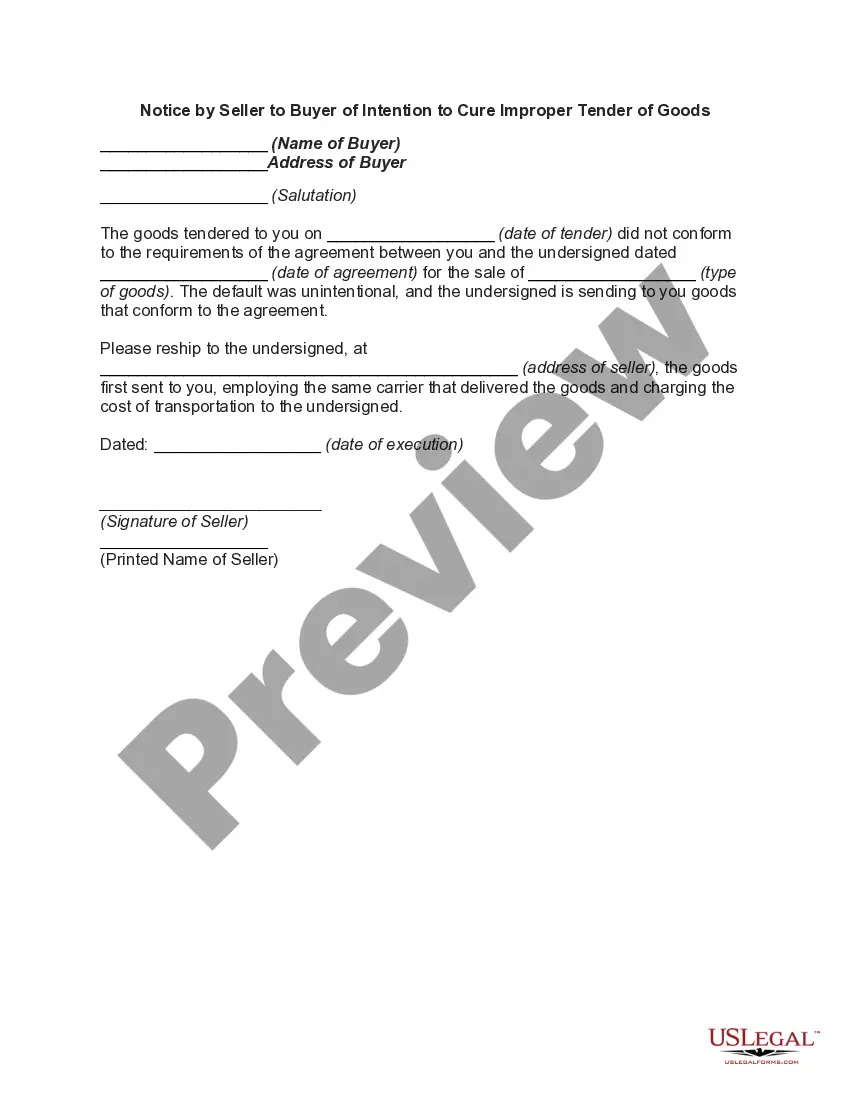
Georgia Notice of Default in Payment of Rent as Warning Prior to Demand to Pay or Terminate for Nonresidential or Commercial Property
What this document covers
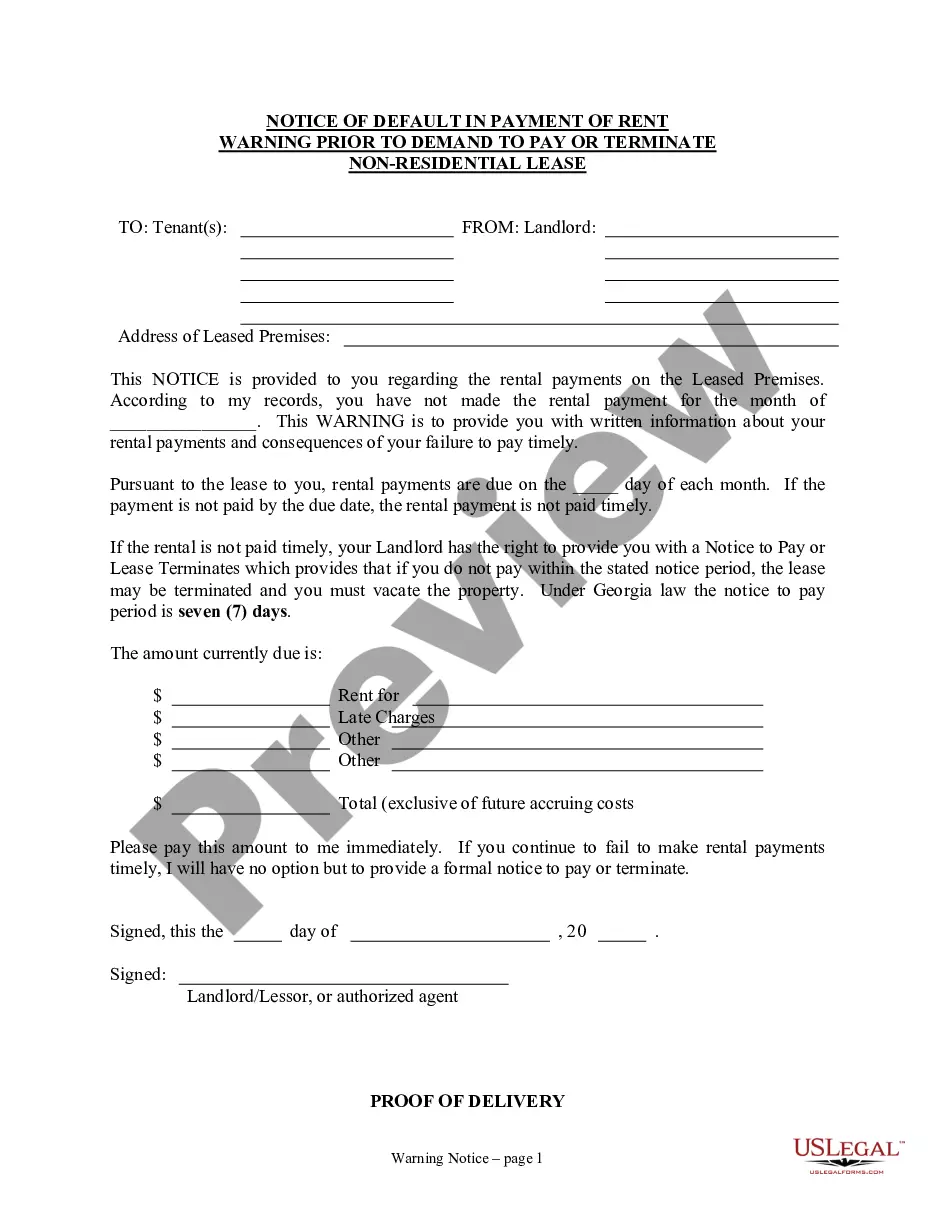
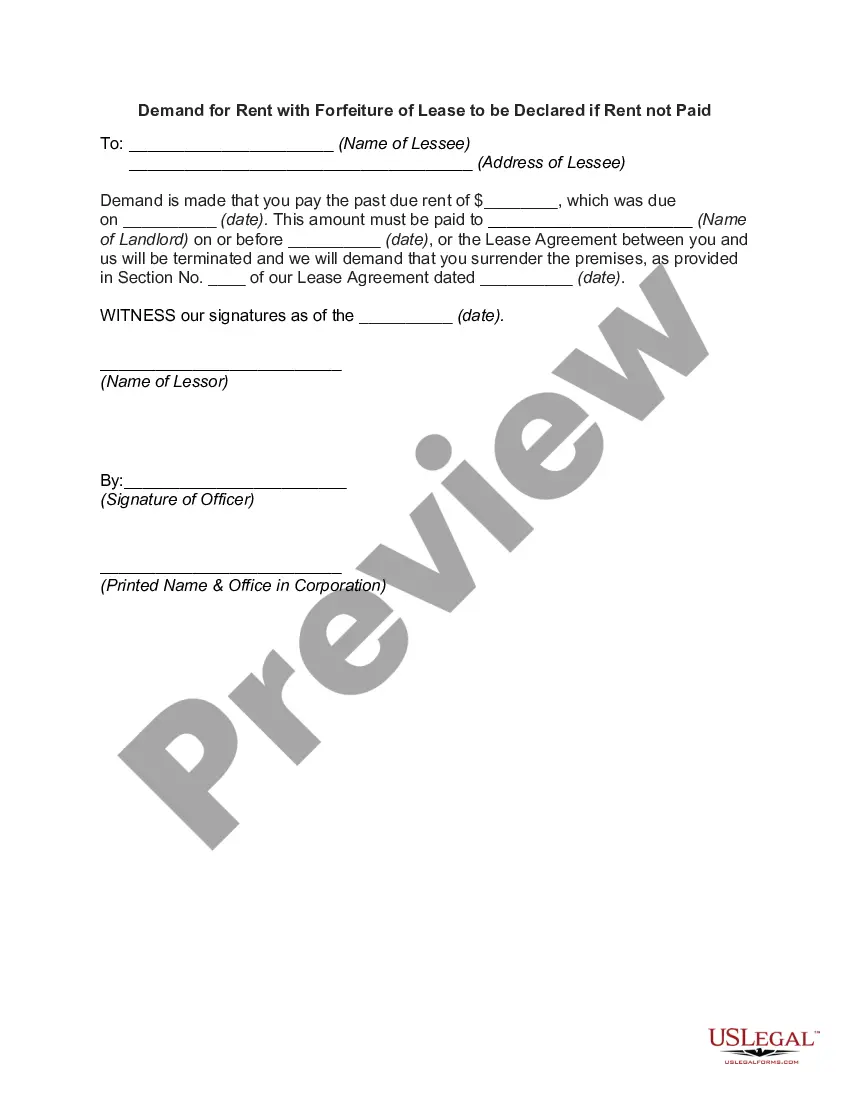
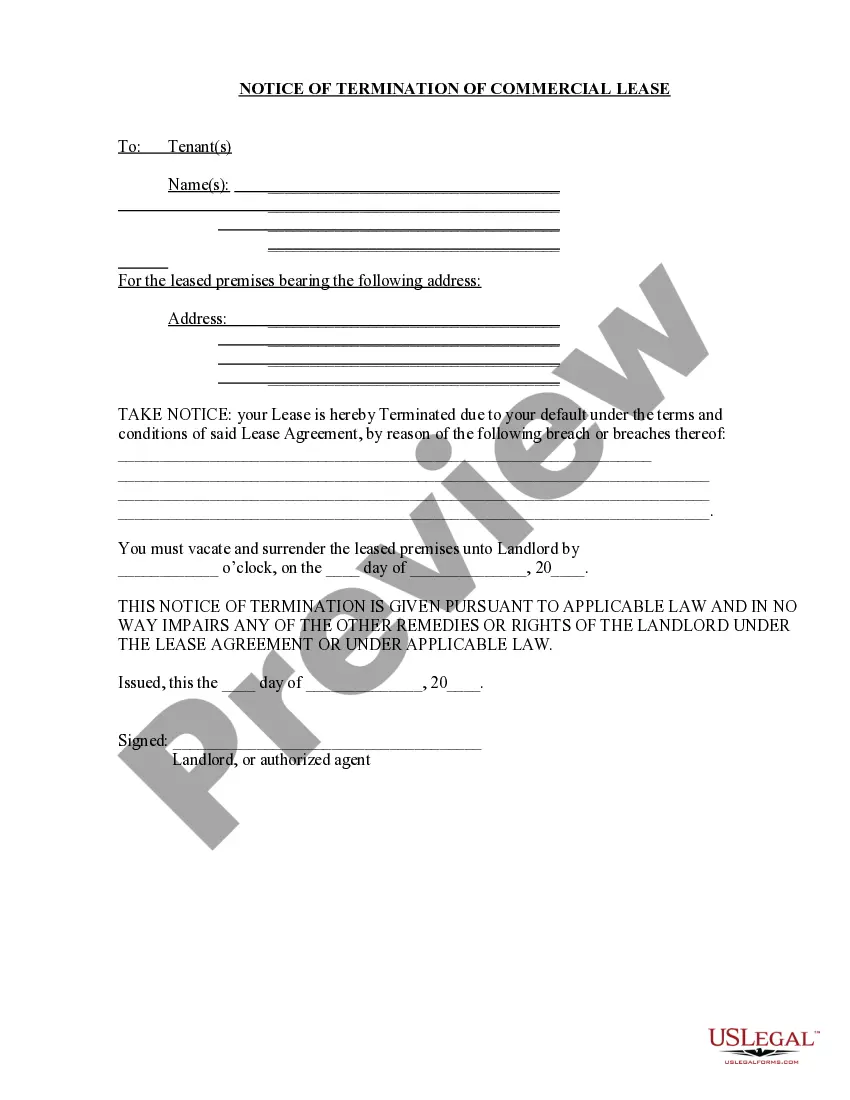
The Notice of Default in Payment of Rent as Warning Prior to Demand to Pay or Terminate for Nonresidential or Commercial Property is a legal document used by landlords to inform tenants of their failure to pay rent. This form serves as an official warning and notifies the tenant about overdue payments, consequences of non-payment, and potential termination of the lease. Unlike a formal eviction notice, this form is a preliminary step to ensure tenants are aware of their obligations and gives them an opportunity to rectify the situation.
What’s included in this form
- Landlord and tenant identification: Names and addresses of both parties involved.
- Property address: The location of the leased premises.
- Details of the default: Specific month or period of unpaid rent.
- Consequences of non-payment: Explanation of potential lease termination if rent is not paid.
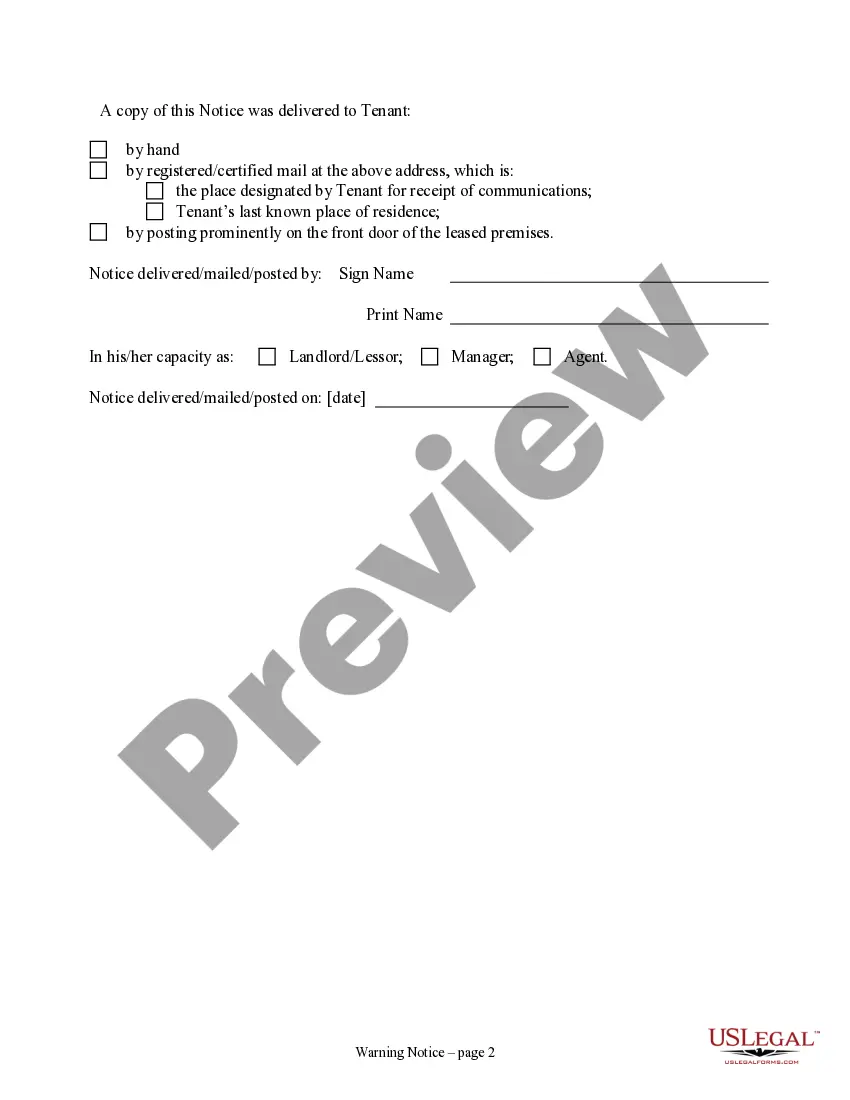
- Proof of delivery section: Confirmation of how and when the notice was delivered to the tenant.
- Signature line: Provides space for the landlord's signature and date.


When to use this document
This form should be used when a landlord needs to formally notify a tenant about a missed rent payment before taking further action. It is especially relevant in situations where tenants have fallen behind on rent and the landlord wishes to remind them of their obligations and the lease terms. Utilizing this notice is a crucial initial step prior to any eviction proceedings and helps establish a clear communication trail regarding rental payments.
Intended users of this form
- Landlords of non-residential or commercial properties.
- Property managers acting on behalf of landlords.
- Commercial property owners needing to address tenant payment issues.
Instructions for completing this form
- Identify the landlord and tenant by entering their names and addresses.
- Specify the address of the leased property.
- Indicate the month for which rent has not been paid.
- Fill in the due date and the total amount owed including any late fees.
- Provide your signature and the date of delivery of the notice.
- Choose the method of delivery and complete the proof of delivery section.
Does this document require notarization?
Notarization is not commonly needed for this form. However, certain documents or local rules may make it necessary. Our notarization service, powered by Notarize, allows you to finalize it securely online anytime, day or night.
Get your form ready online
Our built-in tools help you complete, sign, share, and store your documents in one place.
Make edits, fill in missing information, and update formatting in US Legal Forms—just like you would in MS Word.
Download a copy, print it, send it by email, or mail it via USPS—whatever works best for your next step.
Sign and collect signatures with our SignNow integration. Send to multiple recipients, set reminders, and more. Go Premium to unlock E-Sign.
If this form requires notarization, complete it online through a secure video call—no need to meet a notary in person or wait for an appointment.
We protect your documents and personal data by following strict security and privacy standards.

Make edits, fill in missing information, and update formatting in US Legal Forms—just like you would in MS Word.

Download a copy, print it, send it by email, or mail it via USPS—whatever works best for your next step.

Sign and collect signatures with our SignNow integration. Send to multiple recipients, set reminders, and more. Go Premium to unlock E-Sign.

If this form requires notarization, complete it online through a secure video call—no need to meet a notary in person or wait for an appointment.

We protect your documents and personal data by following strict security and privacy standards.
Common mistakes
- Failing to provide correct tenant contact information.
- Not specifying the exact amount due, including late fees.
- Inaccurate delivery methods that may lead to disputes.
- Neglecting to sign and date the form before delivery.
Why complete this form online
- Convenience of downloading the form anytime and anywhere.
- Editable templates allow for quick customization to fit specific situations.
- Access to forms drafted by licensed attorneys ensures legal validity.
- Time-efficient as it bypasses the need for in-person legal consultations.
Looking for another form?
Form popularity
FAQ
Bona fide house guests, known as invitees, have no rights under Georgia law and you can get them out very quickly. If, on the other hand, your guest pays some rent or helps with chores such as housework or babysitting, then he is properly considered a tenant. And tenants have renters' rights under Georgia law.
You are a renter.If you have no lease agreement, and just pay your rent every month, you are considered a tenant-at-will. Under Georgia law, the landlord is required to give you a notice of at least 60 days before requiring you to move out. After that, you can be evicted.
Your landlord is responsible for repairs to keep the property in good condition. Georgia law says that a landlord cannot make a tenant make or pay for repairs, unless that tenant, his/her family or guests caused the damage. For serious repair problems, local housing code departments can inspect for possible violations.
Assuming that the judge has ruled in your favor, the tenant has 10 days to vacate. The sheriff will provide the tenant with a 24-hour notice. If the renter refuses to vacate after the 10-days period expires, the county sheriff will forcibly evict them.
Notice Requirements for Georgia Landlords A landlord can simply give you a written notice to move, allowing you 60 days as required by Georgia law and specifying the date on which your tenancy will end.
Your landlord can end the let at any time by serving a written 'notice to quit'. The notice period will depend on the tenancy or agreement, but is often at least 4 weeks.
A landlord must give a sixty (60) day notice to terminate or increase rent and the tenant must give a thirty (30) day notice to terminate or change the agreement. It is best to put the notice in writing. If the tenant fails to pay rent, the landlord can immediately demand possession and file a dispossessory affidavit.
Tenancy at sufferance is an agreement in which a property renter is legally permitted to live on a property after a lease term has expired but before the landlord demands the tenant vacate the property. If a tenancy at sufferance occurs, the original lease conditions must be met including the payment of any rents.
NOTE: This order has been extended through 6/30/2021 The CDC issued an order that makes it illegal to evict tenants who cannot pay their rent and have no other housing options.