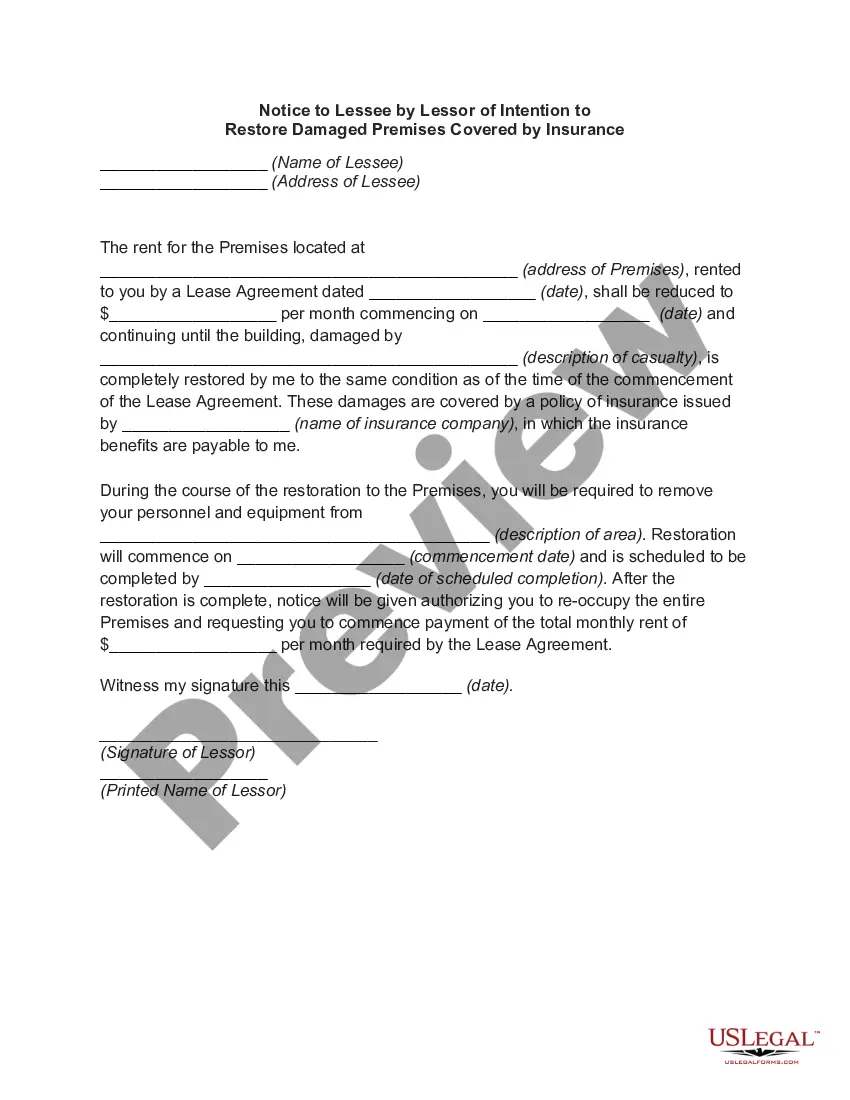
Notice to Lessee by Lessor of Intention to Restore Damaged Premises Covered by Insurance
What is this form?
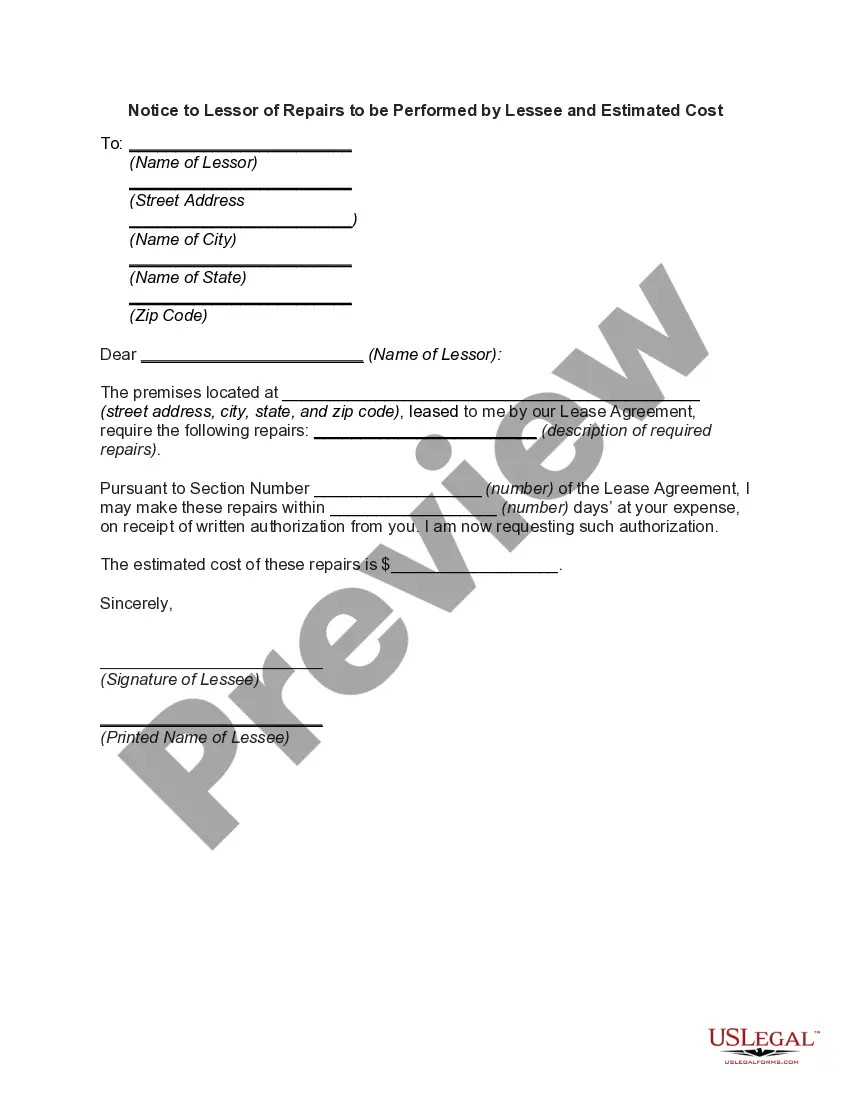
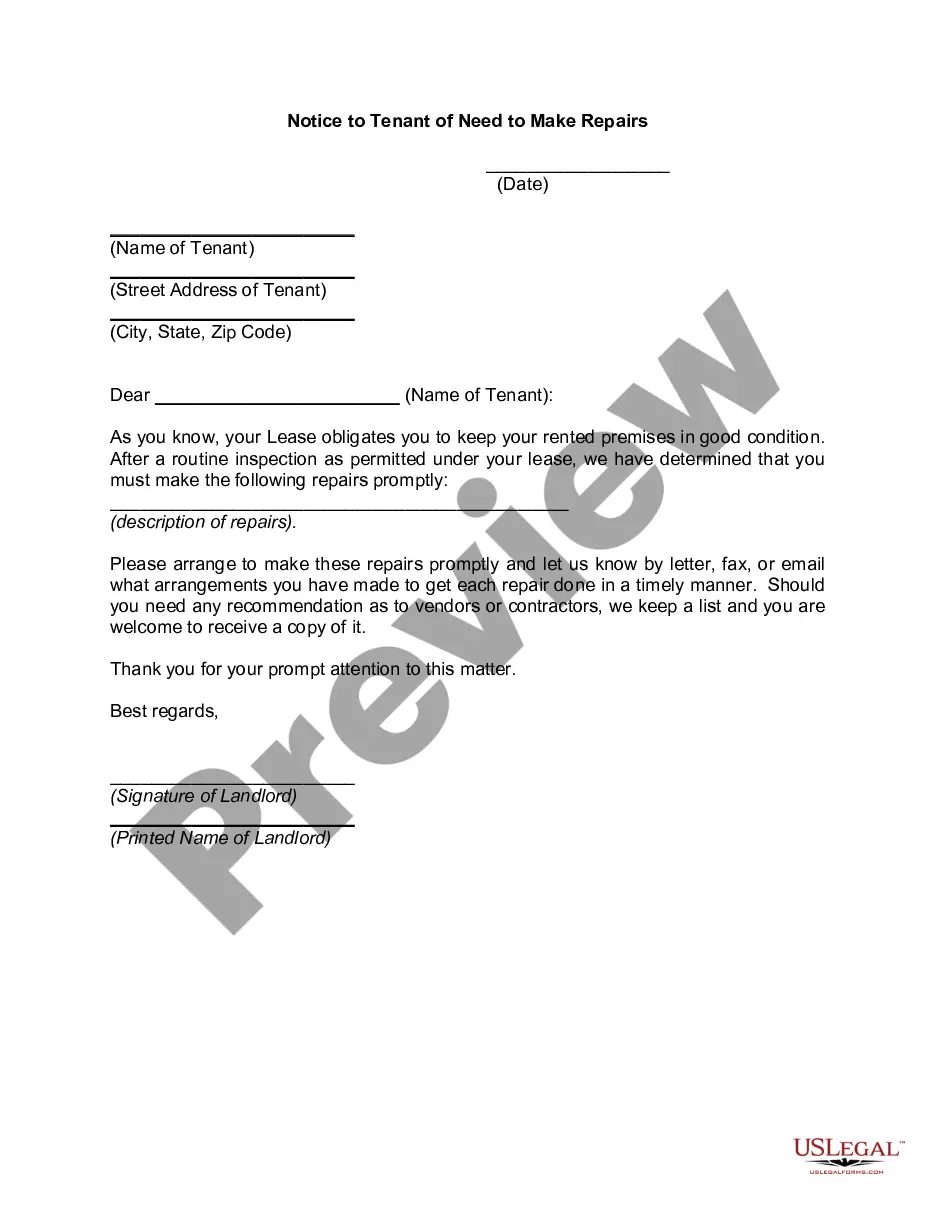
This form, known as the Notice to Lessee by Lessor of Intention to Restore Damaged Premises Covered by Insurance, serves as a formal notification from a lessor to a lessee regarding the plan to restore rental premises that were damaged. It outlines the reduced rent during the restoration process and the key timelines involved. This form is essential for maintaining communication and legal clarity between landlords and tenants following property damage, distinguishing it from general landlord-tenant communication forms.
What’s included in this form
- Name and address of the lessee.
- Address of the premises rented.
- Date of the original lease agreement.
- Amount of reduced rent during the restoration period.
- Description of the damage causing the need for repairs.
- Schedule for restoration, including start and completion dates.
- Signature and printed name of the lessor.
Situations where this form applies
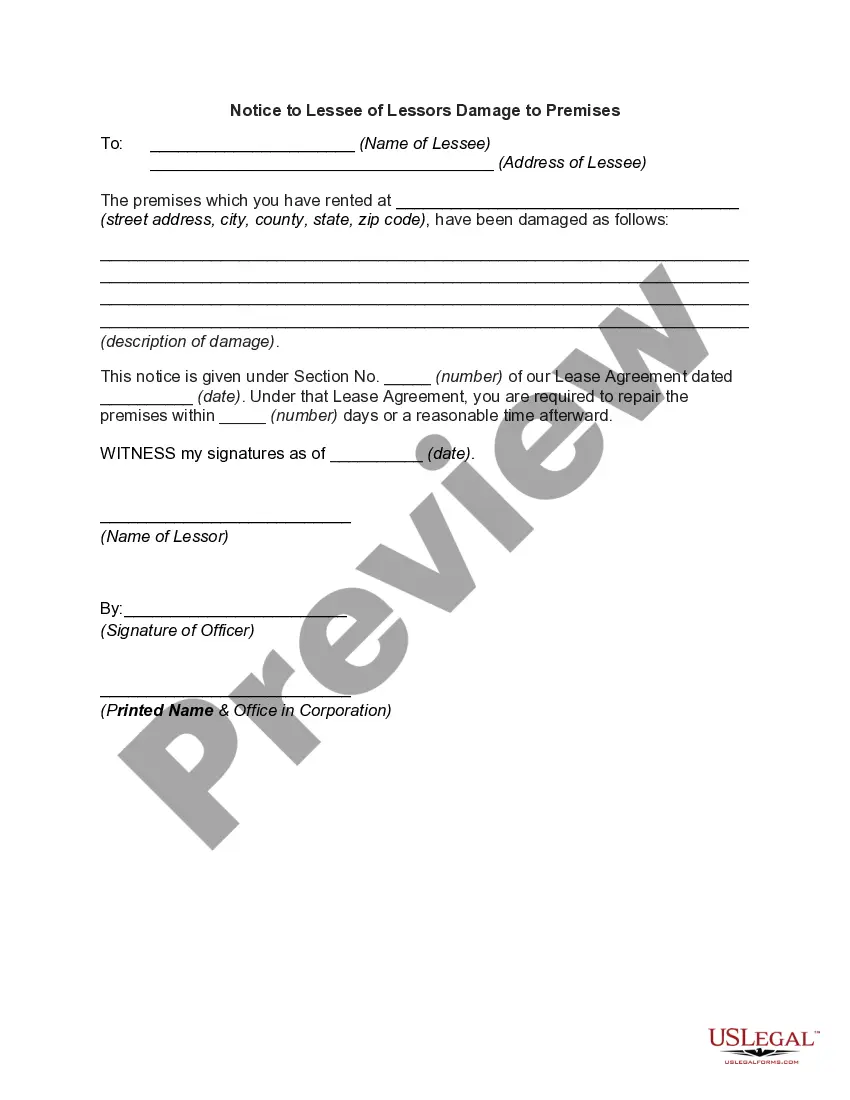
This form should be used when a rental property has sustained damage that is covered by insurance, and the lessor intends to restore the property. It is appropriate when the lessor needs to inform the lessee about the decrease in rent during repairs and establish timelines for restoration and reoccupation. Using this form helps prevent disputes by clearly communicating the lessor's intentions and responsibilities.
Who should use this form
This form is intended for:
- Lessors (landlords) who need to inform lessees (tenants) about property restoration plans.
- Lessee tenants who are affected by property damage and seek clarity on the terms of their lease during the restoration period.
- Property management companies acting on behalf of lessors to ensure proper communication and documentation.
How to prepare this document
- Identify the name and address of the lessee.
- Specify the address of the damaged premises.
- Enter the date of the original lease agreement.
- State the reduced rent amount and the duration for which it applies.
- Describe the nature of the damage that necessitates restoration.
- Provide the start and expected completion dates for restoration.
- Sign and print the name of the lessor as the final step.
Notarization guidance
This form does not typically require notarization unless specified by local law. Ensure that you comply with any specific jurisdictional requirements related to property and rental agreements in your area.
Get your form ready online
Our built-in tools help you complete, sign, share, and store your documents in one place.
Make edits, fill in missing information, and update formatting in US Legal Forms—just like you would in MS Word.
Download a copy, print it, send it by email, or mail it via USPS—whatever works best for your next step.
Sign and collect signatures with our SignNow integration. Send to multiple recipients, set reminders, and more. Go Premium to unlock E-Sign.
If this form requires notarization, complete it online through a secure video call—no need to meet a notary in person or wait for an appointment.
We protect your documents and personal data by following strict security and privacy standards.
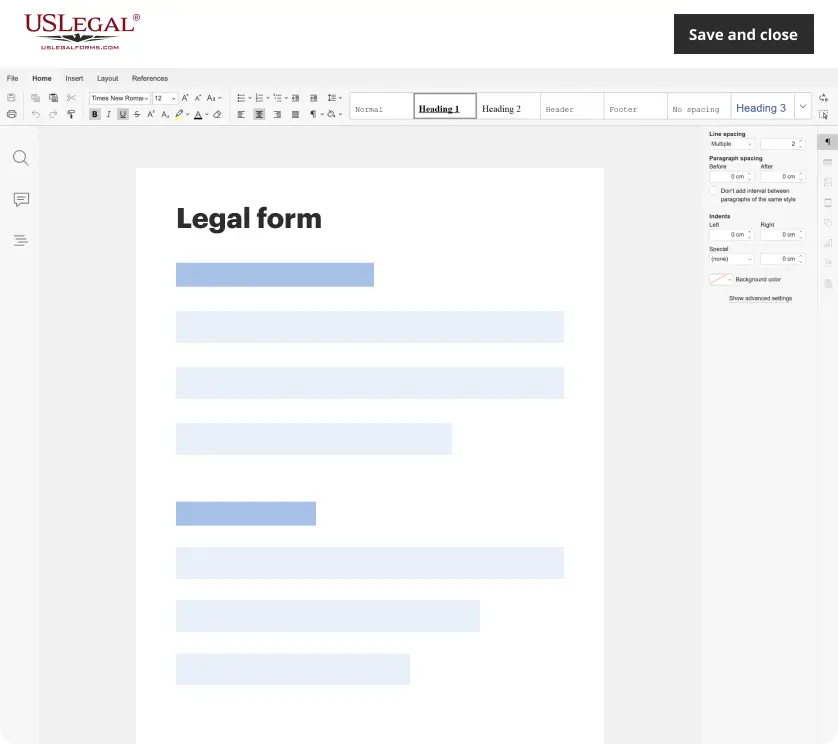
Make edits, fill in missing information, and update formatting in US Legal Forms—just like you would in MS Word.
Download a copy, print it, send it by email, or mail it via USPS—whatever works best for your next step.
Sign and collect signatures with our SignNow integration. Send to multiple recipients, set reminders, and more. Go Premium to unlock E-Sign.
If this form requires notarization, complete it online through a secure video call—no need to meet a notary in person or wait for an appointment.
We protect your documents and personal data by following strict security and privacy standards.
Common mistakes to avoid
- Failing to include all necessary dates for the restoration process.
- Not specifying the reduced rent amount clearly.
- Omitting a description of the damage, which could lead to confusion.
- Not providing accurate and complete contact information for the lessee.
Advantages of online completion
- Quick and easy access to legal templates from a trusted source.
- Edit and customize the form to fit specific needs.
- Convenience of downloading and printing from anywhere at any time.
- Avoid potential errors by using professionally drafted legal language.
Looking for another form?
Form popularity
FAQ
Writing the Letter It should include your name and address as well as the property in question's address and the tenant's name. Just in case there are others residing in or using the property that you are not aware of, include and all other occupants in that salutation. Keep it short and to the point.
Your name, and the landlord's name and address. The date you're writing the letter. Informing the landlord you're breaking your lease early. The reason why you're breaking your lease. The building and apartment you're vacating. The date by which you're vacating.
When damages or issues affect a rental unit's liveability, it is the landlord's responsibility to fix these damages at no cost to the tenant. Landlords are also responsible for repairing (and sometimes replacing) damaged items or appliances that are in the lease agreement.
Landlord Rights When Tenant Destroys PropertyIf the tenant is evicted or already abandoned the property the landlord can deduct money from the security deposit. If the damages exceed the funds in the security deposit the landlord can sue the tenant in small claims court.
Damage to the Property: A landlord can sue a tenant if the tenant has caused damage to the property.To Recover Lost Rent From an Illegal Move Out: If the tenant moved out before their lease was actually up, you can take them to court to recover the rent they owed for the remaining time on their lease.
Set up an Entity for your rental or rentals. Act Like A Responsible Landlord. Have A Quality Lease Agreement. Carry an Umbrella Insurance Policy. Know What Risks Are You Liable For.
In most cases when a rental property is damaged, you have the right to keep all or part of the security deposit to offset the repair costs. But again, security deposits are heavily regulated by the landlord-tenant laws in your location.
If your tenant damages your rental property, your landlord insurance may cover that damage, depending on your policy and the type and extent of the damage. There are three types of tenant damage: accidental, intentional and normal wear and tear. Accidental damage Sometimes covered by landlord insurance.
Can a tenant claim for improvements made during the lease? The position differs in the case of immovable and movable property. Tenant can claim for:The claim arises only once the lease is terminated and lessee vacated the property.