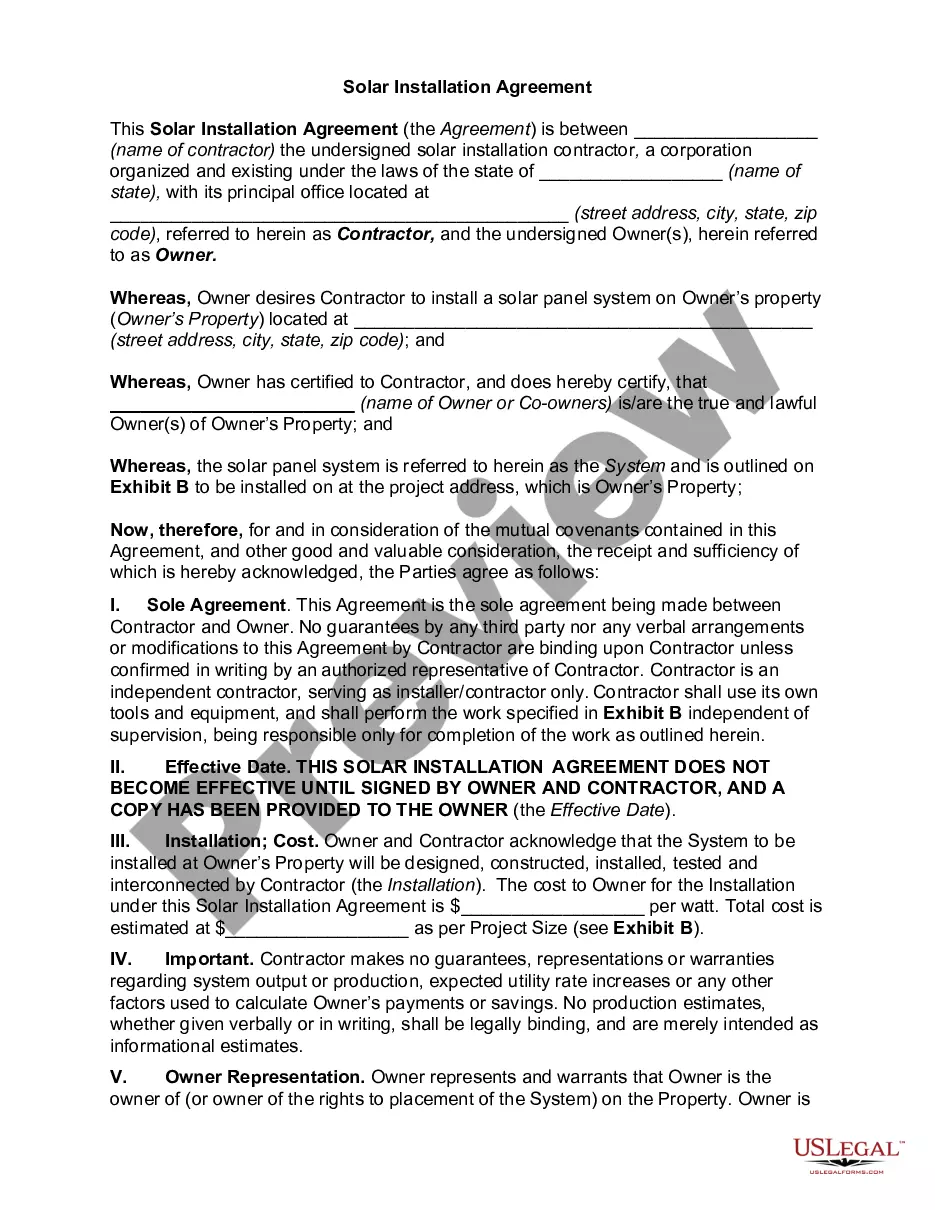
Georgia Letter from Landlord to Tenant that Sublease granted - Rent Paid by Subtenant, but Tenant Still Liable for Rent and Damages
What is this form?
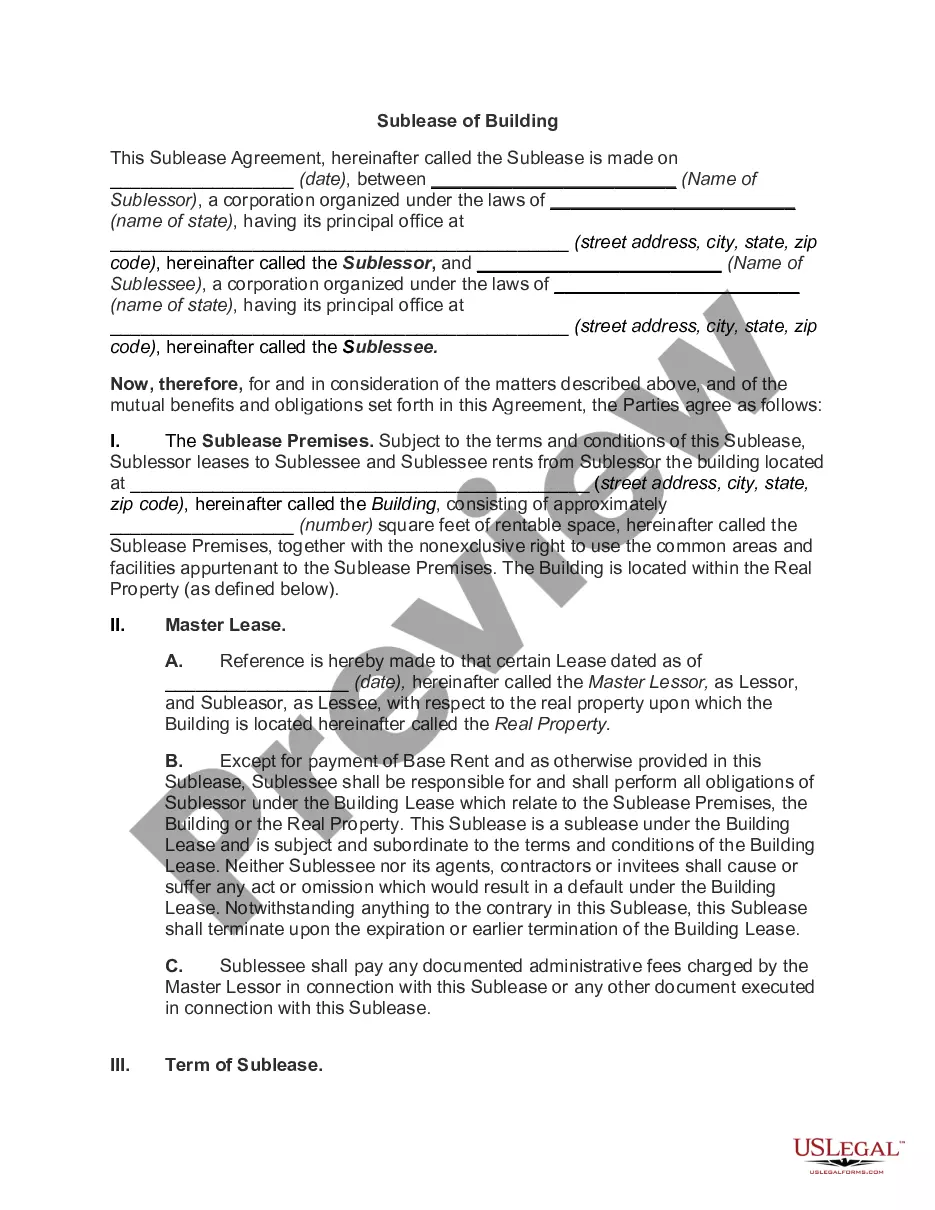
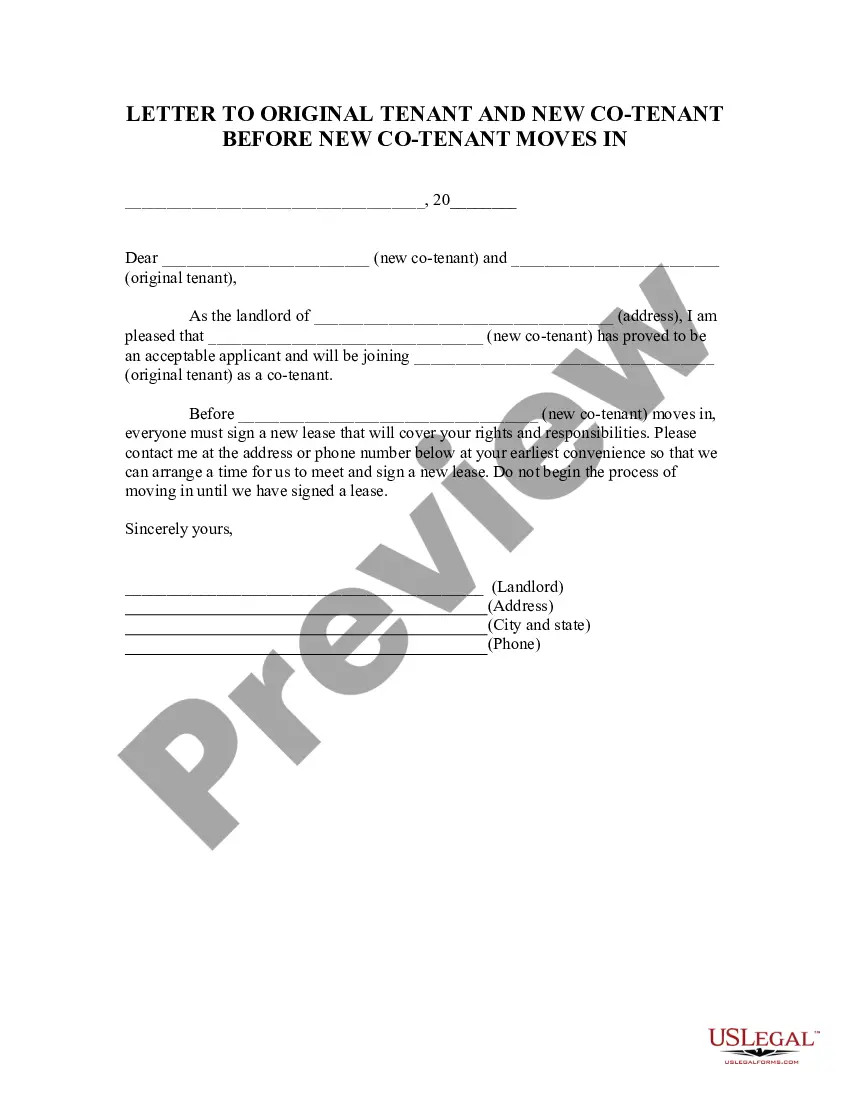
This letter from landlord to tenant serves to formally acknowledge that a sublease has been granted. The subtenant will pay the rent, but the original tenant remains liable for all obligations under the lease, including any damages. This form is essential for clarifying responsibilities and ensuring that the landlord can hold the tenant accountable if the subtenant defaults.
What’s included in this form
- Notification of sublease approval
- Statement of tenant's continued liability for rent and damages
- Details regarding the subtenant's obligation to pay rent
- Information on remedy options for the landlord
- Contact information for any queries
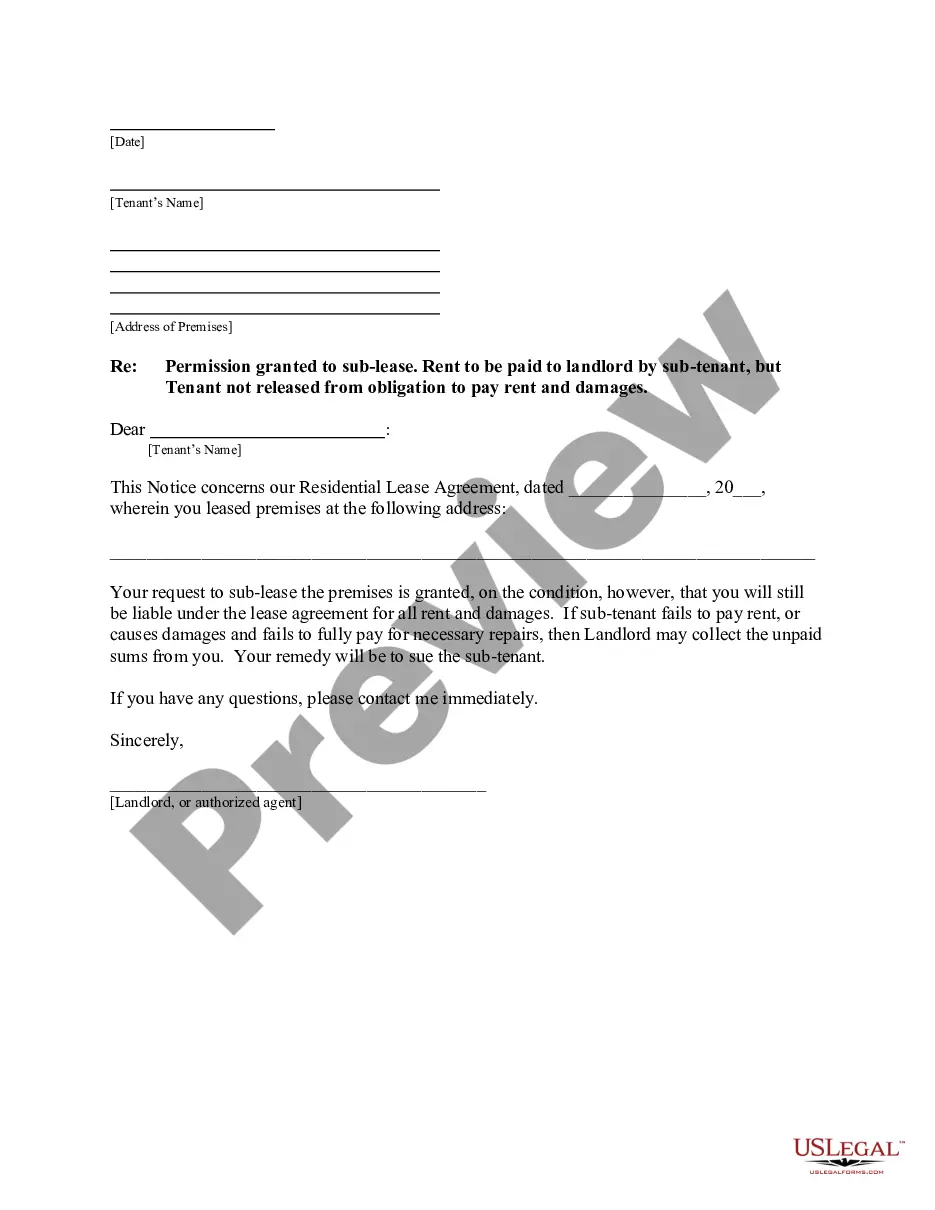


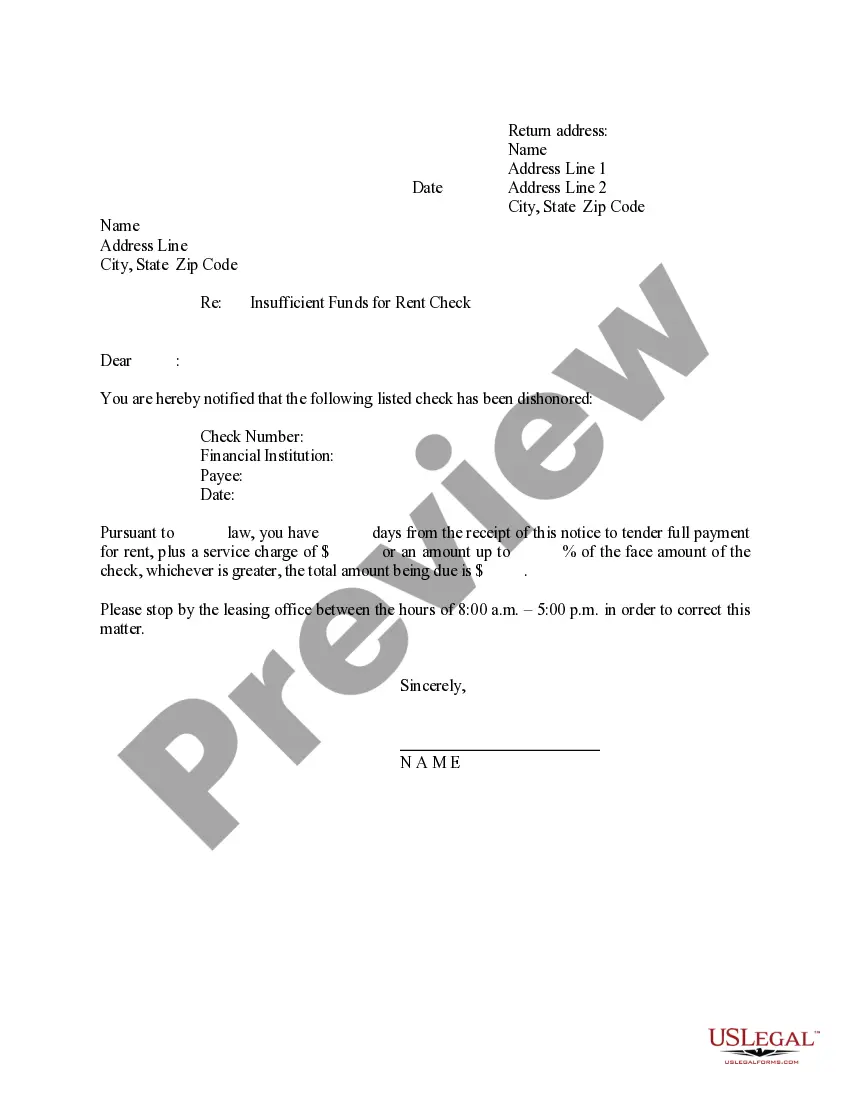
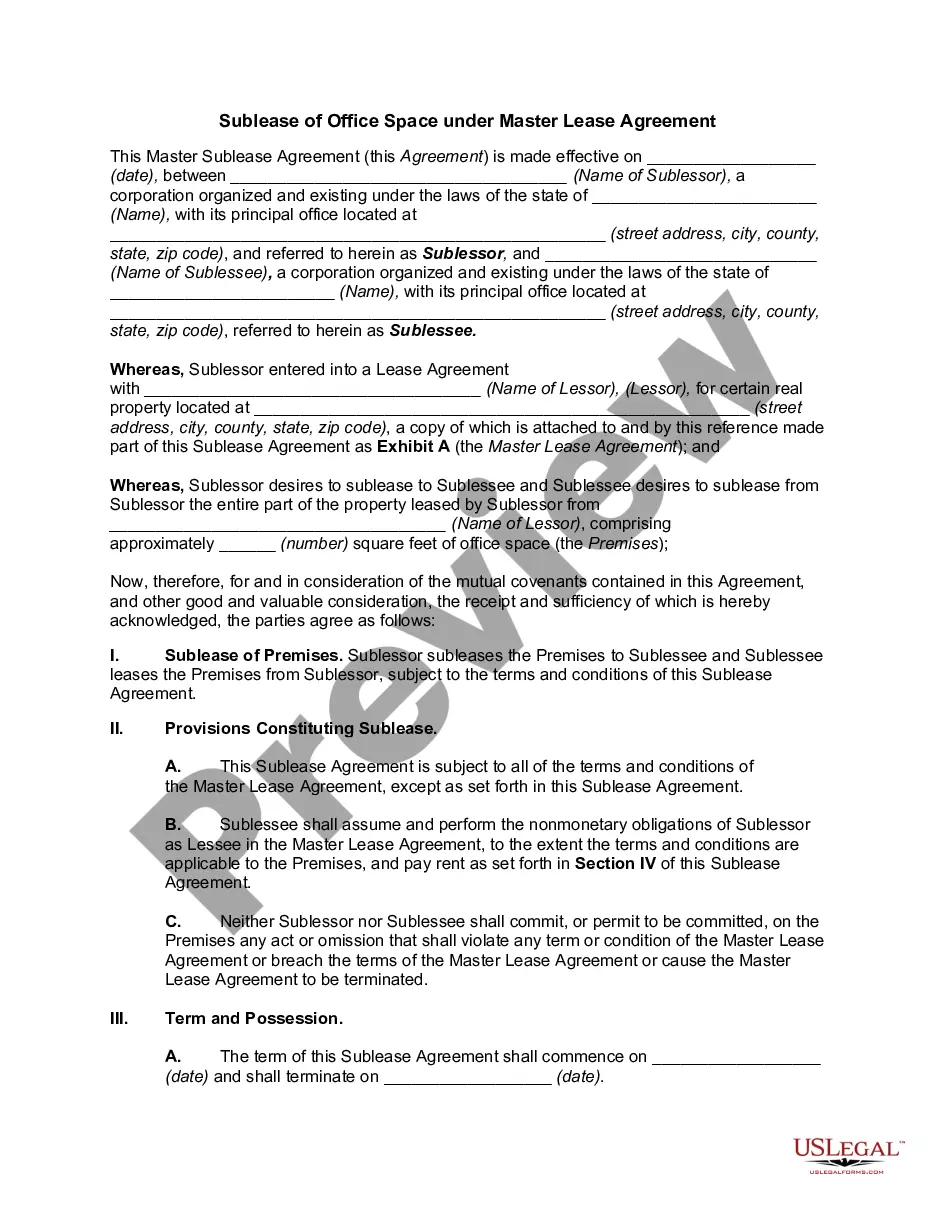
Common use cases
This form should be used when a tenant has been granted permission to sublease their rental unit. It is important for landlords to formally acknowledge the sublease in writing to clarify that the original tenant is still responsible for rent and potential damages, regardless of the agreement with the subtenant.
Intended users of this form
- Landlords looking to formalize a sublease arrangement
- Tenants who have obtained permission to sublease their unit
- Property managers overseeing rental properties
- Legal representatives acting on behalf of landlords or tenants
Steps to complete this form
- Fill in the date of the letter.
- Clearly state the names of the landlord and tenant.
- Specify details about the sublease, including the subtenant's name and the terms of the lease.
- Include any obligations concerning payment of rent and repairs.
- Sign the letter and indicate the method of delivery to the tenant.
Is notarization required?
Notarization is not commonly needed for this form. However, certain documents or local rules may make it necessary. Our notarization service, powered by Notarize, allows you to finalize it securely online anytime, day or night.
Get your form ready online
Our built-in tools help you complete, sign, share, and store your documents in one place.
Make edits, fill in missing information, and update formatting in US Legal Forms—just like you would in MS Word.
Download a copy, print it, send it by email, or mail it via USPS—whatever works best for your next step.
Sign and collect signatures with our SignNow integration. Send to multiple recipients, set reminders, and more. Go Premium to unlock E-Sign.
If this form requires notarization, complete it online through a secure video call—no need to meet a notary in person or wait for an appointment.
We protect your documents and personal data by following strict security and privacy standards.

Make edits, fill in missing information, and update formatting in US Legal Forms—just like you would in MS Word.

Download a copy, print it, send it by email, or mail it via USPS—whatever works best for your next step.

Sign and collect signatures with our SignNow integration. Send to multiple recipients, set reminders, and more. Go Premium to unlock E-Sign.

If this form requires notarization, complete it online through a secure video call—no need to meet a notary in person or wait for an appointment.

We protect your documents and personal data by following strict security and privacy standards.
Common mistakes
- Failing to include the subtenant's name and details.
- Not clarifying the original tenant's liabilities.
- Omitting contact information for follow-up questions.
- Using informal language instead of a formal letter format.
Advantages of online completion
- Convenient access and immediate download available.
- Edit the form to fit specific circumstances before printing.
- Drafted by licensed attorneys to ensure legal validity.
- Saves time compared to creating a document from scratch.
Looking for another form?
Form popularity
FAQ
Yes, a tenant can evict a subtenant, but it must be done legally. The original tenant must follow specific procedures, often requiring notification and justification under the terms of the sublease. It is essential to consult the lease agreement to understand the grounds for eviction. Legal forms can help formalize this process.
In Georgia, subleasing laws vary based on the terms outlined in the original lease agreement. Generally, tenants need the landlord's consent to sublet the property. It's also vital to ensure the sublease complies with local regulations and ordinances. A strong understanding of these laws can help prevent conflicts and ensure a smooth subleasing process.
Yes, a tenant can take legal action against another tenant for not paying their share of the rent. This can lead to disputes, particularly if the lease or sublease does not clarify payment responsibilities. It's crucial for tenants to document agreements and communication to support their case. If you need formal documents, consider utilizing a service like US Legal Forms.
Yes, a subtenant can sue a tenant for breaches of the sublease agreement. If the subtenant has fulfilled their obligations, they may seek legal remedies. However, any legal action will depend on the specific terms of the agreement and the nature of the dispute, such as unpaid rent or damages. Always consider consulting a legal professional for guidance.
A subtenant is someone who has the right to use and occupy rental property leased by a tenant from a landlord. A subtenant has responsibilities to both the landlord and the tenant.The tenant still remains responsible for the payment of rent to the landlord and any damages to the property caused by the subtenant.
The subtenant must give a notice of one month in order to terminate the sublease. The subtenant is also required to give reasons for leaving the premises. A sublease can be terminated early if the subtenant is willing to pay the rent until the end of the month and an amount in addition to this.
If a court finds you guilty of the first offence of unlawful subletting, you can be fined in the magistrates' court.At the magistrates' court, you can get up to six months in prison or a fine, or both. At the Crown Court the maximum penalty is imprisonment for two years or a fine, or both.
A sublease is a legally binding contract made between a tenant and a new tenant (also known as a subtenant or a sublessee).Usually, the first tenant must get consent from the landlord before he/she is allowed to sublease the premises.
A Residential Sublease is a legally binding contract made between the original tenant of a rental property (sublandlord) and a new tenant (also known as a subtenant or a sublessee). The sublease gives the subtenant the right to share or to take over the rented premises from the original tenant.
If a tenant is subletting without consent, it's likely they will have broken terms in their tenancy agreement. This breach of contract means that the landlord can take action to evict them from their home. Possession proceedings can be started quickly, but it's important to follow the correct legal process.