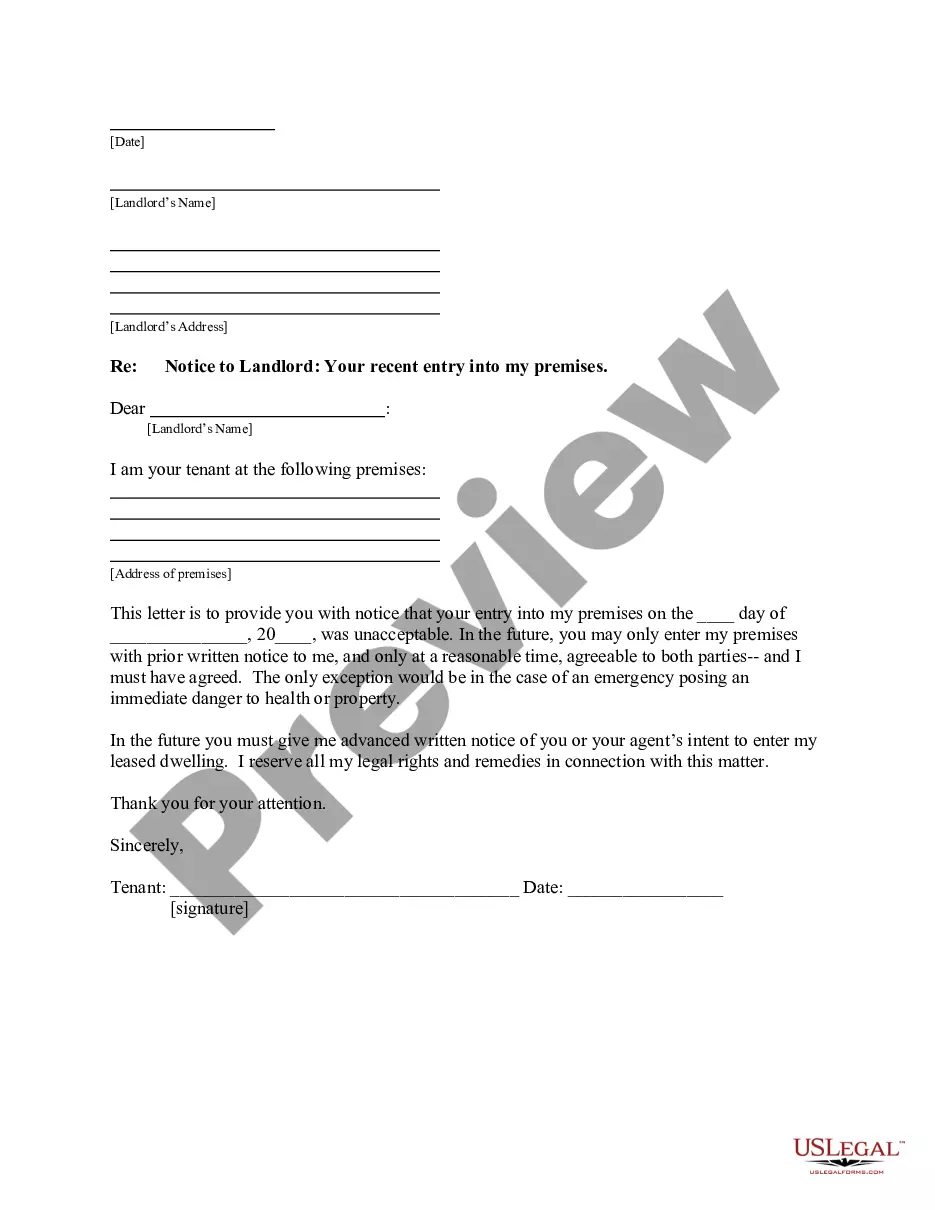
Georgia Letter from Tenant to Landlord about Illegal entry by landlord
About this form
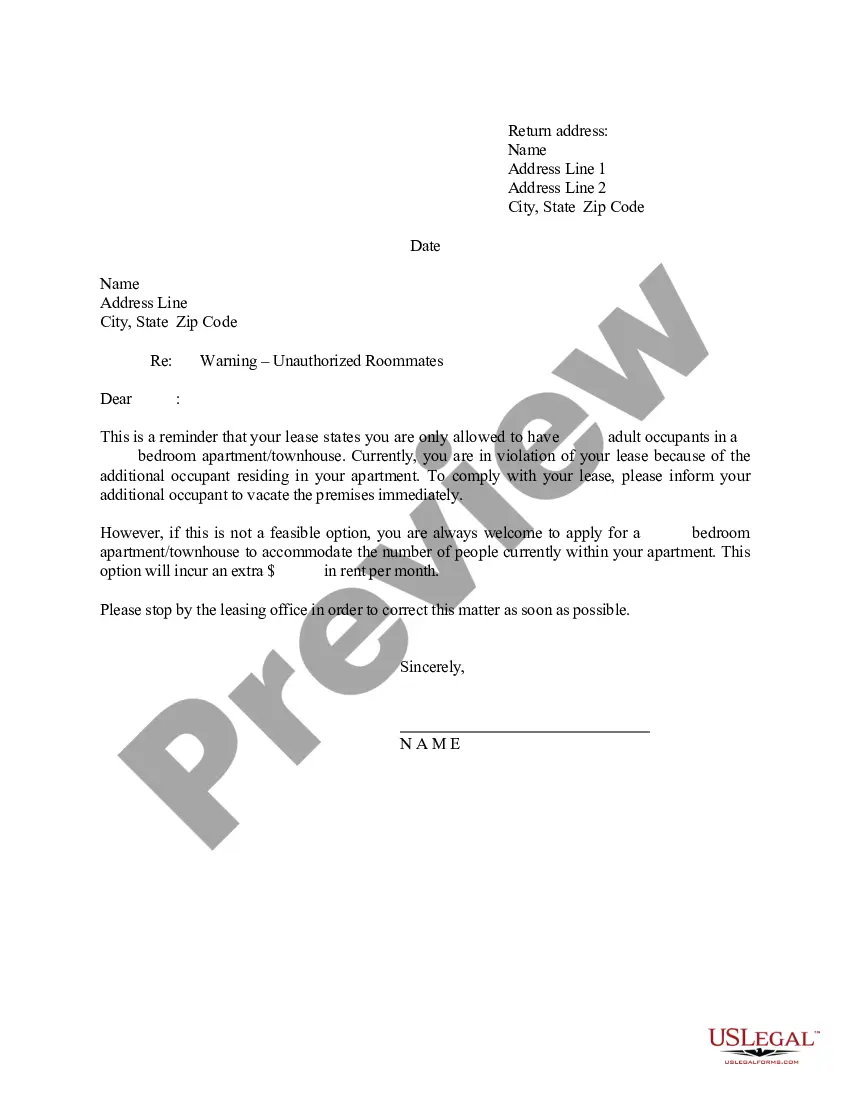
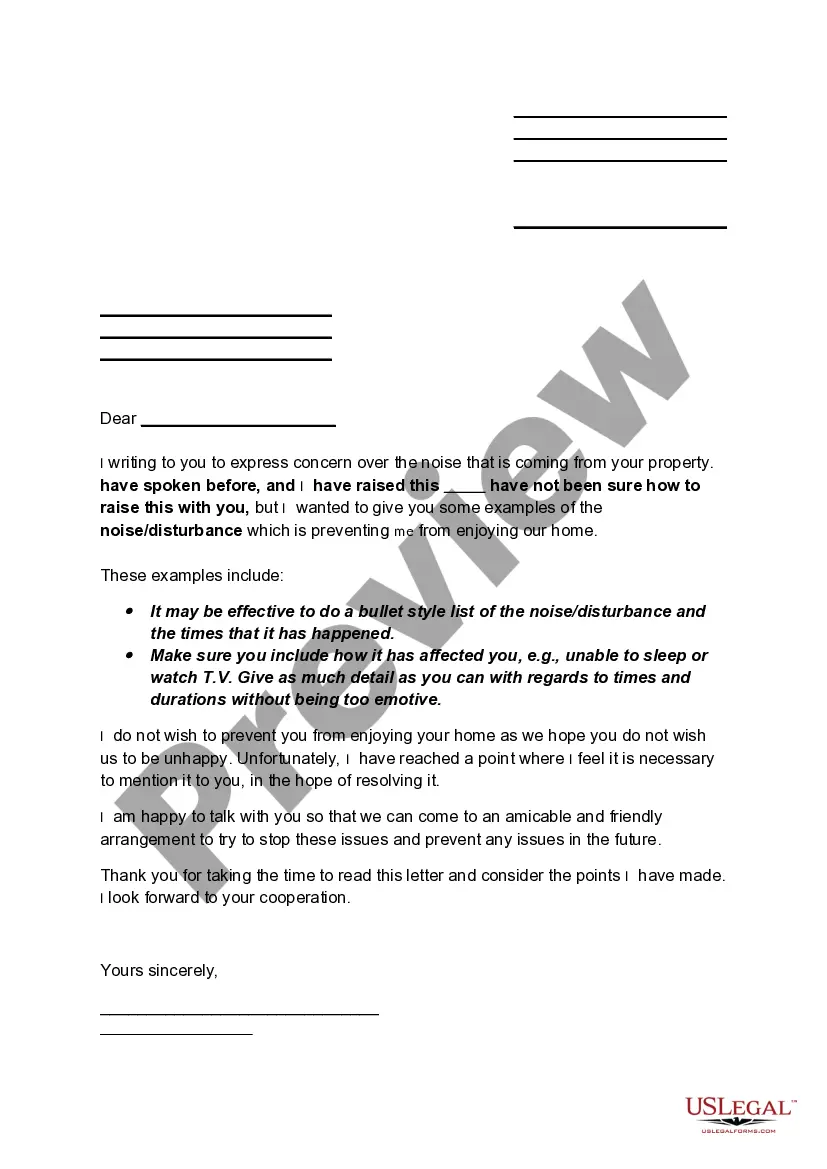
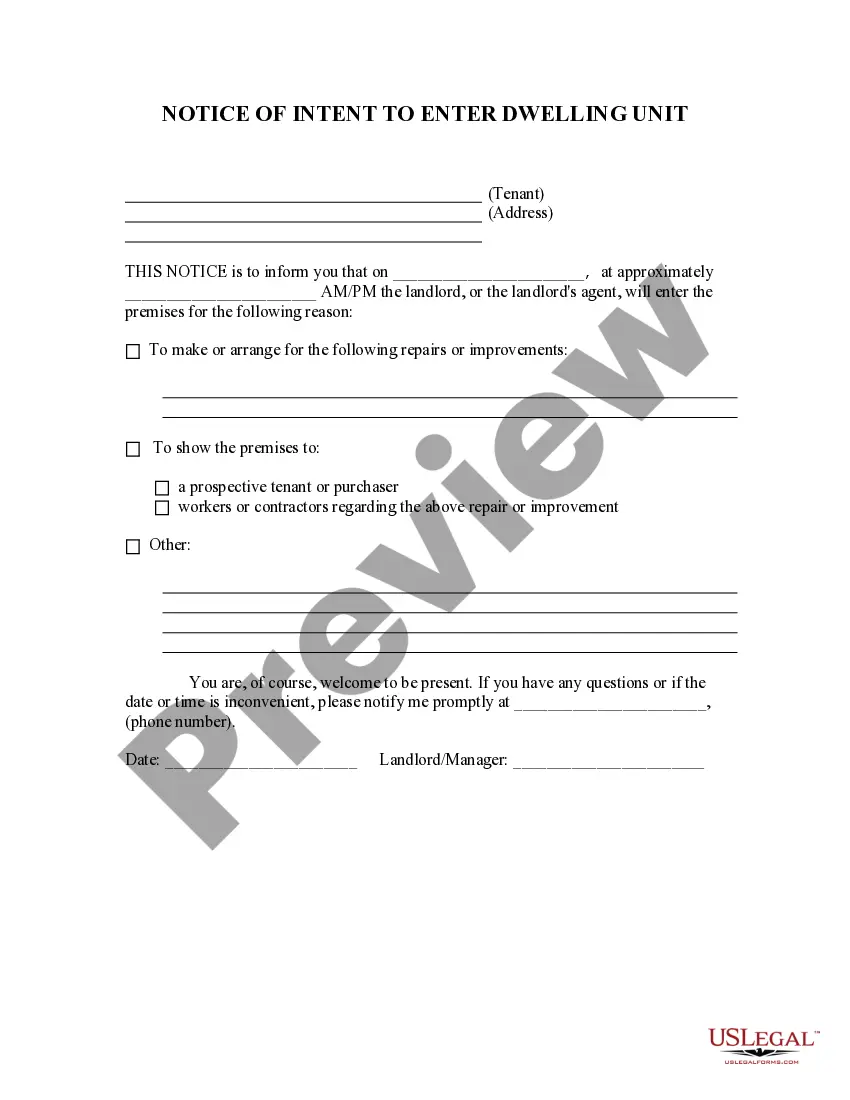
This form is a Letter from Tenant to Landlord concerning illegal entry by the landlord. It is designed to formally request that the landlord provide advance written notice before entering the rented premises. This letter emphasizes the tenant's right to privacy and stipulates that entry should only occur at a reasonable time with prior consent, with the exception of emergency situations. This form is pivotal for tenants wanting to document their communication regarding unauthorized entry and protect their rights under landlord-tenant law.
What’s included in this form
- Request for advance written notice of entry by the landlord.
- Statement reserving all legal rights and remedies.
- Signature and date fields for the tenant.
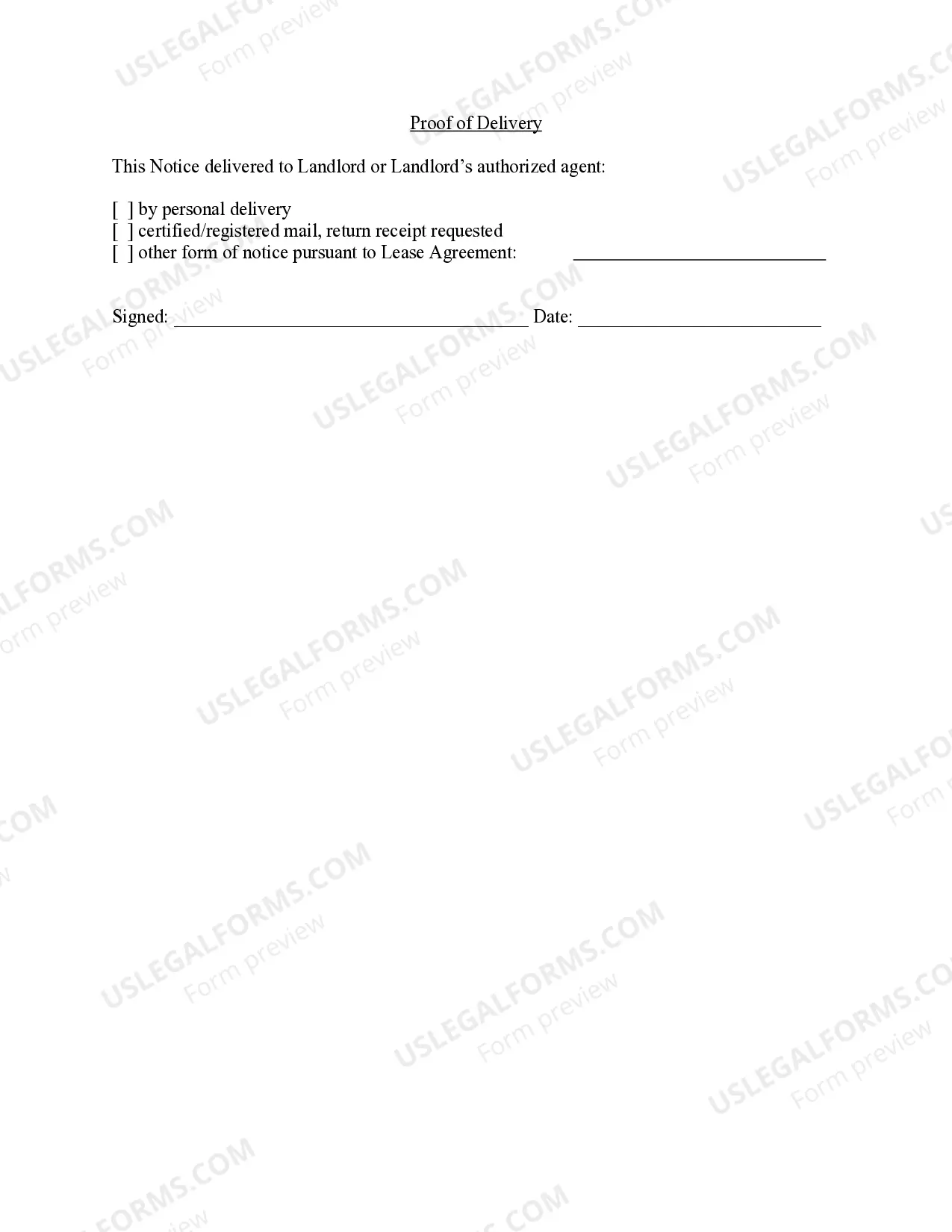
- Proof of delivery options for notifying the landlord.

When to use this form
This form should be used when a tenant needs to address unauthorized entry by the landlord. Situations may include when the landlord enters the property without prior notice, or if a tenant feels their privacy rights are being violated. Sending this letter can help establish boundaries and reinforce communication regarding property access.
Who this form is for
- Tenants who have experienced illegal entry by their landlord.
- Individuals who want to formalize their request for privacy and communication.
- Anyone wishing to document their rights in a landlord-tenant relationship.
How to complete this form
- Identify yourself as the tenant and state the address of the leased property.
- Clearly specify your request for advanced written notice before any landlord entry.
- Include a statement that reserves your legal rights in relation to this matter.
- Sign and date the letter to validate your request.
- Select proof of delivery method (personal delivery or certified mail) and document accordingly.
Notarization requirements for this form
This form usually doesn’t need to be notarized. However, local laws or specific transactions may require it. Our online notarization service, powered by Notarize, lets you complete it remotely through a secure video session, available 24/7.
Get your form ready online
Our built-in tools help you complete, sign, share, and store your documents in one place.
Make edits, fill in missing information, and update formatting in US Legal Forms—just like you would in MS Word.
Download a copy, print it, send it by email, or mail it via USPS—whatever works best for your next step.
Sign and collect signatures with our SignNow integration. Send to multiple recipients, set reminders, and more. Go Premium to unlock E-Sign.
If this form requires notarization, complete it online through a secure video call—no need to meet a notary in person or wait for an appointment.
We protect your documents and personal data by following strict security and privacy standards.

Make edits, fill in missing information, and update formatting in US Legal Forms—just like you would in MS Word.

Download a copy, print it, send it by email, or mail it via USPS—whatever works best for your next step.

Sign and collect signatures with our SignNow integration. Send to multiple recipients, set reminders, and more. Go Premium to unlock E-Sign.

If this form requires notarization, complete it online through a secure video call—no need to meet a notary in person or wait for an appointment.

We protect your documents and personal data by following strict security and privacy standards.
Typical mistakes to avoid
- Not including the property address in the letter.
- Failing to sign and date the letter properly.
- Neglecting to choose a proof of delivery method.
Benefits of using this form online
- Convenient to download and fill out at your own pace.
- Editable templates allow for customization specific to your situation.
- Provides peace of mind knowing you are using a form drafted by licensed attorneys.
Legal use & context
- Ensures that tenant rights are protected in accordance with state law.
- Creates a formal record of the tenant's request for proper notice.
- Can be used as evidence in a legal dispute regarding landlord entry.
Main things to remember
- This letter helps tenants formally address illegal entries by landlords.
- It specifies requirements for future landlord entries, protecting tenant privacy.
- Using this form can establish clear communication and prevent conflicts.
Looking for another form?
Form popularity
FAQ
To file a complaint against a landlord in Georgia, you can start by gathering all relevant information and documentation about the incidents, such as dates and descriptions of illegal entry. Next, you may want to consider contacting local housing authorities or legal aid organizations that specialize in tenant rights. These resources can help you navigate the complaint process and ensure your concerns are addressed. For formal documentation, referring to a Georgia Letter from Tenant to Landlord about Illegal entry by landlord may also provide a structured approach to your complaint.
To write a formal letter to your landlord, start by addressing them properly and including the date at the top. Clearly state your purpose, such as discussing the issue of illegal entry, and use a polite but firm tone. Remember to include important details, including your address and specific incidents, to support your case. Considering a Georgia Letter from Tenant to Landlord about Illegal entry by landlord can help structure your message effectively.
Yes, in Georgia, landlords are required to give advance notice before entering a rental unit. Typically, a 24-hour notice is considered reasonable, except in emergencies. Utilizing a Georgia Letter from Tenant to Landlord about Illegal entry by landlord can help tenants formally remind landlords of their obligations under the law.
The new law for landlords in Georgia emphasizes a tenant's right to privacy and the need for reasonable notice before landlord entry. This law strengthens the requirement that landlords must obtain permission or provide notice before accessing the property. Knowing and utilizing a Georgia Letter from Tenant to Landlord about Illegal entry by landlord can be an effective way to ensure these rights are respected.
Tenants can deny landlord entry, especially if due notice has not been provided. Georgia law requires landlords to give reasonable notice before entering a rental property—typically 24 hours. Sending a Georgia Letter from Tenant to Landlord about Illegal entry by landlord can formalize your request for adherence to this notice requirement.
Yes, as a tenant, you have the right to deny entry to your landlord under certain conditions. If the landlord does not provide appropriate notice or has no valid reason for entry, you can refuse them access. A well-crafted Georgia Letter from Tenant to Landlord about Illegal entry by landlord can help clarify your stance on this issue.
An example of a letter from a tenant to a landlord could address concerns regarding illegal entry by the landlord. In this letter, the tenant should clearly state the date of the unauthorized visit, express their discomfort, and request prior notice for any future entries. This Georgia Letter from Tenant to Landlord about Illegal entry by landlord serves to protect tenant rights and establish clear communication.
Yes, tenants have the right to refuse entry if the landlord fails to follow legal notice requirements or enters the property for inappropriate reasons. It’s vital for tenants to understand their rights and communicate them in a Georgia Letter from Tenant to Landlord about Illegal entry by landlord. This ensures that both parties respect the lease agreement and legal boundaries.
A rent demand letter typically includes your details, the landlord's information, and a request for overdue payments. For issues concerning illegal entry, your Georgia Letter from Tenant to Landlord about Illegal entry by landlord should address the violation and ask for resolution. Be specific in your request and include any supporting evidence.
Start by outlining the specific issue you face, including dates and instances of the landlord’s illegal entry. Use a clear and direct approach in your Georgia Letter from Tenant to Landlord about Illegal entry by landlord, and request specific action from your landlord. This clarity helps communicate your expectations and emphasizes the urgency of the situation.