West Virginia Revocation of Anatomical Gift Donation
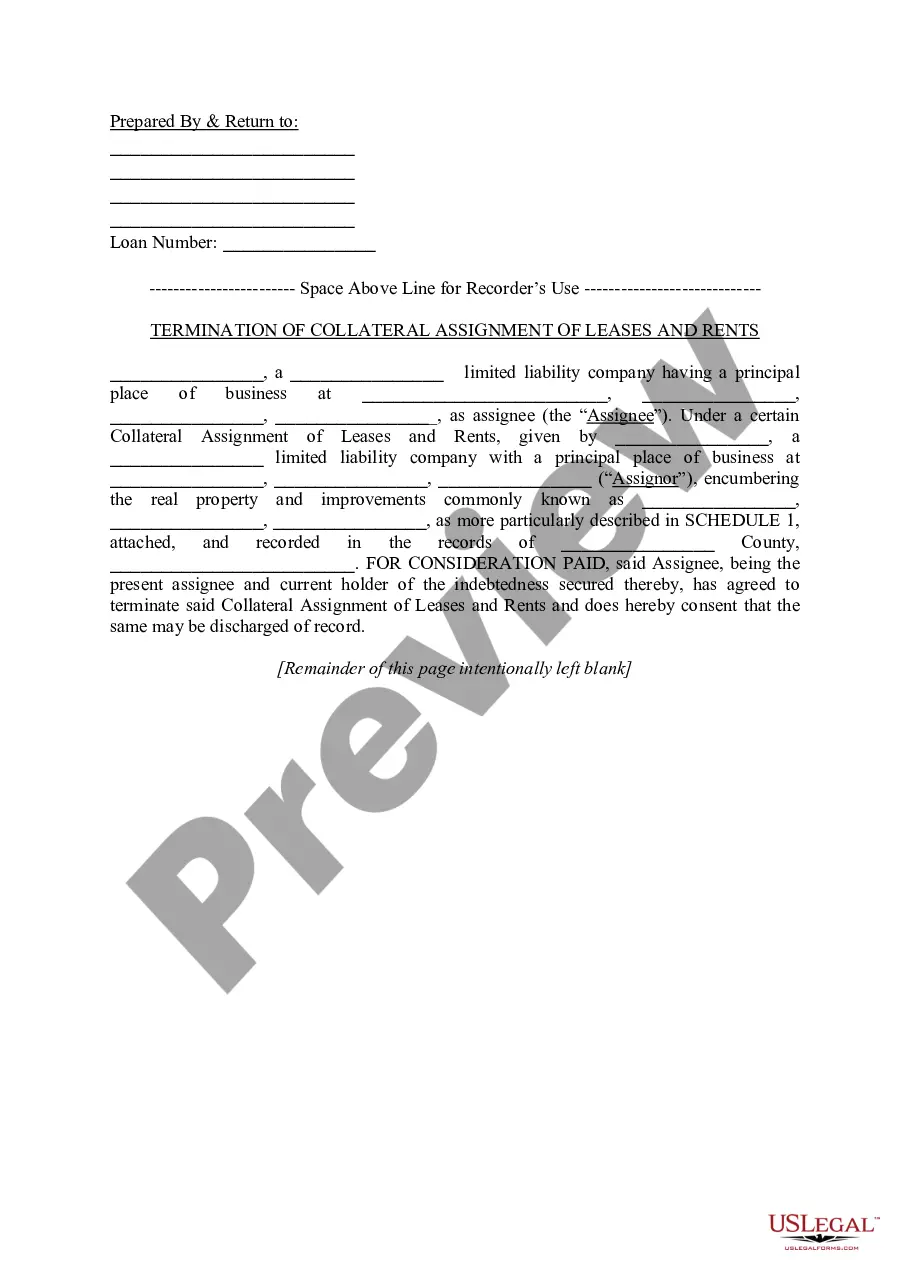
About this form
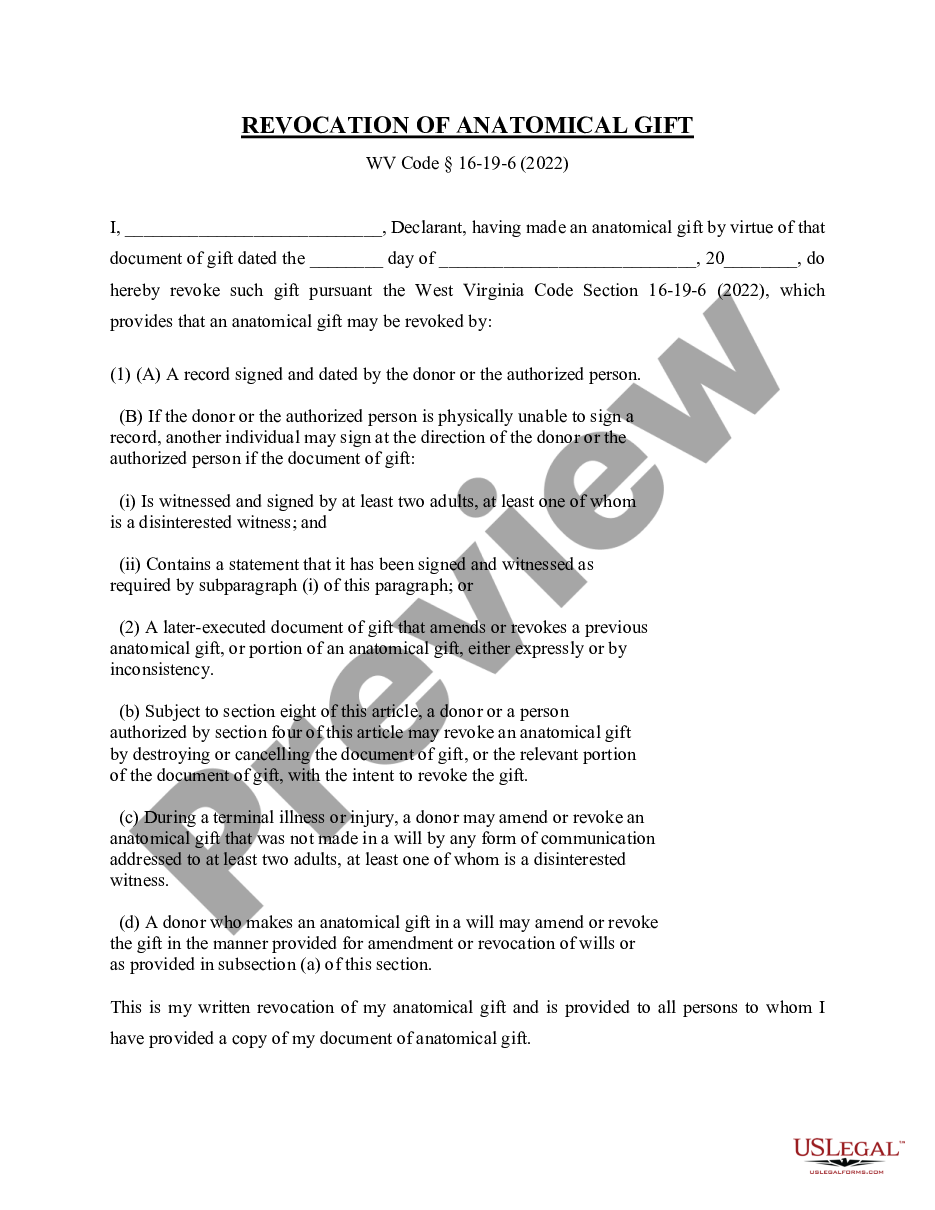
The Revocation of Anatomical Gift Donation form is a legal document that allows an individual to revoke a previously made anatomical gift. This form serves to void any intentions regarding organ or tissue donation as expressed in an earlier anatomical gift document. It provides a clear method for amending or canceling a gift at any point, differing from other forms of estate planning that may not address anatomical gifts specifically.
What’s included in this form
- Declarant's identification: The individual revoking the gift must provide their name and details.
- Original gift details: Reference to the original anatomical gift document date.
- Revocation declaration: A formal statement indicating the intent to revoke the previous donation.
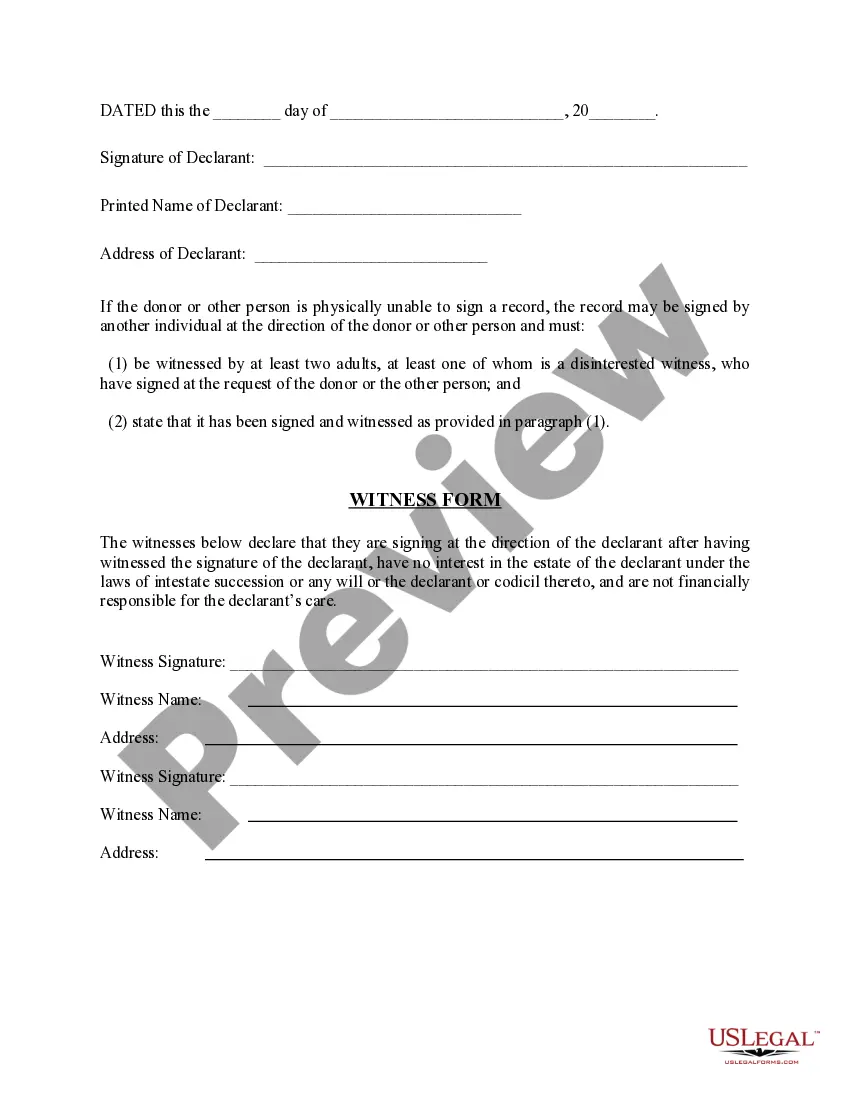
- Witness requirements: Procedures for signing and witnessing the document, ensuring legal compliance.
- Signature fields: Areas for the Declarant and witnesses to sign, confirming the revocation.
When to use this document
This form should be used when an individual changes their mind about donating their organs or body parts after making a prior anatomical gift. Situations may arise due to changes in personal beliefs, medical conditions, or family circumstances. It is essential to complete and distribute this form to ensure that all parties are aware of the change in intent regarding organ donation.
Who should use this form
This form is intended for:
- Individuals who have previously made an anatomical gift and wish to revoke it.
- Authorized representatives acting on behalf of a donor who needs to revoke a gift.
- Any adult who plans to alter their previous decisions about organ or tissue donation.
How to prepare this document
- Enter your full name and contact information in the provided fields.
- Specify the date of the original anatomical gift document.
- Clearly state your intent to revoke the anatomical gift.
- Sign and date the form to formalize the revocation.
- Ensure that two witnesses also sign the document, confirming they are disinterested parties.
Does this form need to be notarized?
This form usually doesn’t need to be notarized. However, local laws or specific transactions may require it. Our online notarization service, powered by Notarize, lets you complete it remotely through a secure video session, available 24/7.
Get your form ready online
Our built-in tools help you complete, sign, share, and store your documents in one place.
Make edits, fill in missing information, and update formatting in US Legal Forms—just like you would in MS Word.
Download a copy, print it, send it by email, or mail it via USPS—whatever works best for your next step.
Sign and collect signatures with our SignNow integration. Send to multiple recipients, set reminders, and more. Go Premium to unlock E-Sign.
If this form requires notarization, complete it online through a secure video call—no need to meet a notary in person or wait for an appointment.
We protect your documents and personal data by following strict security and privacy standards.

Make edits, fill in missing information, and update formatting in US Legal Forms—just like you would in MS Word.

Download a copy, print it, send it by email, or mail it via USPS—whatever works best for your next step.

Sign and collect signatures with our SignNow integration. Send to multiple recipients, set reminders, and more. Go Premium to unlock E-Sign.

If this form requires notarization, complete it online through a secure video call—no need to meet a notary in person or wait for an appointment.

We protect your documents and personal data by following strict security and privacy standards.
Avoid these common issues
- Failing to sign and date the form properly.
- Not securing the required witnesses for the signature.
- Not referencing the original anatomical gift correctly.
- Failing to distribute copies of the revoked gift to relevant parties.
Advantages of online completion
- Accessibility: Easily download and complete the form from anywhere.
- Editability: Make adjustments as necessary before finalizing the document.
- Reliability: Use professionally drafted templates to ensure legal compliance and accuracy.
Looking for another form?


Form popularity
FAQ
A transplant surgical team replaces the medical team that treated the patient before death. (The medical team trying to save the patient's life and the transplant team are never the same team.) The surgical team removes the organs and tissues from the donor's body in an operating room.
If you have registered as an organ donor and have changed your mind, you can ask to be removed from the list. Our research shows that a phone call to your closest geographic location is the best option. Most states prefer phone contact.
Can I remove myself from the registered donors list? Yes, you can change your donor status at any time. Look for an option such as "updating your status" on your state's site. If you have a donor designation on your driver's license, removing yourself from the registry will not change that.
Select 'Organ donor details' from the left side navigation menu. Choose from the options 'Change or View my donation decision' or 'Remove me from the Donor Register'. Complete the online form to request the change or removal. Review your donation decision and, if correct, select 'Submit' to finalise the request.
Medical aspects From a medical perspective, the act of returning an organ that has once been donated (hereafter, organ restitution) is not permissible if serious safety issues arise due to returning the organ. Accumulating cases have reported on the reuse of transplanted kidneys.
You can remove your registration online at any time by visiting www.donateLIFEcalifornia.org. Additionally, you can contact us by calling us at 866-797-2366, emailing us at info@donatelifecalifornia.org, or sending us a letter at. Donate Life California. 3940 Industrial Blvd.
Over 700,000 transplants have occurred in the U.S. since 1988. Organs that can be donated after death are the heart, liver, kidneys, lungs, pancreas and small intestines. Tissues include corneas, skin, veins, heart valves, tendons, ligaments and bones.
If you have registered that you don't want to donate any of your organs or tissue, this may not be overruled by anyone. If you have registered that you want to be a donor, your relatives may overrule this only if they have compelling reasons to do so.
A: You do not have to wait until your license expires to update your organ and tissue donor status. Simply visit www.DMV.ca.gov and click the Donate Life California link. From there you can become a registered donor and read answers to frequently asked questions and real-life organ donor and recipient stories.