Delaware Foreign Judgment Enrollment
Overview of this form
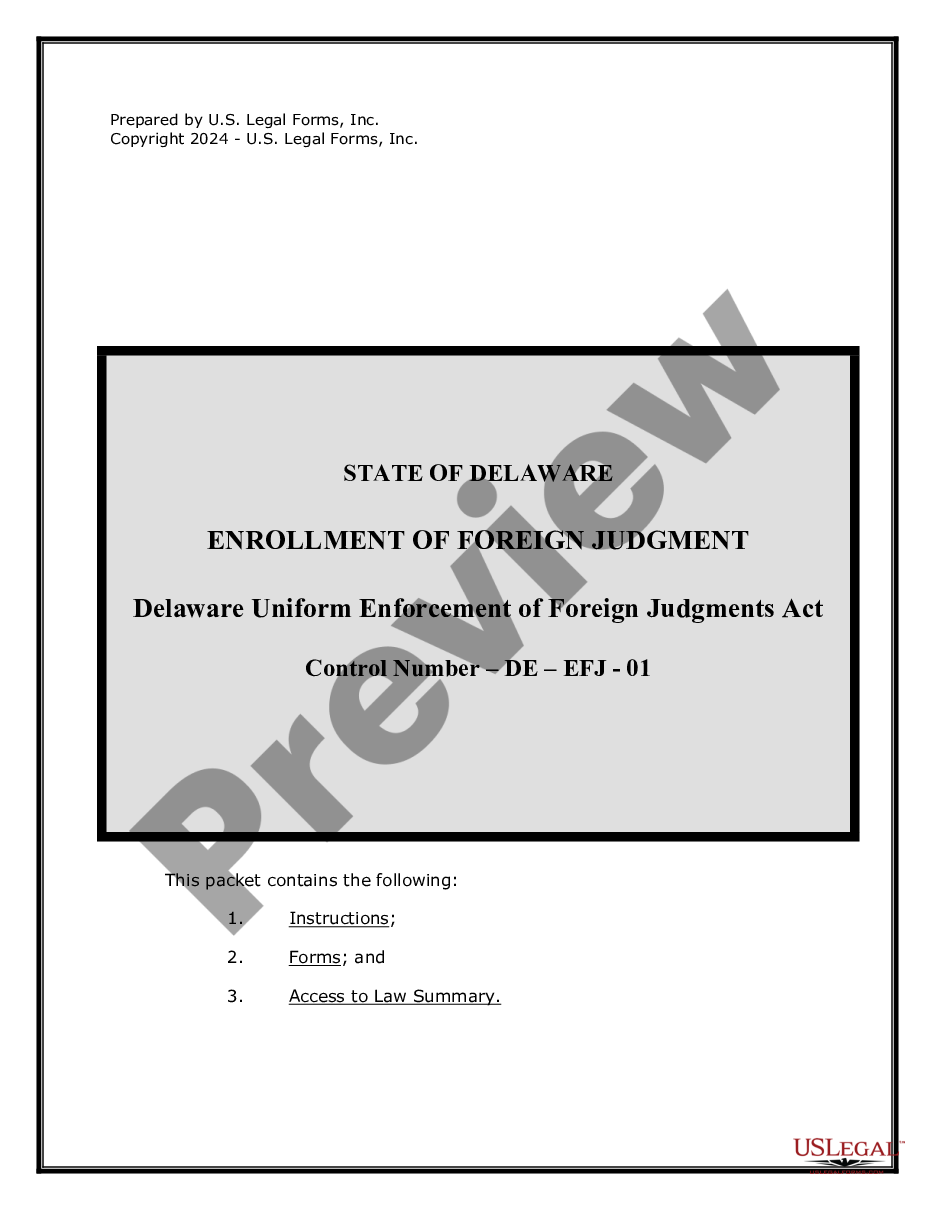
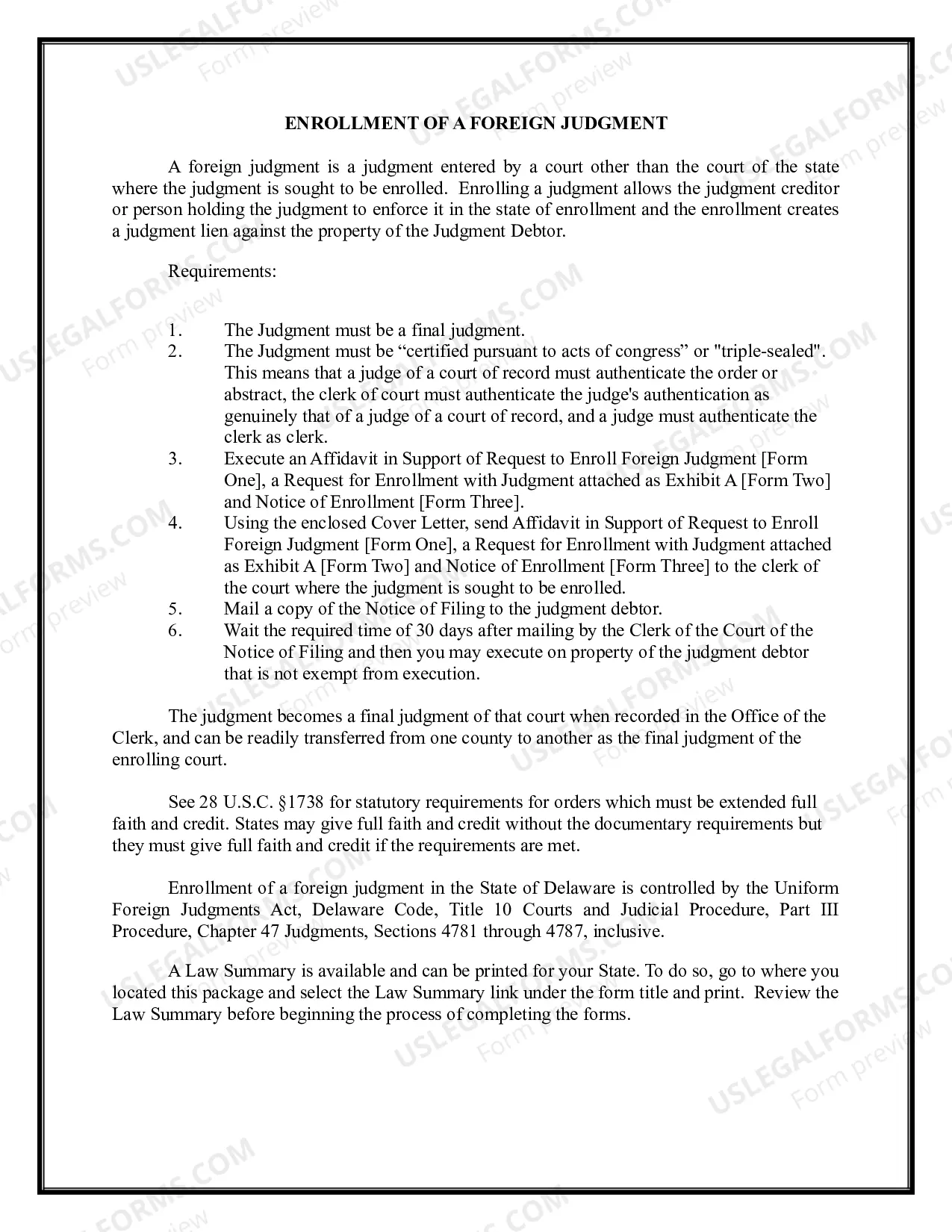
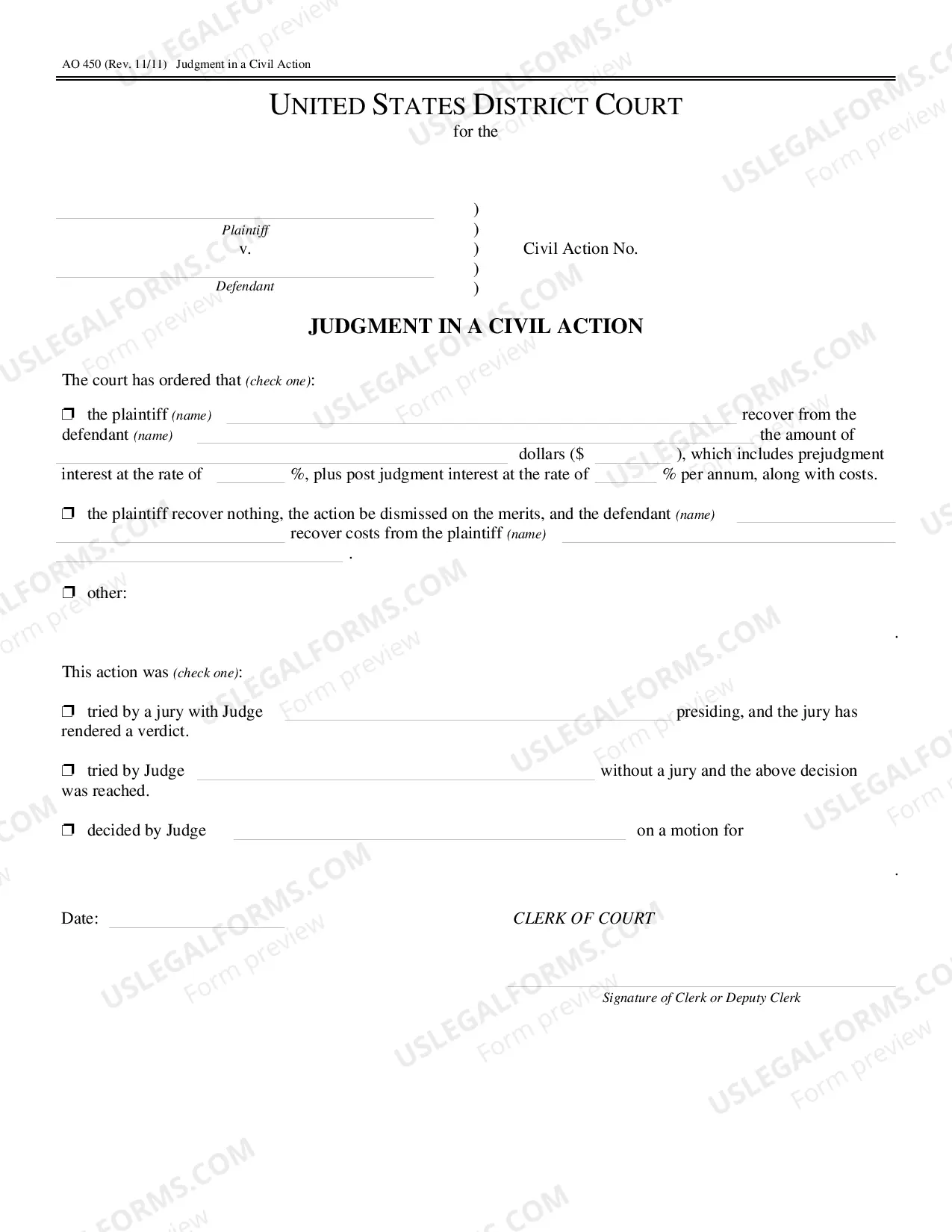
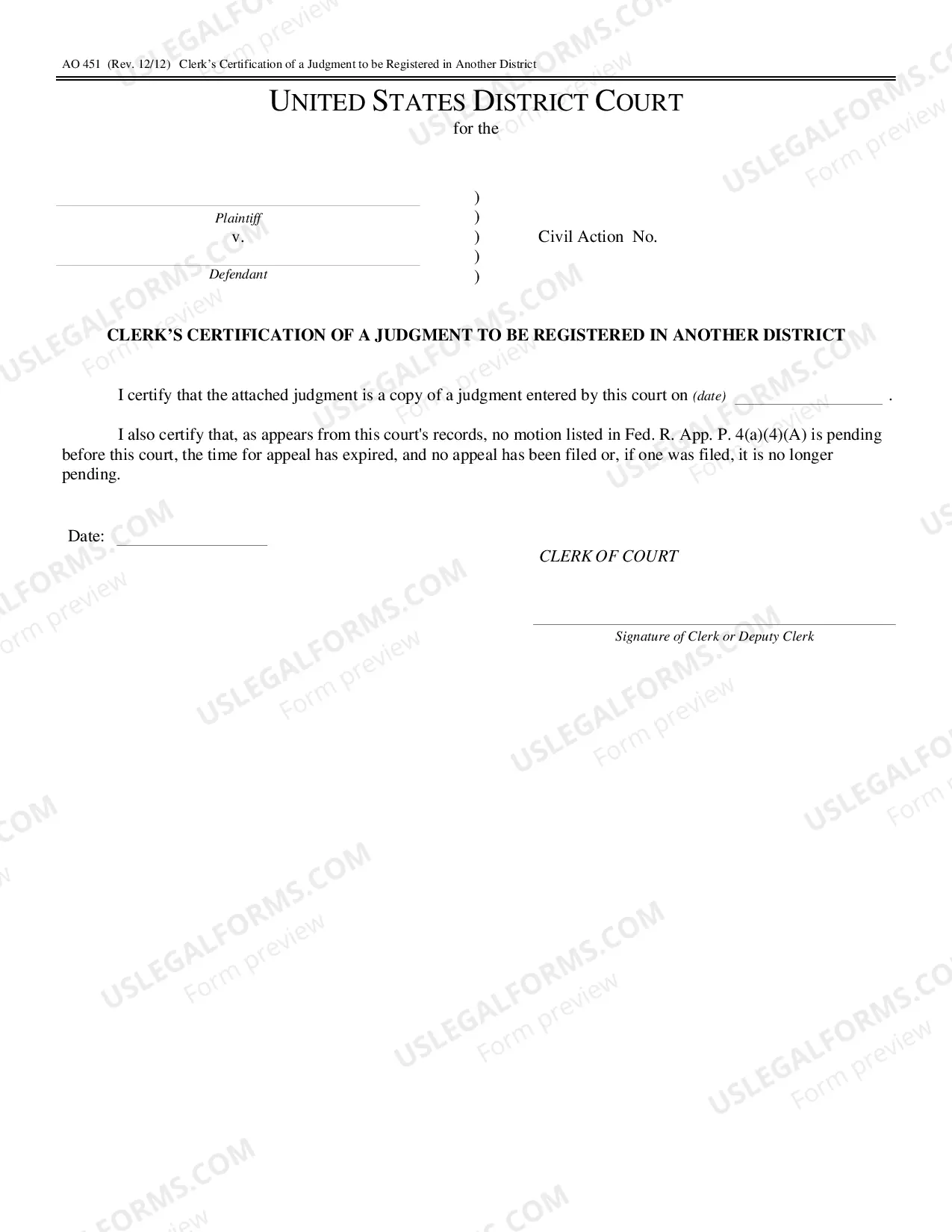
The Delaware Foreign Judgment Enrollment form is a legal document used to enroll a judgment from another state in Delaware. This process allows the judgment creditor to enforce the foreign judgment in Delaware, creating a judgment lien against the debtor's property. This form is distinct from other judgment forms as it specifically addresses judgments issued by courts outside of Delaware, facilitating their recognition and enforcement within the state.
Key parts of this document
- Instructions for enrollment of a foreign judgment
- Request for Enrollment Form
- Notice of Enrollment Form
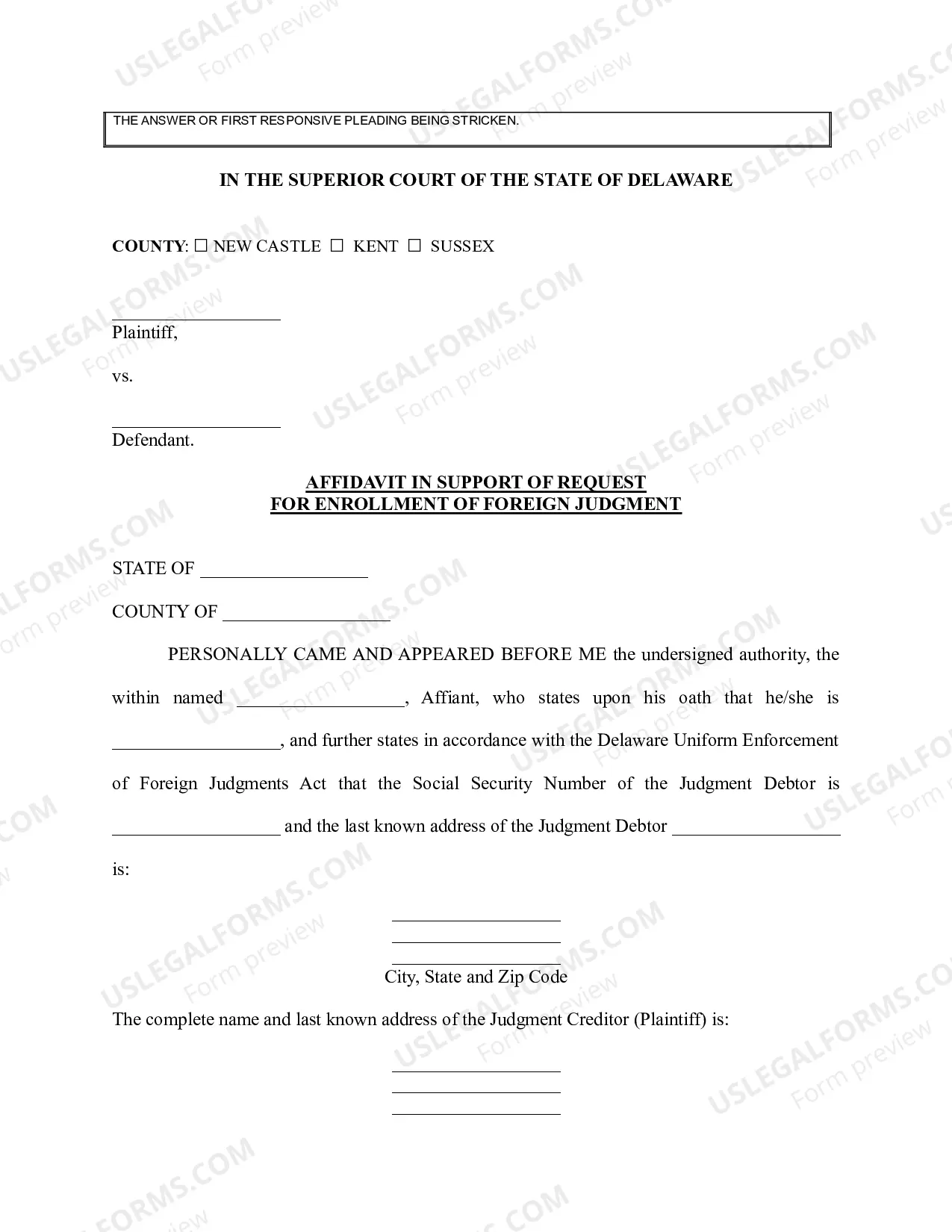
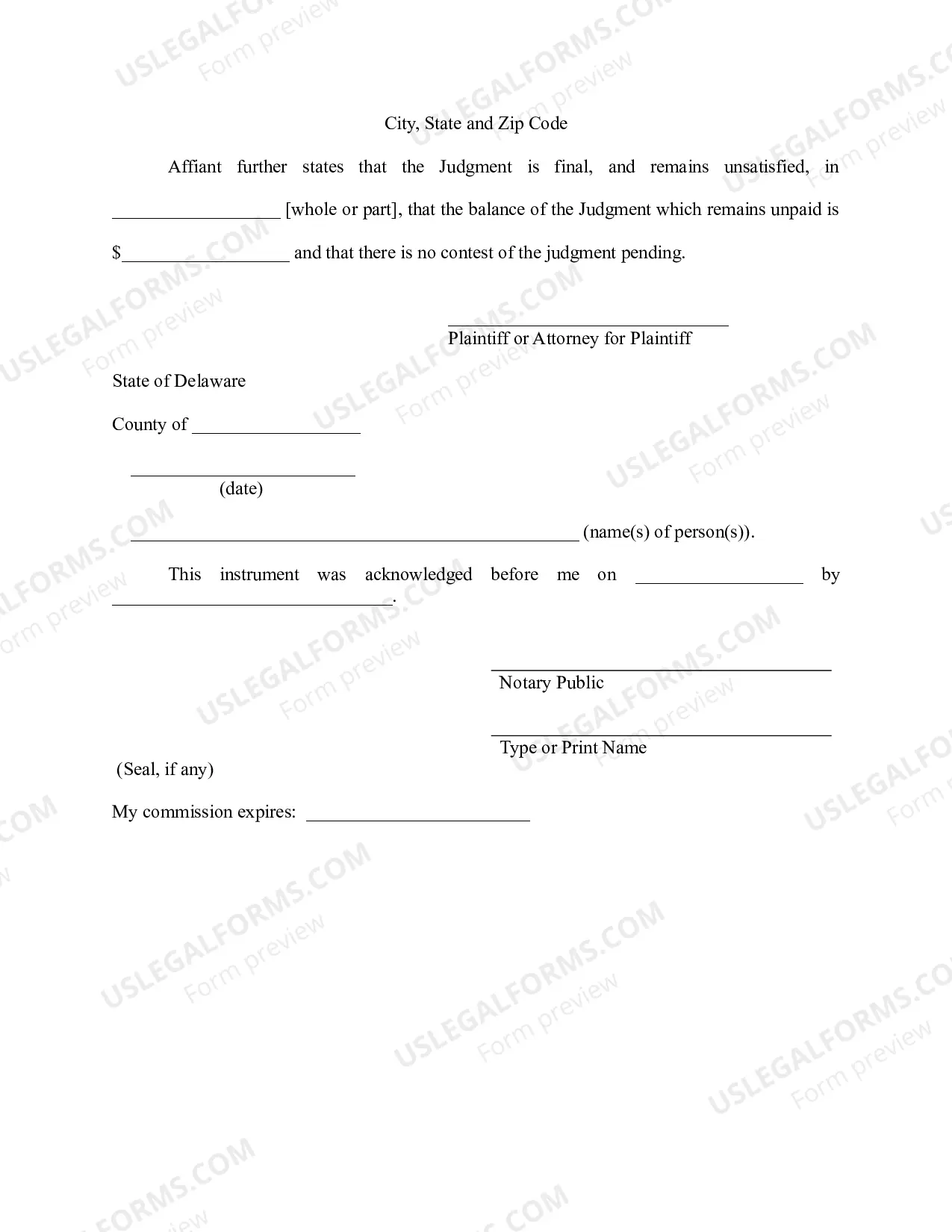
- Affidavit in Support of Request to Enroll Foreign Judgment
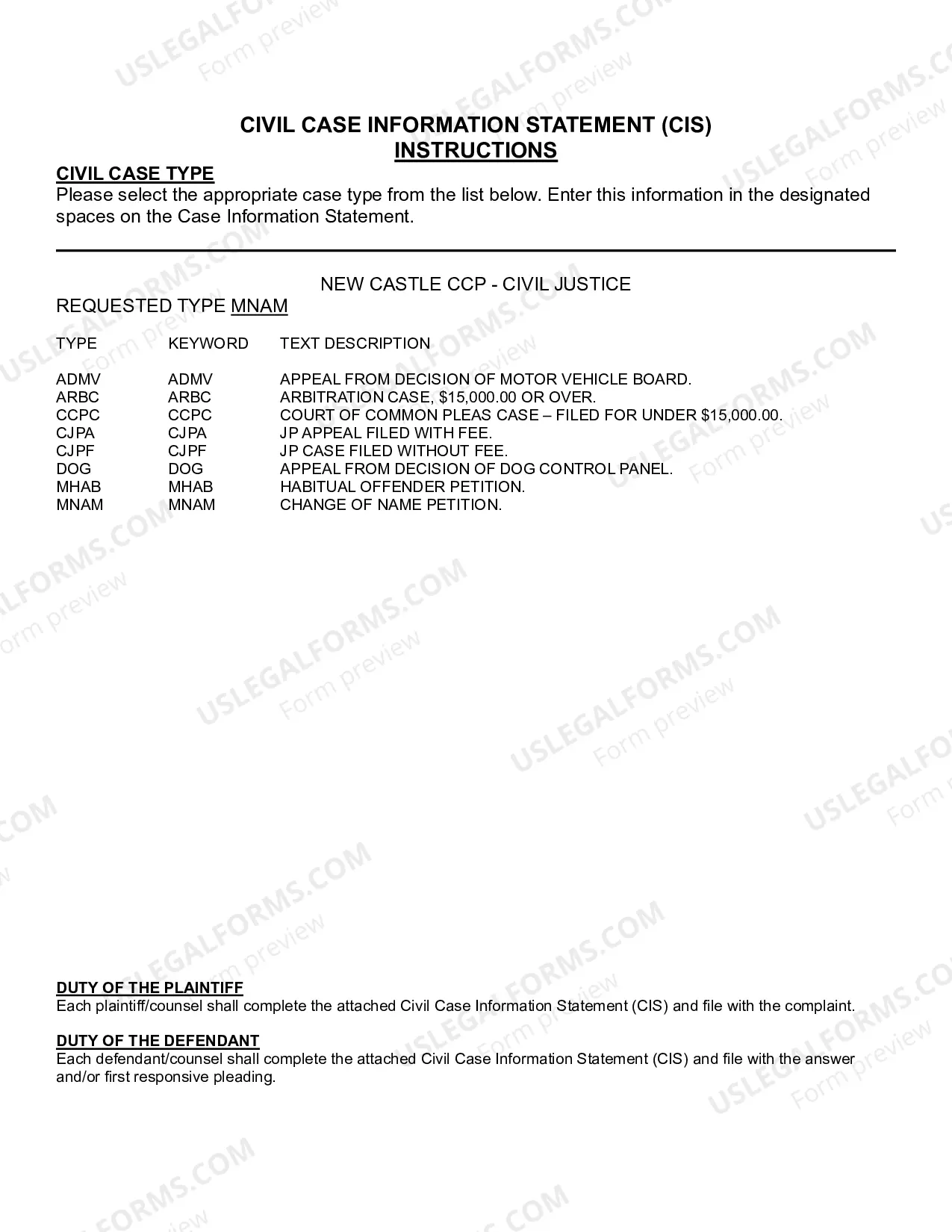
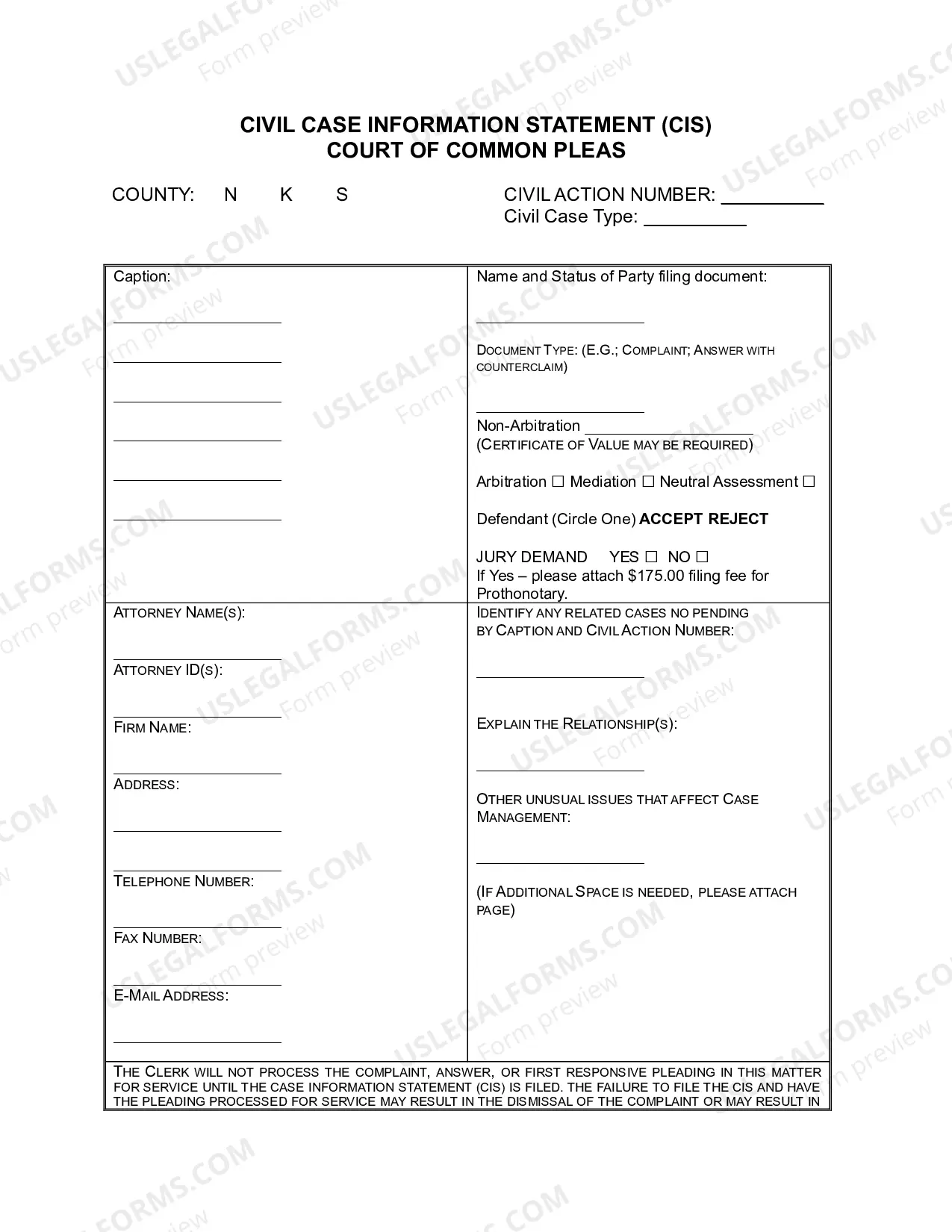
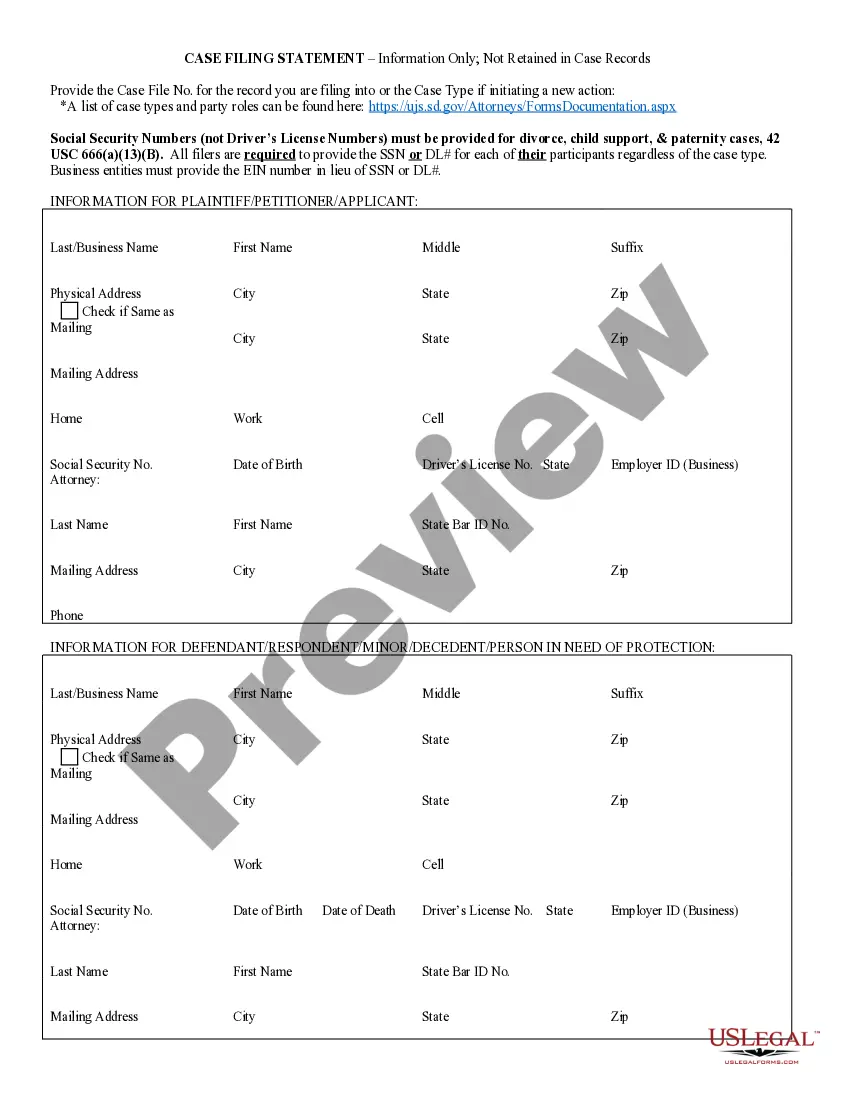
- Civil Case Information Statement


When this form is needed
This form should be used when you have a final judgment from a court in another state that you need to enforce in Delaware. It is particularly relevant if the debtor lives or has property in Delaware and you wish to ensure that the judgment can be recognized and executed in the state. Typical scenarios include collecting debts from individuals or businesses that have moved to Delaware or have assets in the state.
Who this form is for
- Individuals who are judgment creditors seeking to enforce a foreign judgment
- Business owners with judgments against clients or partners from other states
- Attorneys representing clients in collection actions involving out-of-state judgments
Completing this form step by step
- Obtain the necessary forms from the Foreign Judgment Enrollment Package.
- Fill out the Affidavit in Support of Request to Enroll Foreign Judgment with relevant details.
- Complete the Request for Enrollment Form, attaching a certified copy of the foreign judgment.
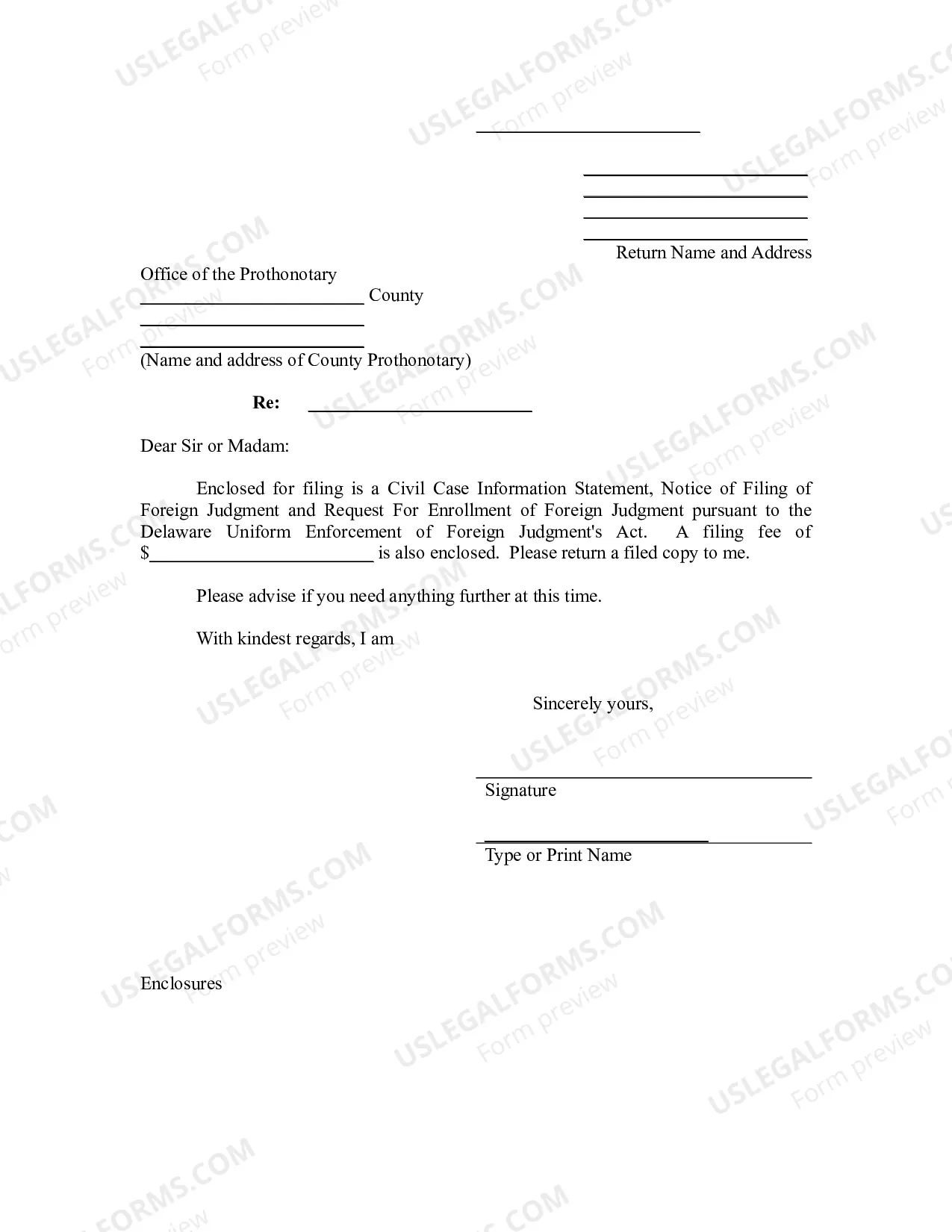
- Provide a Notice of Enrollment Form and send it to the clerk of the court.
- Mail a copy of the Notice of Filing to the judgment debtor.
- Wait for the required 30 days before executing any lien on the judgment debtor's non-exempt property.
Is notarization required?
To make this form legally binding, it must be notarized. Our online notarization service, powered by Notarize, lets you verify and sign documents remotely through an encrypted video session.
Get your form ready online
Our built-in tools help you complete, sign, share, and store your documents in one place.
Make edits, fill in missing information, and update formatting in US Legal Forms—just like you would in MS Word.
Download a copy, print it, send it by email, or mail it via USPS—whatever works best for your next step.
Sign and collect signatures with our SignNow integration. Send to multiple recipients, set reminders, and more. Go Premium to unlock E-Sign.
If this form requires notarization, complete it online through a secure video call—no need to meet a notary in person or wait for an appointment.
We protect your documents and personal data by following strict security and privacy standards.

Make edits, fill in missing information, and update formatting in US Legal Forms—just like you would in MS Word.

Download a copy, print it, send it by email, or mail it via USPS—whatever works best for your next step.

Sign and collect signatures with our SignNow integration. Send to multiple recipients, set reminders, and more. Go Premium to unlock E-Sign.

If this form requires notarization, complete it online through a secure video call—no need to meet a notary in person or wait for an appointment.

We protect your documents and personal data by following strict security and privacy standards.
Avoid these common issues
- Failing to provide a certified copy of the judgment.
- Not completing all sections of the required forms.
- Neglecting to mail the Notice of Filing to the judgment debtor.
- Missing the 30-day waiting period before enforcing the judgment.
Benefits of completing this form online
- Convenient and quick access to necessary legal forms.
- Ability to complete forms electronically, reducing the chance of errors.
- Instant downloads of officially drafted legal documents.
Main things to remember
- The Delaware Foreign Judgment Enrollment form is essential for enforcing out-of-state judgments in Delaware.
- Proper completion and adherence to state requirements are crucial for successful enrollment.
- Understanding the forms and steps involved can simplify the process for judgment creditors.
Looking for another form?

Form popularity
FAQ
To enforce a foreign judgment in the United States, you typically begin by registering the judgment in a state court where enforcement is sought. This process often involves submitting the foreign judgment along with an affidavit confirming its validity. States have specific procedural requirements, and understanding these can be crucial for success. To streamline the Delaware Foreign Judgment Enrollment, consider using tools provided by US Legal Forms, which can offer essential templates and guidance.
Recognition of foreign court decisions refers to the process of validating and enforcing judgments made by courts outside the United States. In the case of Delaware Foreign Judgment Enrollment, this allows you to seek enforcement of a judgment obtained in another country, ensuring that it holds legal weight in Delaware. This process can prevent lengthy and costly legal disputes by enabling swift enforcement actions. Familiarize yourself with the relevant procedures, possibly leveraging US Legal Forms for assistance.
To collect a judgment in Delaware, you can start by filing a writ of execution with the court that issued the judgment. This legal document allows you to seize the debtor's property or garnishee their wages, effectively facilitating collection. Additionally, consider reaching out to professionals who specialize in judgment enforcement. Using US Legal Forms can guide you through the process of Delaware Foreign Judgment Enrollment and improve your chances of recovery.
To file recognition of a foreign judgment in Delaware, you must submit your documents to the appropriate court based on where you seek enforcement. Typically, this process occurs in the Superior Court of the state. Be sure to include all required forms and evidence of the original judgment. For a smooth experience, you can use US Legal Forms to access the necessary paperwork for Delaware Foreign Judgment Enrollment.
To authenticate a foreign judgment, you need to obtain an apostille or a similar certification, depending on whether the originating country is part of the Hague Convention. This step confirms the legitimacy of the judgment and assists with Delaware Foreign Judgment Enrollment. Using platforms like uslegalforms can simplify this process, providing you with the necessary templates and guidance for successful authentication.
The Hague Convention on Recognition and Enforcement of Foreign Judgments includes signatories from several countries, promoting streamlined international legal collaborations. This treaty facilitates the enforcement of foreign judgments, which is essential for Delaware Foreign Judgment Enrollment. For individuals or businesses dealing with cross-border judgments, knowing the signatories can significantly impact your legal strategy.
To domesticate a foreign judgment in New York, you must file a motion to recognize the judgment in a New York court. This process typically involves submitting the original judgment along with a supporting affidavit. Understanding the nuances of Delaware Foreign Judgment Enrollment can help ensure that the process unfolds smoothly and successfully, confirming the judgment's validity across state lines.
Rule 56 in Delaware pertains to summary judgment, allowing a party to obtain a judgment without a trial when there are no genuine disputes over material facts. This rule enables efficient resolution of cases, particularly in the context of Delaware Foreign Judgment Enrollment. It accelerates legal processes, saving time and resources for all parties involved.
A petition for recognition of foreign judgment is a legal request to have a judgment from another jurisdiction acknowledged and enforced in Delaware. This process is critical for individuals and businesses seeking Delaware Foreign Judgment Enrollment, as it establishes the validity of the foreign judgment in the eyes of the court. By filing this petition, you can protect your interests and ensure that the judgment carries weight in Delaware. Platforms like USLegalForms offer valuable guidance and templates for this essential legal step.
Rule 29 in Delaware Superior Court pertains to the enforcement of foreign judgments. This rule assists in the process of Delaware Foreign Judgment Enrollment by outlining specific procedures for recognizing and executing judgments from other jurisdictions. Understanding this rule can streamline your legal actions and ensure compliance with Delaware laws. To gain insights and templates, consider turning to resources like USLegalForms.