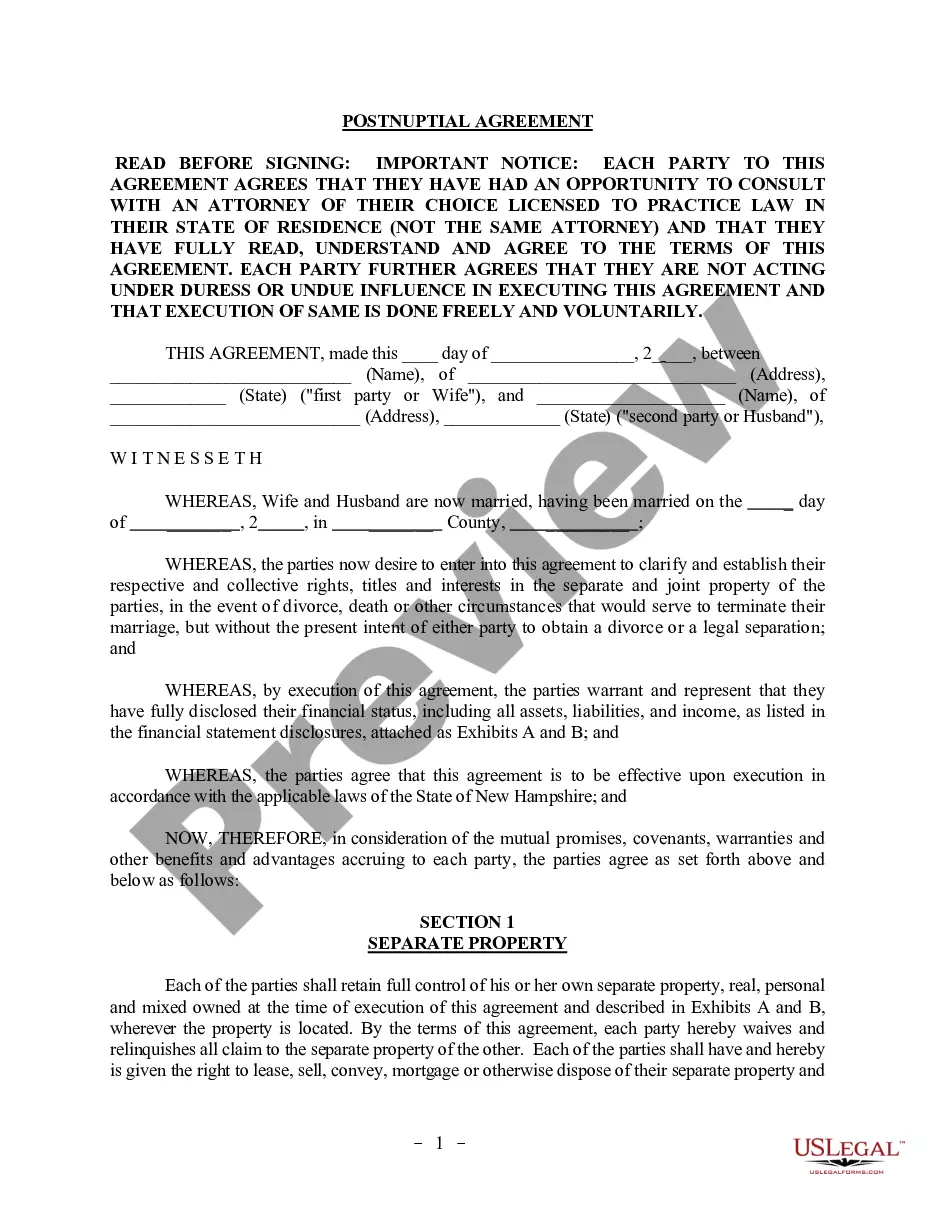
South Carolina Office Lease Agreement
What this document covers
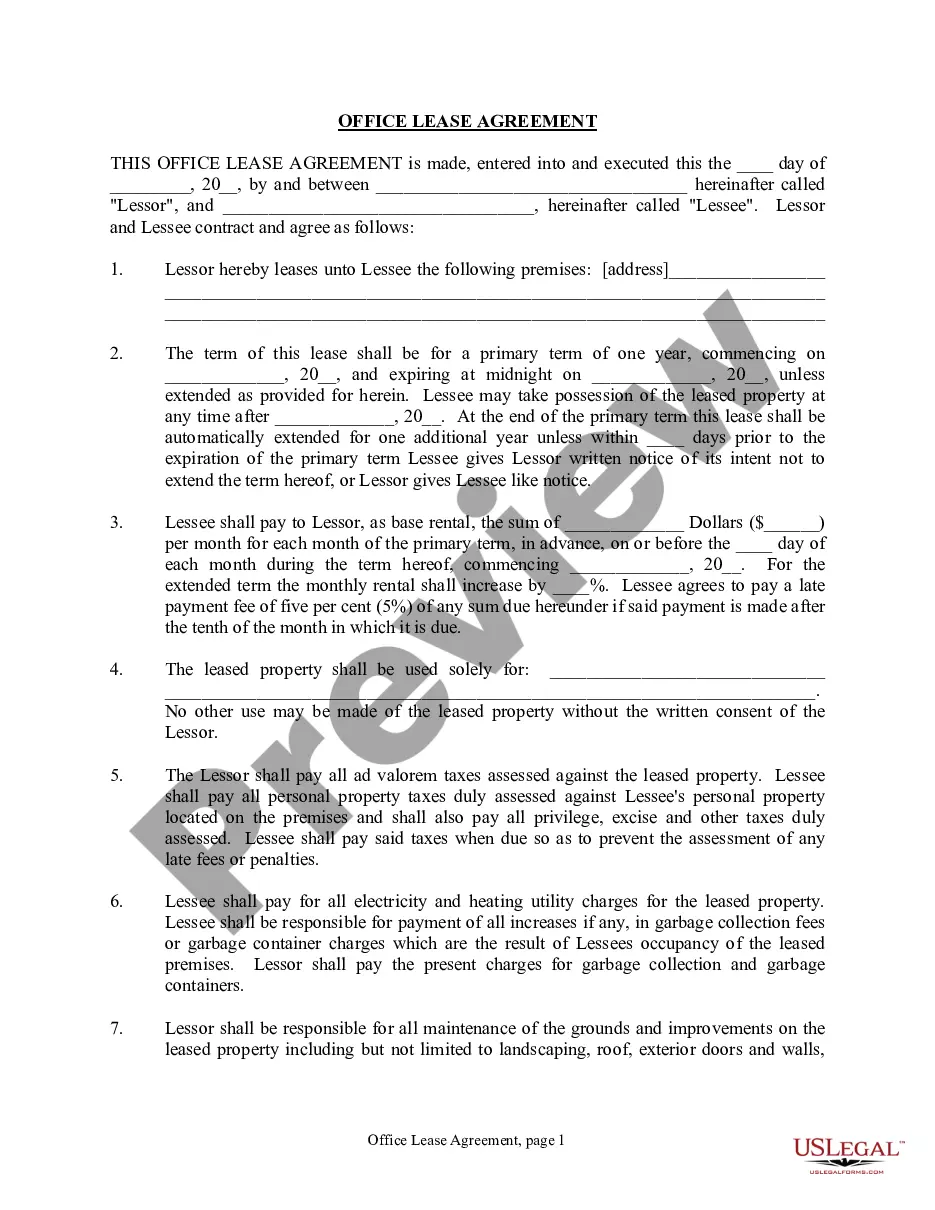
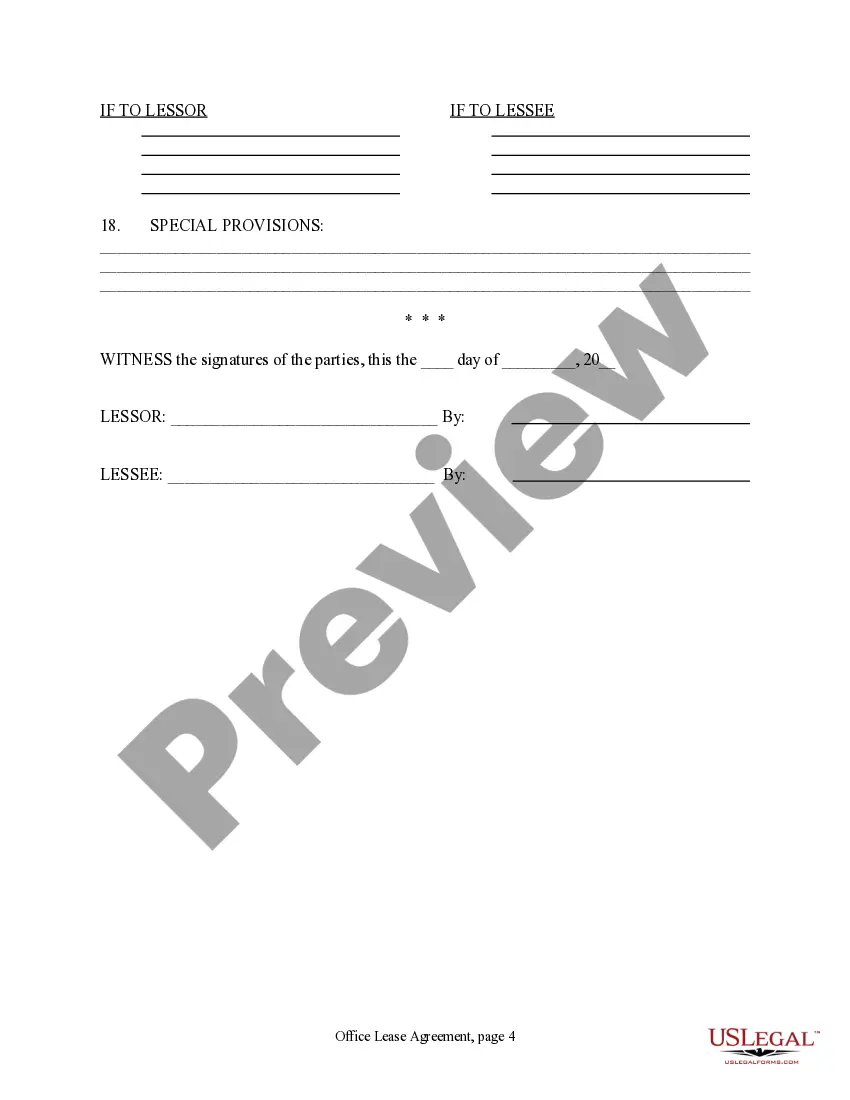
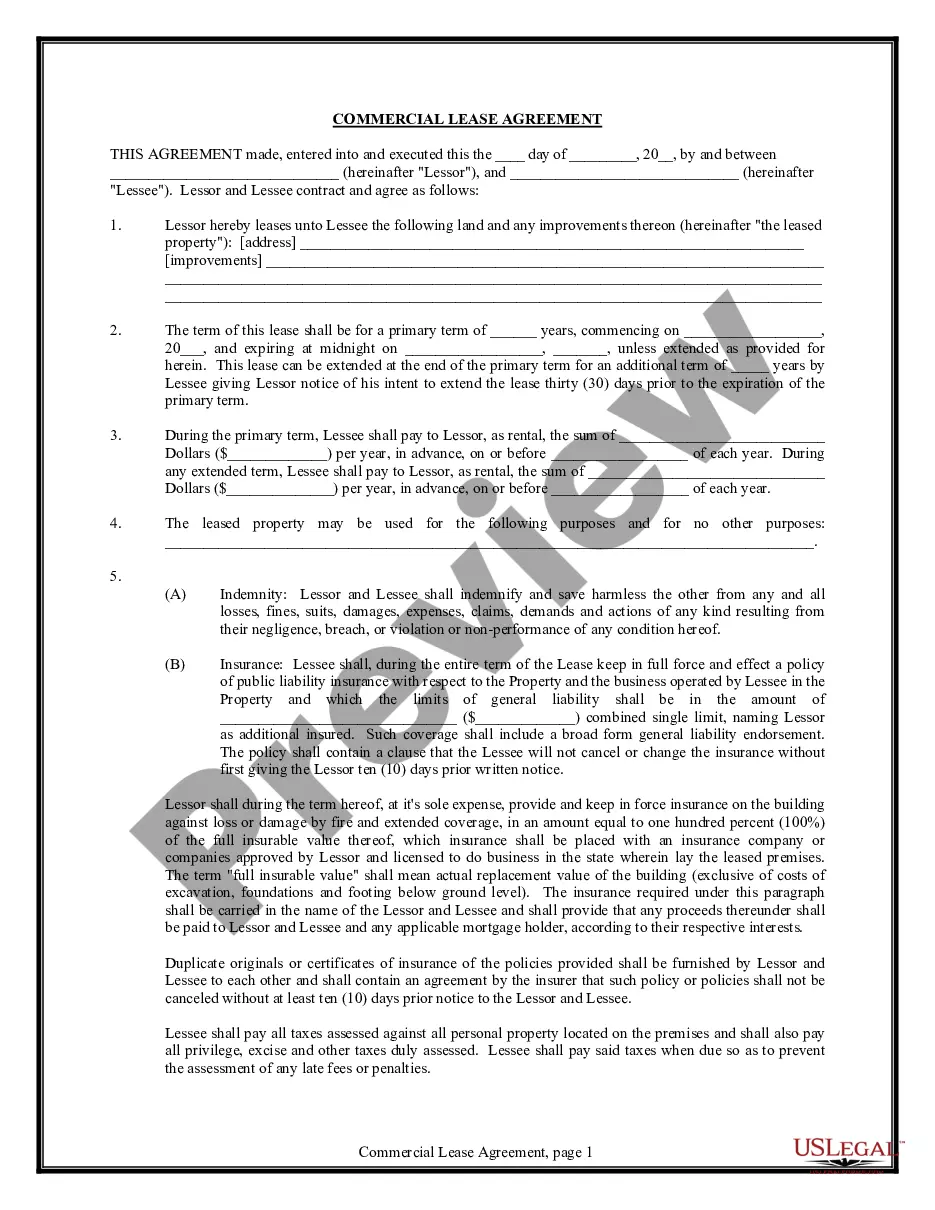
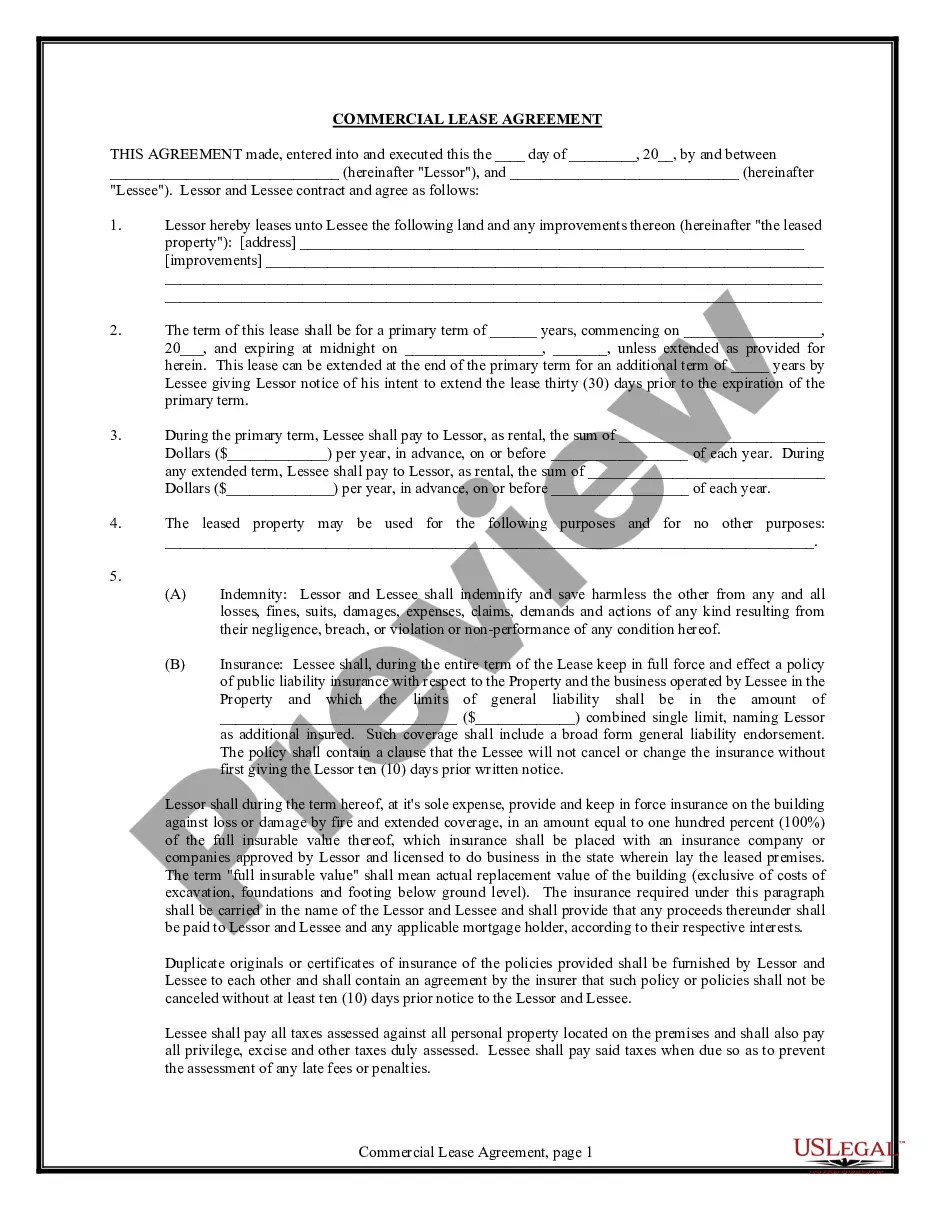
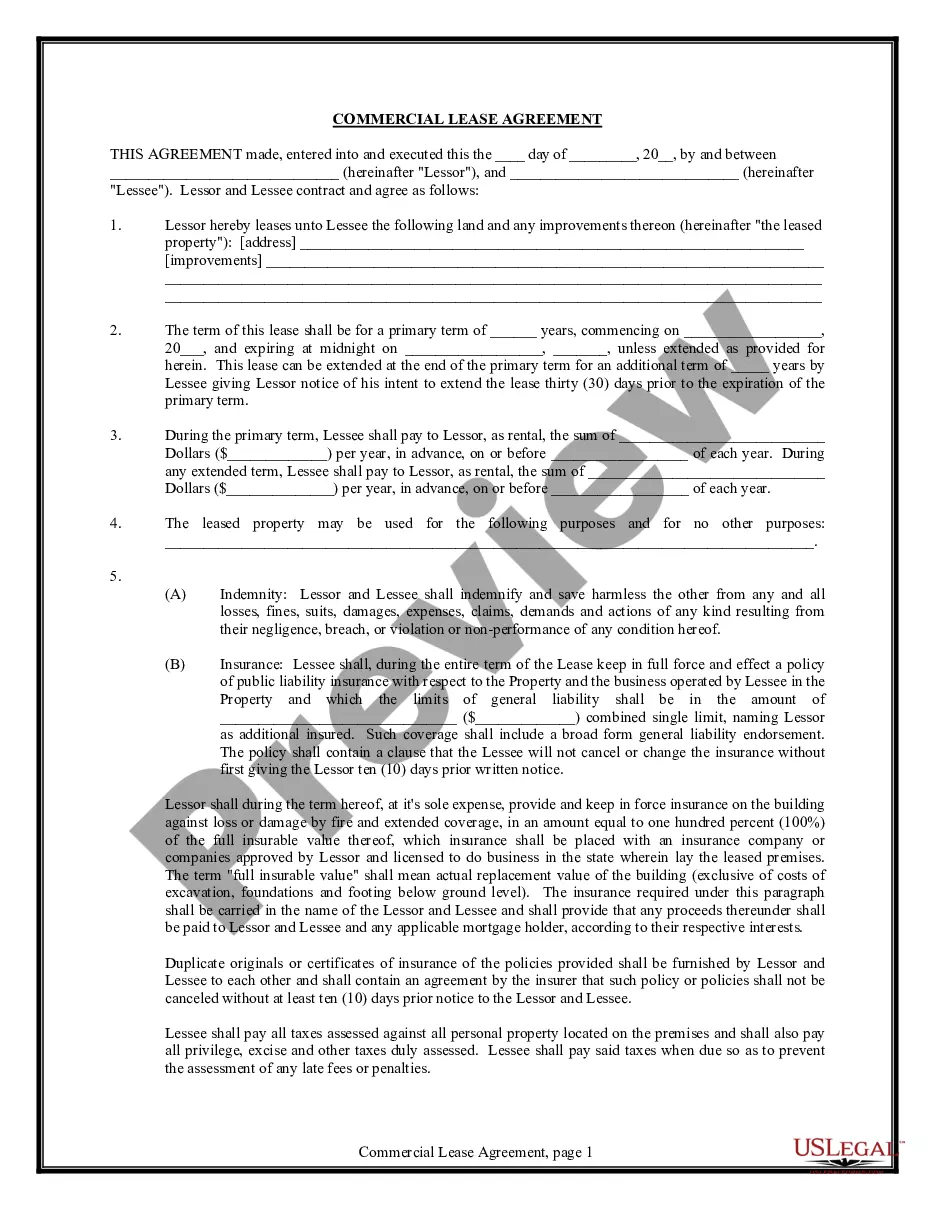
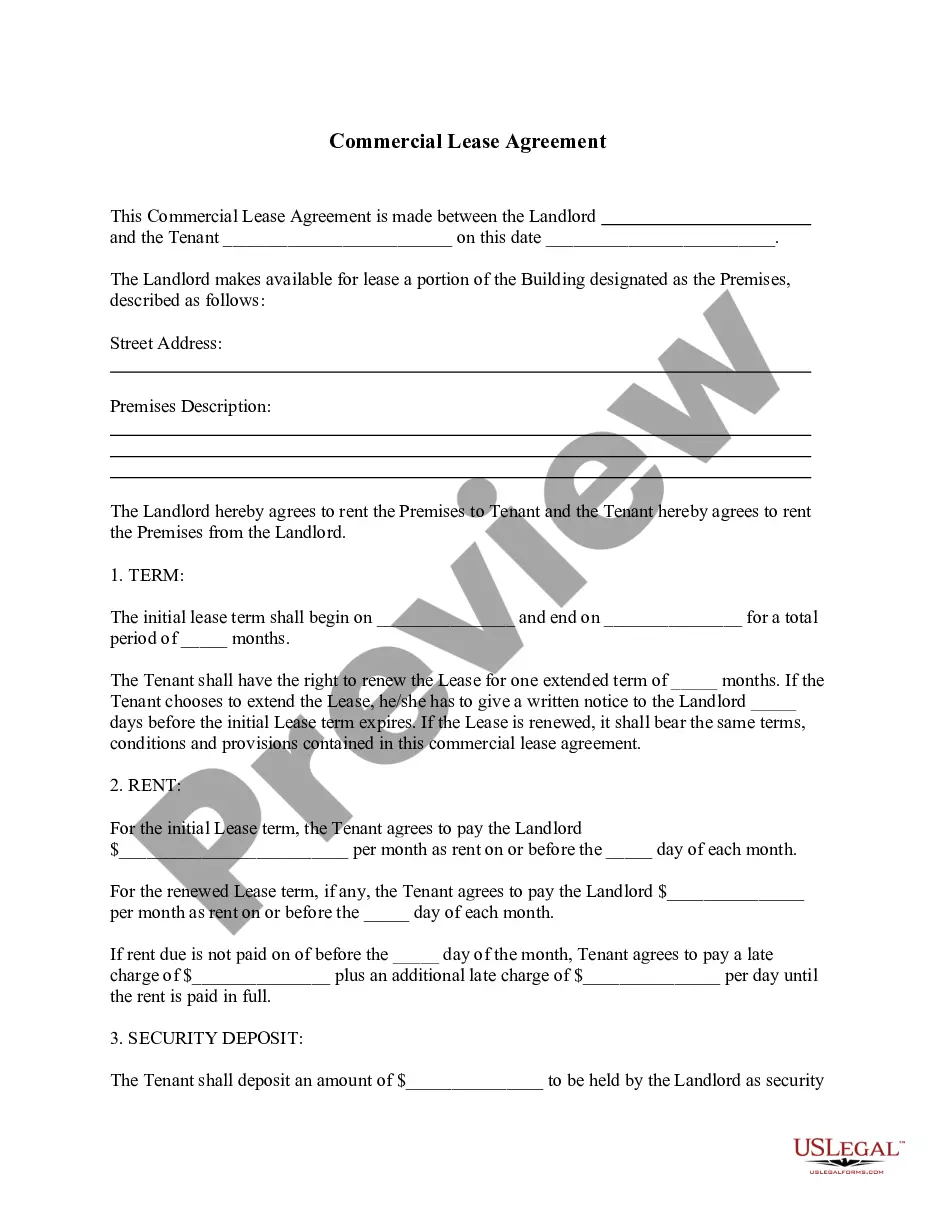
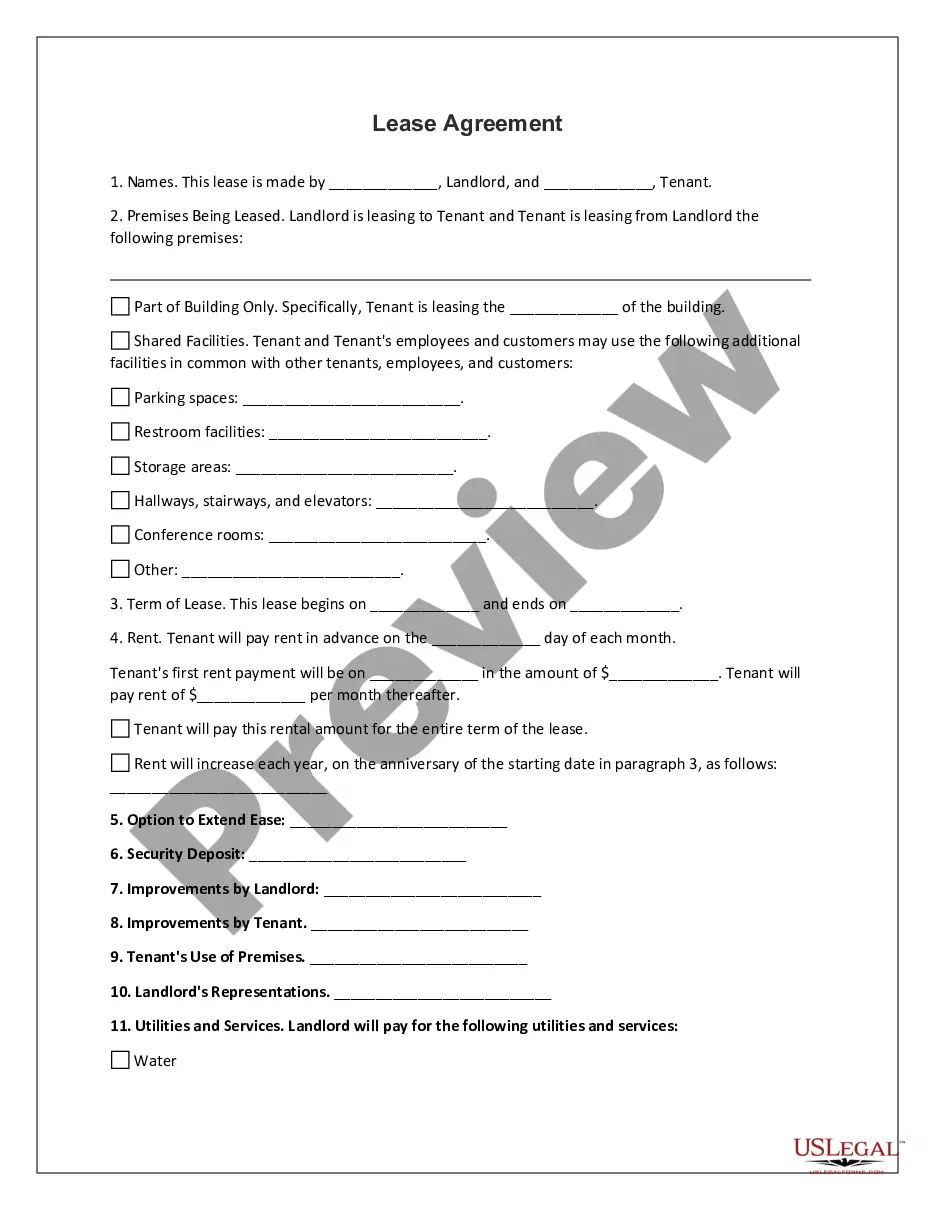
The Office Lease Agreement is a legally binding contract between a property owner (Lessor) and a tenant (Lessee) to lease office space. This form outlines the lease terms, including the duration, rent, responsibilities, and other conditions that must be followed. It is essential for both parties to understand their obligations and rights, making it distinct from residential lease agreements or other types of rental contracts. Using this form ensures compliance with state laws governing commercial leases.
Main sections of this form
- The identification of the Lessor and Lessee, including their contact information.
- A description of the leased premises, including the address and specific details.
- Lease term details, including the start date, expiration, and conditions for renewal.
- Base rental amount along with payment due dates and late fees.
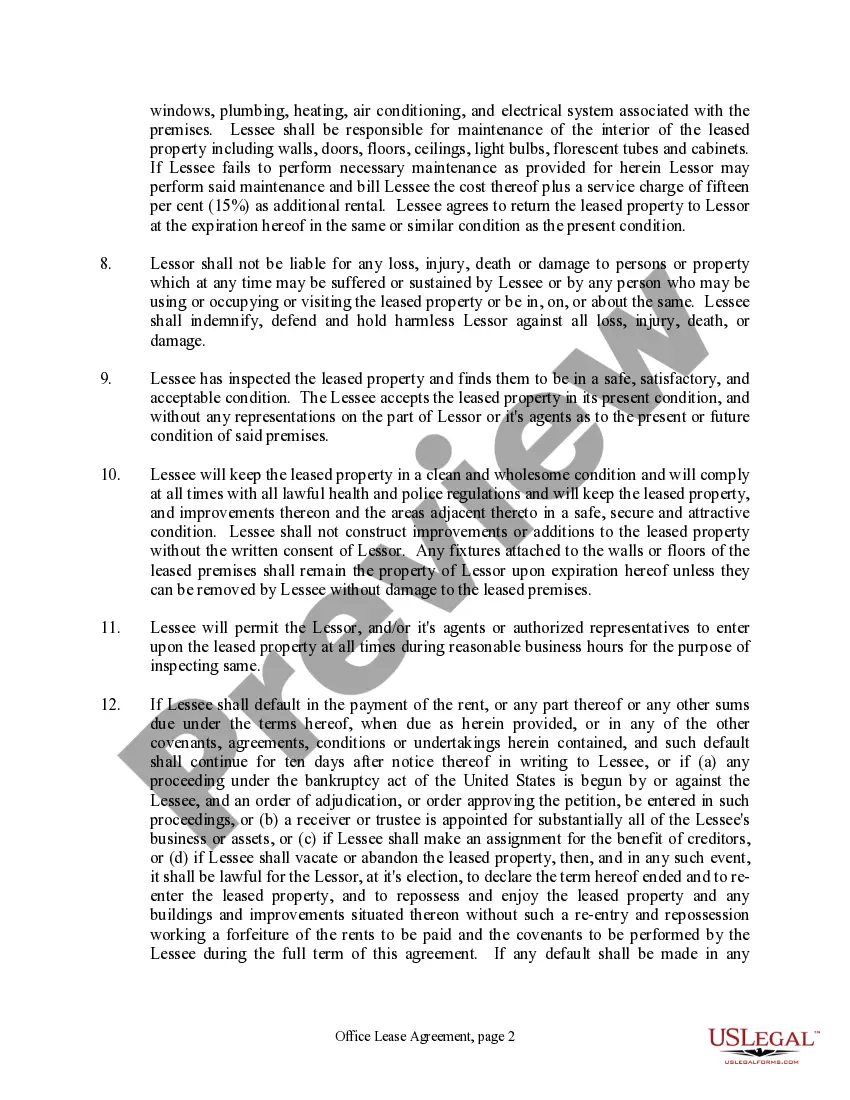
- Responsibilities regarding taxes, utilities, and maintenance of the premises.
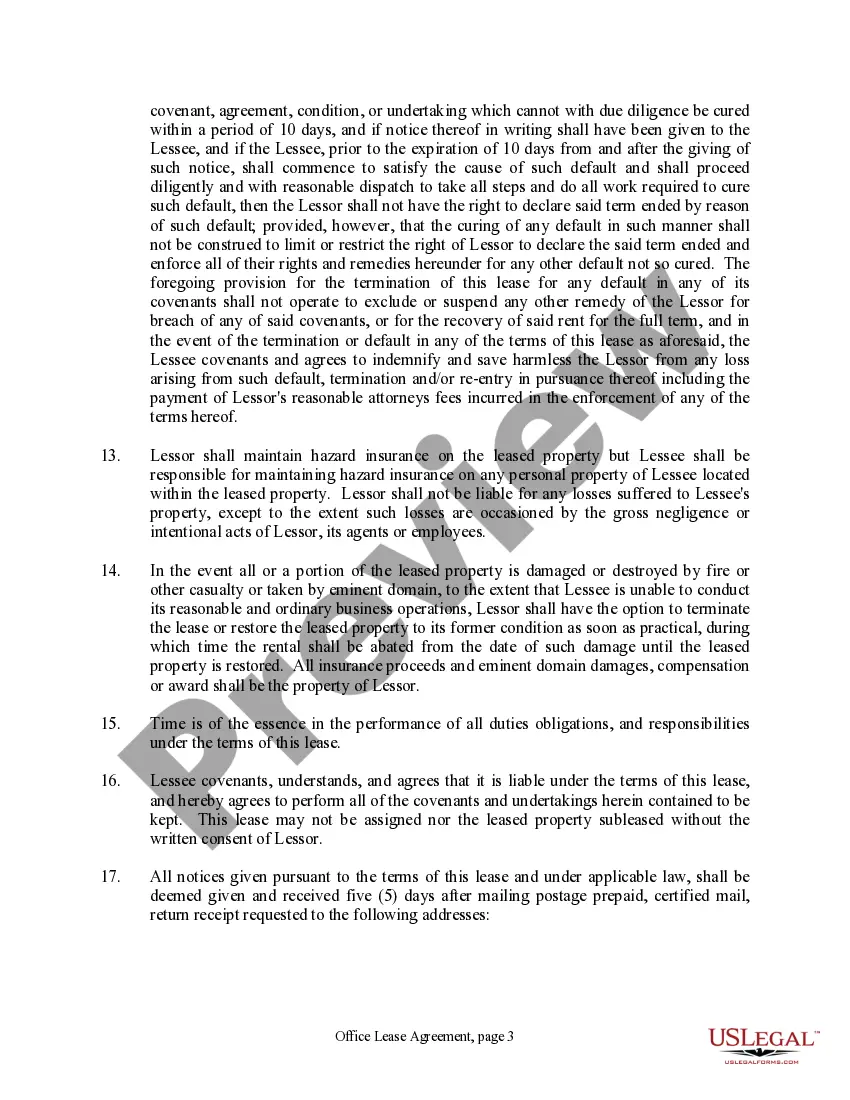
- Liabilities and indemnification clauses concerning property damage or personal injury.
Situations where this form applies
This Office Lease Agreement should be used when a business intends to rent office space for a defined period. It is suitable for startups, established businesses looking to downsize or expand, or any entity requiring commercial office space. It protects both the landlord's and the tenant's interests by clearly defining expectations and legal responsibilities.
Who can use this document
- Business owners seeking to rent office space.
- Property owners wanting to lease out office properties.
- Real estate agents or brokers facilitating office leases.
- Legal professionals advising clients on commercial leasing agreements.
Completing this form step by step
- Identify the parties involved: Fill out the names and contact details of the Lessor and Lessee.
- Specify the leased property: Clearly describe the office space being rented, including the address.
- Enter the lease term: Provide the start and end dates, including any conditions for extension.
- Outline the rent details: State the monthly rent amount, payment due date, and any applicable late fees.
- Define maintenance and liability responsibilities: Indicate which party is responsible for various aspects of property upkeep.
Does this form need to be notarized?
This form usually doesn’t need to be notarized. However, local laws or specific transactions may require it. Our online notarization service, powered by Notarize, lets you complete it remotely through a secure video session, available 24/7.
Get your form ready online
Our built-in tools help you complete, sign, share, and store your documents in one place.
Make edits, fill in missing information, and update formatting in US Legal Forms—just like you would in MS Word.
Download a copy, print it, send it by email, or mail it via USPS—whatever works best for your next step.
Sign and collect signatures with our SignNow integration. Send to multiple recipients, set reminders, and more. Go Premium to unlock E-Sign.
If this form requires notarization, complete it online through a secure video call—no need to meet a notary in person or wait for an appointment.
We protect your documents and personal data by following strict security and privacy standards.

Make edits, fill in missing information, and update formatting in US Legal Forms—just like you would in MS Word.

Download a copy, print it, send it by email, or mail it via USPS—whatever works best for your next step.

Sign and collect signatures with our SignNow integration. Send to multiple recipients, set reminders, and more. Go Premium to unlock E-Sign.

If this form requires notarization, complete it online through a secure video call—no need to meet a notary in person or wait for an appointment.

We protect your documents and personal data by following strict security and privacy standards.
Avoid these common issues
- Failing to accurately describe the leased premises, which may lead to disputes.
- Not specifying renewal terms or conditions, resulting in confusion at the lease's end.
- Overlooking utility responsibilities, leading to unexpected costs for the Lessee.
- Neglecting legal requirements specific to the state, which could invalidate the agreement.
Why complete this form online
- Convenience: Download and complete the form at your own pace.
- Easy customization: Edit the form to meet your specific needs and requirements.
- Reliability: Forms created and reviewed by licensed attorneys help ensure legal compliance.
Legal use & context
- This agreement is legally binding as long as both parties agree to the terms and conditions.
- Both the Lessor and Lessee should retain copies for their records to ensure clear understanding and enforcement.
- The agreement may be enforceable in court if either party fails to comply with the terms.
Quick recap
- Understand the responsibilities and rights outlined in the Office Lease Agreement.
- Ensure all terms are thoroughly reviewed and agreed upon by both parties.
- Keep records of payments and communications regarding the lease.
Looking for another form?
Form popularity
FAQ
You and your landlord agree to terminate early. Enter into a deed of surrender to explicitly release you from all lease obligations. You have an early termination clause or break clause in the lease. You may be able to transfer or assign the lease with your landlord's agreement.
Look for a clause: Re-read your lease and look for either a bailout clause or a co-tenancy clause. Ask: If you are in a good space in a popular area, your landlord will be more inclined to an early termination of the lease than if you are in a bad space in a hard-to-rent location.
The Lease Must be in Writing It does not matter if the lease is handwritten or typed.
A written agreement can act as a roadmap for the landlord-tenant relationship, especially if a dispute arises. Also, real estate (land) leases for more than one year must be in writing. If a lease for over one year is not in writing, it will generally not be enforceable in court.
The lease becomes legally binding when all parties have signed: the landlord and all tenants living in the unit who are 18 and older. If you're worried about situations where a lease needs to end early, learn about breaking a lease and grounds for eviction.
The difference between lease and rent is that a lease generally lasts for 12 months while a rental agreement generally lasts for 30 days.That means the landlord can't raise the rent without your written consent or evict you without cause, and you can't stop paying rent or break the lease without consequence.
The Lease Must be in Writing It does not matter if the lease is handwritten or typed. If the lease is for more than one year, it must be in written form and contain the following terms.
Collect each party's information. Include specifics about your property. Consider all of the property's utilities and services. Know the terms of your lease. Set the monthly rent amount and due date. Calculate any additional fees. Determine a payment method. Consider your rights and obligations.
In a full-service lease, or gross lease, the tenant pays the base rent, and the landlord pays for the utilities, insurance, taxes and other costs of operating the building.In a net lease, by contrast, the tenants pay a portion of the operating costs of the building.