Trafficking in Counterfeit Goods or Services
About this form
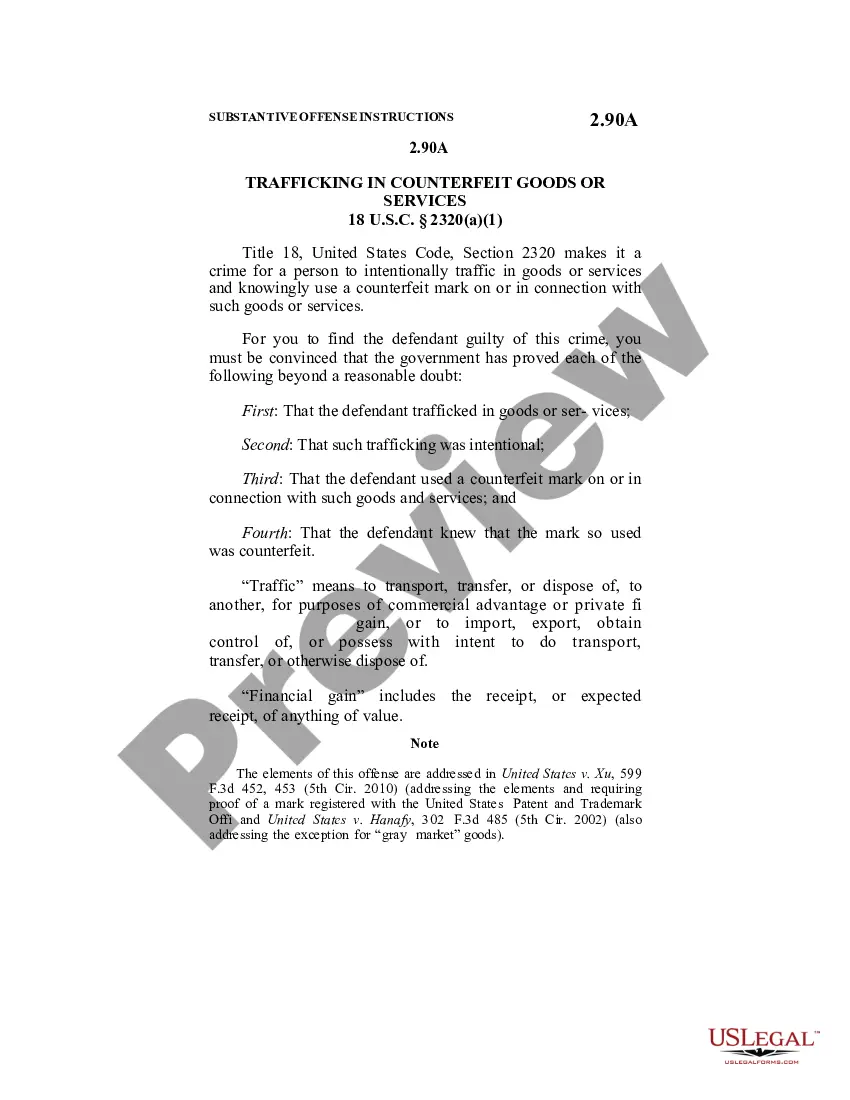
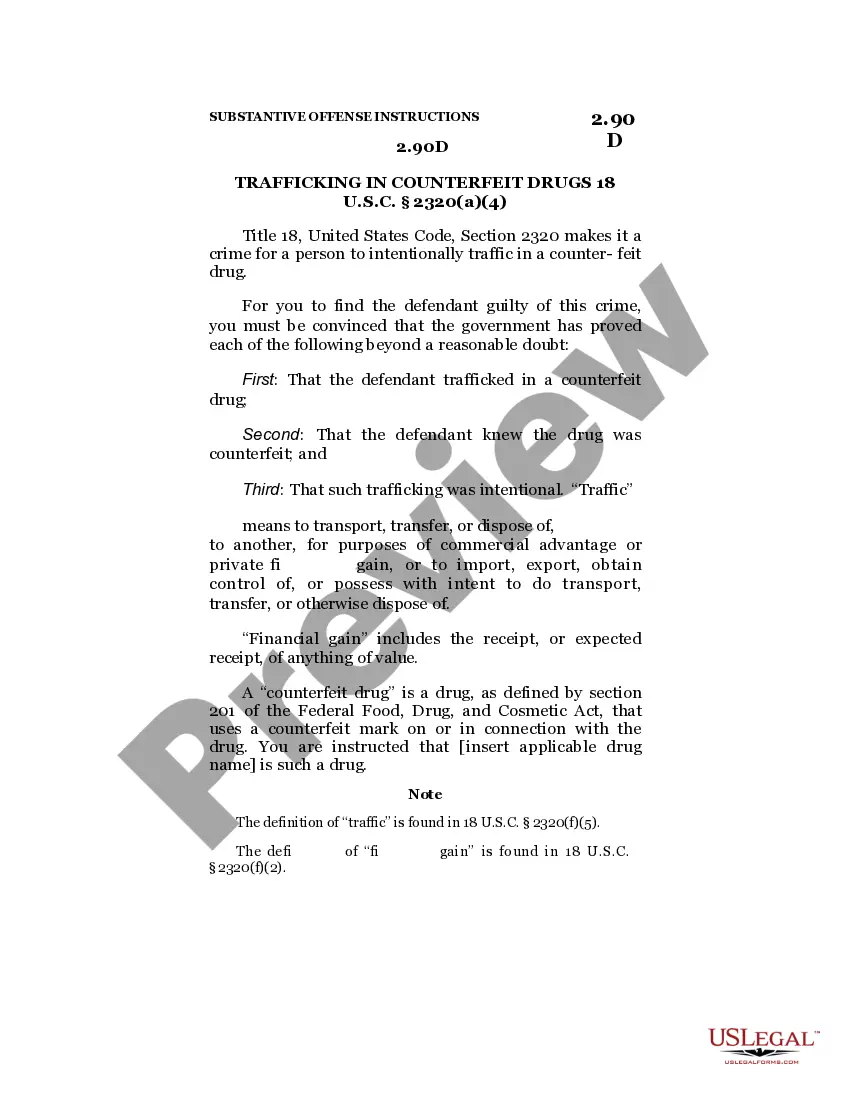
The Trafficking in Counterfeit Goods or Services form is a legal document to address the crime of intentionally trafficking in counterfeit goods or services. Under Title 18, United States Code, Section 2320, it outlines what constitutes trafficking and the necessary legal components required to prove guilt in such a case. This form is crucial for those accused of this crime, distinguishing itself from other legal forms as it deals specifically with trademark violations and counterfeit markings.
Key parts of this document
- Definition of trafficking in goods or services.
- Intentionality of the act of trafficking.
- Use of a counterfeit mark in connection with the goods or services.
- Knowledge that the mark used is counterfeit.
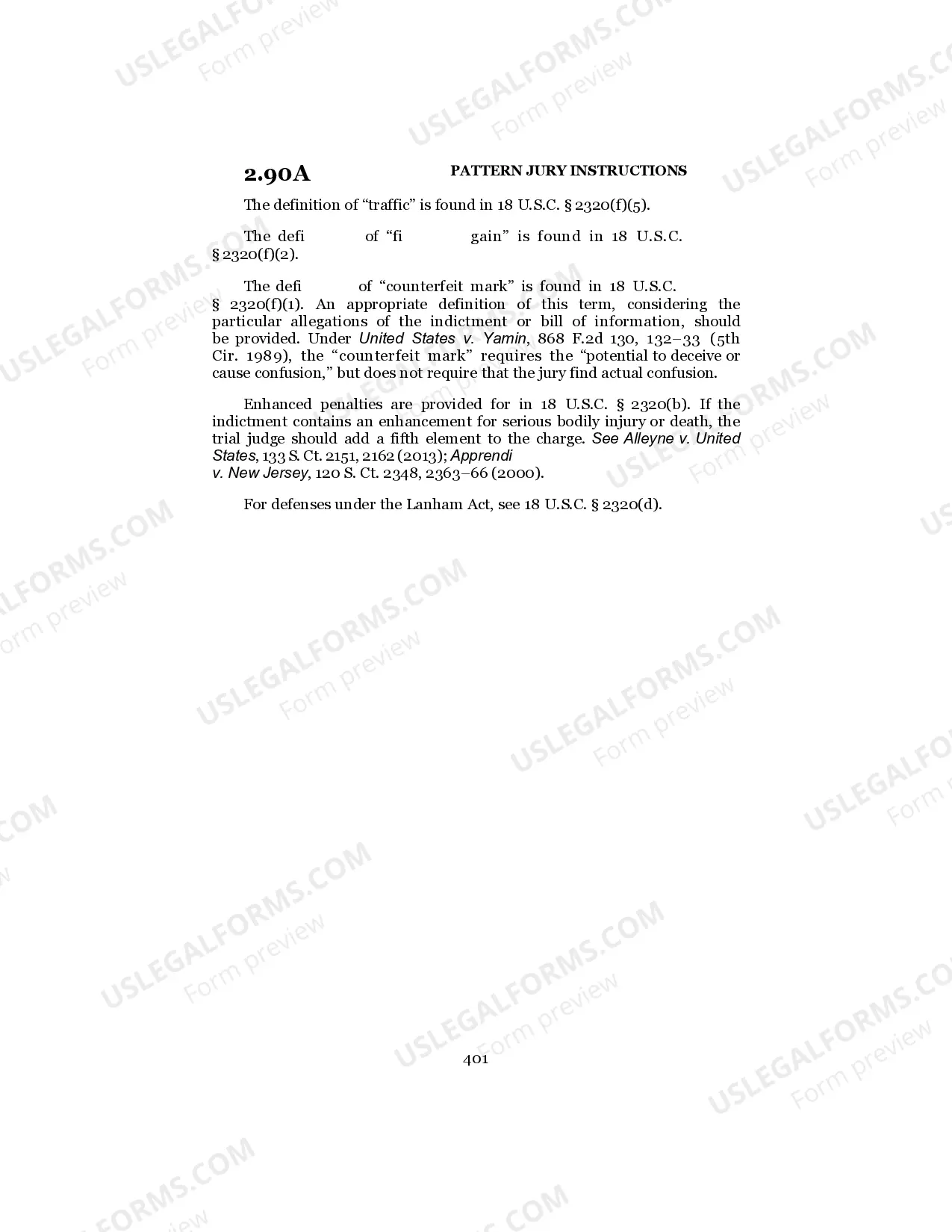
- Potential penalties for enhanced charges related to serious bodily harm or death.

Situations where this form applies
This form is used when an individual is charged with trafficking counterfeit goods or services. It applies in legal situations involving trademark infringement, where the defendant's actions result in possible financial gain through the sale or distribution of counterfeit products. It may also be relevant when planning a defense against such charges in court.
Intended users of this form
- Individuals accused of trafficking in counterfeit goods or services.
- Legal representatives handling cases involving trademark violations.
- Businesses facing allegations of distributing counterfeit items.
Completing this form step by step
- Gather evidence regarding the goods or services involved.
- Document the intent behind the trafficking act.
- Identify and describe the counterfeit mark used.
- Specify your knowledge of the counterfeit nature of the mark.
- Complete any additional fields related to penalties if applicable.
Notarization requirements for this form
This form does not typically require notarization unless specified by local law. Always check with legal counsel to ensure compliance with specific state requirements.
Get your form ready online
Our built-in tools help you complete, sign, share, and store your documents in one place.
Make edits, fill in missing information, and update formatting in US Legal Forms—just like you would in MS Word.
Download a copy, print it, send it by email, or mail it via USPS—whatever works best for your next step.
Sign and collect signatures with our SignNow integration. Send to multiple recipients, set reminders, and more. Go Premium to unlock E-Sign.
If this form requires notarization, complete it online through a secure video call—no need to meet a notary in person or wait for an appointment.
We protect your documents and personal data by following strict security and privacy standards.

Make edits, fill in missing information, and update formatting in US Legal Forms—just like you would in MS Word.

Download a copy, print it, send it by email, or mail it via USPS—whatever works best for your next step.

Sign and collect signatures with our SignNow integration. Send to multiple recipients, set reminders, and more. Go Premium to unlock E-Sign.

If this form requires notarization, complete it online through a secure video call—no need to meet a notary in person or wait for an appointment.

We protect your documents and personal data by following strict security and privacy standards.
Mistakes to watch out for
- Failing to provide clear evidence of intent to traffic.
- Omitting details about the counterfeit mark.
- Not understanding the definitions as outlined in the legal statute.
- Ignoring potential enhanced penalties related to serious crimes.
Benefits of using this form online
- Convenience of completing and submitting the form at any time.
- Editability allows users to make changes before final submission.
- Easy access to legal language created by licensed attorneys.
Main things to remember
- The Trafficking in Counterfeit Goods or Services form is essential for addressing criminal charges related to counterfeit goods.
- Understanding the required legal components is vital for defense.
- Completing this form accurately can impact the outcome of legal proceedings.
Looking for another form?

Form popularity
FAQ
Under federal law, any individual who knowingly distributes, wholesales, or sells counterfeit merchandise faces substantial penalties: Imprisonment for the first offense up to 10 years and up to 20 years for repeat offenders.
The colloquial terms knockoff or dupe (duplicate) are often used interchangeably with counterfeit, although their legal meanings are not identical. Knockoff products are those that copy or imitate the physical appearance of other products but which do not copy the brand name or logo of a trademark.
Some of the most common examples of counterfeit goods include counterfeit handbags, clothing, accessories, perfumes, and electronics. However, the most commonly seized counterfeit goods are athletic shoes, specifically, from brands like Nike and Adidas.
Criminal organizations are attracted by the lucrative profits involved in trading counterfeit or goods, or in trading legitimate goods through illicit channels. The criminals involved manufacture and trade illicit goods on a regional and increasingly global scale.
It is illegal to purchase counterfeit goods. Bringing them into the United States may result in civil or criminal penalties and purchasing counterfeit goods often supports criminal activities, such as forced labor or human trafficking. Help to stop the funding of criminal enterprises by buying authentic goods.
THE TWO CHIEF METHODS OF COUNTERFEITING COINS ARE CASTING AND STRIKING. IN CASTING, THE METAL (USUALLY A LEAD ALLOY) IS POURED INTO A PREFABRICATED MOLD WHICH IN MODERN TIMES IS A TYPE OF PLASTER.
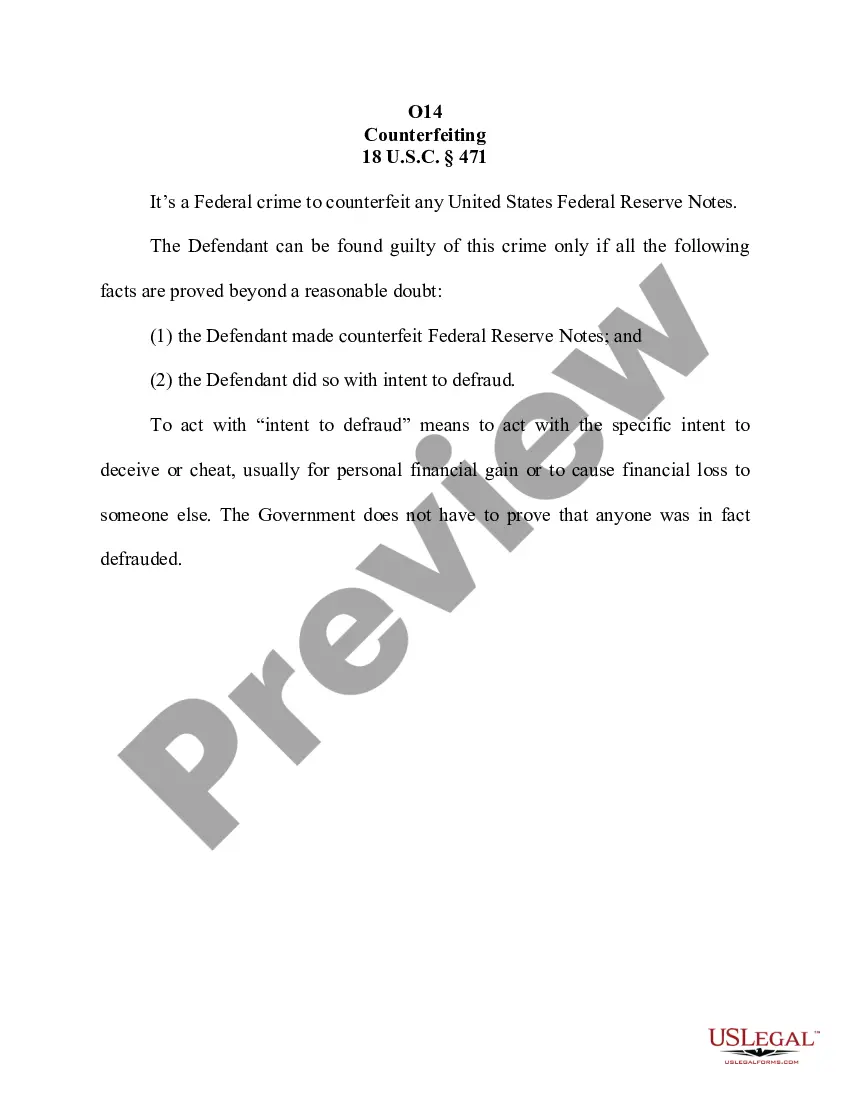
This includes the repackaging of genuine goods or services with the intent to deceive or confuse. However, it is not necessary for the end user to be deceived into believing the product is genuine or authorized by a trademark owner to constitute trafficking in counterfeit goods or services.
: the act of buying or selling usually illegal goods. drug trafficking.