Trafficking in Goods or Services Bearing a Counterfeit Mark Likely to Cause Confusion, Mistake, or Deception
Understanding this form
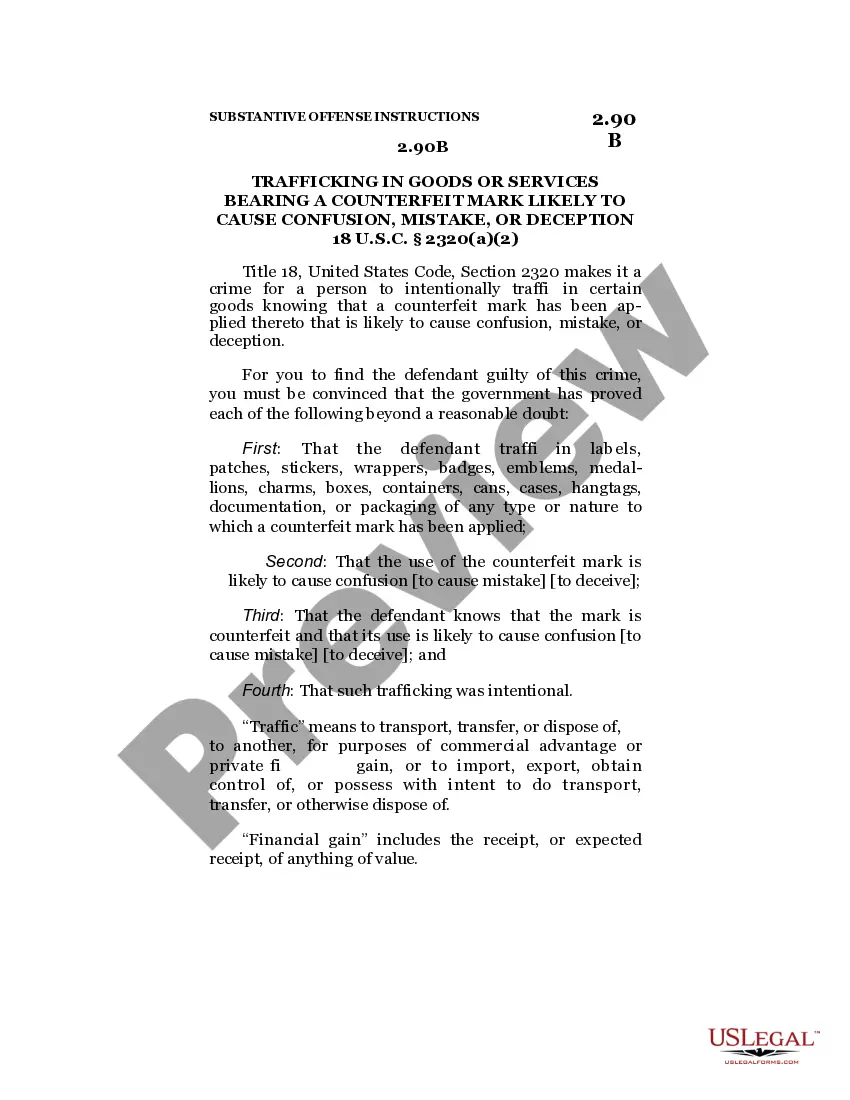
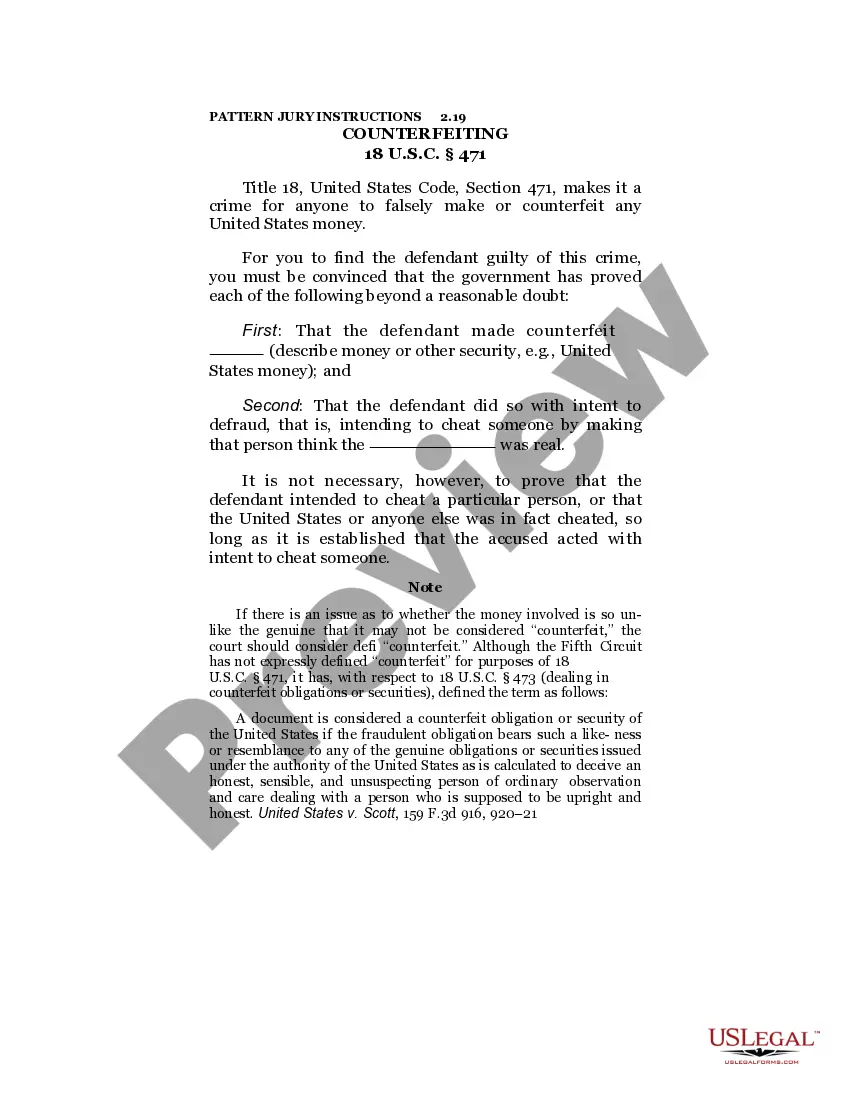
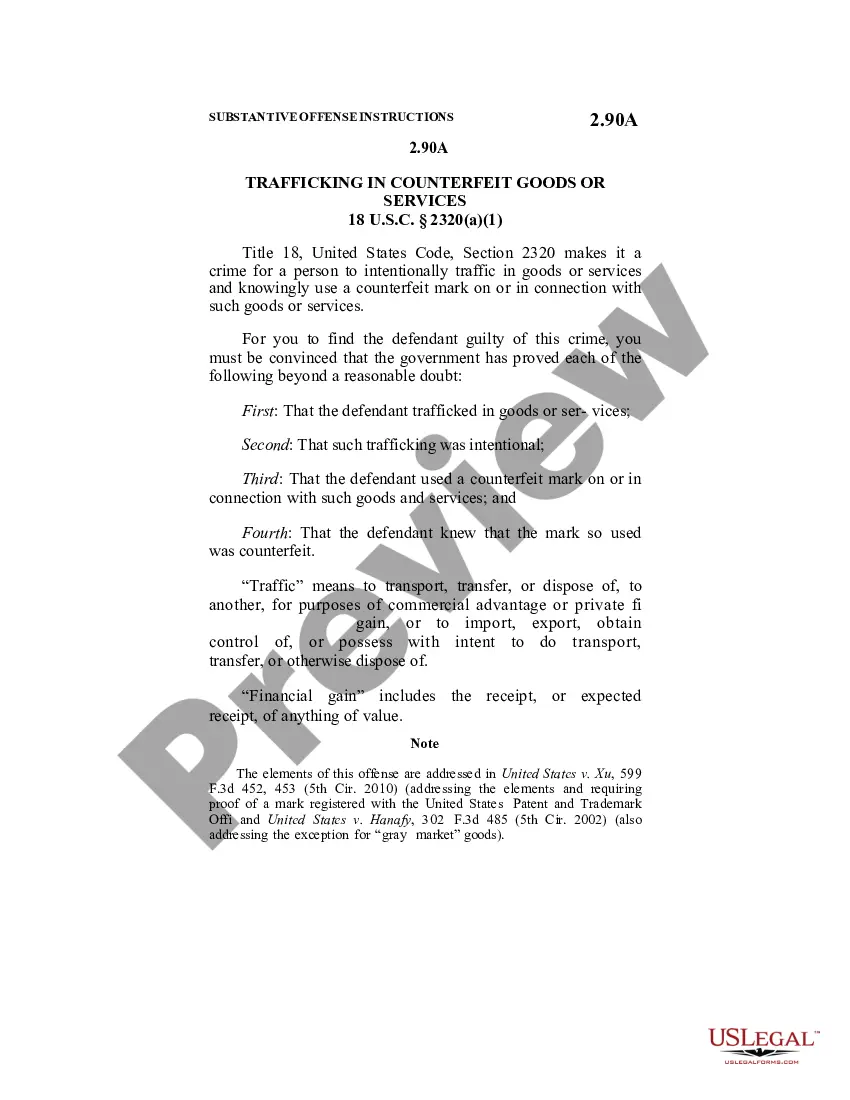
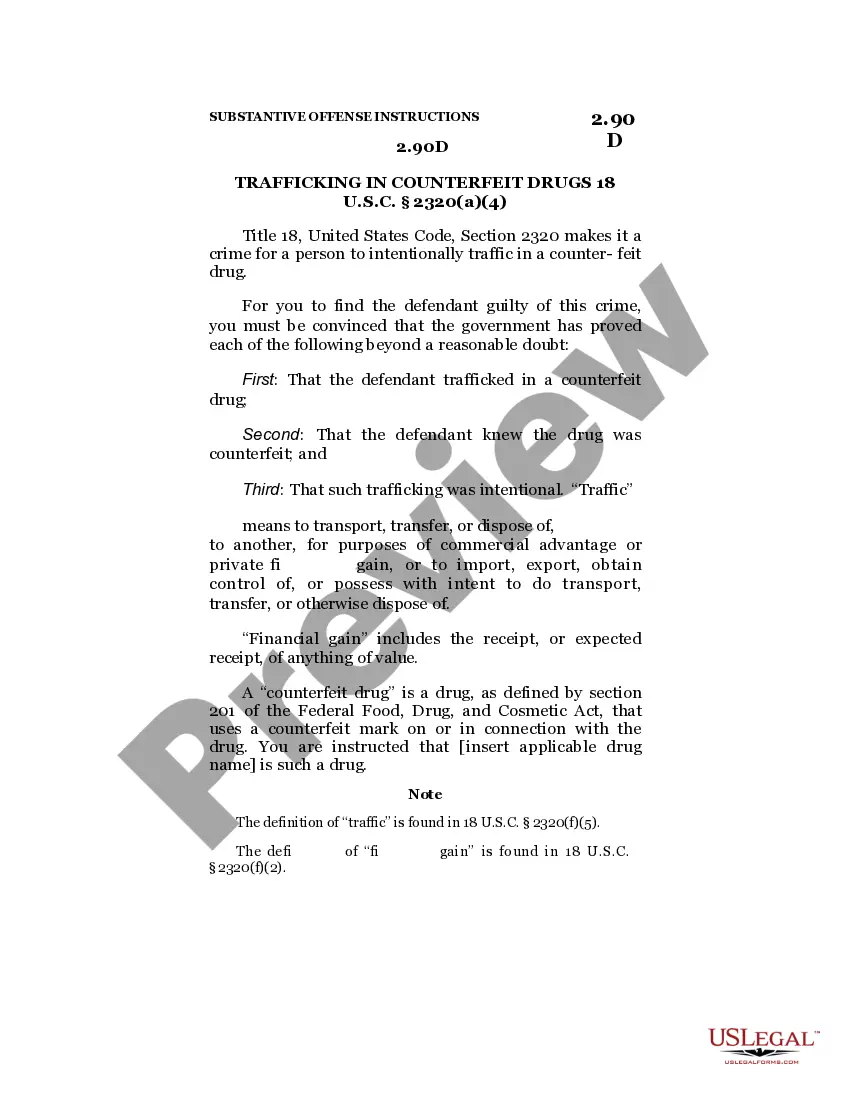
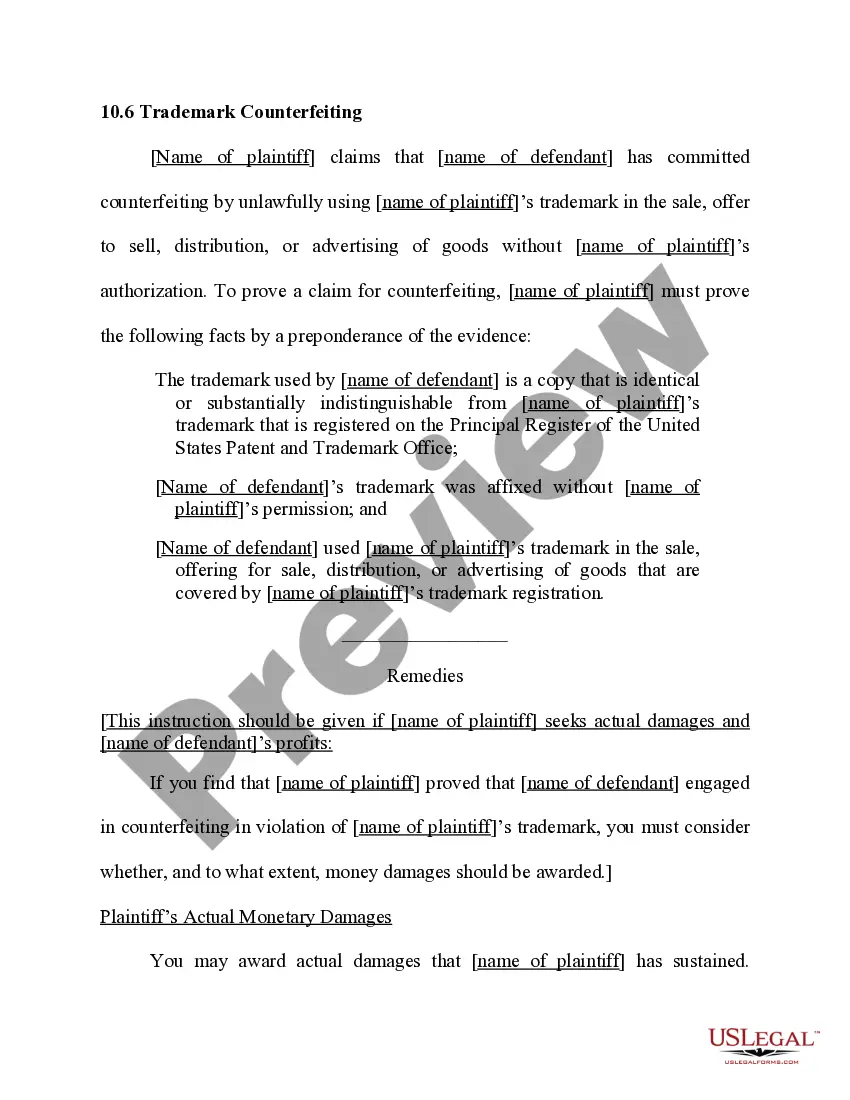
This form addresses the legal implications of trafficking in goods or services that bear a counterfeit mark likely to cause confusion, mistake, or deception. Specifically, it outlines the crime as defined by Title 18, United States Code, Section 2320. Unlike other legal forms that may cover trademarks or similar intellectual property issues, this form focuses on criminal liability concerning counterfeiting practices.
Key components of this form
- Definition of trafficking in goods or services with counterfeit marks.
- Requirements to prove intent and knowledge of counterfeit marks.
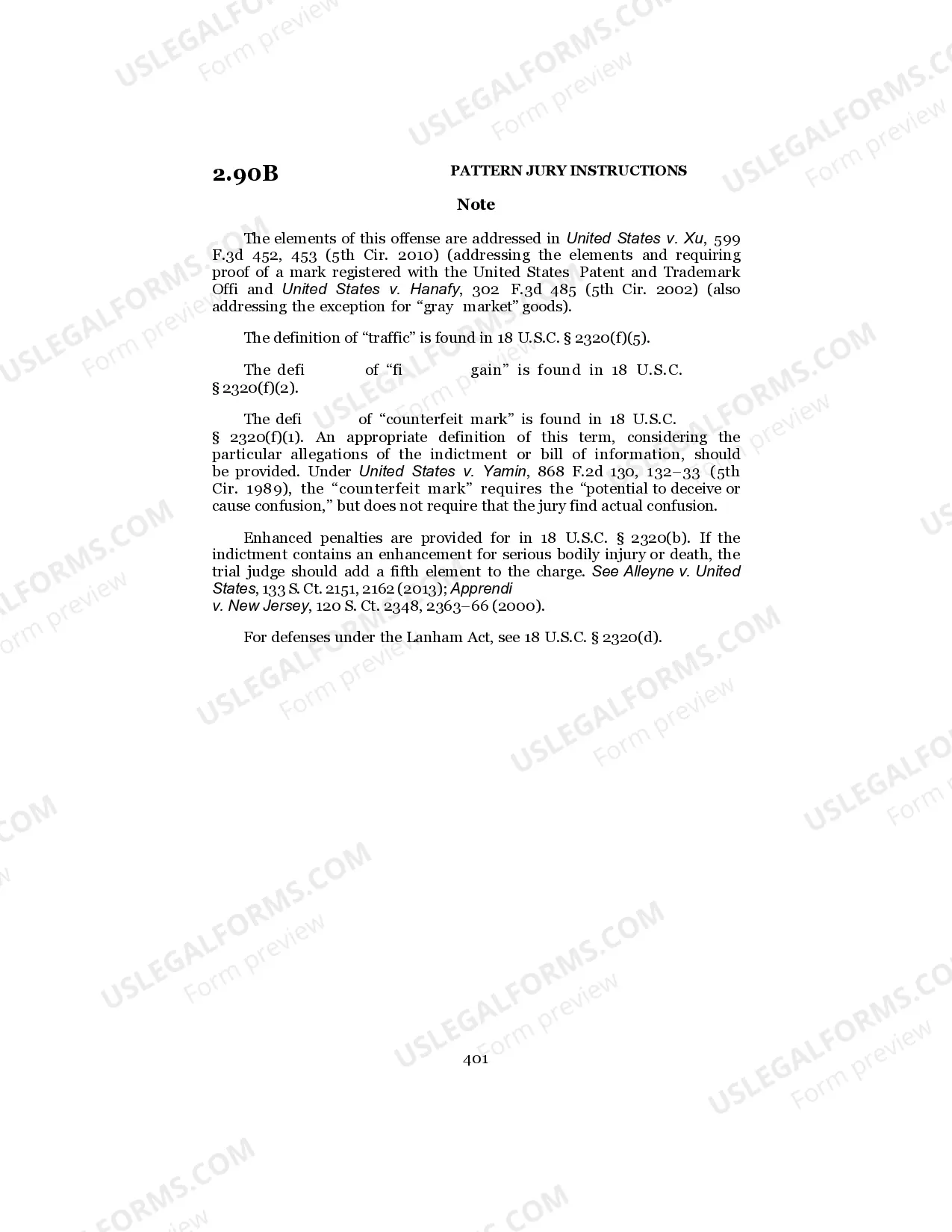
- Explanation of terms such as 'traffic,' 'financial gain,' and 'counterfeit mark.'
- Elements that must be proven for a guilty verdict under this statute.
- Reference to relevant legal cases that provide context and application.

Common use cases
This form is necessary when there is a suspicion or accusation of trafficking goods that may carry counterfeit marks. It is essential for legal professionals involved in criminal cases concerning intellectual property theft, as well as businesses seeking to assert their rights against counterfeit goods in commerce.
Who needs this form
- Legal professionals representing clients accused of counterfeiting.
- Businesses affected by counterfeit goods in the marketplace.
- Individuals seeking to understand their rights regarding counterfeit accusations.
Steps to complete this form
- Identify the defendant and provide all necessary details regarding the alleged trafficking.
- Clearly specify the goods or services involved and the nature of the counterfeit marks.
- Document evidence of intent and knowledge regarding the counterfeit nature of the mark.
- Include all relevant details pertaining to the sale or distribution of the counterfeit goods.
- Sign and date the form where required to validate the submission.
Does this document require notarization?
This form does not typically require notarization to be legally valid. However, some jurisdictions or document types may still require it. US Legal Forms provides secure online notarization powered by Notarize, available 24/7 for added convenience.
Get your form ready online
Our built-in tools help you complete, sign, share, and store your documents in one place.
Make edits, fill in missing information, and update formatting in US Legal Forms—just like you would in MS Word.
Download a copy, print it, send it by email, or mail it via USPS—whatever works best for your next step.
Sign and collect signatures with our SignNow integration. Send to multiple recipients, set reminders, and more. Go Premium to unlock E-Sign.
If this form requires notarization, complete it online through a secure video call—no need to meet a notary in person or wait for an appointment.
We protect your documents and personal data by following strict security and privacy standards.

Make edits, fill in missing information, and update formatting in US Legal Forms—just like you would in MS Word.

Download a copy, print it, send it by email, or mail it via USPS—whatever works best for your next step.

Sign and collect signatures with our SignNow integration. Send to multiple recipients, set reminders, and more. Go Premium to unlock E-Sign.

If this form requires notarization, complete it online through a secure video call—no need to meet a notary in person or wait for an appointment.

We protect your documents and personal data by following strict security and privacy standards.
Mistakes to watch out for
- Failing to thoroughly define the counterfeit mark in question.
- Omitting crucial details about the defendant's knowledge and intent.
- Not providing adequate evidence to support claims of confusion or deception.
Why complete this form online
- Easy access allows you to download and complete the necessary form at your convenience.
- Editable templates ensure that you can customize the form to fit your specific situation.
- Reliability of professionally drafted forms that adhere to legal standards.
Legal use & context
- This form is based on federal law and is important for cases involving counterfeit goods.
- Enforcement varies by jurisdiction; it is advisable to consult local laws.
- Using this form properly can help establish a clear case against fraudulent activities in trade.
Quick recap
- The form addresses specific legal standards for trafficking in counterfeit goods.
- Understanding the intent and consumer confusion is critical to the case.
- This form is applicable across multiple states, with nuances in local law.
Looking for another form?
Form popularity
FAQ
A "counterfeit" is a spurious mark which is identical with, or substantially indistinguishable from, a registered mark.
Criminal organizations are attracted by the lucrative profits involved in trading counterfeit or goods, or in trading legitimate goods through illicit channels. The criminals involved manufacture and trade illicit goods on a regional and increasingly global scale.
Defined under 18 U.S. Code § 2320, intentionally trafficking goods or knowingly using a counterfeit mark is a felony. This includes the repackaging of genuine goods or services with the intent to deceive or confuse.
The trafficking in illicit goods spans a number of practices including: counterfeiting. piracy. falsification. adulteration of products.
It is illegal to purchase counterfeit goods. Bringing them into the United States may result in civil or criminal penalties and purchasing counterfeit goods often supports criminal activities, such as forced labor or human trafficking. Help to stop the funding of criminal enterprises by buying authentic goods.
Counterfeit products range from high-end consumer luxury goods such as watches, perfumes or leather goods, to business-to-business products such as machines, chemicals or spare parts, to common consumer products such as toys, pharmaceuticals, cosmetics and foodstuffs.
Bringing them into the United States may result in civil or criminal penalties and purchasing counterfeit goods often supports criminal activities, such as forced labor or human trafficking. Help to stop the funding of criminal enterprises by buying authentic goods.
For example, if an individual buys a computer that bears an apple logo, but that computer is counterfeit and is lower quality than an actual apple computer, then the owner of the trademark will have their reputation and business goodwill harmed.