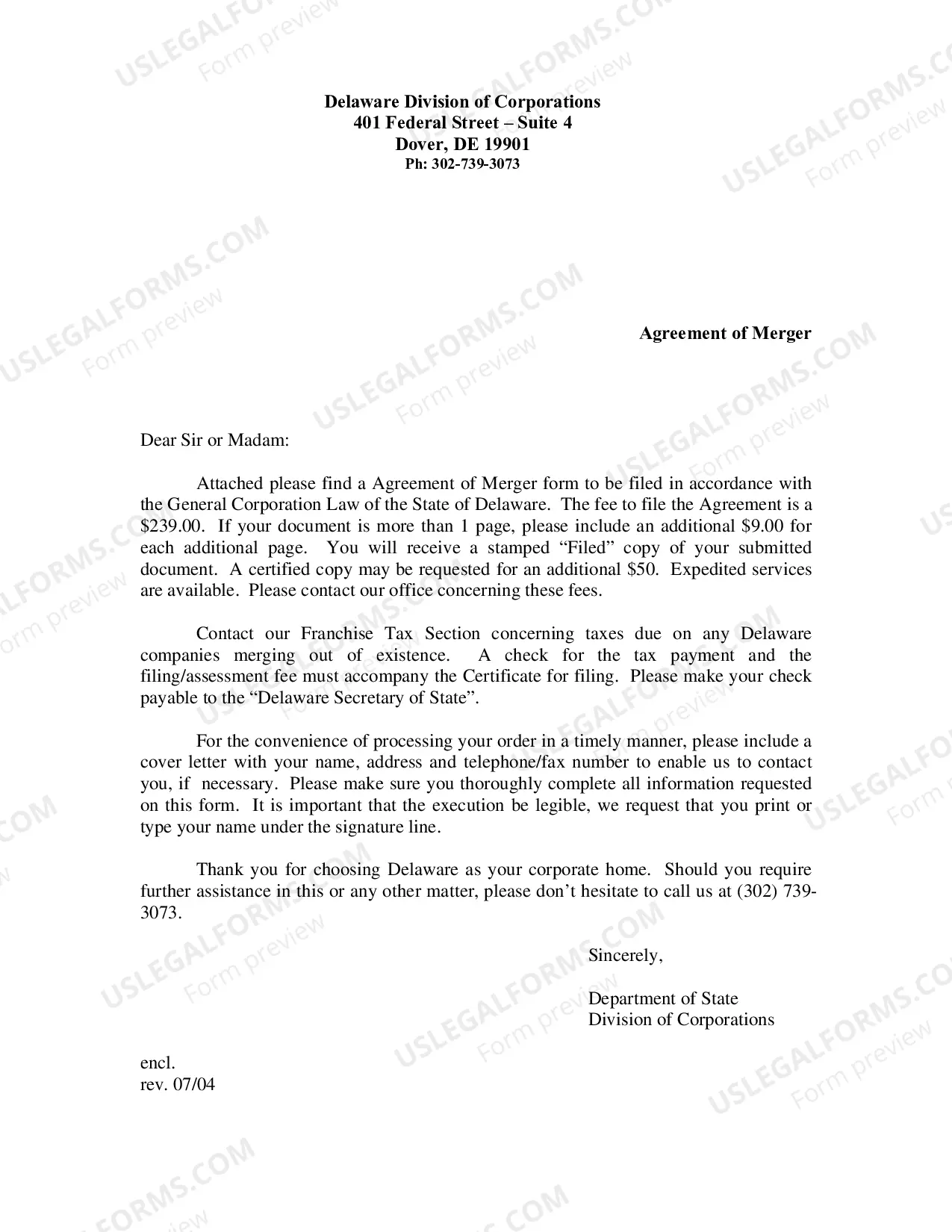
West Virginia Notice of Option for Recording
What this document covers
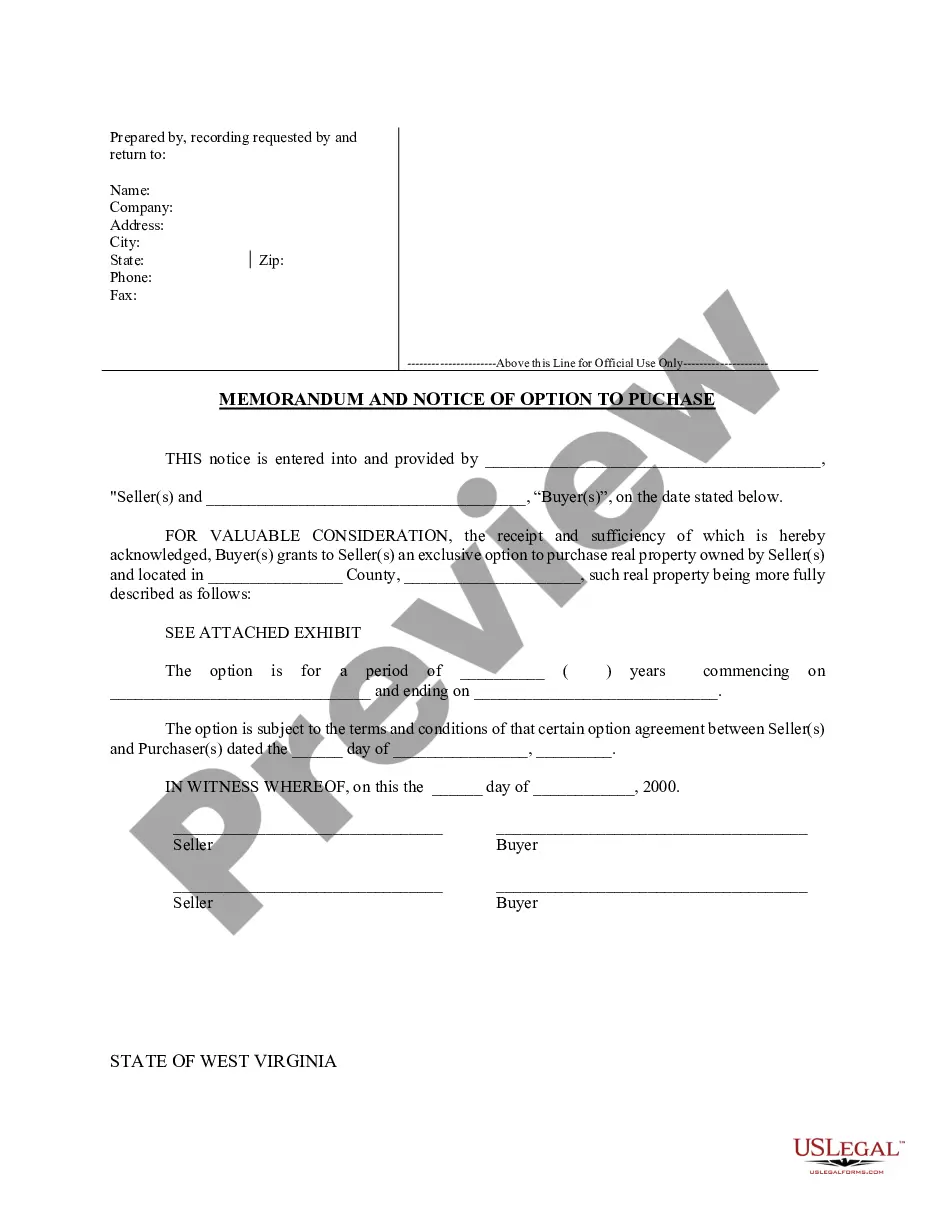
The Notice of Option for Recording is a legal document that provides notice of an existing option to purchase a specific parcel of real estate. This form serves as a memorandum rather than the full Option Agreement, offering a simplified way to notify interested parties of the purchase option without needing to disclose the entire contract.
What’s included in this form
- Prepared by and recording request details.
- Identification of the seller(s) and buyer(s).
- Description of the real property associated with the purchase option.
- Time period during which the option is valid.
- Reference to the underlying option agreement.
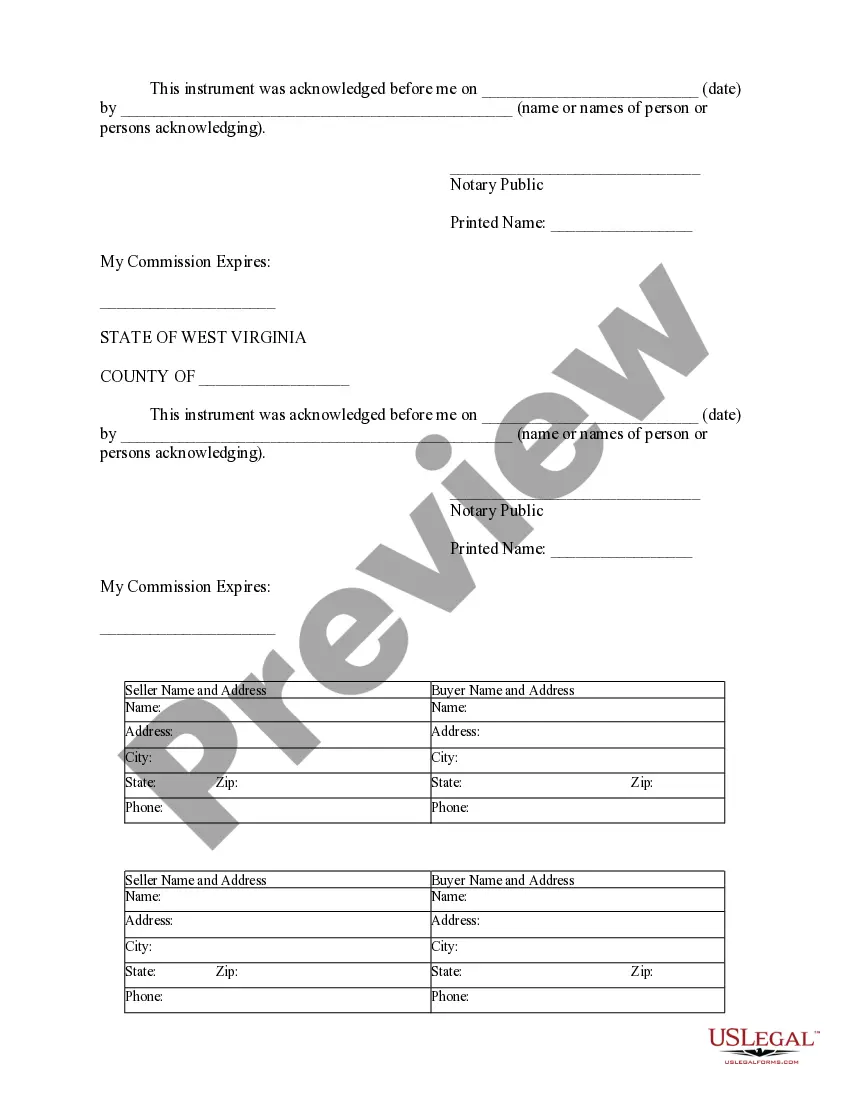
- Signatures of the seller(s) and buyer(s) along with notarization requirements.

When to use this form
This form is useful when a seller wants to officially notify the public that a buyer has an exclusive option to purchase their property. It is typically used when the seller prefers not to record the full Option Agreement while still ensuring that the potential buyers and related parties are aware of the existing option on the property.
Who can use this document
- Property sellers who wish to inform the public about an existing purchase option.
- Buyers who want to secure and document their option to acquire a property.
- Real estate agents or brokers facilitating transactions involving options to purchase.
How to prepare this document
- Identify the parties involved: seller(s) and buyer(s).
- Provide a clear description of the real property, including the county and any relevant details.
- Specify the duration of the purchase option, including start and end dates.
- Reference the date of the original option agreement.
- Gather signatures from all parties, ensuring to include notarization where required.
Notarization requirements for this form
Notarization is required for this form to take effect. Our online notarization service, powered by Notarize, lets you verify and sign documents remotely through an encrypted video session, available 24/7.
Get your form ready online
Our built-in tools help you complete, sign, share, and store your documents in one place.
Make edits, fill in missing information, and update formatting in US Legal Forms—just like you would in MS Word.
Download a copy, print it, send it by email, or mail it via USPS—whatever works best for your next step.
Sign and collect signatures with our SignNow integration. Send to multiple recipients, set reminders, and more. Go Premium to unlock E-Sign.
If this form requires notarization, complete it online through a secure video call—no need to meet a notary in person or wait for an appointment.
We protect your documents and personal data by following strict security and privacy standards.

Make edits, fill in missing information, and update formatting in US Legal Forms—just like you would in MS Word.

Download a copy, print it, send it by email, or mail it via USPS—whatever works best for your next step.

Sign and collect signatures with our SignNow integration. Send to multiple recipients, set reminders, and more. Go Premium to unlock E-Sign.

If this form requires notarization, complete it online through a secure video call—no need to meet a notary in person or wait for an appointment.

We protect your documents and personal data by following strict security and privacy standards.
Common mistakes to avoid
- Failing to accurately describe the property, which can lead to legal disputes.
- Not specifying the dates for the option period clearly.
- Omitting signatures or not notarizing the document when required.
Why use this form online
- Convenience of downloading and completing the form at your own pace.
- Editability allows for quick adjustments to meet specific needs.
- Reliability of using attorney-drafted templates ensures legal compliance.
Legal use & context
- The Notice of Option for Recording serves as an official public notice regarding real estate transactions.
- Documenting options can help prevent future disputes over property interests.
- This form should be kept with relevant real estate documentation for reference.
Summary of main points
- The Notice of Option for Recording is essential for notifying interested parties of a purchase option.
- Proper completion and notarization are necessary for the document's legal standing.
- Using this form helps streamline the communication regarding property purchase options.
Looking for another form?
Form popularity
FAQ
West Virginia recording law stipulates that it is a one-party consent state. In West Virginia, it is a criminal offense to use any device to record or share use communications, whether they are wire, oral or electronic, without the consent of at least one person taking part in the communication.
WEST VIRGINIA is considered a One-Party Consent State, in that at least one person involved in the recorded communication must give permission.
Expect to wait four to six weeks and don't expect to get the original deed because they keep that and send you a copy. On an even less romantic note, owners of new homes often only get an electronic copy.
California's wiretapping law is a "two-party consent" law. California makes it a crime to record or eavesdrop on any confidential communication, including a private conversation or telephone call, without the consent of all parties to the conversation. See Cal. Penal Code § 632.
In 12 statesCalifornia, Connecticut, Florida, Illinois, Maryland, Massachusetts, Michigan, Montana, Nevada, New Hampshire, Pennsylvania, and Washingtonall parties involved need to consent before one of them can record the conversation.
States that follow the Notice statute: Alabama, Arizona, Connecticut, Florida, Illinois, Iowa, Kansas, Kentucky, Maine, Massachusetts, Missouri, New Hampshire, New Mexico, Oklahoma, Rhode Island, South Carolina, Tennessee, Vermont, and West Virginia.
In addition to subjecting you to criminal prosecution, violating the Virginia wiretapping law can expose you to a civil lawsuit for damages by an injured party. See Virginia Code § 19.2-69.
Who Pays Transfer Taxes in West Virginia: the Buyer or the Seller? In the state of West Virginia, it is usually customary for the seller to pay all transfer taxes.
In West Virginia, deeds and recorded documents are public records. Many County Clerks provide online information about recorded documents, such as fees and locations. However, access to recorded documents is generally only available by visiting the County Clerk's office in person.