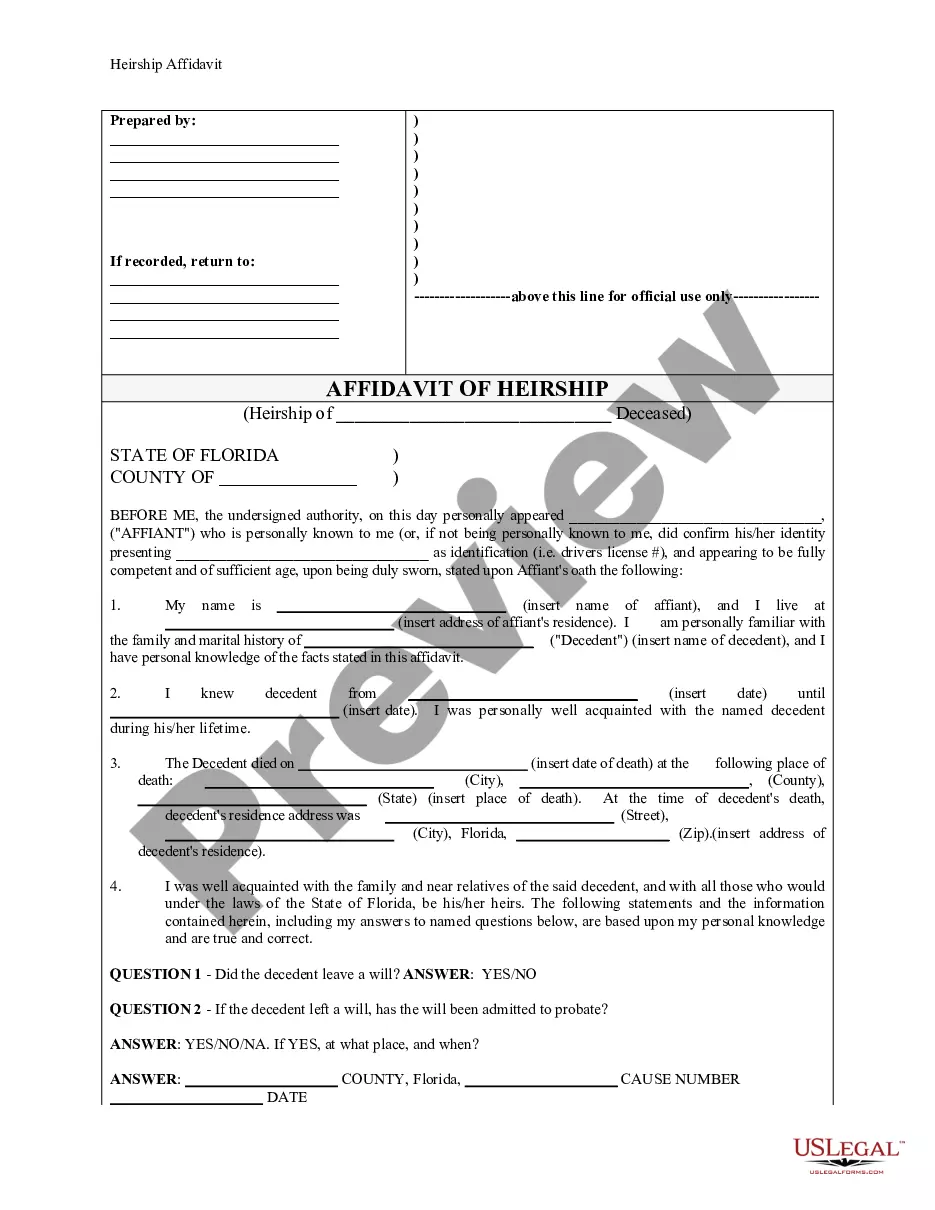
West Virginia Living Trust for Husband and Wife with One Child
Overview of this form
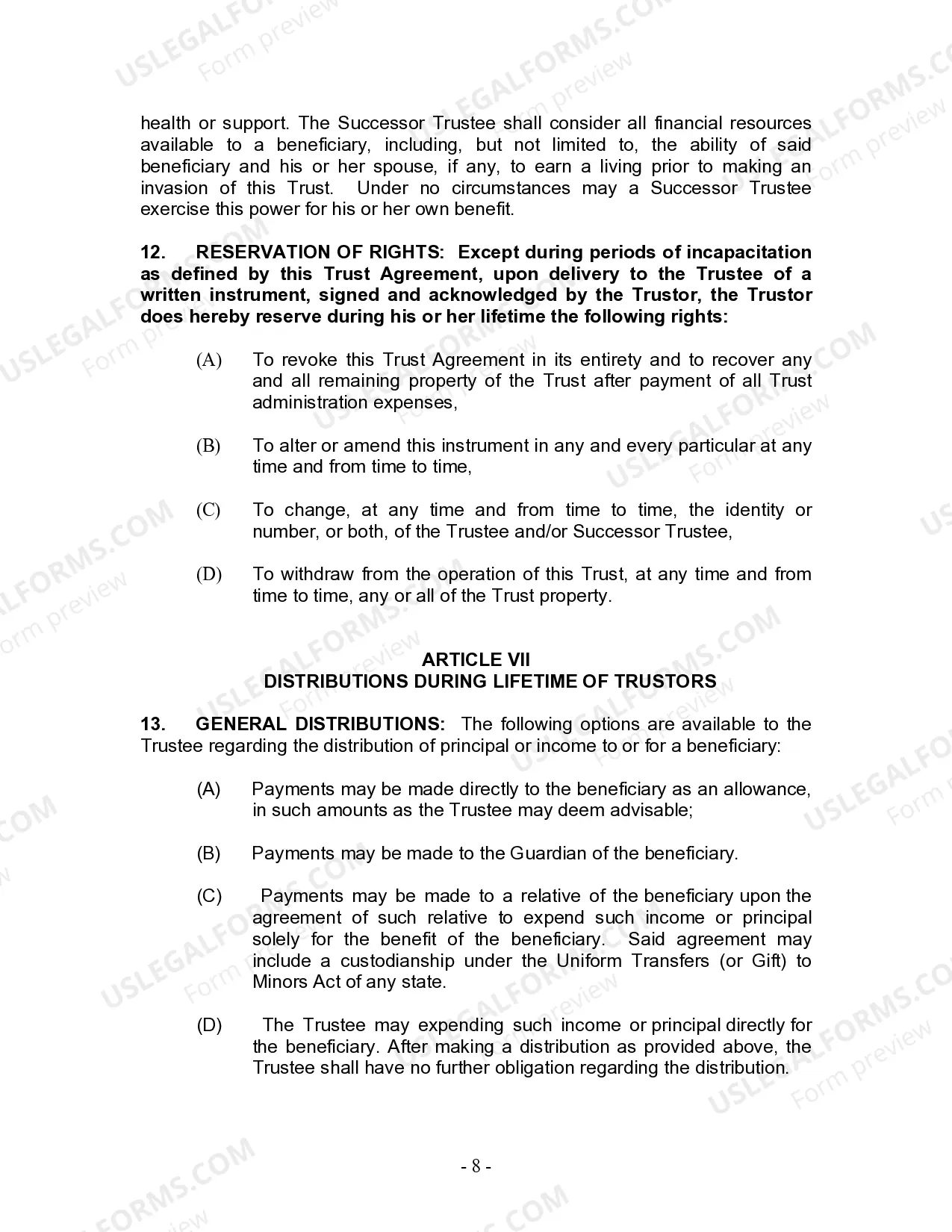
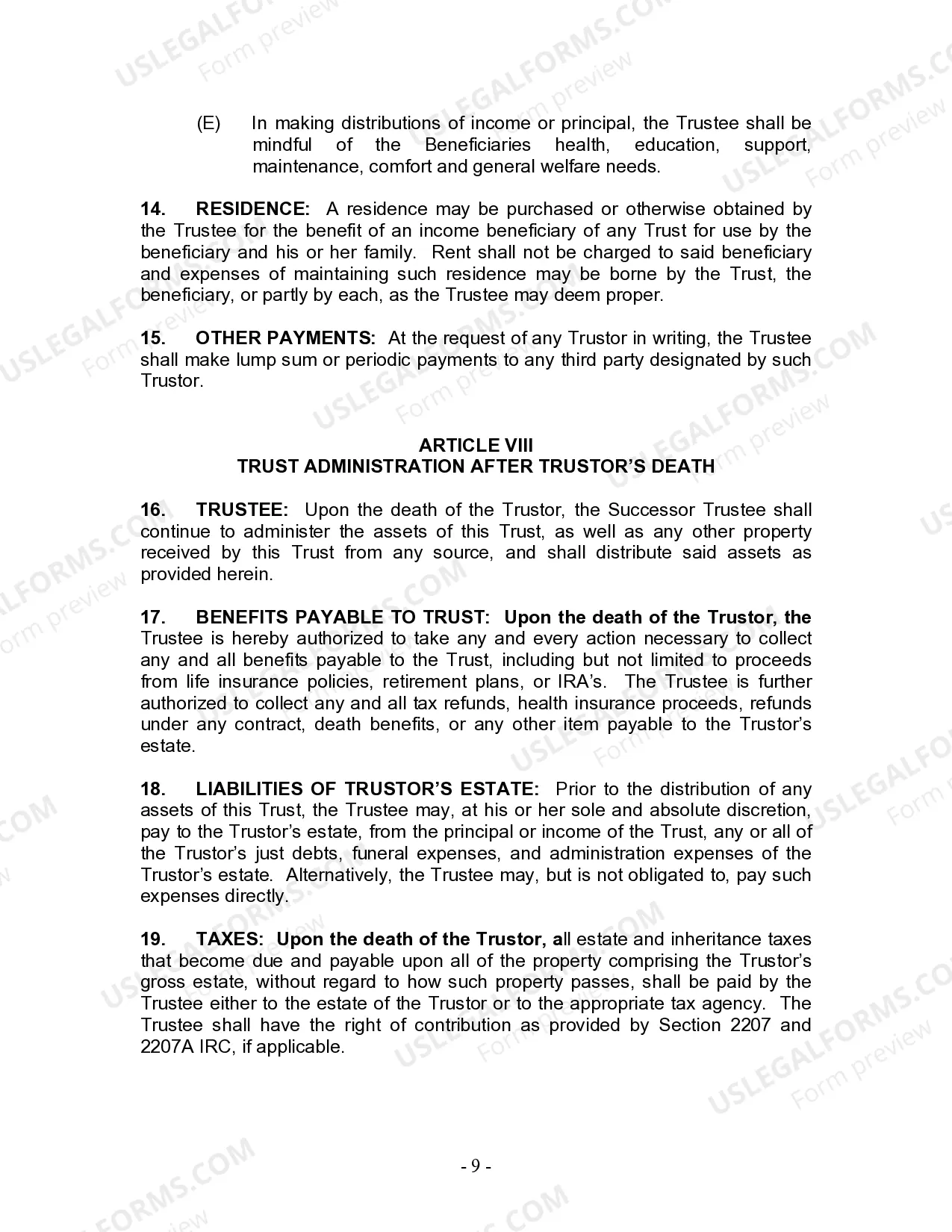
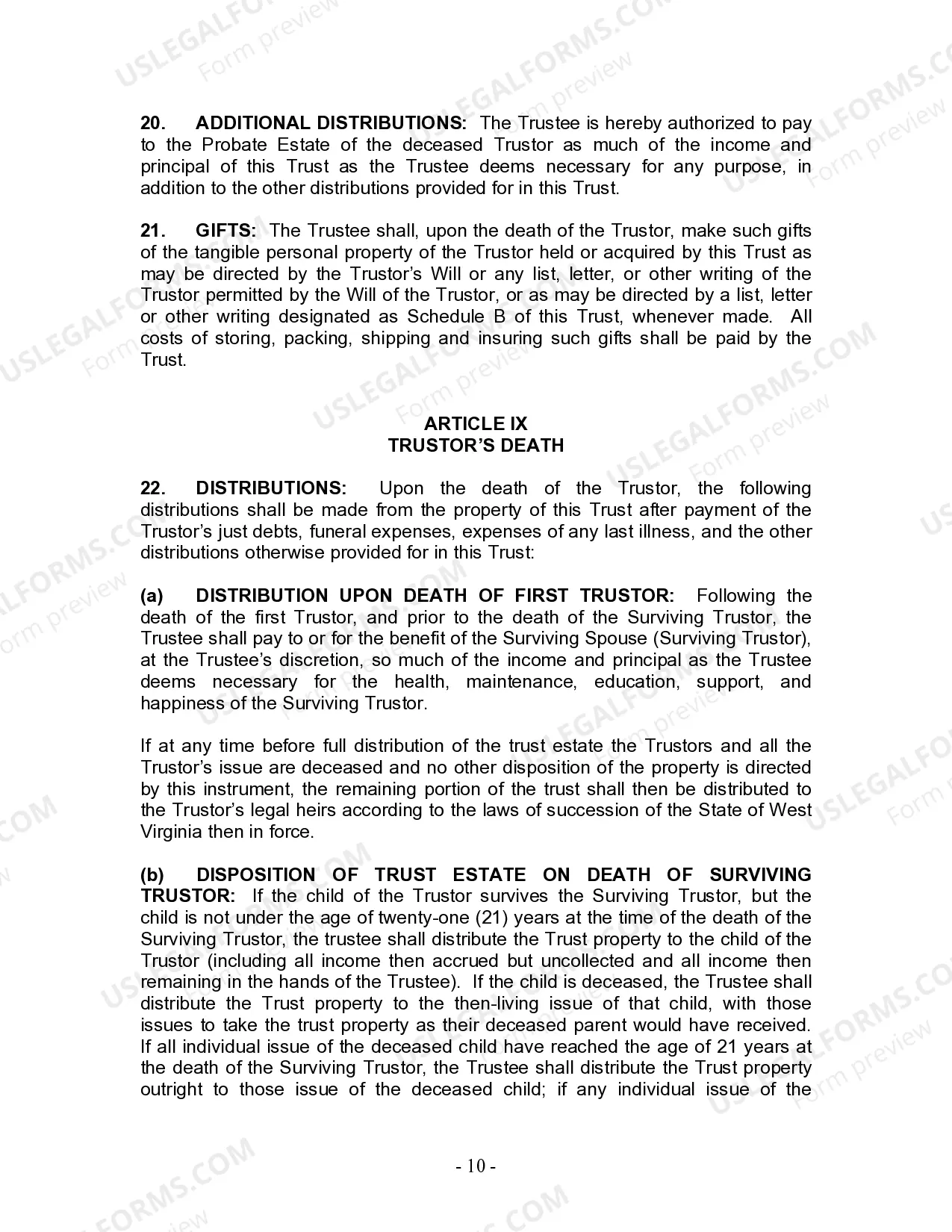
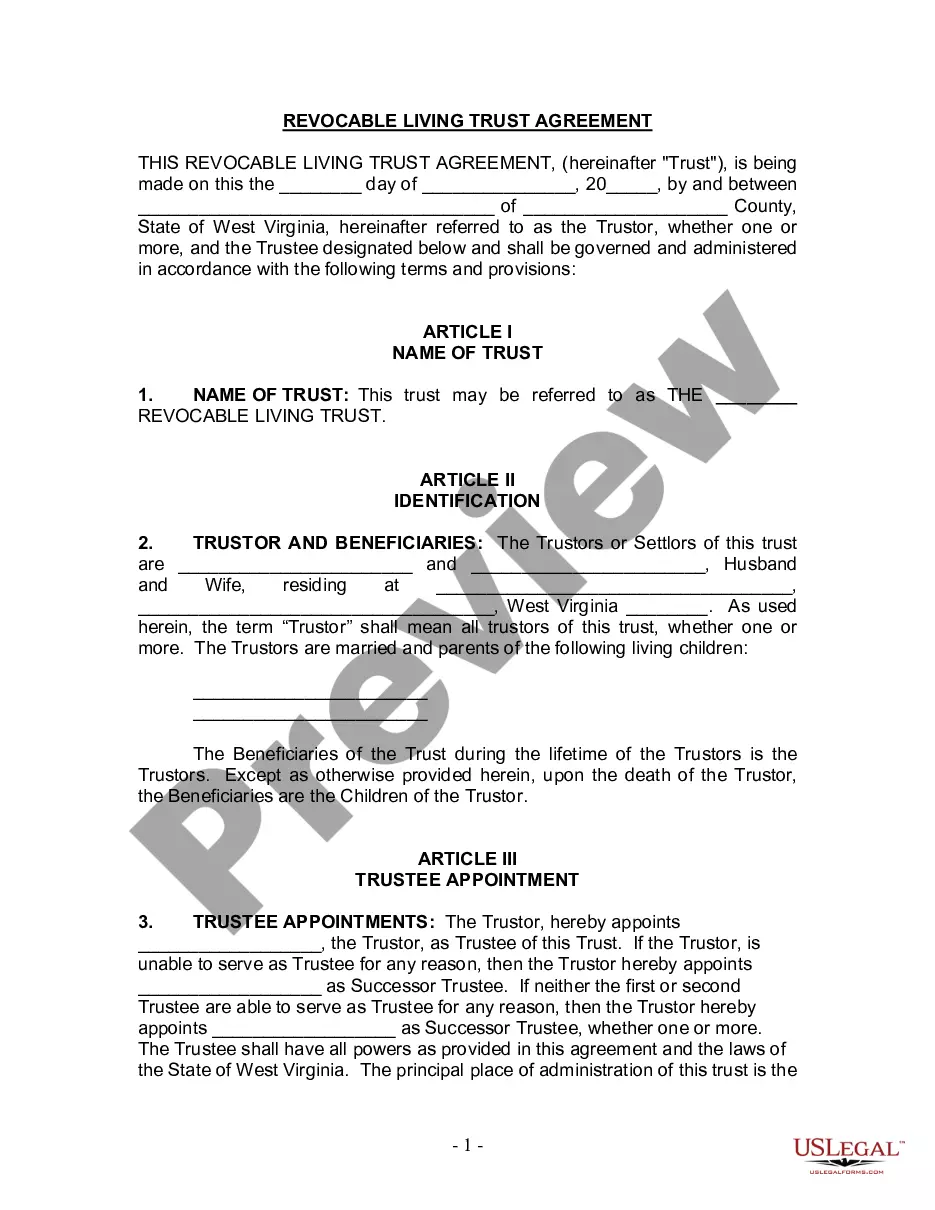
The Living Trust for Husband and Wife with One Child is a legal document that establishes a trust during the lifetime of the trustors (husband and wife) to manage their assets for the benefit of their child. This type of living trust allows the creators to retain control over their assets while providing management and distribution guidelines upon their passing. Unlike a will, a living trust typically avoids probate, enabling smoother transitions of asset ownership to beneficiaries.
What’s included in this form
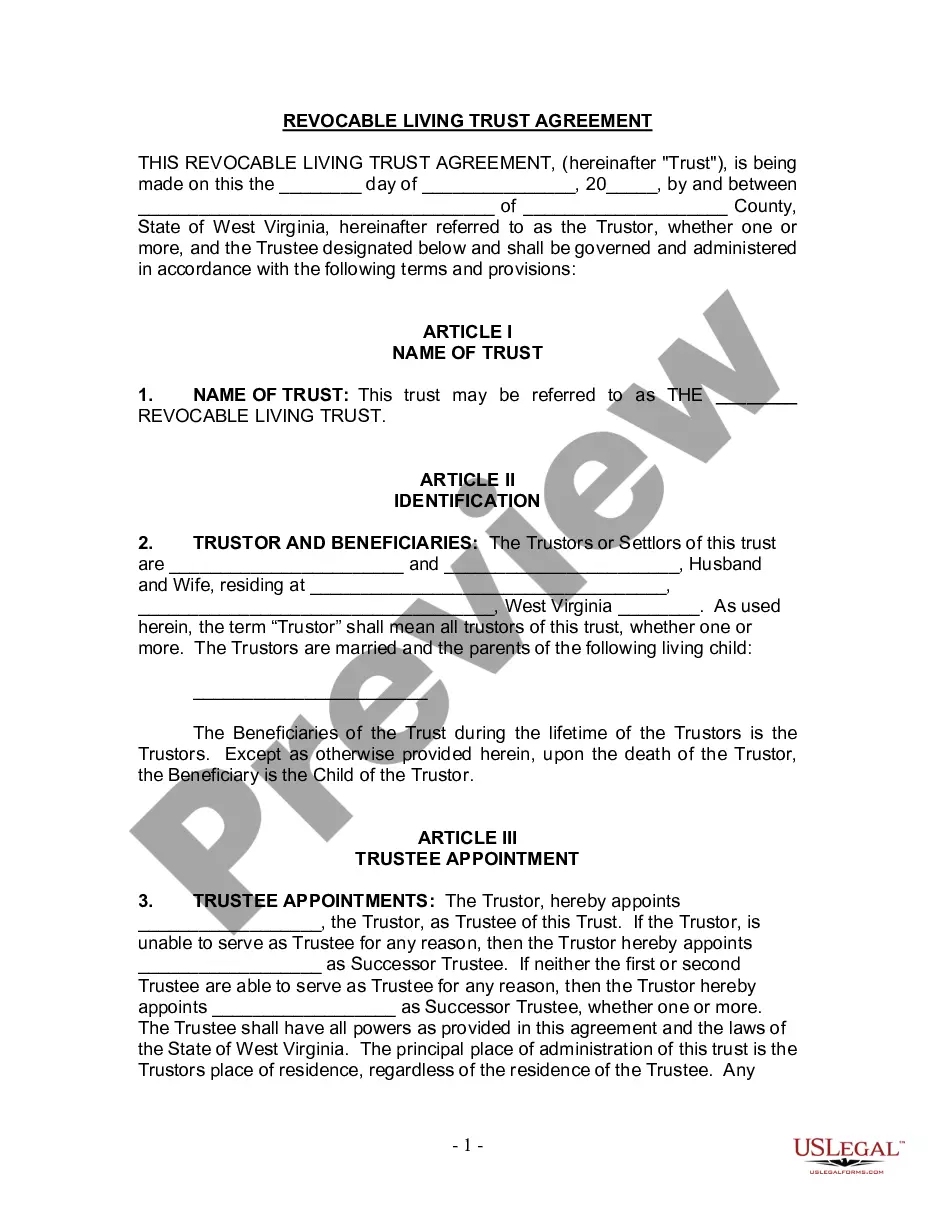
- Identification of Trustors: Names and residency details of the husband and wife who create the trust.
- Trustee Designation: Appointment of the trustee(s) responsible for managing the trust assets.
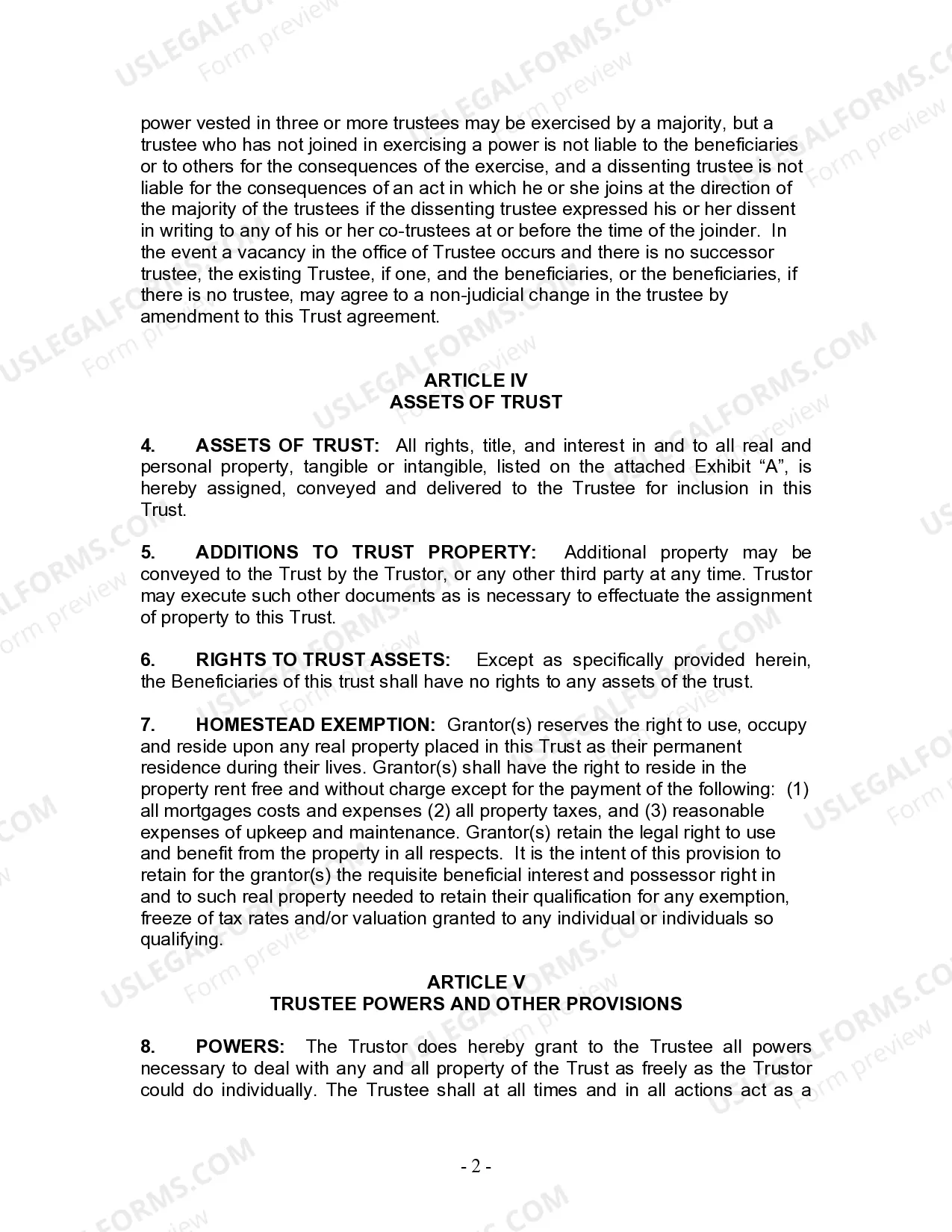
- Asset Assignment: A list of all real and personal property included in the trust.
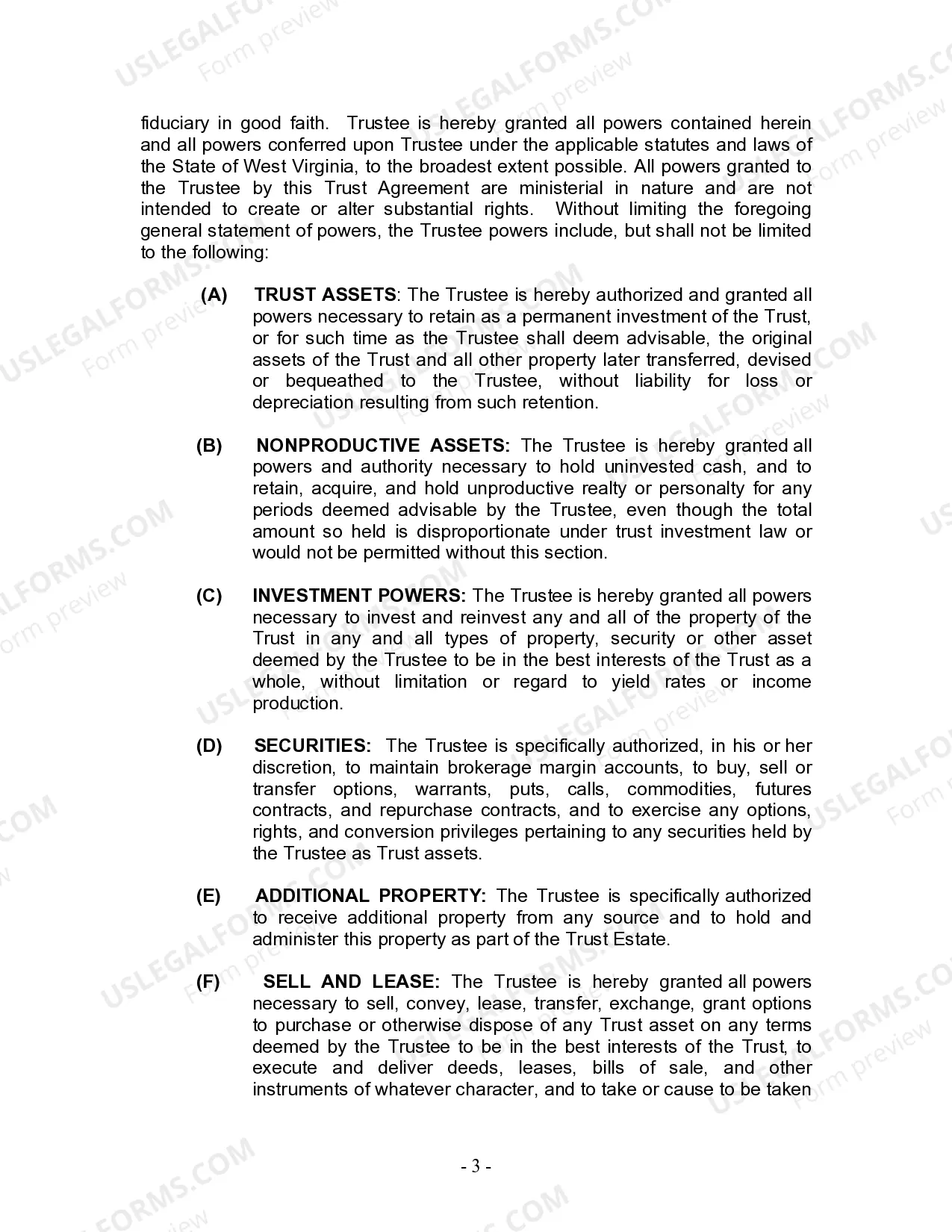
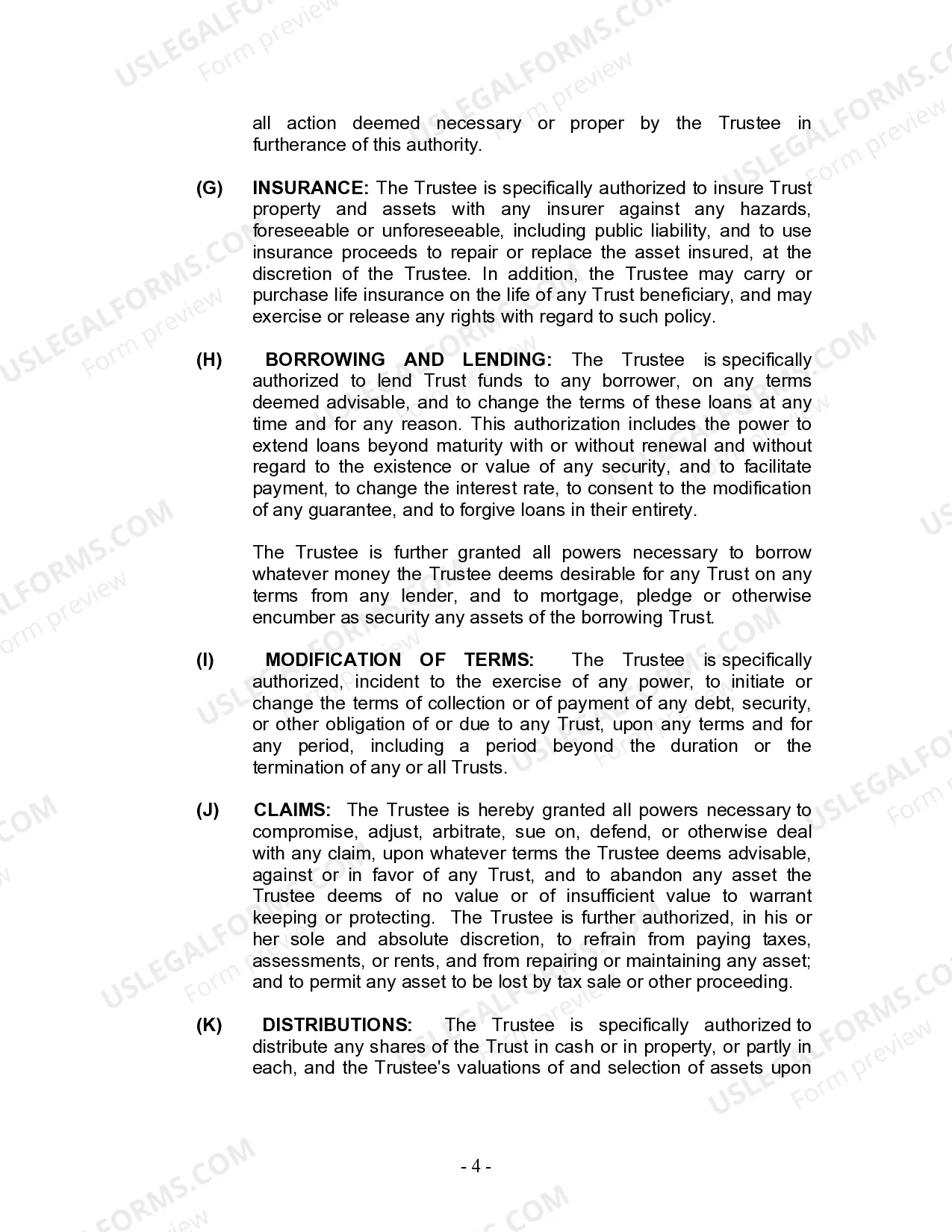
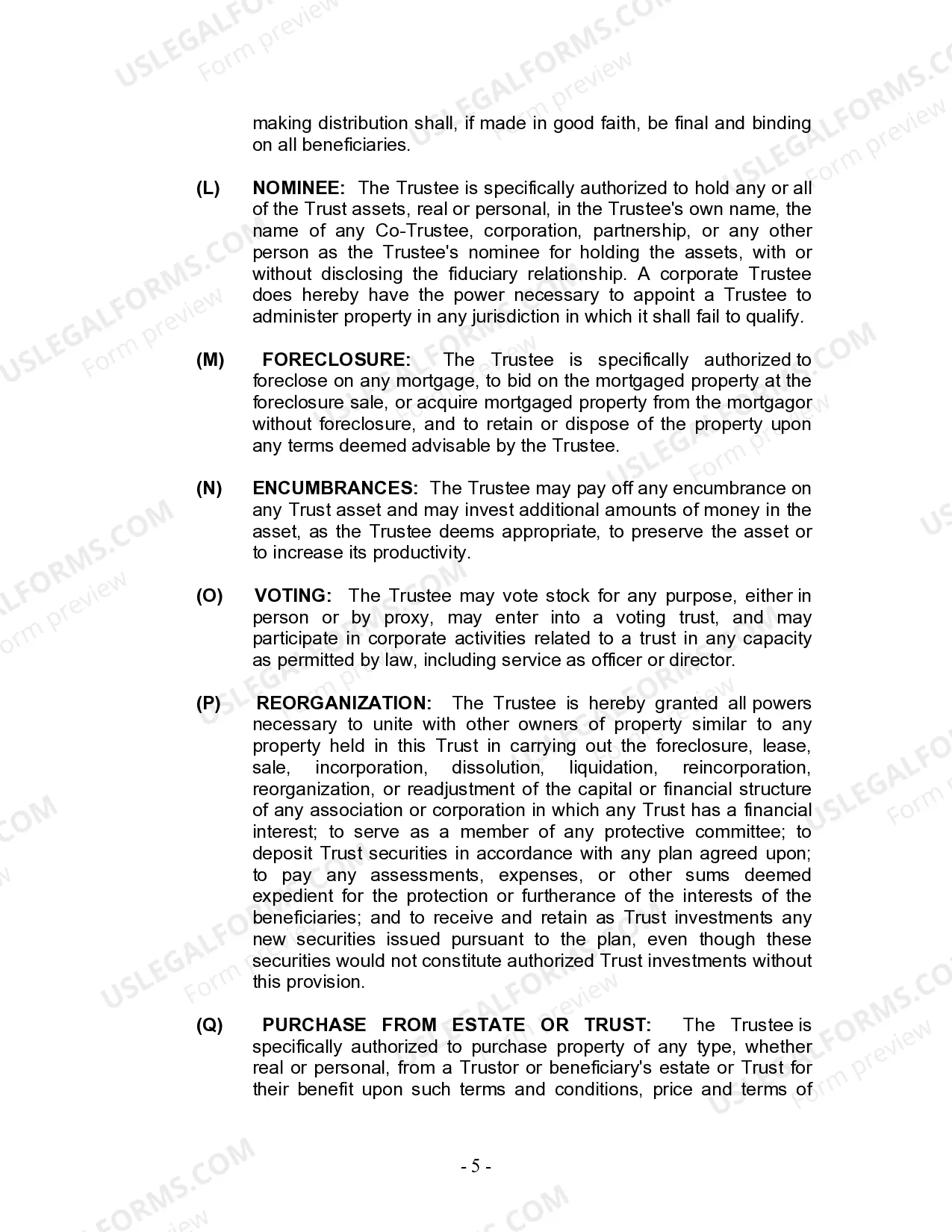
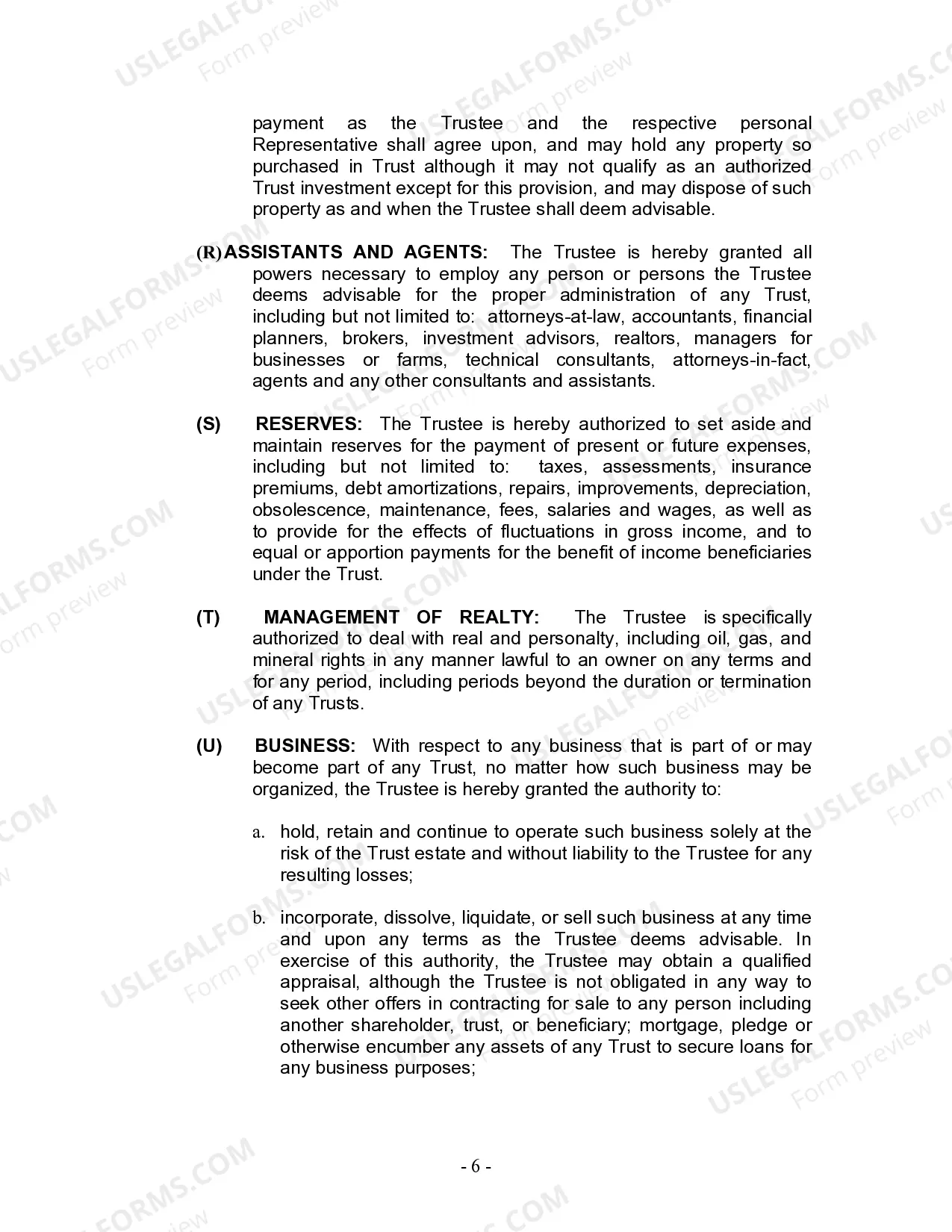
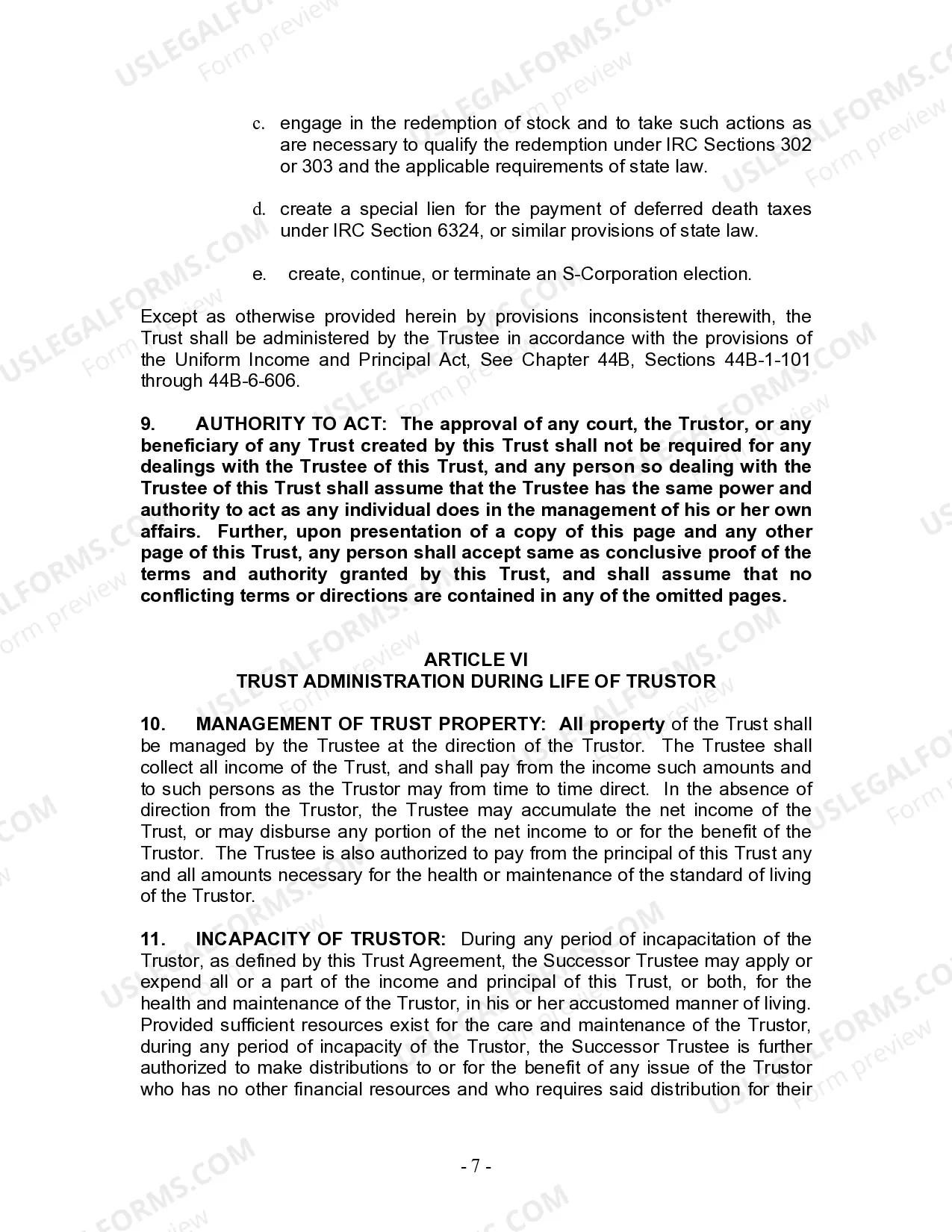
- Management Powers: Outlines the powers granted to the trustee to manage the trust effectively.
- Distribution Instructions: Specifies how the trust assets are to be distributed to the beneficiaries upon the death of the trustors.

Common use cases
This Living Trust is ideal for married couples with one child who want to ensure their assets are managed according to their wishes without the complications of probate. It is particularly useful for couples who wish to plan for their estate and provide for their child after their passing, allowing them to avoid potential disputes and ensuring a smoother transition of assets.
Who should use this form
- Couples legally married and residing together.
- Parents with one child planning for potential future needs.
- Individuals wanting to control the distribution of their estates while avoiding probate.
How to complete this form
- Identify the trustors by entering their names and address in the designated section.
- Designate the trustee(s) who will manage the trust.
- List all assets that will be placed into the trust, as detailed in Exhibit A.
- Specify any additional instructions regarding the management and distribution of assets.
- Sign and date the document in the presence of a notary if required.
Does this form need to be notarized?
Notarization is required for this form to take effect. Our online notarization service, powered by Notarize, lets you verify and sign documents remotely through an encrypted video session, available 24/7.
Get your form ready online
Our built-in tools help you complete, sign, share, and store your documents in one place.
Make edits, fill in missing information, and update formatting in US Legal Forms—just like you would in MS Word.
Download a copy, print it, send it by email, or mail it via USPS—whatever works best for your next step.
Sign and collect signatures with our SignNow integration. Send to multiple recipients, set reminders, and more. Go Premium to unlock E-Sign.
If this form requires notarization, complete it online through a secure video call—no need to meet a notary in person or wait for an appointment.
We protect your documents and personal data by following strict security and privacy standards.

Make edits, fill in missing information, and update formatting in US Legal Forms—just like you would in MS Word.

Download a copy, print it, send it by email, or mail it via USPS—whatever works best for your next step.

Sign and collect signatures with our SignNow integration. Send to multiple recipients, set reminders, and more. Go Premium to unlock E-Sign.

If this form requires notarization, complete it online through a secure video call—no need to meet a notary in person or wait for an appointment.

We protect your documents and personal data by following strict security and privacy standards.
Common mistakes
- Failing to clearly identify all parties involved in the trust.
- Neglecting to list all relevant assets, which can lead to disputes later.
- Not updating the trust after significant life changes, such as a change in marital status.
Benefits of completing this form online
- Convenience of completing the form from home without needing to visit an attorney.
- Immediate access to a legally vetted document created by licensed attorneys.
- Easy editing options to ensure the trust reflects your specific wishes accurately.
Looking for another form?


Form popularity
FAQ
In West Virginia, you can make a living trust to avoid probate for virtually any asset you own -- real estate, bank accounts, vehicles, and so on. You need to create a trust document (it's similar to a will), naming someone to take over as trustee after your death (called a successor trustee).
Many married couples own most of their assets jointly with the right of survivorship. When one spouse dies, the surviving spouse automatically receives complete ownership of the property. This distribution cannot be changed by Will.
Surviving spouses and domestic partners of intestate individuals will find that they are entitled to a solid portion of their deceased spouse's property, according to California inheritance laws.
In most cases, your property is distributed in split shares to your "heirs," which could include your surviving spouse, parents, siblings, aunts and uncles, nieces, nephews, and distant relatives. Generally, when no relatives can be found, the entire estate goes to the state.
If you and your spouse own your house jointly, the responsibility for the mortgage will pass to your surviving spouse. Your surviving spouse, who will now be the sole owner of the house, will also be responsible for the entire mortgage.
Is Probate Required in West Virginia? Yes, the settling of an estatewhether under the terms of a will or under default intestate rulesmust occur according to West Virginia law. In most cases, the deceased person's final wishes are stated in a will document with named heirs, transfers and assets.
If one dies, the house automatically belongs entirely to the surviving spouse without going through probate. This type of ownership also protects the surviving spouse's interest in the property from the people who may have been owed money by the deceased.The third type of home ownership is called a tenancy in common.
If you die without a will in West Virginia, your assets will go to your closest relatives under state intestate succession laws.
With survivorship, if one of them dies, the surviving spouse becomes the sole owner of the property. If there are no survivorship provisions, such as with tenants in common, then the surviving spouse retains half of the property but the remaining half goes into the deceased spouse's estate.