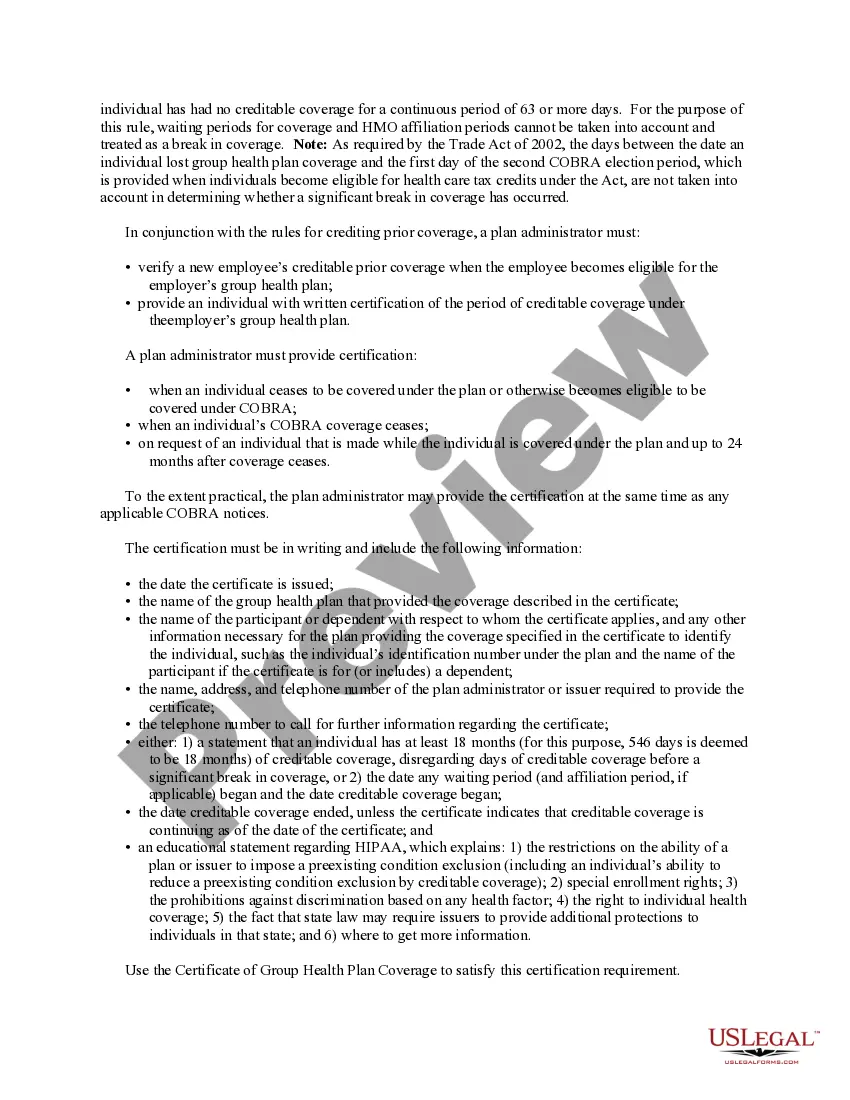
Wisconsin HIPAA Certification Requirements
Description
Get your form ready online
Our built-in tools help you complete, sign, share, and store your documents in one place.
Make edits, fill in missing information, and update formatting in US Legal Forms—just like you would in MS Word.
Download a copy, print it, send it by email, or mail it via USPS—whatever works best for your next step.
Sign and collect signatures with our SignNow integration. Send to multiple recipients, set reminders, and more. Go Premium to unlock E-Sign.
If this form requires notarization, complete it online through a secure video call—no need to meet a notary in person or wait for an appointment.
We protect your documents and personal data by following strict security and privacy standards.

Make edits, fill in missing information, and update formatting in US Legal Forms—just like you would in MS Word.

Download a copy, print it, send it by email, or mail it via USPS—whatever works best for your next step.

Sign and collect signatures with our SignNow integration. Send to multiple recipients, set reminders, and more. Go Premium to unlock E-Sign.

If this form requires notarization, complete it online through a secure video call—no need to meet a notary in person or wait for an appointment.

We protect your documents and personal data by following strict security and privacy standards.
Looking for another form?





How to fill out HIPAA Certification Requirements?
Are you currently in a position where you require documents for both business and personal purposes almost every day.
There are many legal document templates available online, but finding reliable ones can be challenging.
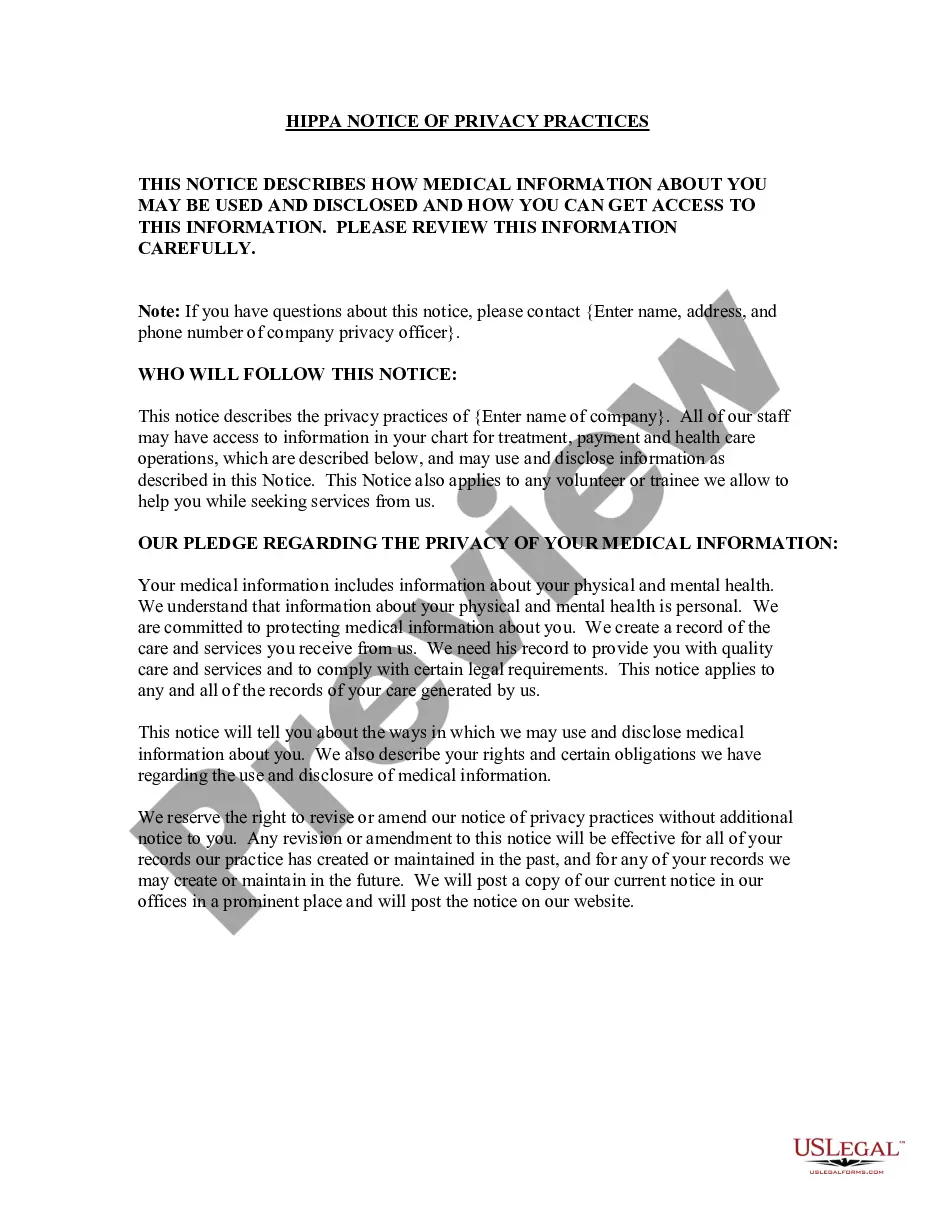
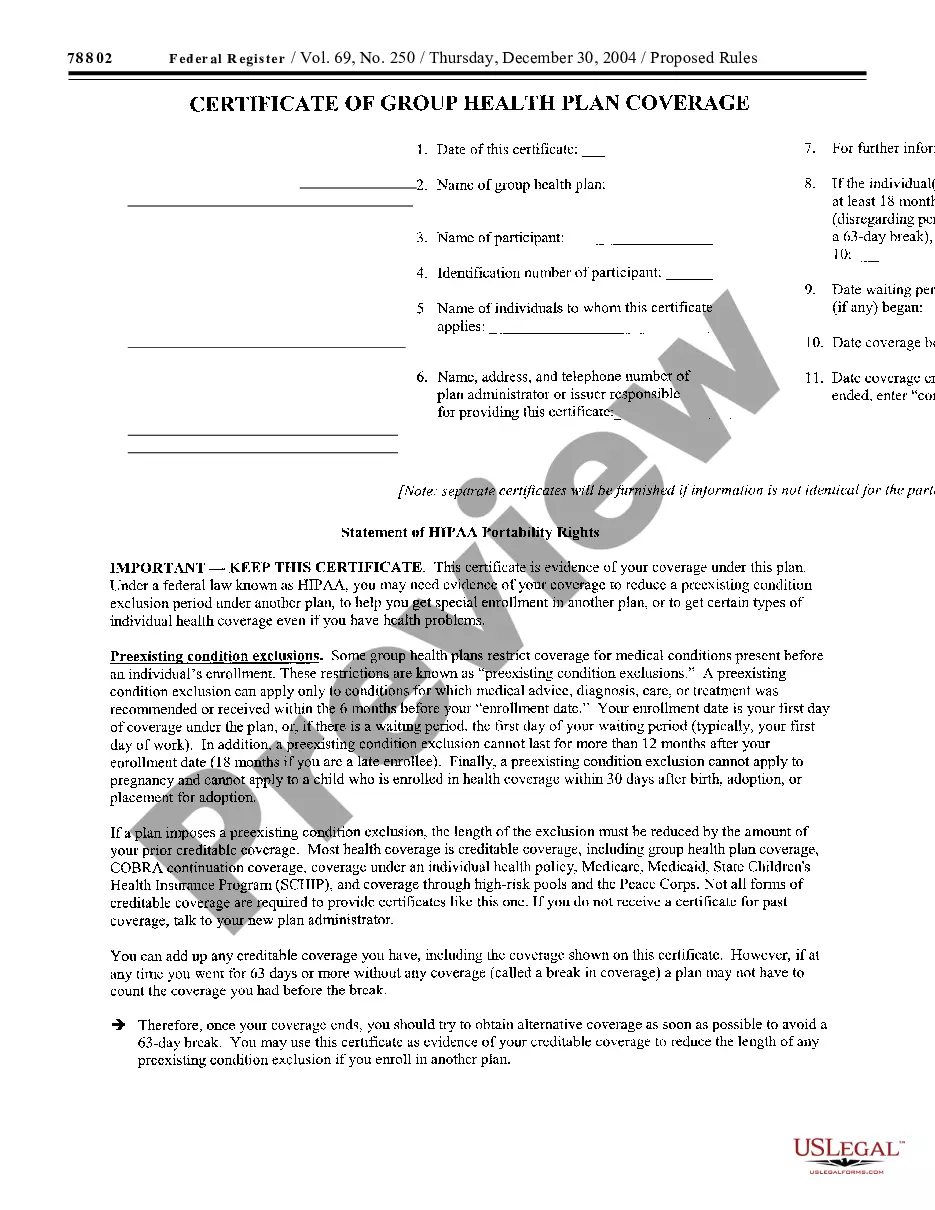
US Legal Forms offers thousands of form templates, including the Wisconsin HIPAA Certification Requirements, designed to meet state and federal standards.
Once you find the right form, click on Download now.
Select the pricing plan you prefer, fill in the required details to create your account, and pay for your order using PayPal or a credit card.
- If you are already familiar with the US Legal Forms website and have an account, simply Log In.
- Then, you can download the Wisconsin HIPAA Certification Requirements template.
- If you do not have an account and wish to start using US Legal Forms, follow these steps.
- Locate the form you need and ensure it is for the correct city/state.
- Use the Review button to evaluate the document.
- Read the description to confirm that you have chosen the correct form.
- If the form is not what you are looking for, use the Search section to find the document that suits your needs.
Form popularity
FAQ
The frequency of HIPAA training is at the discretion of each covered entity, with HIPAA only saying that retraining should be periodic. That should be taken to mean at least every 2 years, although the industry best practice which should be followed is to provide refresher HIPAA training to the workforce annually
How to Become HIPAA Compliant in 7 StepsCreate Privacy and Security Policies for the Organization.Name a HIPAA Privacy Officer and Security Officer.Implement Security Safeguards.Regularly Conduct Risk Assessments and Self-Audits.Maintain Business Associate Agreements.Establish a Breach Notification Protocol.More items...?
Covered entities (anyone providing treatment, payment, and operations in healthcare) and business associates (anyone who has access to patient information and provides support in treatment, payment, or operations) must meet HIPAA Compliance.
Because Covered Entities and Business Associates are required to keep HIPAA-related papers for at least six years, in theory, HIPAA Certification has a shelf life of six years - although this may be considerably longer in reality.
Hospitals, doctors, clinics, psychologists, dentists, chiropractors, nursing homes, and pharmacies are considered Healthcare Providers and need to be HIPAA compliant. Examples of Health Plans include health insurance companies, HMOs, company health plans, Medicare, and Medicaid.
HIPAA Compliance and Certification Services HIPAA (Health Insurance Portability and Accountability Act of 1996) is United States legislation,which provides data privacy and security provisions to safeguard medical information.
HIPAA requires that both covered entities and business associates provide HIPAA training to members of their workforce who handle PHI. This means that even small physician's offices need to train their personnel on HIPAA. Doctors need to be trained.
1) Does OSHA/HIPAA training need to be conducted annually? Yes, annual OSHA training for all employees is mandatory, and training for new-hire employees must be completed within ten days of hire. HIPAA requires organizations to provide training for all employees, new workforce members, and periodic refresher training.
Organizations that do not have to follow the government's privacy rule known as the Health Insurance Portability and Accountability Act (HIPAA) include the following, according to the US Department of Health and Human Services: Life insurers. Employers. Workers' compensation carriers.
For certain organizations, the short answer is yes, HIPAA training for employees is mandatory. HIPAA compliance training must be implemented for every organization that requires it, regardless of size or annual budget.