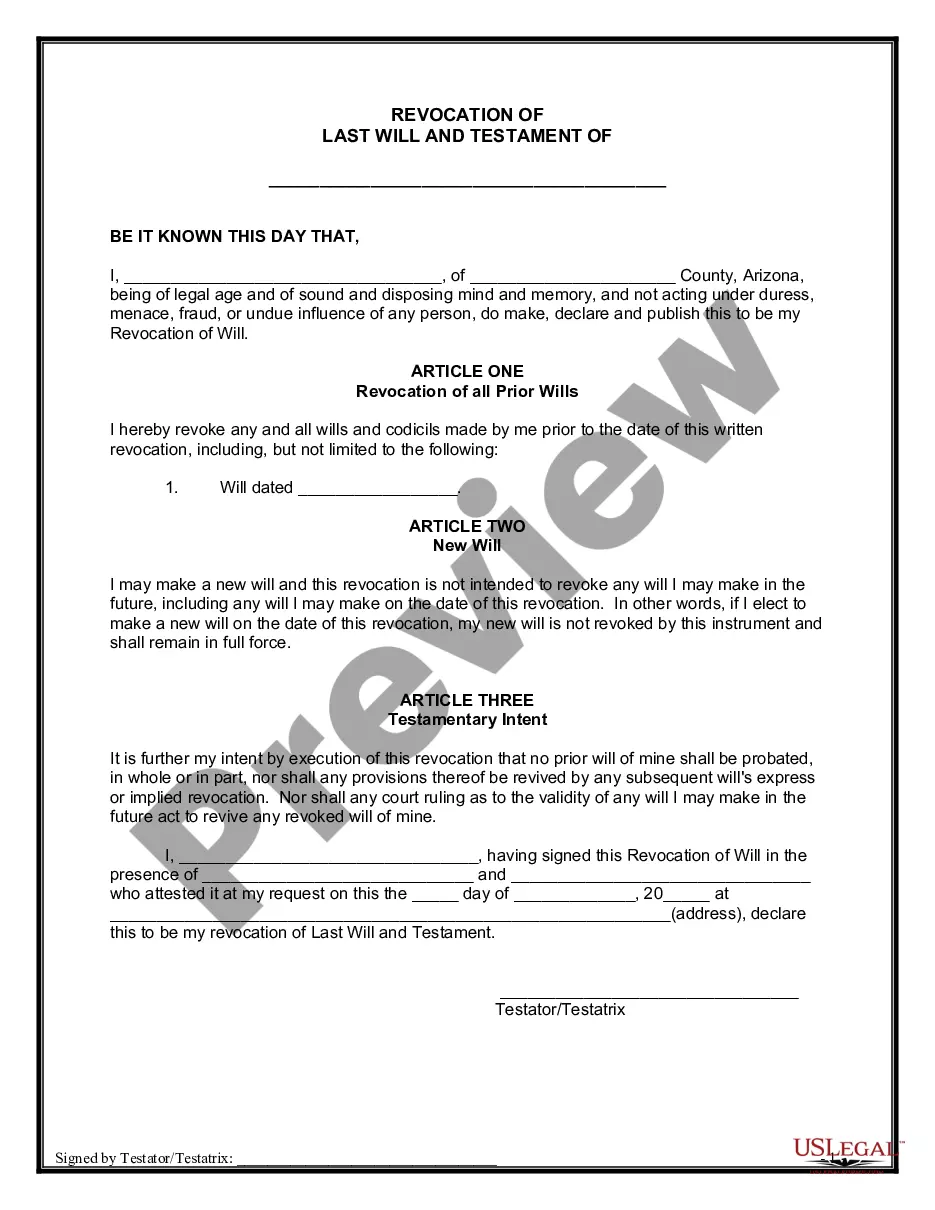
Wisconsin Real Estate Lien Agreement
About this form
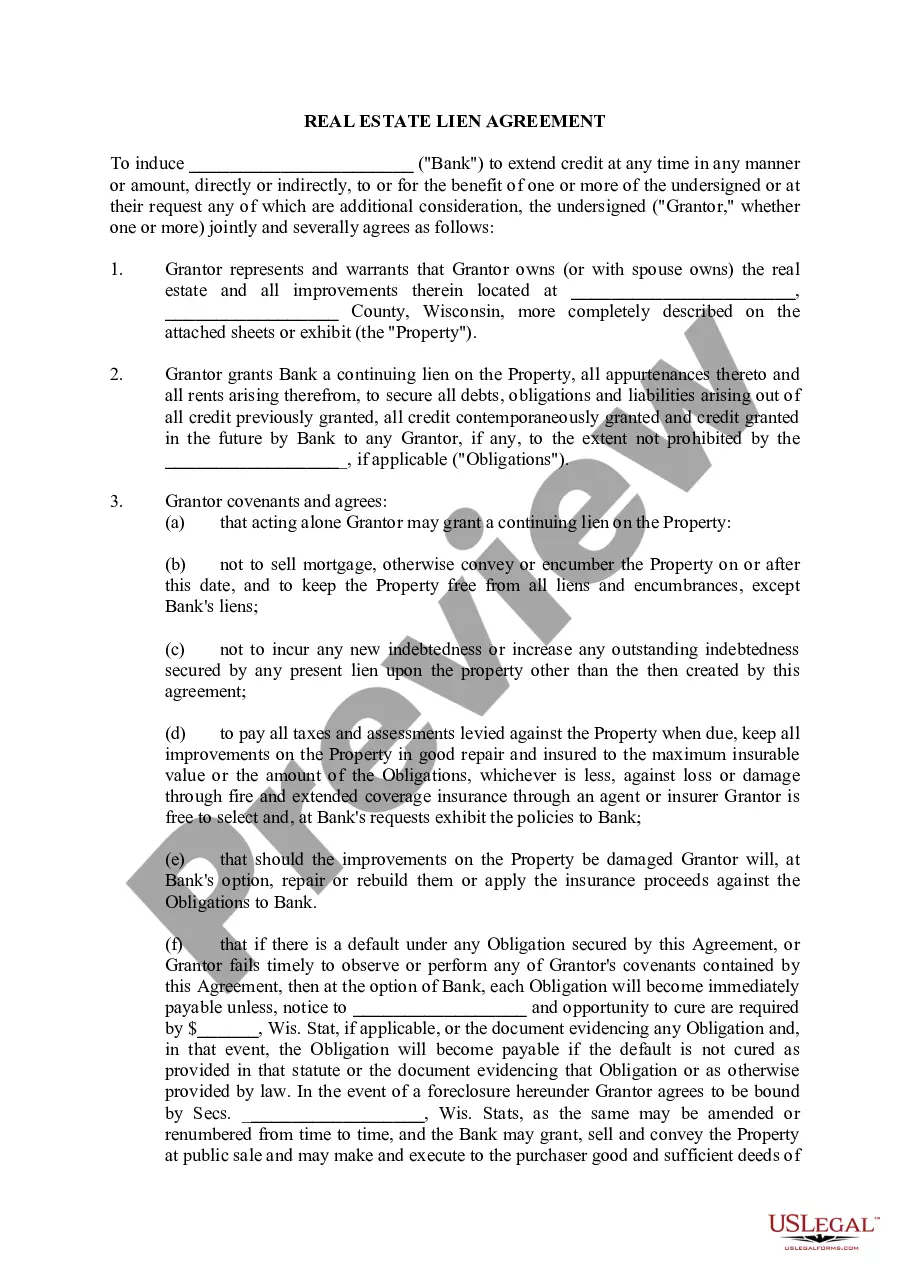
The Real Estate Lien Agreement is a legal document that allows a property owner (Grantor) to secure credit by granting a continuing lien on their property to a lender (Bank). This agreement ensures that the lender has a legal claim on the property, which serves as collateral for any debts or obligations. Unlike other agreements that might involve short-term loans or unsecured credit, this form establishes a lasting security interest in the property, allowing the property owner to access unlimited credit as needed while protecting the lender's interests.
What’s included in this form
- Identification of Grantor and Bank, including contact information.
- Description of the property being secured, including legal details.
- Terms outlining the continuing lien on the property and any associated obligations.
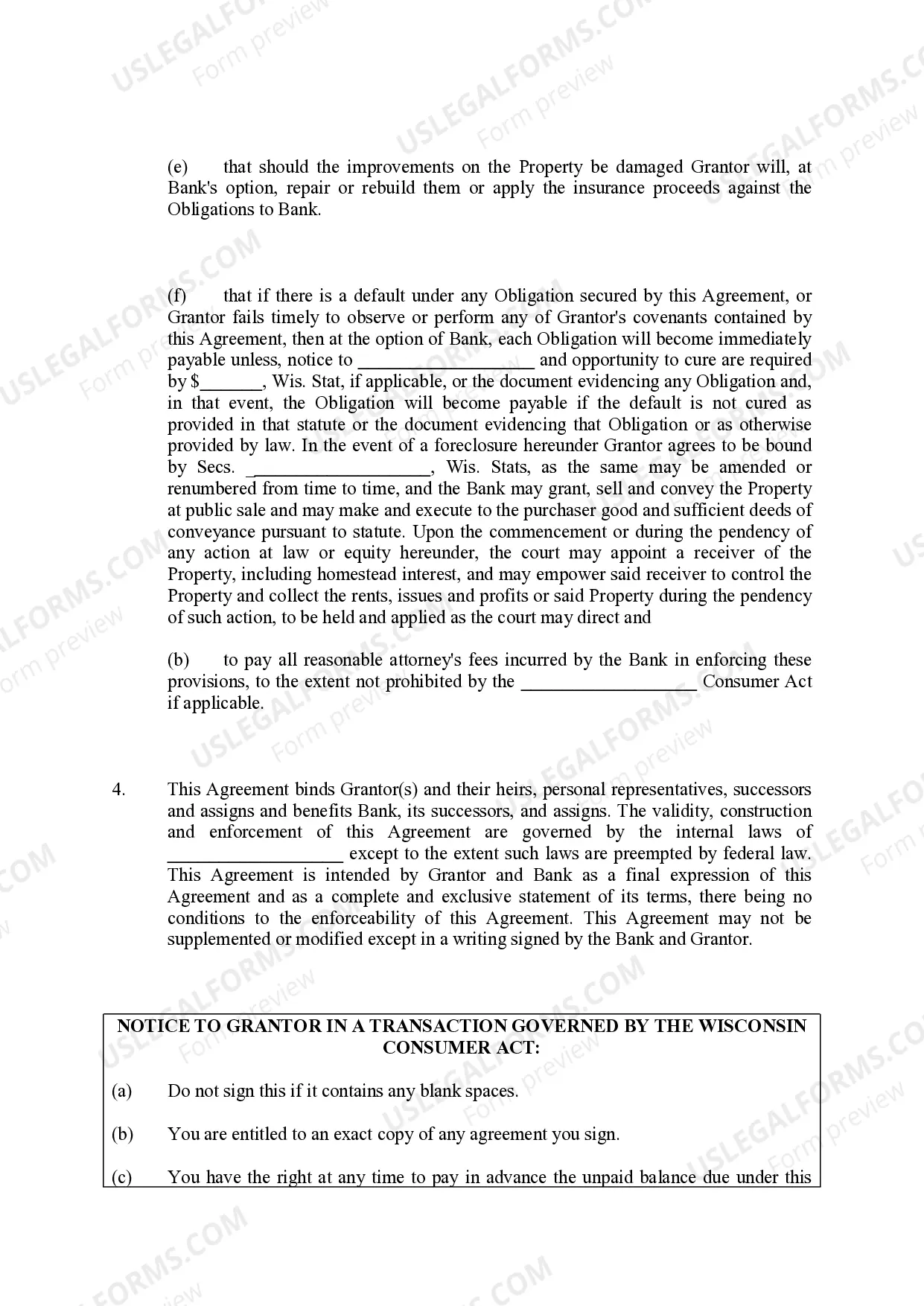
- Covenants by the Grantor regarding property maintenance and debt management.
- Conditions for default and the lender's recourse in case of breach.
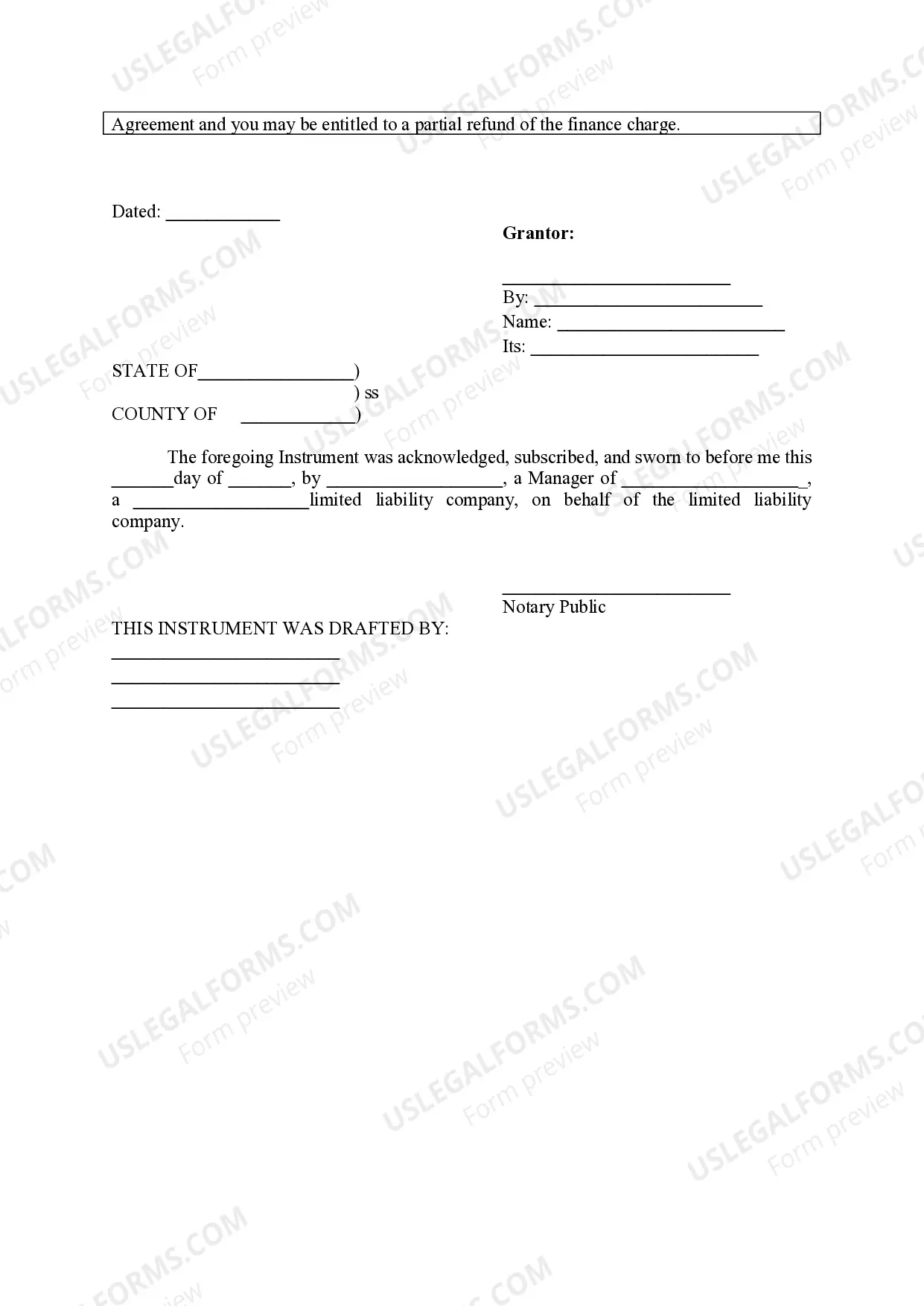
- Notary acknowledgment for the authenticity of the agreement.
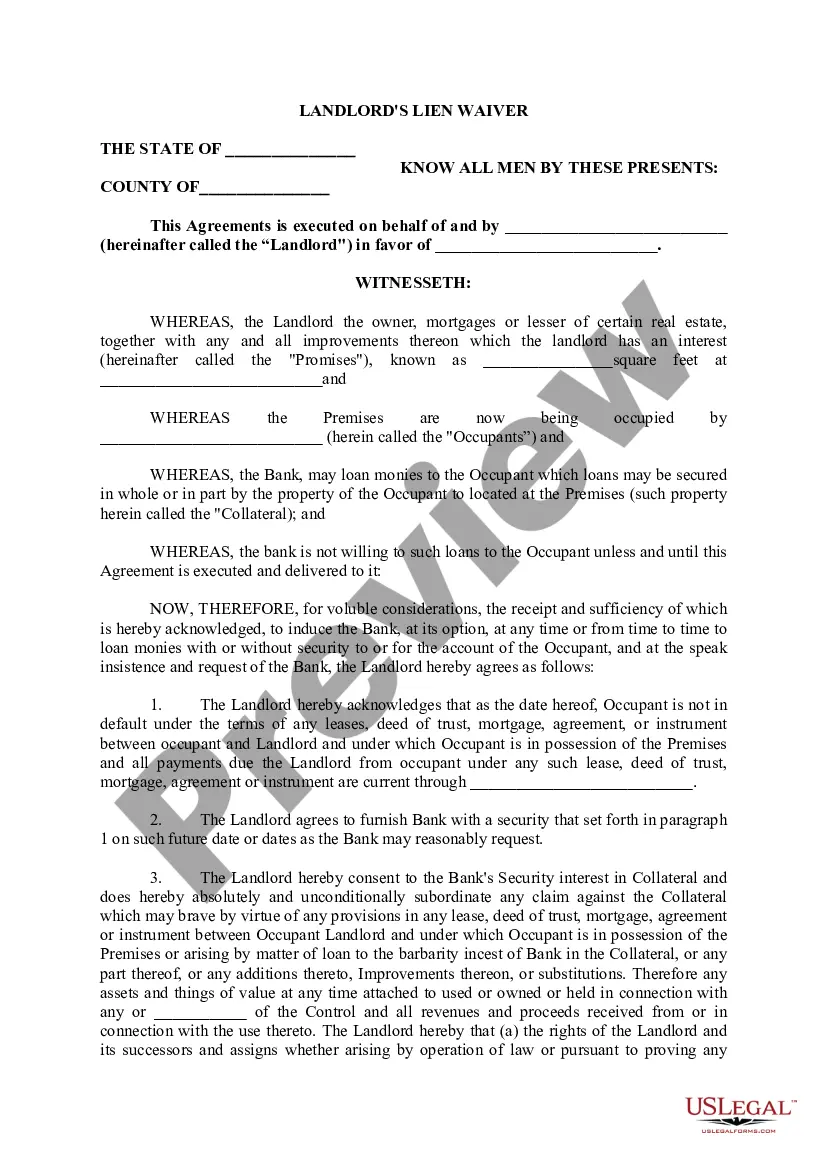
When to use this form
This form should be used when a property owner intends to borrow money from a bank or lender and wants to secure that loan with their property. It is ideal for situations where ongoing access to credit is desired, such as for home renovations, business expenses, or consolidating other debts. A Real Estate Lien Agreement provides assurance to the lender and allows the borrower to leverage their real estate as a financial resource.
Who needs this form
- Property owners seeking to secure loans through their real estate.
- Individuals or businesses attempting to establish a line of credit backed by property equity.
- Borrowers who wish to maintain ownership of their property while accessing credit.
Completing this form step by step
- Identify the parties involved, including the Grantor and the Bank.
- Provide a detailed description of the property being secured by the lien.
- Specify the terms of the lien, including any obligations or debts to be covered.
- Complete the covenants and agreements section, ensuring all commitments are clear.
- Include signatures from all parties involved and ensure notarization where required.
Does this form need to be notarized?
Yes, this form must be notarized to be legally valid. The notary's acknowledgment ensures the authenticity of the signatures and the intent of the parties involved. US Legal Forms offers integrated online notarization services for added convenience, allowing you to complete the notarization process securely through a video call without the need for travel.
Get your form ready online
Our built-in tools help you complete, sign, share, and store your documents in one place.
Make edits, fill in missing information, and update formatting in US Legal Forms—just like you would in MS Word.
Download a copy, print it, send it by email, or mail it via USPS—whatever works best for your next step.
Sign and collect signatures with our SignNow integration. Send to multiple recipients, set reminders, and more. Go Premium to unlock E-Sign.
If this form requires notarization, complete it online through a secure video call—no need to meet a notary in person or wait for an appointment.
We protect your documents and personal data by following strict security and privacy standards.

Make edits, fill in missing information, and update formatting in US Legal Forms—just like you would in MS Word.

Download a copy, print it, send it by email, or mail it via USPS—whatever works best for your next step.

Sign and collect signatures with our SignNow integration. Send to multiple recipients, set reminders, and more. Go Premium to unlock E-Sign.

If this form requires notarization, complete it online through a secure video call—no need to meet a notary in person or wait for an appointment.

We protect your documents and personal data by following strict security and privacy standards.
Typical mistakes to avoid
- Leaving blank spaces in the agreement, which can invalidate the document.
- Failing to provide an accurate description of the property.
- Not properly executing the agreement, including signatures and notary acknowledgment.
- Overlooking state-specific requirements regarding lien agreements.
Why use this form online
- Convenient access to legal forms at any time, eliminating the need for in-person appointments.
- Editable templates allow users to customize the agreement to fit their specific needs.
- Reliable documentation drafted by licensed attorneys to ensure compliance with legal standards.
Looking for another form?

Form popularity
FAQ
A mortgage creates a lien on your property that gives the lender the right to foreclose and sell the home to satisfy the debt. A deed of trust (sometimes called a trust deed) is also a document that gives the lender the right to sell the property to satisfy the debt should you fail to pay back the loan.
While it's unlikely that just anyone can put a lien on your home or land, it's not unheard of for a court decision or a settlement to result in a lien being placed against a property.
A claimant must file an original and 2 signed, copies of a Wisconsin "Claim for Lien" form with the clerk of circuit court in the county where the property is located, at least thirty (30) days after service of the notice of intent to file claim for lien, but within, and no later than, 6 months from the date that the
A claimant must file an original and 2 signed, copies of a Wisconsin "Claim for Lien" form with the clerk of circuit court in the county where the property is located, at least thirty (30) days after service of the notice of intent to file claim for lien, but within, and no later than, 6 months from the date that the
A judgment can remain on your credit report for seven years or until the statute of limitations expires, whichever is longer. In Wisconsin, the statute of limitations on a judgment can be up to 20 years.
There are three common types of liens: statutory, consensual, and judgment.
In Wisconsin, a potential lien claimant must file a mechanics lien within 6 months after the last day on which labor and/or materials were furnished to the project, but at least 30 days after the filing of a Notice of Intention to File a Claim of Lien.
If you have unpaid debt of any kind, this can lead the creditors that you owe money to place a lien on your assets.In other cases, liens may be placed on property by a court order as a result of legal action.