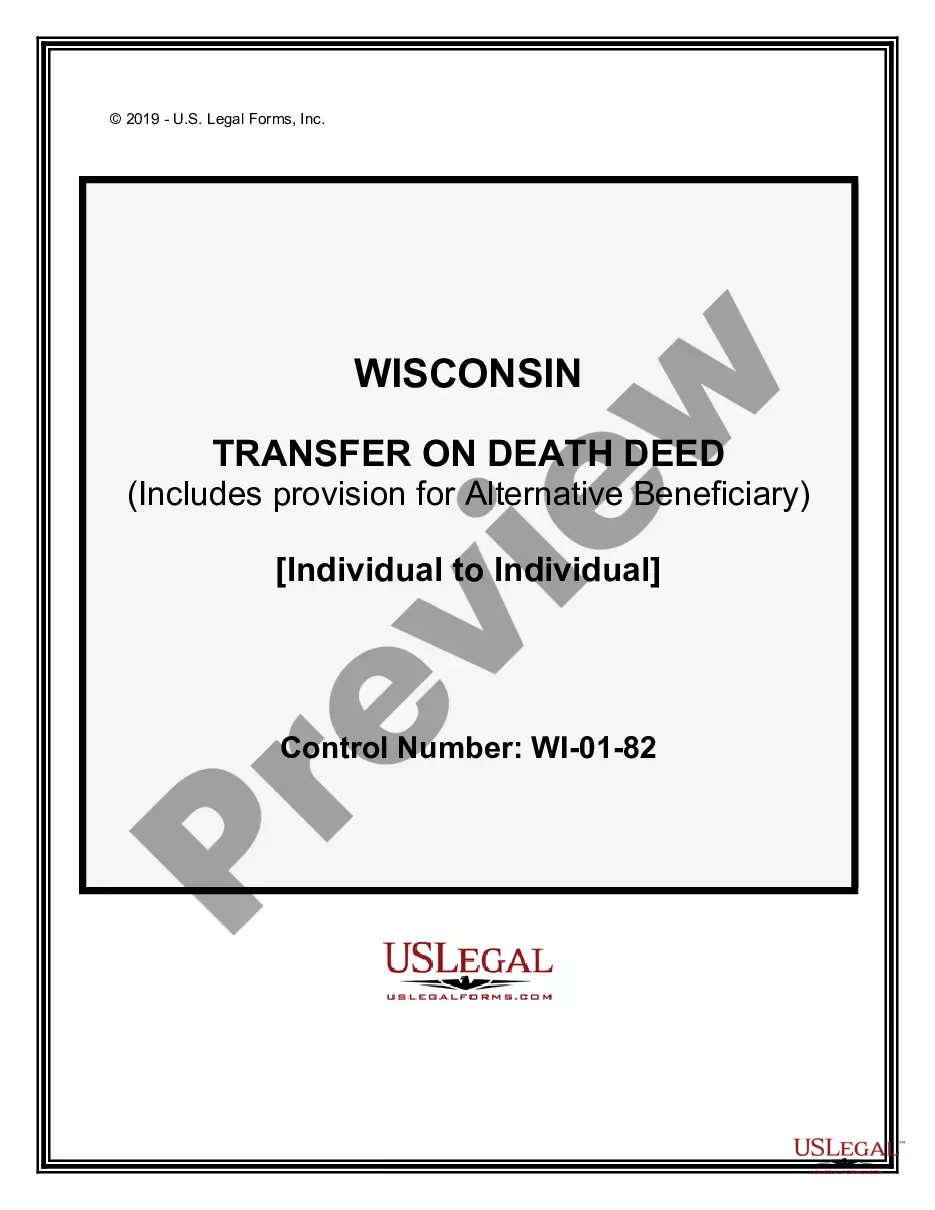
Wisconsin Transfer on Death Deed or TOD - Beneficiary Deed from Individual to Individual includes Alternate Beneficiary Provision
Understanding this form
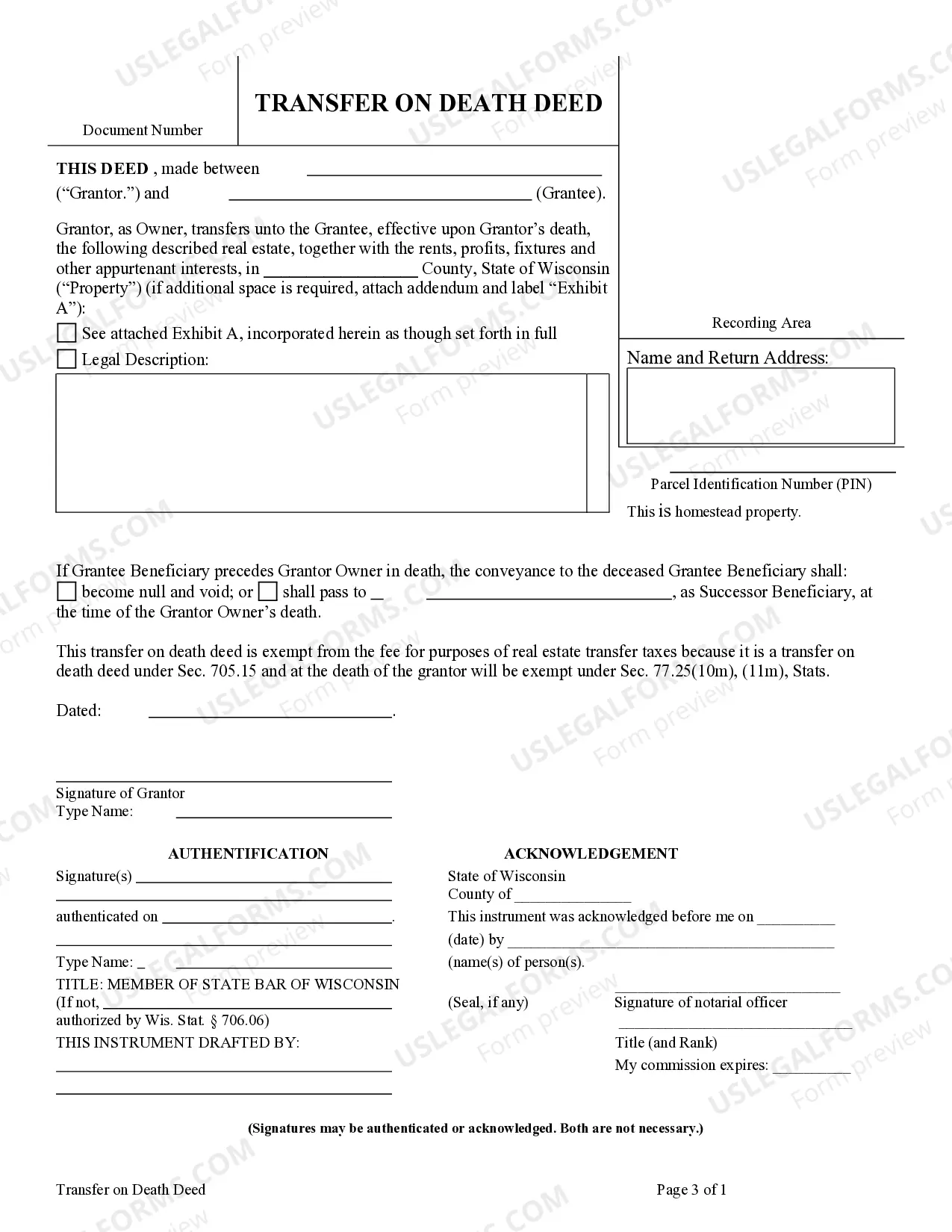
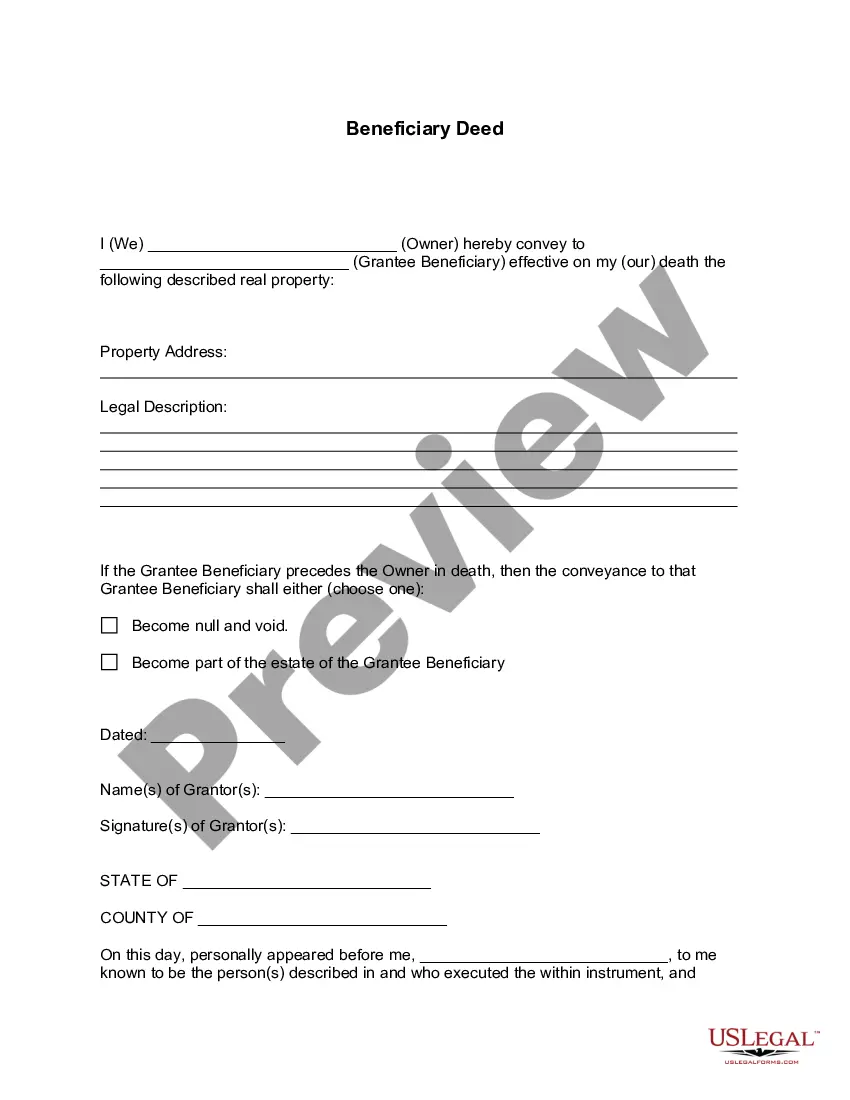
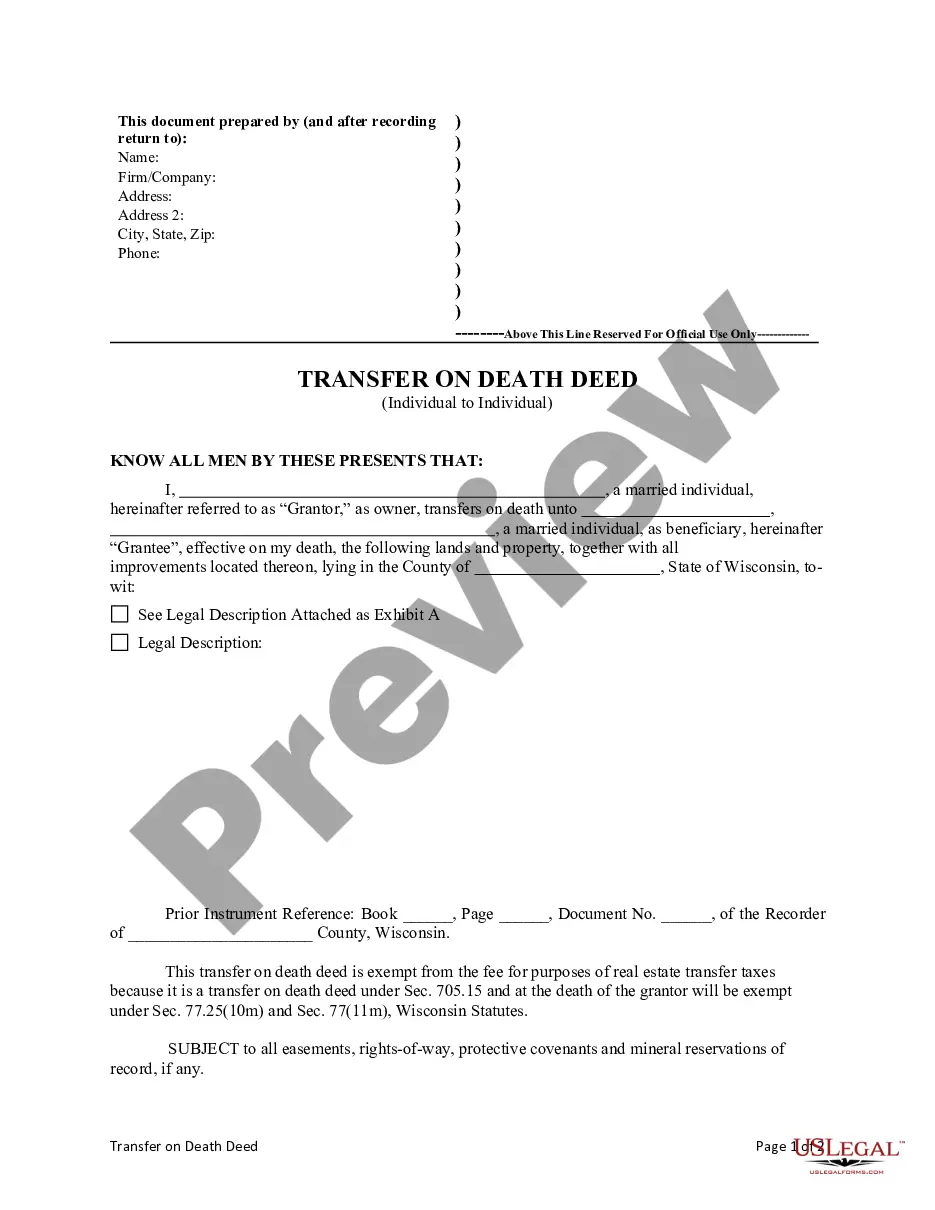
The Transfer on Death Deed (TOD) is a legal document used to transfer ownership of property upon the death of the Grantor. Unlike a traditional deed, this form allows the Grantor to retain full control over the property during their lifetime, as it is revocable until death. The TOD includes a provision for an alternate beneficiary in case the primary beneficiary does not survive the Grantor, ensuring a clear succession plan. This form complies with all relevant state laws and offers a simple way to facilitate property transfer without the complications of probate.
Form components explained
- Identification of the Grantor and Grantee: Clearly states who is transferring and receiving the property.
- Legal description of the property: A detailed description to avoid ambiguity regarding the property being transferred.
- Alternate beneficiary provision: Designates a secondary beneficiary if the primary beneficiary does not survive the Grantor.
- Revocation clause: Affirms that the Grantor can revoke the deed until their death.
- Signature and date lines: Required for the validity of the document.


When this form is needed
This form is ideal for individuals who wish to ensure that their property is transferred directly to a designated beneficiary upon their death. It is particularly useful for those who want to avoid probate or provide a clear plan for the succession of real estate. Common situations for using a Transfer on Death Deed include estate planning, transferring family property, or when a specific property should pass to a chosen person rather than going through the standard inheritance process.
Intended users of this form
- Individuals looking to transfer property to a specific beneficiary upon their death.
- Homeowners wanting to avoid the probate process after their passing.
- Those with a clear intention of who will inherit their property.
- Individuals interested in designating an alternate beneficiary for additional security in their estate planning.
How to prepare this document
- Identify the Grantor: Fill in personal information of the person transferring the property.
- Identify the Grantee: Enter the name and information of the person who will receive the property.
- Provide property details: Include a legal description of the property being transferred.
- Designate an alternate beneficiary: If applicable, specify the alternative individual who would inherit if the primary beneficiary does not survive the Grantor.
- Sign and date the document: Ensure this is done per state law requirements to validate the deed.
Does this form need to be notarized?
This form does not typically require notarization unless specified by local law. Always check your state's requirements to ensure the deed's validity.
Get your form ready online
Our built-in tools help you complete, sign, share, and store your documents in one place.
Make edits, fill in missing information, and update formatting in US Legal Forms—just like you would in MS Word.
Download a copy, print it, send it by email, or mail it via USPS—whatever works best for your next step.
Sign and collect signatures with our SignNow integration. Send to multiple recipients, set reminders, and more. Go Premium to unlock E-Sign.
If this form requires notarization, complete it online through a secure video call—no need to meet a notary in person or wait for an appointment.
We protect your documents and personal data by following strict security and privacy standards.

Make edits, fill in missing information, and update formatting in US Legal Forms—just like you would in MS Word.

Download a copy, print it, send it by email, or mail it via USPS—whatever works best for your next step.

Sign and collect signatures with our SignNow integration. Send to multiple recipients, set reminders, and more. Go Premium to unlock E-Sign.

If this form requires notarization, complete it online through a secure video call—no need to meet a notary in person or wait for an appointment.

We protect your documents and personal data by following strict security and privacy standards.
Common mistakes
- Failing to include a legal description of the property, leading to confusion about what is being transferred.
- Not designating an alternate beneficiary, which can complicate the transfer if the primary beneficiary passes away before the Grantor.
- Neglecting to sign the deed, which invalidates the document.
- Assuming the form is valid without proper knowledge of state-specific requirements.
- Forgetting to keep a copy of the executed deed for personal records.
Benefits of using this form online
- Convenience: Access and complete the form from the comfort of your home at any time.
- Editability: Easily make changes and ensure all information is accurate before finalizing.
- Reliability: Forms are drafted by licensed attorneys, ensuring compliance with current laws.
- Immediate availability: Download and print the completed form instantly.
Legal use & context
- The Transfer on Death Deed serves as a legal mechanism to transfer property outside of probate.
- While often effective, it is not advisable for all property types; consult legal advice if unsure.
- State laws may vary, so understanding your local regulations is crucial for enforceability.
- This deed should clearly state the intentions of the Grantor to avoid future disputes.
Main things to remember
- A Transfer on Death Deed allows property to be transferred directly to a beneficiary upon the Grantor's death.
- The deed remains revocable, providing flexibility during the Grantor's lifetime.
- Including an alternate beneficiary ensures continued intentions are respected even if the primary beneficiary is deceased.
- Review local laws to understand any specific requirements related to the form.
Looking for another form?
Form popularity
FAQ
If the property is to be transferred to a beneficiary the Executor or Administrator will need to submit a document called an 'Assent' to the Land Registry, with a copy of the Grant of Representation. The Land Registry will then transfer the property into the name of the new owner.
All you need to do is fill out a simple form, provided by the bank, naming the person you want to inherit the money in the account at your death. As long as you are alive, the person you named to inherit the money in a payable-on-death (POD) account has no rights to it.
In most cases, the surviving owner or heir obtains the title to the home, the former owner's death certificate, a notarized affidavit of death, and a preliminary change of ownership report form. When all these are gathered, the transfer gets recorded, the fees are paid, and the county issues a new title deed.
A transfer on death deed allows you to retain full ownership during your lifetime and conveys your full interest to the Grantee upon your death.Ultimately, the decision between a life estate and transfer on death deed is dependent on why you want to transfer the property.
Wisconsin's Transfer on Death Deed. Wisconsin's Transfer on Death Deed (TOD Deed) allows for the non-probate transfer of real property upon death. This seemingly simple law, Wisconsin Statute 705.15, can be used as a powerful estate planning tool, in the right circumstances.
Get a Deed Form or Prepare Your Own. You can buy a state-specific TOD deed form for your state or type up your own document. Name the Beneficiary. Describe the Property. Sign the Deed. Record the Deed.
If you'd like to avoid having your property going through the probate process, it's a good idea to look into a transfer on death deed. A transfer on death deed allows you to select a beneficiary who will receive your property, but only when you've passed away.
File a petition in probate court. The first step to transferring the property to the rightful new owners is to open up a case in probate court. Petition the court for sale and convey the property to the purchaser. Next, you must petition the court to sell the property.