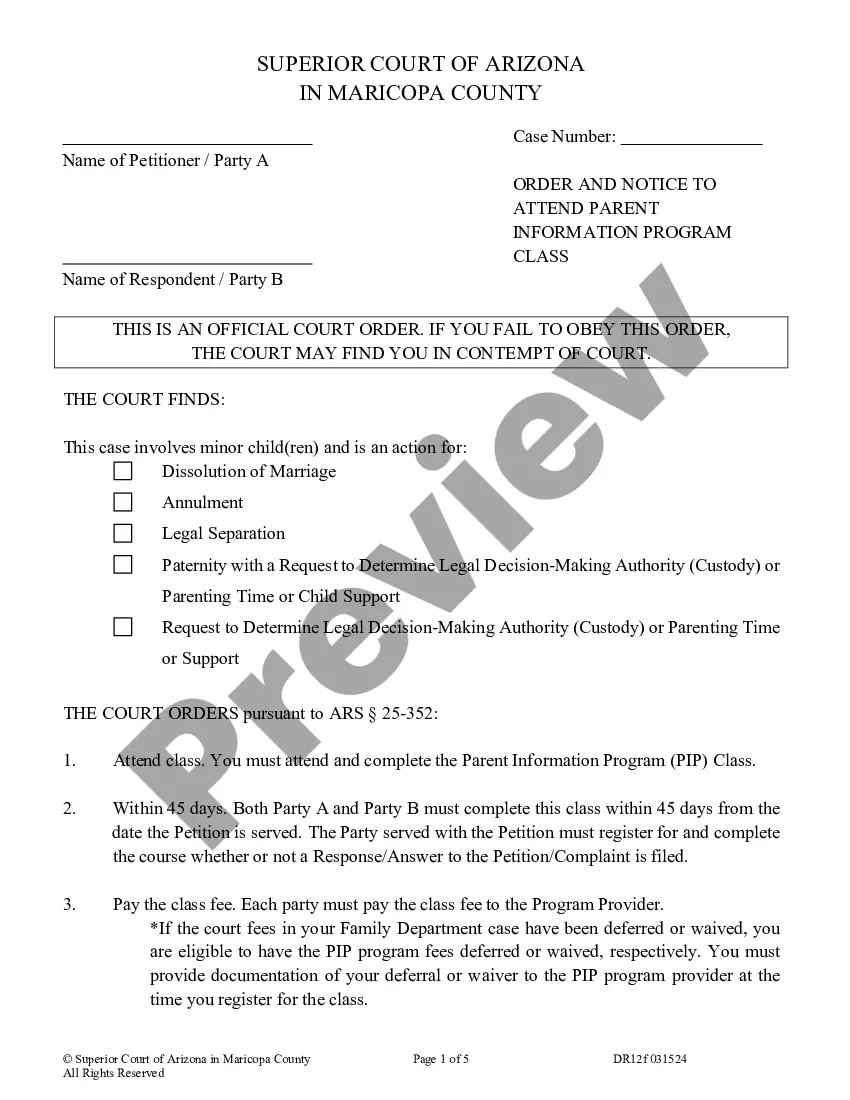
Mississippi Plaintiff's Response to Defendant's Motion for Partial Summary Judgment
About this form
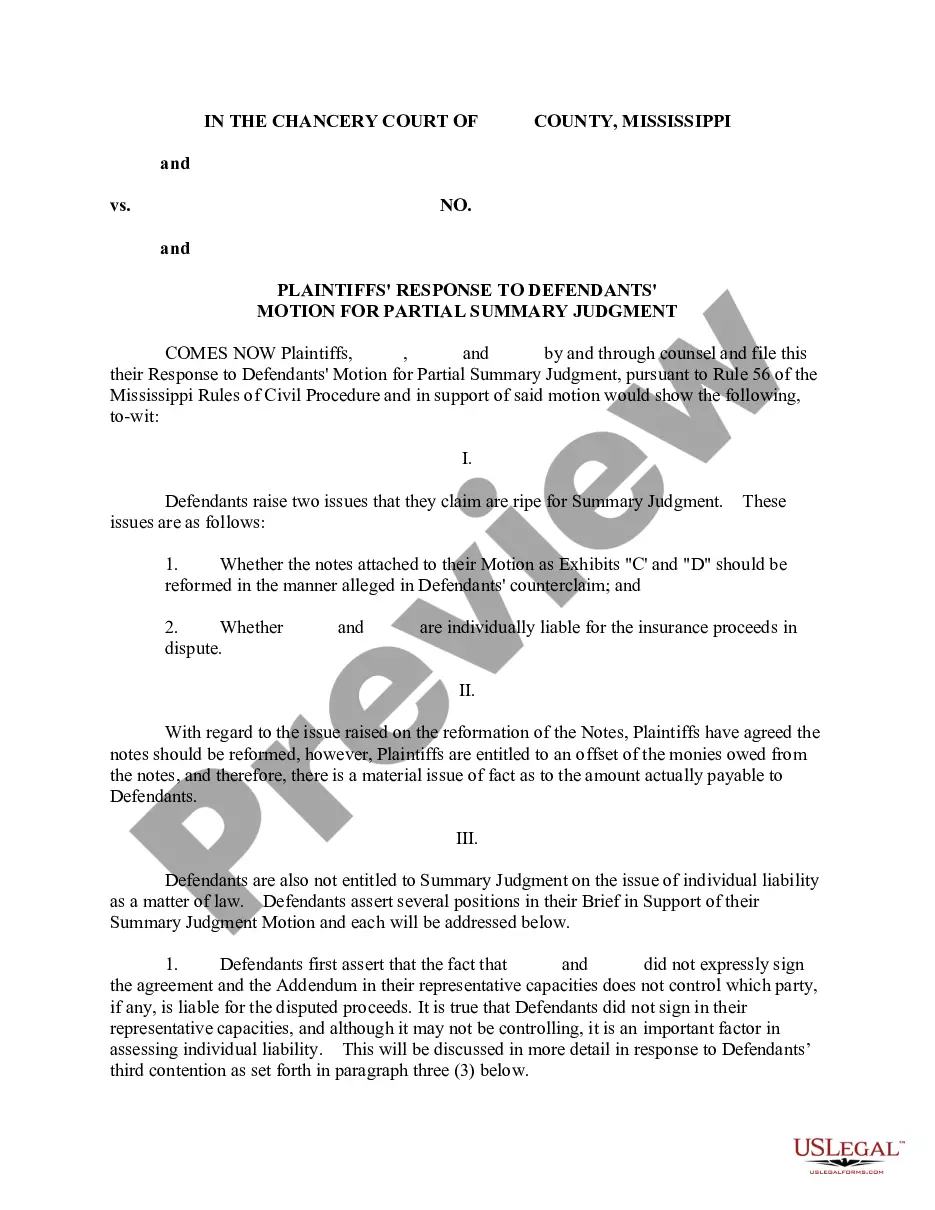
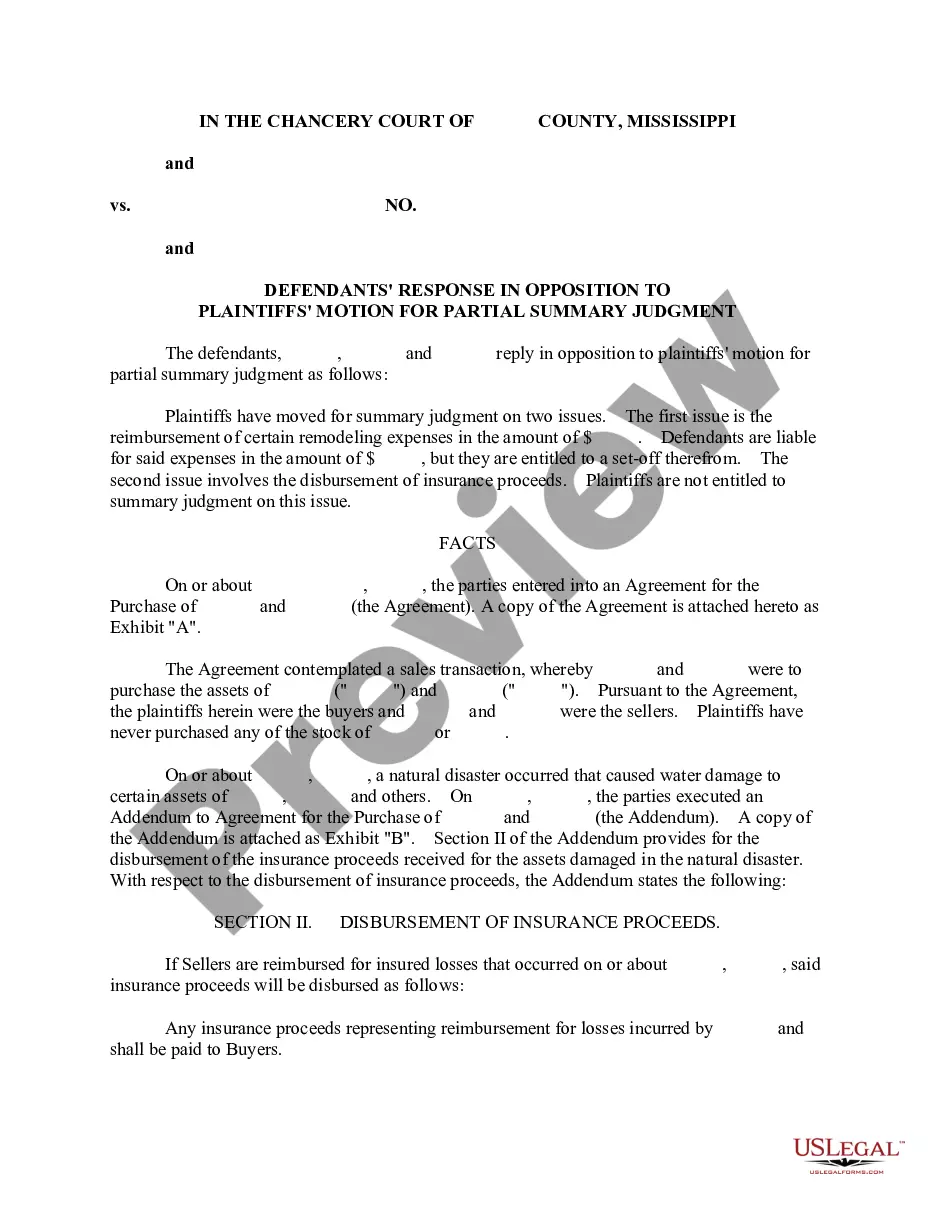
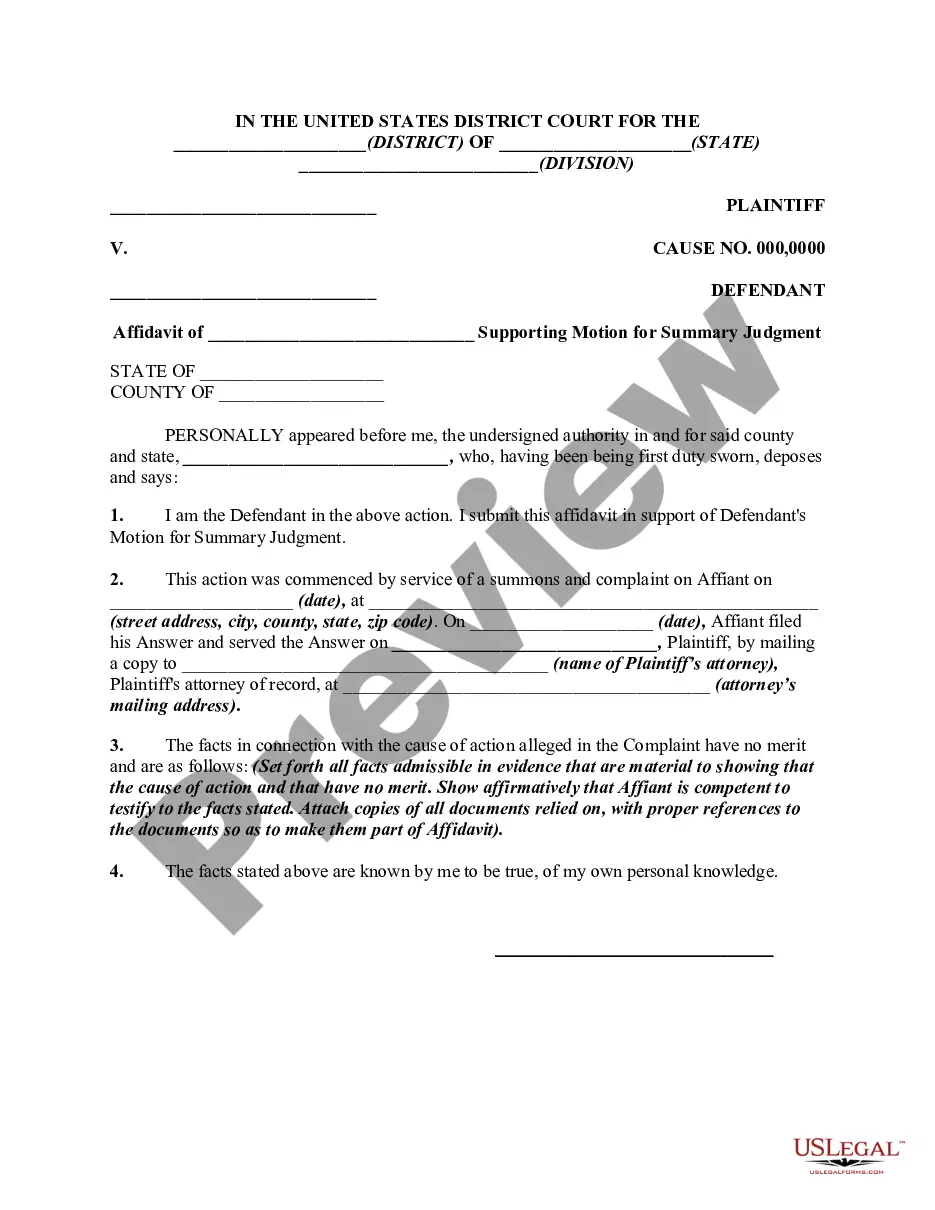
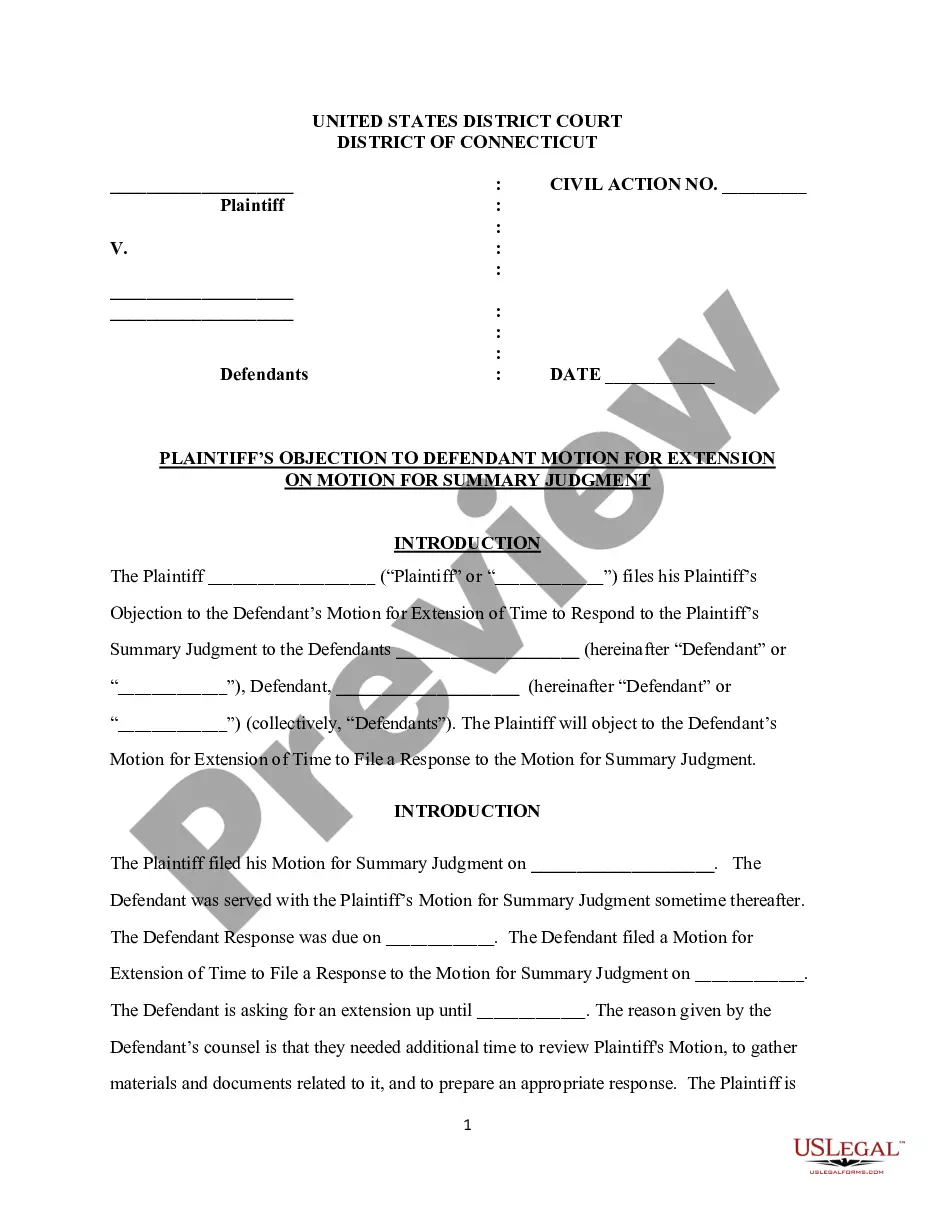
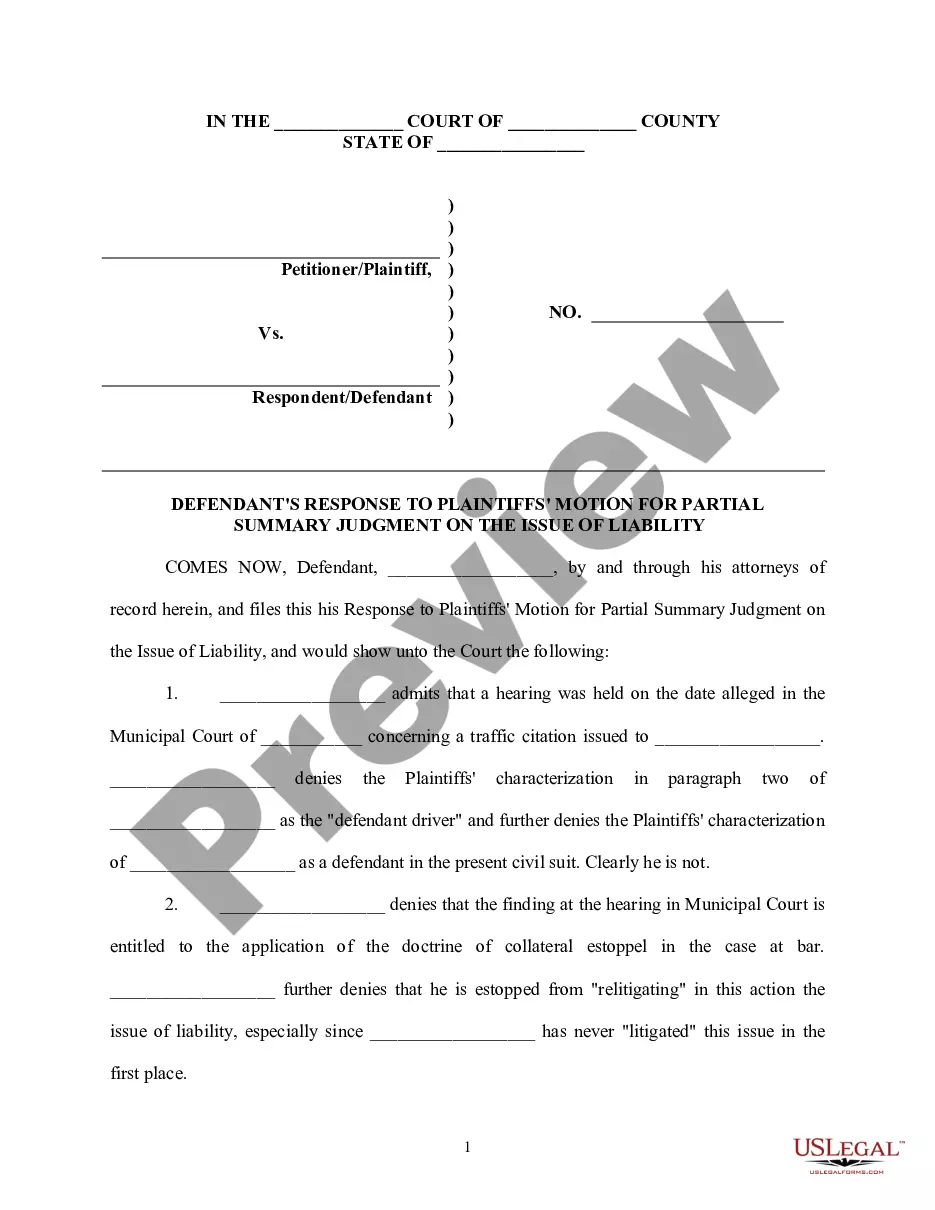
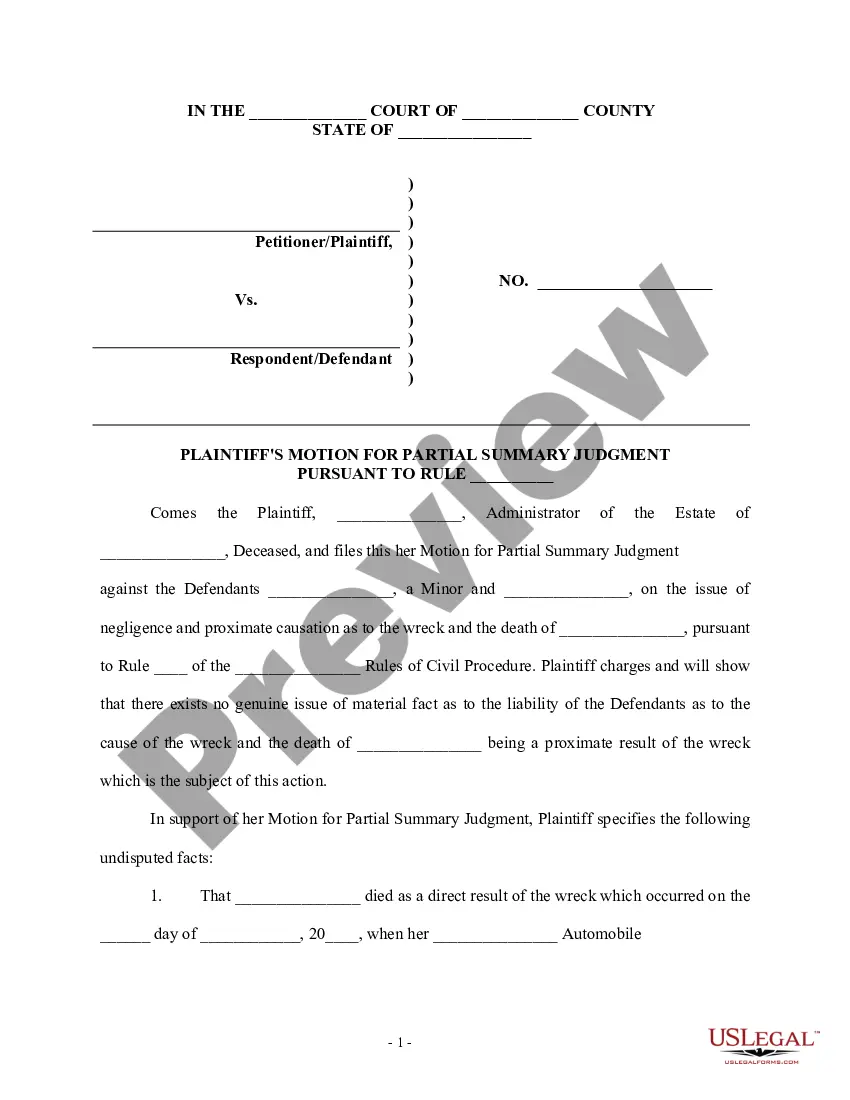
This form is a Plaintiff's Response to Defendant's Motion for Partial Summary Judgment. It provides a structured framework for plaintiffs to address and contest claims made by defendants seeking a summary judgment. This response form is essential for clarifying legal arguments and ensuring that all relevant facts are presented, differentiating it from other forms related to judicial responses and motions.
Key parts of this document
- Introduction: States the purpose of the response and identifies the specific motion being contested.
- Issues Raised: Addresses the specific issues outlined by the defendants regarding summary judgment.
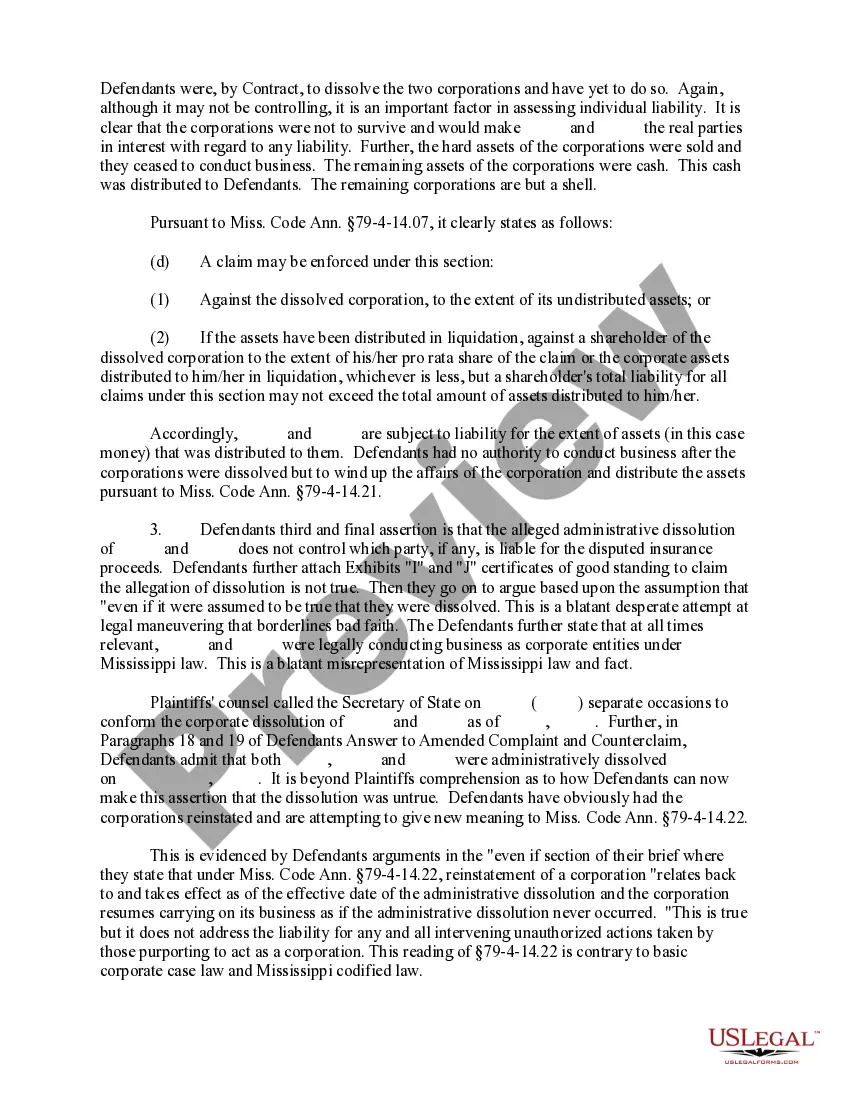
- Legal Standards: Cites relevant laws and precedents that govern summary judgments and applicable liabilities.
- Arguments: Provides space for detailing the plaintiff's legal arguments in response to each issue raised.
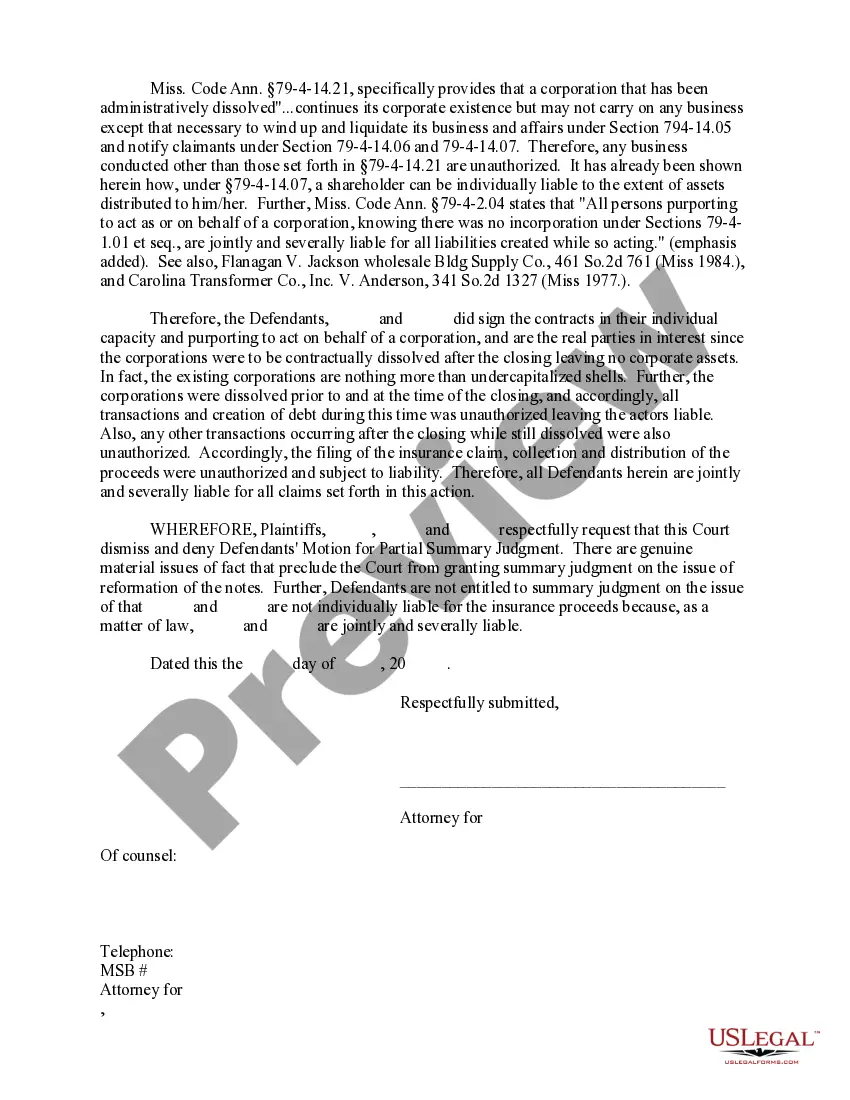
- Conclusion: Summarizes the plaintiffâs position and requests relief from the court.

Situations where this form applies
This form is needed when a plaintiff must respond to a defendant's motion for partial summary judgment in a civil lawsuit. It is particularly relevant when the defendant argues that there are no genuine issues of material fact and that they are entitled to judgment as a matter of law on specific claims. This form helps articulate the plaintiff's position and defense against such motions.
Who can use this document
- Plaintiffs involved in civil litigation where a defendant has filed for partial summary judgment.
- Individual or corporate litigants seeking to assert their legal rights and counter claims made by defendants.
- Legal representatives or attorneys looking to prepare a formal response to motions filed against their clients.
Steps to complete this form
- Identify the parties involved in the case, including the plaintiff and defendant.
- Clearly state the specific issues raised by the defendant that you are responding to.
- Cite applicable Mississippi laws and any relevant case law supporting your arguments.
- Detail your counterarguments, addressing each claim made by the defendant.
- Conclude by reiterating your request for the court to deny the defendantâs motion for summary judgment.
Does this form need to be notarized?
This form does not typically require notarization unless specified by local law. It is advisable to check jurisdiction-specific requirements to ensure compliance.
Get your form ready online
Our built-in tools help you complete, sign, share, and store your documents in one place.
Make edits, fill in missing information, and update formatting in US Legal Forms—just like you would in MS Word.
Download a copy, print it, send it by email, or mail it via USPS—whatever works best for your next step.
Sign and collect signatures with our SignNow integration. Send to multiple recipients, set reminders, and more. Go Premium to unlock E-Sign.
If this form requires notarization, complete it online through a secure video call—no need to meet a notary in person or wait for an appointment.
We protect your documents and personal data by following strict security and privacy standards.

Make edits, fill in missing information, and update formatting in US Legal Forms—just like you would in MS Word.

Download a copy, print it, send it by email, or mail it via USPS—whatever works best for your next step.

Sign and collect signatures with our SignNow integration. Send to multiple recipients, set reminders, and more. Go Premium to unlock E-Sign.

If this form requires notarization, complete it online through a secure video call—no need to meet a notary in person or wait for an appointment.

We protect your documents and personal data by following strict security and privacy standards.
Common mistakes to avoid
- Failing to address all issues raised in the defendant's motion.
- Inadequately supporting arguments with relevant legal citations or precedents.
- Missing important deadlines for filing the response with the court.
- Using vague language that does not clearly articulate the plaintiffâs position.
Advantages of online completion
- Convenience of downloading the form immediately after purchase.
- Editability allows customization to fit specific case details.
- Access to forms drafted by licensed attorneys, ensuring legal accuracy.
- Simple step-by-step guidance for completing the form correctly.
Legal use & context
- This form is used in legal proceedings to respond formally to motions for summary judgment.
- It helps protect the plaintiffâs rights by ensuring their arguments and evidence are considered.
- Legal standards for summary judgment in Mississippi require thorough responses to avoid dismissal.
Looking for another form?
Form popularity
FAQ
(b) (1) A party may move for judgment on the pleadings.(A) If the moving party is a plaintiff, that the complaint states facts sufficient to constitute a cause or causes of action against the defendant and the answer does not state facts sufficient to constitute a defense to the complaint.
A response must be in writing and include the same supporting documents as a motion for summary judgment. The opposition to the motion for summary judgment should also include a statement of facts showing the dispute and supporting documents.
Judgment on the pleadings is a motion made after pleading and before discovery; summary judgment happens after discovery and before trial; JMOL occurs during trial.Timing is very important in making a motion for JMOL; the motion can be made only after the opposing party has presented its case.
When a motion for summary judgment is denied, the nonmoving party achieves a form of premium that enables a case to settle for an additional amount. Put simply, the settlement value of a case increases when a motion for summary judgment is denied.
Instead the party who believes that the undisputed facts compel a ruling in his or her favor will file a motion for summary judgment. The motion asks the court to consider the undisputed facts and apply the law to them, and argues that the law requires a judgment for the party bringing the motion.
Rule 56 of the Federal Rules of Civil Procedure governs summary judgment for federal courts. Under Rule 56, in order to succeed in a motion for summary judgment, a movant must show 1) that there is no genuine dispute as to any material fact, and 2) that the movant is entitled to judgment as a matter of law.
19, 2008) (motions to dismiss or for summary judgment are not responsive pleadings, and therefore do not cut off a plaintiff's right to amend his pleadings once at any time).
When it comes to summary judgment, plaintiff lawyers are often guilty of forgetting the fact that either party can file one. If you have solid evidence that can't be disputed, you may very well be able to prove your claim without going to trial.