Washington Community Property Affidavit for Recordation
What is this form?
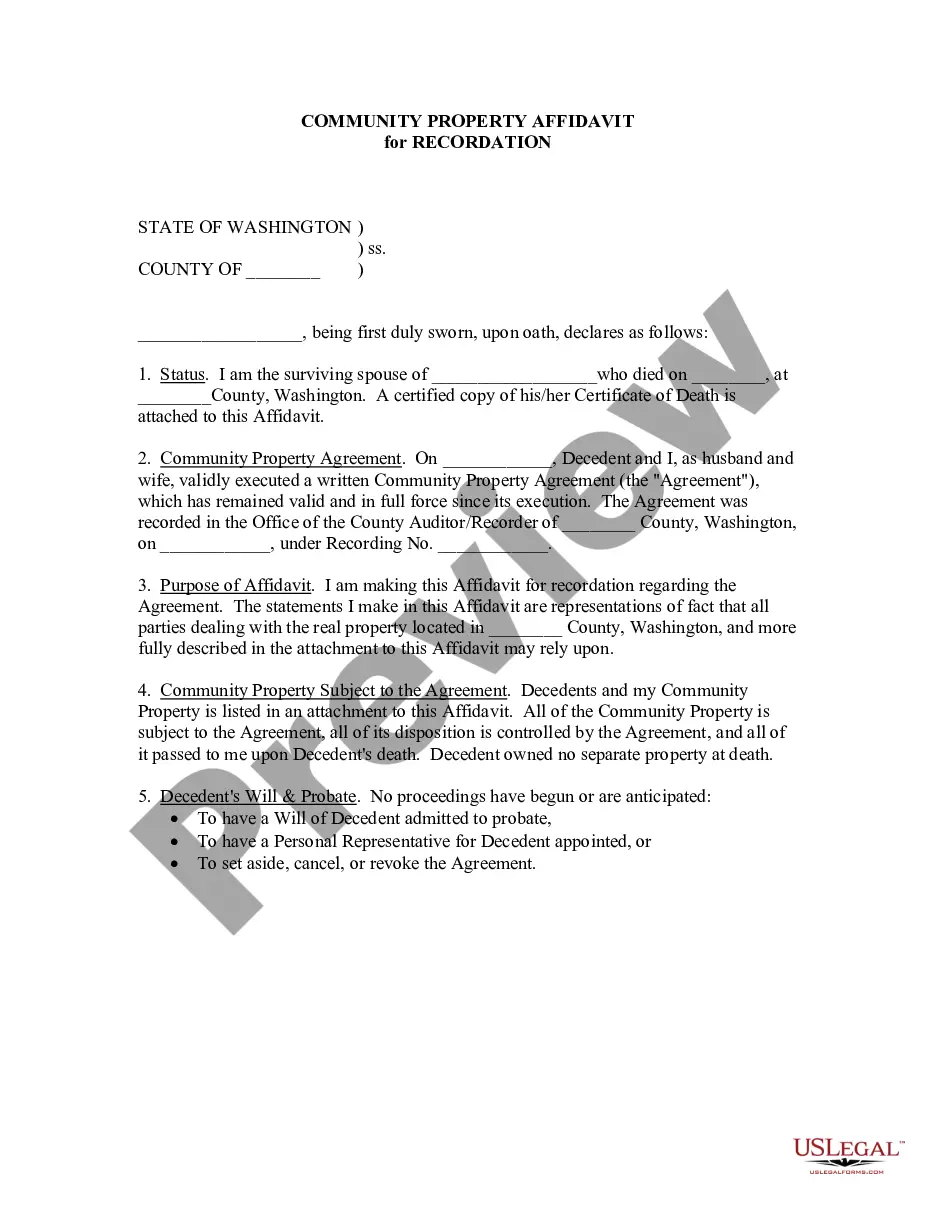
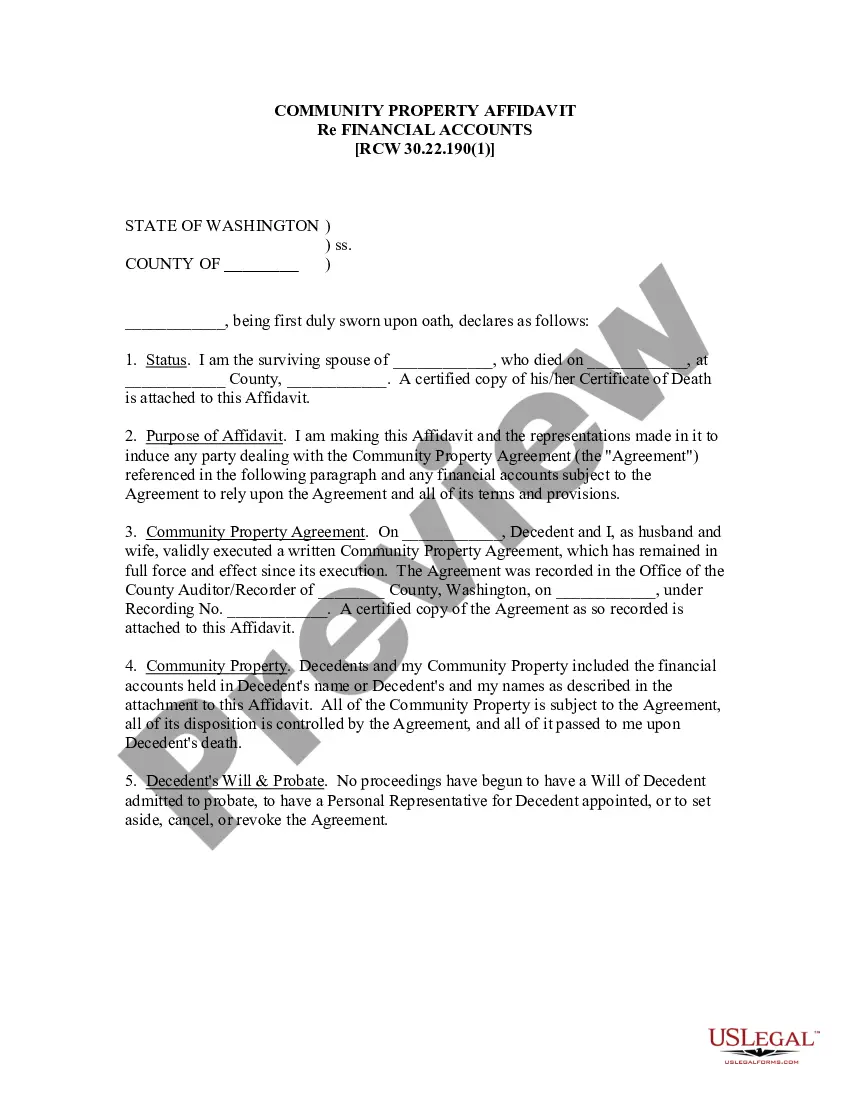
The Community Property Affidavit for Recordation is a legal document used by the surviving spouse to convert a deceased spouseâs separate property into community property. This form facilitates the transfer of all community property to the surviving spouse upon the death of the first spouse, ensuring that the estate is properly documented and recognized under local law.
Form components explained
- Surviving spouse declaration and identity confirmation.
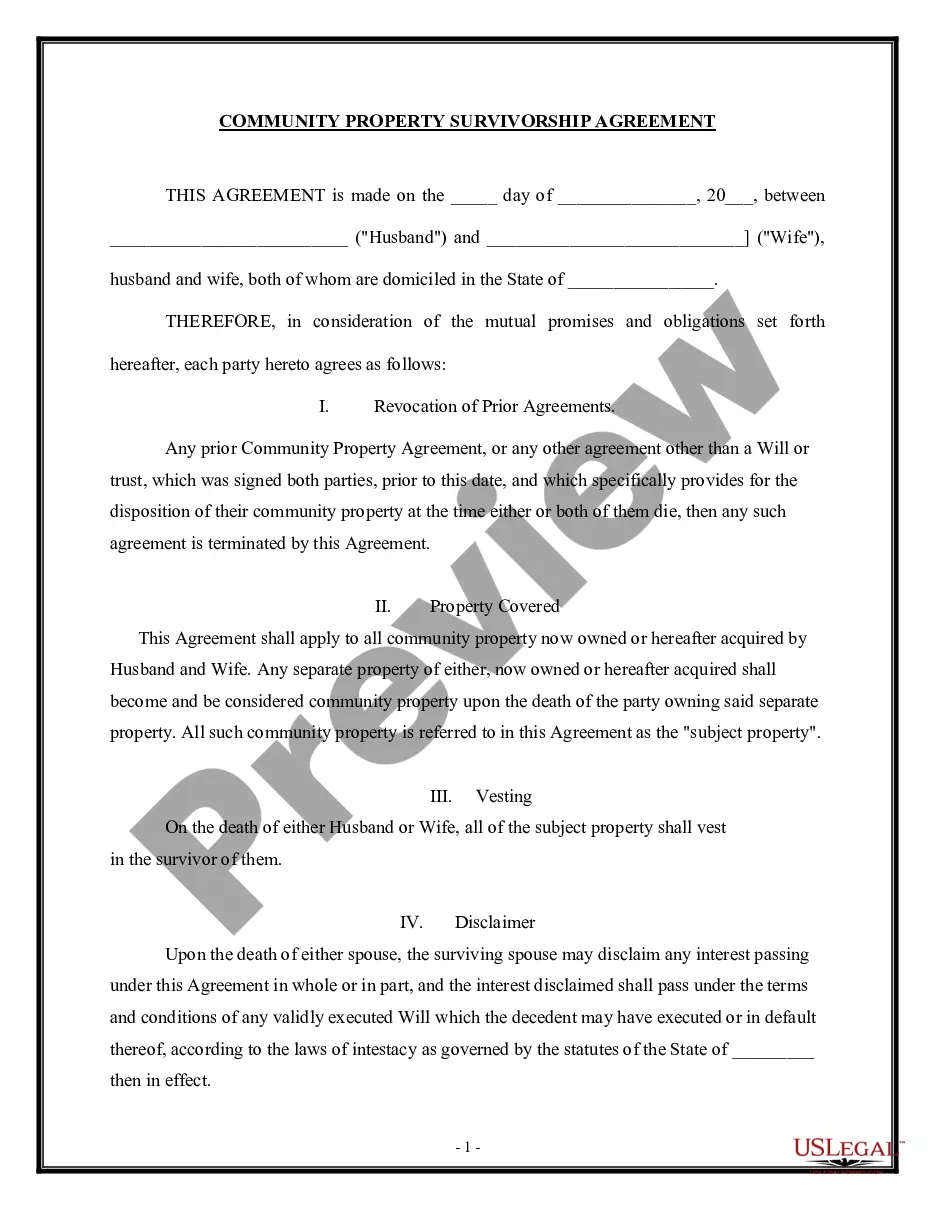
- Details about the Community Property Agreement executed by both spouses.
- Confirmation of property subject to the Community Property Agreement.
- Statement regarding absence of probate proceedings for the deceased spouse.
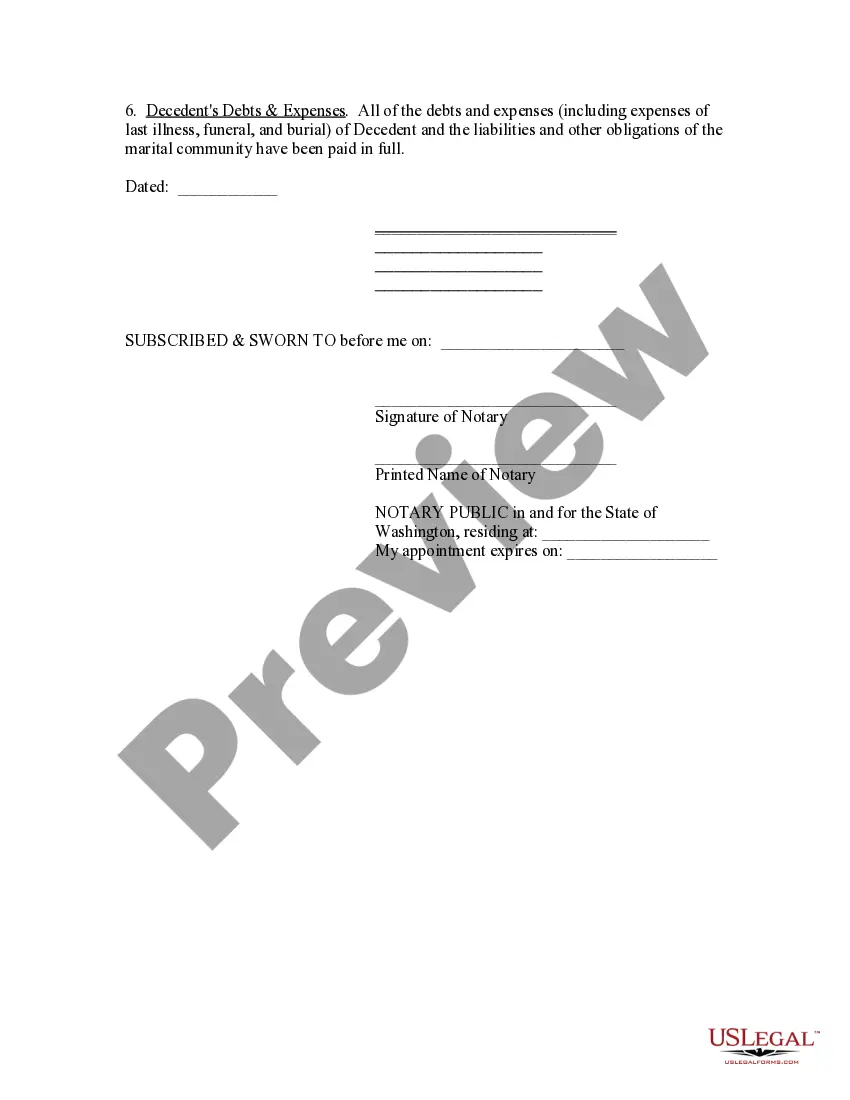
- Statement confirming that all debts and expenses of the deceased have been settled.
When to use this document
Use the Community Property Affidavit for Recordation when your spouse has passed away, and you need to transfer ownership of their property to yourself as the surviving spouse. This form is especially important if you wish to clarify ownership of the community property and ensure that no pending probate actions could complicate the transition of property rights.
Who this form is for
- Surviving spouses of individuals who had an established community property agreement.
- Individuals looking to clarify the ownership of property after their spouse's death.
- Spouses who are not engaged in any probate proceedings regarding their deceased partner's estate.
How to prepare this document
- Identify yourself as the surviving spouse and provide your deceased spouse's information, including their date and place of death.
- Attach a certified copy of your spouseâs Certificate of Death.
- Detail the executed Community Property Agreement, including its recording information in the county where it was filed.
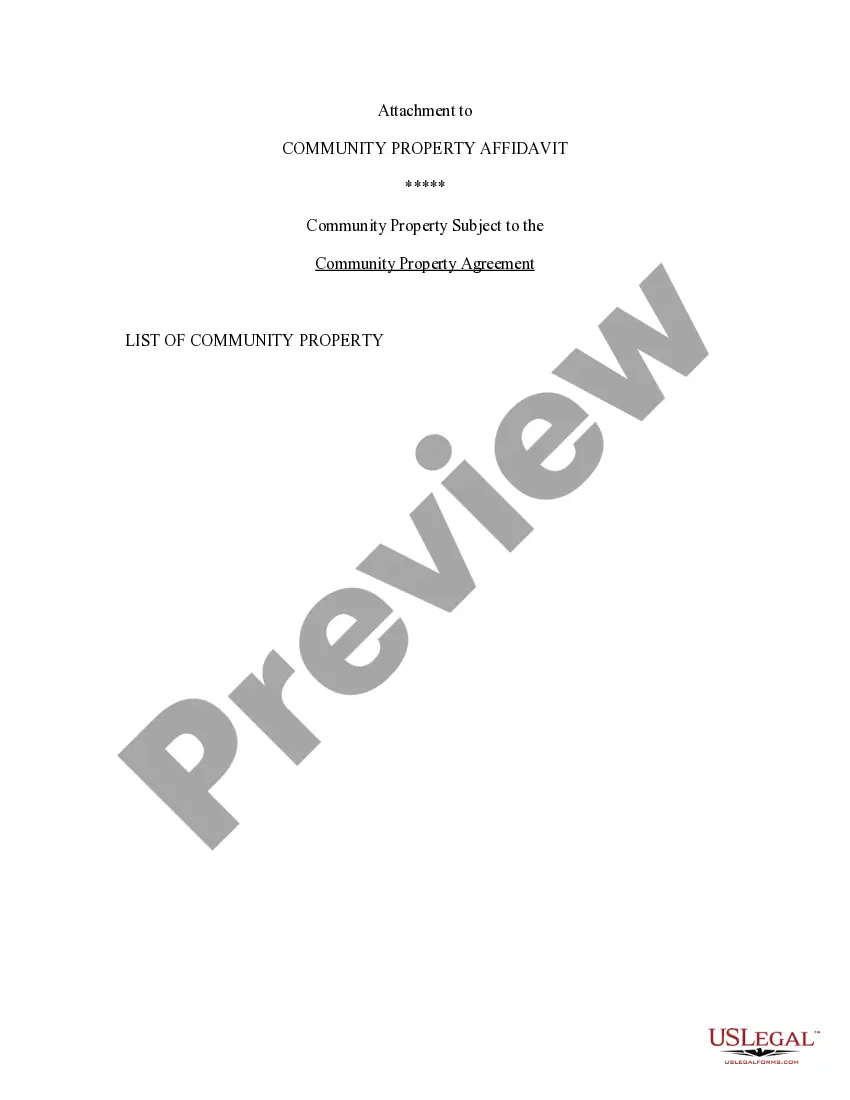
- List the community property subject to the agreement in an attachment.
- Sign the affidavit in the presence of a notary public.
Is notarization required?
Yes, this form must be notarized to be legally valid. US Legal Forms offers integrated online notarization services, making it convenient to have your affidavit notarized through secure video calls, available 24/7.
Get your form ready online
Our built-in tools help you complete, sign, share, and store your documents in one place.
Make edits, fill in missing information, and update formatting in US Legal Forms—just like you would in MS Word.
Download a copy, print it, send it by email, or mail it via USPS—whatever works best for your next step.
Sign and collect signatures with our SignNow integration. Send to multiple recipients, set reminders, and more. Go Premium to unlock E-Sign.
If this form requires notarization, complete it online through a secure video call—no need to meet a notary in person or wait for an appointment.
We protect your documents and personal data by following strict security and privacy standards.

Make edits, fill in missing information, and update formatting in US Legal Forms—just like you would in MS Word.

Download a copy, print it, send it by email, or mail it via USPS—whatever works best for your next step.

Sign and collect signatures with our SignNow integration. Send to multiple recipients, set reminders, and more. Go Premium to unlock E-Sign.

If this form requires notarization, complete it online through a secure video call—no need to meet a notary in person or wait for an appointment.

We protect your documents and personal data by following strict security and privacy standards.
Avoid these common issues
- Failing to attach the Certificate of Death.
- Not listing all community property, leading to potential disputes.
- Omitting necessary signatures or notarization.
Why use this form online
- Convenience of completing the form at home without needing to visit a lawyer.
- Editable templates that allow for easy modifications based on individual needs.
- Access to forms drafted by licensed attorneys, ensuring compliance with legal standards.
Looking for another form?
Form popularity
FAQ
Washington is one of eight of the few remaining community property states in the United States. Under Washington law, community property is the property acquired while the spouses were married.
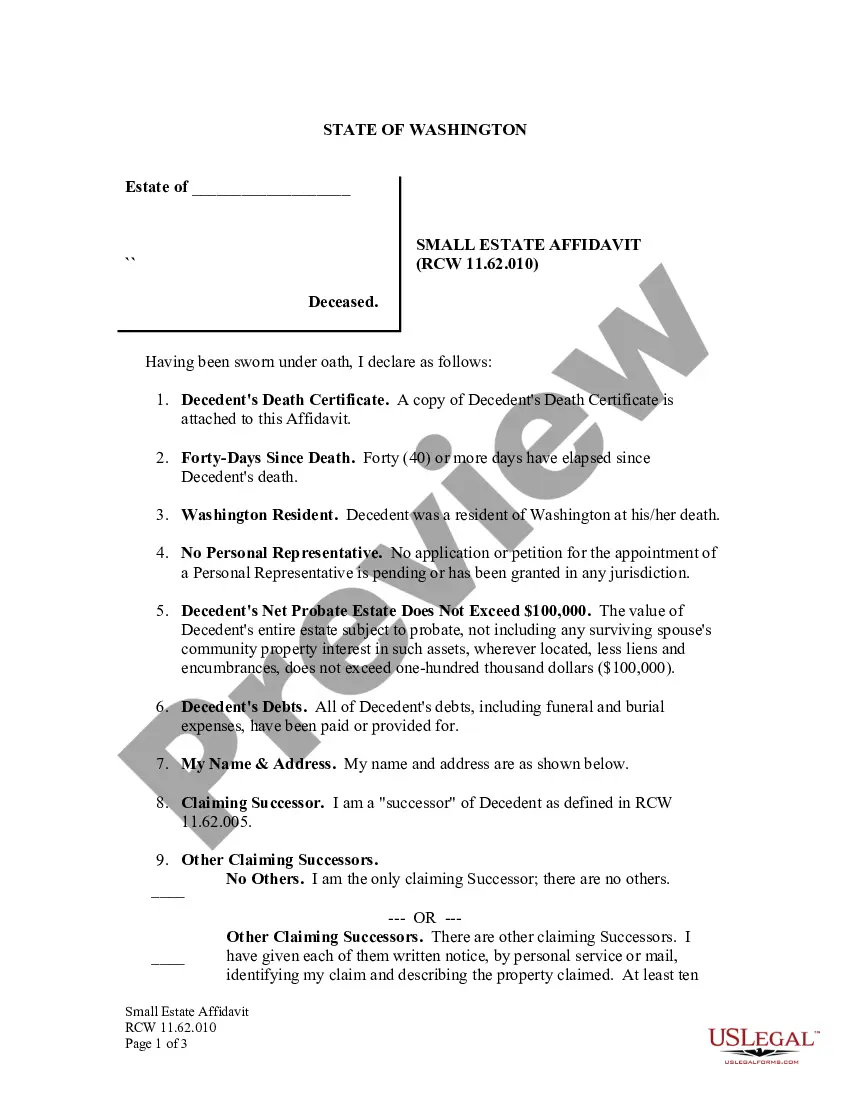
The Small Estate Affidavit. Washington law permits the use of a small estate affidavit in certain circumstances. Before using a small estate affidavit, you should first ask whether the deceased person had less than $100,000 in probate assets. If they did, you can probably use this process.
Community Property Law in the State of Washington Here are some examples of separate property: The balance of your bank account before marriage. Property you owned before marriage. Vehicles you owned before marriage.
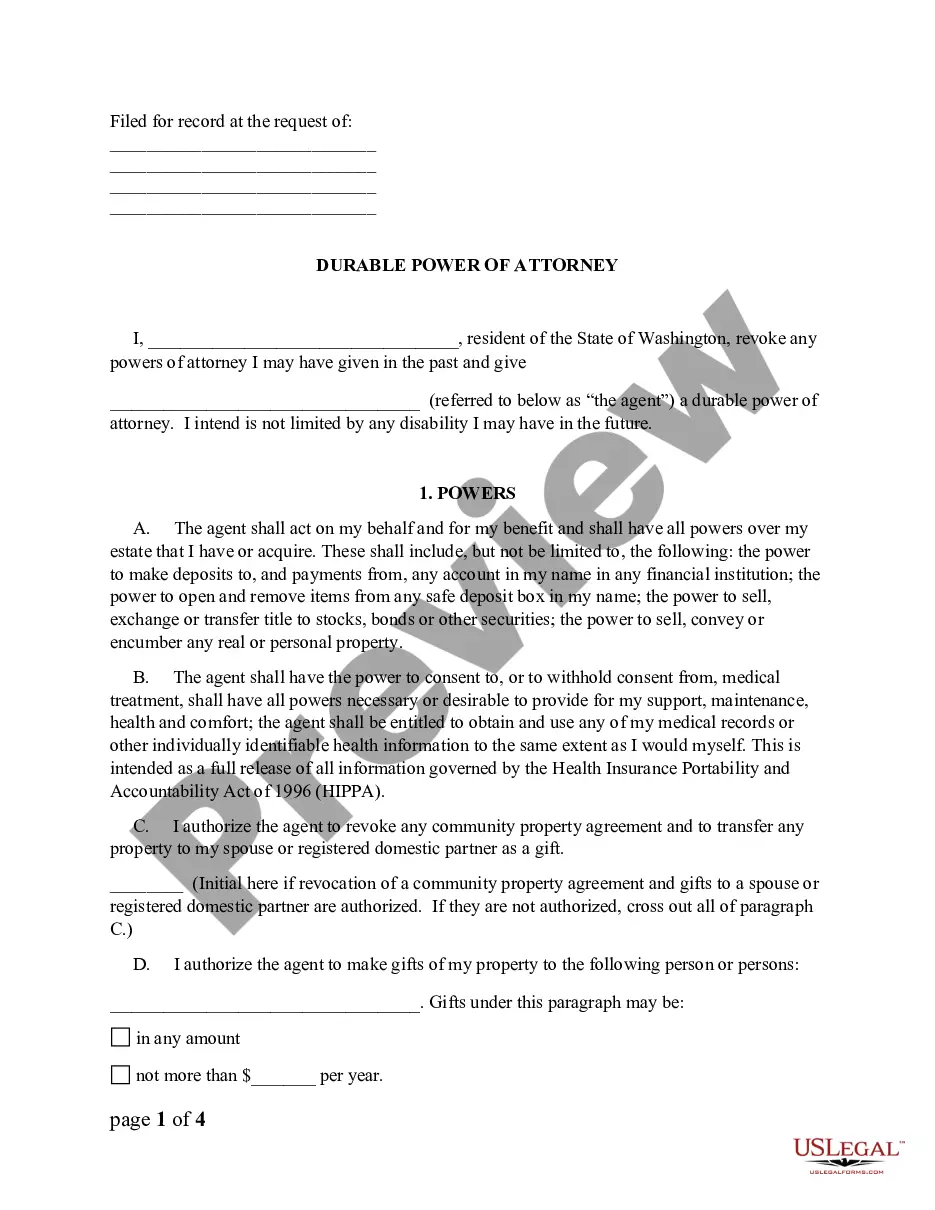
Washington law allows a husband and wife or domestic partners to sign and notarize a community property agreement, a document that automatically transfers an individual's community property shares at his or her death to his or her spouse or registered domestic partner.
Probably not. Washington law permits spouses to make agreements concerning the character of their assets. Community property may be changed to separate property.
In Washington, married couples and registered domestic partners can avoid probate by signing a Community Property Agreement (CPA). In the agreement, the couple agrees that when one of them dies, all of that person's property will pass directly to the other.
Many states follow ?common law? rules to determine who owns assets or property after a marriage, but that's not the case in the state of Washington. In Washington state (and eight other states, as well), ?community property law? is used to determine property ownership after a marriage.
The ?Affidavit of Successor? may be used to claim a debt or personal property from any person or organization indebted to or having possession of any personal property belonging to a decedent. Please note this affidavit is only to be used to claim a debt or personal property.