Vermont Surrogate Parenting Agreement
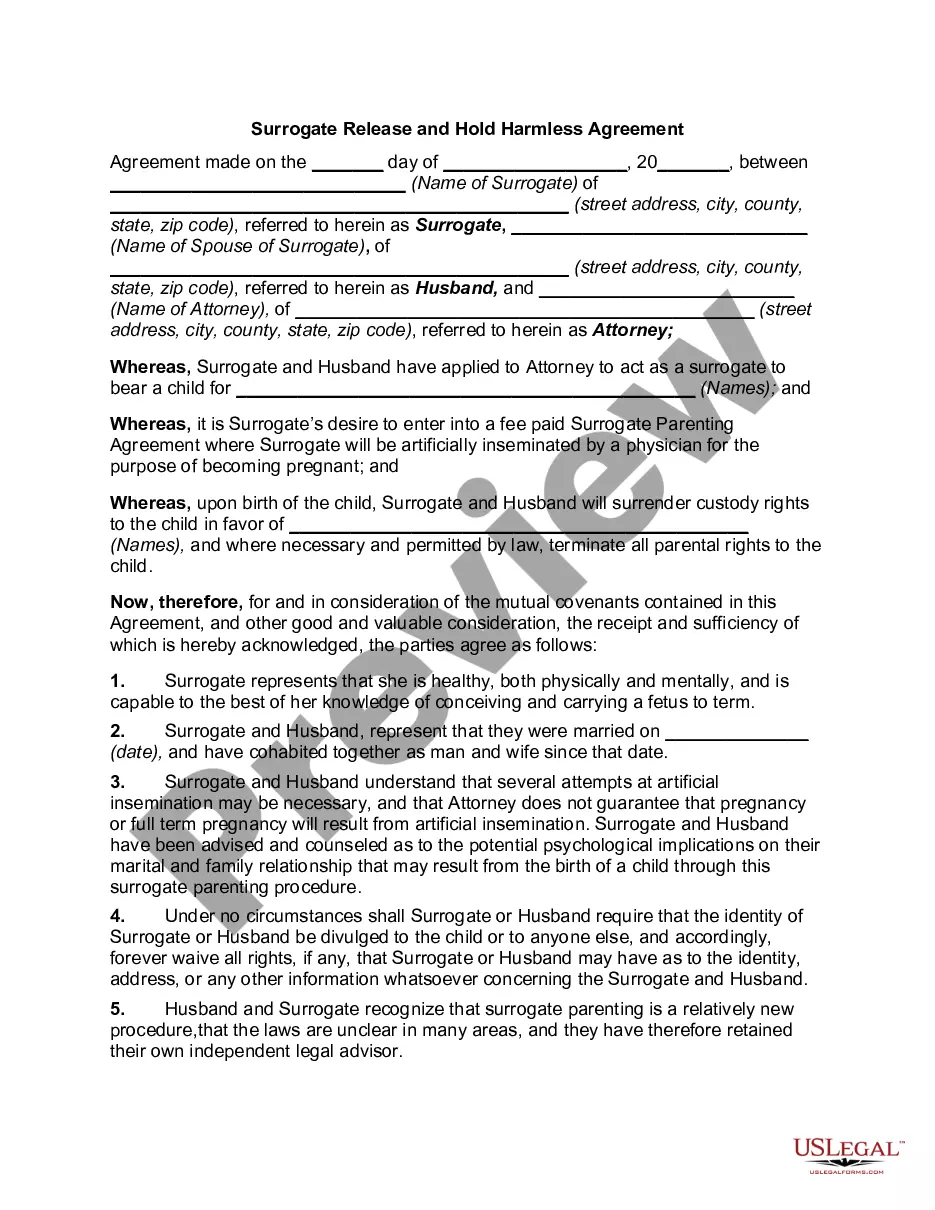
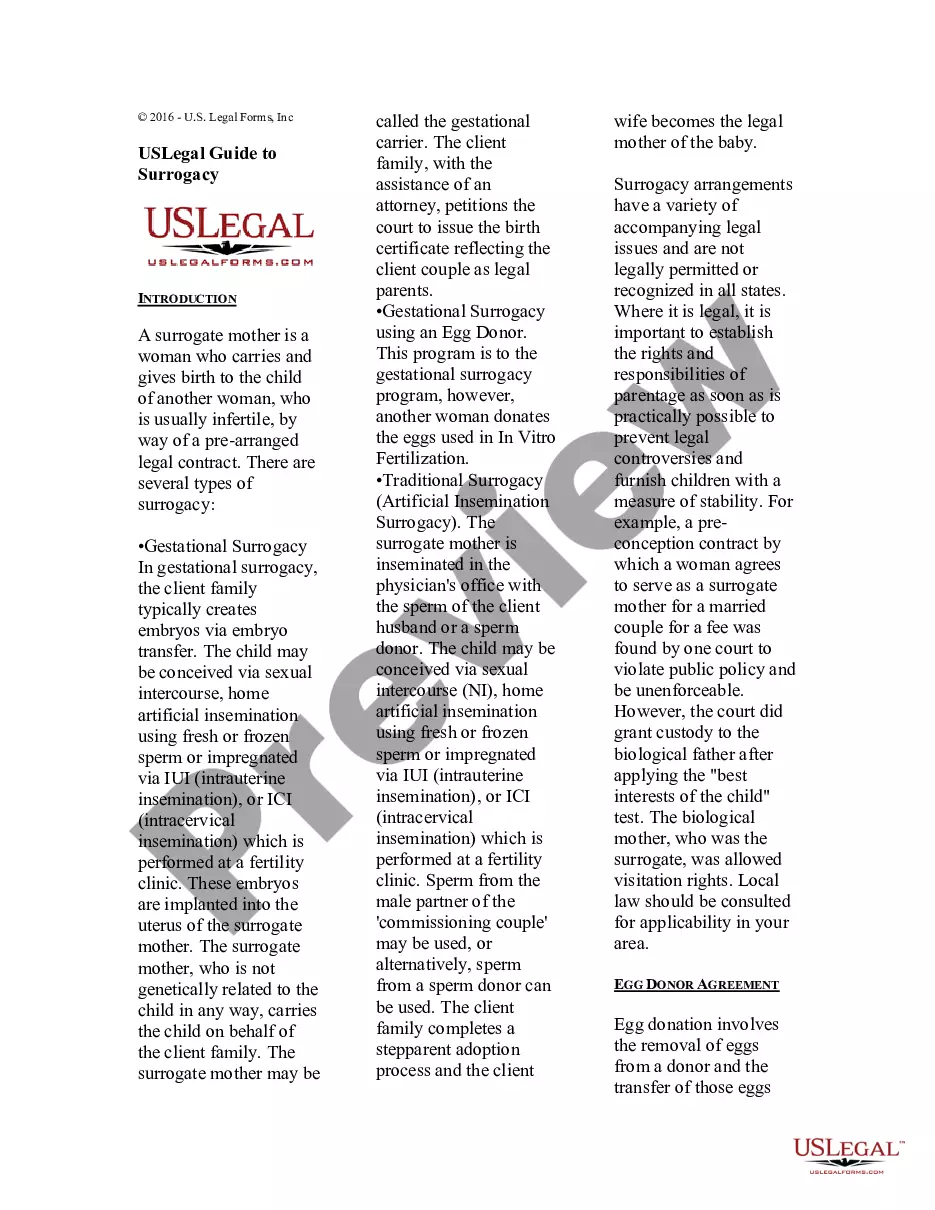
Description
Get your form ready online
Our built-in tools help you complete, sign, share, and store your documents in one place.
Make edits, fill in missing information, and update formatting in US Legal Forms—just like you would in MS Word.
Download a copy, print it, send it by email, or mail it via USPS—whatever works best for your next step.
Sign and collect signatures with our SignNow integration. Send to multiple recipients, set reminders, and more. Go Premium to unlock E-Sign.
If this form requires notarization, complete it online through a secure video call—no need to meet a notary in person or wait for an appointment.
We protect your documents and personal data by following strict security and privacy standards.

Make edits, fill in missing information, and update formatting in US Legal Forms—just like you would in MS Word.

Download a copy, print it, send it by email, or mail it via USPS—whatever works best for your next step.

Sign and collect signatures with our SignNow integration. Send to multiple recipients, set reminders, and more. Go Premium to unlock E-Sign.

If this form requires notarization, complete it online through a secure video call—no need to meet a notary in person or wait for an appointment.

We protect your documents and personal data by following strict security and privacy standards.
Looking for another form?



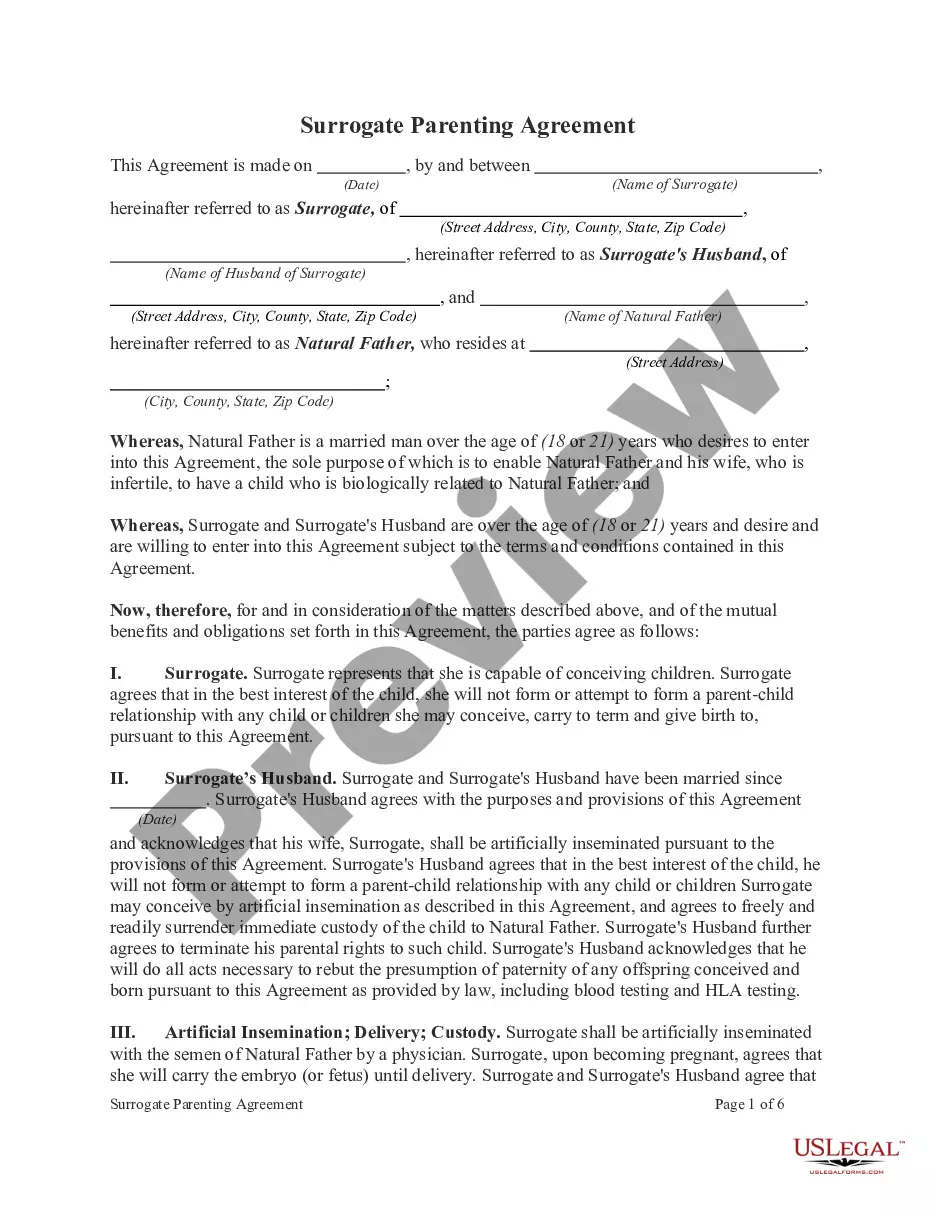
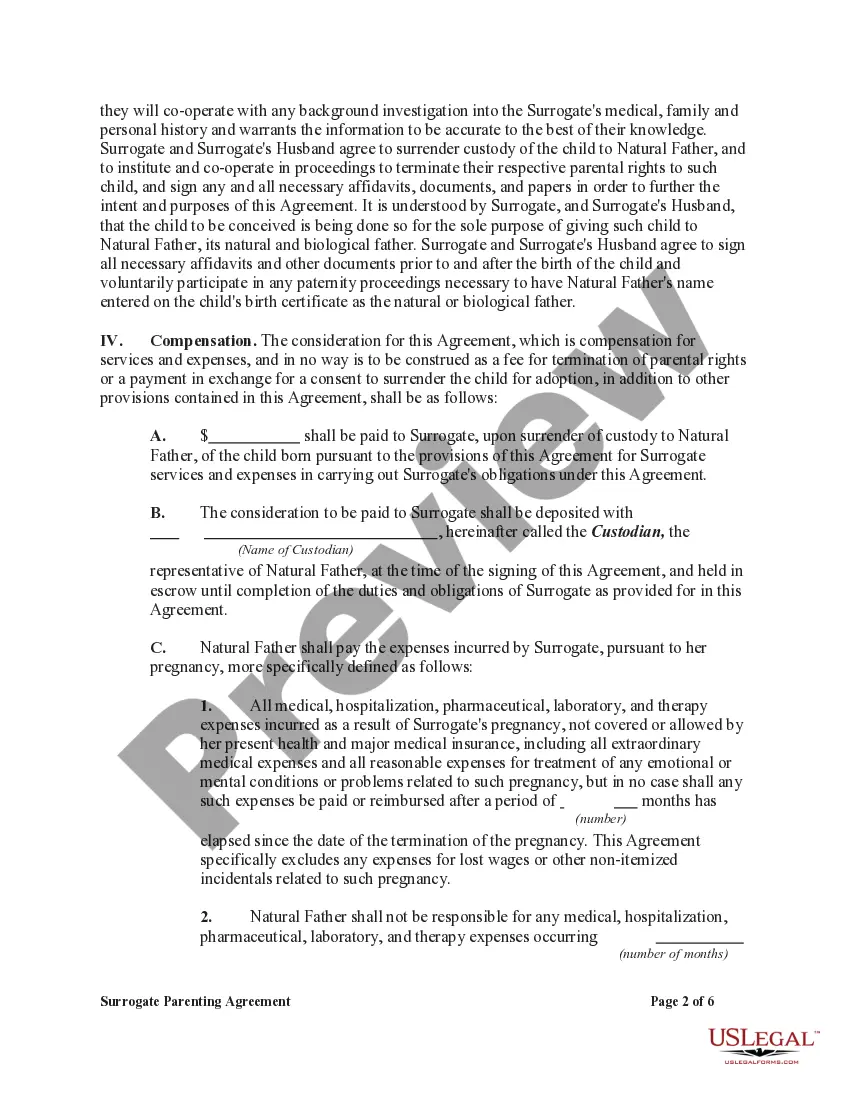
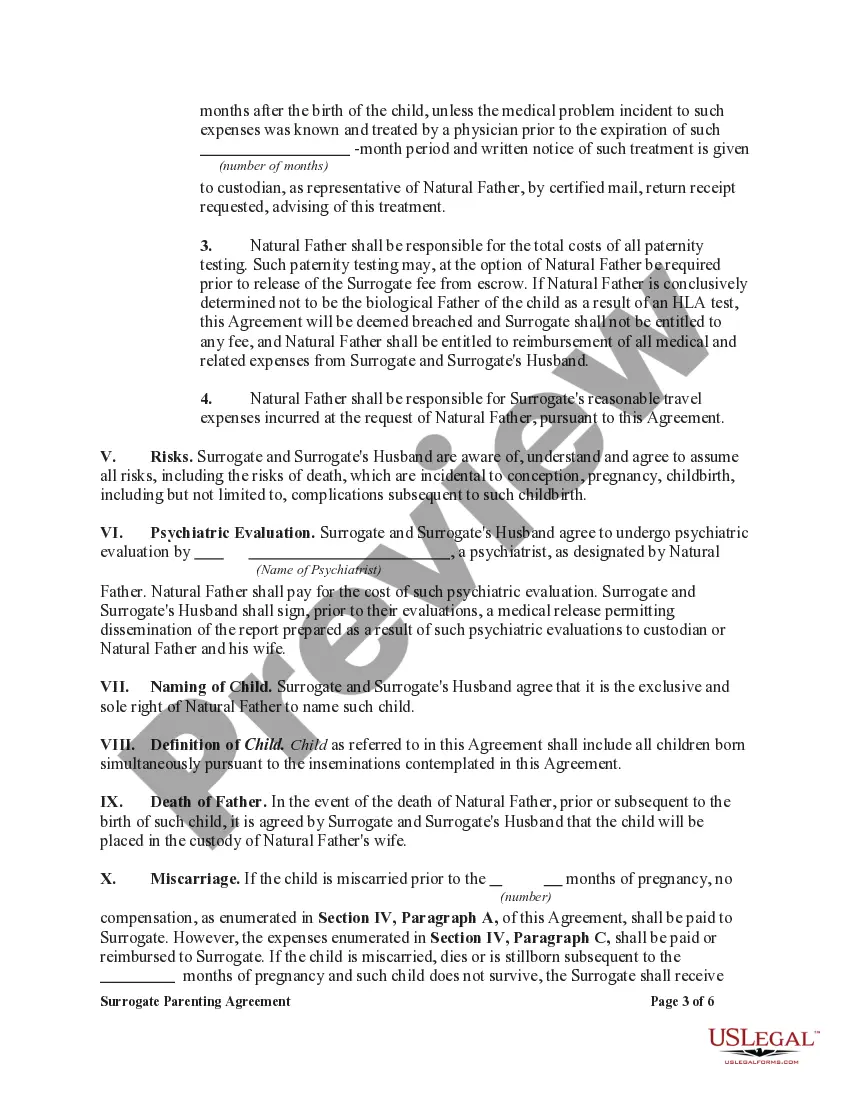
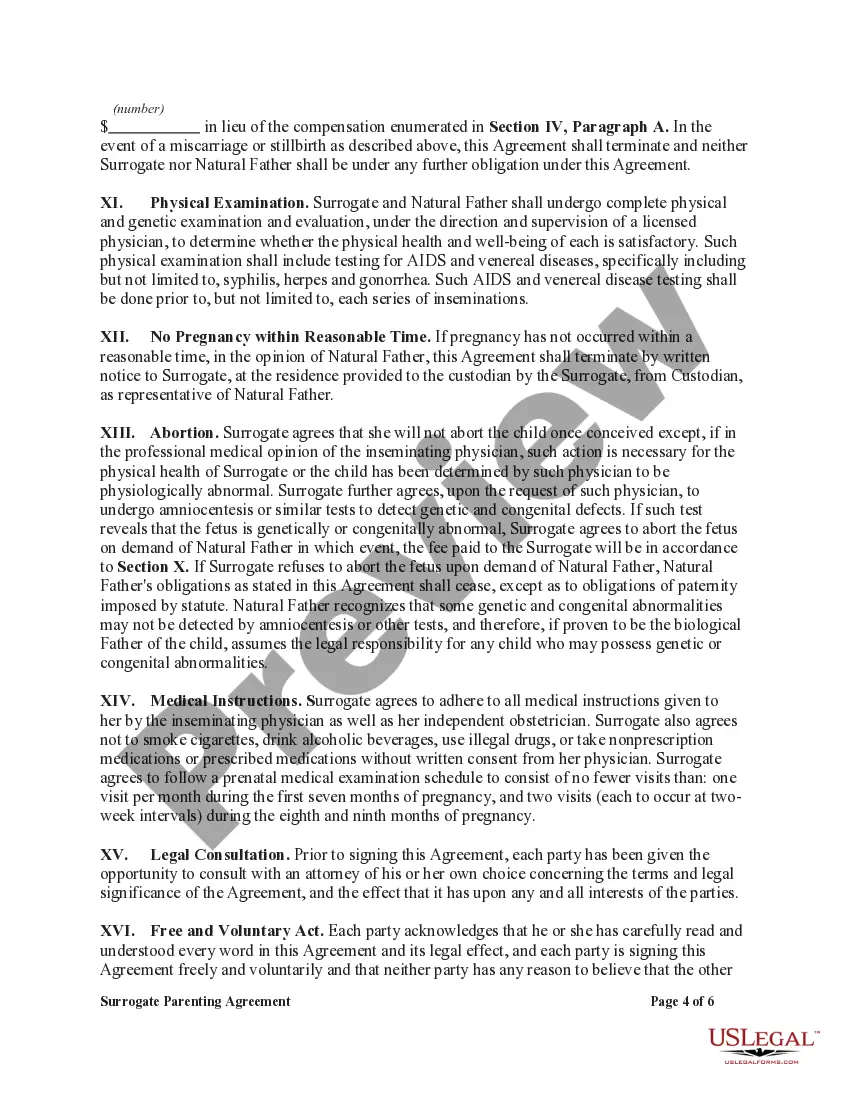
How to fill out Surrogate Parenting Agreement?
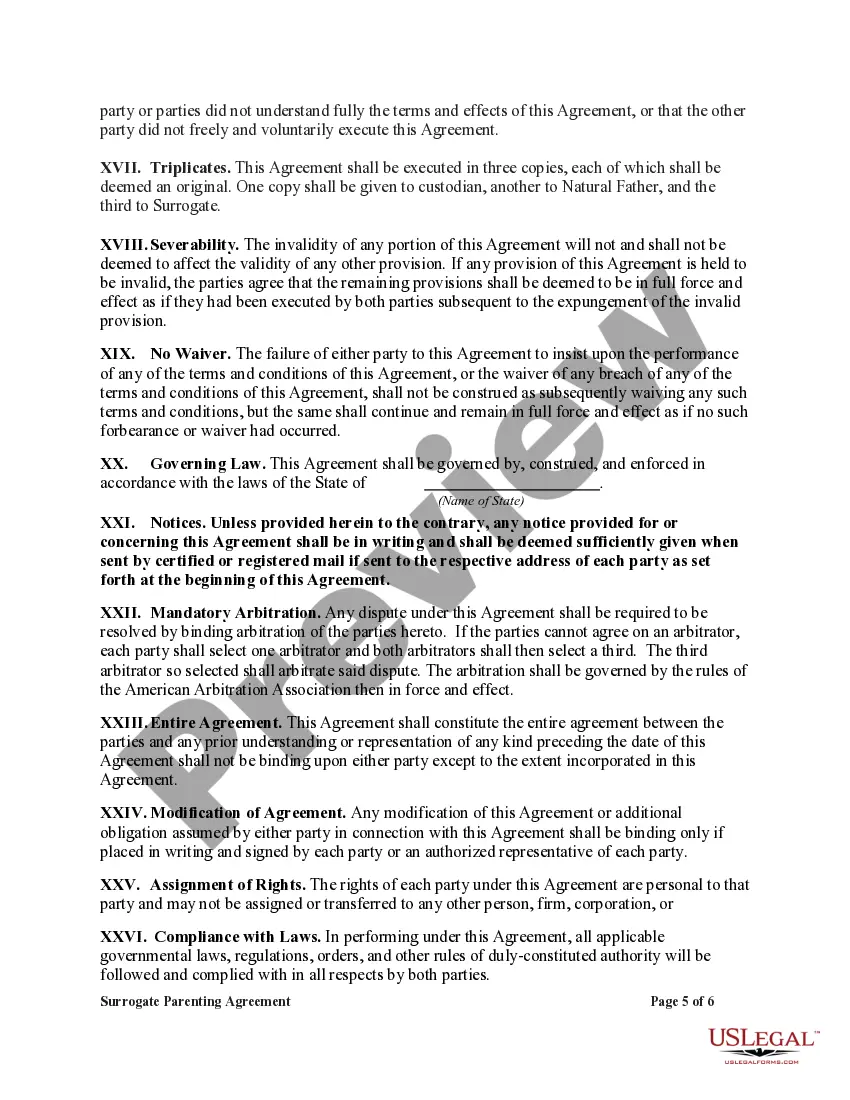
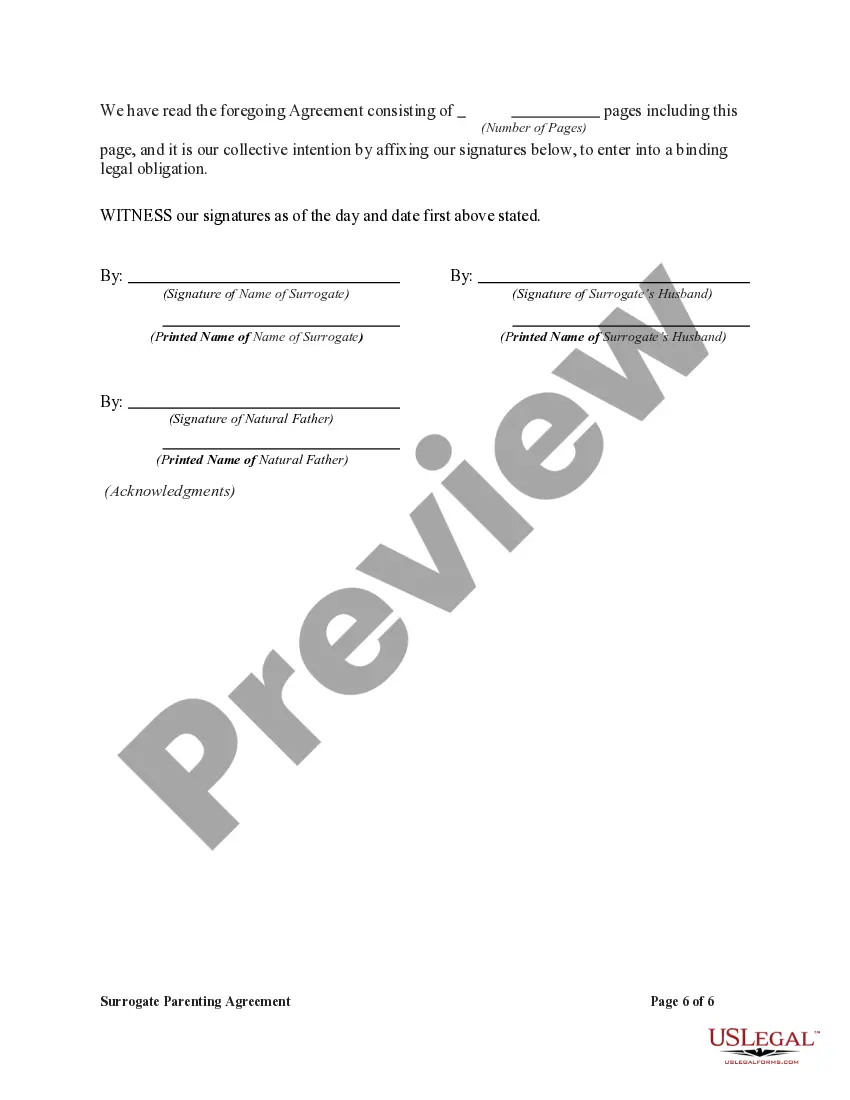
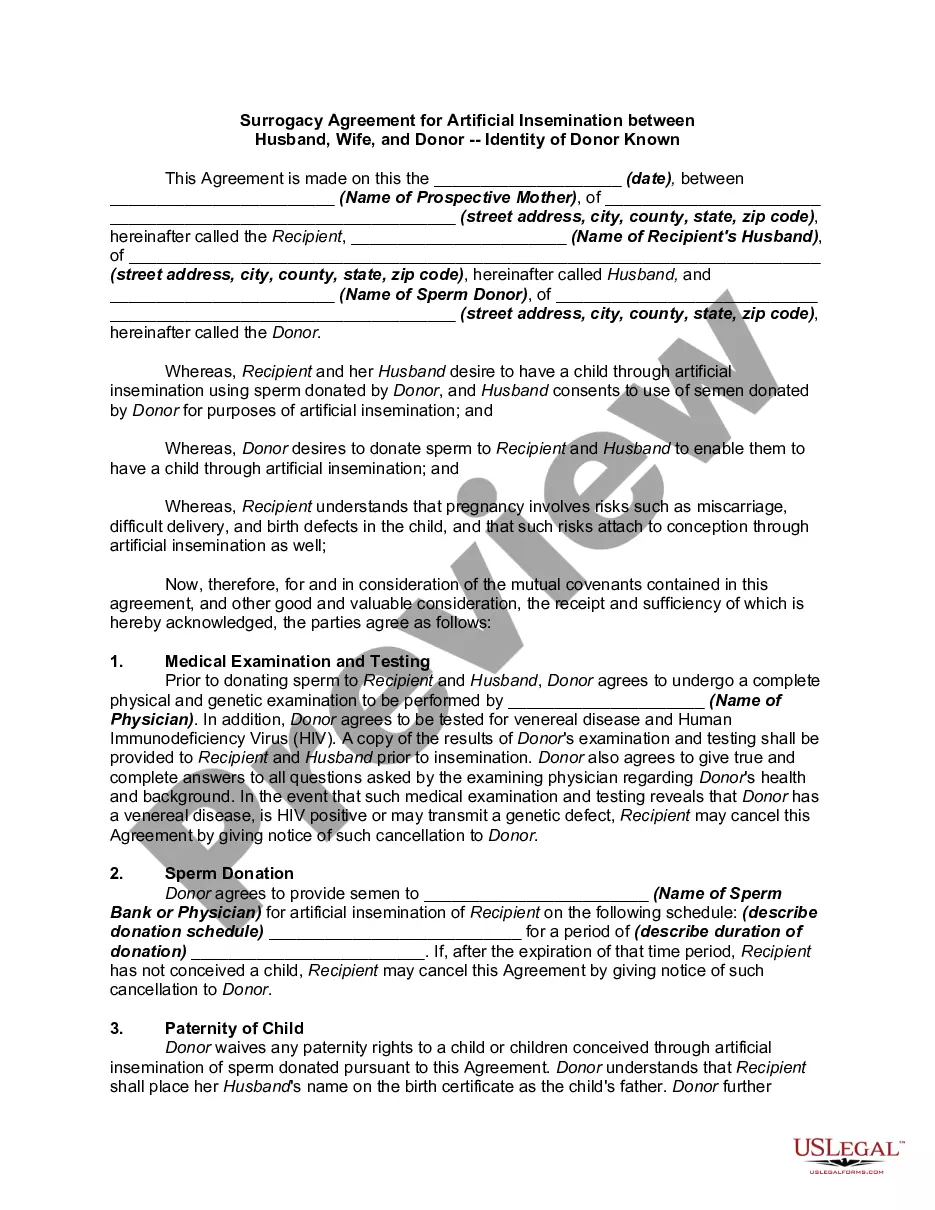
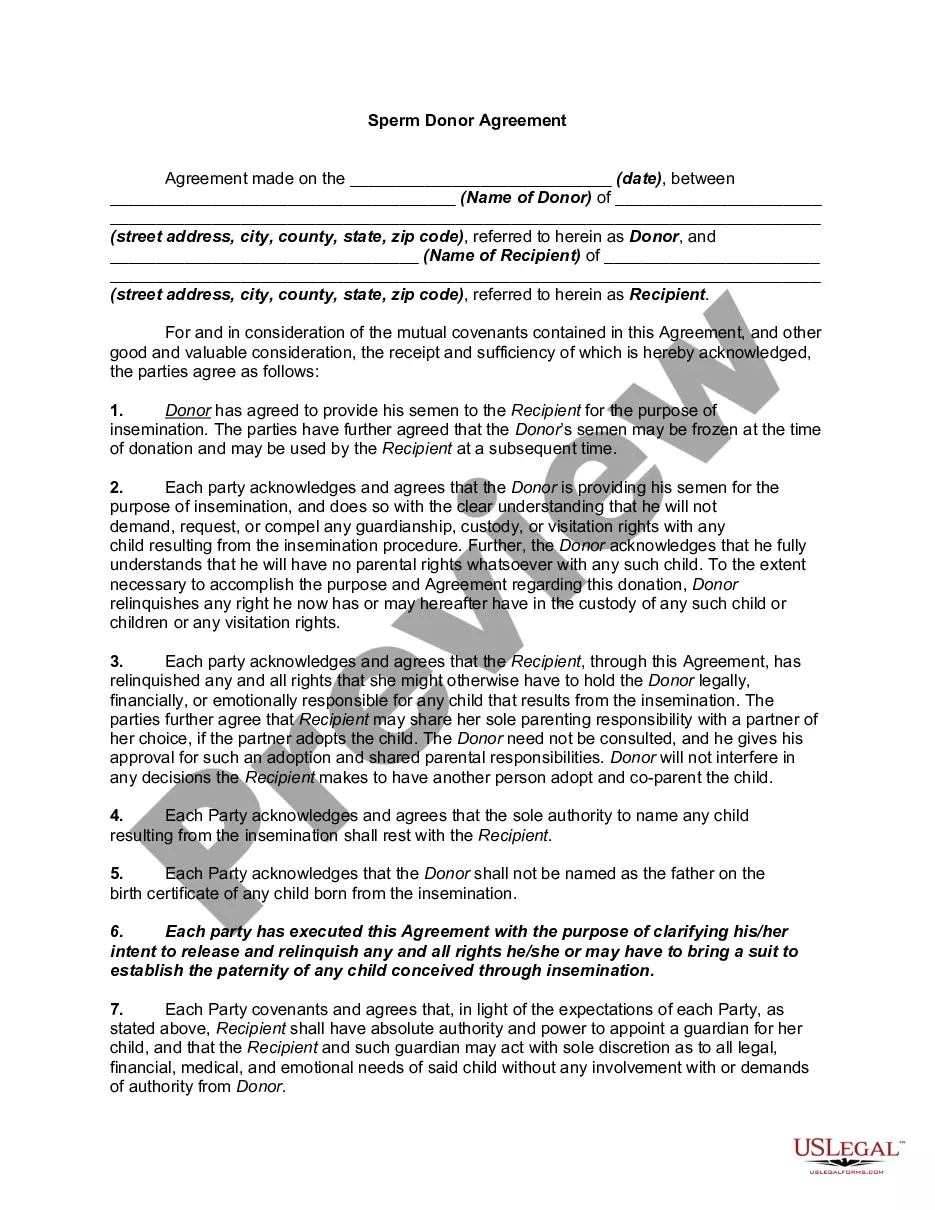
Locating the appropriate legal document format can be a challenge. Naturally, there are numerous templates available online, but how do you secure the legal document you require? Utilize the US Legal Forms platform. This service offers thousands of templates, including the Vermont Surrogate Parenting Agreement, which can be used for business and personal purposes. All forms are reviewed by professionals and comply with federal and state regulations.
If you are already a member, Log In to your account and click on the Download button to get the Vermont Surrogate Parenting Agreement. Use your account to access the legal documents you have previously ordered. Navigate to the My documents section of your account to retrieve another copy of the form you need.
If you are a new user of US Legal Forms, here are simple steps for you to follow: First, ensure that you have selected the correct template for your city/region. You can preview the form using the Preview button and review the form details to confirm it is the right one for you. If the template does not fulfill your requirements, utilize the Search feature to find the appropriate form.
- Once you are certain the form is suitable, click on the Get now button to obtain the document.
- Choose the pricing option you prefer and enter the necessary information.
- Create your account and complete the payment for the order using your PayPal account or credit card.
- Select the file format and download the legal document to your device.
- Complete, modify, print, and sign the downloaded Vermont Surrogate Parenting Agreement.
- US Legal Forms is the largest collection of legal documents from which you can access numerous file formats. Utilize this service to obtain professionally crafted documents that comply with state regulations.
Form popularity
FAQ
A traditional surrogate is the biological mother of her child, meaning she has parental rights and the power to change her mind and keep the baby. The intended parents would then need to go to court to gain custody of the child.
Whether a surrogacy contract is enforceable depends on the resolution of a number of issues. First, courts must decide whether such a contract is void as against public policy or voidable by the birth mother. If the contract is enforceable, then the proper remedy for the breach of the agreement must be determined.
Key points for your surrogacy agreementFull details of everyone involved including any supporters and their roles.Conception arrangements including embryos and clinic details.Decisions and commitments around the pregnancy, including who will attend scans and other antenatal appointments.More items...
Because the surrogate in a traditional surrogacy is genetically related to the baby, she has an even stronger legal case to take custody of the child after it is born.
Gestational surrogates can make up to $65,000 with Family Inceptions. This includes a $35,000-$45,000 base compensation, plus additional monthly stipends and allowances throughout your surrogacy journey.
There are 3 US states that do not recognize gestational surrogacy, and surrogacy contracts are "illegal" in those states (women who live in Nebraska, Michigan and Louisiana are not able to apply to become surrogates at this time). If you're an intended parent, you can become a parent no matter where you live.
Q: Is surrogacy legal in Vermont? A: Like many states, Vermont has no surrogacy laws governing this family-building process. However, the courts are generally favorable to surrogacy, which means that both intended parents and surrogates can pursue a surrogacy in Vermont with the guidance of surrogacy professionals.
While your surrogate has many rights outlined in your contract, a gestational carrier cannot choose to keep the child because she won't have parental rights to the baby and won't be biologically related.
The surrogacy contract (sometimes called a surrogacy agreement) is a binding legal document that guides the entire surrogacy process for intended parents and surrogates. It's one of the most important parts of the entire surrogacy journey.
What the surrogacy contract entails. The contract guides the entire surrogacy journey, clearly outlining each party's rights, roles and responsibilities before, during and after the pregnancy. Each Surrogacy contract should include the below: The intent, rights, and obligations of the intended parents and Surrogate.