Motion to Quash Indictment
What this document covers
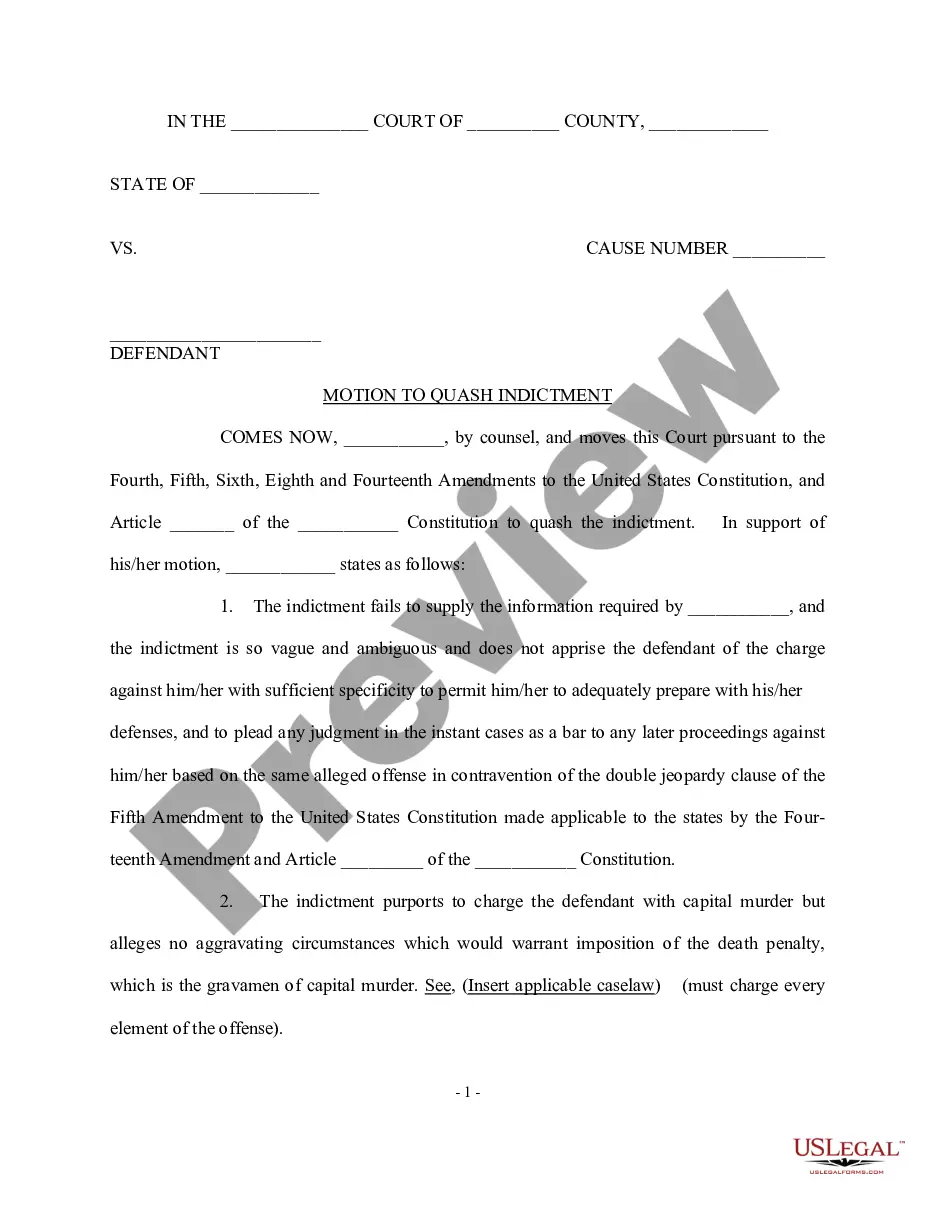
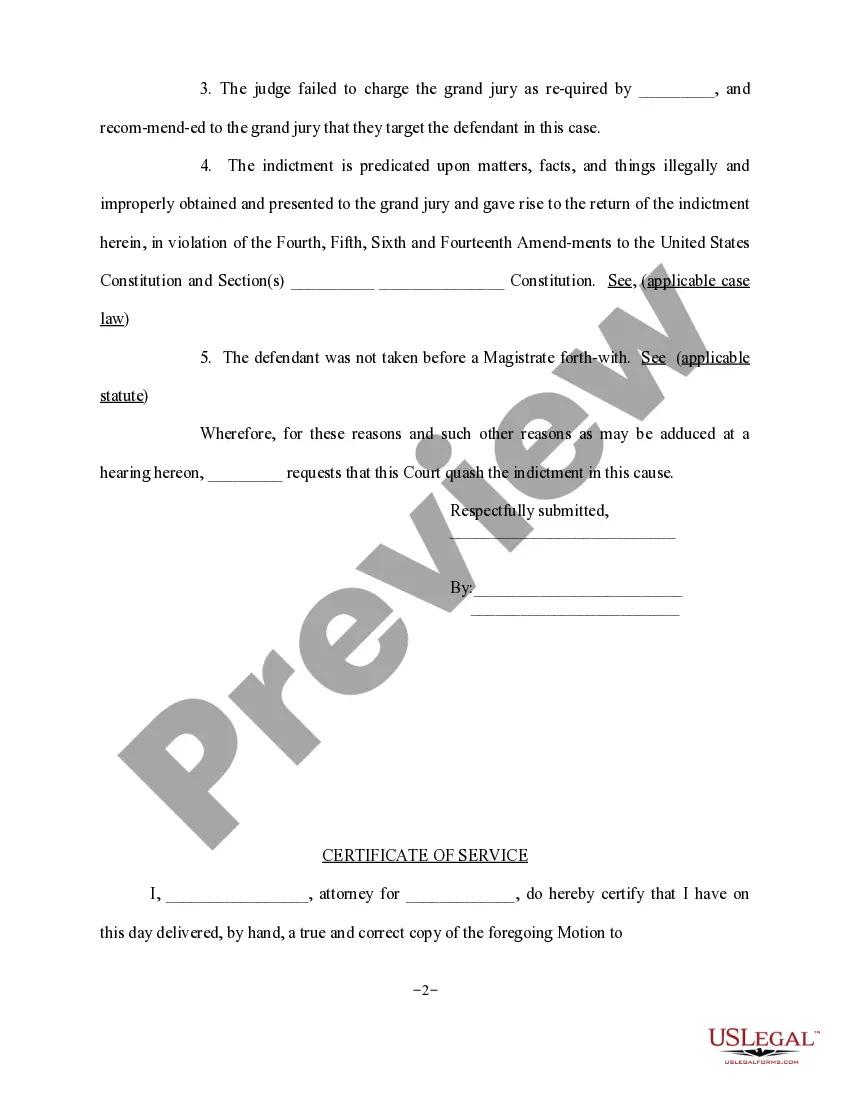
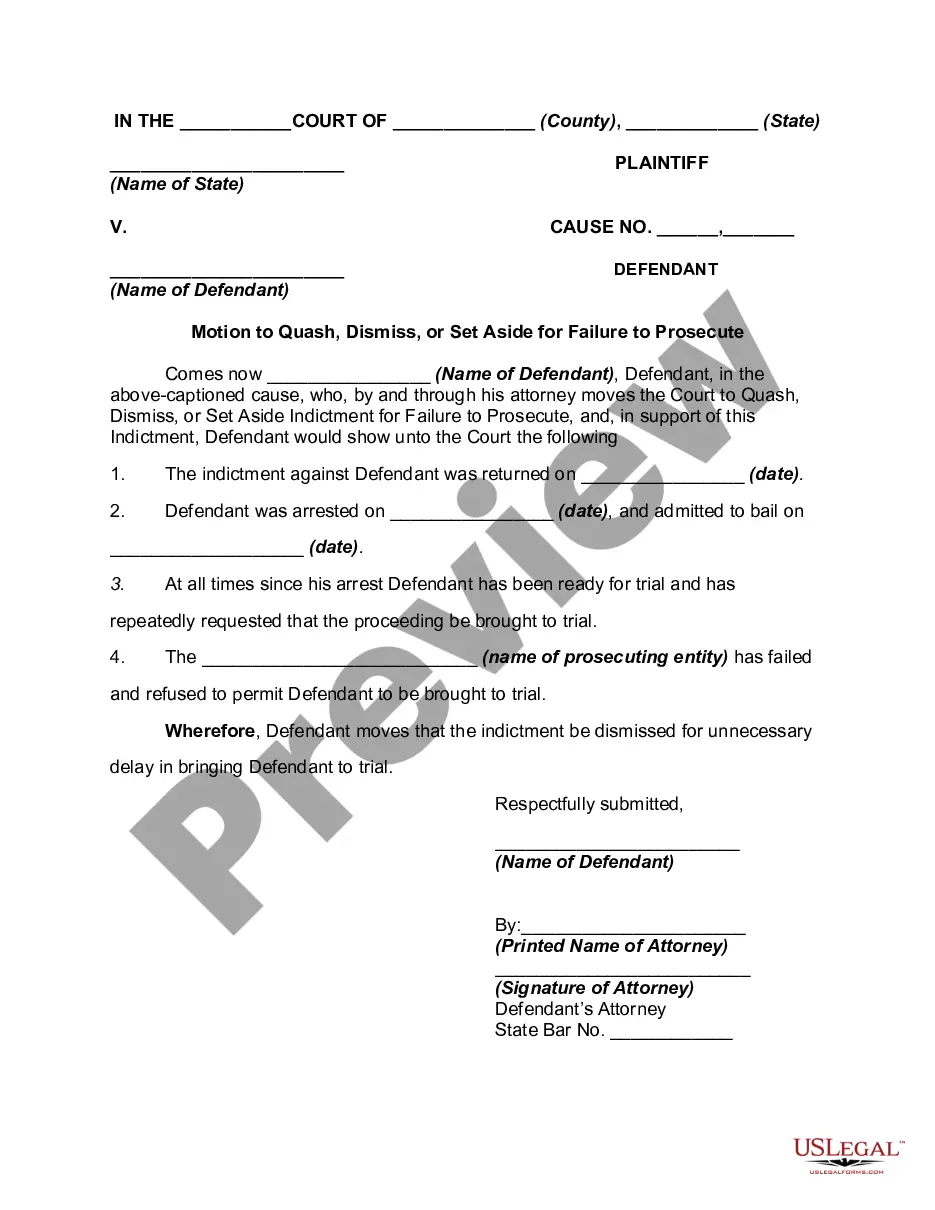
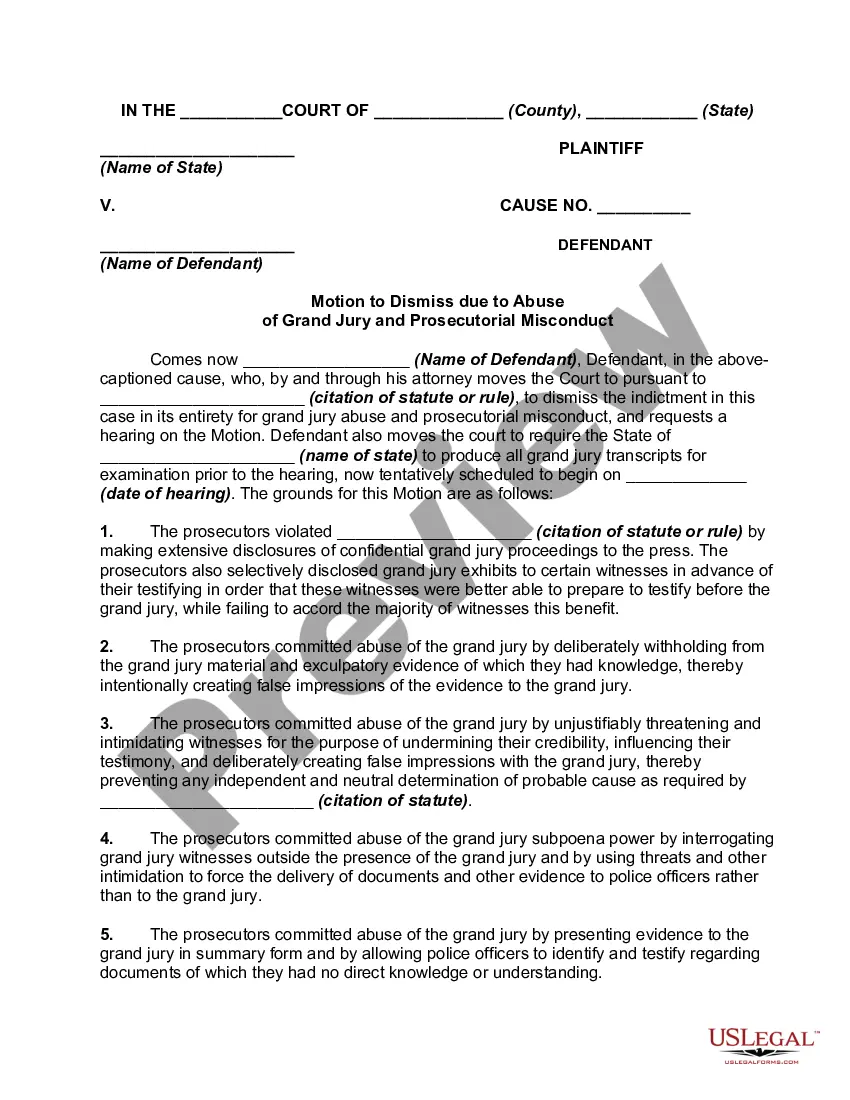
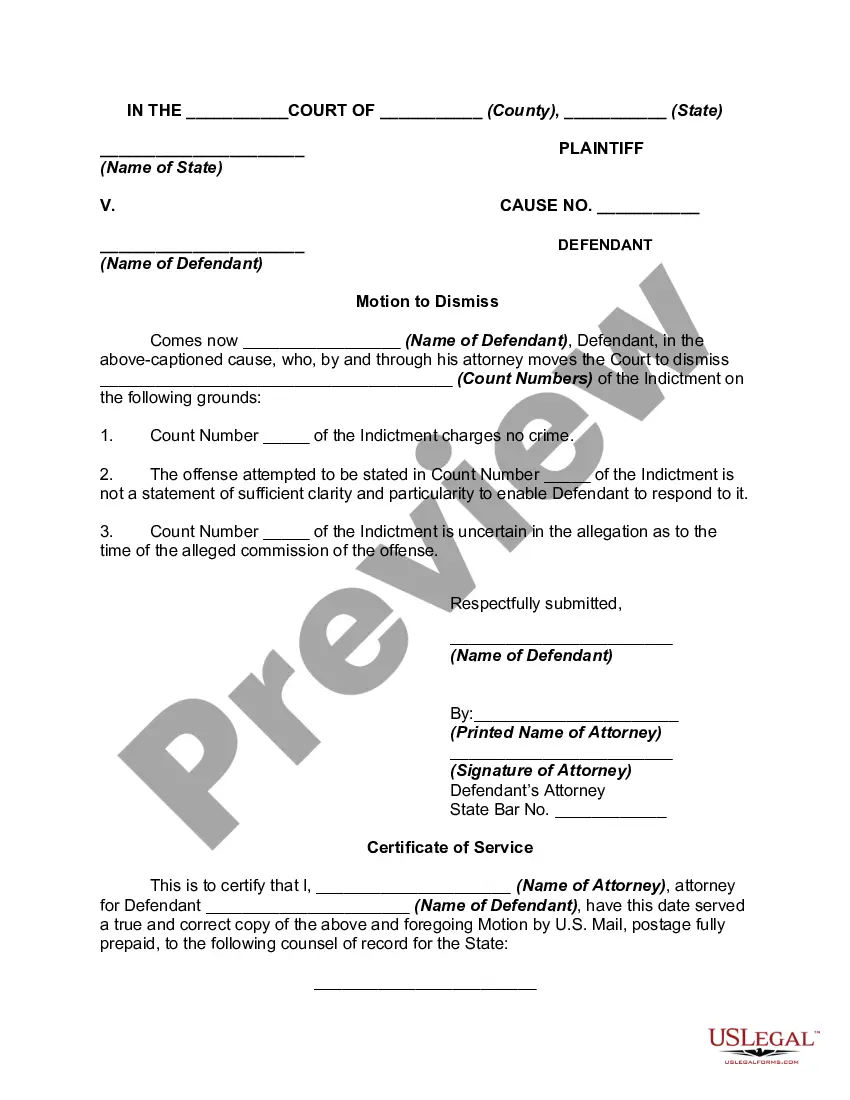
The Motion to Quash Indictment is a legal document that a defendant uses to request the court to dismiss an indictment. This form is crucial when a defendant believes that the indictment is unclear, lacks necessary information, or does not provide sufficient detail to prepare a defense. By filing this motion, defendants assert their rights under specific amendments of the U.S. Constitution, aiming to ensure fair legal processes and avoid unjust prosecution.
Form components explained
- Case title and cause number: Identification of the legal case.
- Defendant's name: The individual filing the motion.
- Legal basis: References to constitutional amendments supporting the motion.
- Arguments for quashing: Specific reasons why the indictment should be dismissed.
- Certificate of service: Confirmation that all parties have received copies of the motion.

When to use this form
Use the Motion to Quash Indictment when you have been indicted and believe that the indictment is legally insufficient. This may occur if the indictment fails to inform you of the charges clearly or does not contain the required elements to support the charges being brought against you. Additionally, if there are concerns regarding the way evidence was obtained or presented to the grand jury, this form can help protect your rights.
Intended users of this form
The following individuals should consider using this form:
- Defendants facing criminal charges who have received an indictment.
- Individuals who believe their indictment lacks clarity or sufficient detail.
- Those who wish to challenge the legality of the evidence presented against them.
Instructions for completing this form
- Identify the case title and cause number at the top of the form.
- Enter the defendant's name and provide the necessary legal arguments for quashing the indictment.
- Cite relevant constitutional amendments and any applicable case law that supports your motion.
- Attach a certificate of service to confirm that all involved parties have received copies of the document.
- Sign the motion and include the date of submission.
Is notarization required?
Notarization is generally not required for this form. However, certain states or situations might demand it. You can complete notarization online through US Legal Forms, powered by Notarize, using a verified video call available anytime.
Get your form ready online
Our built-in tools help you complete, sign, share, and store your documents in one place.
Make edits, fill in missing information, and update formatting in US Legal Forms—just like you would in MS Word.
Download a copy, print it, send it by email, or mail it via USPS—whatever works best for your next step.
Sign and collect signatures with our SignNow integration. Send to multiple recipients, set reminders, and more. Go Premium to unlock E-Sign.
If this form requires notarization, complete it online through a secure video call—no need to meet a notary in person or wait for an appointment.
We protect your documents and personal data by following strict security and privacy standards.

Make edits, fill in missing information, and update formatting in US Legal Forms—just like you would in MS Word.

Download a copy, print it, send it by email, or mail it via USPS—whatever works best for your next step.

Sign and collect signatures with our SignNow integration. Send to multiple recipients, set reminders, and more. Go Premium to unlock E-Sign.

If this form requires notarization, complete it online through a secure video call—no need to meet a notary in person or wait for an appointment.

We protect your documents and personal data by following strict security and privacy standards.
Mistakes to watch out for
- Failing to provide adequate legal citations to support the motion.
- Not signing the motion or improperly completing the certificate of service.
- Neglecting to include specific facts about the case that support the argument for quashing.
- Using ambiguous language that does not clearly outline the reasons for the motion.
Benefits of completing this form online
- Convenience: Download and complete the form at your own pace.
- Editability: Make changes easily as needed before submission.
- Accuracy: Use professionally drafted templates to ensure legal compliance.
Legal use & context
- The motion is a formal request made to the court, and it must detail specific legal grounds.
- Filing this motion is an essential step to protect a defendant's rights in the legal process.
- If successful, the quashing of an indictment can lead to the dismissal of the charges against the defendant.
Quick recap
- The Motion to Quash Indictment helps protect defendants' rights against unclear or insufficient charges.
- Completing the form accurately is critical to its success in court.
- Be aware of your state's specific requirements to avoid mistakes.
Looking for another form?
Form popularity
FAQ
Use general discovery motions to your advantage. Always cite Tex. File a motion in limine along with your motion to suppress. Request a jury charge. Don't reveal specific grounds for the motion until the hearing. Consider Tex. Attack the probable cause affidavit.
To overthrow; to annul; to make void or declare invalid; e.g., "quash a subpoena."In criminal cases, if an indictment is defective to such a degree that no judgment could be made if the defendant were to be convicted, the court typically will quash the indictment.
A lawyer may file a motion to quash if a mistake has been made on the part of a court, or if an attorney believes that the issuance of some court document like a subpoena was not done in a legal manner. For example, a party that receives improper service of process may file a motion to quash.
In order to file a motion to quash, you will need to draft the motion and file it in the case/court that appears on the document you were served with. Once filed, the motion to quash will stay the subpoena, until a judge makes a ruling on the motion or the subpoenaed party and the issuing party reach an agreement.
The motion to quash shall be in writing, signed by the accused or his counsel and shall distinctly specify its factual and legal grounds. The court shall consider no ground other than those stated in the motion, except lack of jurisdiction over the offense charged.
A lawyer may file a motion to quash if a mistake has been made on the part of a court, or if an attorney believes that the issuance of some court document like a subpoena was not done in a legal manner. For example, a party that receives improper service of process may file a motion to quash.
After the motion to quash is filed, the court will review the case and make its determination. For example, if the judge grants a motion to quash service, then the service on the defendant would be considered void. A motion to quash that is approved would also invalidate any applicable decisions from a lower court.
An FIR can be quashed by the High Court if the court is convinced that the person is innocent and has been falsely implicated. A High Court can quash the FIR on the ground that the case is a false case and will ask the police to set the aggrieved person free if he has been arrested.