Vermont Electrical Contract for Contractor
What this document covers
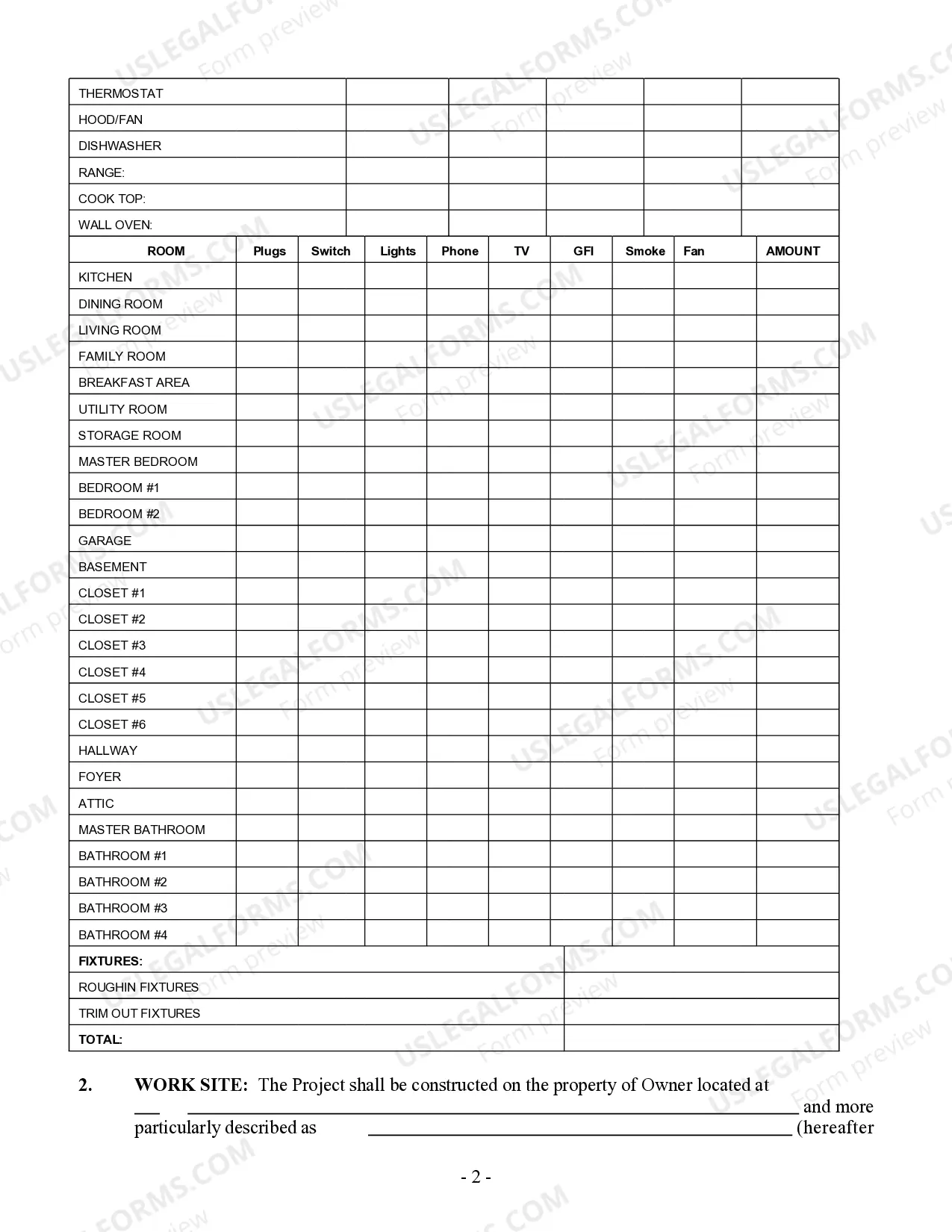
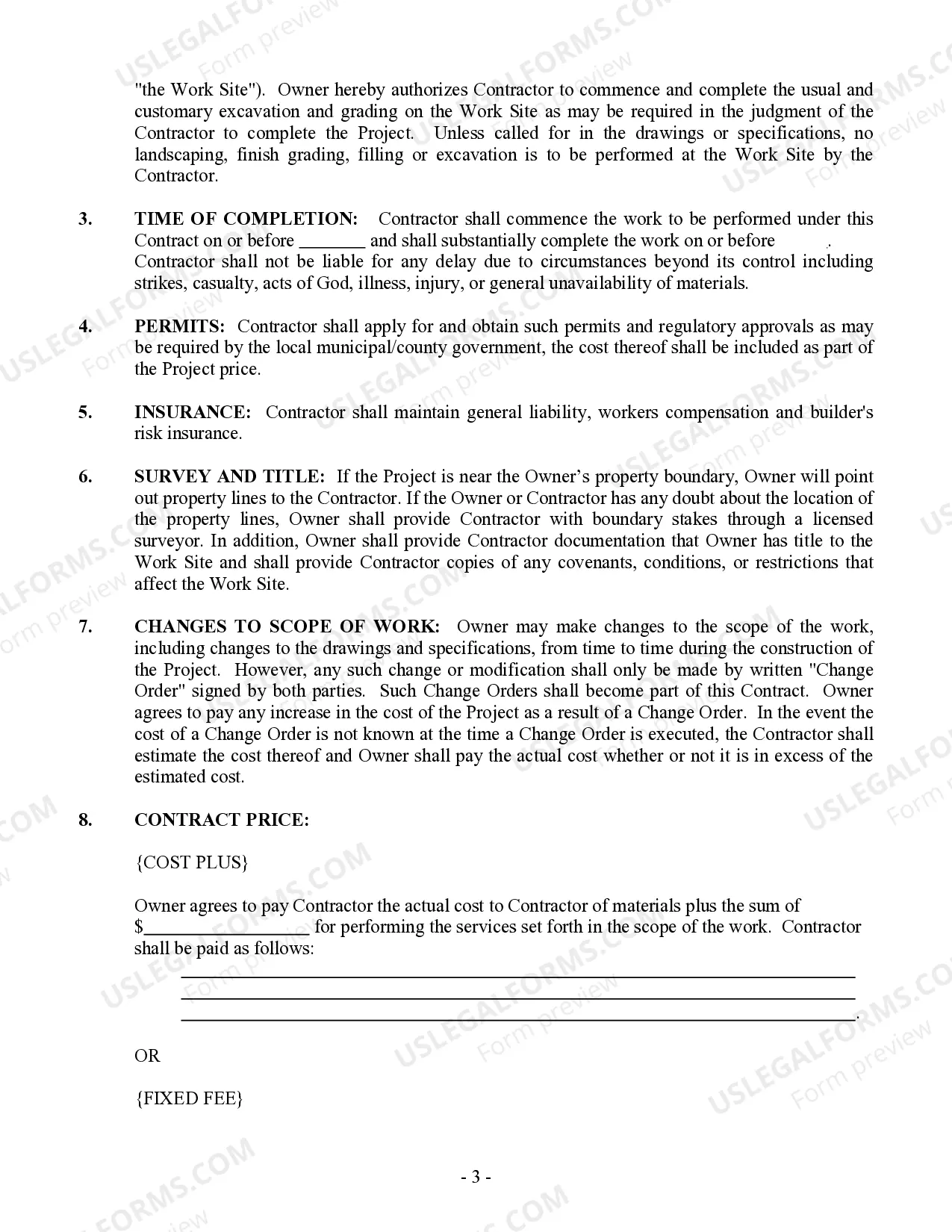
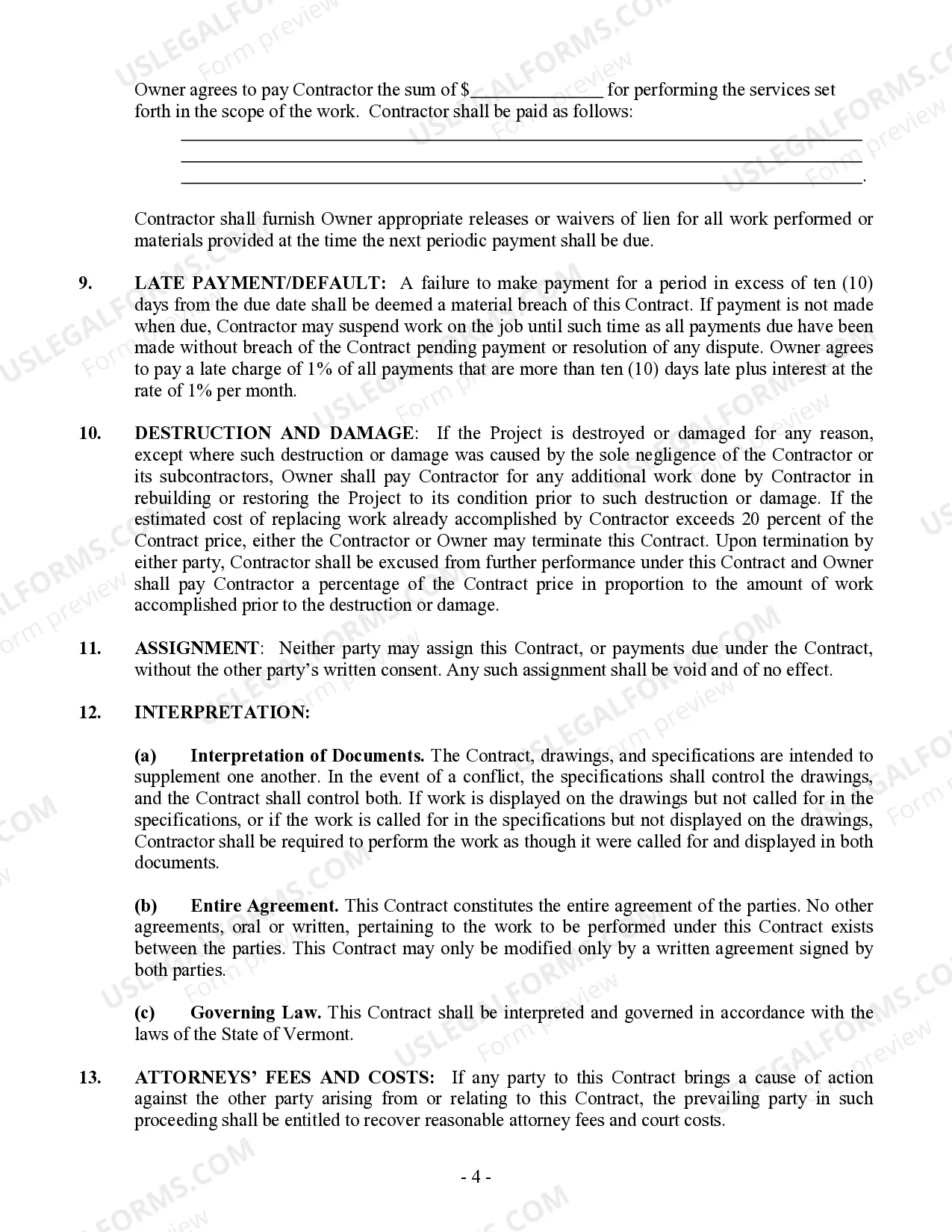
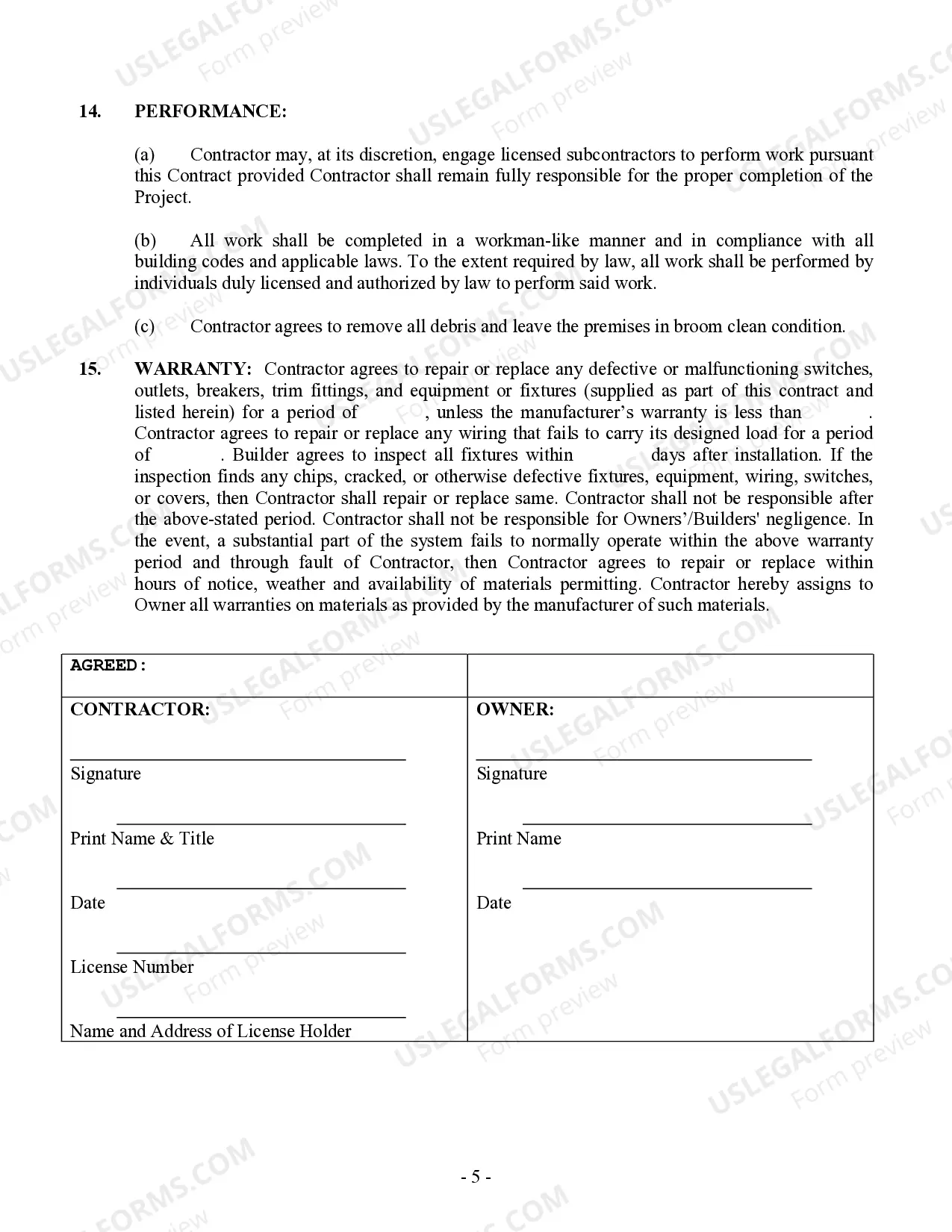
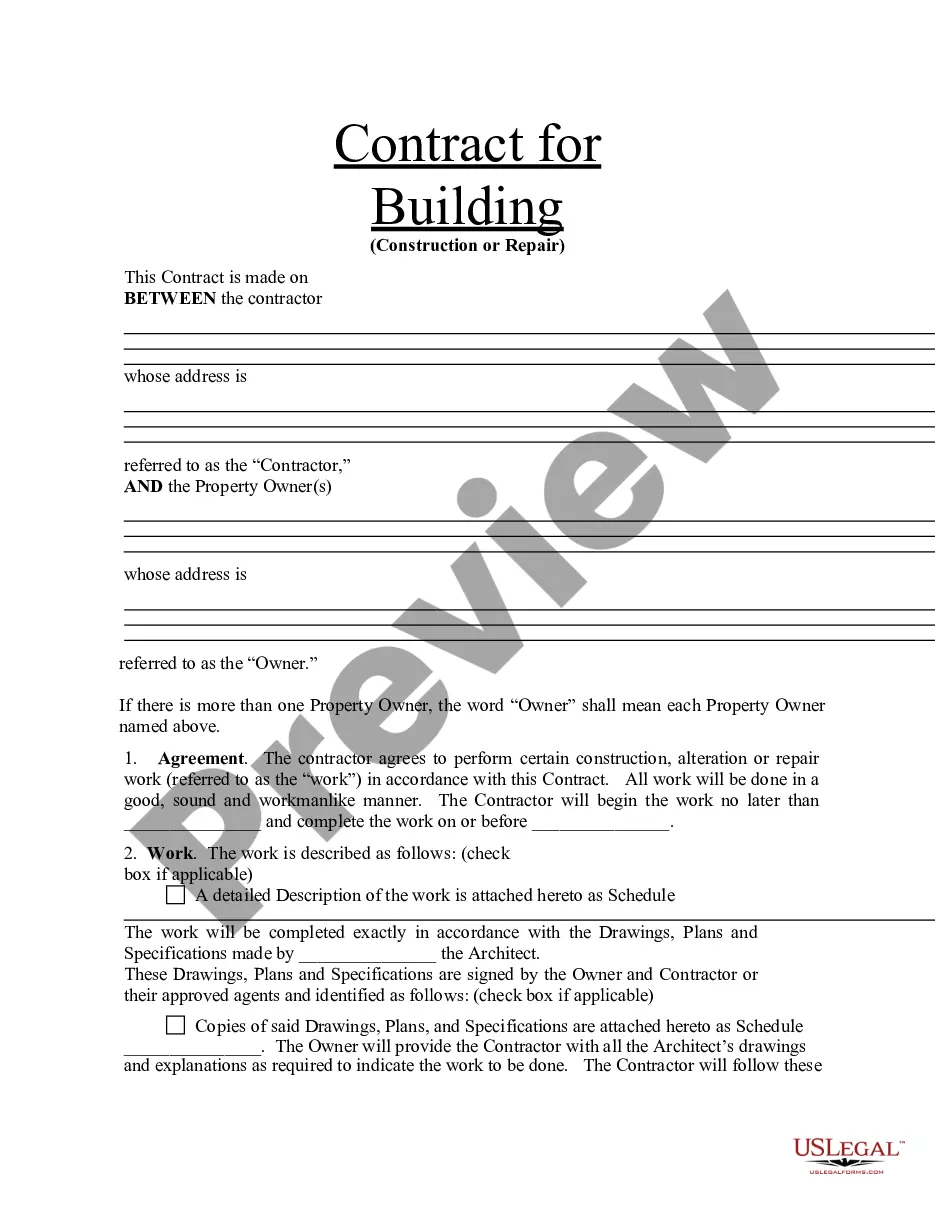
The Electrical Contract for Contractor is a legally binding agreement between electrical contractors and property owners. It establishes terms for either a cost-plus or fixed fee arrangement and covers essential aspects like change orders, site information, warranties, and insurance requirements. This form is specifically designed to comply with the laws of the State of Vermont, making it distinct from other construction contracts that may not address those specific legal regulations.
Form components explained
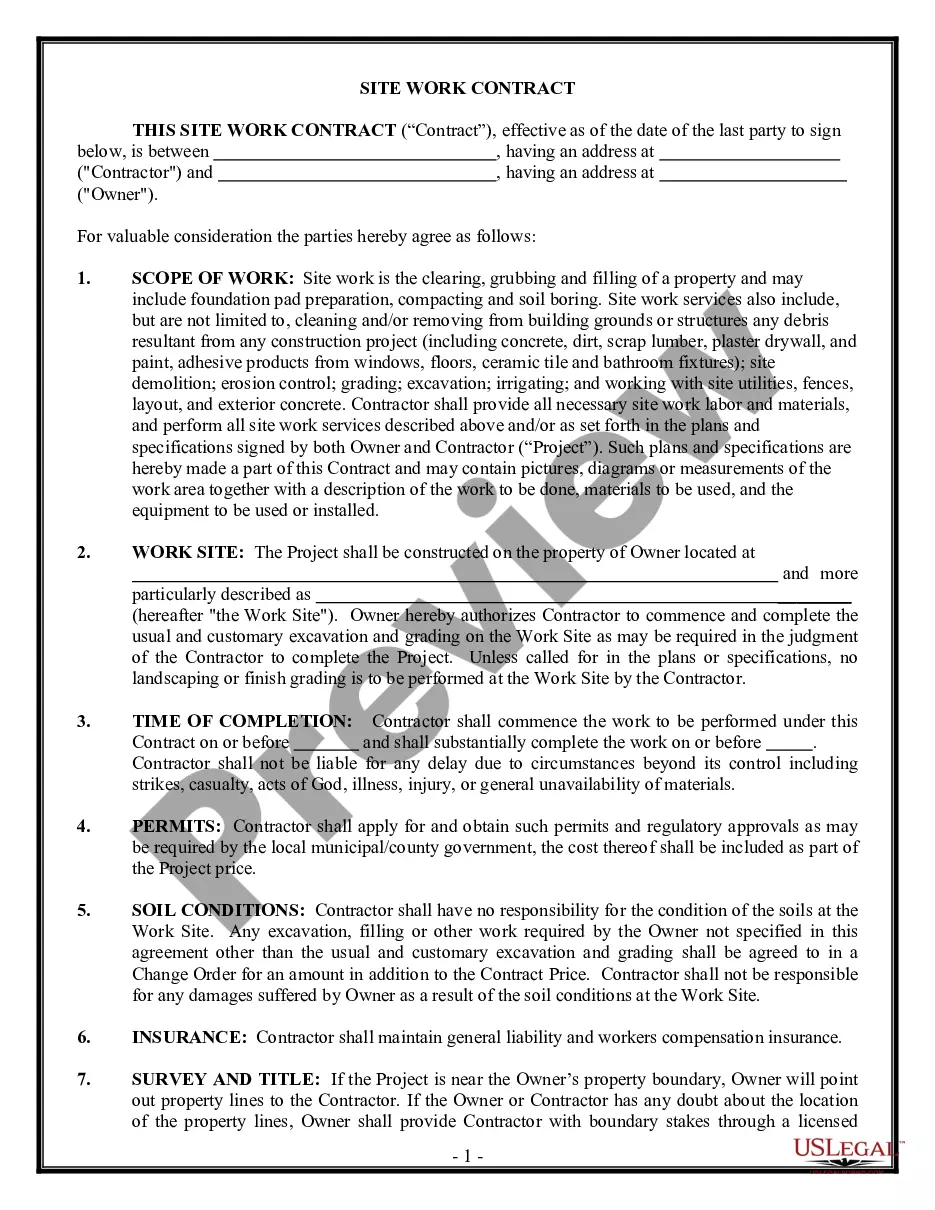
- Permits: Contractor responsibilities for obtaining necessary permits.
- Insurance: Required coverage, including general liability and workers' compensation.
- Survey and Title: Clarifications about property boundaries and ownership documentation.
- Changes to Scope of Work: Procedures for making adjustments through written Change Orders.
- Destruction and Damage: Handling circumstances where the project is damaged.
- Assignment: Prohibitions on transferring contractual obligations without consent.


Situations where this form applies
This electrical contract should be used when a property owner hires an electrical contractor to perform work on their property. It is suitable for construction projects requiring clear agreements on payment structures, project changes, and insurance. This form is ideal for projects in Vermont or when the parties involved desire to detail their responsibilities and safeguard their interests legally.
Intended users of this form
- Electrical contractors providing services in Vermont.
- Property owners seeking to hire electrical services for construction or renovation projects.
- Businesses or individuals wanting a formal agreement for electrical work to ensure legal protection.
Instructions for completing this form
- Identify the parties involved: Enter the names and addresses of the contractor and the property owner.
- Specify the project details: Clearly outline the electrical work to be performed, including any relevant specifications and timelines.
- Determine payment arrangements: Choose between a cost-plus or fixed fee structure and state the agreed amount.
- Address changes and permits: Include any necessary permits and outline how changes to the project will be handled.
- Sign and date the contract: Ensure both parties review and sign the document to make it legally binding.
Does this document require notarization?
Notarization is not commonly needed for this form. However, certain documents or local rules may make it necessary. Our notarization service, powered by Notarize, allows you to finalize it securely online anytime, day or night.
Get your form ready online
Our built-in tools help you complete, sign, share, and store your documents in one place.
Make edits, fill in missing information, and update formatting in US Legal Forms—just like you would in MS Word.
Download a copy, print it, send it by email, or mail it via USPS—whatever works best for your next step.
Sign and collect signatures with our SignNow integration. Send to multiple recipients, set reminders, and more. Go Premium to unlock E-Sign.
If this form requires notarization, complete it online through a secure video call—no need to meet a notary in person or wait for an appointment.
We protect your documents and personal data by following strict security and privacy standards.

Make edits, fill in missing information, and update formatting in US Legal Forms—just like you would in MS Word.

Download a copy, print it, send it by email, or mail it via USPS—whatever works best for your next step.

Sign and collect signatures with our SignNow integration. Send to multiple recipients, set reminders, and more. Go Premium to unlock E-Sign.

If this form requires notarization, complete it online through a secure video call—no need to meet a notary in person or wait for an appointment.

We protect your documents and personal data by following strict security and privacy standards.
Typical mistakes to avoid
- Failing to specify all project details can lead to misunderstandings.
- Not obtaining necessary permits prior to starting work.
- Neglecting to include a clear process for change orders.
- Overlooking insurance requirements, which can lead to liability issues.
Advantages of online completion
- Immediate availability for download, which saves time.
- Customizable sections that allow users to tailor the agreement to their specific needs.
- Drafted by licensed attorneys, ensuring legal soundness and compliance.
- Accessible from any device, making it convenient to complete anytime and anywhere.
Summary of main points
- Ensure all terms of the electrical project are detailed in the contract.
- Understand your rights and responsibilities as outlined in the contract.
- Always have clear communication between the contractor and property owner to avoid disputes.
Looking for another form?




Form popularity
FAQ
A certified contractor passed the state licensing examination. Certified contractors can work anywhere within the state in which they are licensed. A registered contractor is registered by a local county or municipality and receives a certificate of competency from the Electrical Contractors' Licensing Board.
To become a general contractor, you need at least a high school diploma, but there is an increase in a need for a bachelor's degree or at least an associate degree, plus years of construction industry experience. Regardless of education though, experience in the industry is the most important requirement.
Your general contractor should provide proof of licensing, bonding and insurance before a project starts, but it's better to have it in hand before you sign any contracts. It's important that contractors carry any licensing and/or certification required for the specific trade or skill they practice.
As mentioned earlier, general contractors' salaries can be around 10 to 20 percent of the project cost, with the rate going as high as 25 percent for larger projects. The fees are calculated from a listing of materials, markup on subcontractor labor, and the total price of the entire job.
Since Vermont does not require a general contractors license at the state level, you need to understand your local county and city requirements. In many cases, experience and examination will be needed to obtain your license for plumbing, electrical, and specialty trades mentioned above.
The contractor's name, address, phone, and license number (if required) an estimated start and completion date. the payment schedule for the contractor, subcontractors, and suppliers. the contractor's obligation to get all necessary permits. how change orders are handled.
General Contractor without Residential Contractor Endorsement - Can undertake commercial work or residential remodel work less than 25% of the value of the structure. No exam is required.
Make sure the contractor obtains a permit if the job requires one. Ask for a copy of the contractor's license and proof of insurance. Pay by check and get a receipt. Document any changes to the contract in writing.
Are you licensed for this type of work? Which types of insurance do you carry? How many building permits have you obtained in my area over the last two years? Can you provide a list of references? What is an expected timeline for this project? Will you hire sub-contractors for the job?