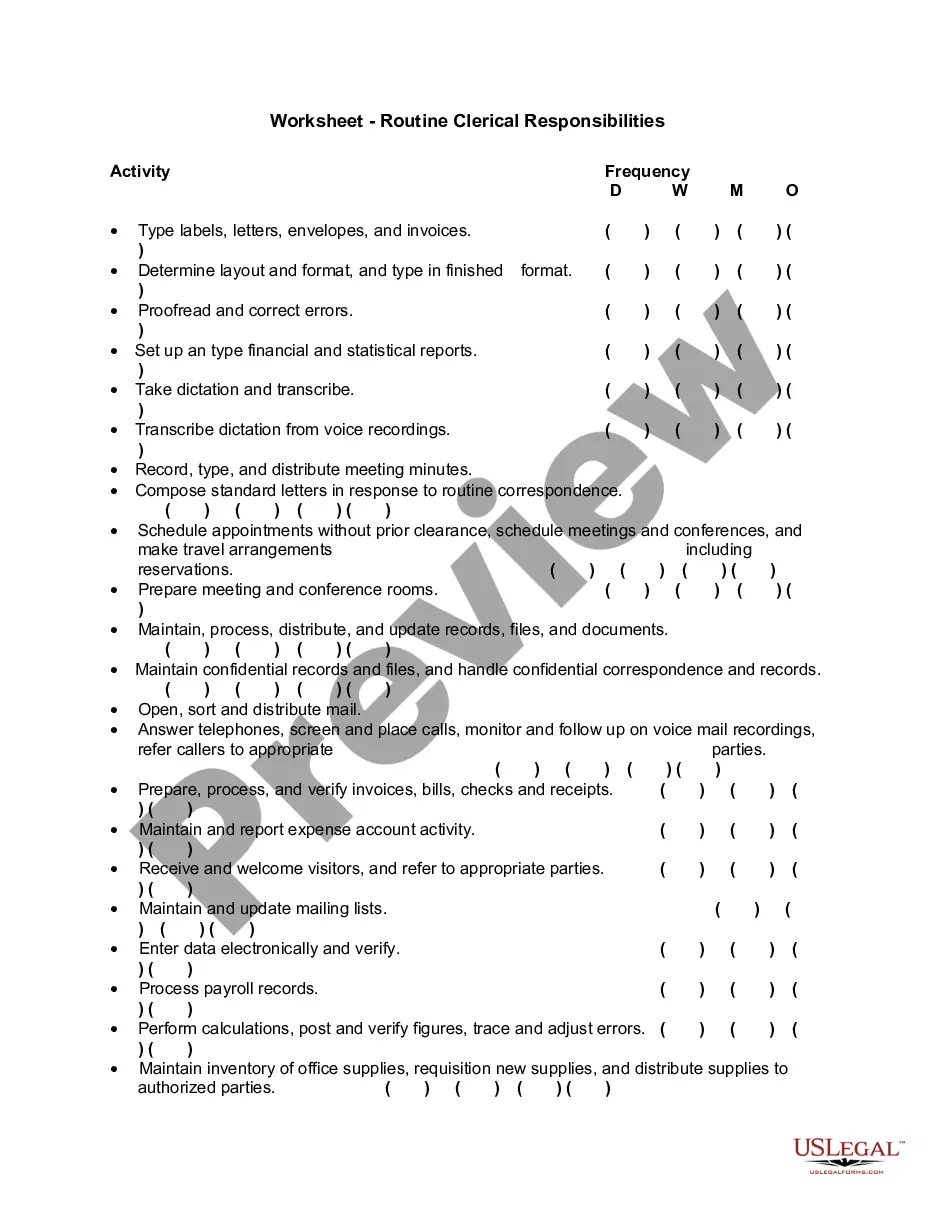
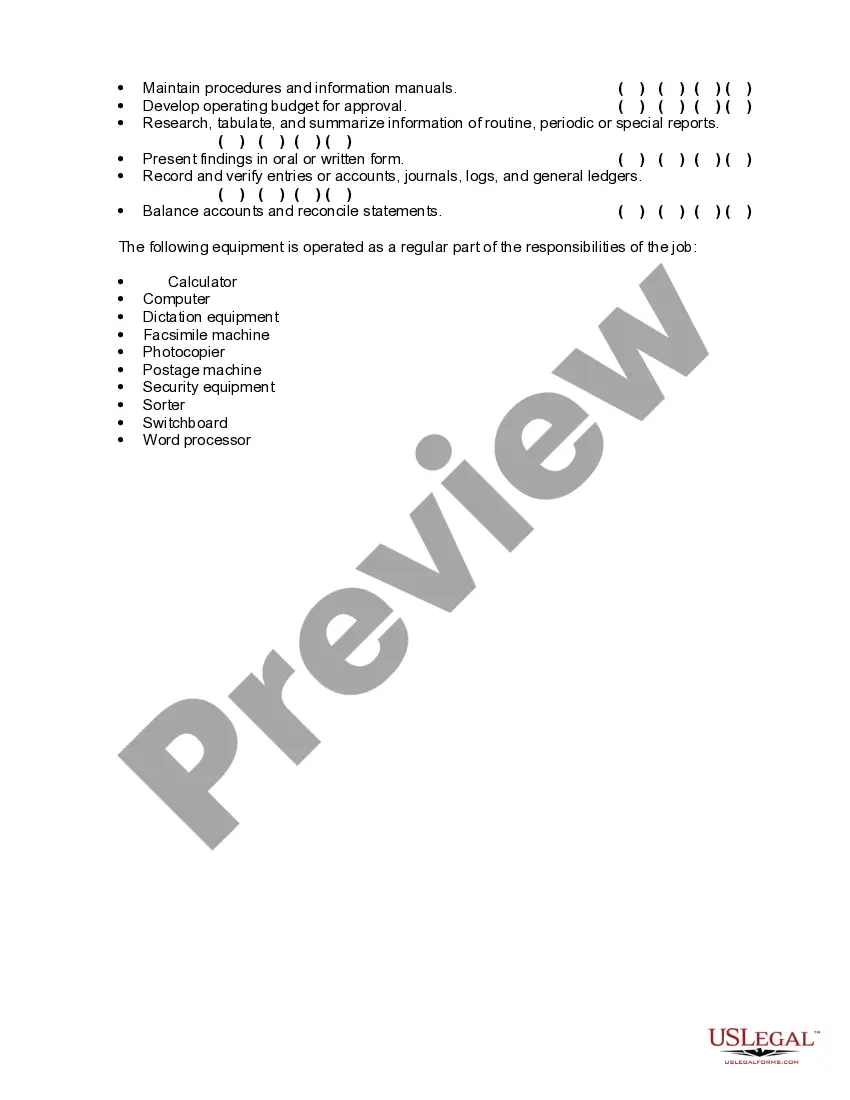
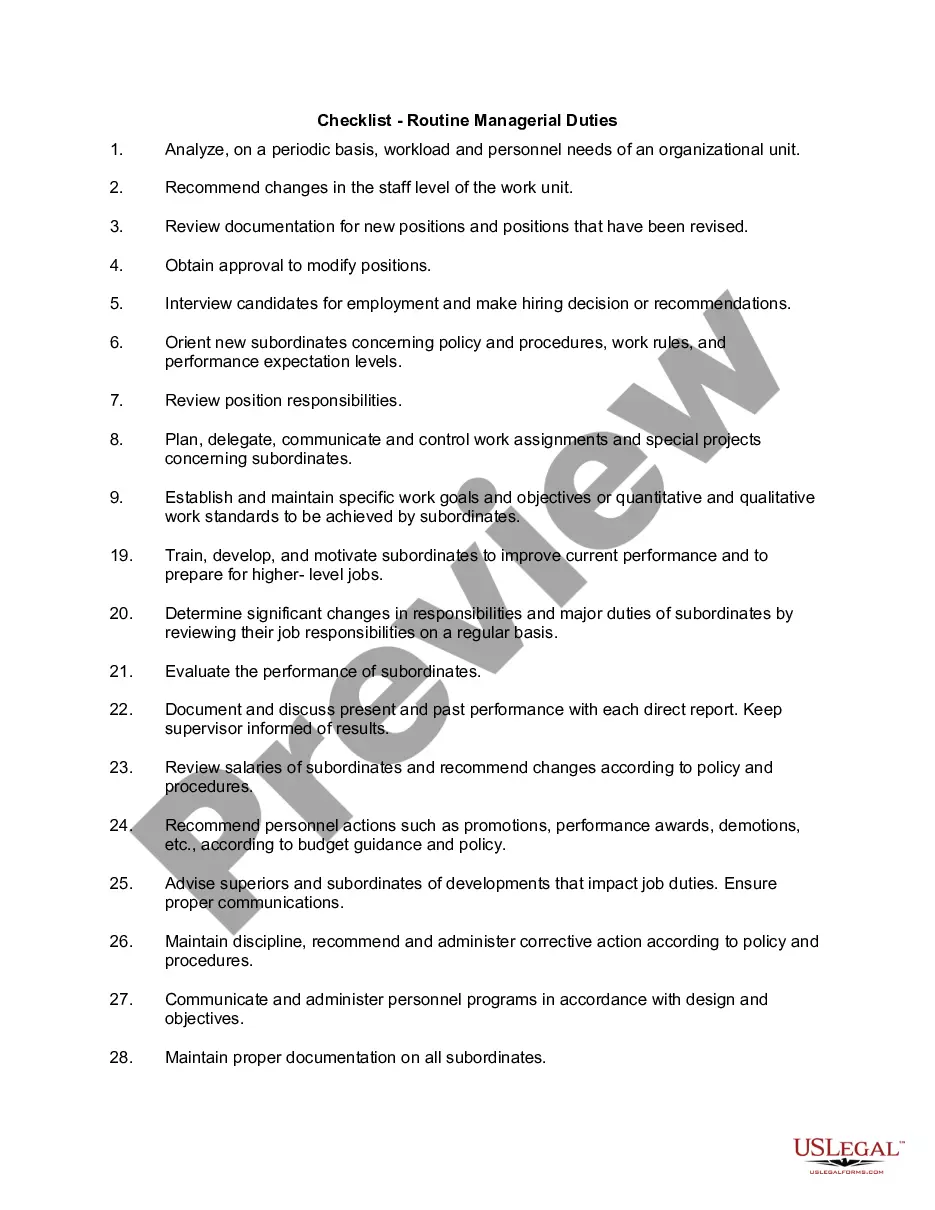
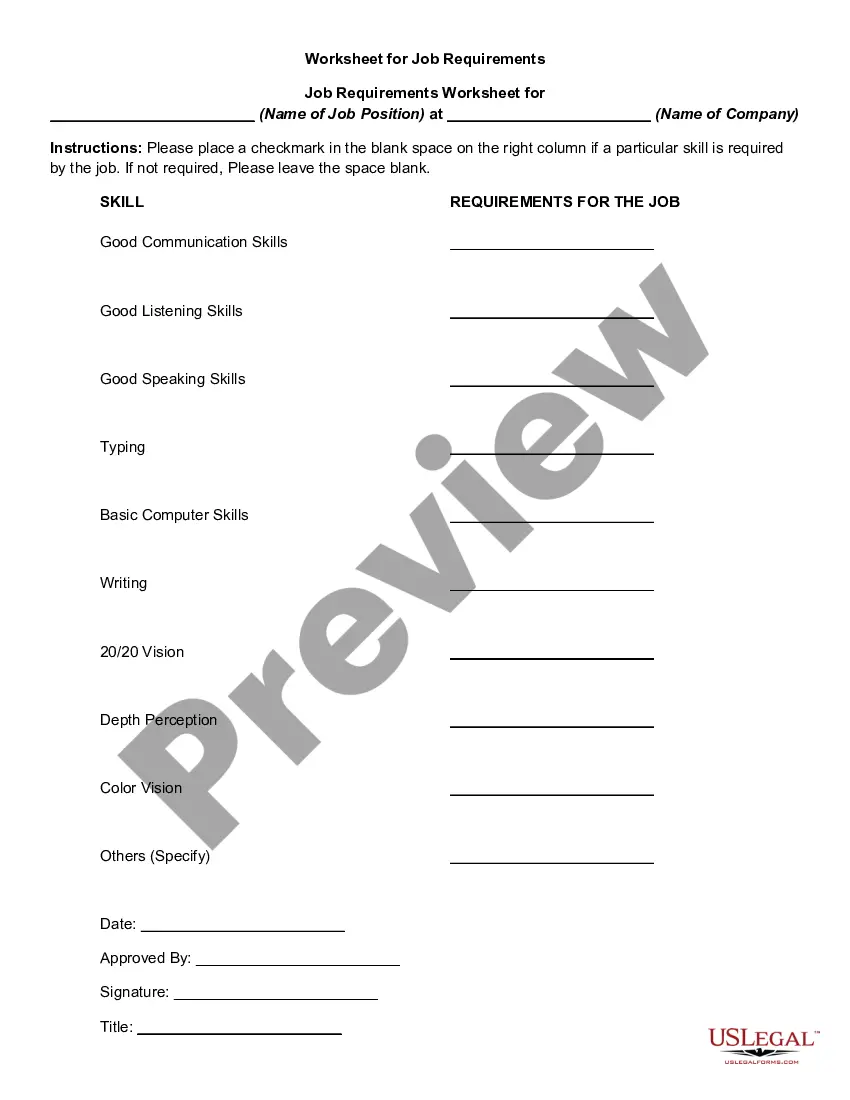
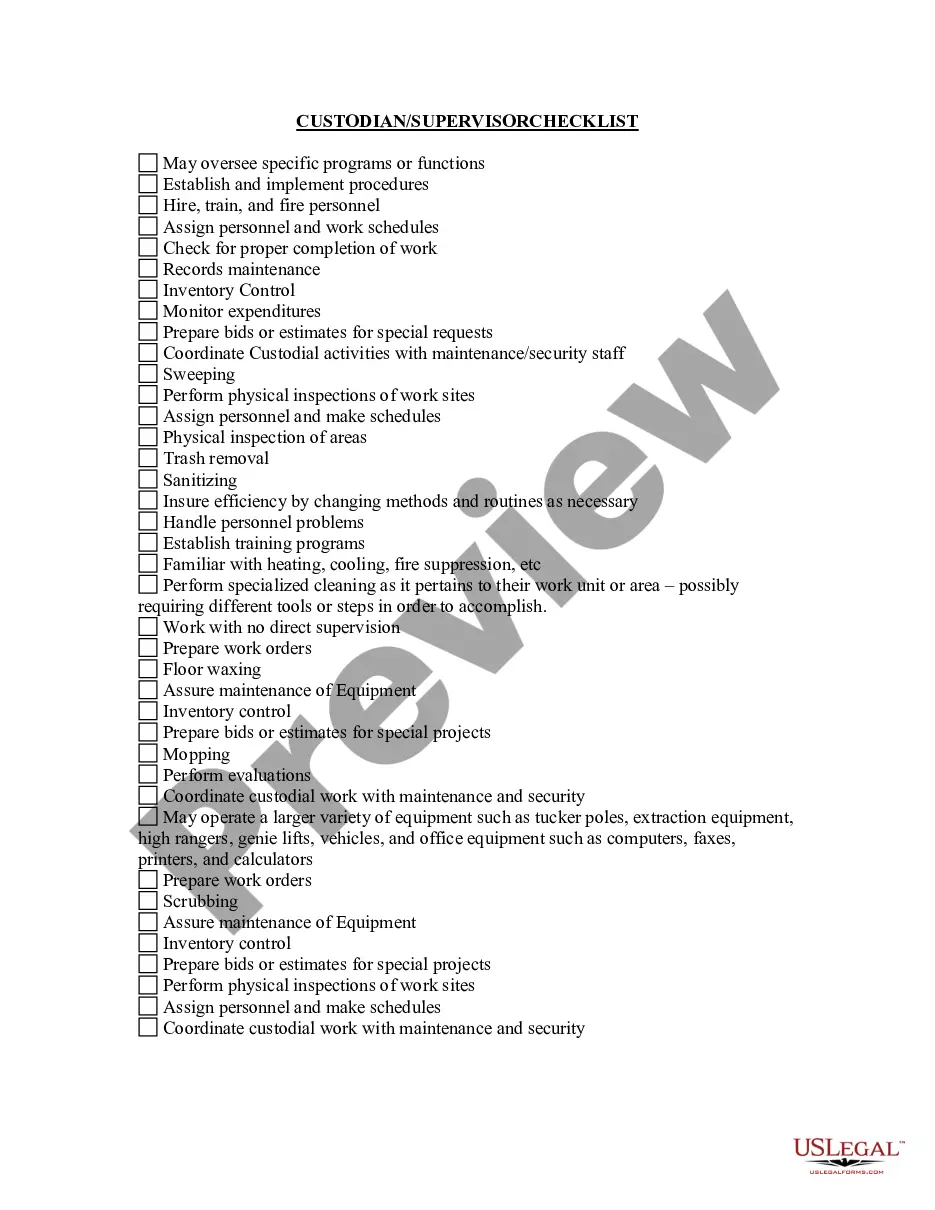
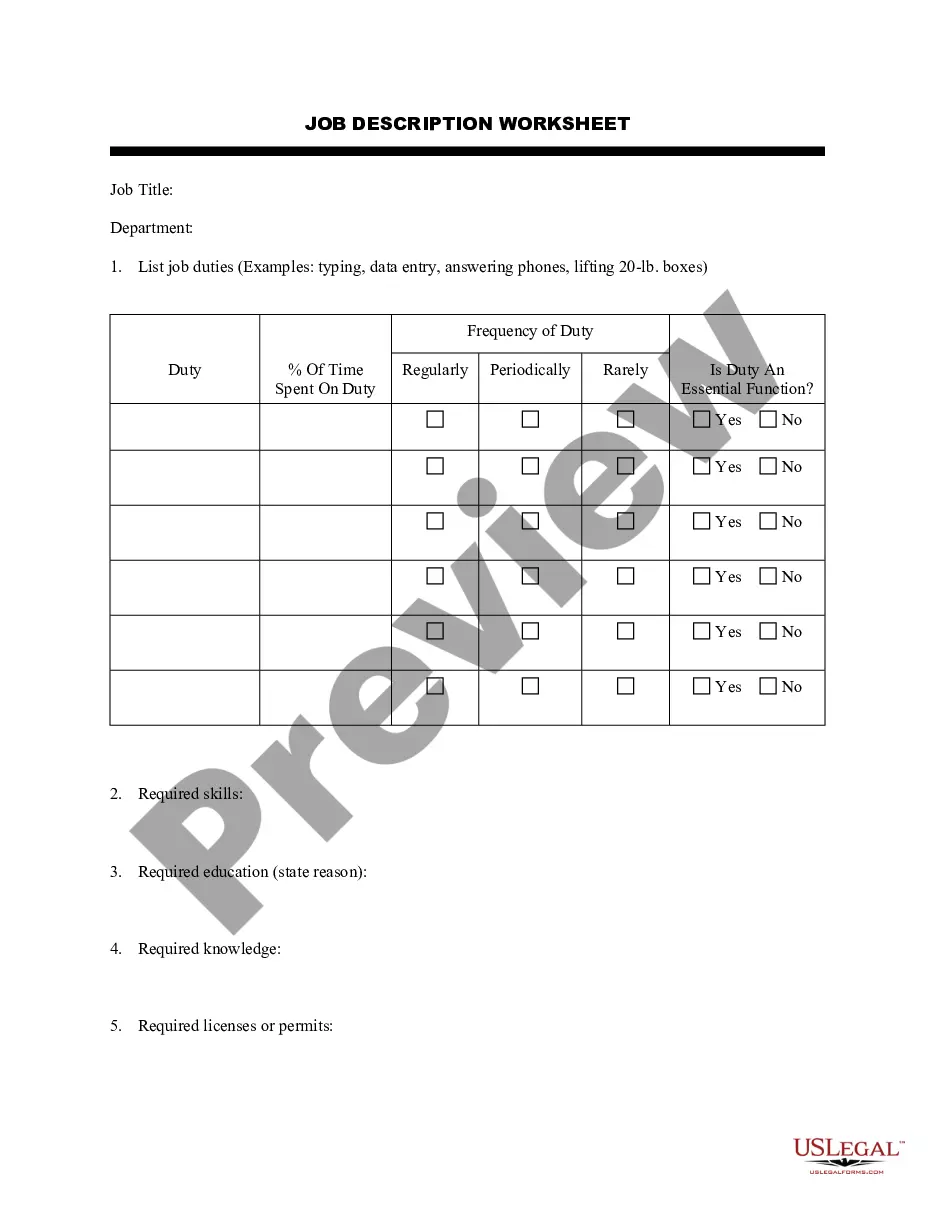
Virginia Worksheet - Routine Clerical Responsibilities
Description
Get your form ready online
Our built-in tools help you complete, sign, share, and store your documents in one place.
Make edits, fill in missing information, and update formatting in US Legal Forms—just like you would in MS Word.
Download a copy, print it, send it by email, or mail it via USPS—whatever works best for your next step.
Sign and collect signatures with our SignNow integration. Send to multiple recipients, set reminders, and more. Go Premium to unlock E-Sign.
If this form requires notarization, complete it online through a secure video call—no need to meet a notary in person or wait for an appointment.
We protect your documents and personal data by following strict security and privacy standards.

Make edits, fill in missing information, and update formatting in US Legal Forms—just like you would in MS Word.

Download a copy, print it, send it by email, or mail it via USPS—whatever works best for your next step.

Sign and collect signatures with our SignNow integration. Send to multiple recipients, set reminders, and more. Go Premium to unlock E-Sign.

If this form requires notarization, complete it online through a secure video call—no need to meet a notary in person or wait for an appointment.

We protect your documents and personal data by following strict security and privacy standards.
Looking for another form?


How to fill out Worksheet - Routine Clerical Responsibilities?
Selecting the appropriate valid document template can be quite a challenge.
Certainly, there are numerous templates accessible online, but how do you locate the correct type that you need.
Utilize the US Legal Forms website. This service offers thousands of templates, including the Virginia Worksheet - Routine Clerical Responsibilities, which can be utilized for business and personal purposes.
You can review the form using the Preview button and read the form description to confirm this is suitable for you.
- All forms are verified by experts and comply with federal and state requirements.
- If you are already registered, Log In to your account and select the Download button to obtain the Virginia Worksheet - Routine Clerical Responsibilities.
- You can use your account to search for the valid forms you have previously purchased.
- Visit the My documents section of your account to retrieve another copy of the document you need.
- If you are a new user of US Legal Forms, here are simple guidelines for you to follow.
- First, ensure that you have chosen the correct form for your area/state.
Form popularity
FAQ
You might thing clerical and administrative work in an office is one and the same thing, but they are not. Clerical personnel are entry-level workers, generally, whereas administrative work is typically done by trained secretaries or administrative assistants.
The clerical staff is usually responsible for answering phones, maintaining filing systems, assisting with scheduling, handling deliveries, and doing data entry, among other tasks. Because of the variety of tasks involved in clerical work, you should be well-organized and detail-oriented if you choose this profession.
Clerical work ensures that an office runs smoothly and efficiently. It involves the day-to-day administrative tasks of an office, such as answering phones, scheduling appointments, sending faxes, and filing documents. 1feff Clerical and administrative skills are useful for almost anyone who works in an office.
The Role of a Clerical OfficerGeneral clerical work e.g. filing, photocopying, answering/making telephone calls, dealing with emails, reception desk duties, etc.Supporting line-managers and colleagues;Working as part of a team in delivering services;More items...
The main difference between cashiers and courtesy clerks is that cashiers handle cash, and courtesy clerks do not. This responsibility is a crucial part of a business' success because cashiers can cost the business money if they mishandle cash. In addition to cash, cashiers also handle checks and credit cards.
7 answers. Clerks normally work in fresh (food departments) cashier's are the ones who work the registers. As a courtesy clerk, you mostly help the customer with their groceries and help around the store. As a cashier, you mostly scan the groceries and staying at the cashiers.
Clerical Officer Job DutiesAnswering phones, taking messages and directing calls.Operating photocopiers, scanners, fax machines, personal computers and voicemail systems.Maintaining and updating inventory, database, mailing and filing systems.Opening, sorting and distributing incoming mail.More items...?
To understand the definition of clerical work, consider these common clerical tasks:Answering phones.Scheduling appointments or business trips.Sending faxes.Making copies.Filing documents.Screening salespeople.Creating records.Checking and sending mail and email.More items...
7 answers. Clerks normally work in fresh (food departments) cashier's are the ones who work the registers. As a courtesy clerk, you mostly help the customer with their groceries and help around the store. As a cashier, you mostly scan the groceries and staying at the cashiers.
An office worker, also known as a receptionist, secretary or office clerk, performs many tasks to ensure that an office runs smoothly. These include answering phones and emails, collecting and providing information, imputing data, making copies and filing records.