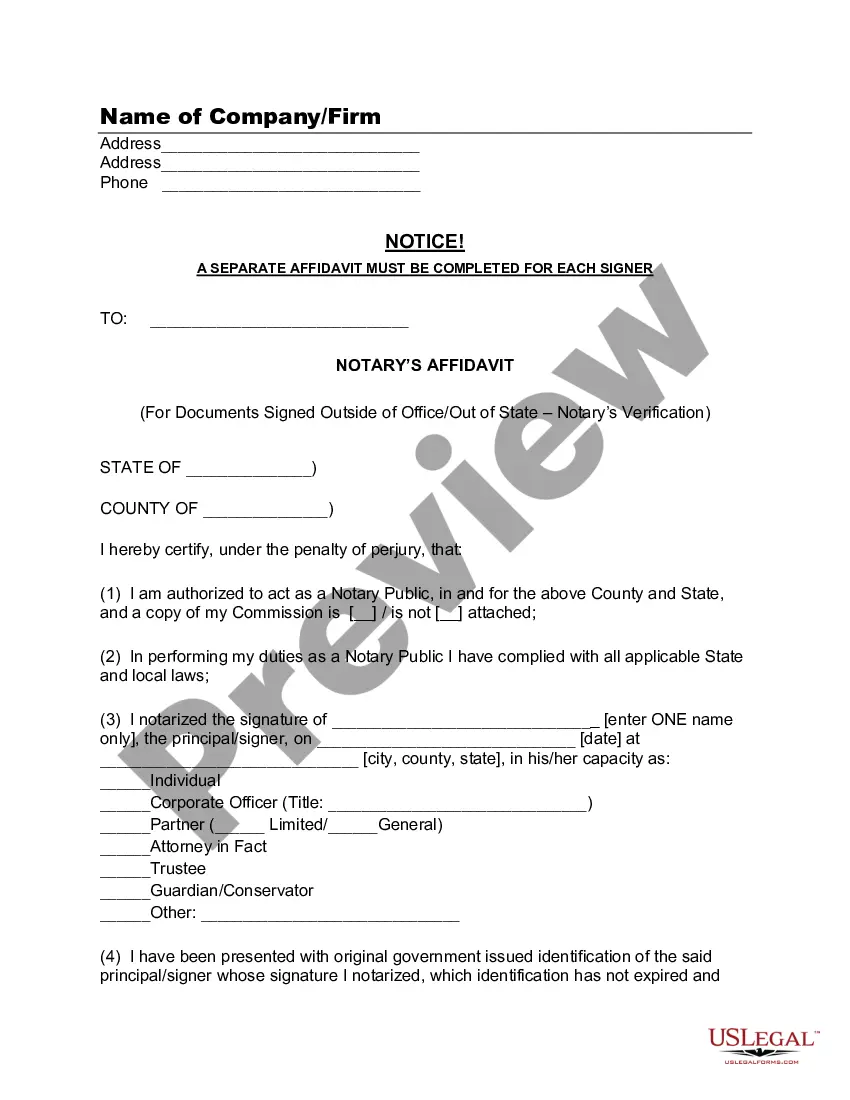
Virginia Special Needs Trust Clause
What is this form?
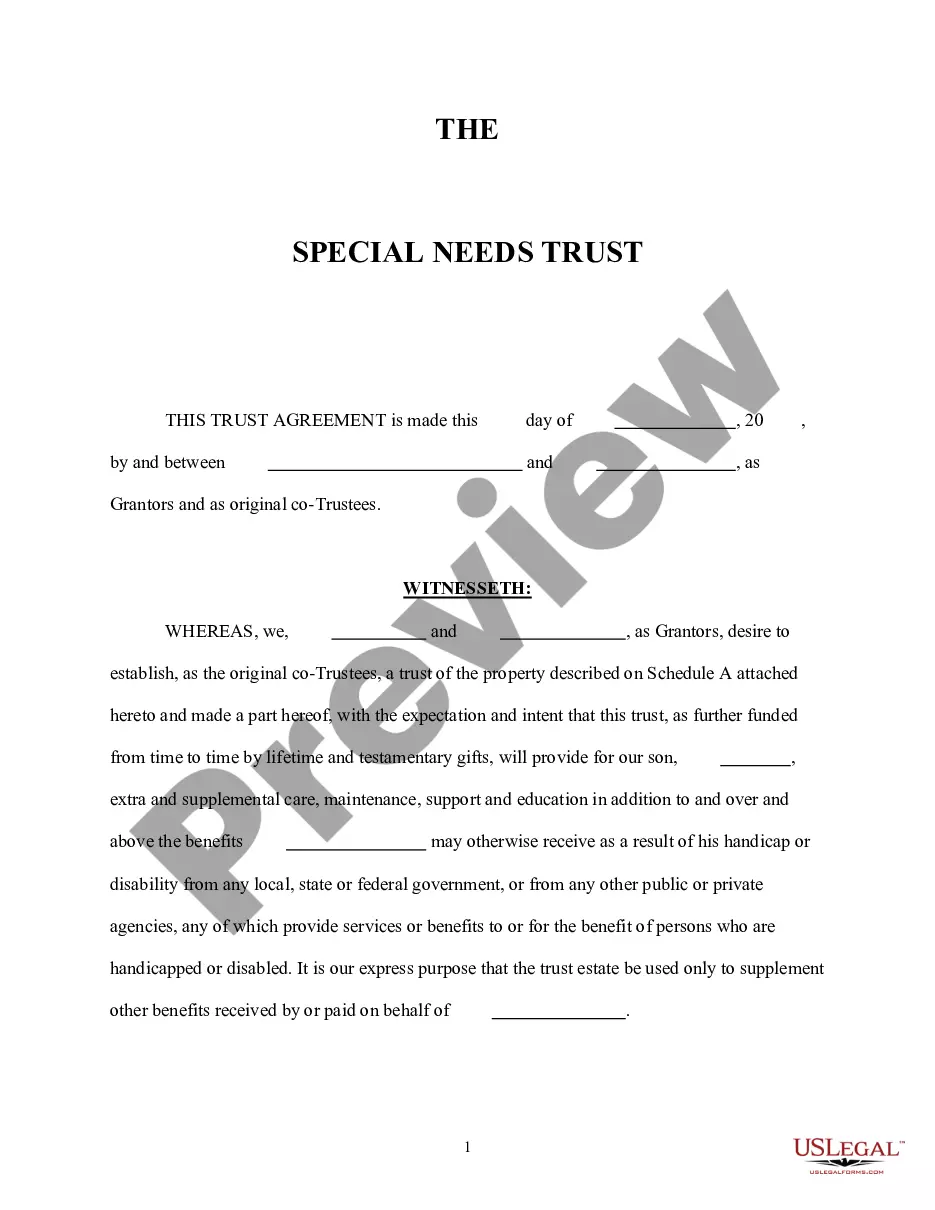
The Special Needs Trust Clause is a legal document intended to create a trust that provides for the supplemental needs of a beneficiary with a handicap or disability while preserving their eligibility for government benefits. This form ensures that the trust's assets are used to enhance the beneficiary's quality of life without replacing the support they receive from various public agencies. Unlike standard trusts, this specialized clause helps maintain benefits while allowing for additional care and resources.
Key parts of this document
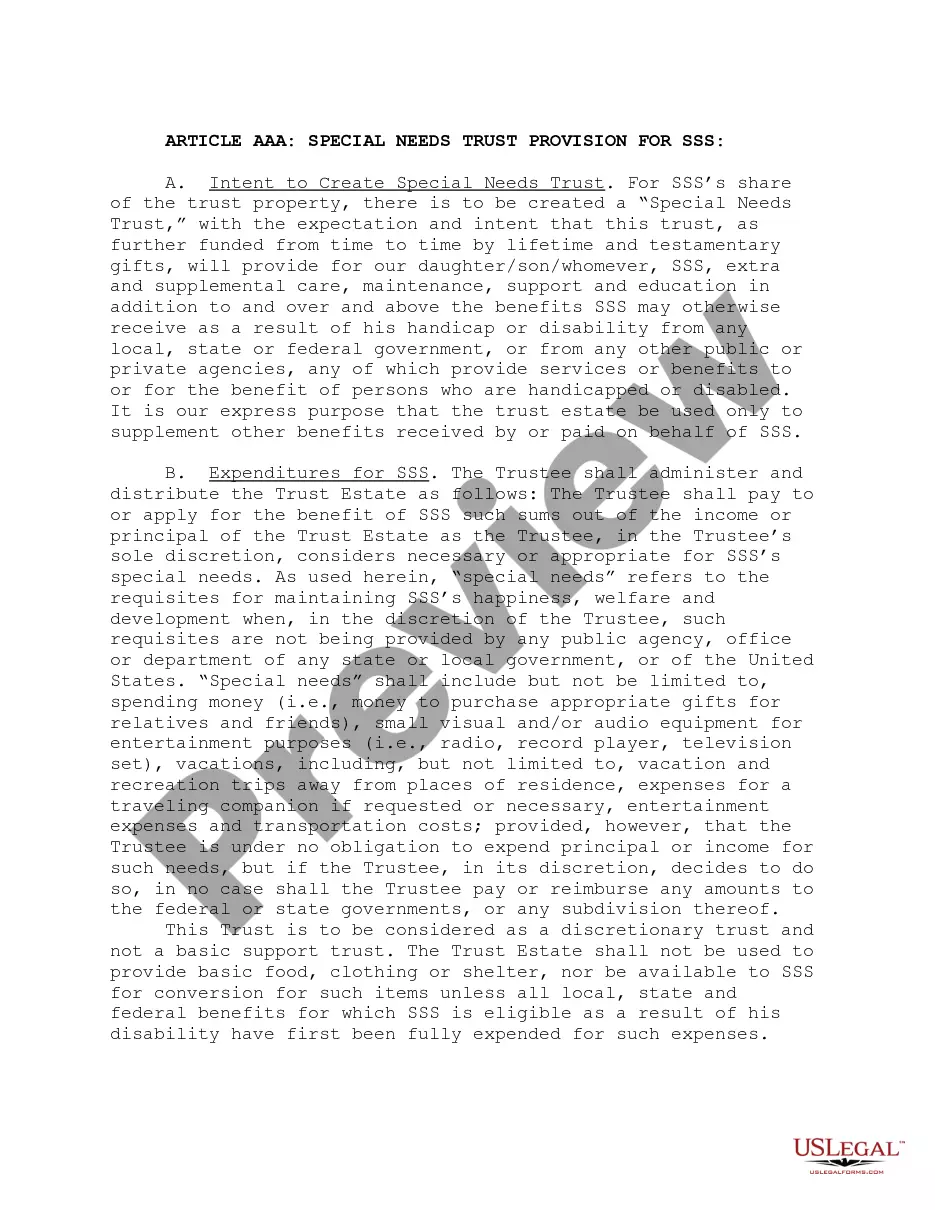
- Intent to create a Special Needs Trust and the purpose of supplementing public benefits.
- Guidelines for the Trustee on making expenditures for the beneficiary's special needs.
- Requirements for seeking public support to ensure the beneficiary's basic needs are met.
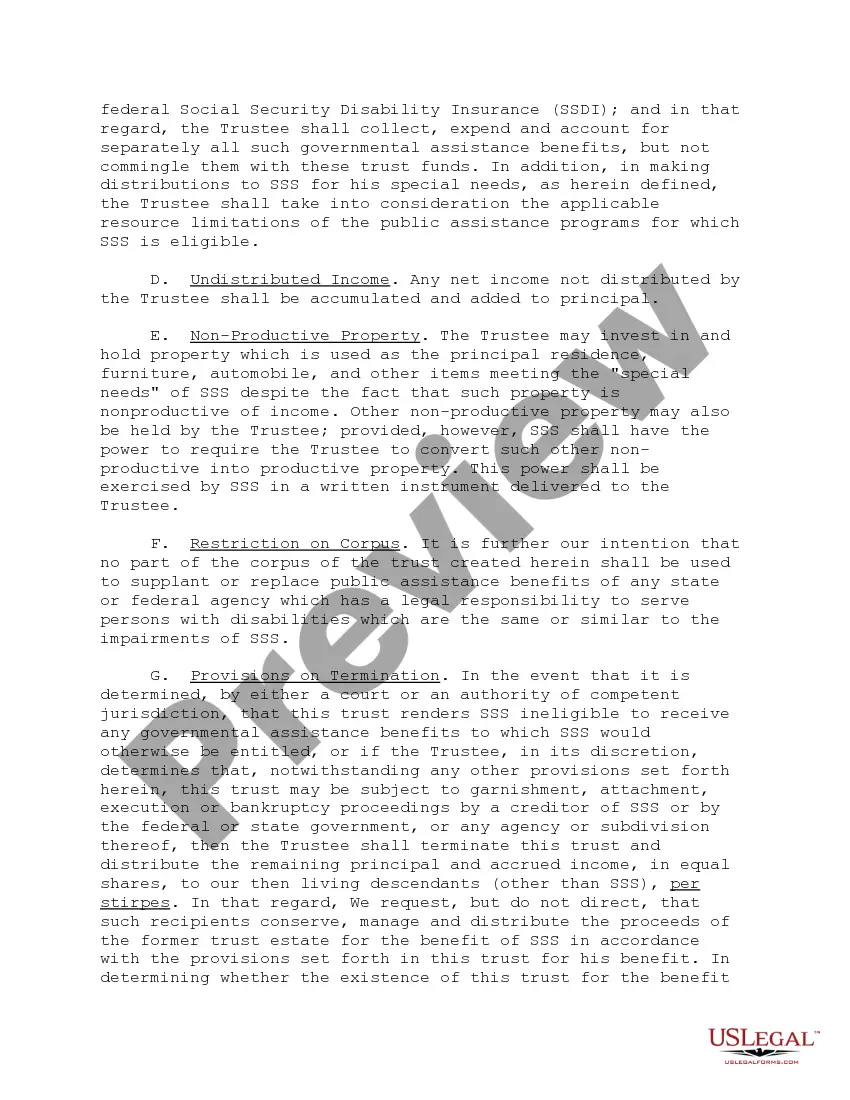
- Restrictions on the trust corpus to protect public assistance eligibility.
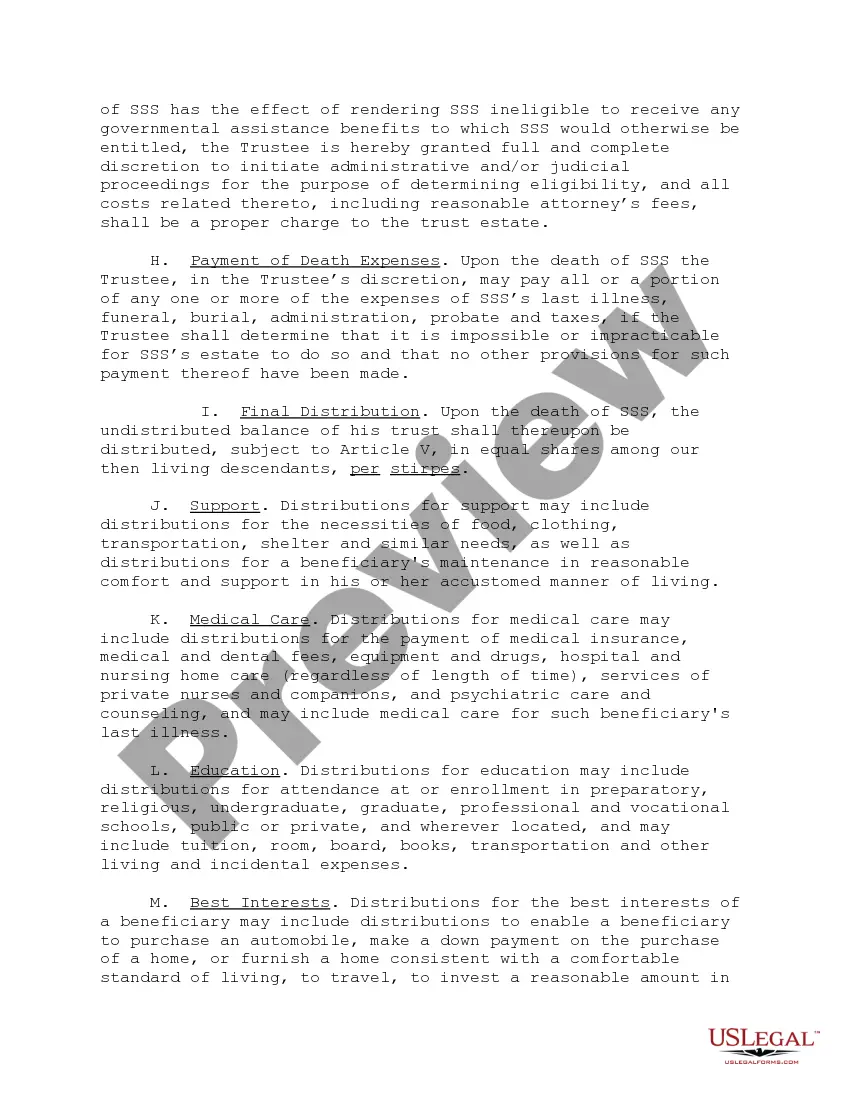
- Provisions related to the termination of the trust and distribution of assets upon the beneficiary's death.
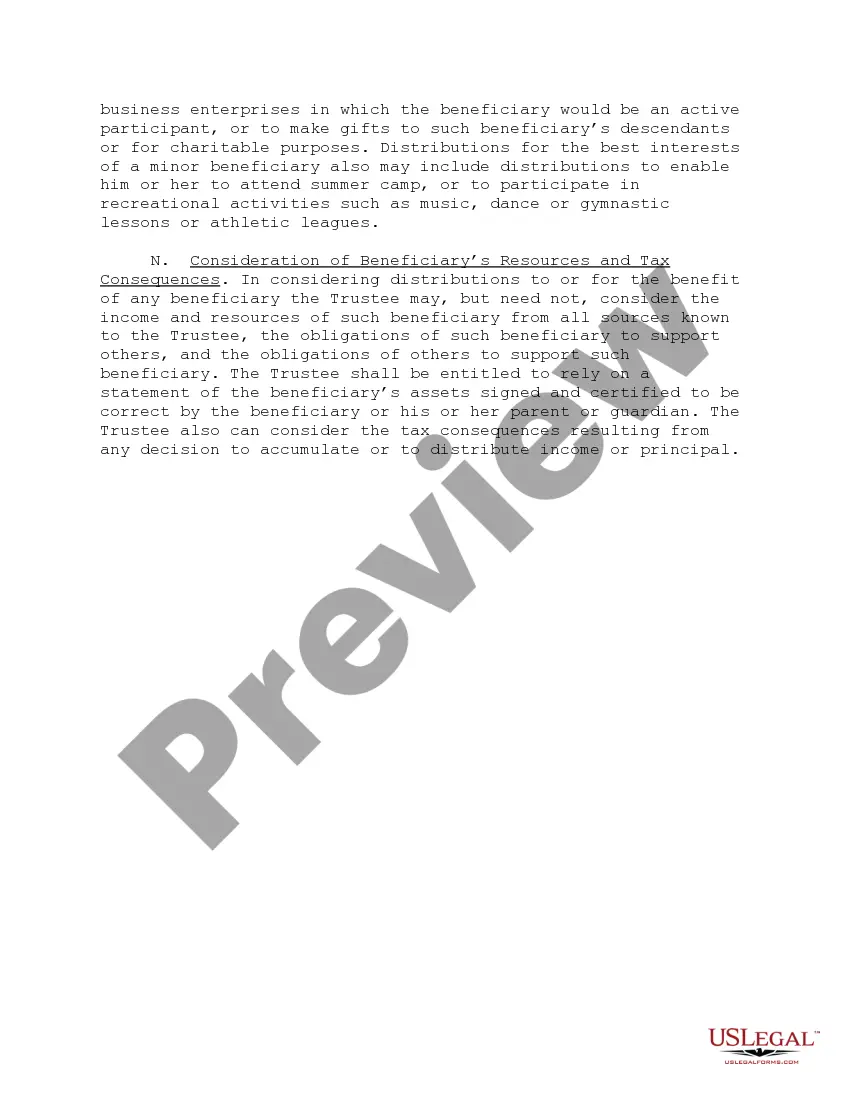
- Provisions for support, medical care, education, and other best interests of the beneficiary.

When this form is needed
This form is essential when creating a financial plan for individuals with disabilities who may need additional support beyond what government benefits provide. It is useful when you want to ensure that the beneficiaryâs trust funds are used for their enhancement, such as healthcare, education, or recreational activities, without jeopardizing Medicaid or SSI eligibility. If you are planning to provide assistance to a relative or dependent with special needs, this trust clause can help ensure their needs are met effectively.
Who needs this form
This form is suitable for:
- Parents or guardians of individuals with disabilities.
- Trustees responsible for managing the financial assets for beneficiaries with special needs.
- Anyone interested in establishing a Special Needs Trust to provide for a loved one's supplemental needs.
Completing this form step by step
- Identify the intended beneficiary and their specific special needs.
- Outline the intent to create the Special Needs Trust in the document.
- Detail the responsibilities and discretion of the Trustee regarding expenditures.
- Include clauses about seeking public benefits and restrictions on using trust funds.
- Ensure the trust provisions cover support, medical care, and educational expenses.
- Review and sign the document, ensuring all parties understand the contents and implications.
Does this document require notarization?
This form does not typically require notarization unless specified by local law. However, having the trust document notarized can provide an additional layer of authenticity and protection.
Get your form ready online
Our built-in tools help you complete, sign, share, and store your documents in one place.
Make edits, fill in missing information, and update formatting in US Legal Forms—just like you would in MS Word.
Download a copy, print it, send it by email, or mail it via USPS—whatever works best for your next step.
Sign and collect signatures with our SignNow integration. Send to multiple recipients, set reminders, and more. Go Premium to unlock E-Sign.
If this form requires notarization, complete it online through a secure video call—no need to meet a notary in person or wait for an appointment.
We protect your documents and personal data by following strict security and privacy standards.

Make edits, fill in missing information, and update formatting in US Legal Forms—just like you would in MS Word.

Download a copy, print it, send it by email, or mail it via USPS—whatever works best for your next step.

Sign and collect signatures with our SignNow integration. Send to multiple recipients, set reminders, and more. Go Premium to unlock E-Sign.

If this form requires notarization, complete it online through a secure video call—no need to meet a notary in person or wait for an appointment.

We protect your documents and personal data by following strict security and privacy standards.
Mistakes to watch out for
- Failing to specify how the trust funds can be spent, leading to potential misuse.
- Not considering the impact of the trust on government benefits eligibility.
- Inadequately addressing the Trusteeâs responsibilities and discretion.
- Neglecting to update the trust after significant life changes, such as the birth of new family members.
Advantages of online completion
- Convenient access to the form anytime, anywhere with internet access.
- Customizable options to reflect specific needs and circumstances regarding the beneficiary.
- Immediate download for quick implementation, allowing for timely planning.
- Reliability ensured by the involvement of licensed attorneys in drafting the template.
Legal use & context
- The Special Needs Trust Clause safeguards the beneficiary's public assistance benefits while providing additional support.
- This form can protect trust assets from creditors and legal claims.
- Failure to follow guidelines may result in loss of government benefits for the beneficiary.
Summary of main points
- The Special Needs Trust Clause is crucial for individuals with disabilities.
- It allows for supplemental support without risking government benefits.
- Understanding and clarity on trustee responsibilities are vital.
- Seek legal advice for state-specific compliance when creating a trust.
Looking for another form?

Form popularity
FAQ
The Virginia Special Needs Trust Clause is a provision to be added to a revocable trust that provides for a disabled beneficiary’s supplemental needs while preserving eligibility for government benefits. It directs how assets are used to enhance the beneficiary’s life, sets trustee duties, requires coordination with public benefits, and outlines death and asset-distribution provisions.
In Virginia, this clause helps create a supplemental needs trust inside an existing trust plan to support a disabled beneficiary without disqualifying them from programs like Medicaid or SSI. It guides the Trustee on expenditures for the beneficiary’s special needs, limits distributions to protect eligibility, and addresses funding, supervision, and asset-distribution on death.
The clause’s use may require careful administration to maintain benefits and comply with public programs. Its restrictions on the trust corpus and coordination with benefits rules can limit distributions and require ongoing trustee oversight to keep the arrangement aligned with program requirements.
To implement the clause in an existing revocable trust, insert it so the trustee has explicit duties to fund the beneficiary’s supplemental needs, follow the expenditure guidelines, and respect the restrictions designed to preserve eligibility for public benefits. Amendments should follow Virginia-law formalities and be properly executed.
The clause includes provisions for termination and distribution of assets upon the beneficiary’s death, detailing how remaining trust assets are handled. This helps ensure the beneficiary’s best interests are respected while aligning with any remaining public benefits considerations.
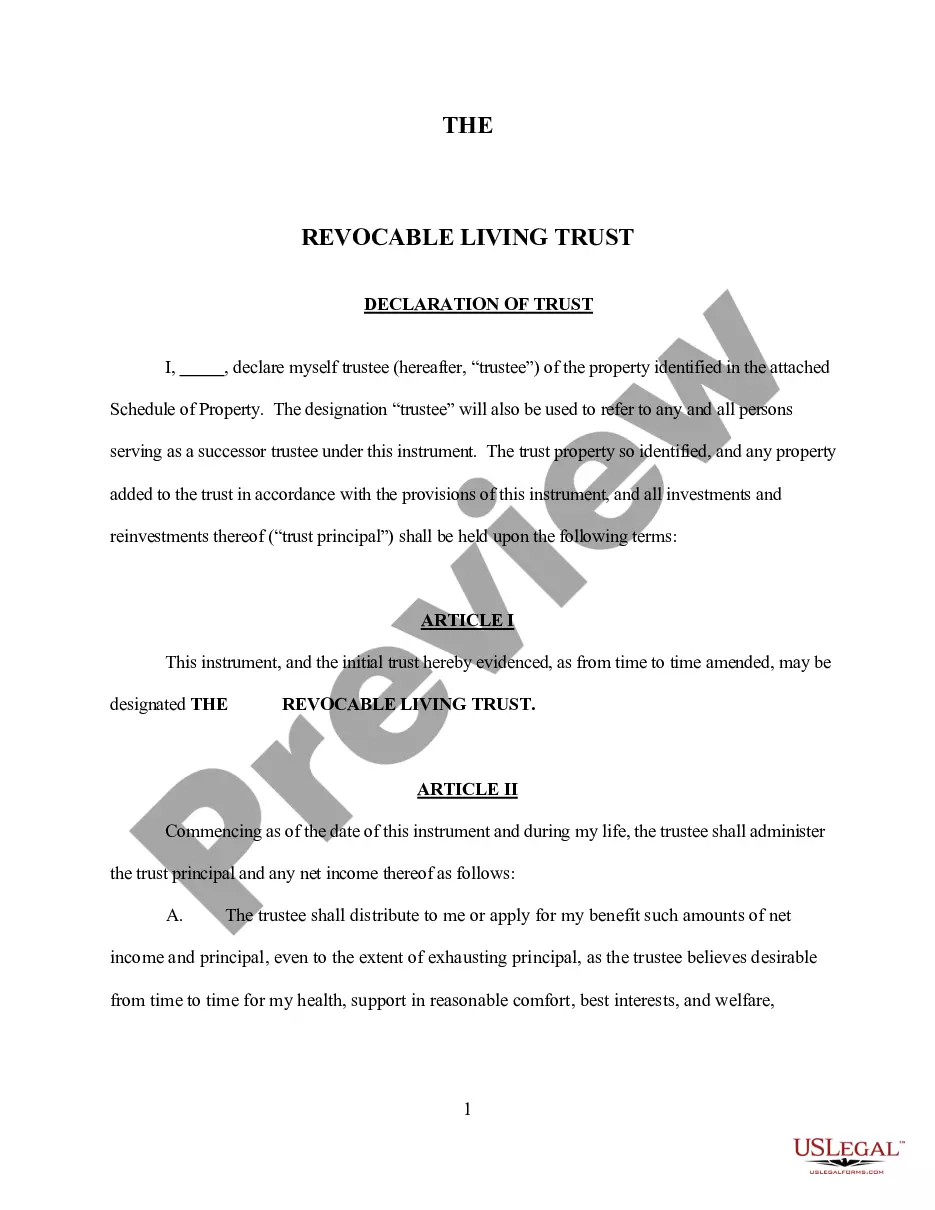
This form is a clause meant to be added to an existing revocable trust rather than a standalone special needs trust. It preserves benefits, guides expenditures, imposes corpus restrictions, and provides death provisions within the underlying trust, but relies on that underlying trust for ownership and administration rather than creating a separate legal entity.