Virginia Revocable Living Trust for Single Person with Special Needs
What this document covers
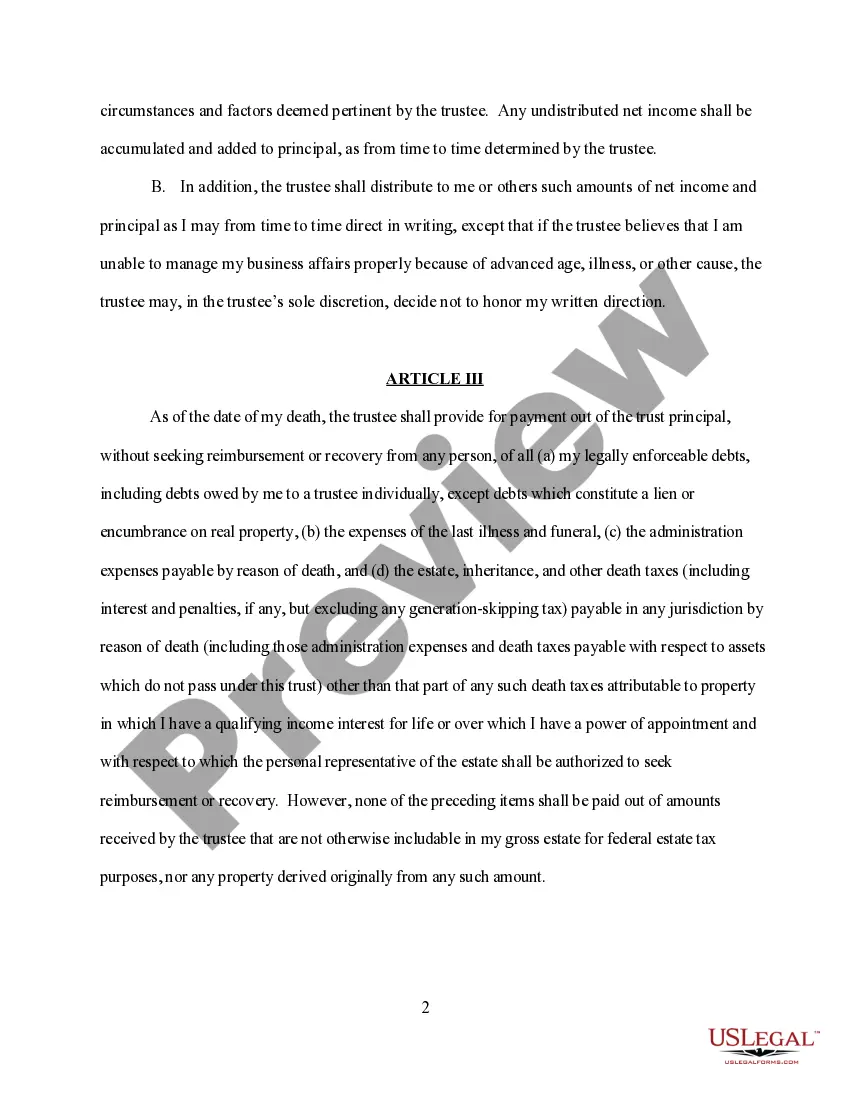
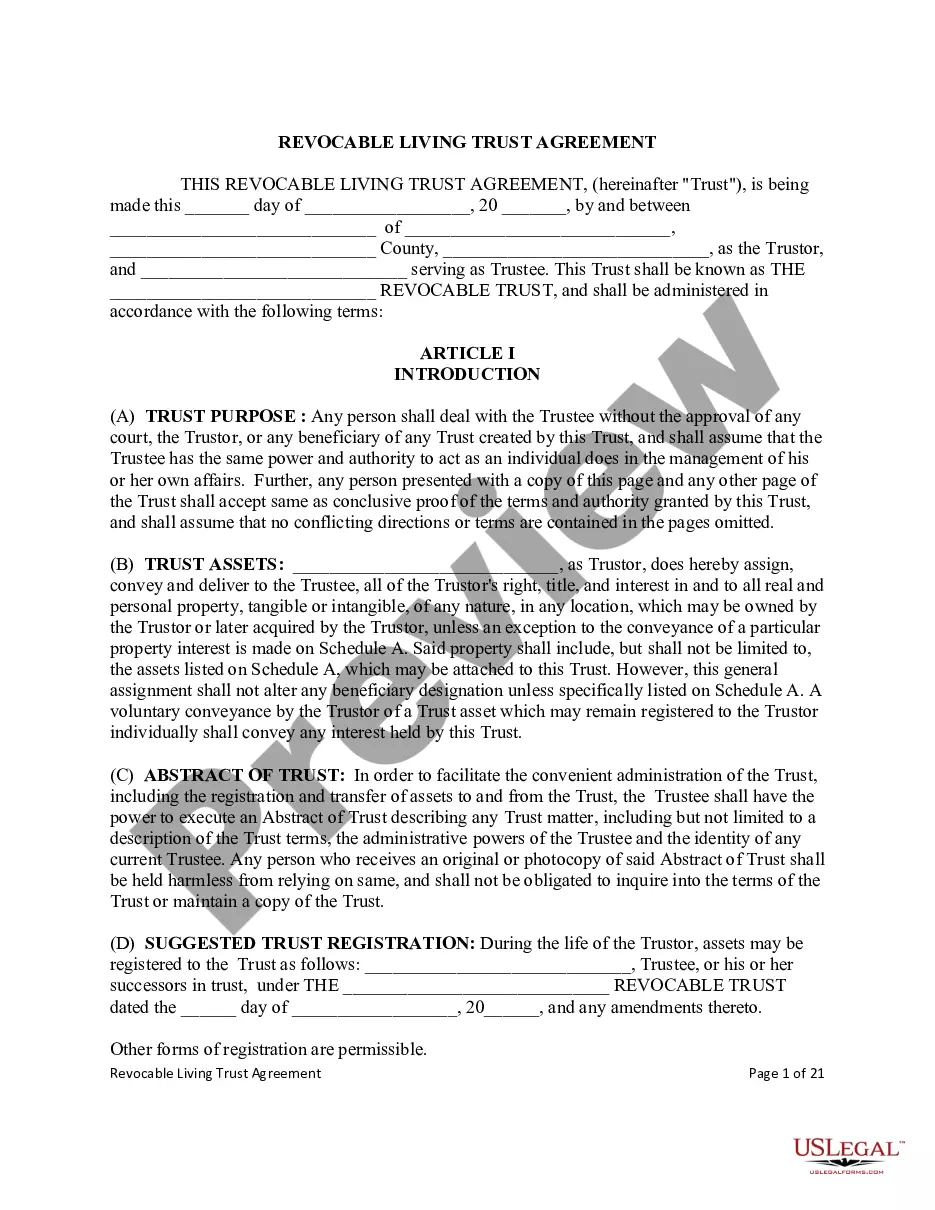
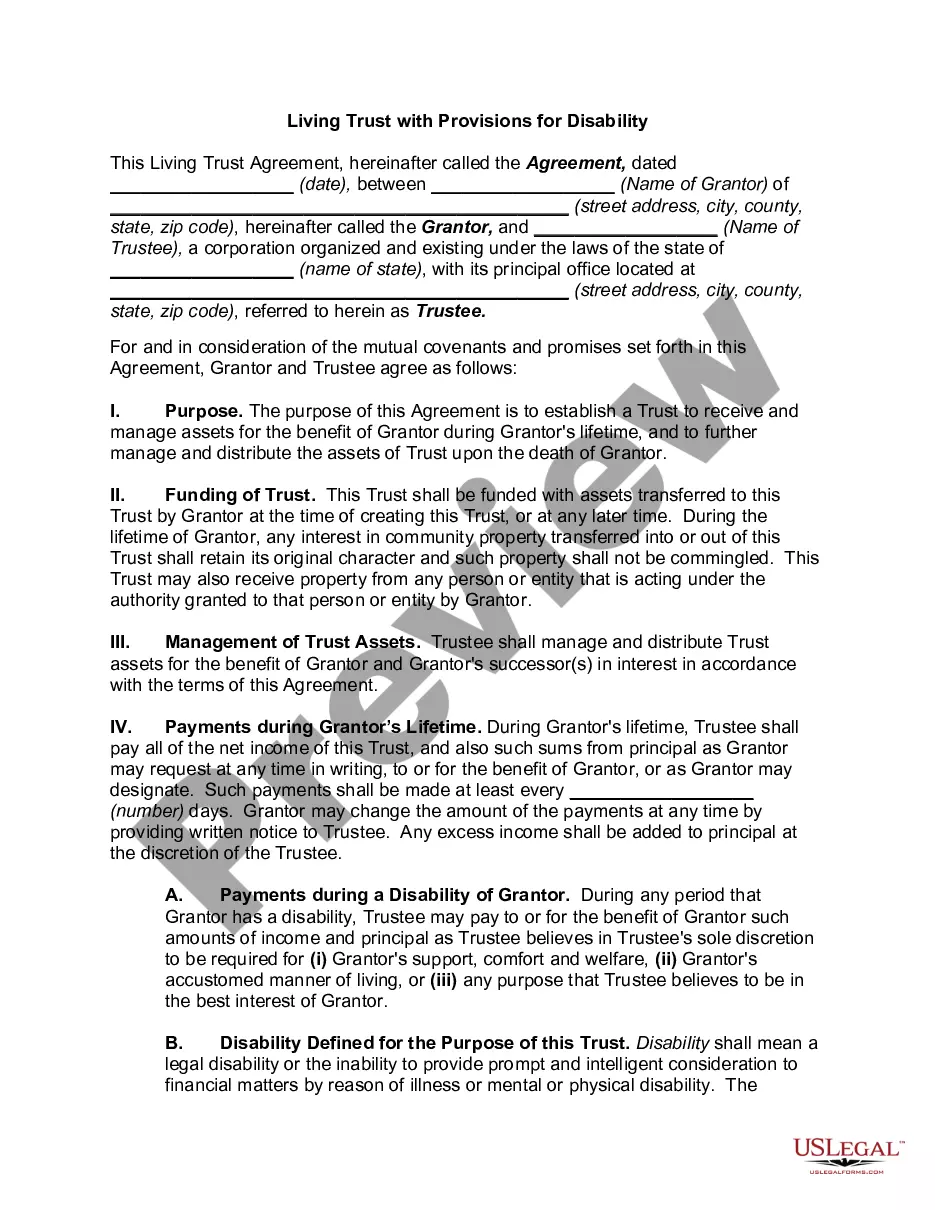
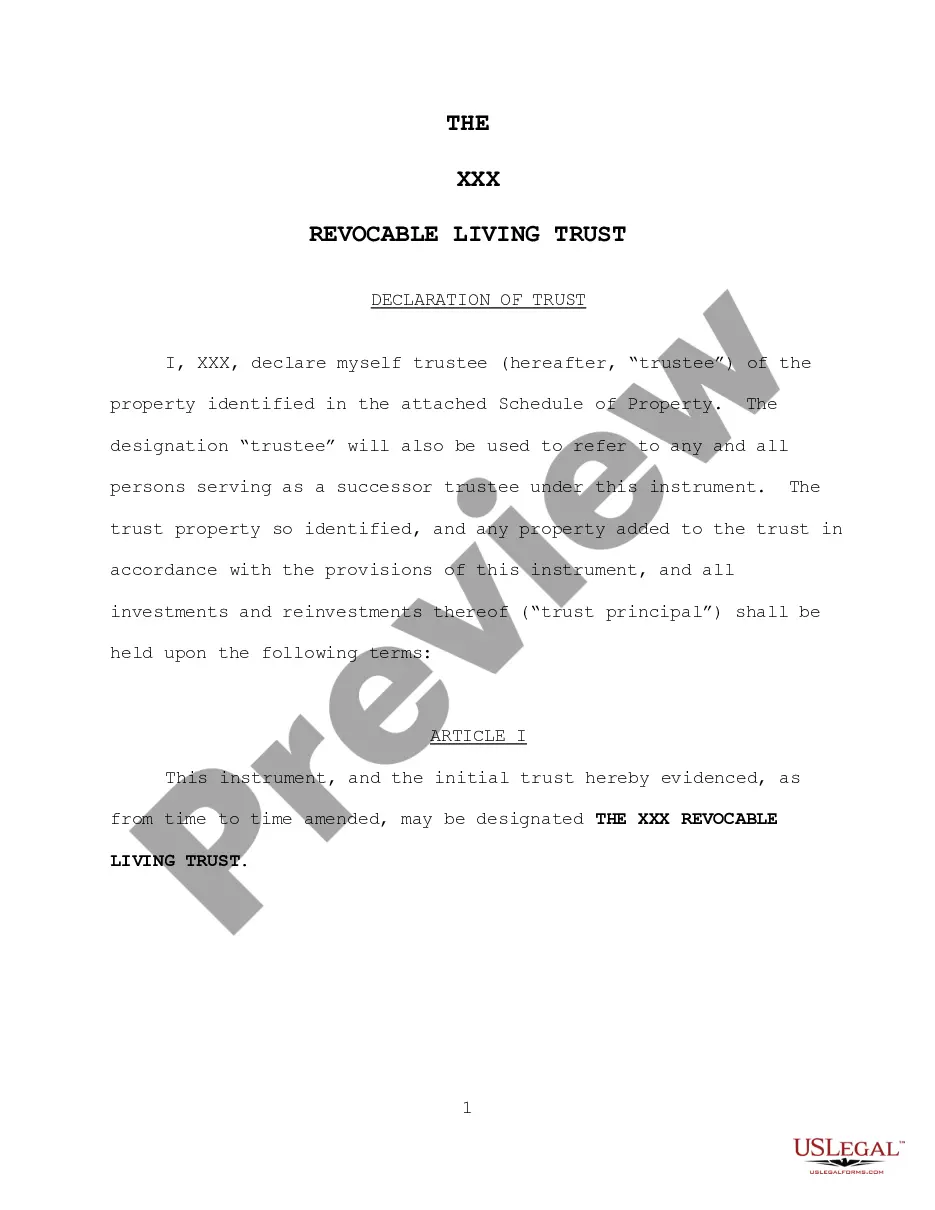
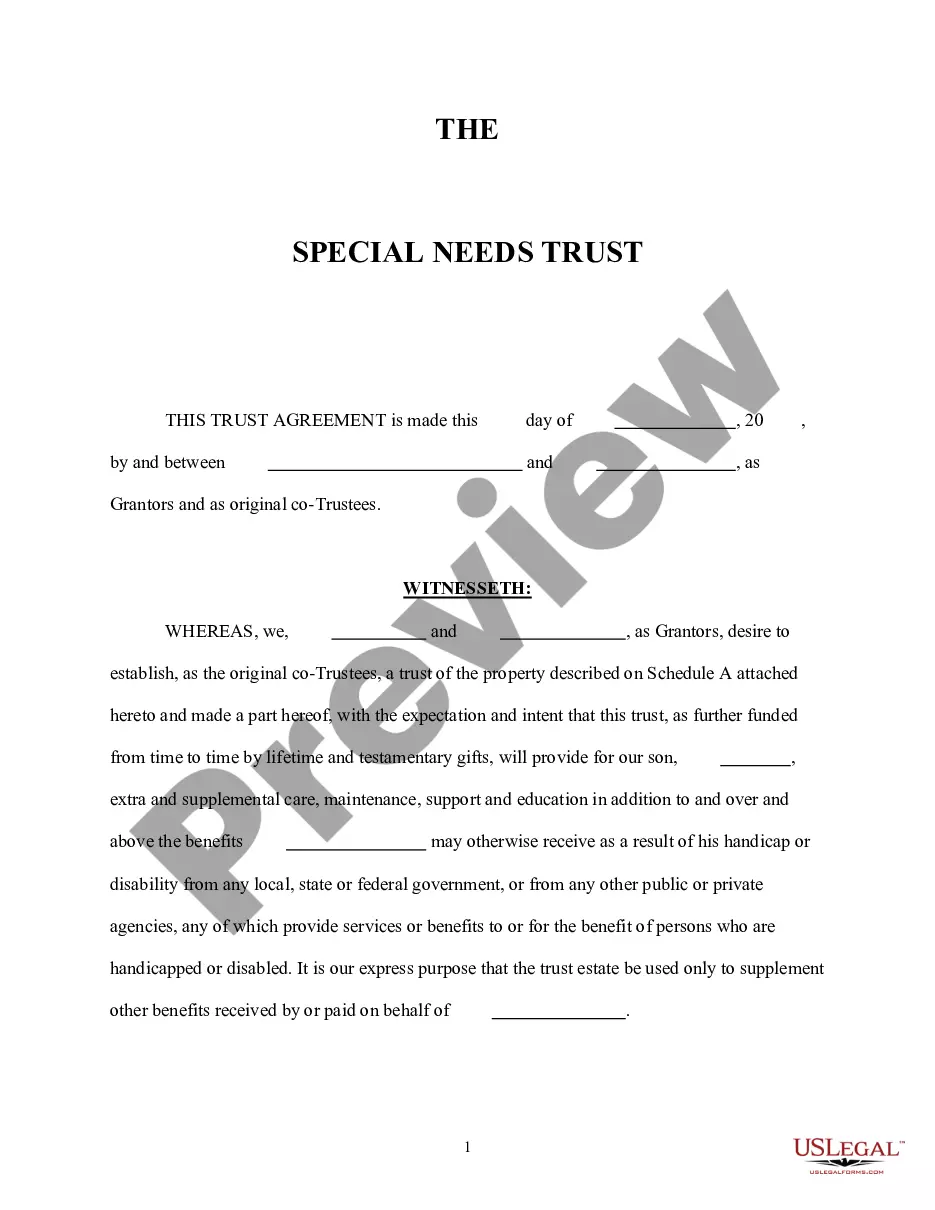
The Revocable Living Trust for Single Person with Special Needs is a legal document that allows an individual with special needs to manage their own trust while ensuring support for their health and welfare. Unlike a will, this trust helps avoid the lengthy and costly probate process upon death. The individual, known as the trustee, can dictate how trust funds are administered for their best interests and the well-being of beneficiaries, making it a vital tool for estate planning.
Key components of this form
- Trustee Designation: The individual with special needs acts as the trustee, allowing them control over the trust.
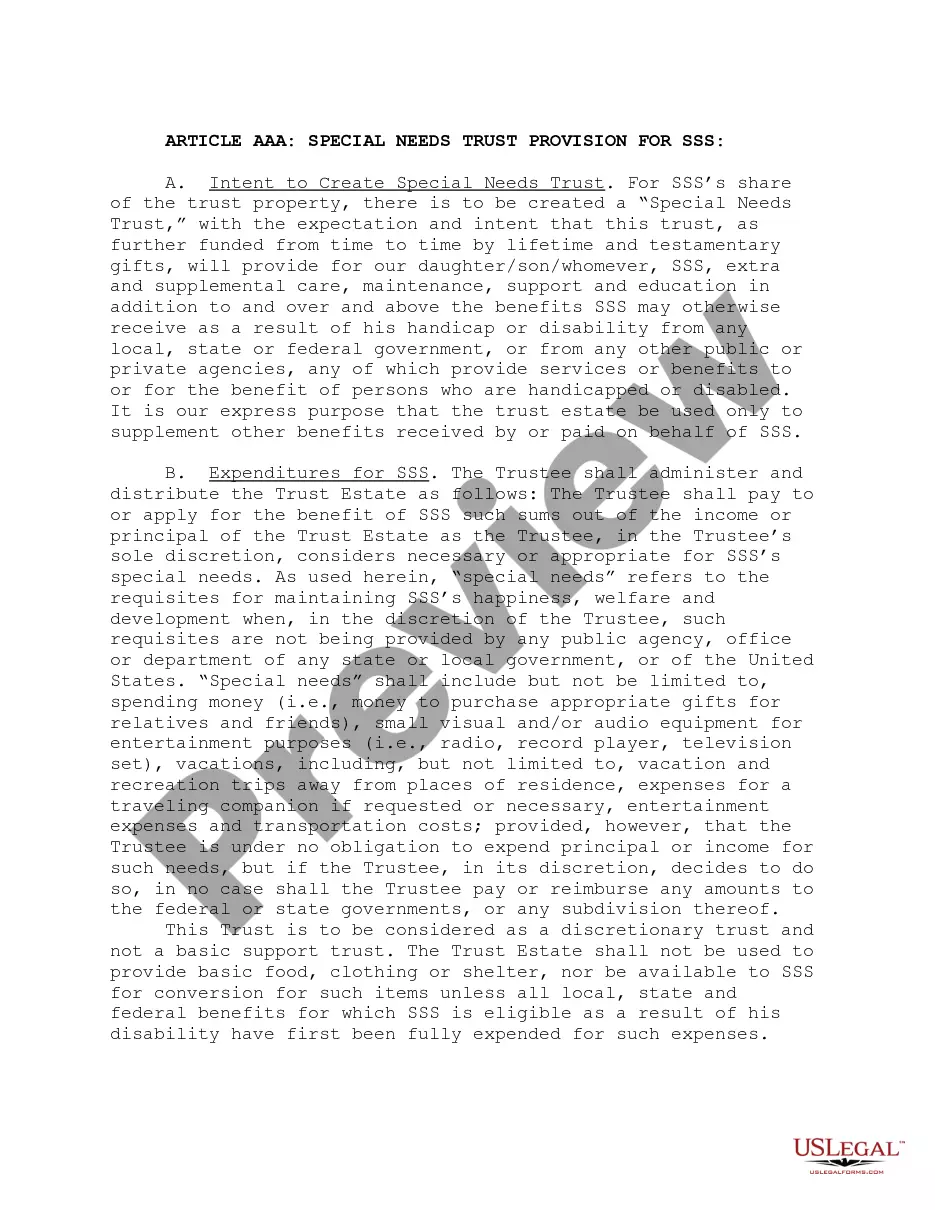
- Distribution Guidelines: Specifies how funds will be allocated for health care, support, education, and overall welfare.
- Debt Settlement: Outlines how any outstanding debts and taxes will be handled upon the trustee's death.
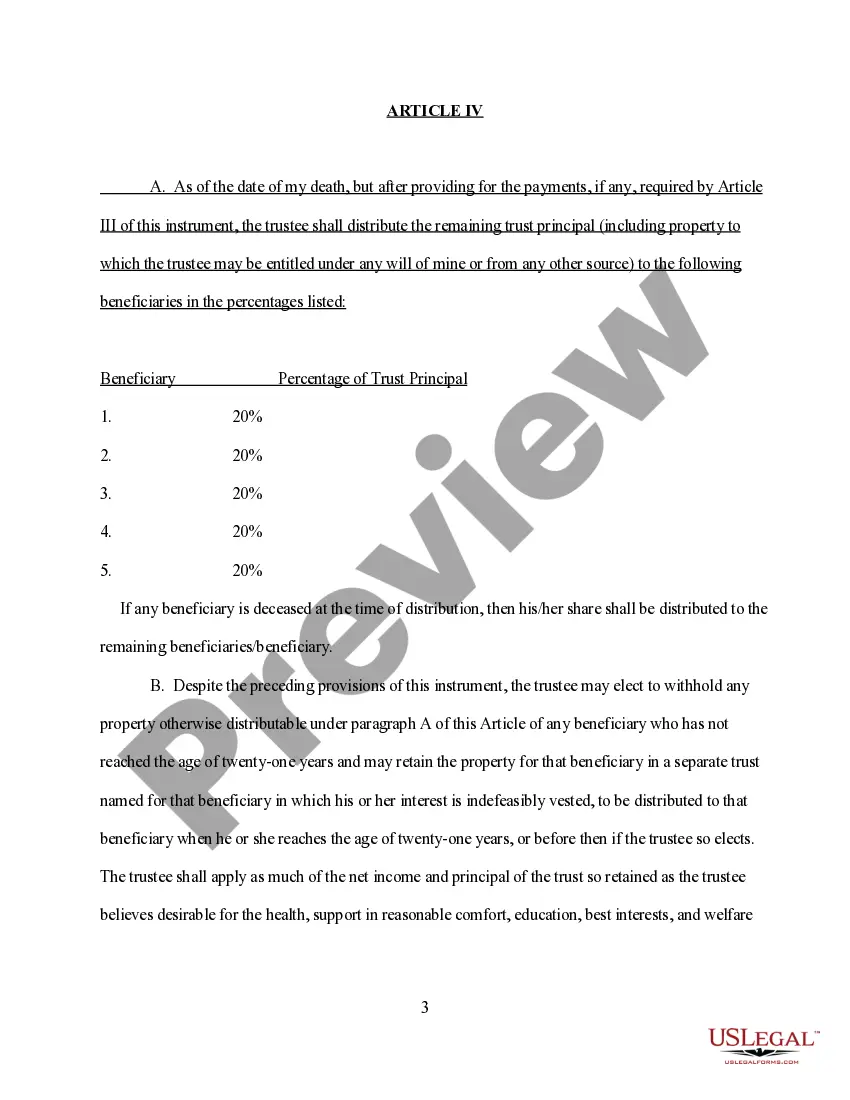
- Beneficiary Provisions: Details how remaining assets will be distributed to beneficiaries, including age restrictions for minors.
- Trustee Powers: Grants the trustee the authority to manage the trust's assets effectively, including buying, selling, and investing.




Common use cases
This form is ideal for individuals with special needs who want to maintain control over their financial assets while ensuring their welfare and that of their beneficiaries. It is suitable for those who wish to prevent probate issues and secure their estate planning effectively. If you have a child or another dependent with special needs, using this trust can provide peace of mind regarding their financial future and care.
Who needs this form
This trust is intended for:
- Individuals with special needs seeking to manage their finances.
- Parents or guardians wanting to establish financial support for a dependent with special needs.
- Anyone looking to avoid probate while ensuring proper asset distribution after death.
Steps to complete this form
To complete the Revocable Living Trust for Single Person with Special Needs, follow these steps:
- Identify the parties involved, including the trustee and beneficiaries.
- Specify the assets to be placed in the trust.
- Outline the distribution instructions for health, support, and other expenses.
- Include debt settlement provisions to ensure compliance upon death.
- Sign the document in accordance with your state's legal requirements, possibly including notarization.
Does this form need to be notarized?
This form does not typically require notarization unless specified by local law. However, having the document notarized can provide additional legal assurance regarding its validity.
Get your form ready online
Our built-in tools help you complete, sign, share, and store your documents in one place.
Make edits, fill in missing information, and update formatting in US Legal Forms—just like you would in MS Word.
Download a copy, print it, send it by email, or mail it via USPS—whatever works best for your next step.
Sign and collect signatures with our SignNow integration. Send to multiple recipients, set reminders, and more. Go Premium to unlock E-Sign.
If this form requires notarization, complete it online through a secure video call—no need to meet a notary in person or wait for an appointment.
We protect your documents and personal data by following strict security and privacy standards.

Make edits, fill in missing information, and update formatting in US Legal Forms—just like you would in MS Word.

Download a copy, print it, send it by email, or mail it via USPS—whatever works best for your next step.

Sign and collect signatures with our SignNow integration. Send to multiple recipients, set reminders, and more. Go Premium to unlock E-Sign.

If this form requires notarization, complete it online through a secure video call—no need to meet a notary in person or wait for an appointment.

We protect your documents and personal data by following strict security and privacy standards.
Avoid these common issues
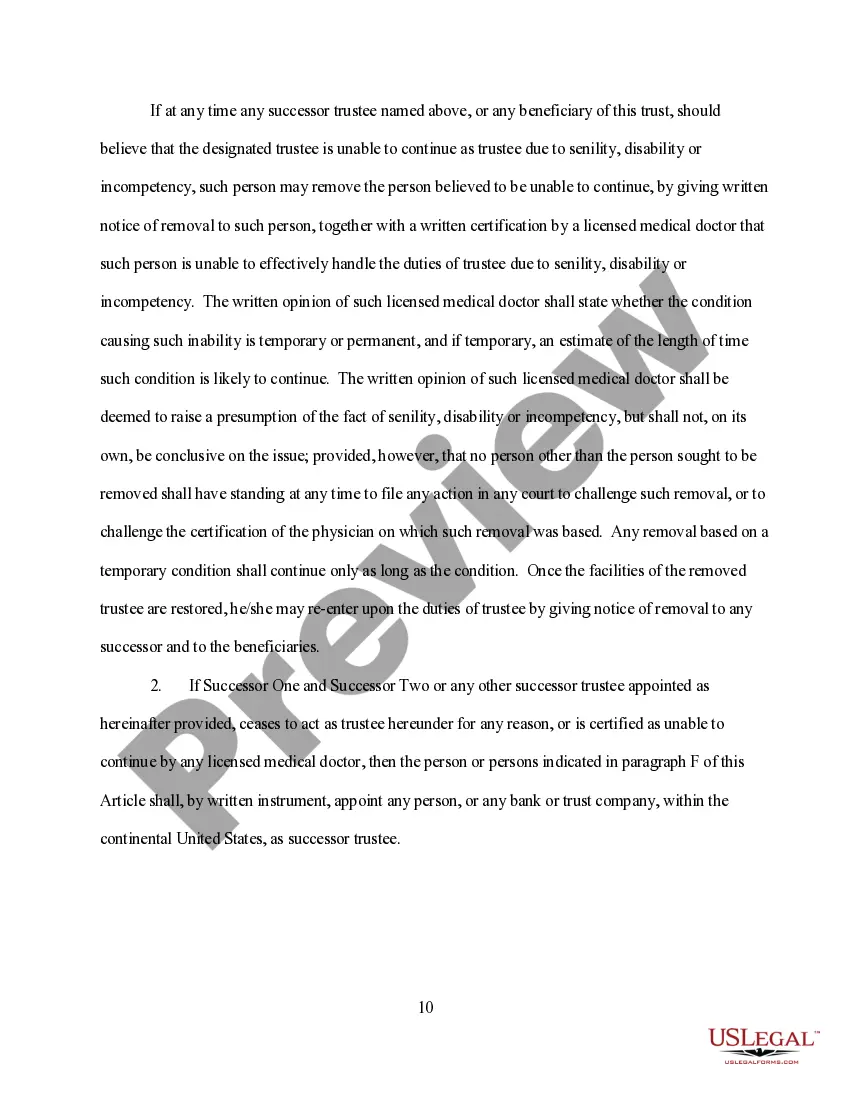
- Not appointing a successor trustee, which can leave the trust in limbo if the original trustee is unable to fulfill their duties.
- Failing to specify how trust assets should be distributed upon the death of the trustee.
- Using vague language that can lead to misinterpretation of distribution intentions.
Why complete this form online
- Convenience of having a downloadable form that can be customized to your specific needs.
- Editability allows users to adjust the document as necessary without extensive legal fees.
- Reliability from templates drafted by licensed attorneys, ensuring compliance with legal standards.
- The Revocable Living Trust for Single Person with Special Needs helps avoid probate and may grant tax advantages.
- Trusts are generally recognized under state laws, but conditions for enforcement can vary, so understanding your stateâs laws is crucial.
Main things to remember
- A revocable living trust allows for effective estate planning, particularly for those with special needs.
- The form provides clarity on how assets are managed and distributed, protecting beneficiaries' interests.
- Customization options make it adaptable to individual circumstances, enhancing its utility.
Looking for another form?




Form popularity
FAQ
Failure to set up a special needs trust might affect them, even if not as much as another person who receives, say, SSI and Medicaid. Even someone receiving Medicare will have some effect from having a higher income.
Well, they are both trusts. They are two different types of trusts.So the special-needs trust is a type of trust that is used to provide assets and resources to take care of a person with a disability, while the living trust is a will substitute that I might use in place of having a will for my estate plan.
The Special Needs Trust Fairness Act inserts language into the Social Security Act to give individuals with special needs the same right to create a trust as a parent, grandparent, guardian, or court. If competent to do so, they can now create a trust on their own behalf using their own assets.
Special needs trust are trusts designed to improve the quality of life of a person with special needs, without affecting that person's eligibility for government benefits. To be effective, a special needs trust must be irrevocable.
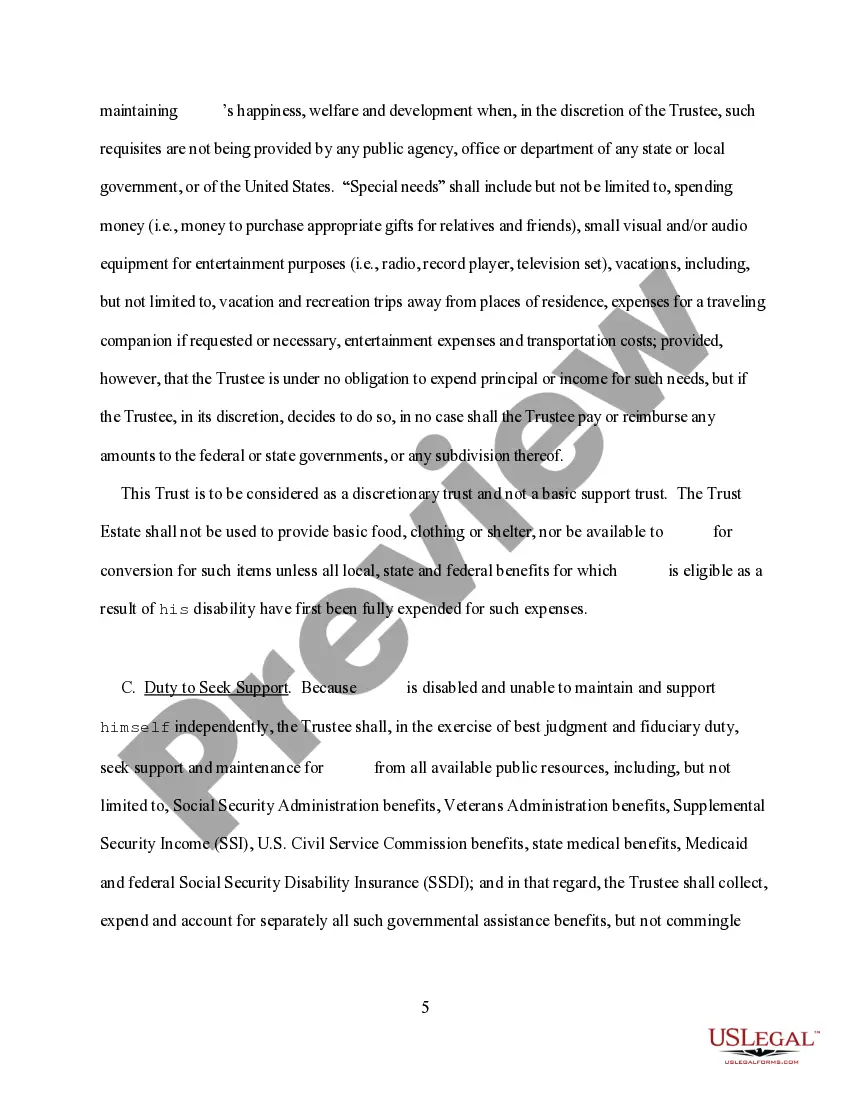
Special needs trusts pay for comforts and luxuries special needs that could not be paid for by public assistance funds. This means that if money from the trust is used for food or shelter costs on a regular basis or distributed directly to the beneficiary, such payments will count as income to the beneficiary.
The SNT Trustee may reimburse third parties for items purchased for trust beneficiary. Purchase of personal items such as clothing, a computer, paying a phone bill or income taxes, would have no impact on SSI. But if food or shelter items are purchased, it is deemed ISM.
Special needs trusts pay for comforts and luxuries -- "special needs" -- that could not be paid for by public assistance funds. This means that if money from the trust is used for food or shelter costs on a regular basis or distributed directly to the beneficiary, such payments will count as income to the beneficiary.
All first-party SNTs must be irrevocable. A third-party SNT can be either irrevocable or revocable. Revocable A revocable trust is a trust in which the grantor can revoke or change the trust terms at any time. Only third-party SNTs can be revocable.
Special Needs Trusts can also pay for home and vehicle maintenance along with a variety of other items like a vacation, a computer, electronic equipment, educational expenses, and ongoing monthly bills such as phone, cable, and internet services.