Bond Securing Payment of Annuity
What this document covers
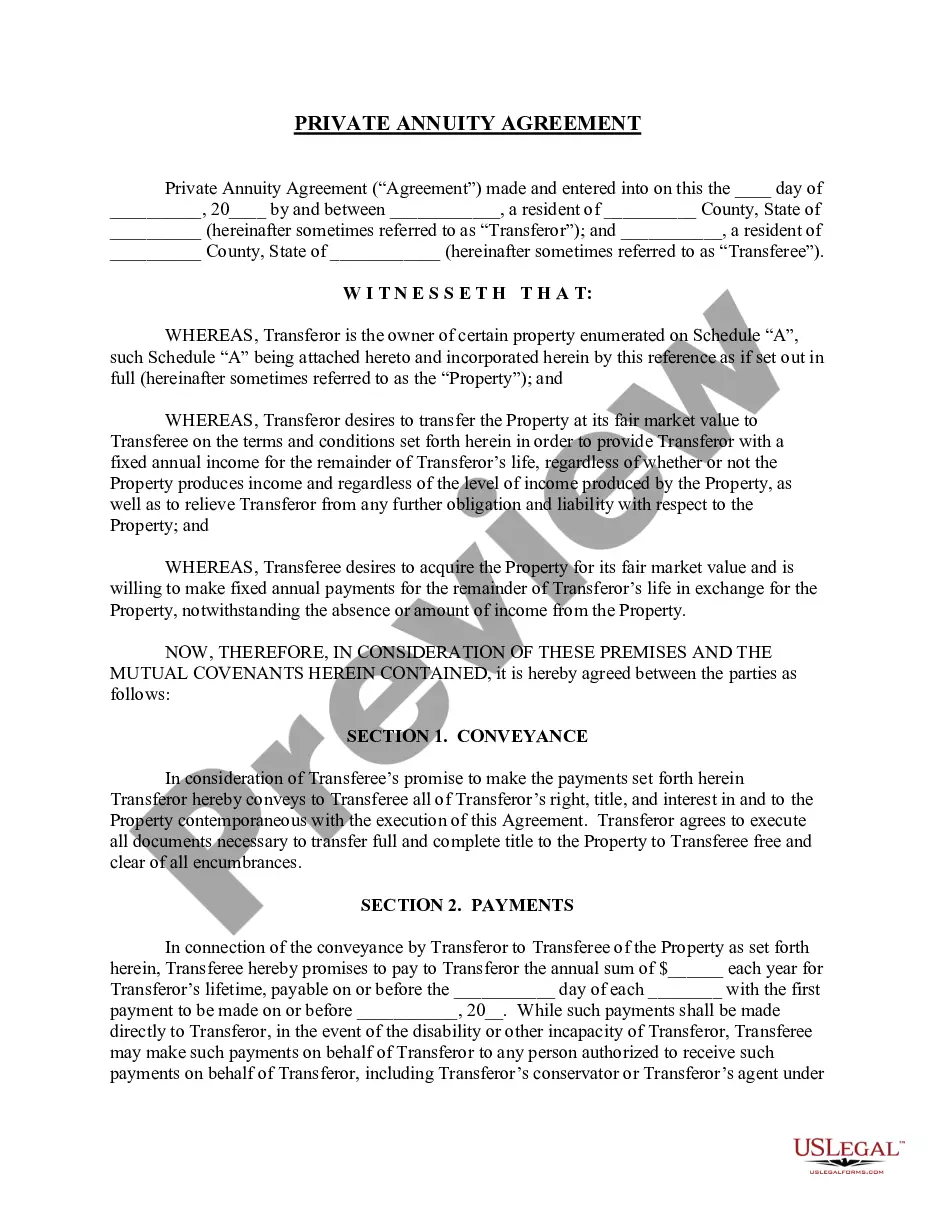
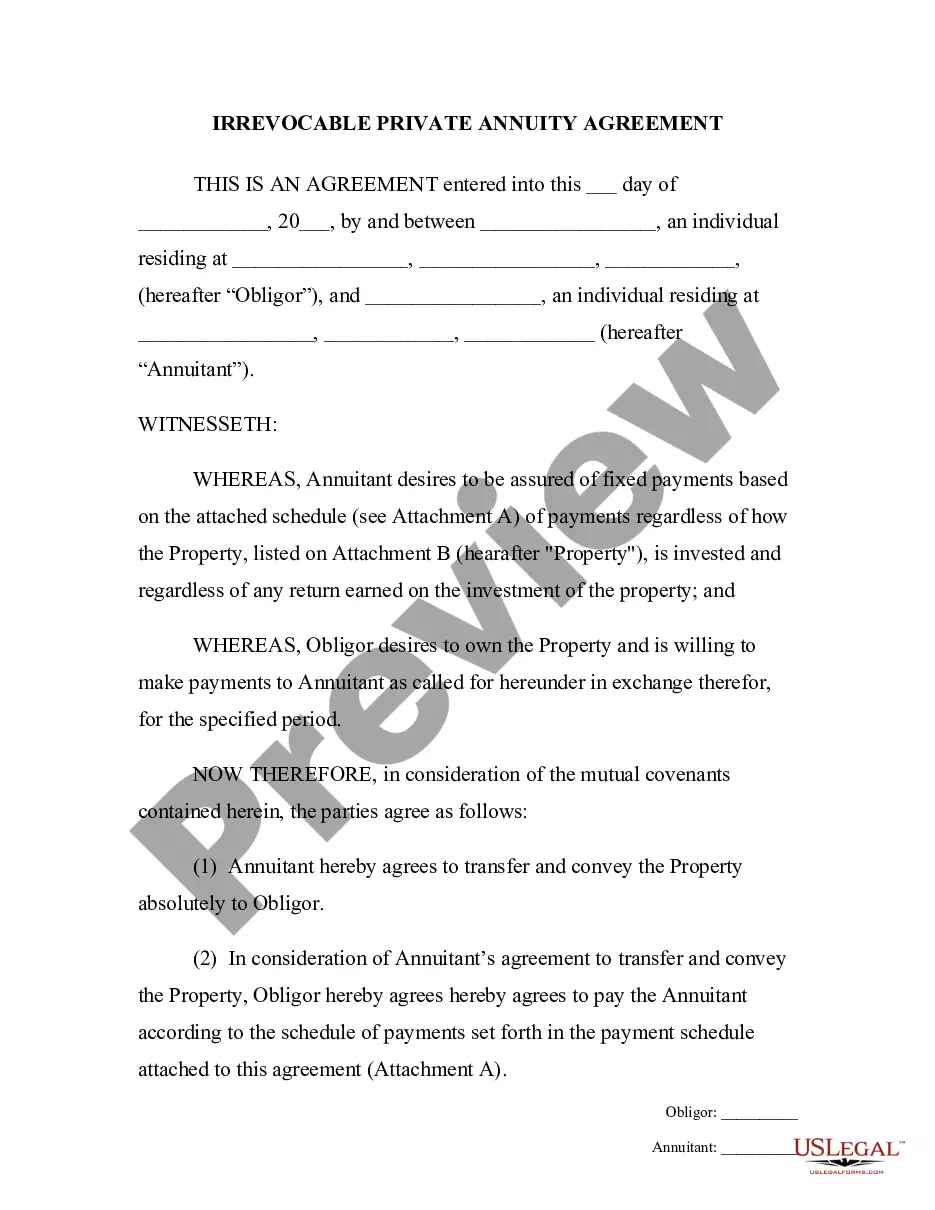
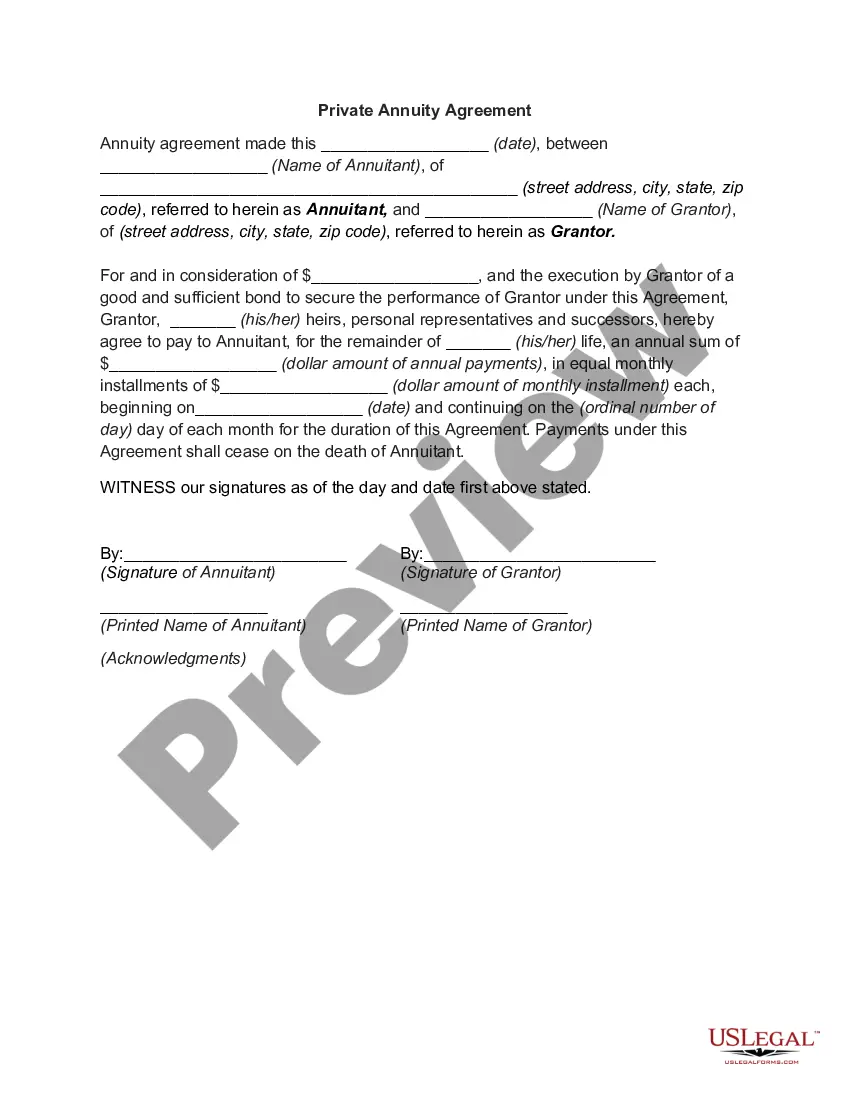
The Bond Securing Payment of Annuity is a legal document that ensures a principal, through a surety, will make specified payments to an obligee as per an annuity agreement. This bond acts as a formal promise, providing security to the obligee that they will receive payments throughout their lifetime. It differs from other financial instruments by emphasizing not just the repayment but also the ongoing financial obligation associated with an annuity.
Main sections of this form
- Name and addresses of the principal, surety, and obligee.
- Specific sum the principal is obligated to pay.
- Details of the property being transferred as mutual consideration.
- Reference to the annuity agreement outlining payment terms.
- Conditions under which the bond becomes null and void.
- Signature sections for the principal and surety with dated witness statements.
Situations where this form applies
This form is used when an individual (the principal) is entering into an agreement to pay an annuity to another individual (the obligee) in exchange for the transfer of property. It is important when the surety wants to guarantee that the principal will fulfill their payment obligations. Common scenarios include estate planning or settling debts involving an annuity.
Who this form is for
- Individuals engaging in property transfers involving annuities.
- Estate planners or financial advisors managing client annuities.
- Sureties wanting to mitigate risk by guaranteeing payments.
- Obligees seeking security on future payments associated with an annuity.
How to prepare this document
- Identify the parties involved: principal, surety, and obligee.
- Provide the names and addresses of each party in the designated fields.
- Specify the total amount to be secured by the bond.
- Include details of the property being transferred, referenced in Exhibit A.
- Enter the agreed annual payment amount for the annuity and sign the document.
- Ensure the dates and signatures are completed and witnessed as required.
Notarization guidance
This form does not typically require notarization unless specified by local law. However, verifying local requirements can help ensure the bondâs enforceability.
Get your form ready online
Our built-in tools help you complete, sign, share, and store your documents in one place.
Make edits, fill in missing information, and update formatting in US Legal Forms—just like you would in MS Word.
Download a copy, print it, send it by email, or mail it via USPS—whatever works best for your next step.
Sign and collect signatures with our SignNow integration. Send to multiple recipients, set reminders, and more. Go Premium to unlock E-Sign.
If this form requires notarization, complete it online through a secure video call—no need to meet a notary in person or wait for an appointment.
We protect your documents and personal data by following strict security and privacy standards.

Make edits, fill in missing information, and update formatting in US Legal Forms—just like you would in MS Word.

Download a copy, print it, send it by email, or mail it via USPS—whatever works best for your next step.

Sign and collect signatures with our SignNow integration. Send to multiple recipients, set reminders, and more. Go Premium to unlock E-Sign.

If this form requires notarization, complete it online through a secure video call—no need to meet a notary in person or wait for an appointment.

We protect your documents and personal data by following strict security and privacy standards.
Mistakes to watch out for
- Failing to include accurate names and addresses of the parties.
- Omitting details of the property being transferred.
- Not including the specific annual payment amount.
- Neglecting to sign and date the document properly.
- Forgetting to attach Exhibit A if referenced.
Benefits of completing this form online
- Convenience of downloading and completing forms at your own pace.
- Easy access to state-specific templates and legal guidelines.
- Time-saving, as you can quickly fill out and edit online forms.
- Reliability with forms drafted and reviewed by licensed attorneys.
Looking for another form?




Form popularity
FAQ
An annuity provides an income stream for a certain period or for life. With a bond, an investor lends money and gets regular interest payments for a fixed period; then, the principal investment is returned.
There are five major categories of annuities ? fixed annuities, variable annuities, fixed-indexed annuities, immediate annuities and deferred annuities.
Are annuities high or low risk? Compared with other traditional investments such as stocks and bonds, annuities are low risk. Their fixed rates and guaranteed income make them safe in the right circumstances.
The main difference between bonds and annuities is that bonds are debt investments, while annuities are insurance products. Annuities typically have higher fees than bonds but can offer more predictable returns and income during retirement.
The 4 types of annuities Immediate annuities: The lifetime guaranteed option.Deferred annuities: The tax-deferred option.Fixed annuities: The lower-risk option.Variable annuities: The potentially highest upside option.
One of the main differences between annuity and bond is that annuities provide a guaranteed income stream, while bonds offer a fixed income stream. Annuities come in different types, such as fixed, variable, and indexed. Bonds also come in different types, such as corporate, municipal, and Treasury bonds.
Fixed annuities share many similarities to bonds. They are contracts issued by insurance companies to individuals in exchange for a premium deposit. Like bonds, multi-year guarantee annuities earn interest at a predetermined interest rate for a specified period of time, typically 3-10 years.
For example, a pension paid to retired soldiers is perpetuity as they are paid a pension throughout their lifetime. Perpetuity is an ordinary annuity, as perpetuity is a form of annuity which is received for infinite years. Perpetuity is used in stocks, bonds, real estate, pensions, and many more.