Virginia Trust Questionnaire
What is this form?
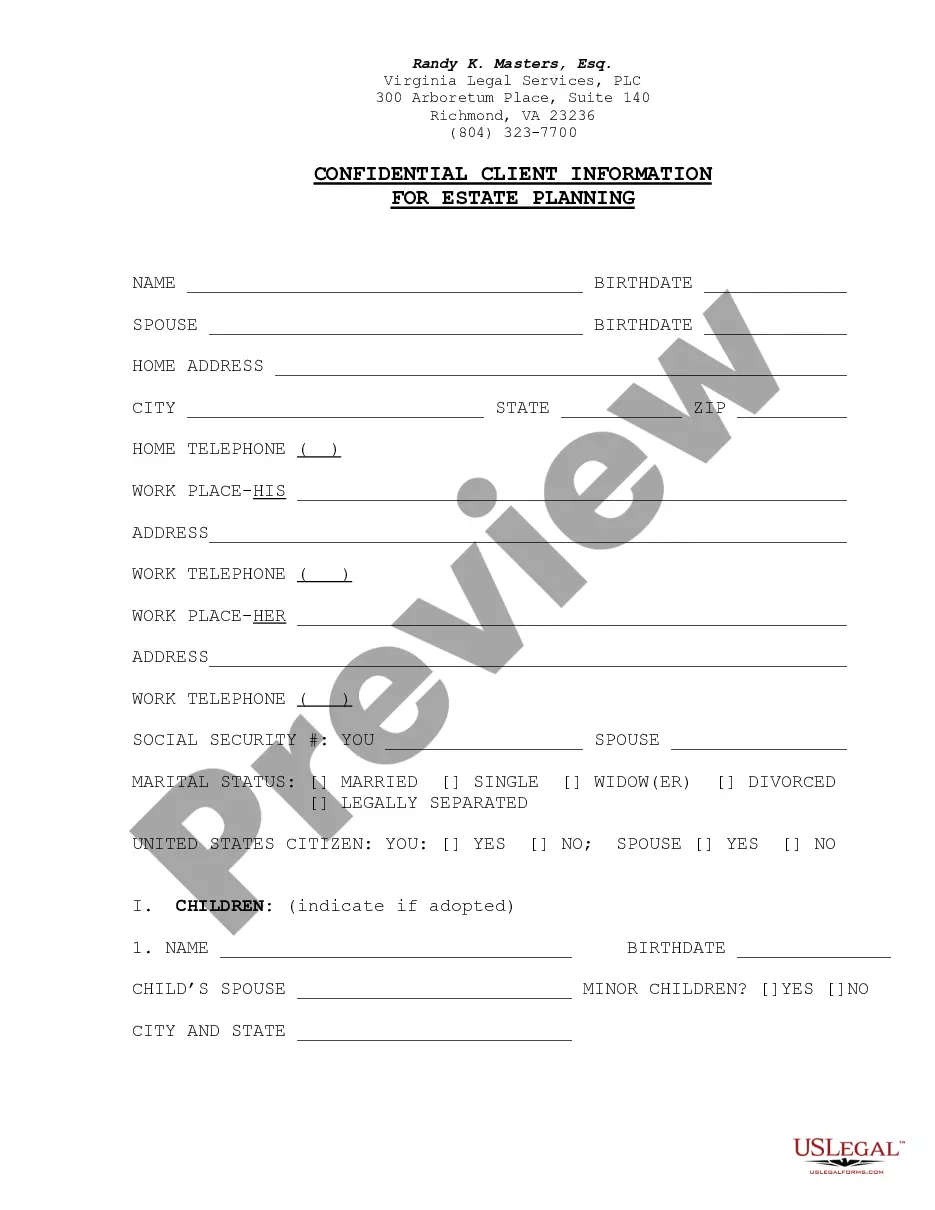
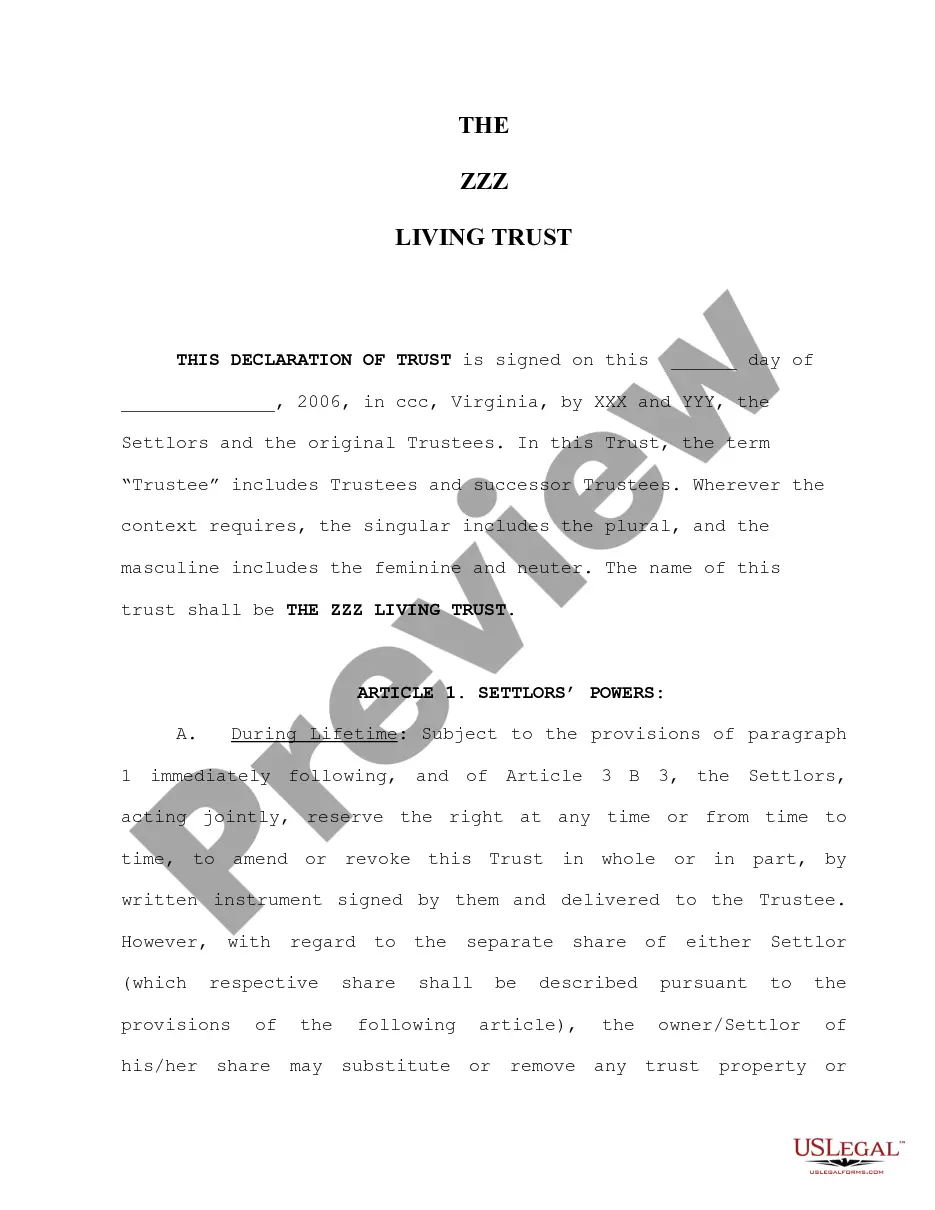
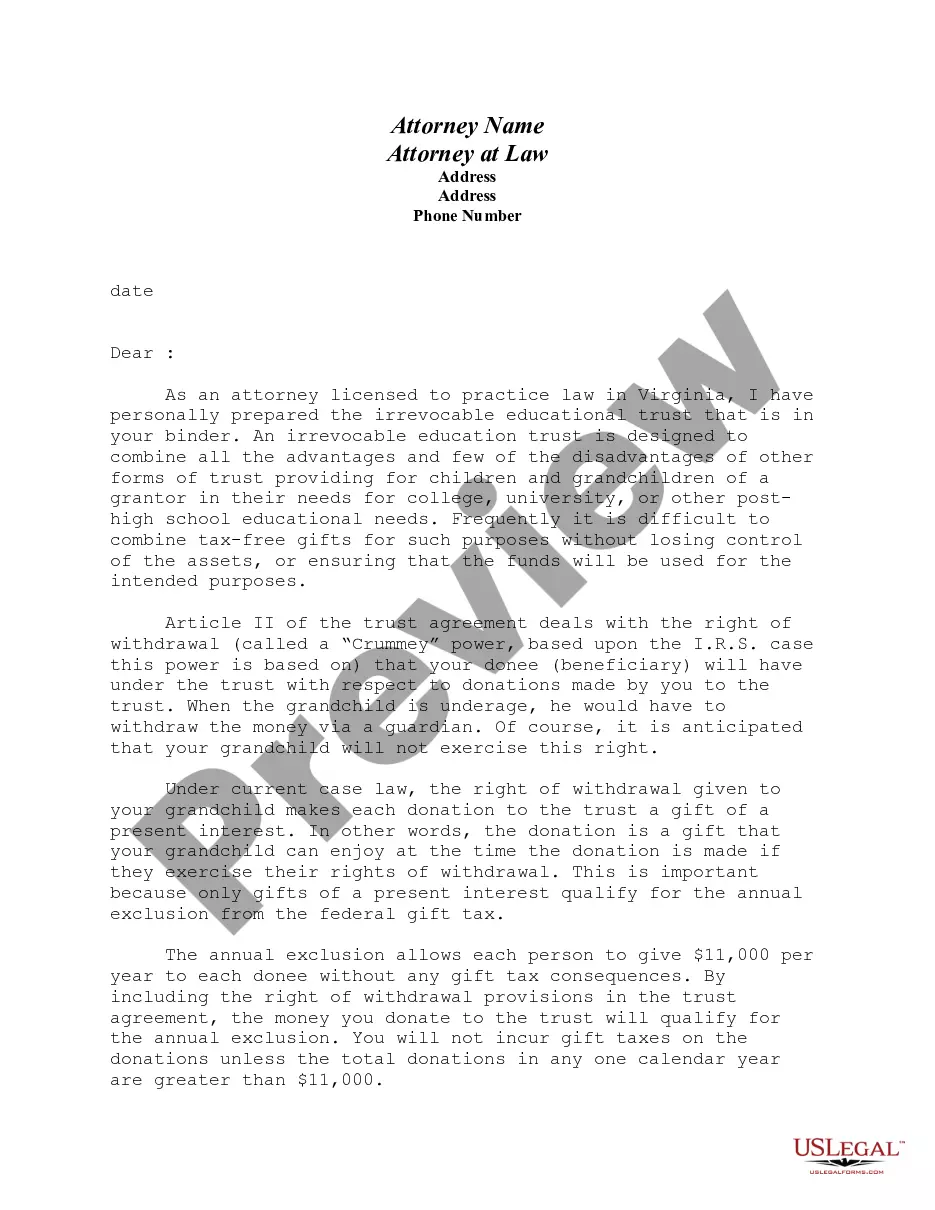
The Trust Questionnaire is a legal document used to gather essential information for estate planning. It helps attorneys understand clients' wishes and the details of their personal and financial situations. Unlike other forms, this questionnaire is tailored specifically for creating a trust, ensuring that all aspects of the individual's estate are meticulously considered.
Main sections of this form
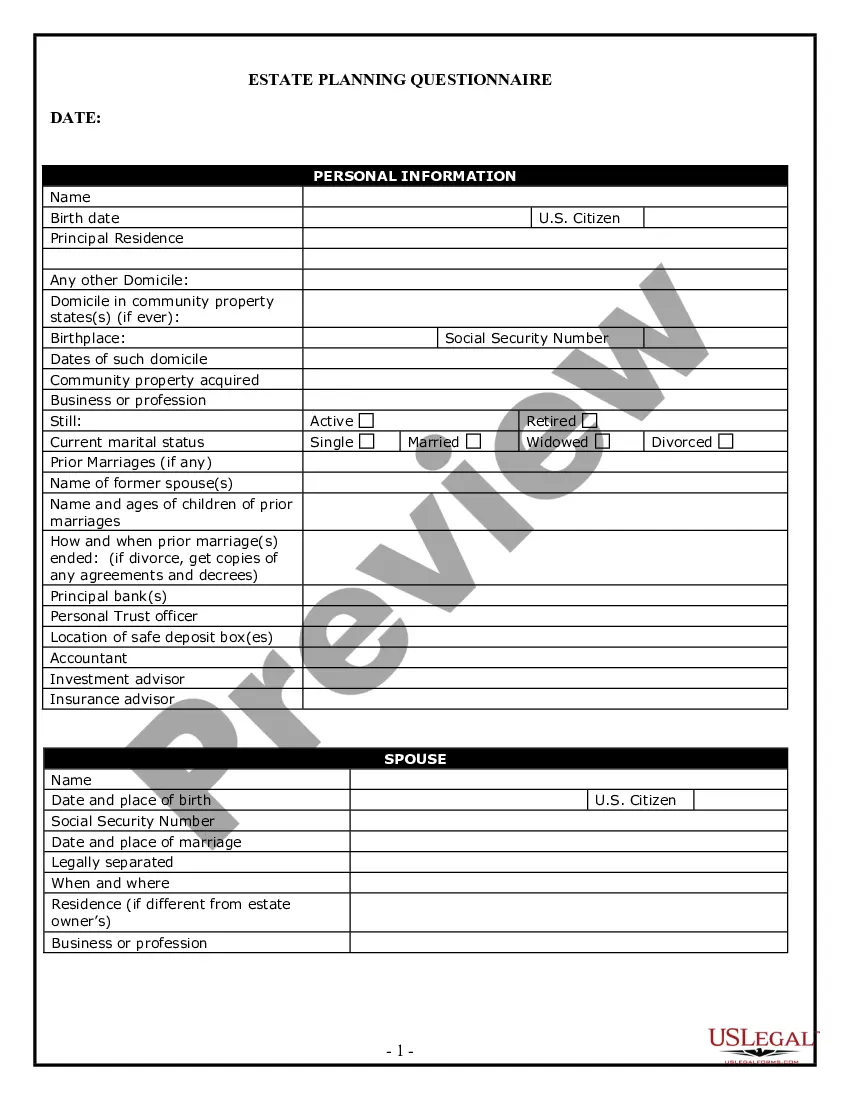
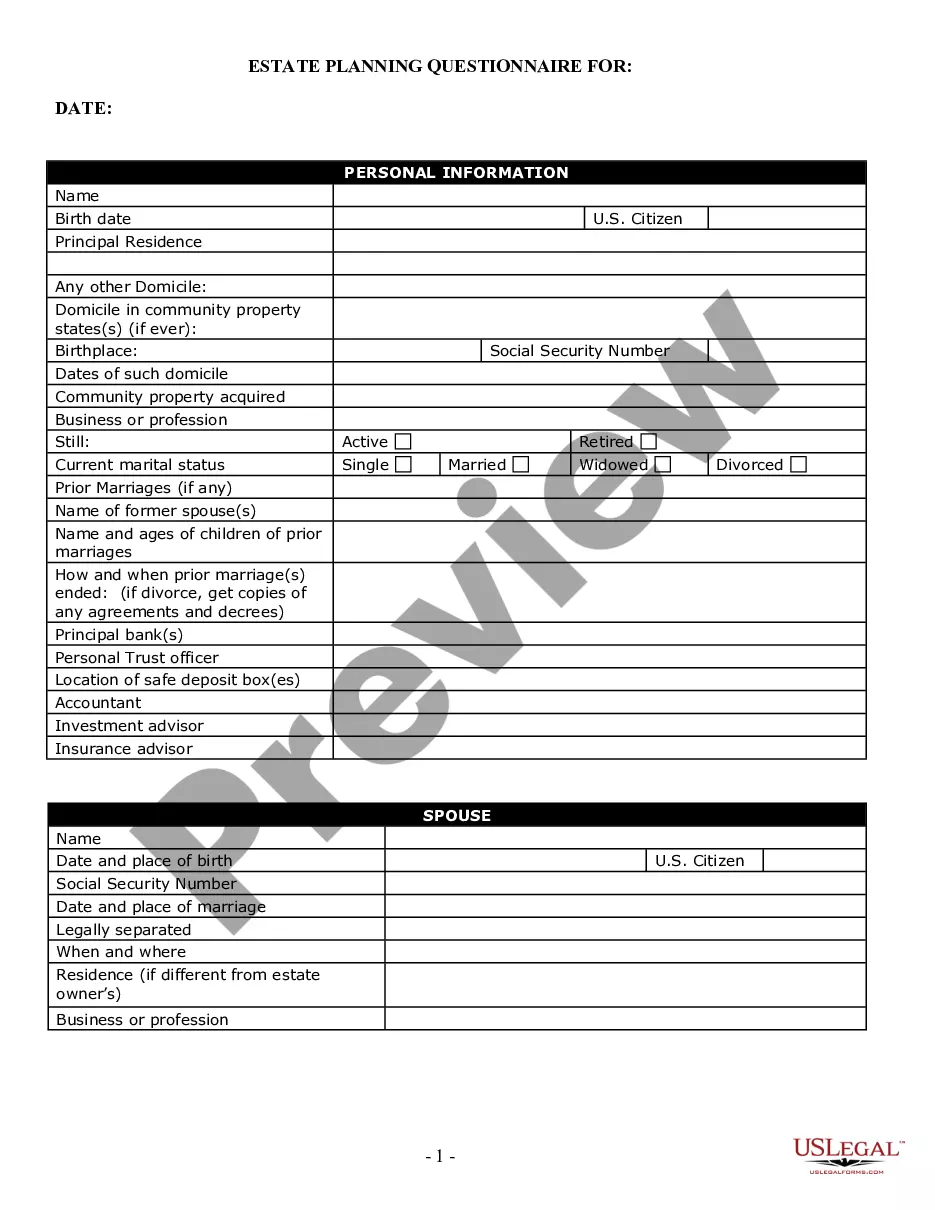
- Client and spouse's personal information, including names, birthdates, and contact details.
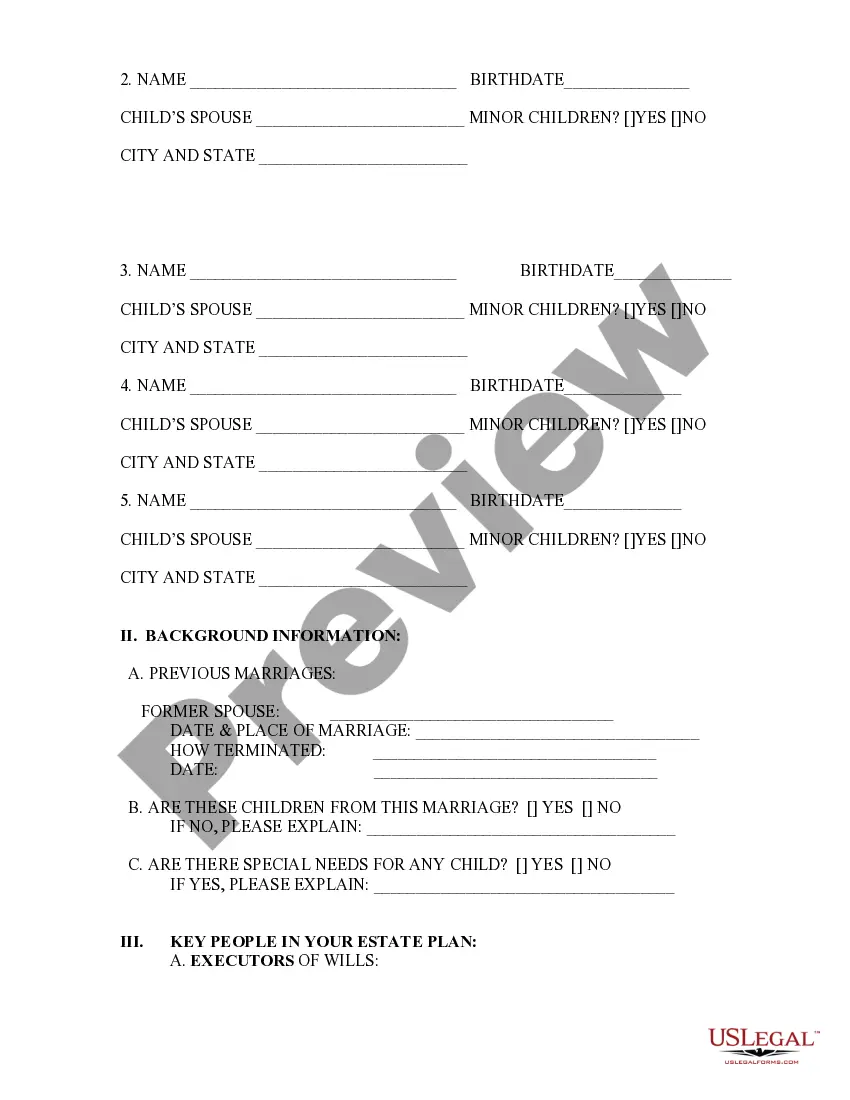
- Details about children, including their names, birthdates, and any special needs.
- Information about previous marriages and their terminations.
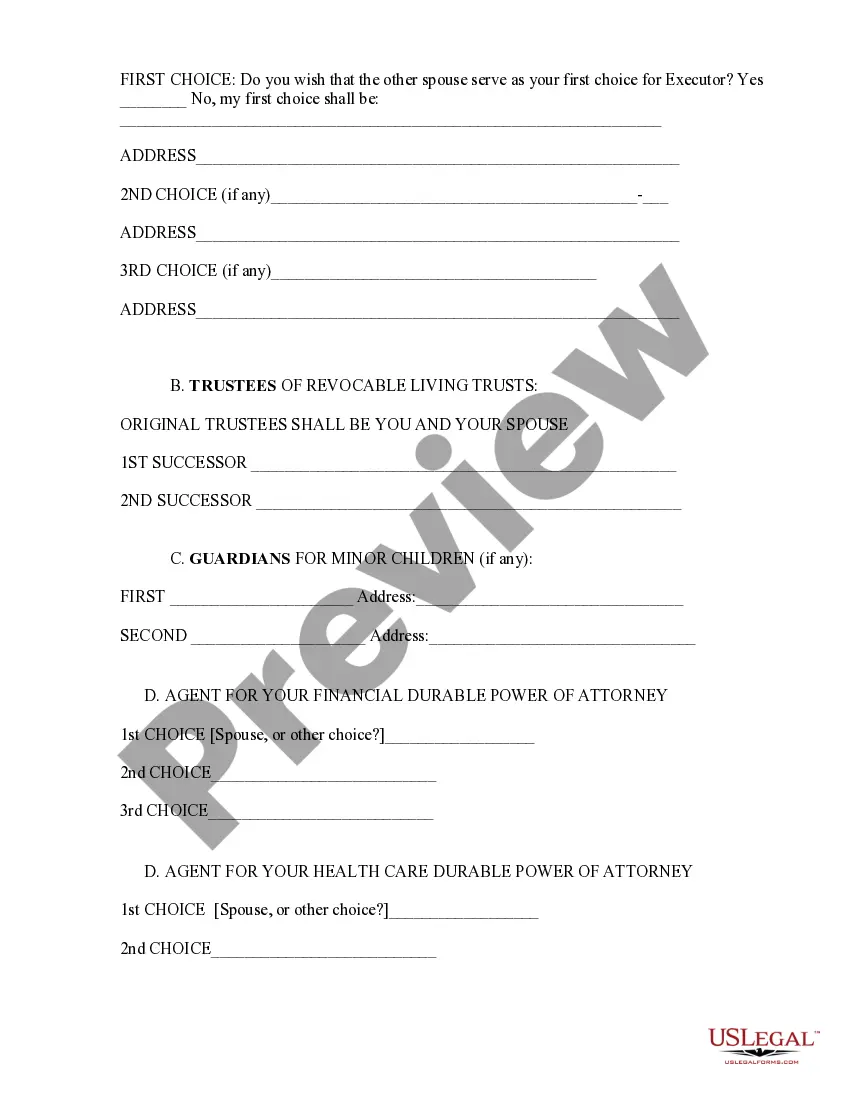
- Executor and trustee selections for the estate plan.
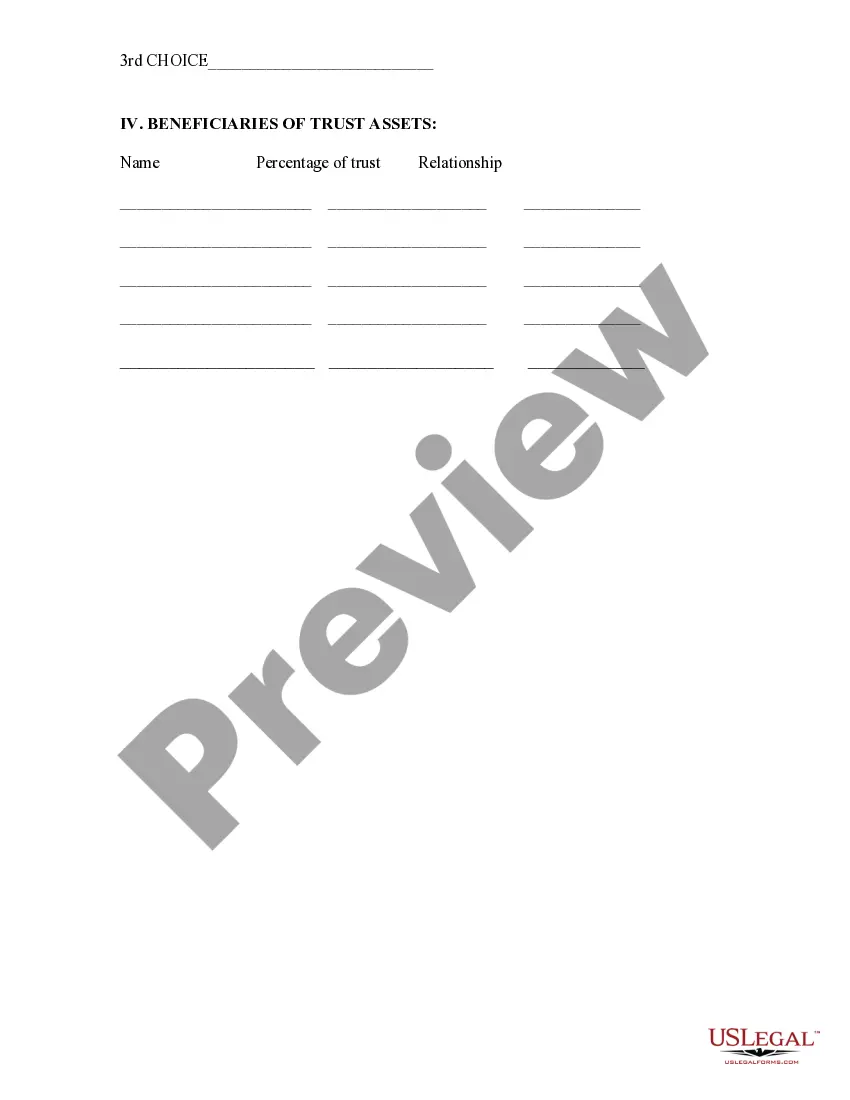
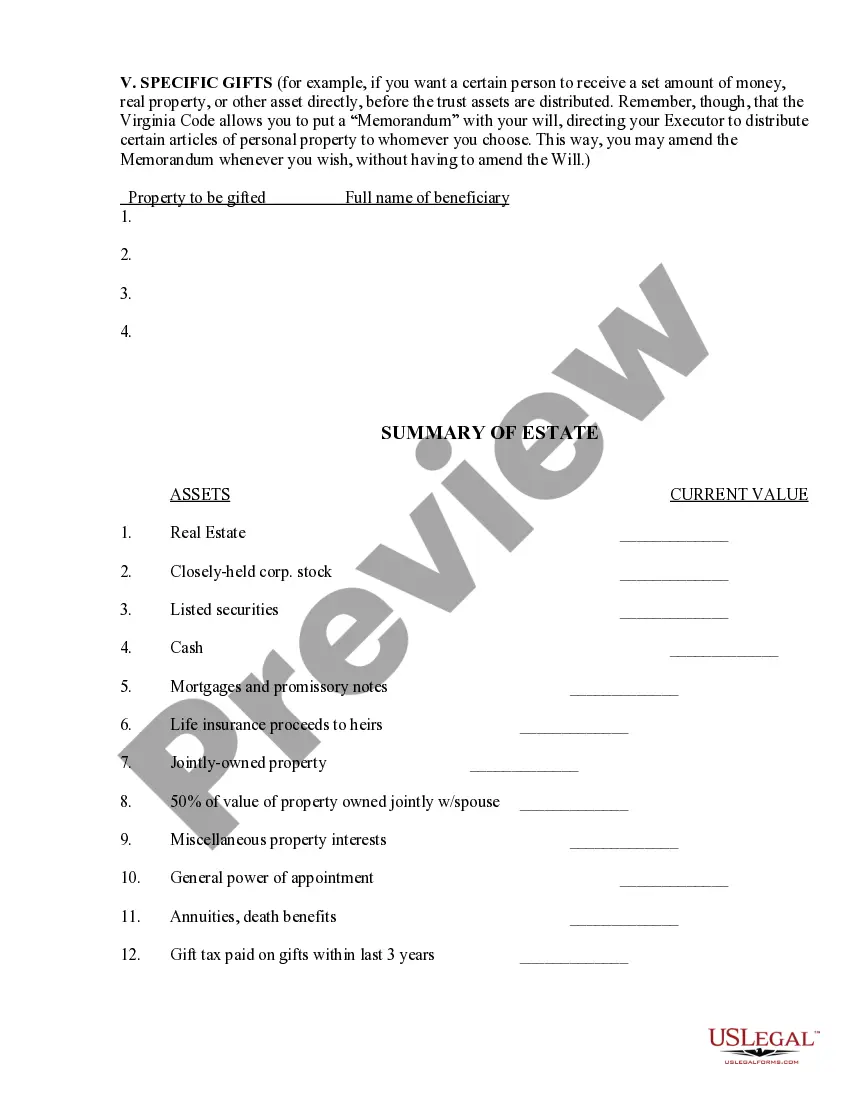
- Beneficiary designations for trust assets and specific gifts.
- A summary of estate assets and their current value.

When this form is needed
This form should be used when you are preparing for estate planning, specifically when you intend to establish a trust. It is crucial to complete this questionnaire accurately to ensure that your estate plan reflects your wishes and needs. You may need this form during discussions with your attorney or financial advisor to streamline the estate planning process.
Intended users of this form
- Individuals or couples looking to create a trust for estate planning purposes.
- People with children, especially those with special needs.
- Anyone who has previously been married and wants to include previous spouse details in their estate plan.
- Individuals who wish to designate executors, trustees, and beneficiaries for their estates.
Instructions for completing this form
- Gather personal information, including names, birthdates, and contact details for yourself and your spouse.
- List all children and indicate if they have special needs or are from a previous marriage.
- Select potential executors, trustees, and guardians for minor children.
- Detail the beneficiaries for trust assets and record any specific gifts you wish to make.
- Summarize your estate's assets and their current values.
Notarization requirements for this form
Notarization is not commonly needed for this form. However, certain documents or local rules may make it necessary. Our notarization service, powered by Notarize, allows you to finalize it securely online anytime, day or night.
Get your form ready online
Our built-in tools help you complete, sign, share, and store your documents in one place.
Make edits, fill in missing information, and update formatting in US Legal Forms—just like you would in MS Word.
Download a copy, print it, send it by email, or mail it via USPS—whatever works best for your next step.
Sign and collect signatures with our SignNow integration. Send to multiple recipients, set reminders, and more. Go Premium to unlock E-Sign.
If this form requires notarization, complete it online through a secure video call—no need to meet a notary in person or wait for an appointment.
We protect your documents and personal data by following strict security and privacy standards.

Make edits, fill in missing information, and update formatting in US Legal Forms—just like you would in MS Word.

Download a copy, print it, send it by email, or mail it via USPS—whatever works best for your next step.

Sign and collect signatures with our SignNow integration. Send to multiple recipients, set reminders, and more. Go Premium to unlock E-Sign.

If this form requires notarization, complete it online through a secure video call—no need to meet a notary in person or wait for an appointment.

We protect your documents and personal data by following strict security and privacy standards.
Typical mistakes to avoid
- Leaving out important information regarding previous marriages or children.
- Failing to update the questionnaire if personal circumstances change.
- Not specifying the percentage of trust assets for each beneficiary.
- Overlooking the details for specific gifts, which can lead to confusion about asset distribution.
Benefits of completing this form online
- Convenience of accessing and completing the form from your own home.
- Editable format allowing for easy updates as your personal situation changes.
- Reliable structure ensuring all necessary information is collected for effective estate planning.
Legal use & context
- The Trust Questionnaire is designed to assist in the creation of legally binding estate planning documents.
- Completing the form accurately is essential to ensure your estate is handled according to your wishes.
- Consulting with an attorney while filling out the questionnaire can enhance legal enforceability.
Main things to remember
- The Trust Questionnaire is essential for comprehensive estate planning.
- It collects important information about assets, beneficiaries, and arrangements for minor children.
- Utilizing this form helps clarify wishes and supports your attorney in drafting legal documents.
- Regular updates to the form are necessary after major life changes.
Looking for another form?
Form popularity
FAQ
Your inventory should include the number of shares of each type of stock, the name of the corporation, and the name of the exchange on which the stock is traded. Meanwhile, you should note the total gross amount of a bond, the name of the entity that issued it, the interest rate on the bond, and its maturity date.
Contrary to popular belief, you do not need to have an attorney draft a will for you. Anyone can write this document on their own, and as long as it meets all of the legal requirements of the state, courts will recognize one you wrote yourself.
The irrevocable trust may be terminated by the consent of all beneficiaries and the court finds the termination is not inconsistent with a material purpose of the trust. Once the termination is approved by the court, the trustee is required to distribute the remaining assets as agreed by the beneficiaries.
What Do You Hope To Achieve With A Will? What Is Your Family Situation? What Assets Do You Own? Where Do You Want Your Assets To Be Distributed? Who Will Be Responsible For Your Estate?
This questionnaire provides for the preparation of your Will. Each individual should complete a questionnaire even if a husband and wife are both making Wills. GLOSSARY OF TERMS. BENEFICIARY: Any individual(s), church or organization chosen to receive your assets after death.
Select a type of trust. Inventory your assets and property. Choose a trustee. Put together your trust document. Visit a notary public and sign your living trust in front of them. Fund your trust.
There are certain types of property that legally cannot be included in a person's will. Depending on state laws, these may include: Any Property that is Co-Owned with Someone Else Through Joint-Tenancy: Married couples typically own the marital home in joint tenancy.Property being held in a living trust.
Your inventory should include the number of shares of each type of stock, the name of the corporation, and the name of the exchange on which the stock is traded. Meanwhile, you should note the total gross amount of a bond, the name of the entity that issued it, the interest rate on the bond, and its maturity date.
Beneficiaries of a will must be notified after the will is accepted for probate. 3feff Moreover, probated wills are automatically placed in the public record. If the will is structured to avoid probate, there are no specific notification requirements.