Virginia Temporary Public Utility Easement
Overview of this form
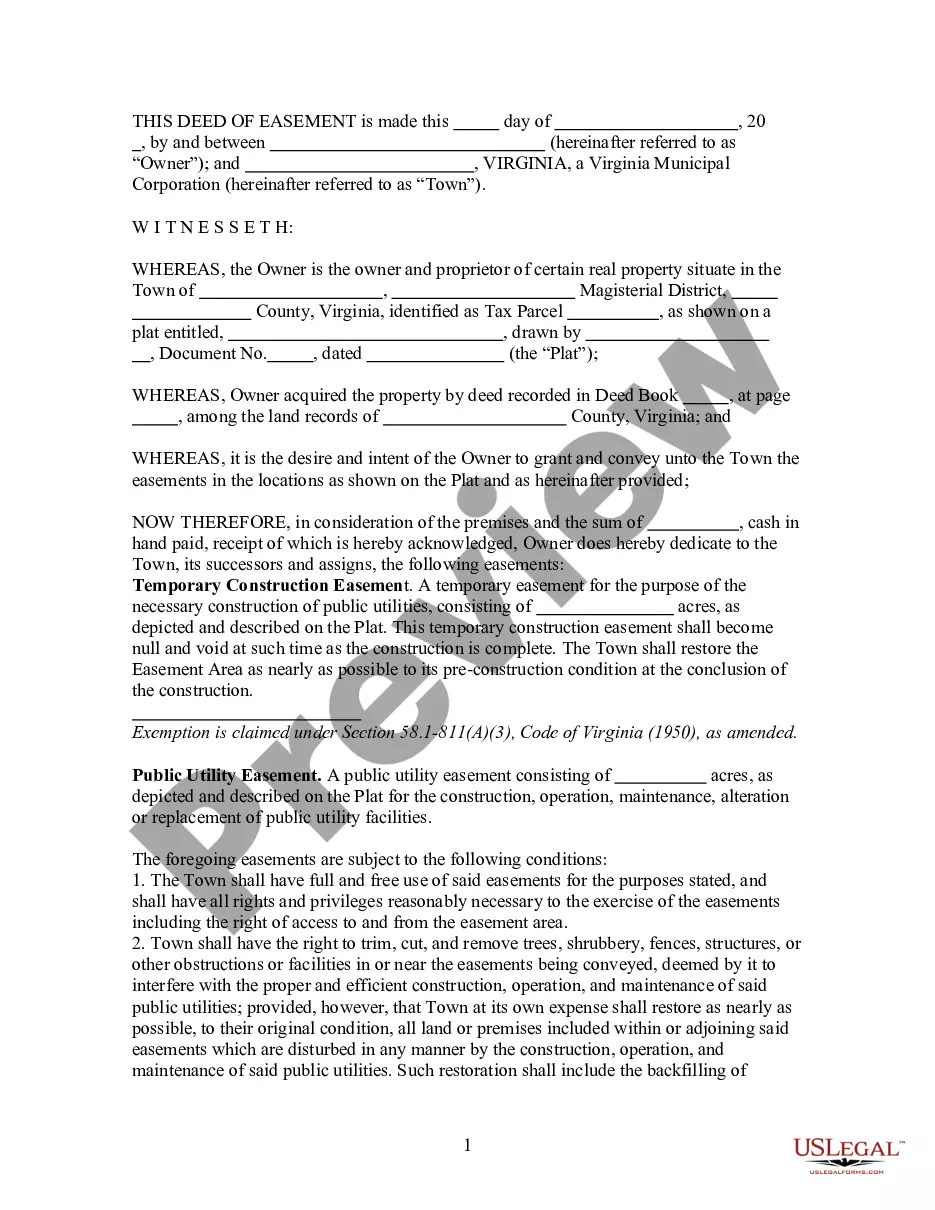
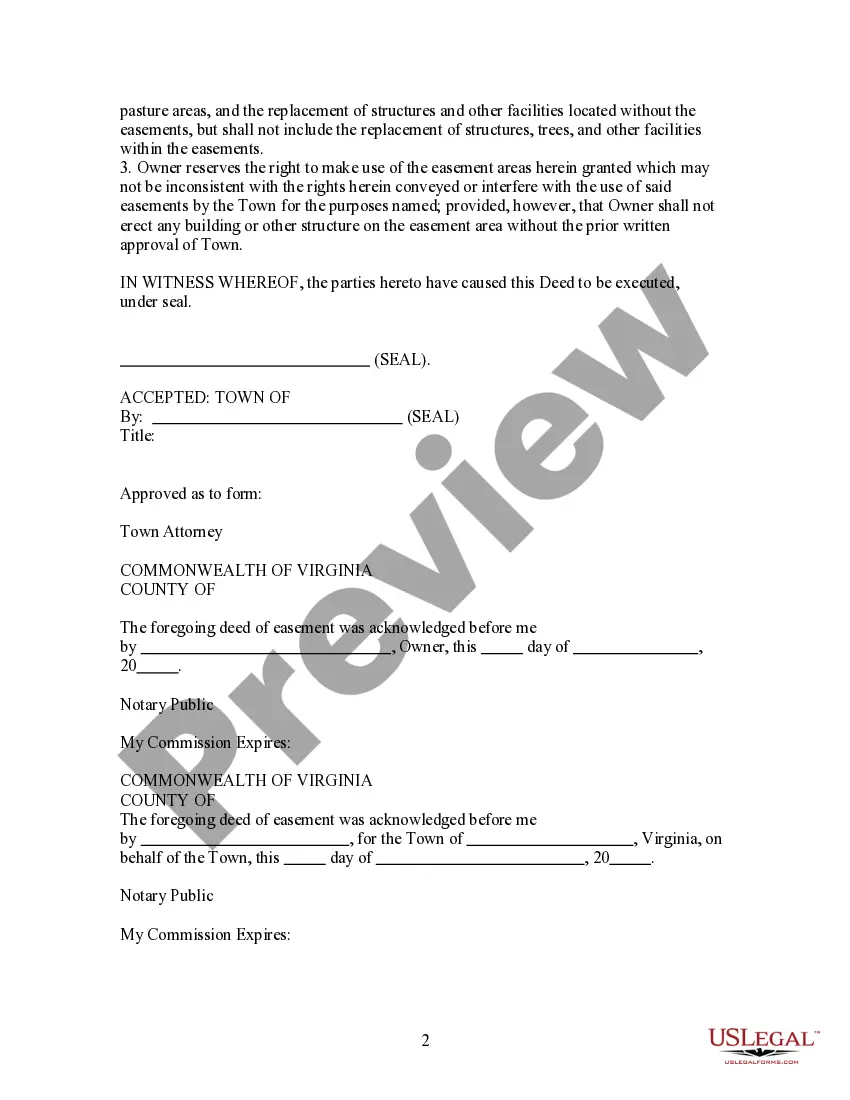
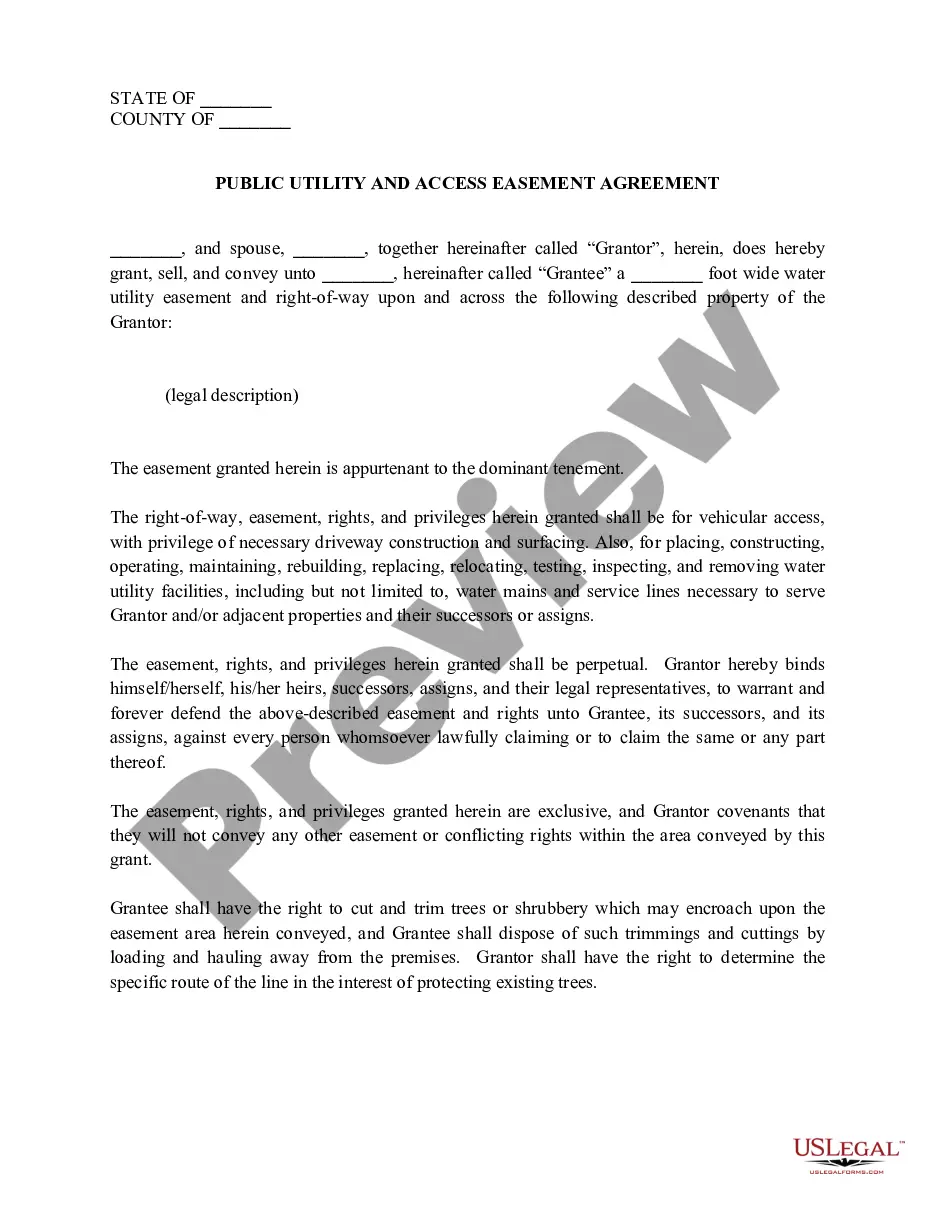
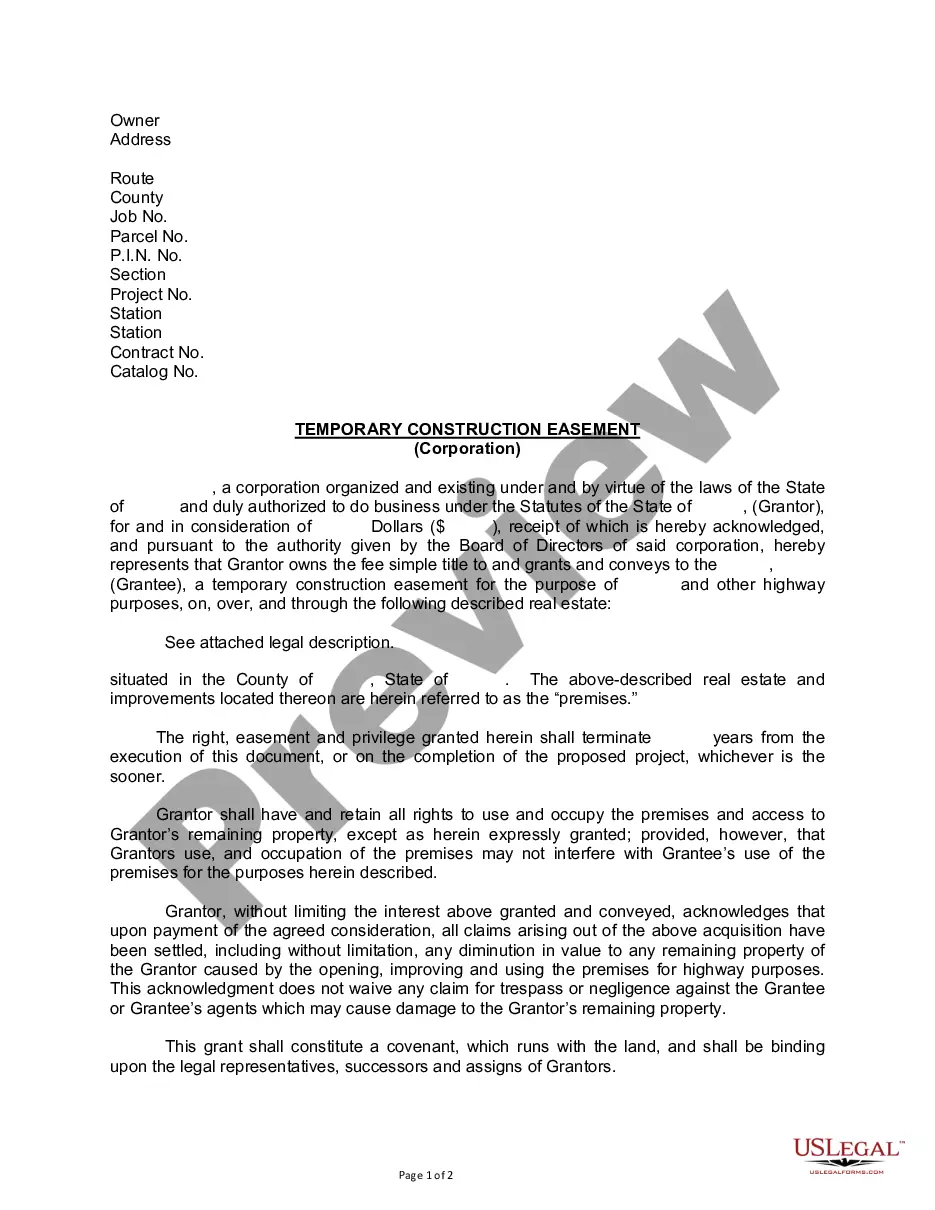
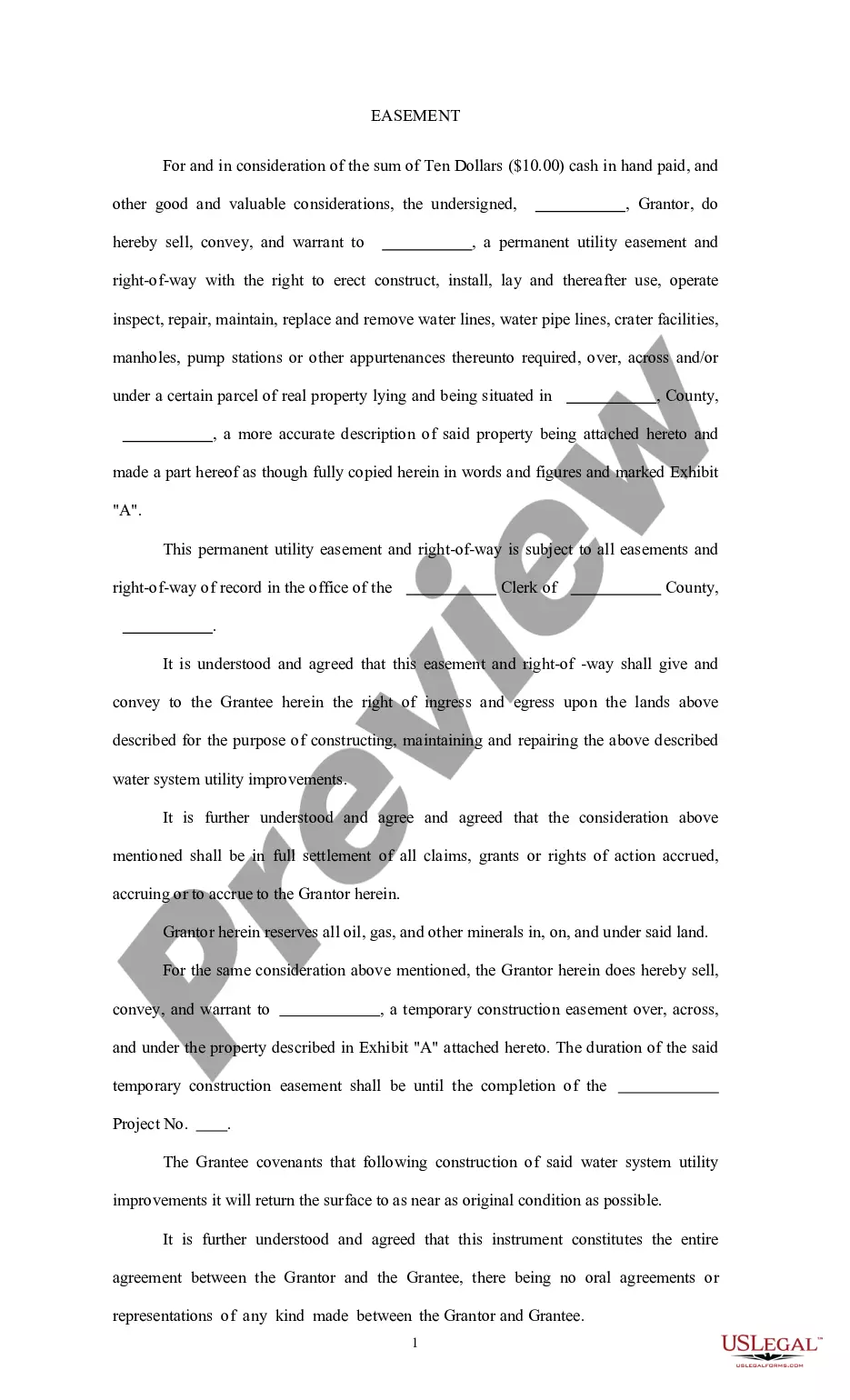
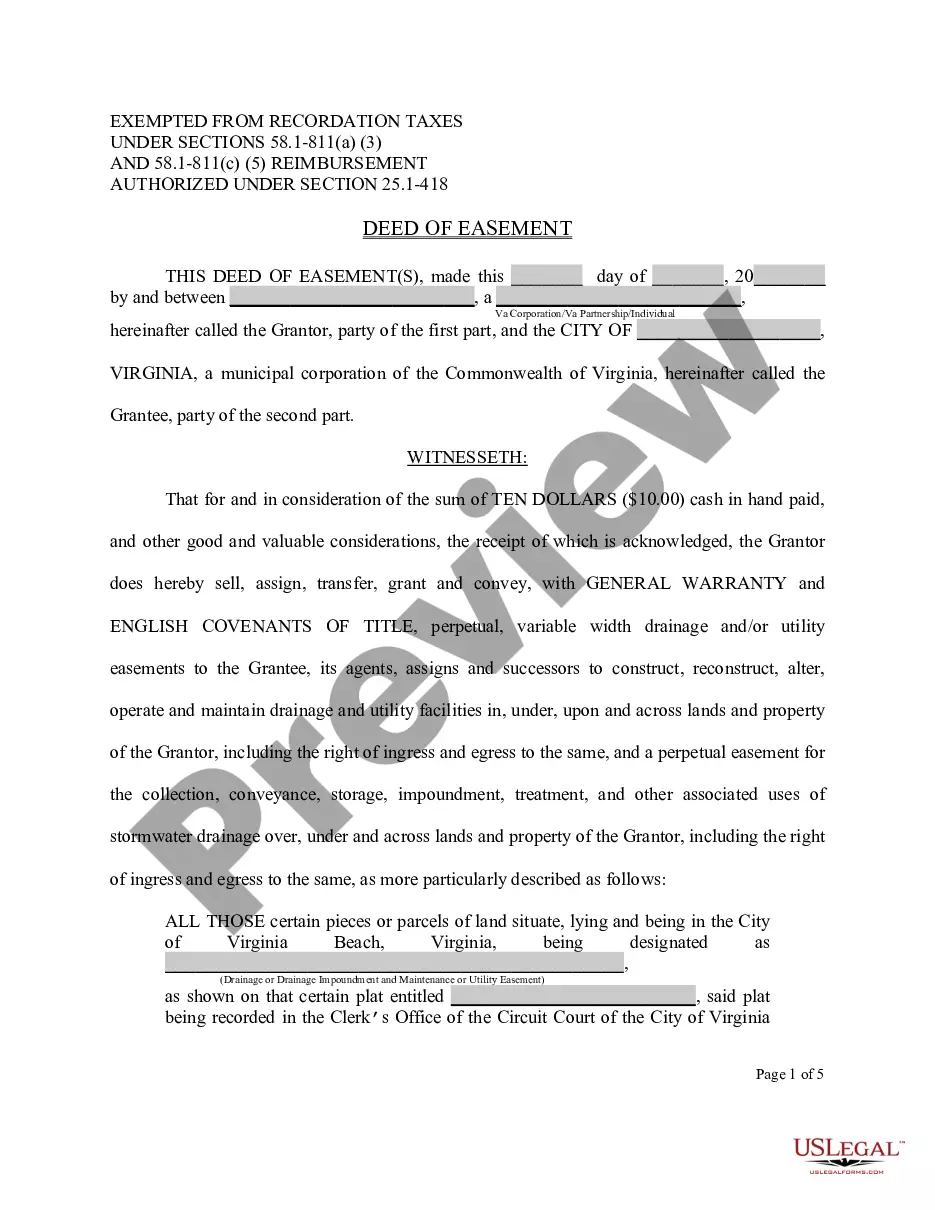
The Temporary Public Utility Easement is a legal document that grants a utility company the right to access and use a property owner's land temporarily for the construction and maintenance of public utilities. Unlike permanent easements, this form is specifically designed for short-term usage, making it ideal for projects that require access over a limited timeframe. It ensures utilities can operate efficiently while respecting property rights.
Key parts of this document
- Purpose of the easement: Grants rights for utility construction and maintenance.
- Conditions for use: Details rights and obligations of the utility and property owner.
- Restoration obligations: Requires the utility to restore the property post-construction.
- Owner's rights: Allows property owners to use the easement area without interference.
- Execution clause: Finalizes the agreement with signatures from both parties.
When this form is needed
This form is needed when a utility provider must temporarily use land for construction purposes, such as installing power lines, pipelines, or similar infrastructure. It is particularly relevant in situations where land is private, and the utility requires legal permission to access the property for a specific project duration.
Who this form is for
- Utility companies seeking to establish temporary access to private property.
- Property owners granting temporary easements for utility installation.
- Legal representatives or attorneys drafting easement agreements.
Steps to complete this form
- Identify the parties involved: Include names and contact information of the utility and property owner.
- Specify the property: Clearly describe the location and boundaries of the easement area.
- Outline the purpose: Detail the specific construction or utility work being performed.
- Define restoration obligations: Agree on how the property should be restored after use.
- Obtain signatures: Ensure both parties sign the document to make it legally binding.
Does this document require notarization?
This form needs to be notarized to ensure legal validity. US Legal Forms provides secure online notarization powered by Notarize, allowing you to complete the process through a verified video call, available anytime.
Get your form ready online
Our built-in tools help you complete, sign, share, and store your documents in one place.
Make edits, fill in missing information, and update formatting in US Legal Forms—just like you would in MS Word.
Download a copy, print it, send it by email, or mail it via USPS—whatever works best for your next step.
Sign and collect signatures with our SignNow integration. Send to multiple recipients, set reminders, and more. Go Premium to unlock E-Sign.
If this form requires notarization, complete it online through a secure video call—no need to meet a notary in person or wait for an appointment.
We protect your documents and personal data by following strict security and privacy standards.

Make edits, fill in missing information, and update formatting in US Legal Forms—just like you would in MS Word.

Download a copy, print it, send it by email, or mail it via USPS—whatever works best for your next step.

Sign and collect signatures with our SignNow integration. Send to multiple recipients, set reminders, and more. Go Premium to unlock E-Sign.

If this form requires notarization, complete it online through a secure video call—no need to meet a notary in person or wait for an appointment.

We protect your documents and personal data by following strict security and privacy standards.
Mistakes to watch out for
- Failing to clearly define the easement boundaries and usage.
- Not specifying the duration of the easement.
- Overlooking restoration responsibilities after completion of work.
- Neglecting to secure necessary signatures from both parties.
Advantages of online completion
- Convenience: Easily download and fill out the form from anywhere.
- Editability: Customize the template to fit specific needs and requirements.
- Reliability: Forms are drafted by licensed attorneys to ensure legal compliance.
What to keep in mind
- The Temporary Public Utility Easement allows utilities to temporarily access private property.
- Clear terms and conditions are essential to protect the rights of both parties.
- Completing the form accurately ensures compliance with local regulations.
Looking for another form?

Form popularity
FAQ
The bottom line is that developers and builders who are presented with utility company easement forms should not just sign them, but think about the kinds of issues they can present. It is easier to negotiate these concessions up front before the lines go in, than to ask the utility company to amend its easement later.
Courts generally assume easements are created to last forever unless otherwise indicated in the document creating the easement. Despite this, an individual granting an easement should avoid any potential problems by expressly providing that the easement is permanent.
So, having an easement on a property may have a permanent outcome on the property with rights of the home owner. But not all easements are bad.If you live in a rural area, you run into bad easement issues more often, typically where the easement was created by a parcel owner next to your land.
Temporary Easement means a grant in the manner of a permission to enter, easements of a limited duration or time or other similar written permission for the purposes of temporary access or in the case of the District temporary access, construction, repair or maintenance.
An easement is a nonpossessory right to use and/or enter onto the real property of another without possessing it. It is "best typified in the right of way which one landowner, A, may enjoy over the land of another, B".
The right to walk is the easement and lawful use cannot be trespassing. If the easement sets out a right to walk, then the owner of the land is bound to abide by that and allow use.
An easement is a limited right to use another person's land for a stated purpose. Examples of easements include the use of private roads and paths, or the use of a landowner's property to lay railroad tracks or electrical wires.
When termed as a utility easement, it means a utility company's right to access and control the portion of another person's land that is located near utility facilities and structures (i.e. utility poles, transformers, overhead or underground electrical lines).
An easement is a property right that provides its holder with a non-possessory interest on another person's land.If there are only personal individual benefits from an easement the term used is in gross. The majority of easements are affirmative, this means that they authorise the use of another person's land.