Assaulting a Federal Officer
What is this form?
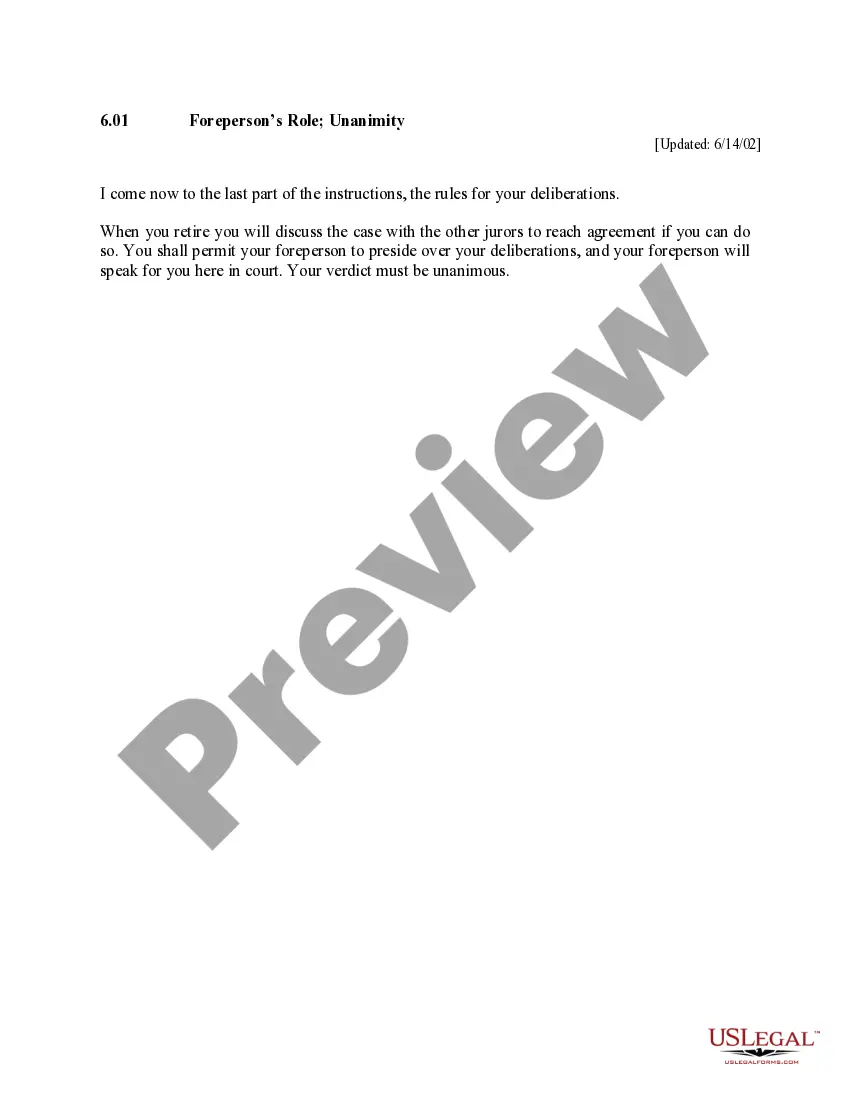
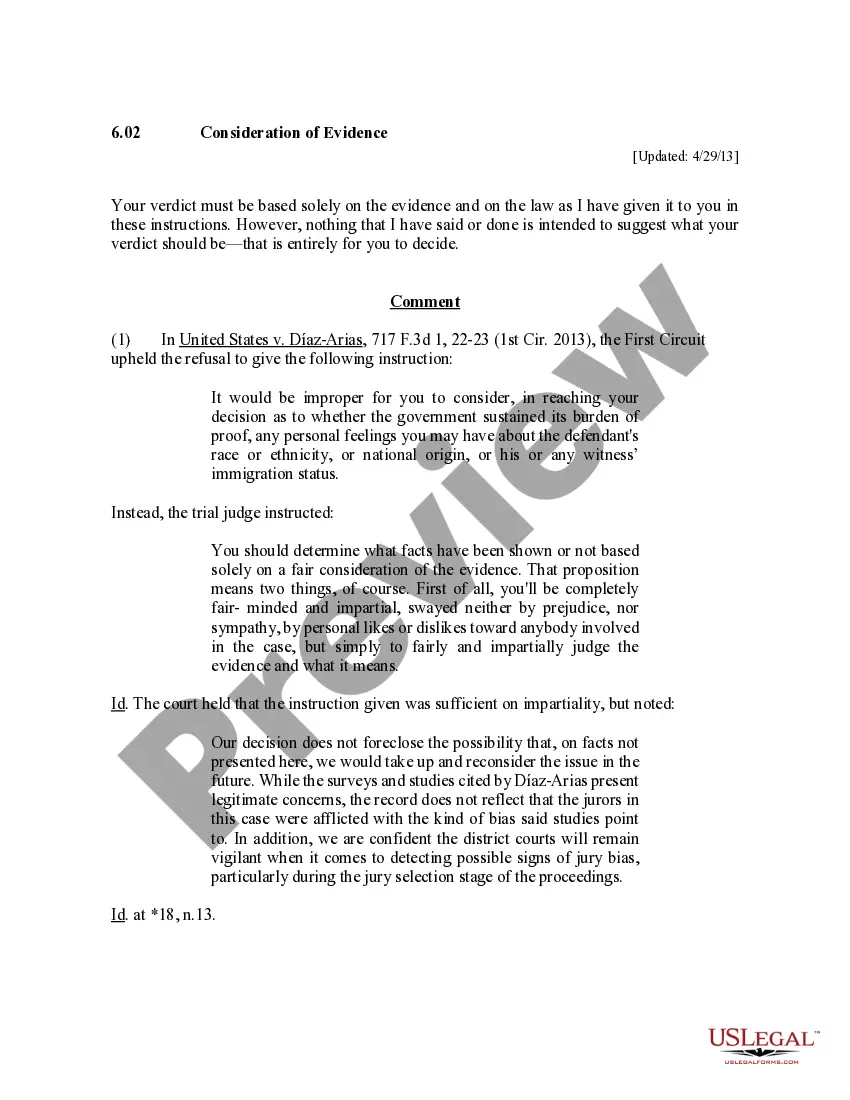
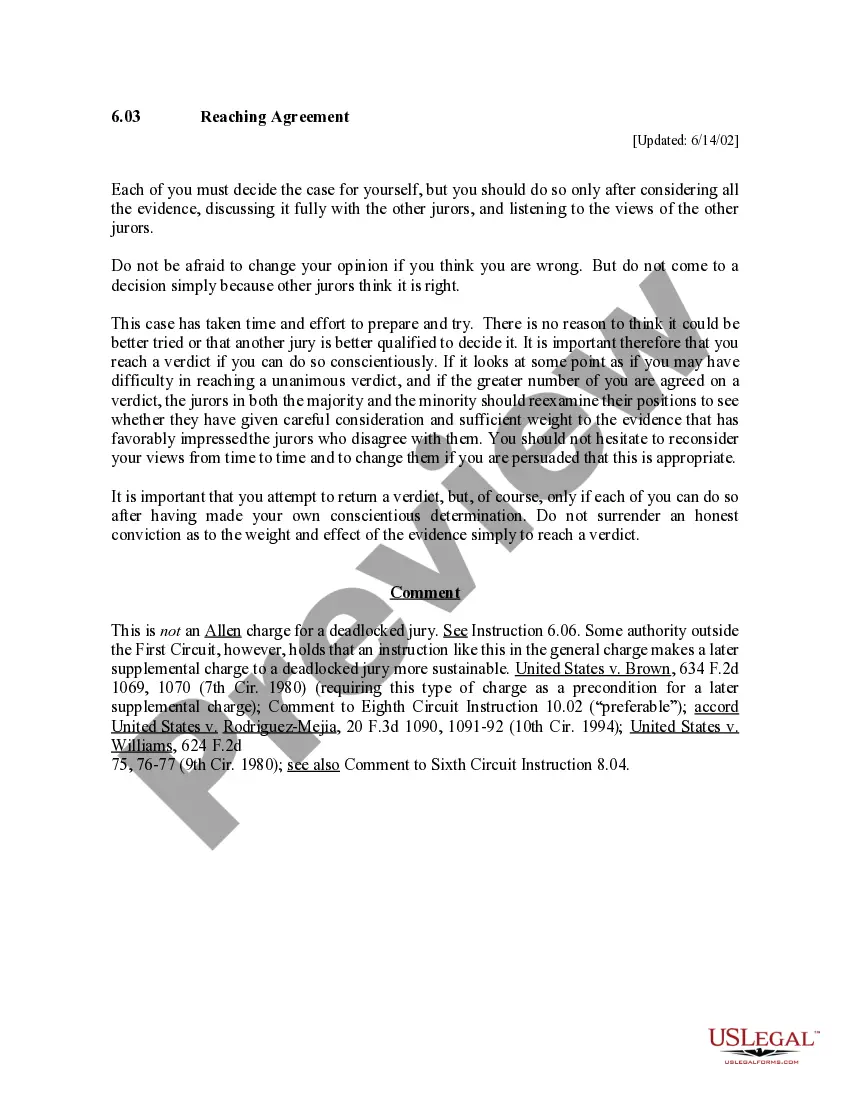
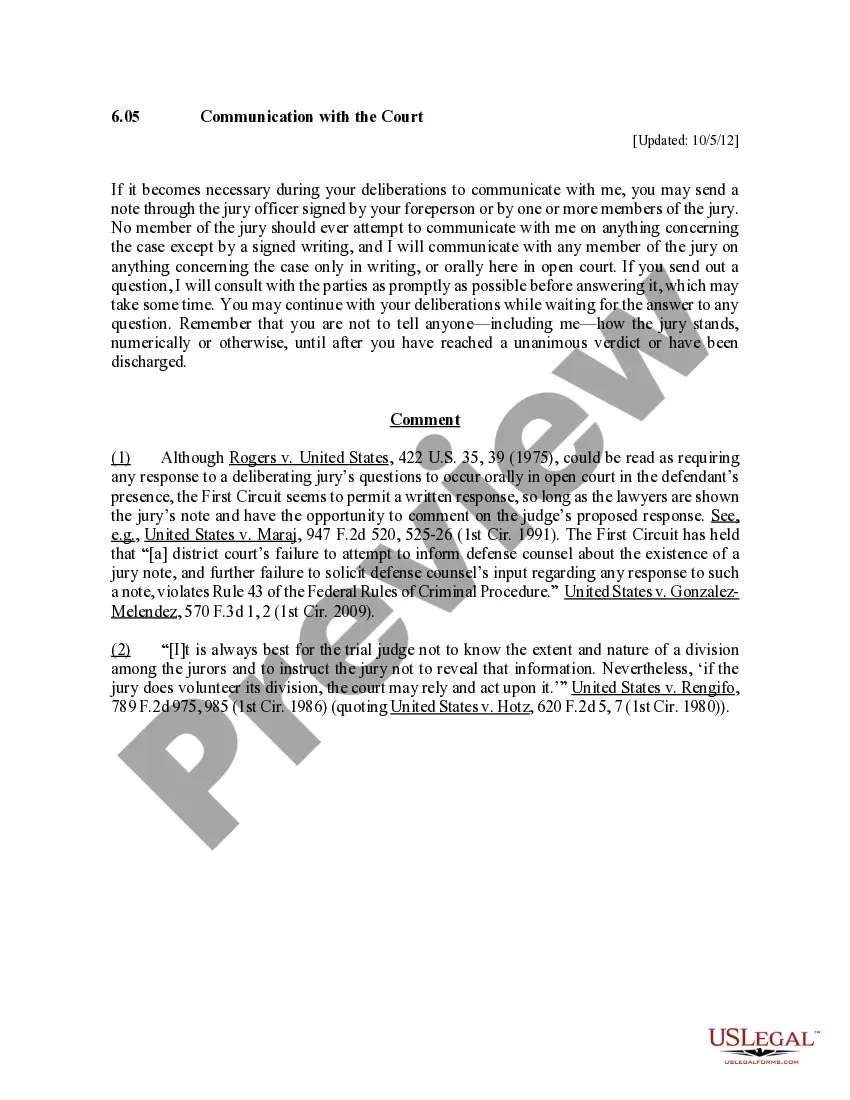
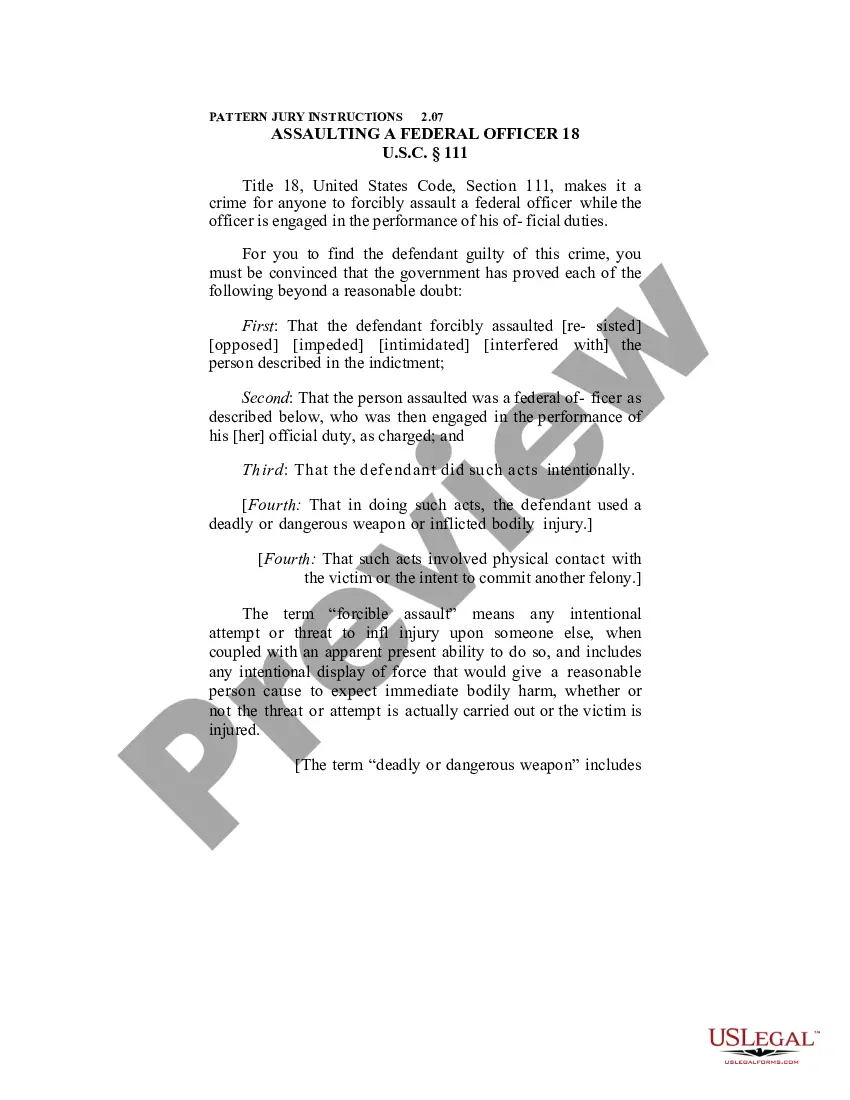
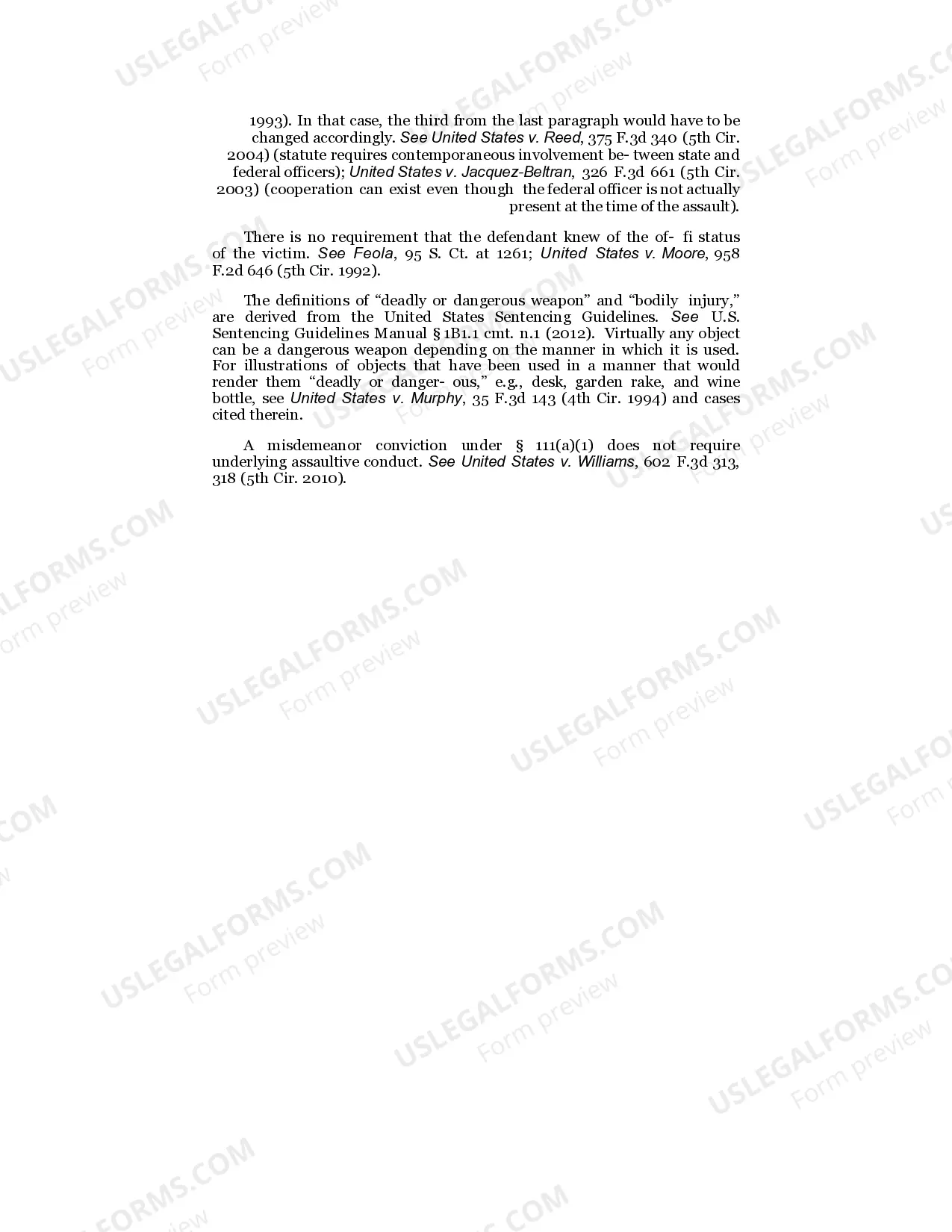
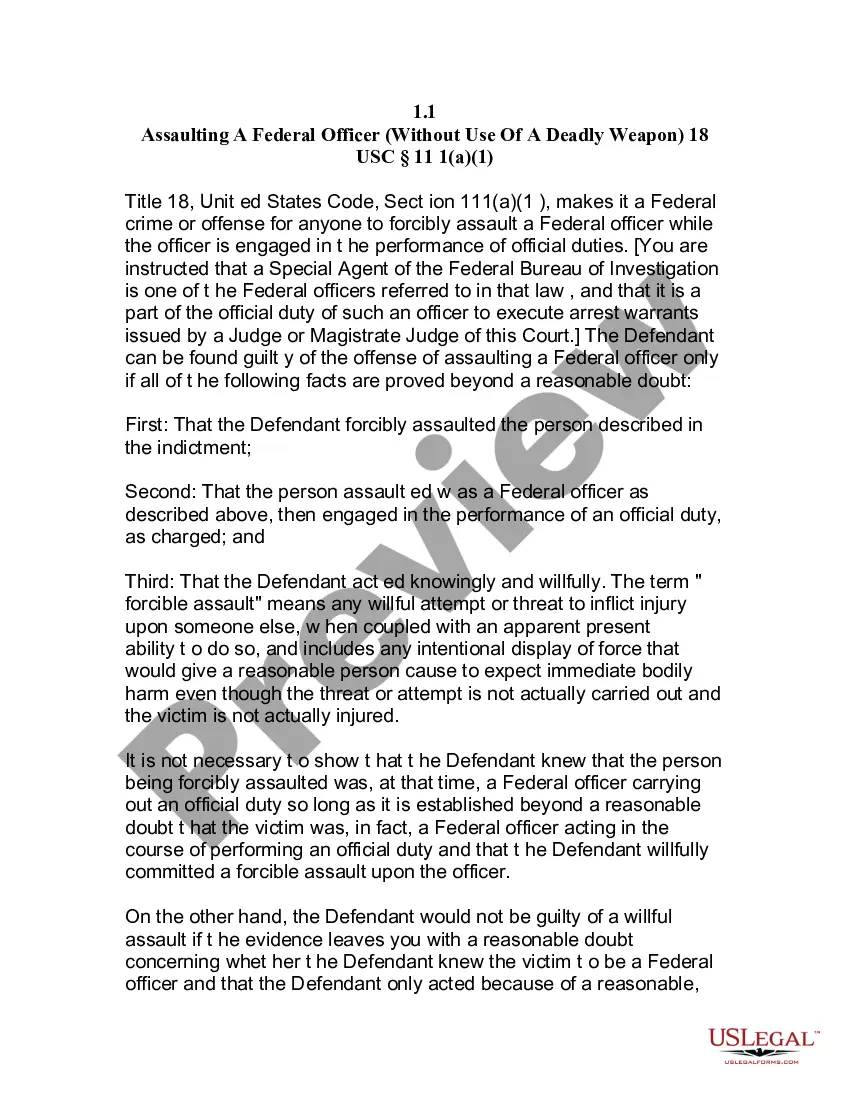
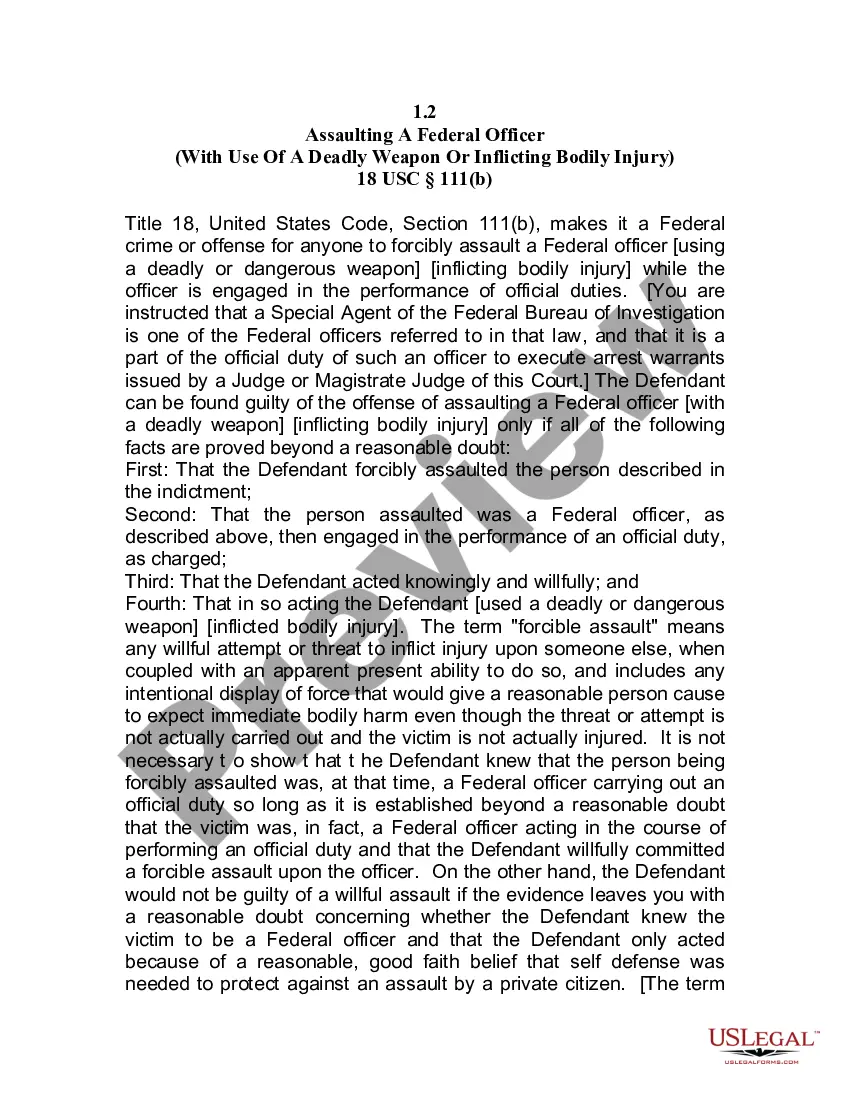
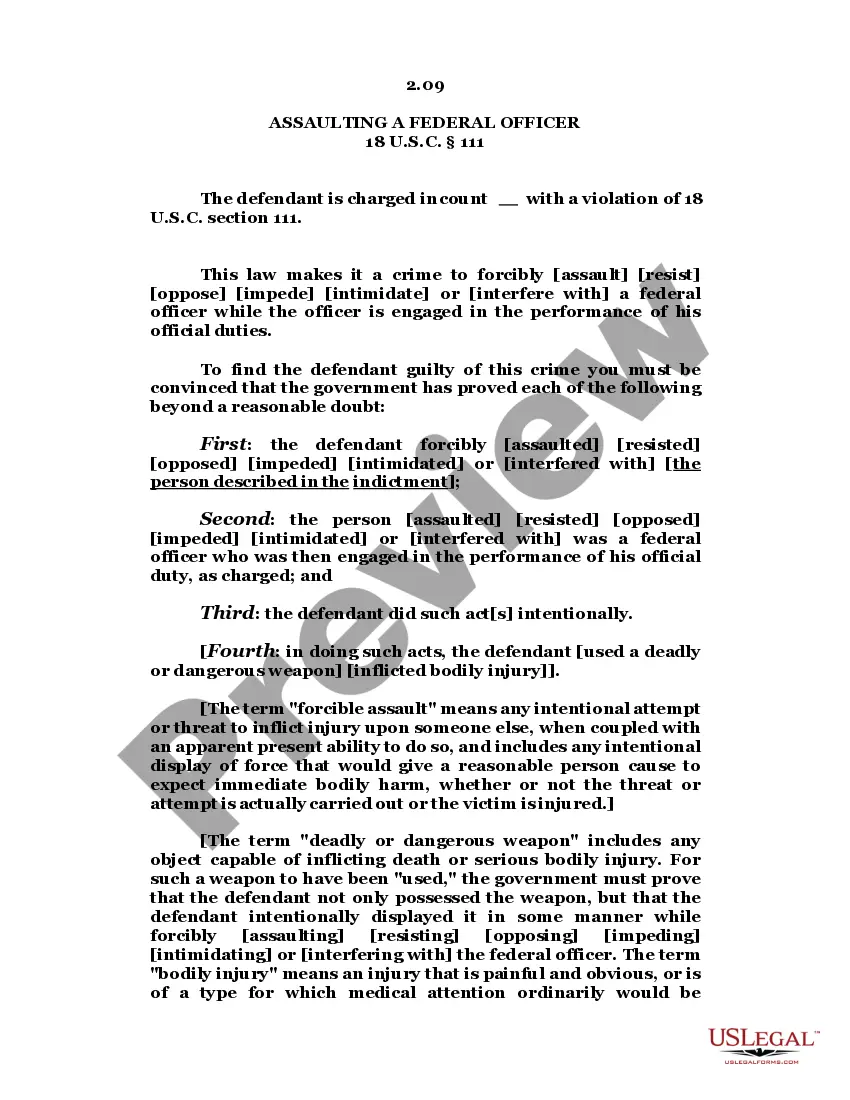
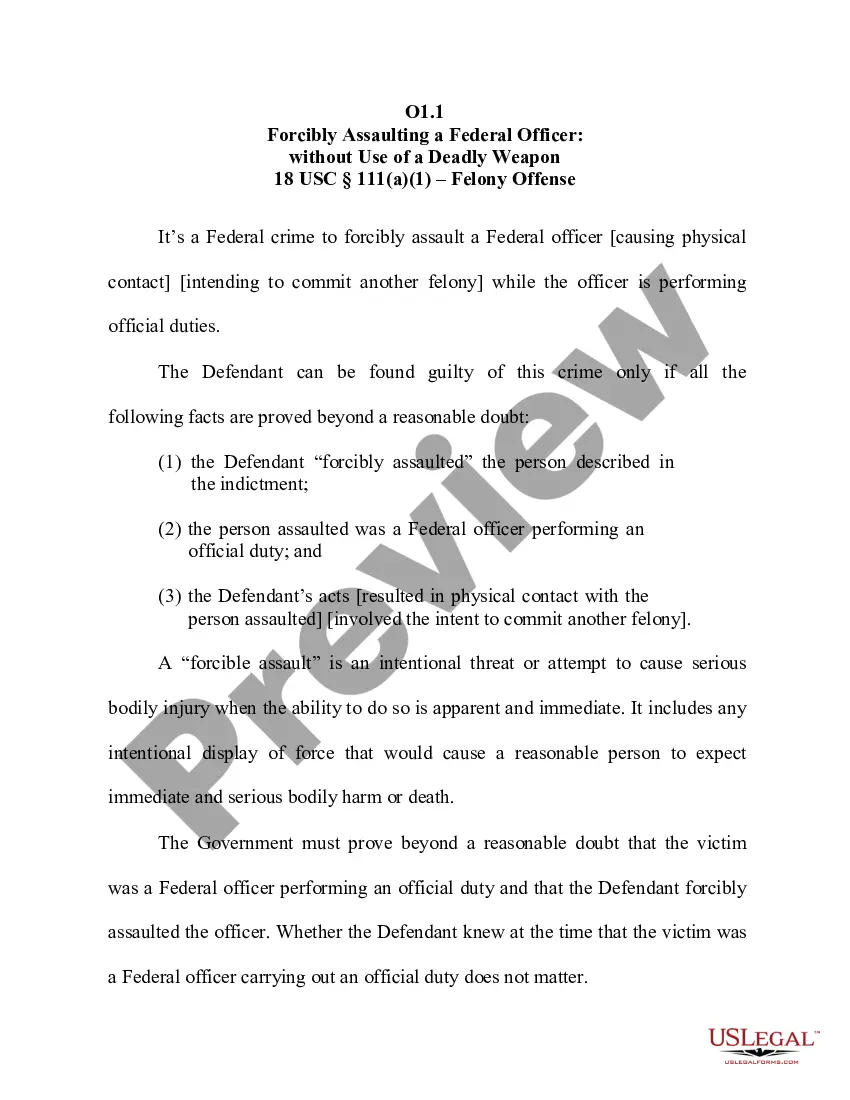
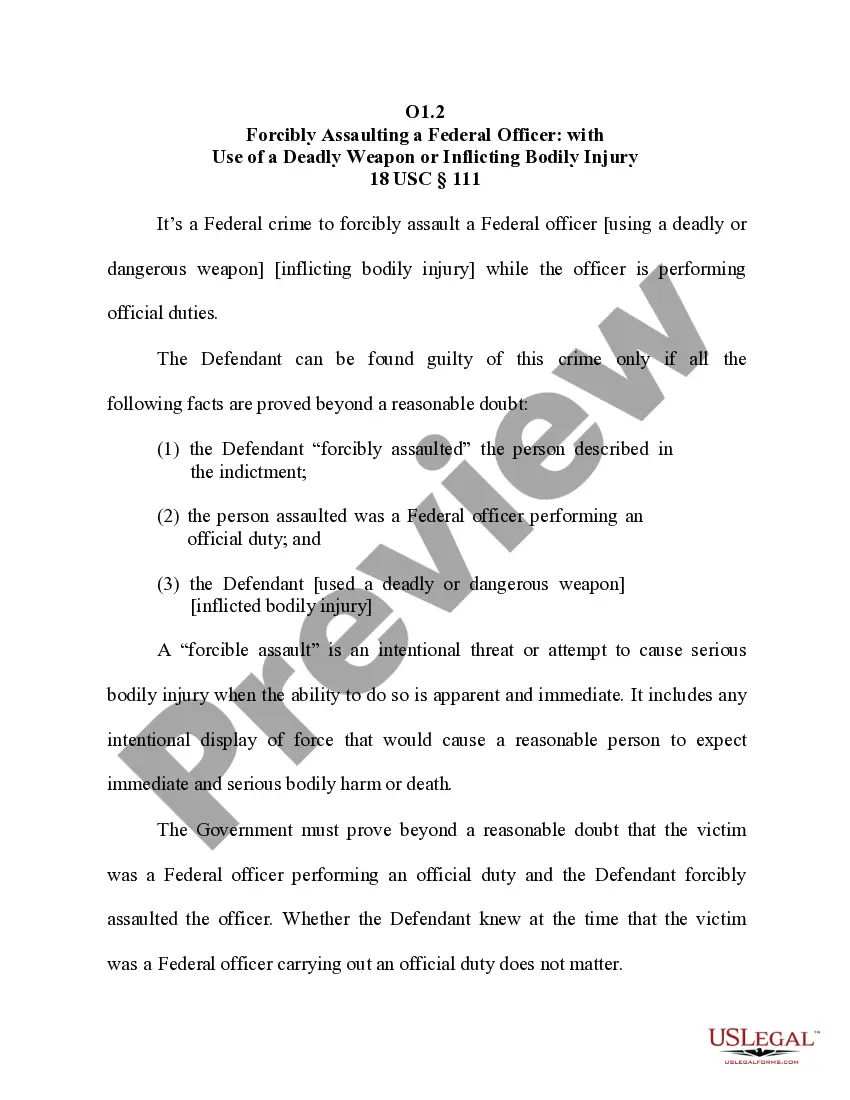
The Assaulting a Federal Officer form is a legal document outlining the specifics of a federal crime defined under Title 18, United States Code, Section 111. This form serves to clarify the elements of the offense, detailing the actions that constitute assault against federal officers during the execution of their official duties. Unlike other assault forms, this one specifically addresses offenses involving federal law enforcement officials. Understanding this form is crucial for individuals involved in legal proceedings related to such charges.
Key components of this form
- Definition of forcible assault and its legal implications.
- Criteria for identifying a federal officer and their official duties.
- Elements that constitute the intention and actions of the defendant.
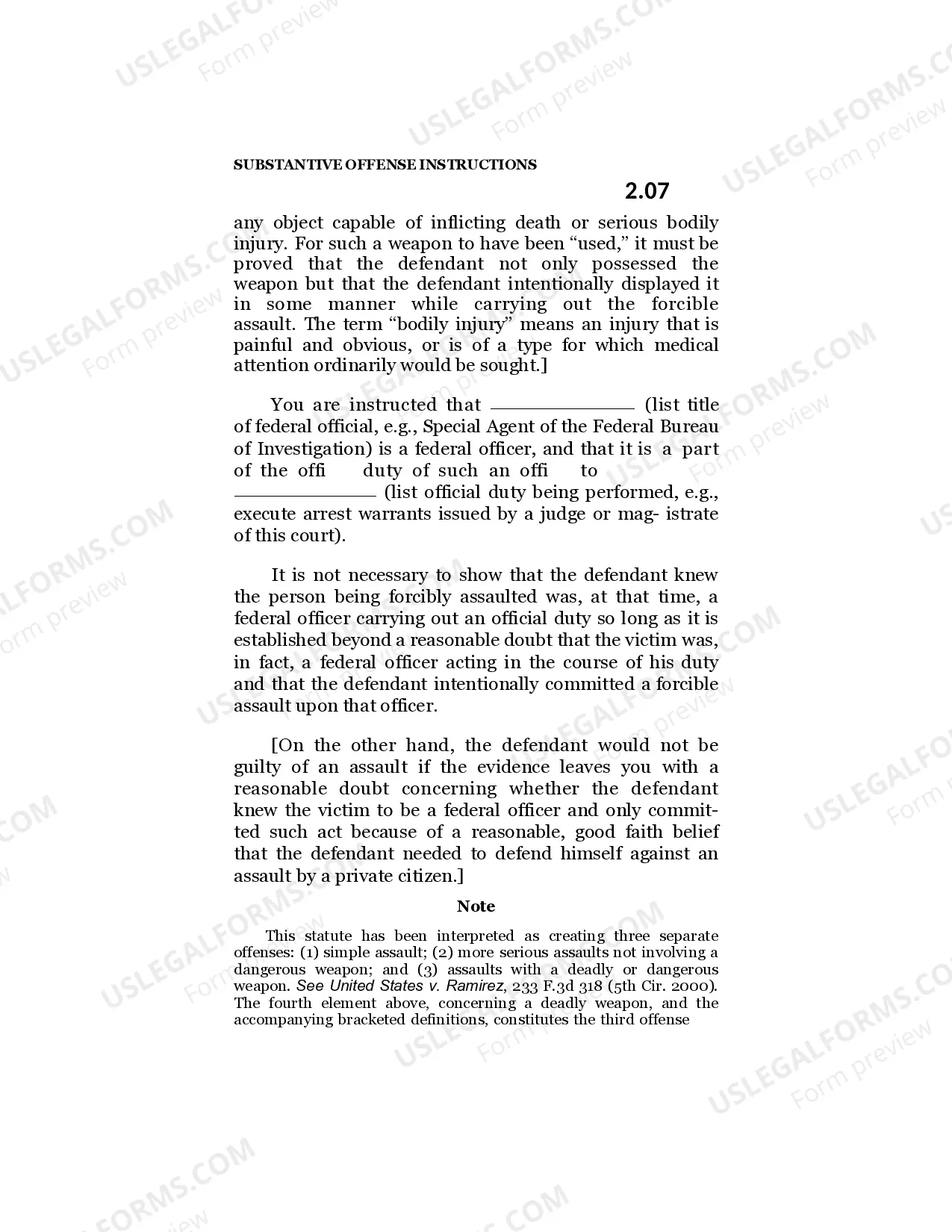
- Explanation of what constitutes a deadly or dangerous weapon.
- Clarification on bodily injury and its legal definition.
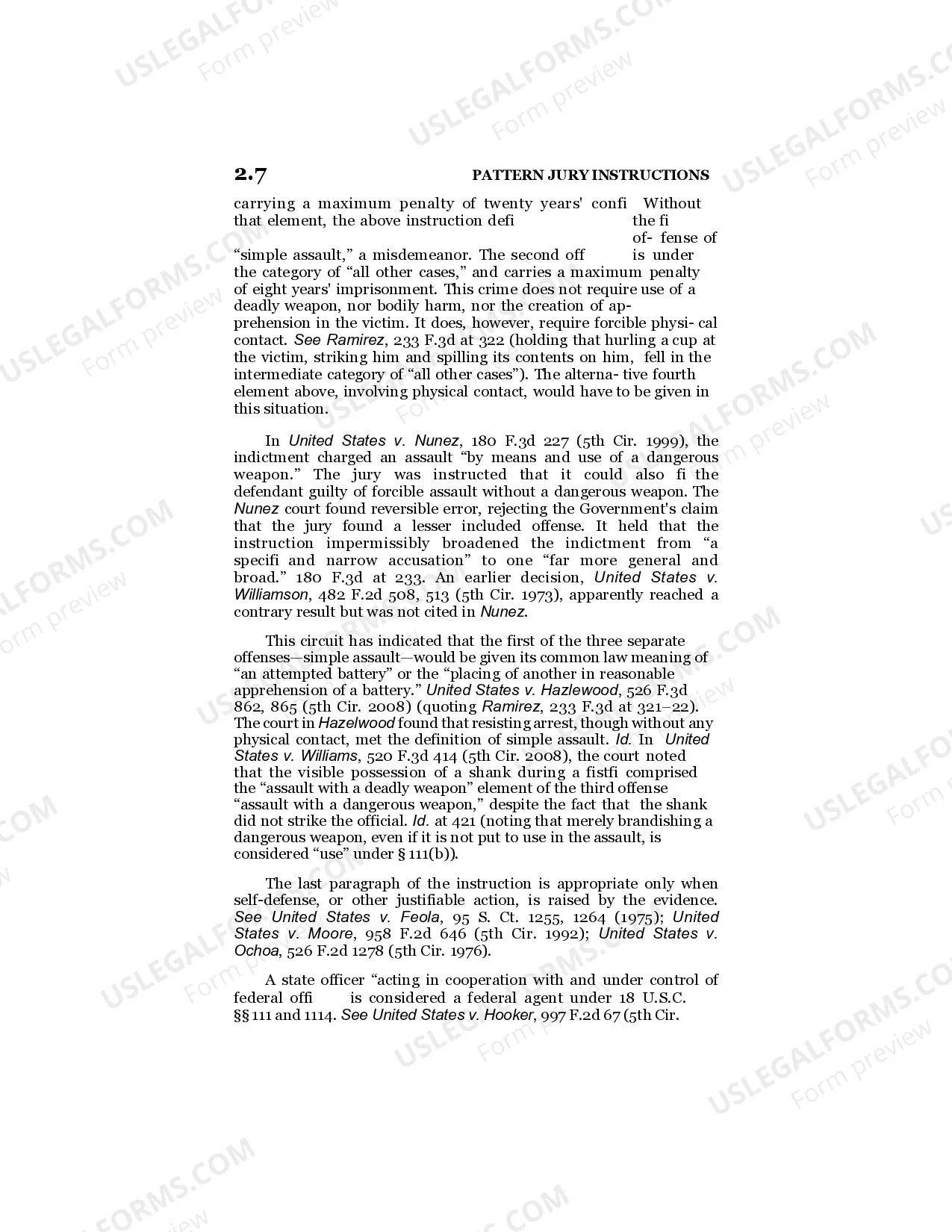
- Descriptions of the three separate offenses related to assaulting a federal officer.

When this form is needed
This form is used when an individual is facing charges related to assaulting a federal officer. It is applicable in legal scenarios where there is evidence of forcible assault against officials such as FBI agents, U.S. marshals, or other federal law enforcement personnel while they are performing their duties. Understanding this form is vital for the accused, legal counsel, and judges involved in the case.
Who should use this form
Eligibility for using this form includes:
- Defendants accused of assaulting a federal officer.
- Attorneys representing clients in federal criminal cases.
- Individuals seeking to understand their rights and obligations under federal law.
- Judges or legal professionals involved in federal criminal proceedings.
Steps to complete this form
- Identify the parties involved in the alleged assault, including the defendant and the federal officer.
- Specify the details of the incident, including the date, time, and location of the assault.
- Document the federal officer's official duties during the incident.
- Clearly outline the actions taken by the defendant and any weapons or tactics used.
- Gather evidence and testimony to support any claims or defenses relevant to the charges.
Does this form need to be notarized?
Notarization is generally not required for this form. However, certain states or situations might demand it. You can complete notarization online through US Legal Forms, powered by Notarize, using a verified video call available anytime.
Get your form ready online
Our built-in tools help you complete, sign, share, and store your documents in one place.
Make edits, fill in missing information, and update formatting in US Legal Forms—just like you would in MS Word.
Download a copy, print it, send it by email, or mail it via USPS—whatever works best for your next step.
Sign and collect signatures with our SignNow integration. Send to multiple recipients, set reminders, and more. Go Premium to unlock E-Sign.
If this form requires notarization, complete it online through a secure video call—no need to meet a notary in person or wait for an appointment.
We protect your documents and personal data by following strict security and privacy standards.

Make edits, fill in missing information, and update formatting in US Legal Forms—just like you would in MS Word.

Download a copy, print it, send it by email, or mail it via USPS—whatever works best for your next step.

Sign and collect signatures with our SignNow integration. Send to multiple recipients, set reminders, and more. Go Premium to unlock E-Sign.

If this form requires notarization, complete it online through a secure video call—no need to meet a notary in person or wait for an appointment.

We protect your documents and personal data by following strict security and privacy standards.
Typical mistakes to avoid
- Failing to clearly define the specific actions taken during the assault.
- Not properly identifying the duties of the federal officer involved.
- Ignoring the requirement to prove intent behind the defendant's actions.
- Neglecting to gather supporting evidence for claims made in the form.
Why use this form online
- Convenient access to legal templates tailored to federal law requirements.
- Ability to edit and customize the form to meet specific case details.
- Access to reliable, attorney-drafted legal forms that ensure compliance with current laws.
Legal use & context
- This form is integral to understanding legal defenses and implications when charged with assaulting a federal officer.
- It assists in navigating the complexities of federal law and the judicial process involved in such cases.
- The clarity provided by this form enhances the ability to argue the cases within the framework of federal law.
Looking for another form?

Form popularity
FAQ
?Whoever forcibly assaults, resists, opposes, impedes, intimidates, or interferes with any person designated in section 1114 of this title while engaged in or on account of the performance of his official duties, shall be fined not more than $5,000 or imprisoned not more than three years, or both.
18 U.S.C. 111 makes it a federal crime to assault any federal officer, agent, or employee of a U.S. government agency or member of the uniformed services. This includes government employees on the job; it may consist of former employees (for example, if the assault occurs as an act of revenge).
Assaulting, resisting, or impeding certain United States Government officers or employees is an offense under 18 U.S.C. § 111. Simple assault is a class A misdemeanor, but if physical contact occurs, the offense is a class D felony. If a deadly weapon is used or bodily injury is inflicted, it is a class C felony.
Assaulting a police officer is considered a violent felony, no matter the type. Usually, probation isn't an option, putting you in prison from two years to life imprisonment. The court of law takes all kinds of assault seriously.
§1114. Protection of officers and employees of the United States. (3) in the case of attempted murder or manslaughter, as provided in section 1113. (b) Extraterritorial Jurisdiction .
The federal officer was forcibly assaulted or resisted, opposed, impeded, intimidated, or interfered with while engaged in the performance of his official duty or on account of the performance of official duties; and. That the person did this intentionally.
The government can prosecute federal officers for any crime they commit, such as murder or assault. But ultimately, it will likely occur in federal court. The US Attorney's Office could leave a federal LEO in state court by not removing the case.