Aiding and Abetting (Agency)
What is this form?
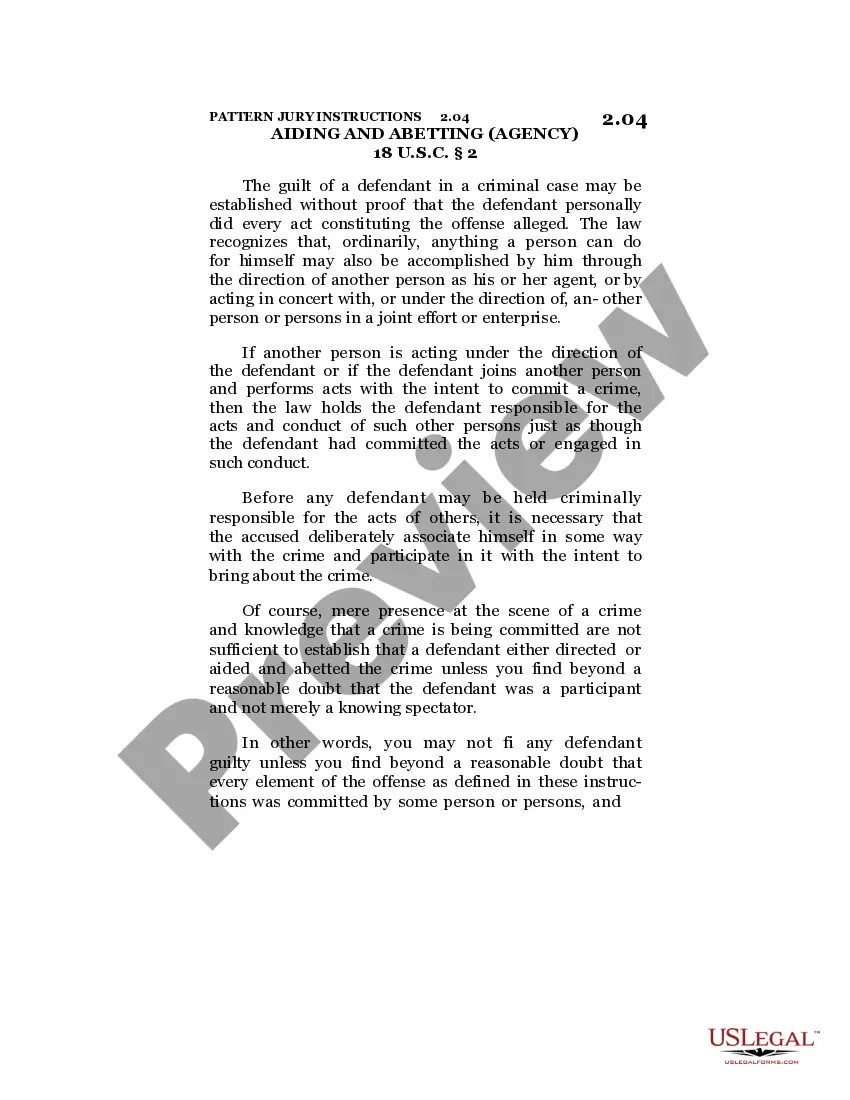
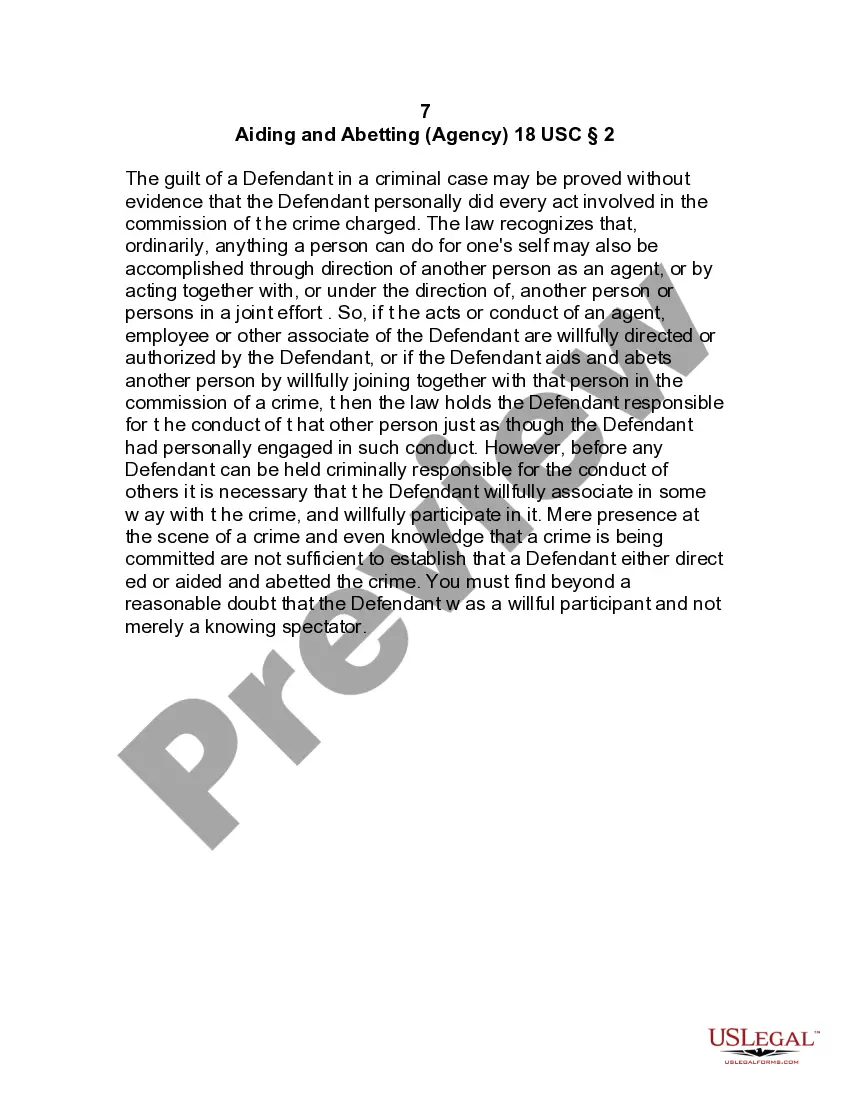
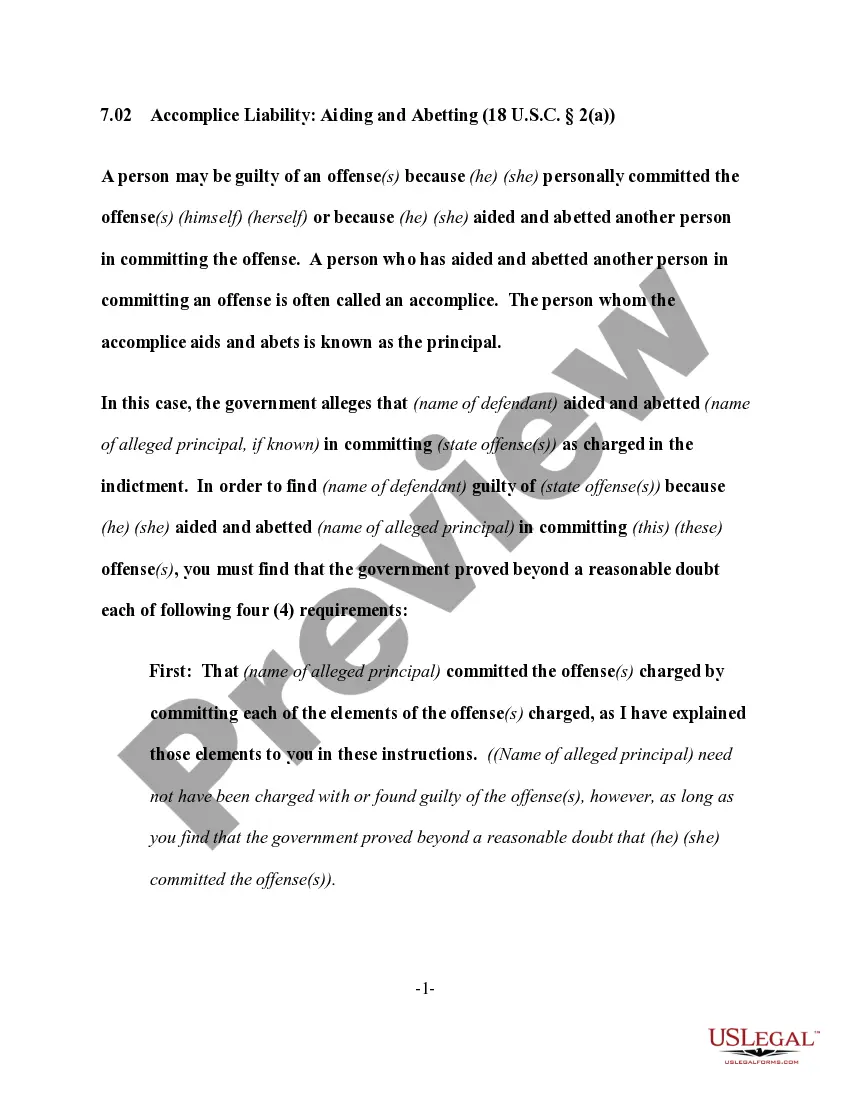
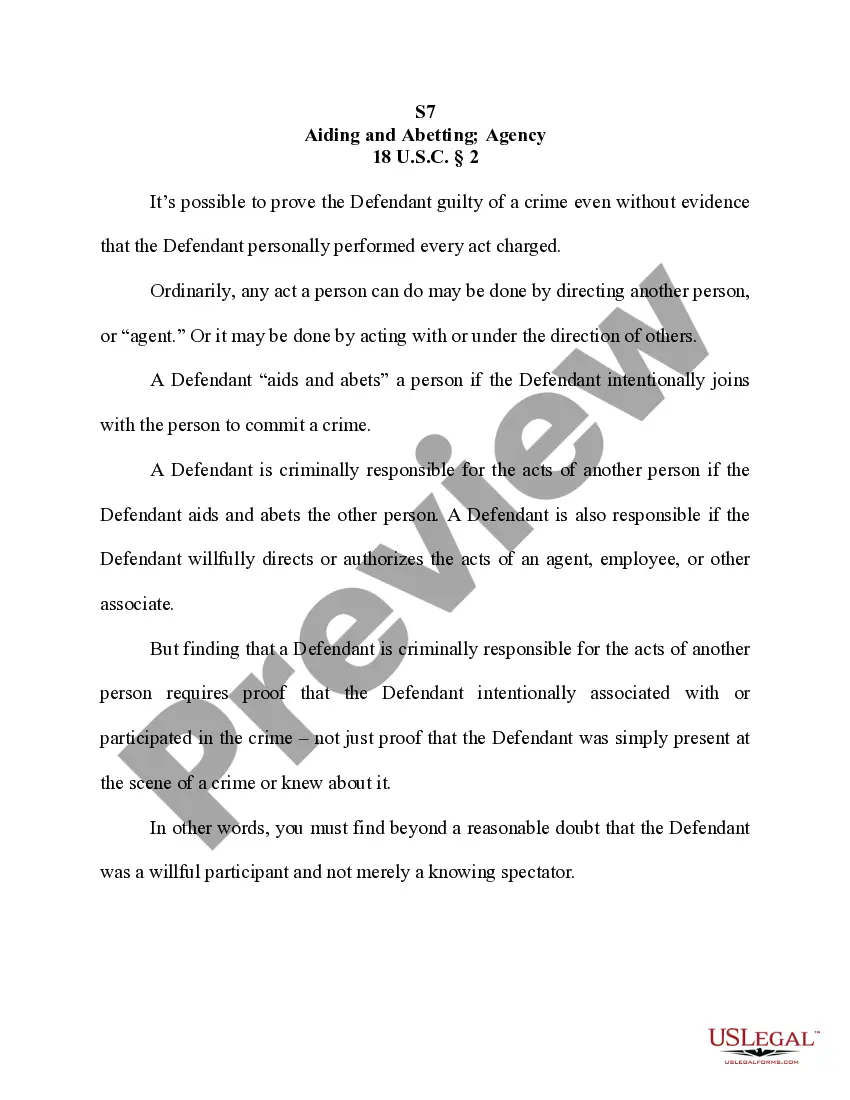
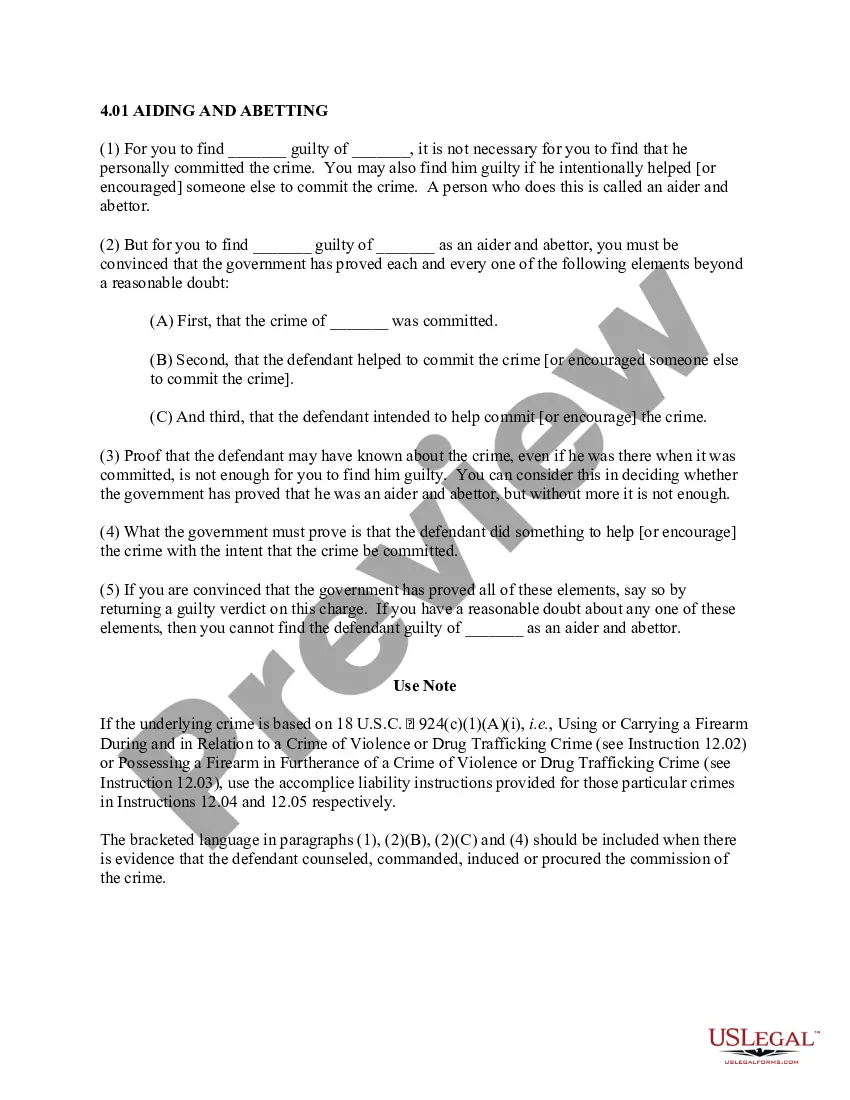
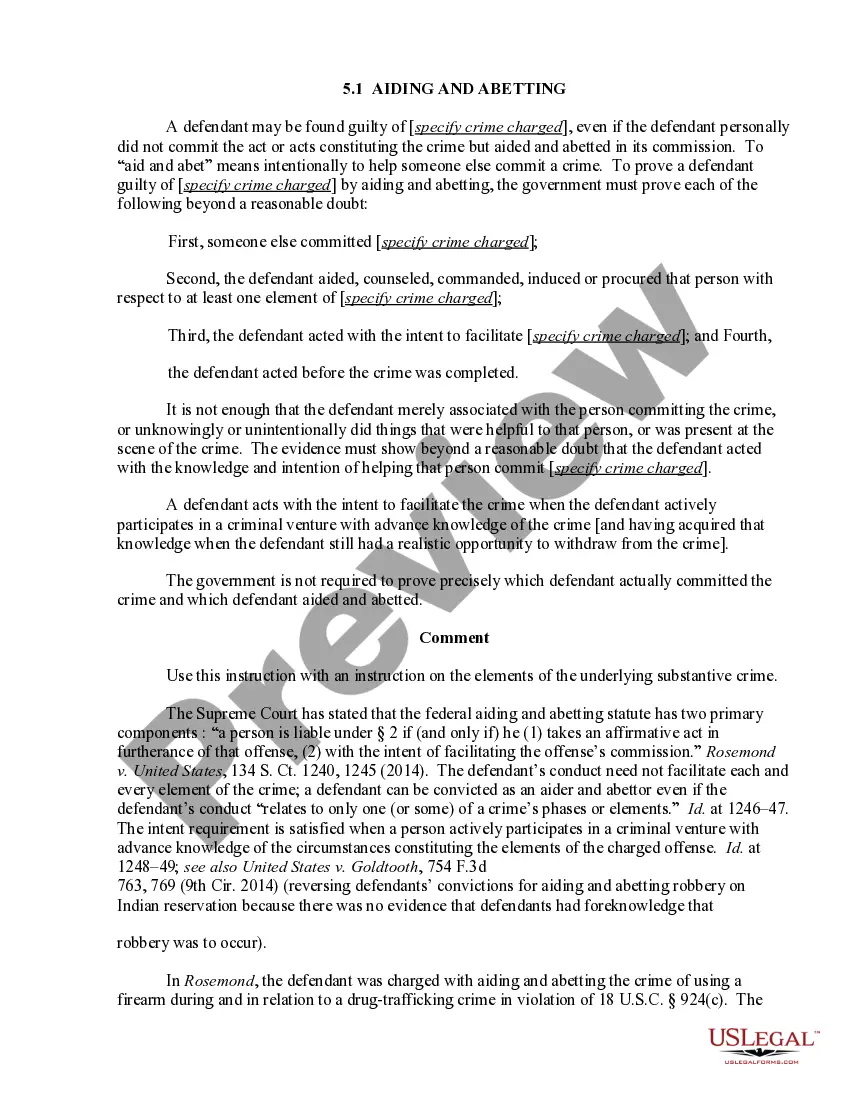
The Aiding and Abetting (Agency) form is a legal document that outlines the legal principles surrounding a defendant's responsibility for crimes committed by others. This form clarifies that a defendant can be held accountable for a crime even if they did not personally commit every act constituting the offense. It establishes the criteria needed to prove that a defendant aided or abetted another in a criminal venture. This form is essential for understanding the nuances of criminal liability, especially in cases involving multiple actors.
Form components explained
- Definition of aiding and abetting within the context of criminal law.
- Criteria for establishing guilt without personal involvement in every act.
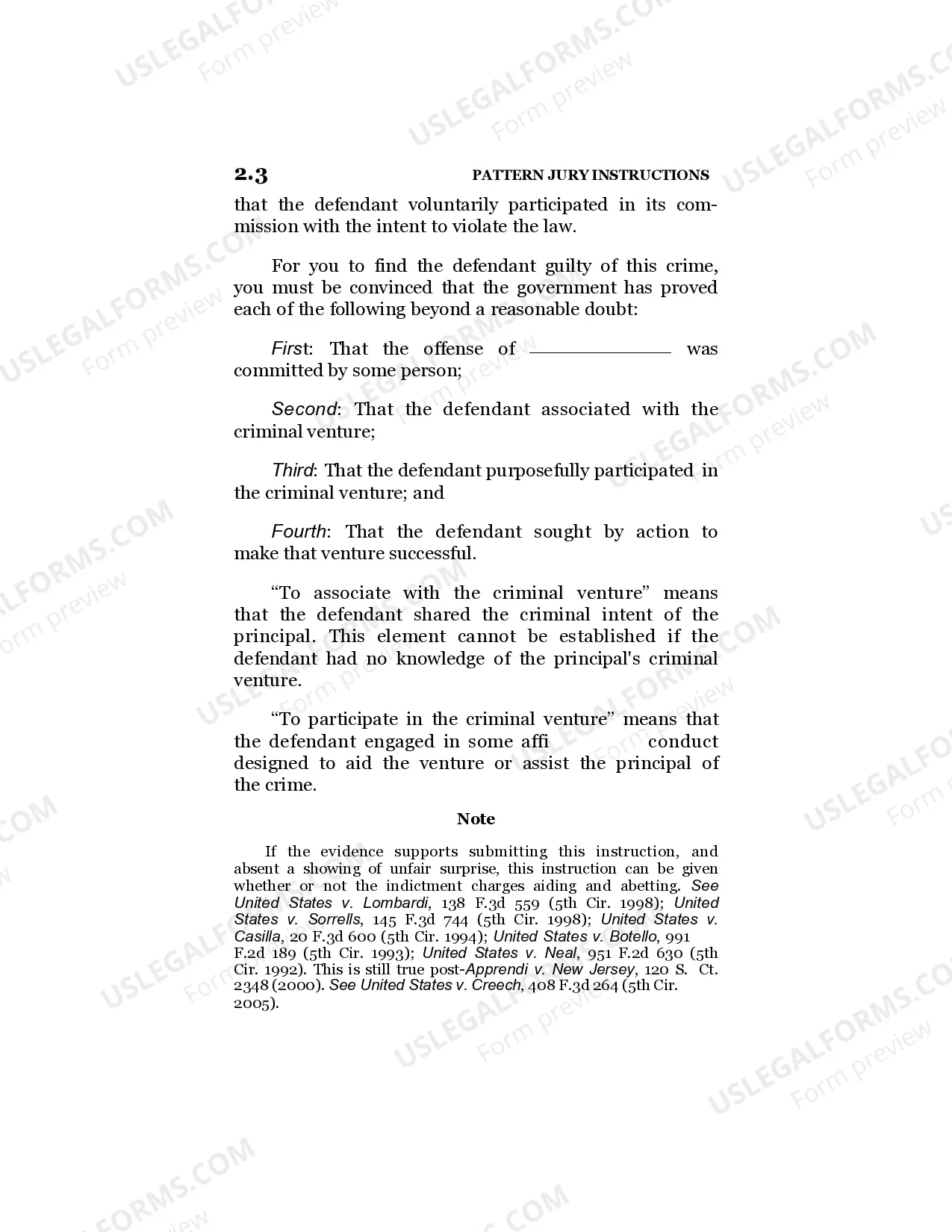
- Requirements for demonstrating the defendant's association and intent.
- Explanation of participation in the criminal venture and shared intent.
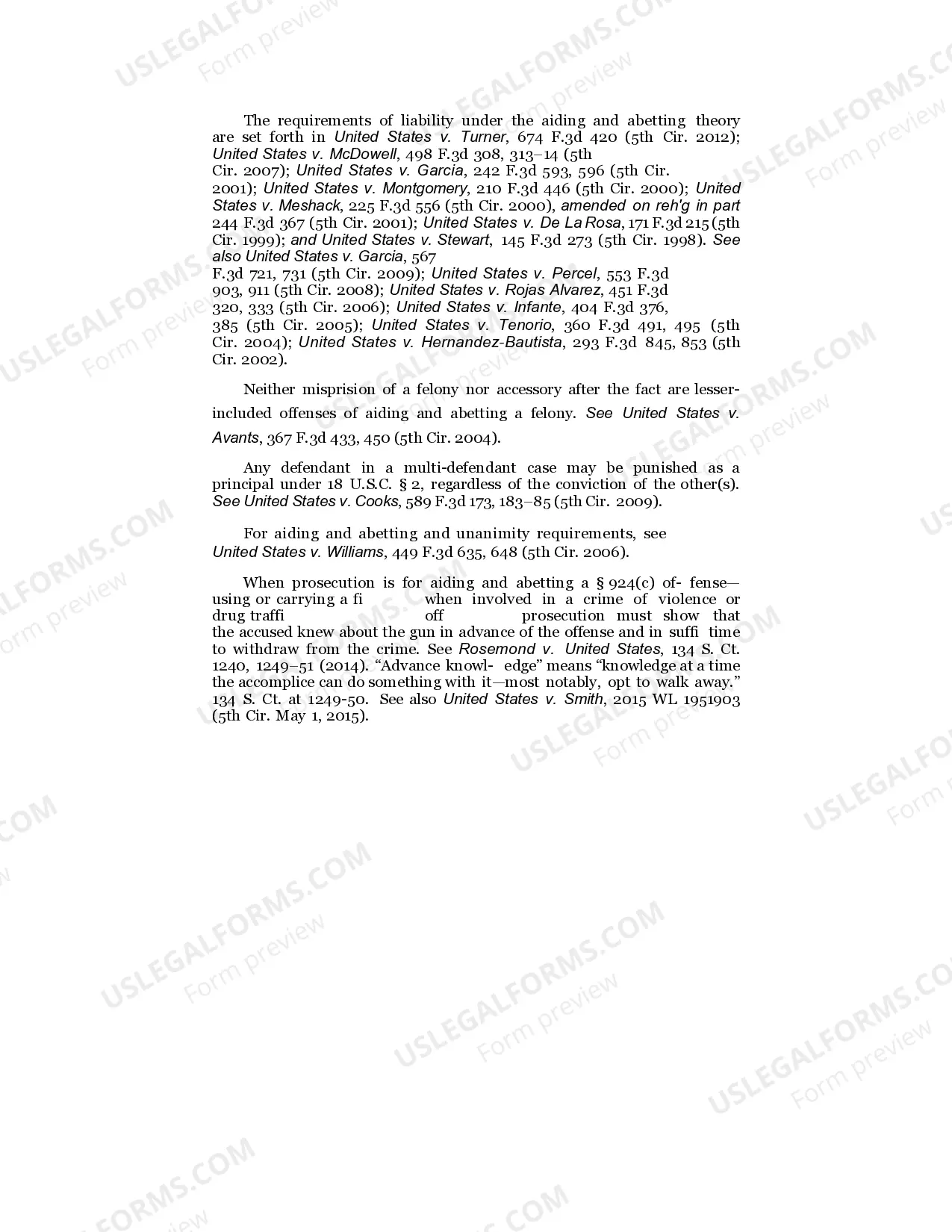
- Case law references to support legal principles outlined in the form.

When to use this form
This form is used in criminal proceedings where a defendant is accused of aiding or abetting another person in committing a crime. It is crucial when the prosecution needs to establish that the defendant had a role in a criminal enterprise, such as conspiracy, joint criminal activity, or collaboration with others. This form helps clarify the legal basis for holding a defendant accountable as if they committed the crime themselves.
Who this form is for
- Defendants facing charges for aiding and abetting a crime.
- Attorneys representing clients involved in joint criminal enterprises.
- Legal practitioners who require clarification of aiding and abetting laws.
Instructions for completing this form
- Identify the parties involved in the criminal venture.
- Describe the specific crime committed and the role of each participant.
- State the intent and association of the defendant with the criminal act.
- Provide details of any pertinent evidence linking the defendant to the crime.
- Ensure all legal definitions and criteria for aiding and abetting are addressed.
Does this document require notarization?
This form does not typically require notarization to be legally valid. However, some jurisdictions or document types may still require it. US Legal Forms provides secure online notarization powered by Notarize, available 24/7 for added convenience.
Get your form ready online
Our built-in tools help you complete, sign, share, and store your documents in one place.
Make edits, fill in missing information, and update formatting in US Legal Forms—just like you would in MS Word.
Download a copy, print it, send it by email, or mail it via USPS—whatever works best for your next step.
Sign and collect signatures with our SignNow integration. Send to multiple recipients, set reminders, and more. Go Premium to unlock E-Sign.
If this form requires notarization, complete it online through a secure video call—no need to meet a notary in person or wait for an appointment.
We protect your documents and personal data by following strict security and privacy standards.

Make edits, fill in missing information, and update formatting in US Legal Forms—just like you would in MS Word.

Download a copy, print it, send it by email, or mail it via USPS—whatever works best for your next step.

Sign and collect signatures with our SignNow integration. Send to multiple recipients, set reminders, and more. Go Premium to unlock E-Sign.

If this form requires notarization, complete it online through a secure video call—no need to meet a notary in person or wait for an appointment.

We protect your documents and personal data by following strict security and privacy standards.
Common mistakes to avoid
- Failing to demonstrate the defendant's intent to participate in the crime.
- Neglecting to identify all parties involved in the criminal venture.
- Assuming that mere presence at the crime scene constitutes guilt.
- Overlooking relevant case law that supports aiding and abetting claims.
Why complete this form online
- Convenience of accessing a legally accurate form anytime and anywhere.
- Editability to customize the form according to specific cases.
- Reliability from templates drafted by licensed attorneys with legal expertise.
Legal use & context
- This form establishes legal standards for proving aiding and abetting in court.
- Case law provides a framework for understanding liability and intent.
- Used correctly, this form can help defendants prepare for a strong legal defense.
Looking for another form?
Form popularity
FAQ
In general, every crime involves three elements: first, the act or conduct (actus reus); second, the individual's mental state at the time of the act (mens rea); and third, the causation between the act and the effect (typically either proximate causation or but-for causation).
To prove you guilty on a theory of aiding and abetting, a prosecutor must demonstrate three things: That you knew of someone's unlawful purpose; you acted with the intent or purpose of committing or encouraging the commission of a crime; and that your actions did, in fact, aid or promote in the commission of the
Aiding and abetting is like zigging and zagging. Each has a slightly different meaning but fits together to create a complete crime. Aiding means helping someone to commit a crime while abetting means encouraging or counseling someone to commit a crime.
Common examples of aiding and abetting a crime include: Driving a getaway car; Serving as a lookout; Providing a weapon to be used during the commission of the crime; Giving a false alibi for someone you know has committed a criminal violation; Luring a victim to a physical or sexual assault;
Aiding is assisting, supporting, or helping another to commit a crime. Abetting is encouraging, inciting, or inducing another to commit a crime. Aiding and abetting is a term often used to describe a single act. An accessory is someone who does any of the above things in support of a principle's commission of crime.
The burden of proof falls on the People to prove beyond a reasonable doubt that the defendant did not withdraw. If the People have not met this burden, a jury cannot find the defendant guilty of aiding and abetting.
Title 18, United States Code § 2 now provides: (a) Whoever commits an offense against the United States or aids, abets, counsels, commands, induces or procures its commission, is punishable as a principal.