Virginia Flood Zone Statement and Authorization
Understanding this form
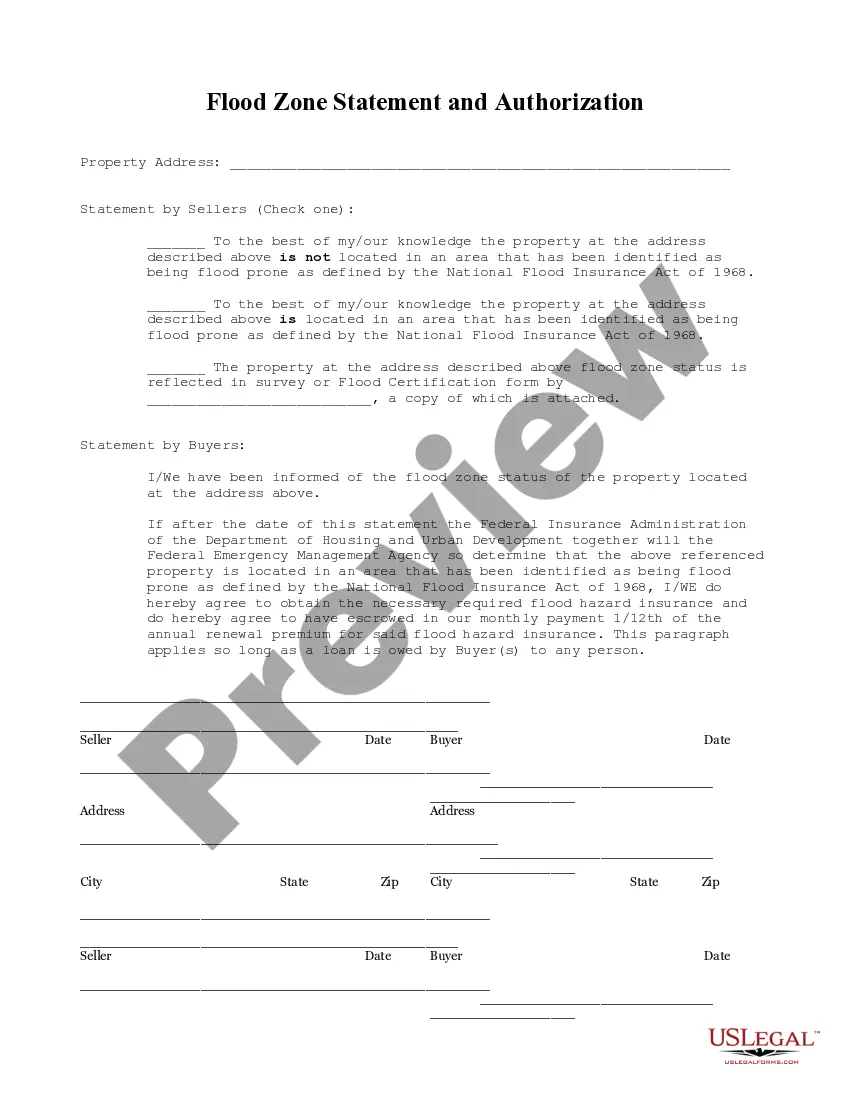
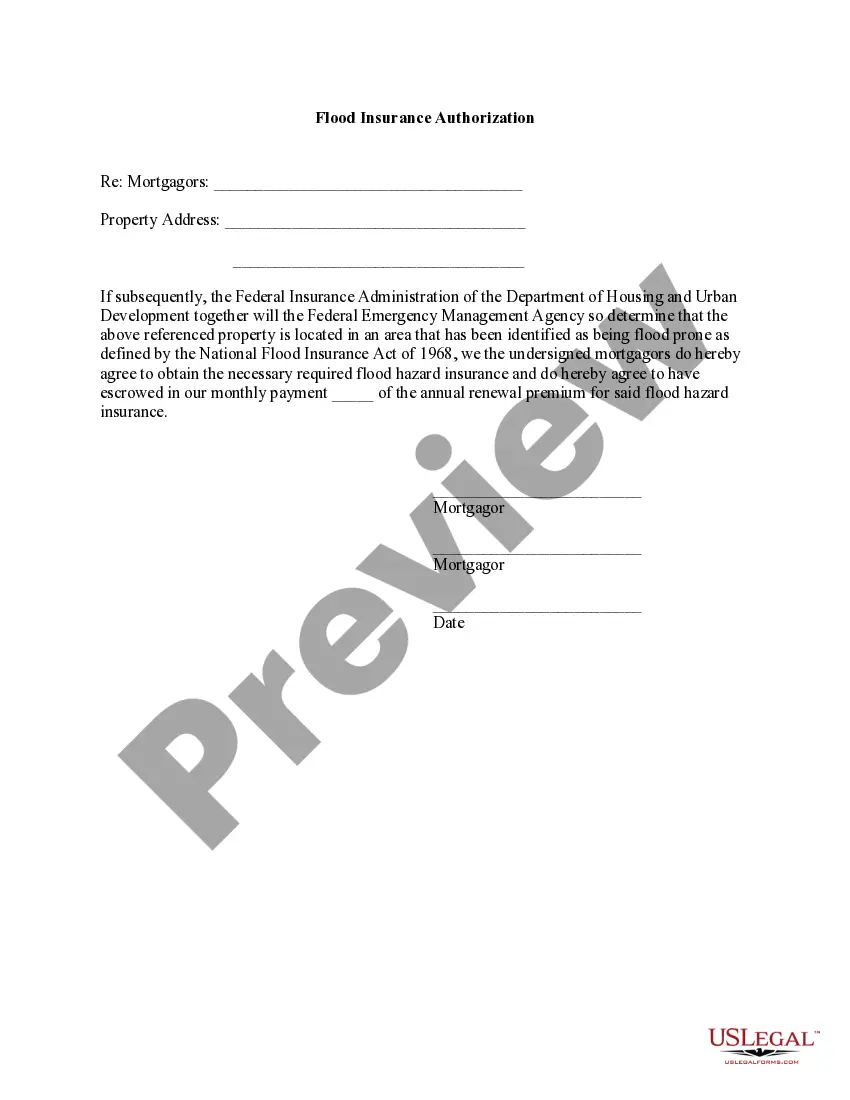
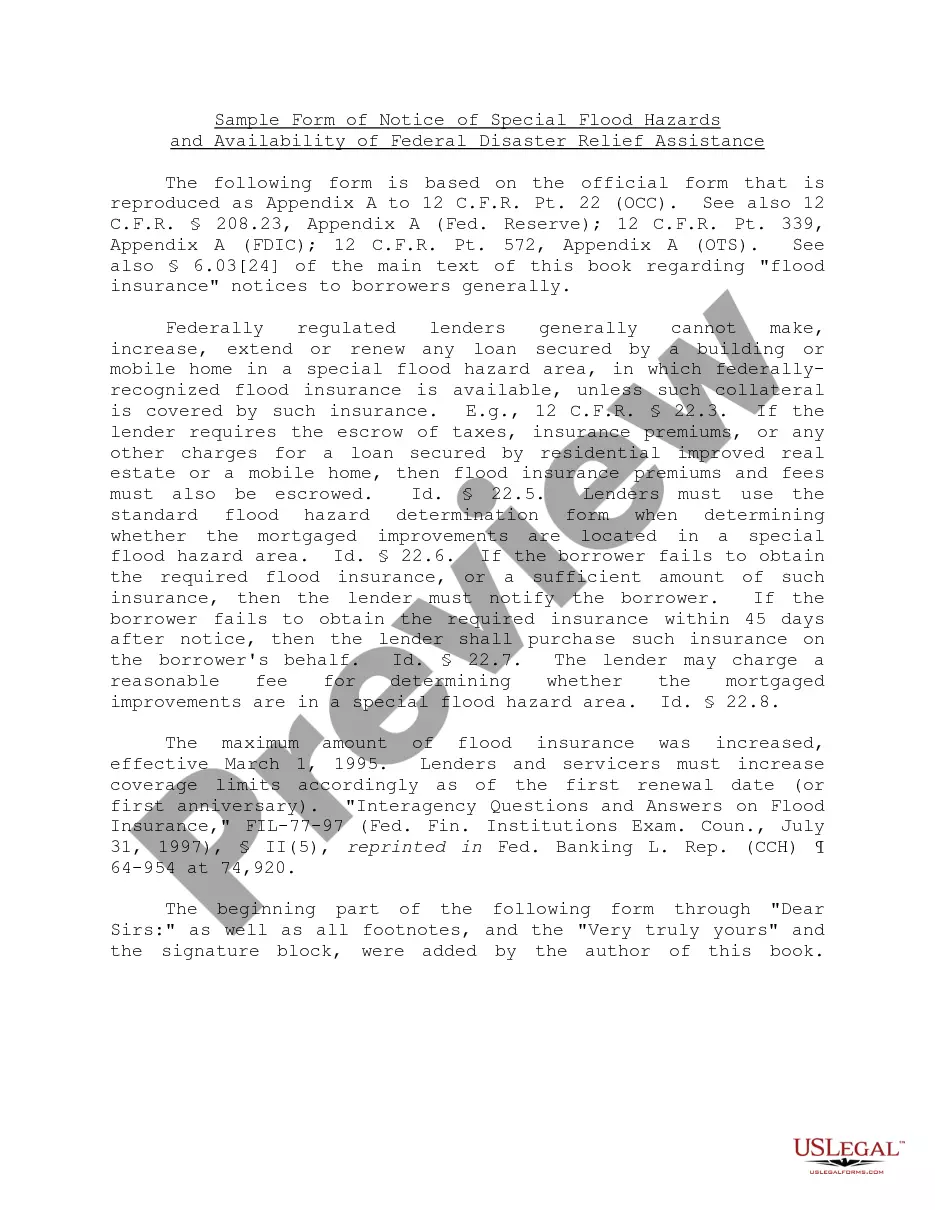
The Flood Zone Statement and Authorization form is designed for property transactions where sellers must disclose the flood zone status of a property. This form helps protect both sellers and buyers by ensuring an acknowledgment of the property's flood risk, as defined by the National Flood Insurance Act of 1968. Unlike other property disclosure forms, this form specifically addresses flood zone information and the buyers' responsibilities if the property is later classified as flood prone.
What’s included in this form
- Property address: the location of the property involved in the transaction.
- Sellersâ statement: sellers must indicate if, to their knowledge, the property is in a flood-prone area.
- Flood certification: an attachment that may provide additional verification of the flood zone status.
- Buyersâ acknowledgment: buyers agree to obtain flood hazard insurance if the property is determined to be in a flood zone after the purchase.
- Signature lines: a section for sellers and buyers to sign and date the form.
When to use this document
This form should be utilized during real estate transactions when the property is located in an area where flood risk might be a concern. Sellers should complete this form to disclose critical information about the property's flood zone status to potential buyers. It is necessary when obtaining financing, as lenders often require acknowledgment of flood risks.
Who this form is for
- Home sellers seeking to disclose the flood zone status of their property.
- Buyers wanting to ensure they understand potential flood risks associated with the property.
- Real estate agents representing either sellers or buyers in a transaction.
- Mortgage lenders requiring flood zone disclosures as part of the financing process.
Steps to complete this form
- Identify the property address by filling in the designated area.
- Have the sellers check the appropriate statement regarding the flood zone status of the property.
- If applicable, attach the flood certification from a certified professional.
- Ensure buyers acknowledge the flood risk by entering their agreement to obtain flood hazard insurance if necessary.
- Collect signatures and dates from all parties involved in the transaction.
Notarization requirements for this form
This form does not typically require notarization unless specified by local law. Always check your jurisdictionâs requirements before finalizing the form to ensure compliance.
Get your form ready online
Our built-in tools help you complete, sign, share, and store your documents in one place.
Make edits, fill in missing information, and update formatting in US Legal Forms—just like you would in MS Word.
Download a copy, print it, send it by email, or mail it via USPS—whatever works best for your next step.
Sign and collect signatures with our SignNow integration. Send to multiple recipients, set reminders, and more. Go Premium to unlock E-Sign.
If this form requires notarization, complete it online through a secure video call—no need to meet a notary in person or wait for an appointment.
We protect your documents and personal data by following strict security and privacy standards.

Make edits, fill in missing information, and update formatting in US Legal Forms—just like you would in MS Word.

Download a copy, print it, send it by email, or mail it via USPS—whatever works best for your next step.

Sign and collect signatures with our SignNow integration. Send to multiple recipients, set reminders, and more. Go Premium to unlock E-Sign.

If this form requires notarization, complete it online through a secure video call—no need to meet a notary in person or wait for an appointment.

We protect your documents and personal data by following strict security and privacy standards.
Common mistakes
- Failing to fully disclose the flood zone status can lead to legal issues.
- Not attaching the flood certification when applicable.
- Leaving unsigned sections, which may render the form invalid.
- Assuming all buyers understand flood risks without proper disclosure.
Why use this form online
- Convenience of accessing and completing the form from anywhere.
- Editability allows for quick adjustments to meet specific needs.
- Reliable templates designed by licensed attorneys ensure legal compliance.
- Instant downloads provide immediate access to necessary documents.
Legal use & context
- This form fulfills a crucial role in real estate transactions by disclosing potential flood risks.
- It helps prevent future legal disputes related to undisclosed flood hazards.
- Having a clear acknowledgment of flood risk may impact insurance obligations and financing requirements.
Quick recap
- The Flood Zone Statement and Authorization is essential for real estate transactions involving flood risks.
- It provides protection for both sellers and buyers regarding property flood disclosures.
- Ensure all required sections are completed and properly signed to avoid legal issues.
Looking for another form?
Form popularity
FAQ
Zone A. Zone A is the flood insurance rate zone that corresponds to the I-percent annual chance floodplains that are determined in the Flood Insurance Study by approximate methods of analysis.
Flood Zone A. Areas subject to inundation by the 1-percent-annual-chance flood event generally determined using approximate methodologies. Flood Zone AE, A1-30. Flood Zone AH. Flood Zone AO. Flood Zone AR. Flood Zone A99. Flood Zone V. Flood Zone VE, V1-30.
Floodplain regulation is done by imparting minimum standards for the development in the floodplain. This restrains the undue development along the designated or the protected floodplains. It determines floodplain zoning regions and does not permit any development in such regions.
The Federal Emergency Management Agency (FEMA) designates floodplains as geographic zones subject to varying levels of flood risk.
Maintain your current flood insurance coverage. Contact a surveyor to perform an elevation certificate on your home. Submit an application for a Letter of Map Amendment to FEMA once you have received an elevation certificate showing your home to be above the flood plain. Wait for FEMA to evaluate your application.
A floodplain, or flood plain, is flat or nearly flat land adjacent to a stream or river that experiences occasional flooding.Floodplains are formed in two ways: by erosion; and by aggradation. An erosional floodplain is created as a stream cuts deeper into its channel and laterally into its banks.
Areas in flood zone A have a 1 percent chance of flooding per year and a 25 percent chance of flooding at least once during a 30-year mortgage. Since there haven't been detailed hydraulic analysis in these areas, the base flood elevation and depths have not been determined.
Summary: Proximity to a flood zone lowers property values. By law, a property is considered in a flood zone if any part of the structure falls within a floodplain, an area that is adjacent to a stream or river that experiences periodic flooding.
DCR was named manager of the state's floodplain program and designated the coordinating agency of the National Flood Insurance Program under the act, §10.1-602ct. The Floodplain Management Program was created to manage Virginia's flood hazards.