Virginia Facility Release Agreement - Show Or Clinic - Horse Equine Forms
Understanding this form
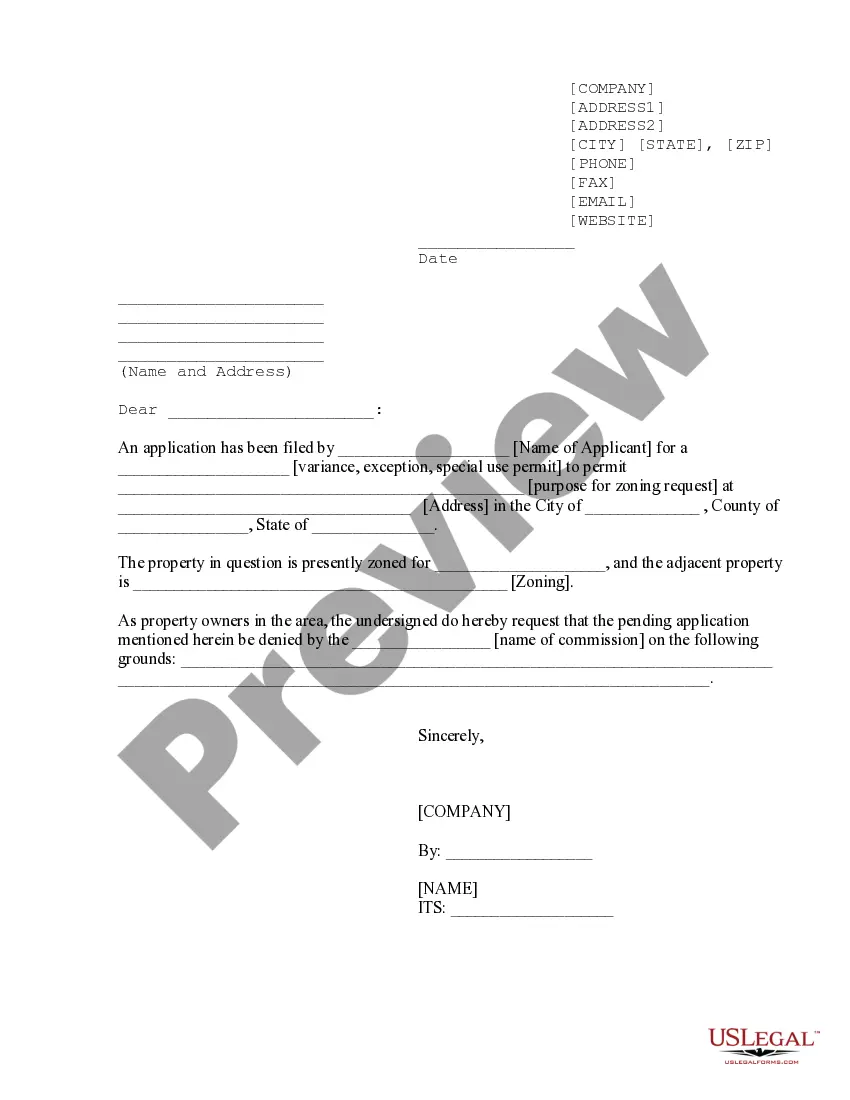
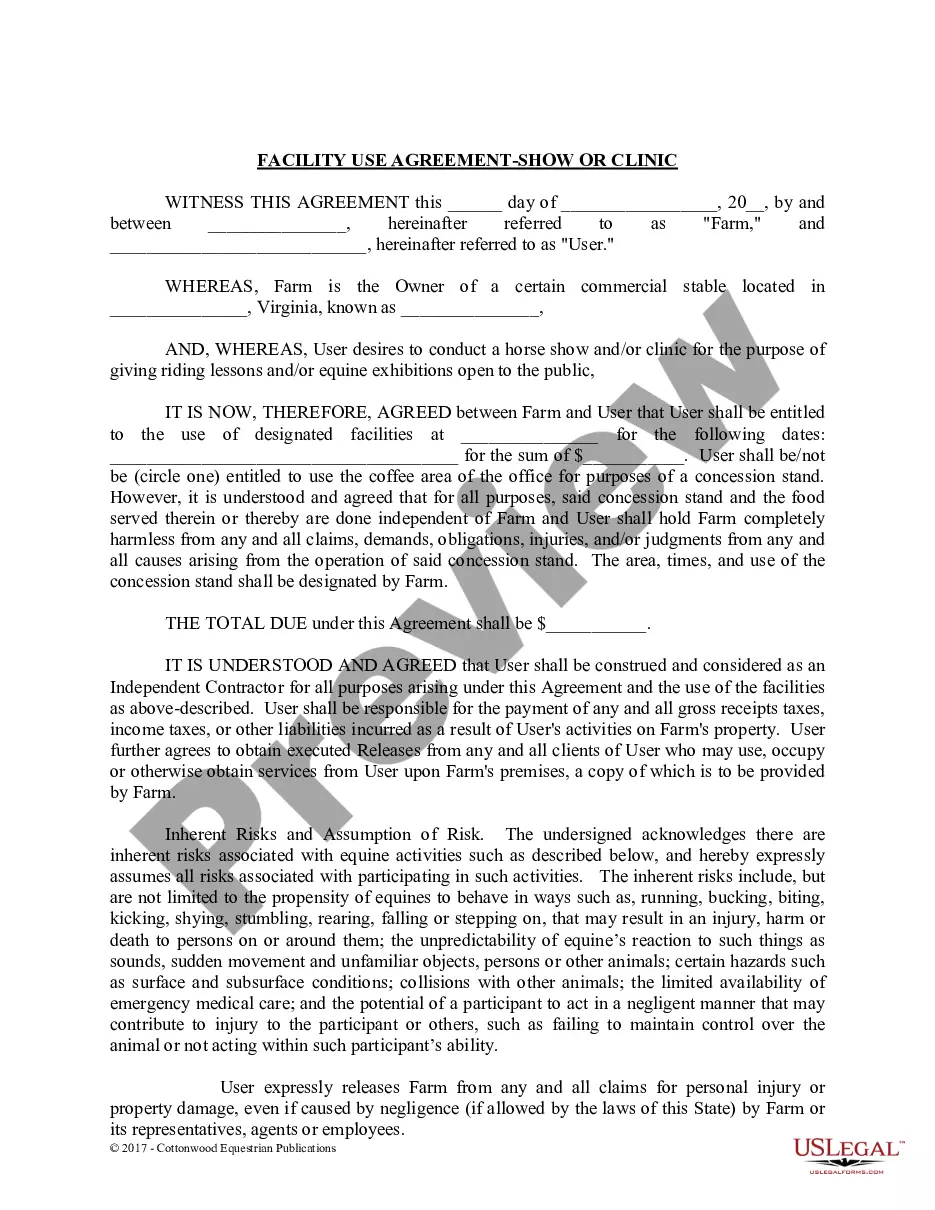
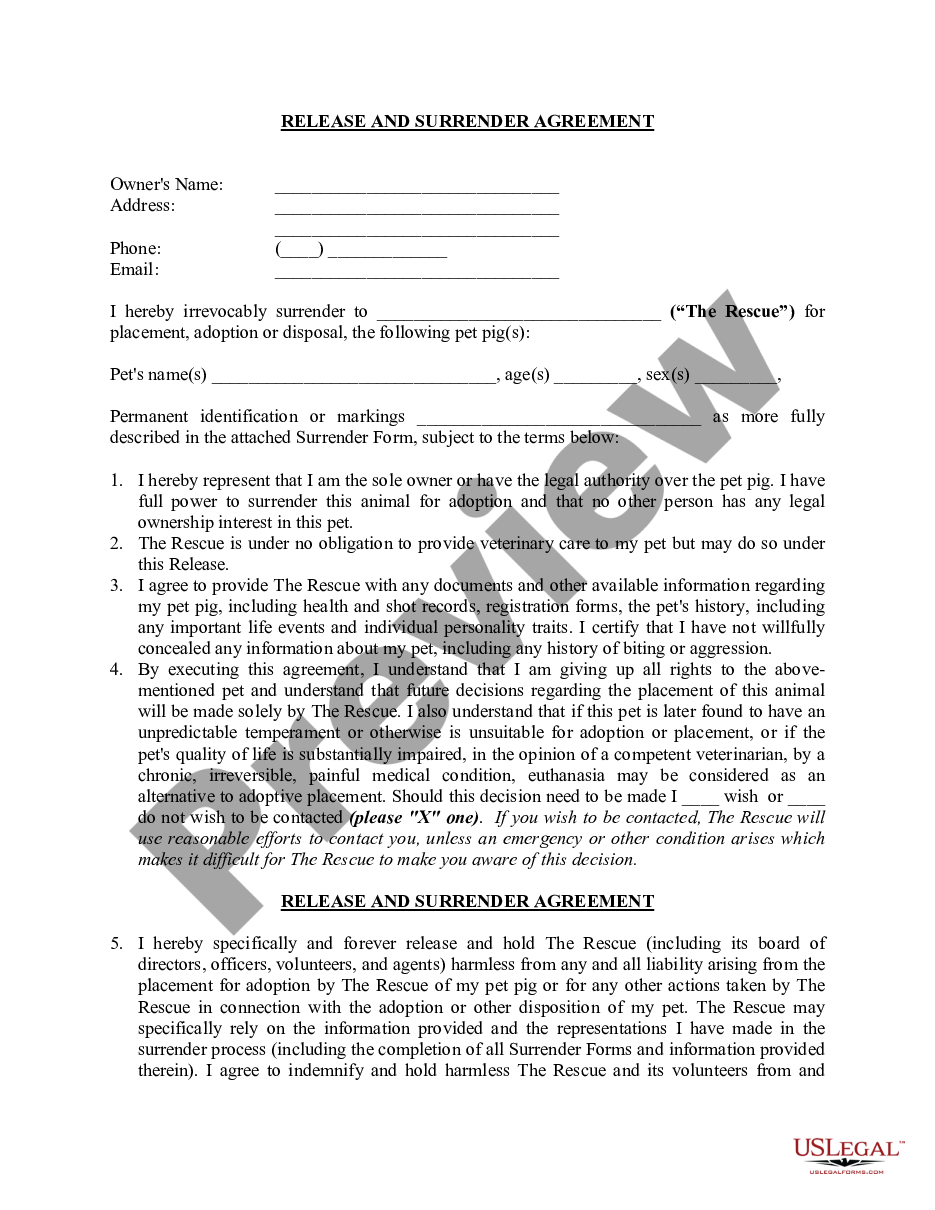
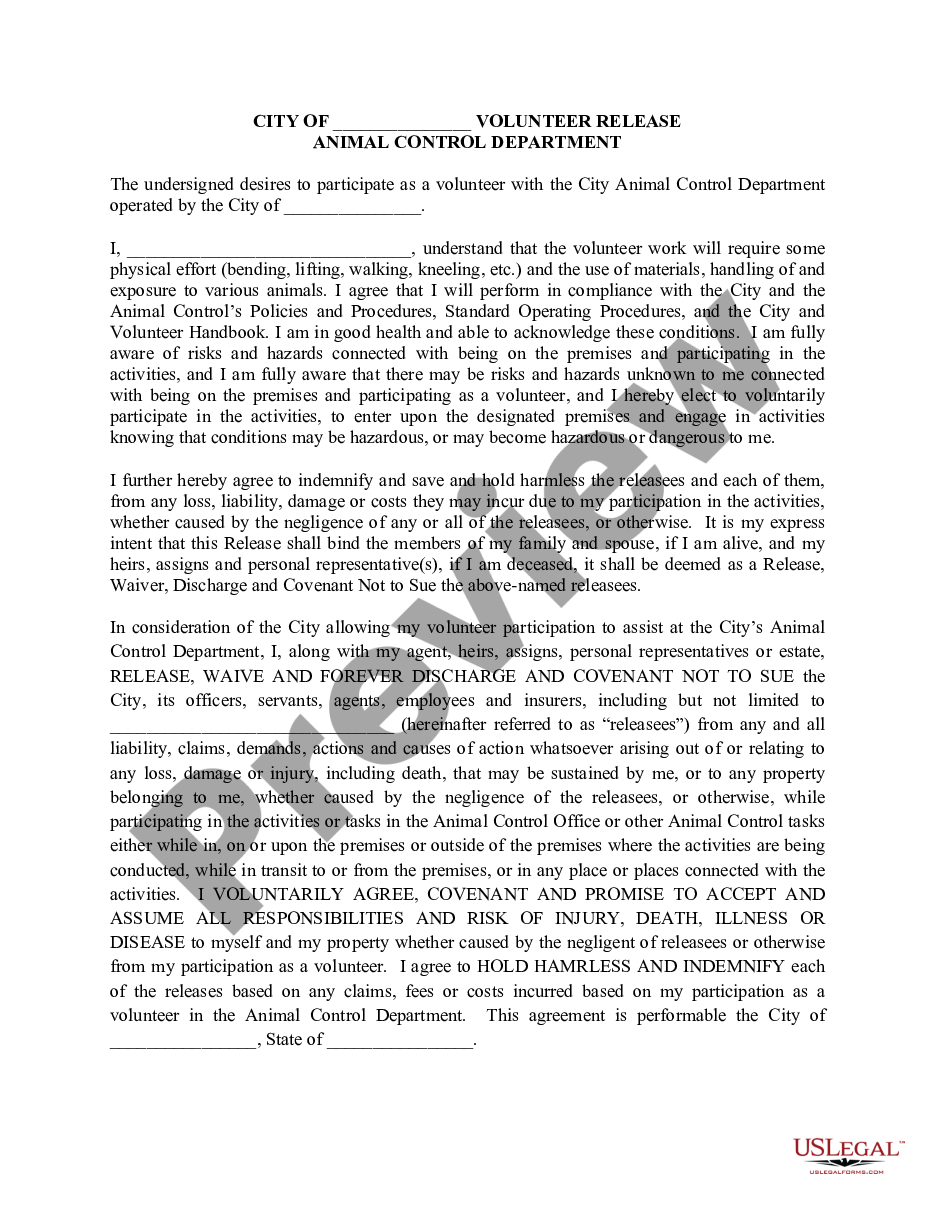
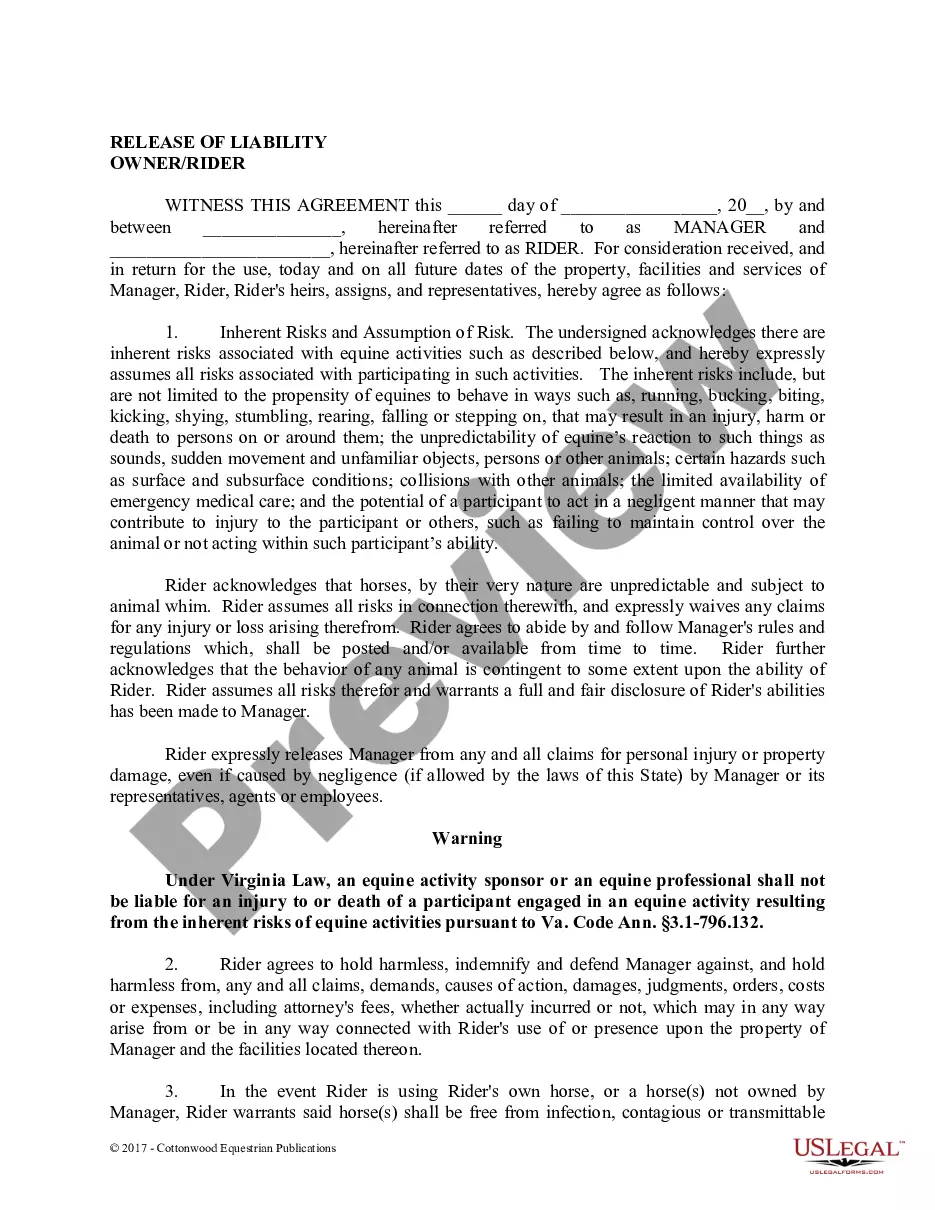
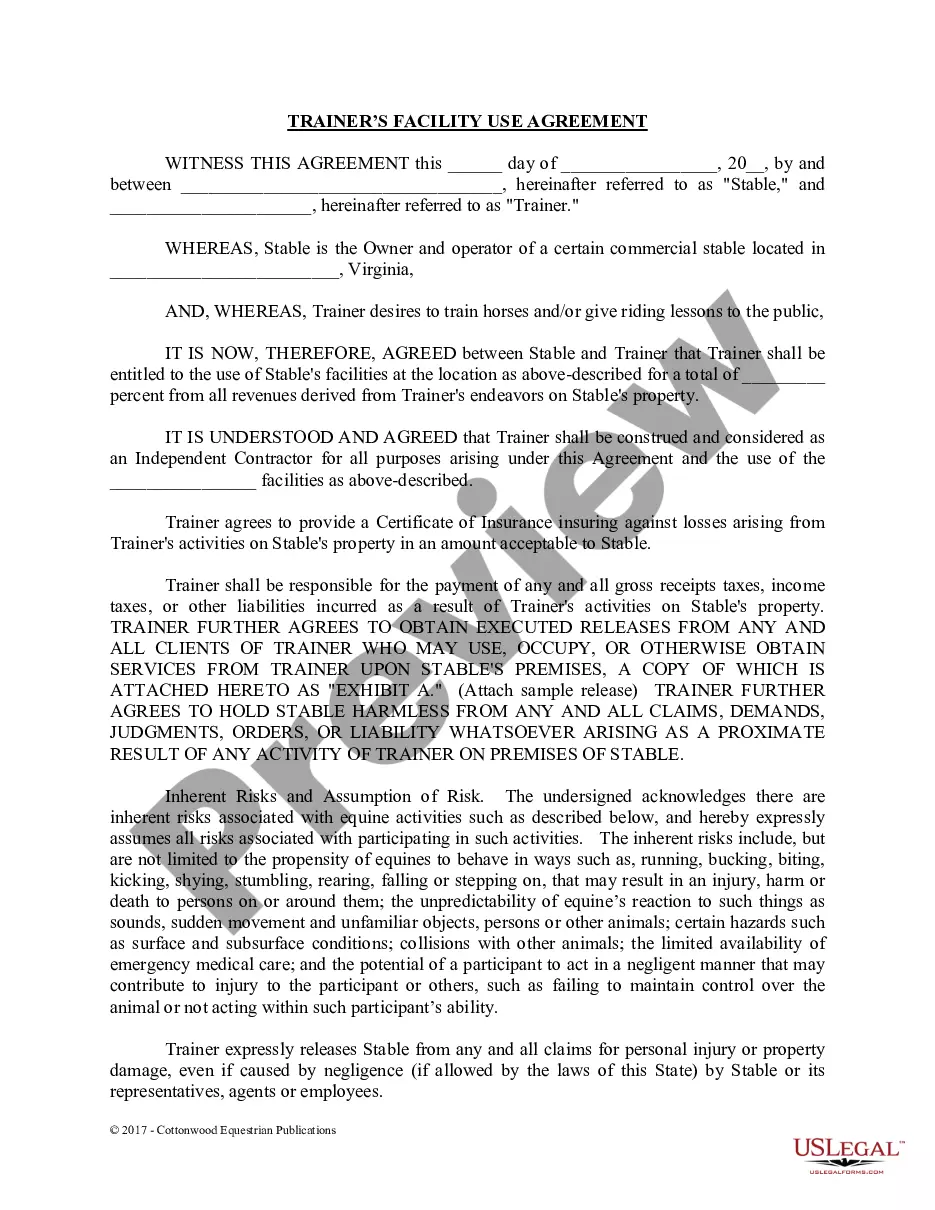
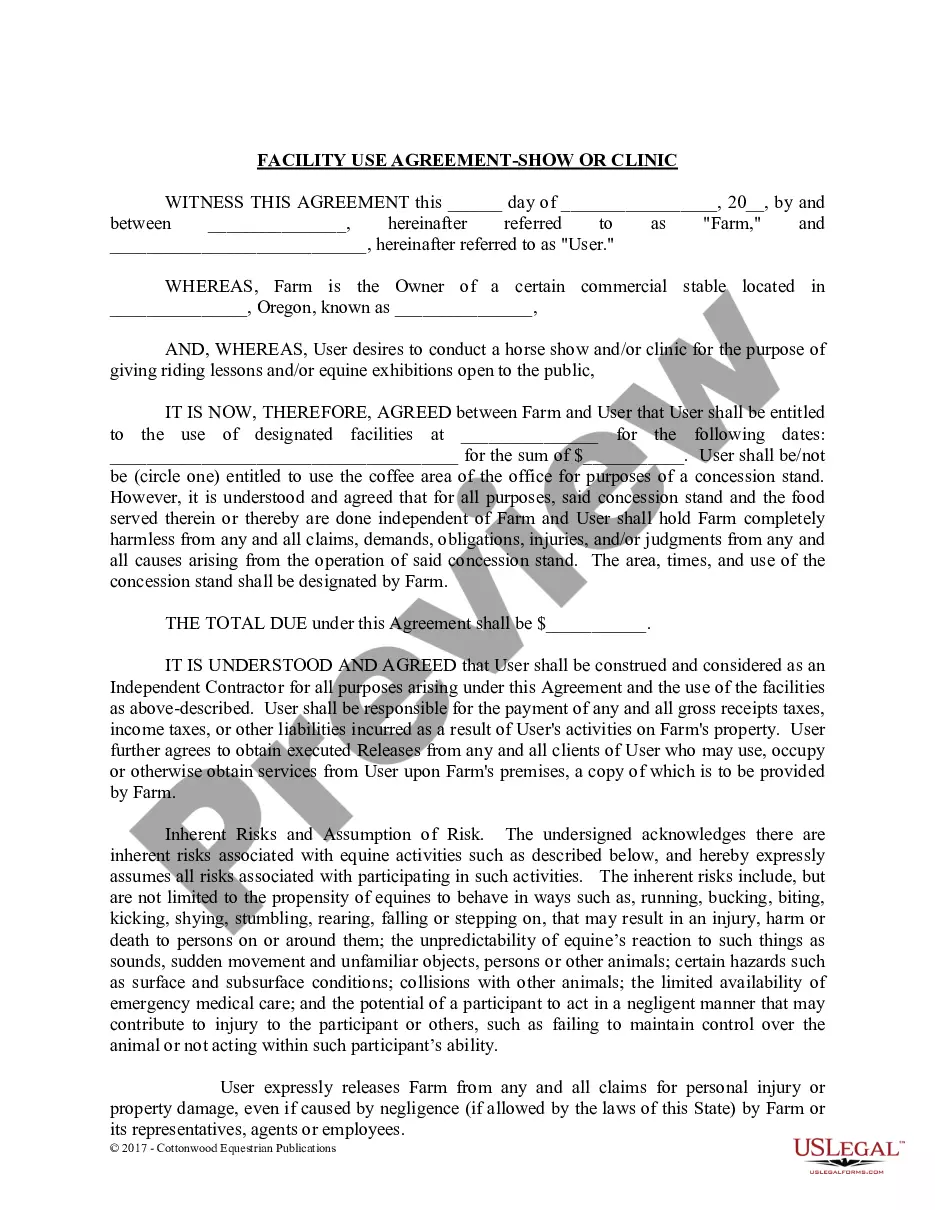
The Facility Release Agreement - Show Or Clinic is a legally binding document that outlines the terms under which an equestrian facility can be used for horse shows and clinics. This form serves to protect both the facility owner and the user by detailing responsibilities, liabilities, and inherent risks associated with equestrian activities. It is particularly important for mitigating legal risks, unlike other general facility use agreements, as it focuses specifically on horse-related events and activities.
What’s included in this form
- Identification of the parties involved: farm owner and user.
- Details of the facility use, including dates and fees.
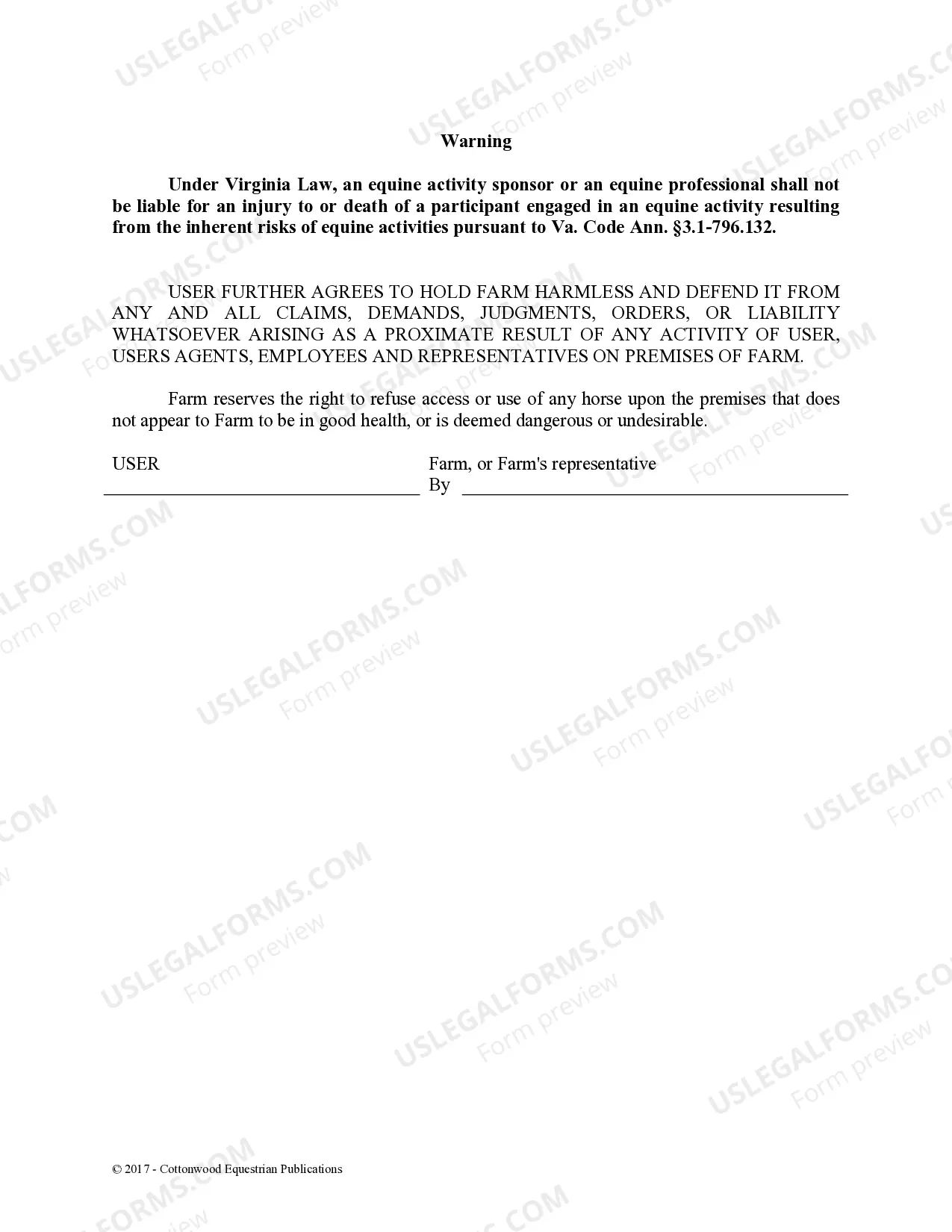
- Indemnification clauses that protect the farm from liability.
- Assumption of risk acknowledgment by the user.
- Release of liability for injuries or damages during equine activities.
- Provisions regarding the operation of concession stands, if applicable.

Common use cases
This form should be used when an individual or organization wants to conduct a horse show or clinic at a specific equestrian facility. It is essential for defining the legal relationship between the facility owner and the user, ensuring that both parties are aware of their rights and responsibilities. It is particularly useful in situations where there is a potential for risk or injury associated with equine activities.
Who this form is for
- Equestrian event organizers planning to hold shows or clinics.
- Facility owners providing space for equine events.
- Instructors offering riding lessons or equine exhibitions to the public.
- Individual riders participating in organized activities at such facilities.
Instructions for completing this form
- Identify the parties: Enter the names of the facility owner and the user.
- Specify the facility: Include the address and name of the equestrian facility.
- Detail the event: Enter the dates and specific activities planned.
- Enter the fee: Clearly state the total payment due for usage of the facility.
- Include concession details: Indicate if a concession stand will be used and any related terms.
- Obtain signatures: Have both parties sign and date the agreement for it to be effective.
Does this document require notarization?
This form does not typically require notarization unless specified by local law. However, having it notarized can provide an additional layer of authenticity and protection for both parties involved.
Get your form ready online
Our built-in tools help you complete, sign, share, and store your documents in one place.
Make edits, fill in missing information, and update formatting in US Legal Forms—just like you would in MS Word.
Download a copy, print it, send it by email, or mail it via USPS—whatever works best for your next step.
Sign and collect signatures with our SignNow integration. Send to multiple recipients, set reminders, and more. Go Premium to unlock E-Sign.
If this form requires notarization, complete it online through a secure video call—no need to meet a notary in person or wait for an appointment.
We protect your documents and personal data by following strict security and privacy standards.

Make edits, fill in missing information, and update formatting in US Legal Forms—just like you would in MS Word.

Download a copy, print it, send it by email, or mail it via USPS—whatever works best for your next step.

Sign and collect signatures with our SignNow integration. Send to multiple recipients, set reminders, and more. Go Premium to unlock E-Sign.

If this form requires notarization, complete it online through a secure video call—no need to meet a notary in person or wait for an appointment.

We protect your documents and personal data by following strict security and privacy standards.
Avoid these common issues
- Failing to clearly identify all parties involved.
- Omitting key details about the facility use dates and activities.
- Not specifying the fee or payment terms adequately.
- Neglecting to include necessary liability waivers.
- Forgetting to obtain signatures from both parties.
Advantages of online completion
- Convenience of instant downloads allows for quick access and use.
- Editability enables customization to match specific needs and circumstances.
- Reliability, as the forms are drafted by licensed attorneys, ensuring legal compliance.
Looking for another form?

Form popularity
FAQ
A traditionally constructed, wooden, barn will typically cost approx. $45 per square foot to construct. In contrast, prefab metal barns range in price between $7 and $25 per square foot. The savings available with prefab barns are immediately apparent.
The cost to build a riding arena averages $150,000, with a typical range of $40,000 to $500,000. Prefab kits made of steel or fabric start at $5 per square foot. Custom wood construction runs up to $50 per square foot. A riding arena offers a place to exercise and train your horses.
The Indoor Arena The costs can also vary greatly depending on how much land preparation needs to be done in order for the arena to be built. Going through multiple resources and receiving quotes from different builders, we have seen an average of: $15 to $30 per square foot to build your indoor arena.
Good Used Saddle $175-350. Leather Bridle (headstall, bit and reins) moderately priced $100. Saddle pads $60. Breast collar $25-75.
BarnPros.com offers pre-fabricated kits1 (just the materials) for $28,000-$52,000 for a 4-stall horse barn, and $42,000-$82,000 for an 8-stall horse barn.
The Indoor Arena The costs can also vary greatly depending on how much land preparation needs to be done in order for the arena to be built. Going through multiple resources and receiving quotes from different builders, we have seen an average of: $15 to $30 per square foot to build your indoor arena.
Planning permission is required for any permanent equestrian construction including stables, a permanent field shelter, or an arena, and it may even be required to simply keep horses/ponies in a field.
Numbers Game. The reality is that boarding facilities operate on slim profit margins. By the time costs are considered for hay, grain, bedding, labor for feeding, cleaning stalls, doing turnout, etc., the board fees typically do not leave a lot left over, Sherrick-von Schiller said.Labor costs are also significant.
Scope out legalities. Consider zoning, business permits and your state's lien laws. Evaluate your facilities. Investigate the cost of liability insurance. Research your market. Crunch the numbers. Draw up a legal boarding contract.