Utah Identity Theft Prevention Package
About this form package
The Utah Identity Theft Prevention Package is a comprehensive collection of documents designed to help individuals protect their identifying information. This package differs from other legal form packages by focusing specifically on identity theft prevention, guiding you through effective strategies to safeguard your credit, finances, and personal information. Included forms assist in notifying creditors, reporting suspicious activity, and removing your name from marketing lists, ultimately reducing your risk of becoming a victim of identity theft.
Forms included in this package
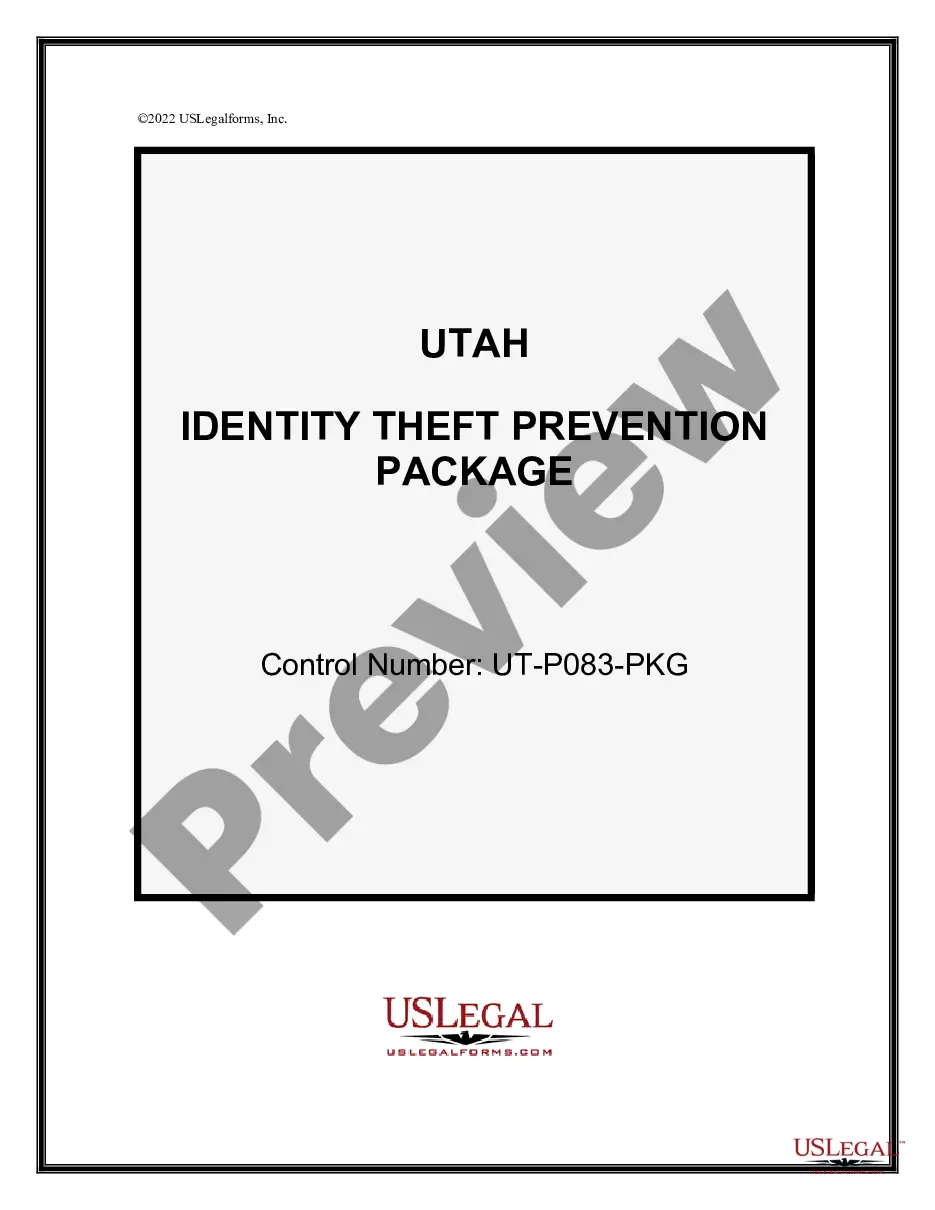
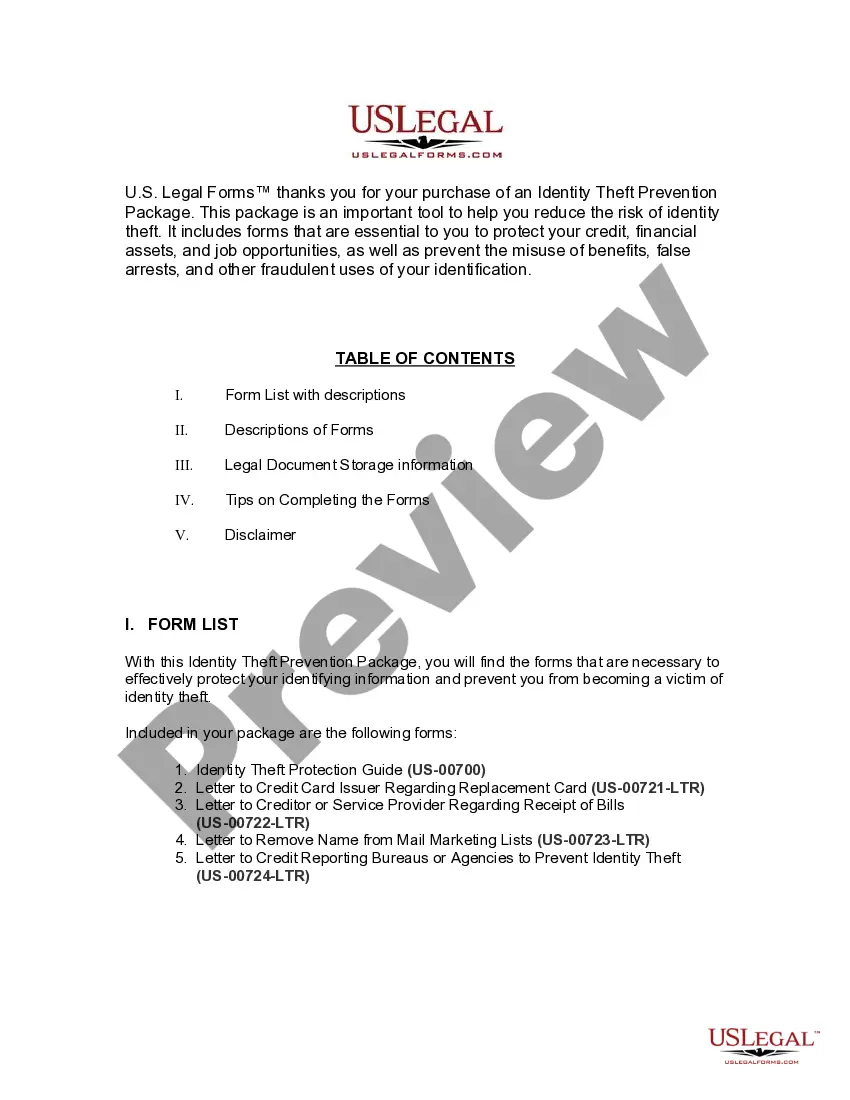
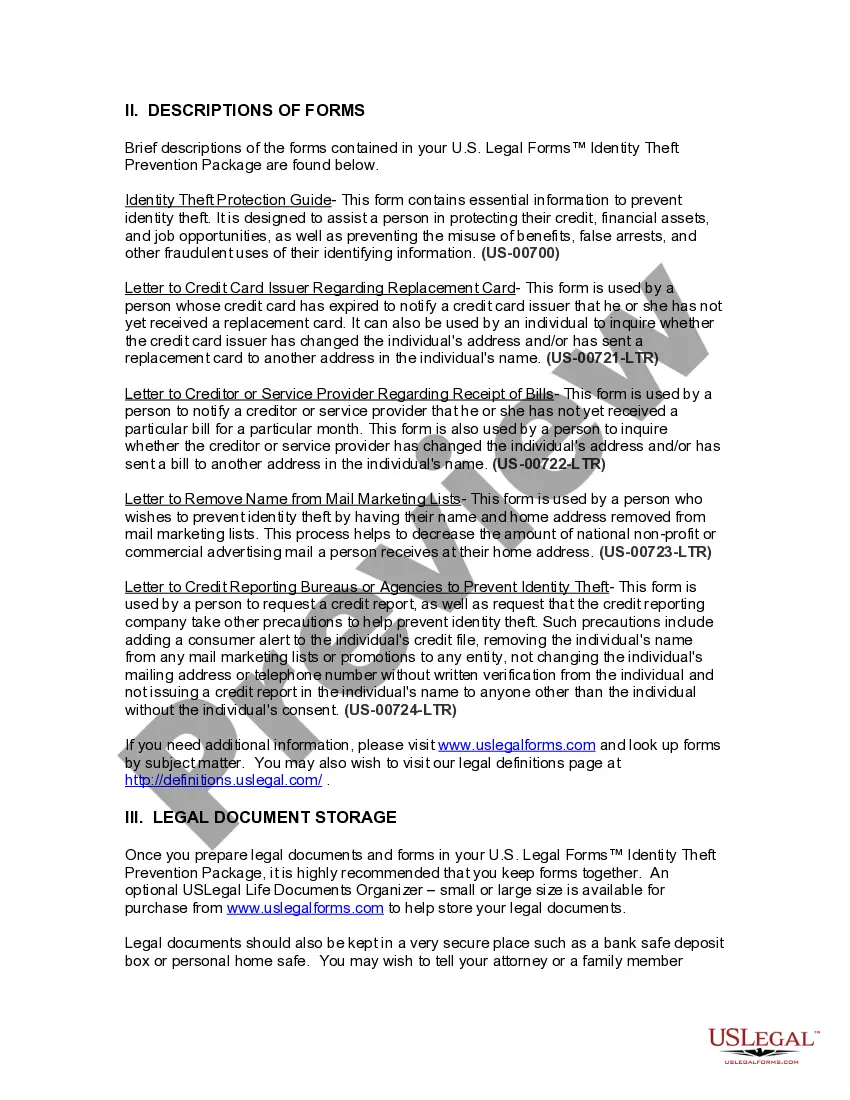
- Identity Theft Protection Guide
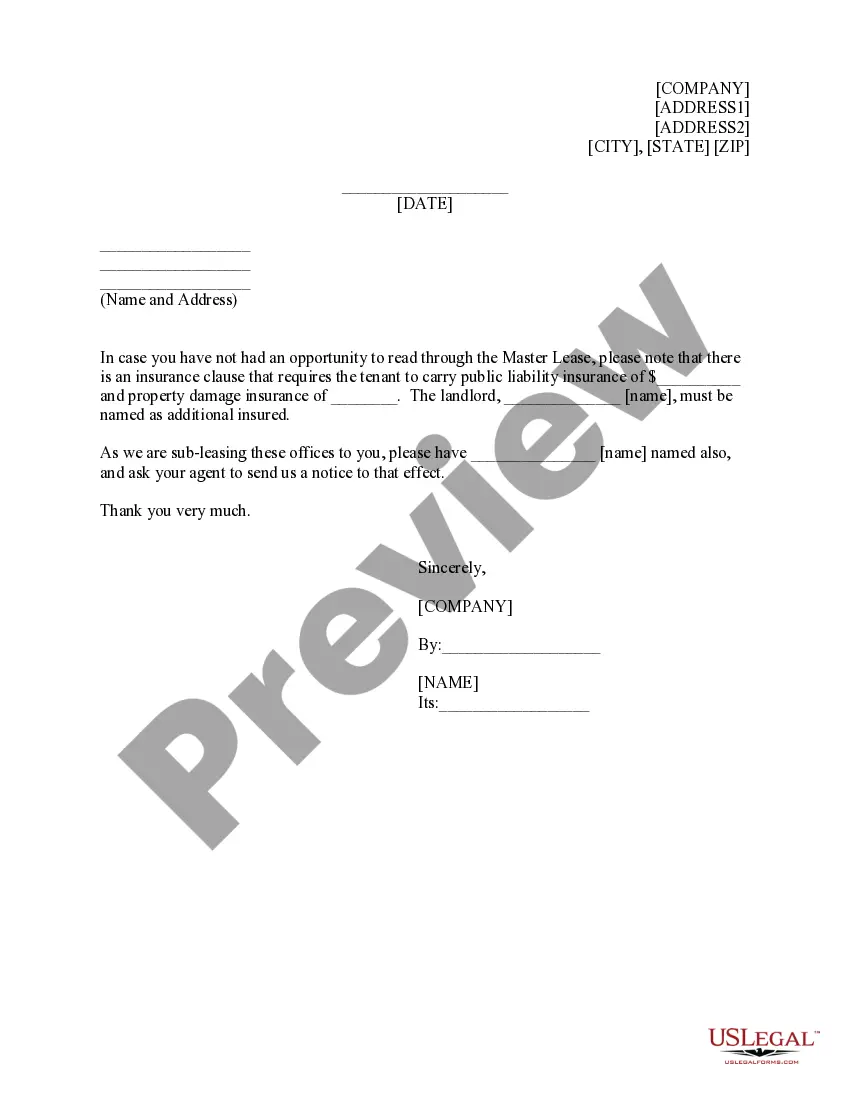
- Sample Letter to Credit Card Issuer Regarding Replacement Card
- Sample Letter to Creditor or Service Provider Regarding Receipt of Bills
- Sample Letter to Remove Name from Mail Marketing Lists
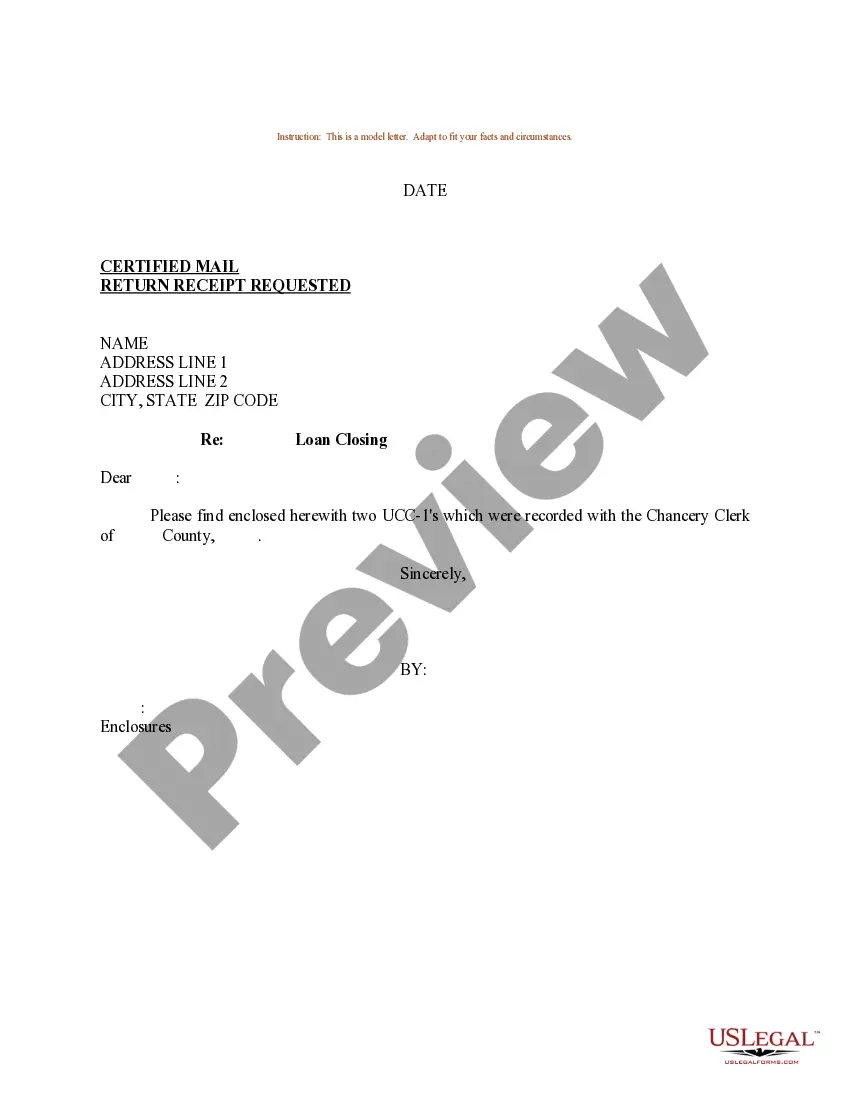
- Sample Letter to Credit Reporting Bureau or Agency to Help Prevent Identity Theft
Common use cases
This form package is essential in several scenarios, such as:
- When you suspect your personal information has been compromised.
- After a lost or stolen credit card, to request a replacement and secure your accounts.
- When you start receiving bills for services or products you didn't order, indicating potential fraud.
- If you want to decrease unsolicited mail that can lead to identity theft.
- If you want to place alerts with credit reporting agencies to monitor your financial accounts actively.
Who needs this form package
- Individuals concerned about identity theft due to financial fraud.
- Anyone who has experienced a lost or stolen identification or credit card.
- People who wish to proactively manage their personal information and safeguard against identity theft.
- Users who want to reduce junk mail and solicitations that could lead to identity theft.
- Victims of identity theft seeking to reclaim their good name and financial standing.
Completing these forms step by step
- Review the included forms carefully to understand their purposes and requirements.
- Identify any pertinent parties involved, such as creditors or service providers.
- Fill in all required fields accurately, ensuring all information is current and correct.
- Adjust the documents as needed for your specific situation or circumstances.
- Keep copies of all forms for your records.
- Send the completed forms via the recommended method, such as certified mail for tracking.
Do documents in this package require notarization?
Most forms in this package do not require notarization. However, local laws or specific situations may demand it. Our online notarization service, powered by Notarize, lets you complete the process through a verified video call, available anytime.
Get your form ready online
Our built-in tools help you complete, sign, share, and store your documents in one place.
Make edits, fill in missing information, and update formatting in US Legal Forms—just like you would in MS Word.
Download a copy, print it, send it by email, or mail it via USPS—whatever works best for your next step.
Sign and collect signatures with our SignNow integration. Send to multiple recipients, set reminders, and more. Go Premium to unlock E-Sign.
If this form requires notarization, complete it online through a secure video call—no need to meet a notary in person or wait for an appointment.
We protect your documents and personal data by following strict security and privacy standards.

Make edits, fill in missing information, and update formatting in US Legal Forms—just like you would in MS Word.

Download a copy, print it, send it by email, or mail it via USPS—whatever works best for your next step.

Sign and collect signatures with our SignNow integration. Send to multiple recipients, set reminders, and more. Go Premium to unlock E-Sign.

If this form requires notarization, complete it online through a secure video call—no need to meet a notary in person or wait for an appointment.

We protect your documents and personal data by following strict security and privacy standards.
Common mistakes
- Failing to provide complete and accurate information in the forms.
- Not keeping copies of the completed forms for personal records.
- Overlooking the importance of verifying contact information before sending letters.
- Neglecting to follow up with recipients regarding the status of your requests.
- Using outdated or incorrect forms that do not meet current legal standards.
Advantages of online completion
- Convenient access to essential forms that can be downloaded at any time.
- Editability of forms, allowing for customization to fit your specific needs.
- Reliability from documents created by licensed attorneys, ensuring compliance with applicable laws.
- Time-saving, as you can complete these forms at your own pace without the need for in-person consultations.
Looking for another form?


Form popularity
FAQ
Aggravated identity theft is punishable by a mandatory minimum sentence of imprisonment for two years or by imprisonment for five years if it relates to a terrorism offense. At least thus far, the government has rarely prosecuted the five-year terrorism form of the offense.
Password-Protect Your Devices. Use a Password Manager. Watch Out for Phishing Attempts. Never Give Out Personal Information Over the Phone. Regularly Check Your Credit Reports. Protect Your Personal Documents. Limit Your Exposure.
Go to your local police office with: A copy of your FTC Identity Theft Report. Tell the police someone stole your identity and you need to file a report. Ask for a copy of the police report. You may need this to complete other steps.
Report the fraud Contact the organisation or agency that issued your identity document and your financial institution. and tell them what happened. Report cybercrime securely to the Australian Cyber Security Centre at ReportCyber.
You may be able to have your identity theft charges dropped if: You didn't obtain use a person's information unlawfully If you did not obtain or use someone else's personal information unlawfully, you are not guilty of identity theft.
Under California law, you can report identity theft to your local police department. Ask the police to issue a police report of identity theft. Give the police as much information on the theft as possible. One way to do this is to provide copies of your credit reports showing the items related to identity theft.
The answer is Yes. If you have some evidence that the person who is living with you stole your property, you can press a charge and sue him, because courts need evidence so if you are accusing someone make sure you have evidence which you have to prove before the courts. So don,t accuse unless you have solid evidence.
Tip #1: Create strong passwords. Tip #2: Be smart about updating passwords. Tip #3: Check your credit report. Tip #4: Review your accounts. Tip #5: Don't over share on social media. Tip #6: Shield your computer.
Password-Protect Your Devices. Use a Password Manager. Watch Out for Phishing Attempts. Never Give Out Personal Information Over the Phone. Regularly Check Your Credit Reports. Protect Your Personal Documents. Limit Your Exposure.