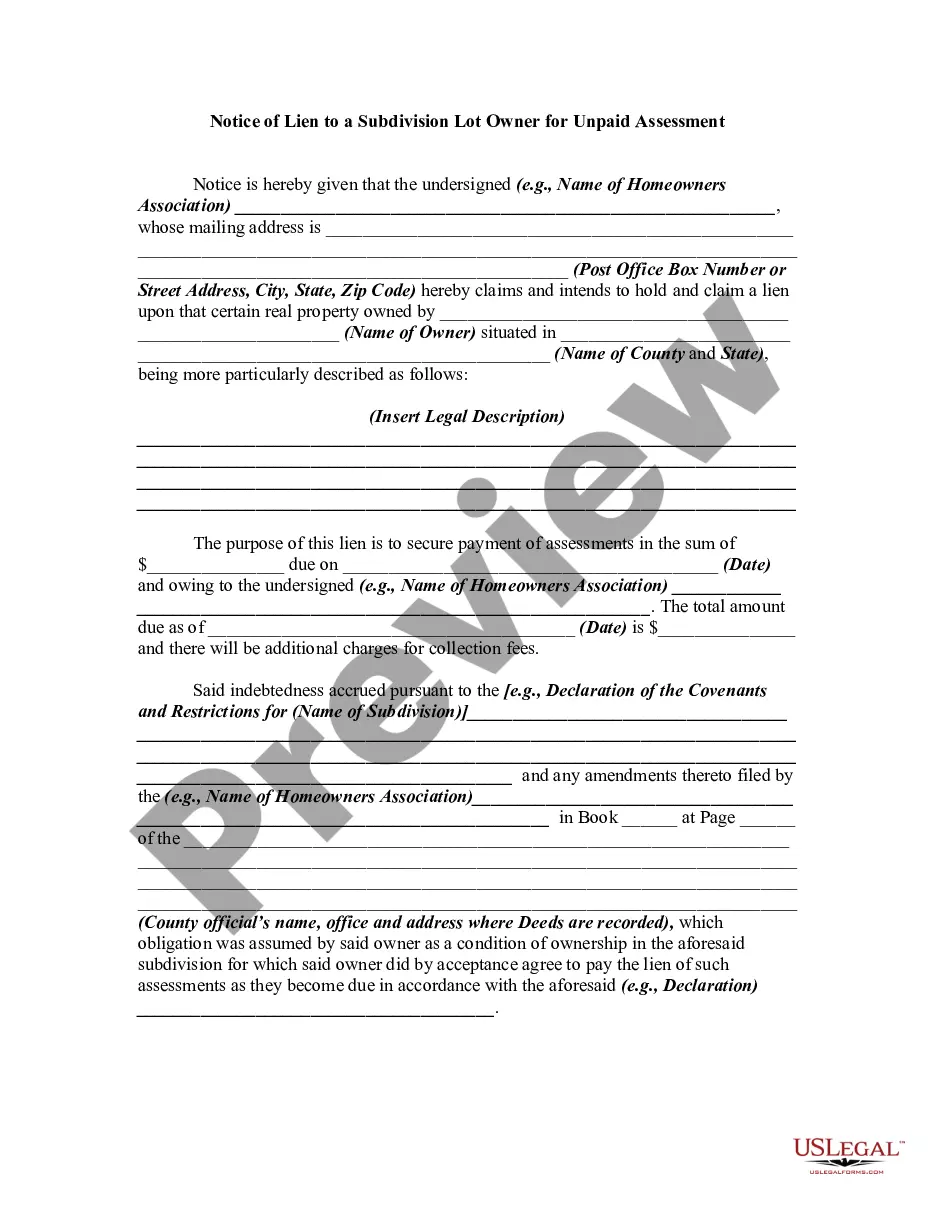
Utah Second Restated and Amended EasementAgreement
About this form
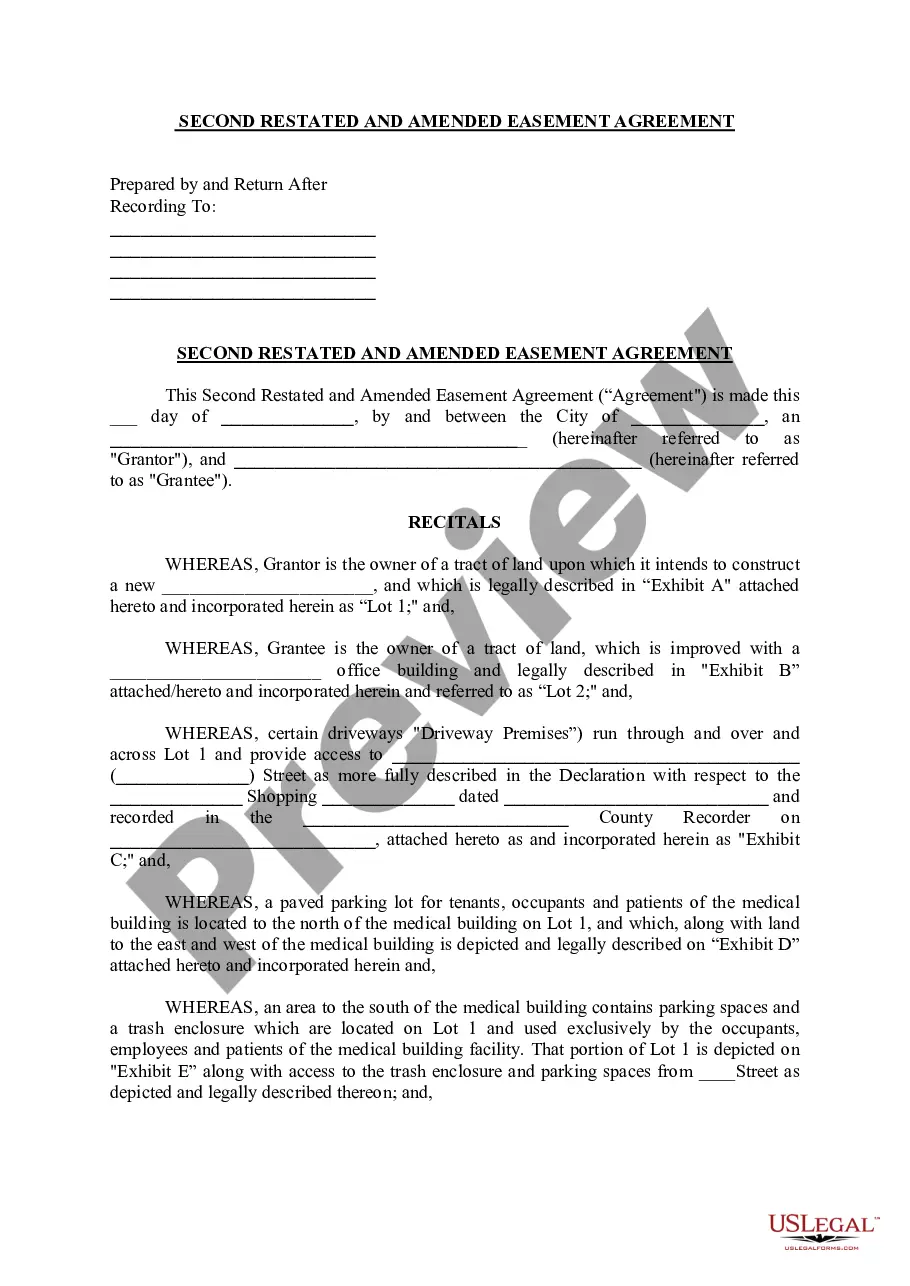
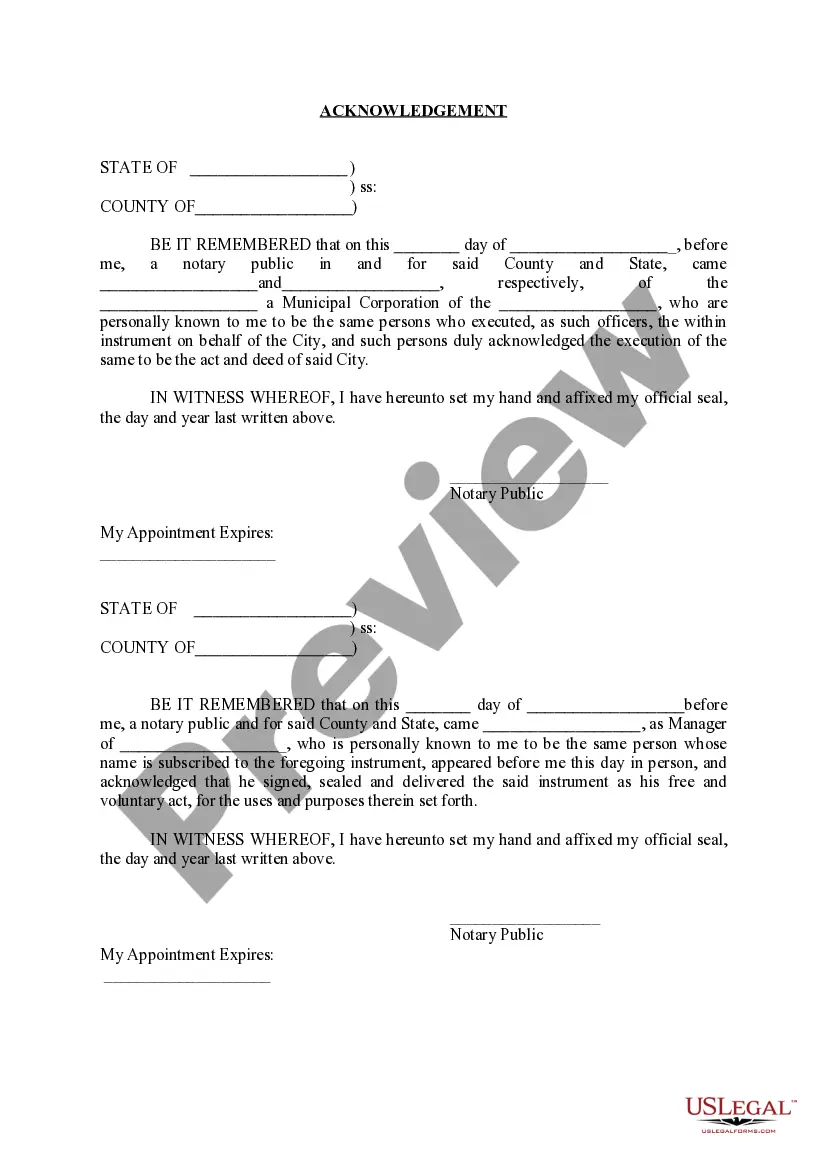
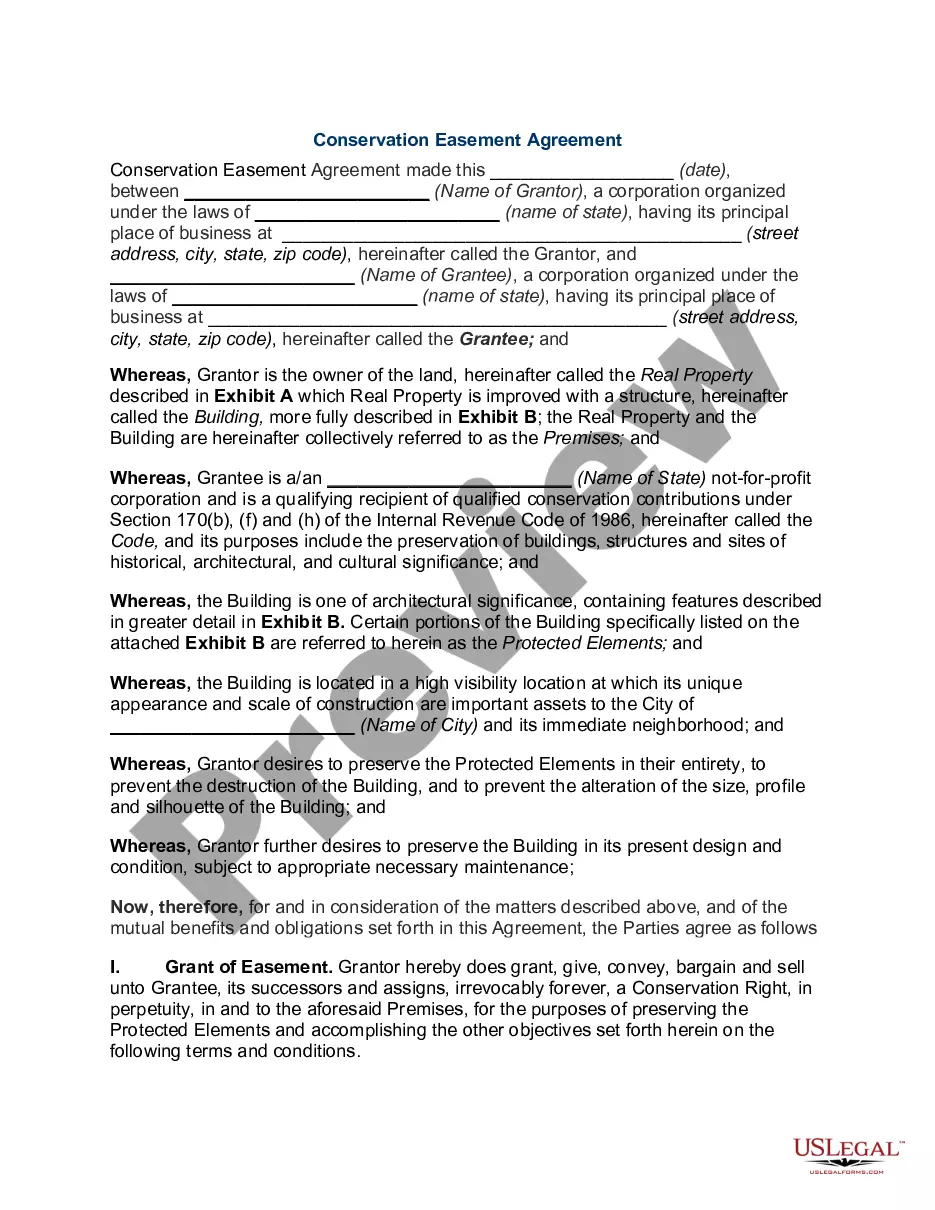
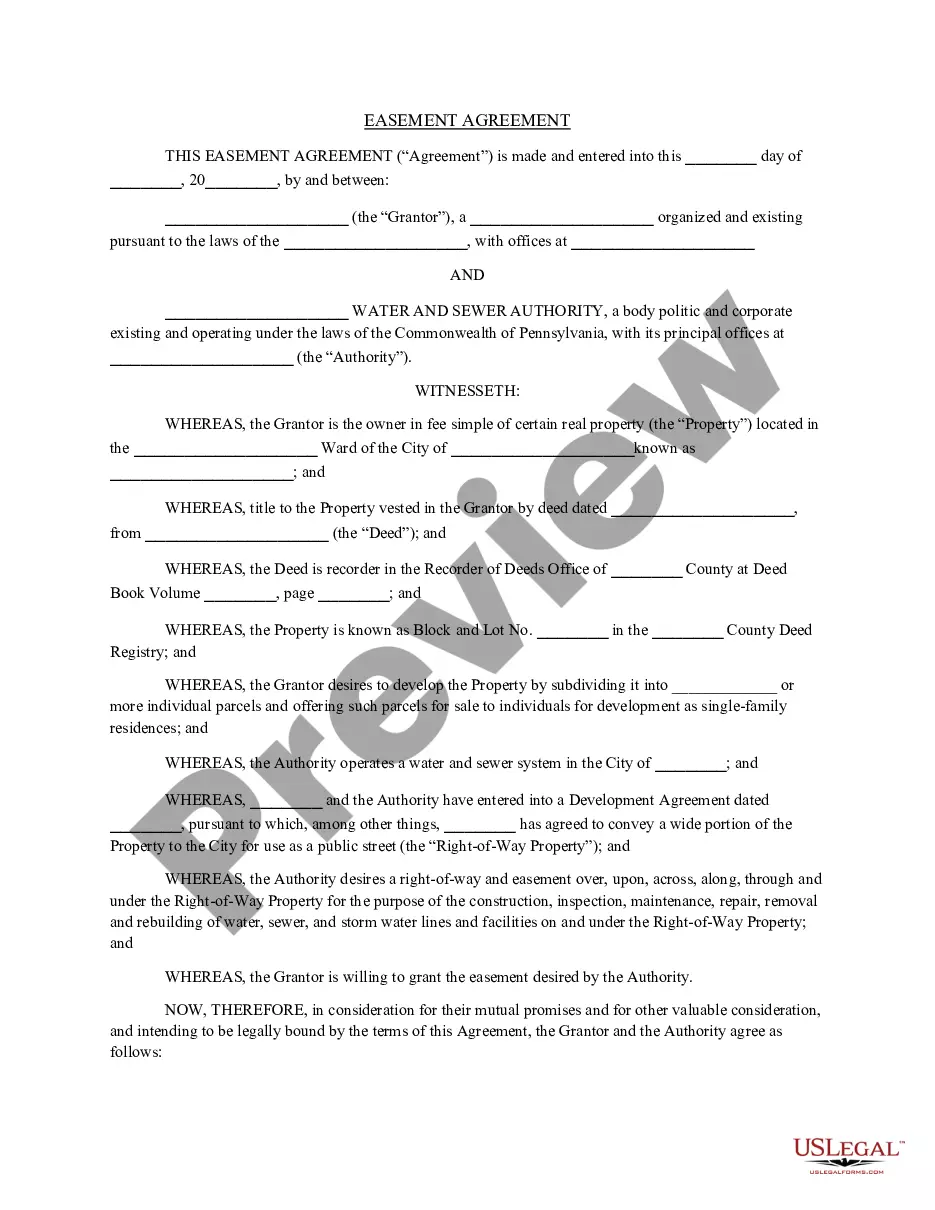
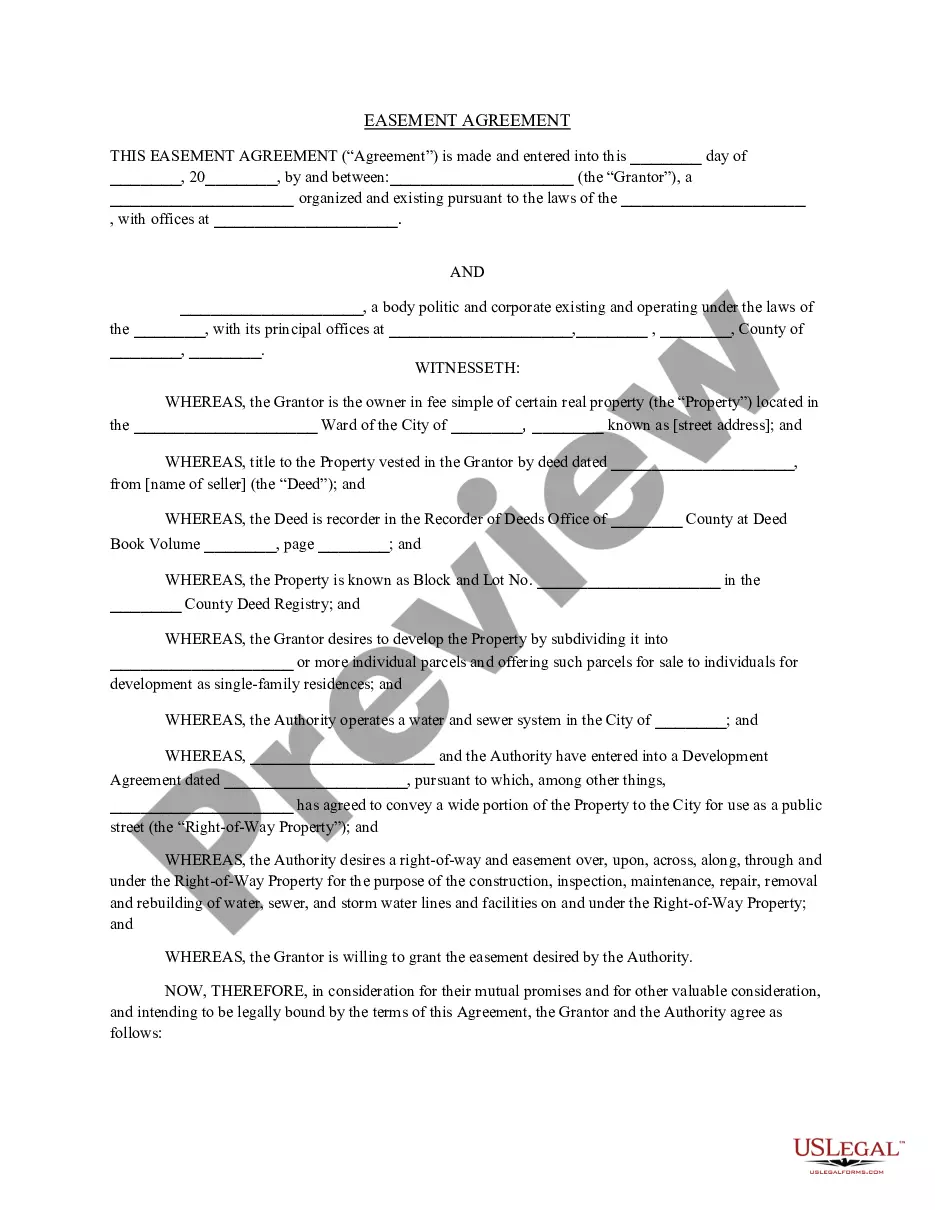
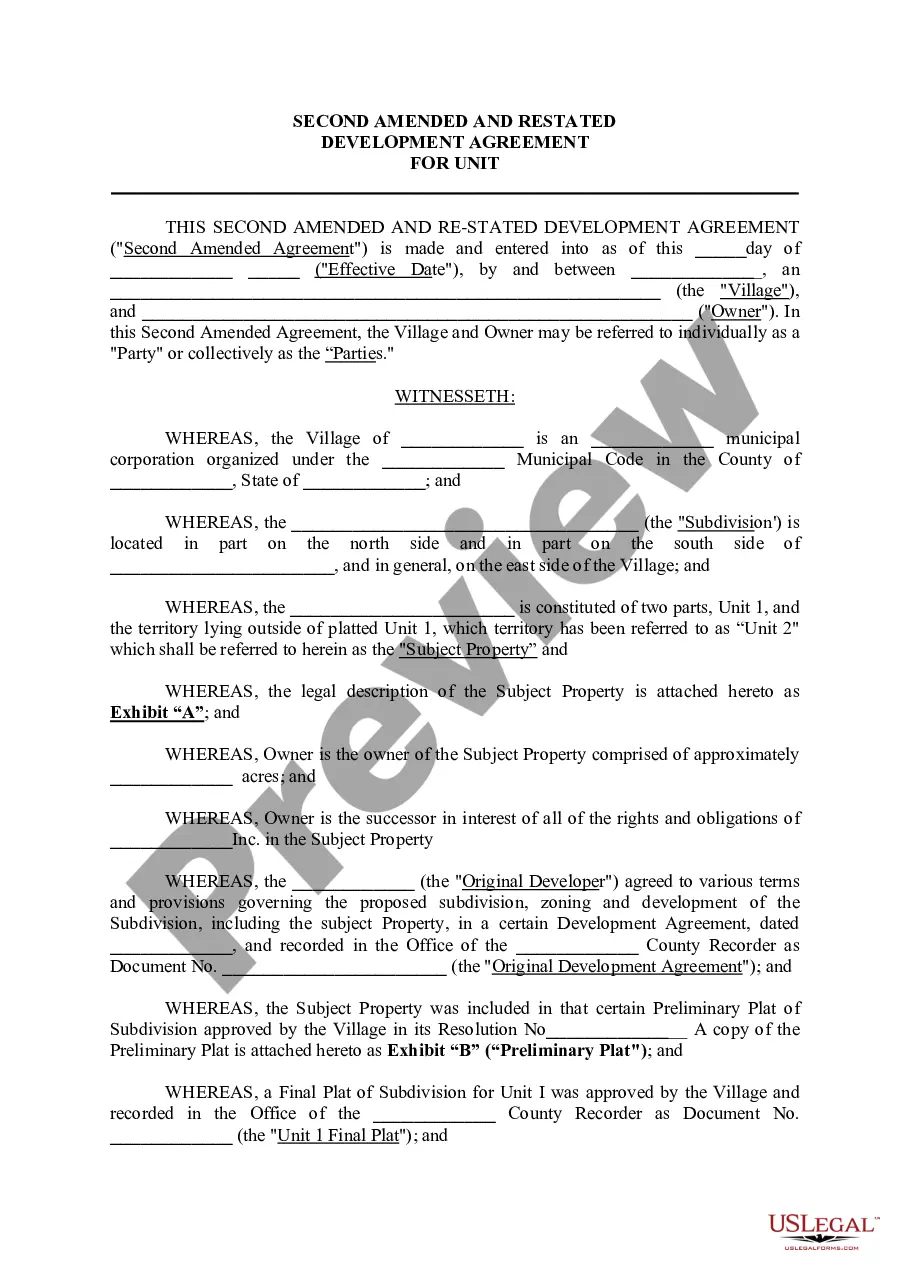
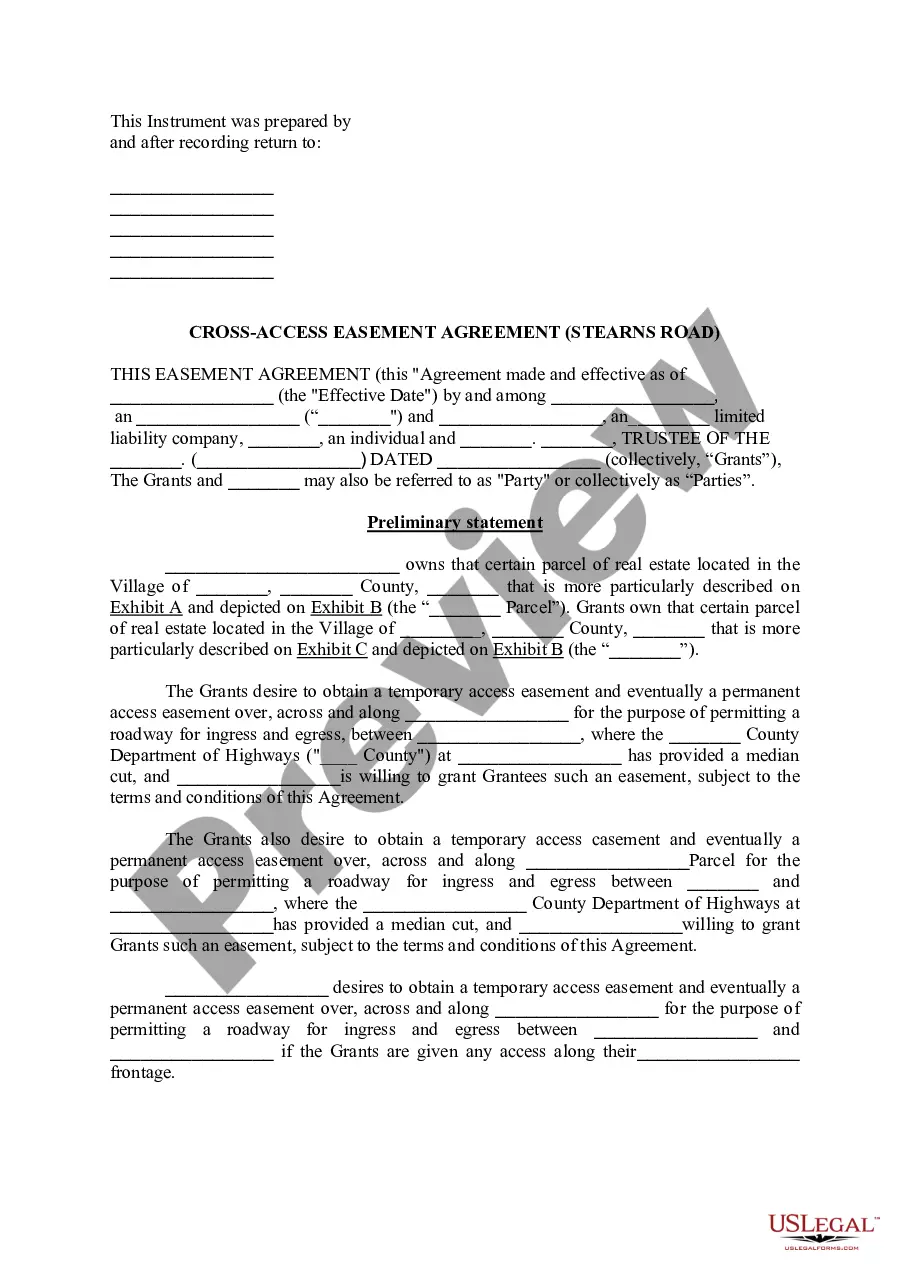
The Second Restated and Amended Easement Agreement is a legal document used to adjust the terms of an existing easement. An easement allows one party to access or use another party's property under specific conditions. This form is essential for parties looking to modify previously established easement terms, ensuring that both the Grantor and Grantee maintain an updated and legally binding agreement that reflects their current intentions and property configurations.
Key components of this form
- Identification of the Grantor and Grantee, including their respective properties.
- Recitals outlining the purpose of the easement and any historical context.
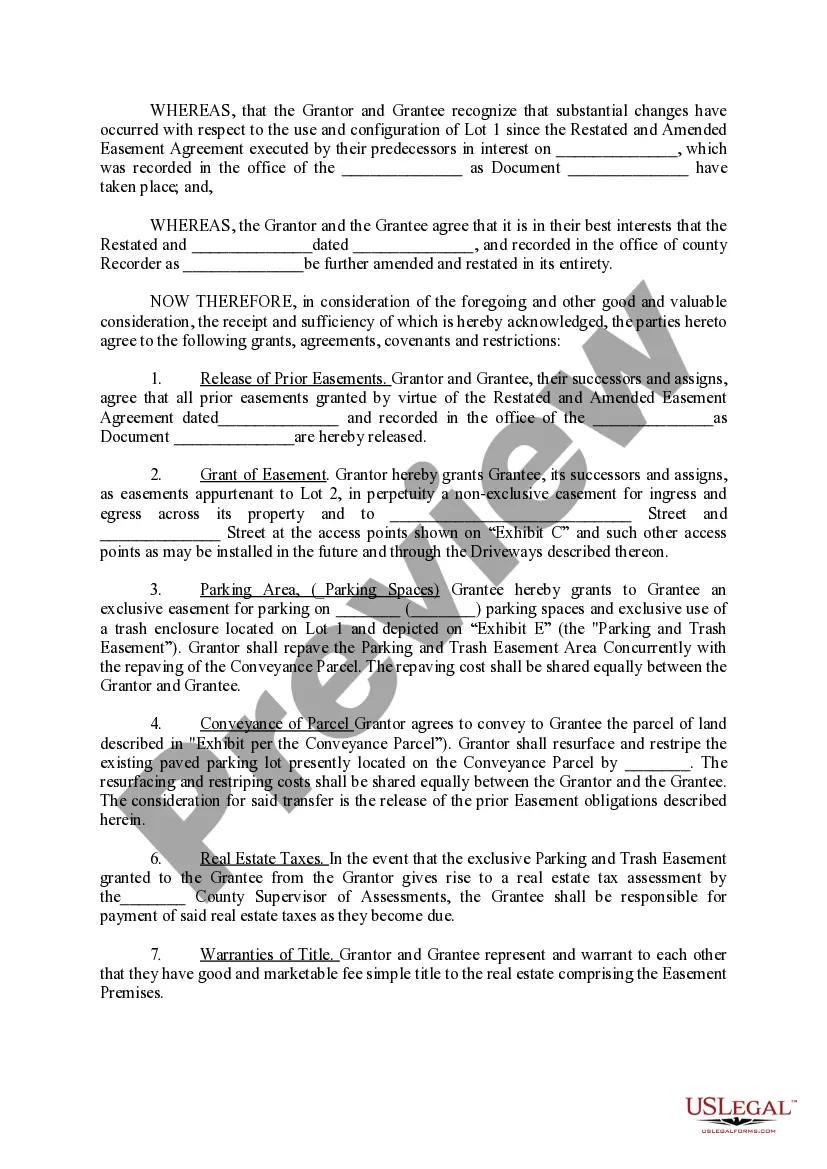
- Terms detailing the release of prior easements and the granting of new easements.
- Provisions for property maintenance and shared responsibilities for costs.
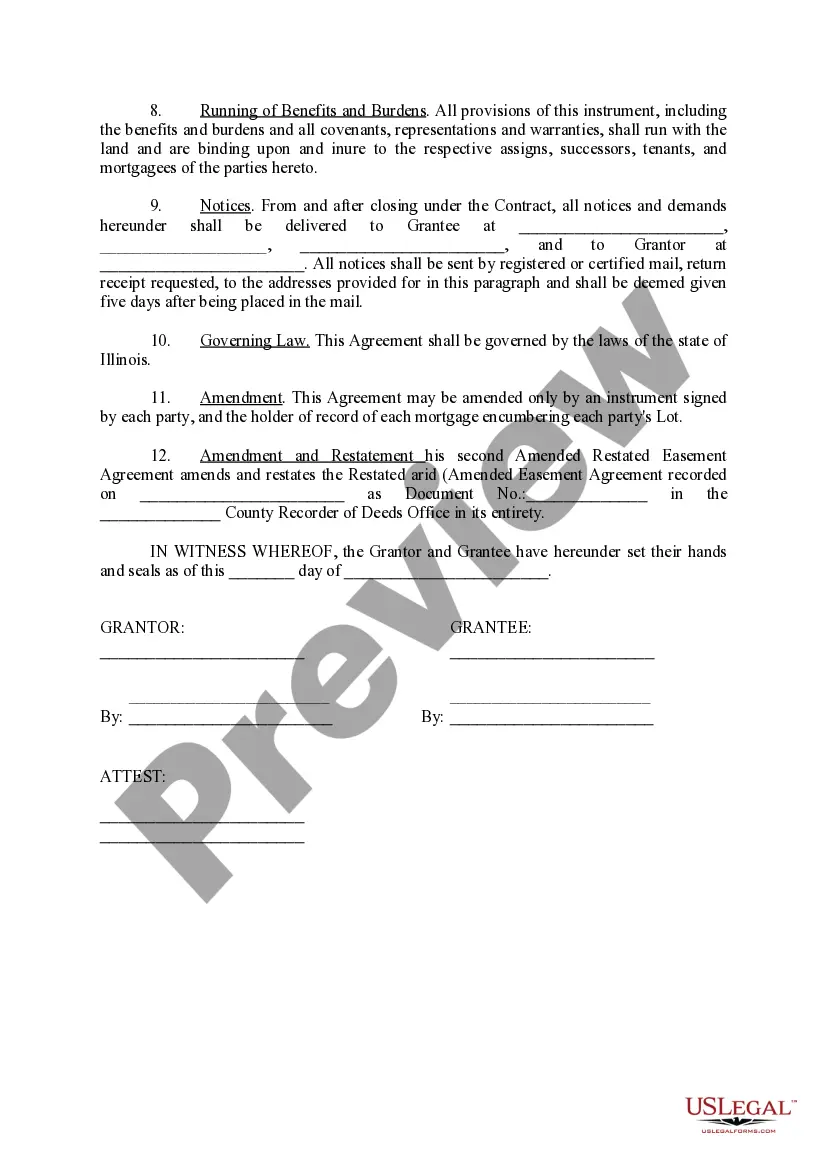
- Requirements for notices and amendments to the agreement.
- Legal governing laws and requirements for notarization and signatures.
When to use this form
This form is applicable when existing easement agreements need modifications, such as when property configurations have changed or when new access points are required. It is also useful for parties entering into a revised agreement for ingress and egress or when updating parking arrangements related to properties involved in shared use.
Intended users of this form
This form is intended for:
- Property owners looking to amend an easement agreement.
- Businesses operating near easement rights that require adjustments.
- Municipal entities managing easements for public access.
- Lawyers or legal representatives facilitating property agreements.
Instructions for completing this form
- Identify the parties involved, including their names and property descriptions.
- Clearly state the reasons for amending the previous easement agreement.
- Specify the new easement terms regarding access and usage of the properties.
- Enter dates and details for shared responsibilities, such as maintenance costs.
- Sign the agreement in the presence of a notary public, if required.
Is notarization required?
Yes, this form must be notarized to be legally valid. Notarization adds a layer of authenticity and can be crucial for the enforceability of the document. US Legal Forms provides integrated online notarization, allowing you to complete the process via secure video call, available 24/7, ensuring convenience without the need to travel.
Get your form ready online
Our built-in tools help you complete, sign, share, and store your documents in one place.
Make edits, fill in missing information, and update formatting in US Legal Forms—just like you would in MS Word.
Download a copy, print it, send it by email, or mail it via USPS—whatever works best for your next step.
Sign and collect signatures with our SignNow integration. Send to multiple recipients, set reminders, and more. Go Premium to unlock E-Sign.
If this form requires notarization, complete it online through a secure video call—no need to meet a notary in person or wait for an appointment.
We protect your documents and personal data by following strict security and privacy standards.

Make edits, fill in missing information, and update formatting in US Legal Forms—just like you would in MS Word.

Download a copy, print it, send it by email, or mail it via USPS—whatever works best for your next step.

Sign and collect signatures with our SignNow integration. Send to multiple recipients, set reminders, and more. Go Premium to unlock E-Sign.

If this form requires notarization, complete it online through a secure video call—no need to meet a notary in person or wait for an appointment.

We protect your documents and personal data by following strict security and privacy standards.
Avoid these common issues
- Failing to include all relevant property descriptions and details.
- Not properly identifying all parties involved in the agreement.
- Overlooking the need for notarization or appropriate signatures.
- Neglecting to review prior easement details that must be released.
Benefits of completing this form online
- Immediate access to professionally drafted templates tailored to your needs.
- Convenience of filling out and downloading the document from any location.
- Editability allows you to customize sections as needed.
- Reliability from licensed attorneys ensuring that the form meets legal standards.
Looking for another form?

Form popularity
FAQ
Generally, easements are created by express grant or reservation. Easements are perpetual unless they are expressly limited, or terminated by agreement, abandonment, implication (e.g. necessity ceases to exist), adverse possession, or another means of formal termination.
An easement is extinguished when the dominant owner releases it, expressly or impliedly, to the servient owner. Such release can be made only in the circumstances and to the extent in and to which the dominant owner can alienate the dominant heritage.
You can terminate an easement by release. A release is a surrender of a right or interest, such as an easement. Only the person holding the right can release it, such as the owner of the dominant estate in an easement appurtenant or the holder of an easement in gross.
If the property is sold to a new owner, the easement is typically transferred with the property. The holder of the easement, however, has a personal right to the easement and is prohibited from transferring the easement to another person or company.
Perpetual easement is that type of easement which is to last without any limitation of time. It is a right which a person has on the property of another person which to an extent is permanent.
Where the facts support it, an easement, even one specifically granted, may be considered to have lapsed.
There are eight ways to terminate an easement: abandonment, merger, end of necessity, demolition, recording act, condemnation, adverse possession, and release.