Utah Lease Subordination Agreement
What this document covers
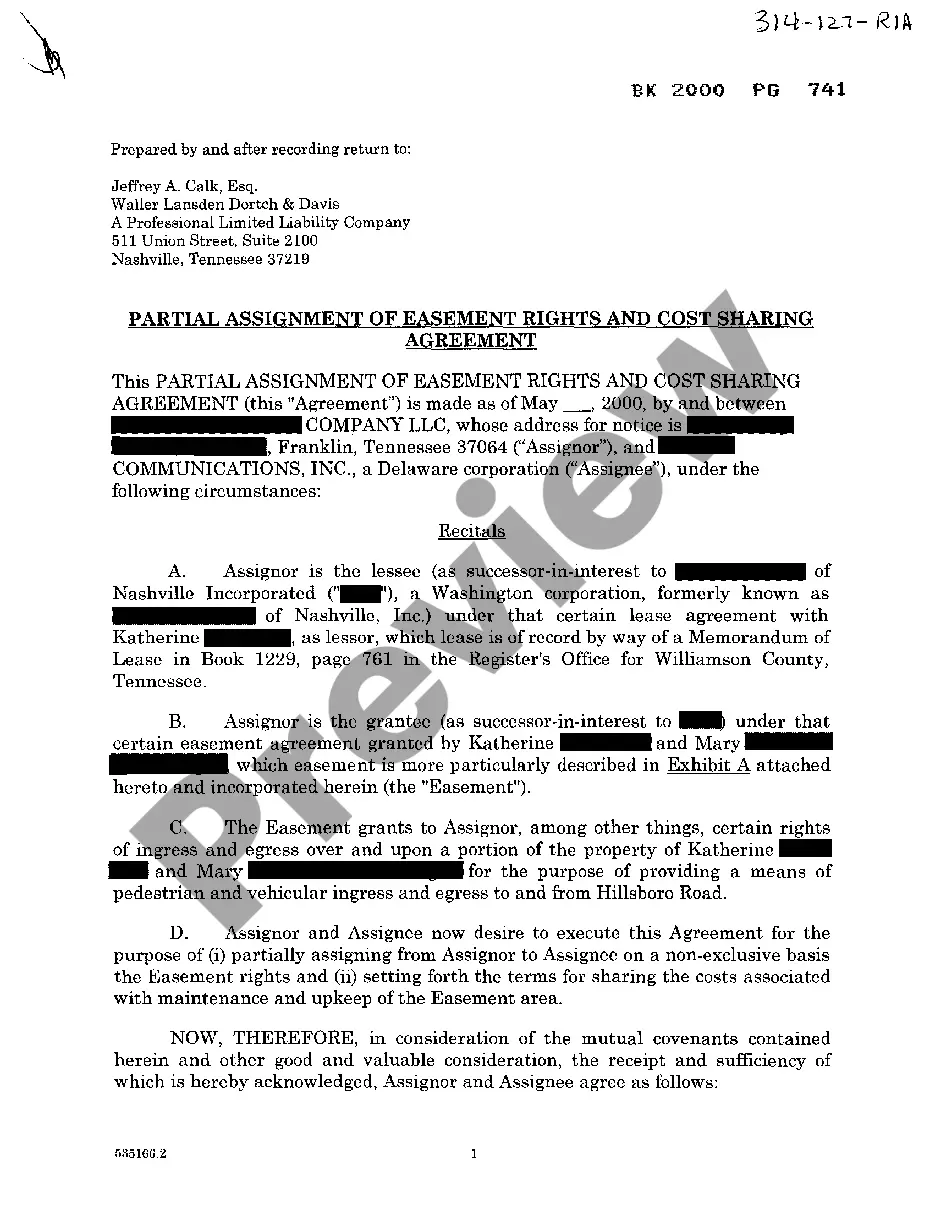
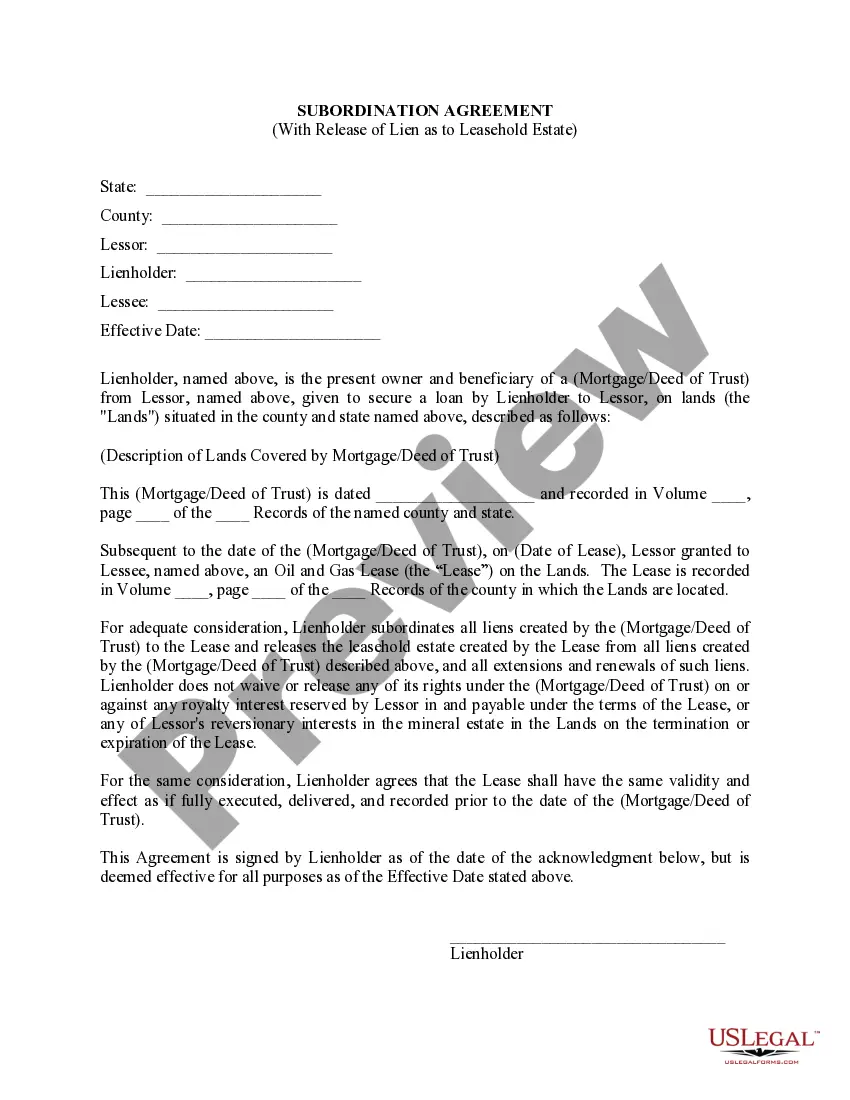
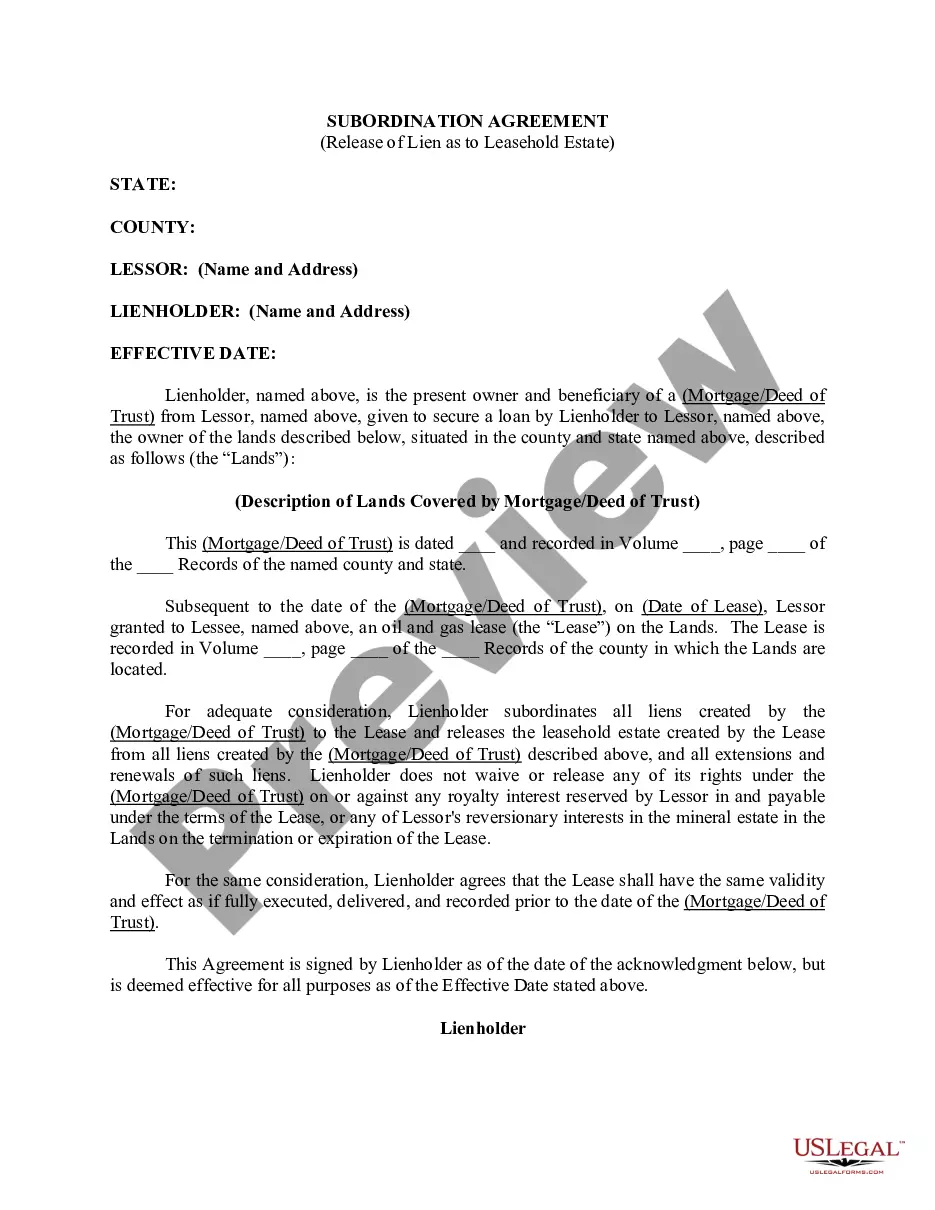
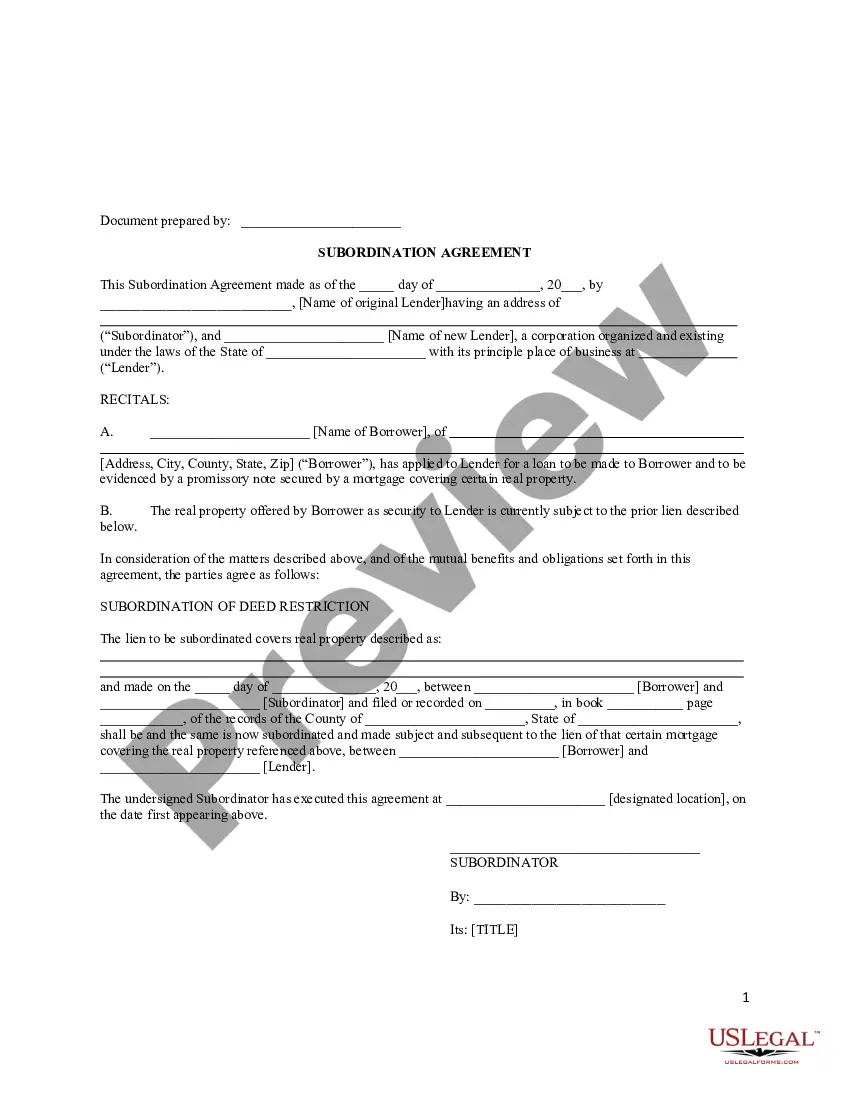
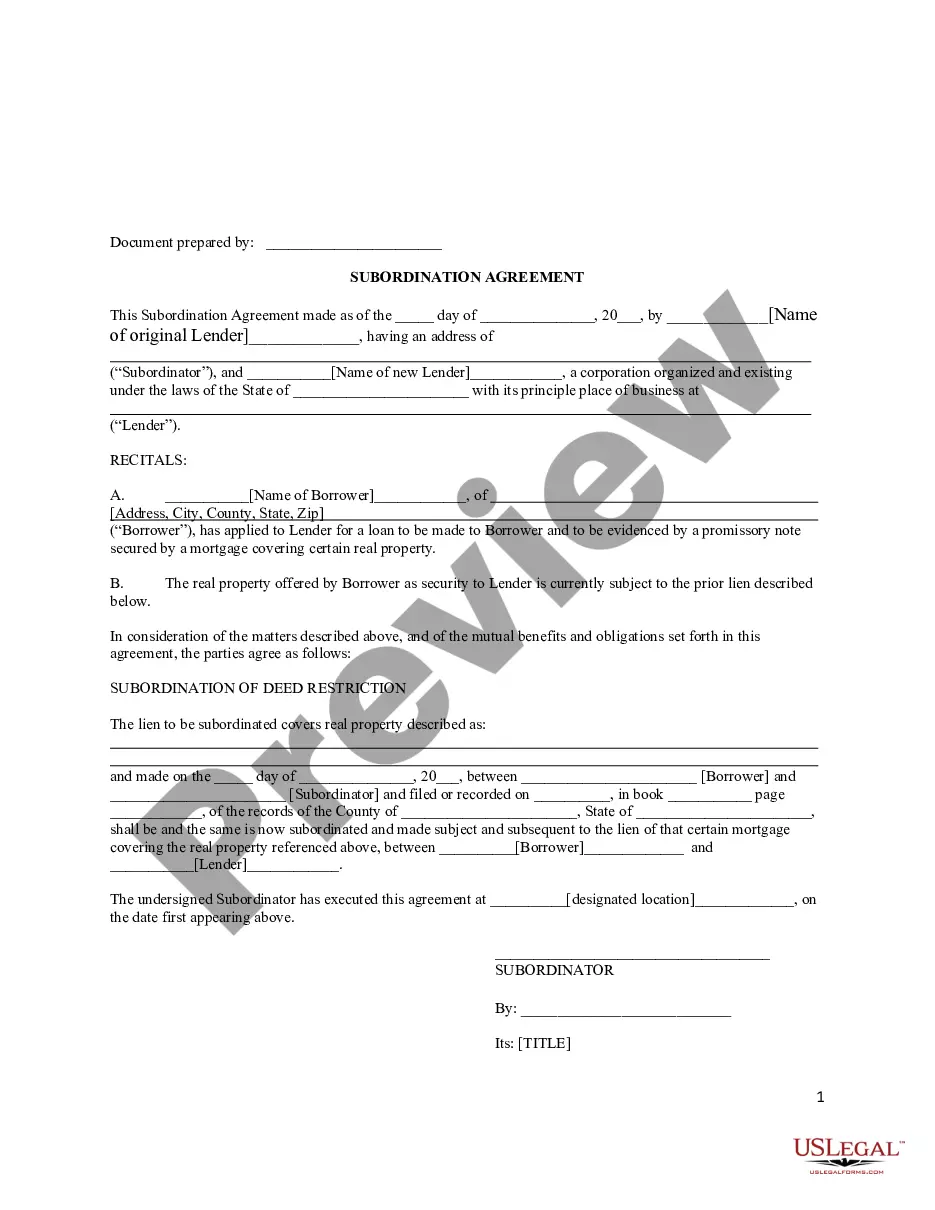
The Lease Subordination Agreement is a legal document that allows a lienholder's claims on a property to take a secondary position behind a mineral, oil, or gas lease. This form serves to protect the interests of the lessee by ensuring their lease remains effective, even if there are existing mortgages or deeds of trust against the property. It clarifies the lienholder's rights and confirms the lease's priority in relation to other debts. This form differs from standard lease agreements as it specifically addresses the subordination of existing liens to the mineral lease.
Form components explained
- Identification of involved parties: lessor, lienholder, and lessee.
- Description of the property secured by the original mortgage or deed of trust.
- Details of the oil and gas lease, including its recording information.
- Terms of subordination of the lien to the lease.
- Rights retained by the lienholder regarding royalty interests and reversionary interests.
- Effective date of the agreement.
When to use this document
This form should be used when a property owner has an existing mortgage or deed of trust and intends to enter into an oil and gas lease. It is particularly necessary in situations where the property owner seeks additional financing or when the original lien must be subordinated to protect the lessee's rights under the mineral lease. Using this form helps to clarify the priority of claims and minimize disputes regarding the lease's validity.
Intended users of this form
- Property owners (lessors) entering into oil and gas leases.
- Lienholders seeking to subordinate their existing claims for a new lease agreement.
- Lessee interested in securing their leasehold against existing liens.
- Legal professionals assisting clients with lease agreements related to mineral rights.
Completing this form step by step
- Identify and fill in the names and addresses of all parties involved: lessor, lienholder, and lessee.
- Specify the property location and provide a detailed description.
- Include the date and recording information for both the original mortgage and the oil and gas lease.
- Detail the terms of subordination, specifying that the lienholder subordinates their claims to the lease agreement.
- Sign and date the form to finalize the agreement, ensuring all parties are in agreement with the terms.
Does this document require notarization?
Notarization is required for this form to take effect. Our online notarization service, powered by Notarize, lets you verify and sign documents remotely through an encrypted video session, available 24/7.
Get your form ready online
Our built-in tools help you complete, sign, share, and store your documents in one place.
Make edits, fill in missing information, and update formatting in US Legal Forms—just like you would in MS Word.
Download a copy, print it, send it by email, or mail it via USPS—whatever works best for your next step.
Sign and collect signatures with our SignNow integration. Send to multiple recipients, set reminders, and more. Go Premium to unlock E-Sign.
If this form requires notarization, complete it online through a secure video call—no need to meet a notary in person or wait for an appointment.
We protect your documents and personal data by following strict security and privacy standards.

Make edits, fill in missing information, and update formatting in US Legal Forms—just like you would in MS Word.

Download a copy, print it, send it by email, or mail it via USPS—whatever works best for your next step.

Sign and collect signatures with our SignNow integration. Send to multiple recipients, set reminders, and more. Go Premium to unlock E-Sign.

If this form requires notarization, complete it online through a secure video call—no need to meet a notary in person or wait for an appointment.

We protect your documents and personal data by following strict security and privacy standards.
Common mistakes to avoid
- Failing to accurately describe the property involved in the lease.
- Neglecting to include all necessary party signatures.
- Not providing complete recording information for existing liens or leases.
- Misunderstanding the implications of subordination can lead to legal disputes.
Benefits of completing this form online
- Convenient access to editable legal forms, allowing for quick modifications.
- Immediate downloads provide a fast turnaround for your legal needs.
- Forms drafted by licensed attorneys ensure reliability and legal compliance.
- Easy step-by-step guidance allows users with little legal experience to complete the form correctly.
Looking for another form?
Form popularity
FAQ
Subordination clauses in mortgages refer to the portion of your agreement with the mortgage company that says their lien takes precedence over any other liens you may have on your property.However, it's also possible to have other liens. You might have some placed by contractors until work is paid off.
A rental agreement will be void and unenforceable if it allows the landlord to terminate the tenancy of a tenant for a crime committed in relation to the rental property if it does not also include the new domestic abuse protection language set forth in sec. 704.
A ground lease is an agreement in which a tenant is permitted to develop a piece of property during the lease period, after which the land and all improvements are turned over to the property owner.
Despite its technical-sounding name, the subordination agreement has one simple purpose. It assigns your new mortgage to first lien position, making it possible to refinance with a home equity loan or line of credit.
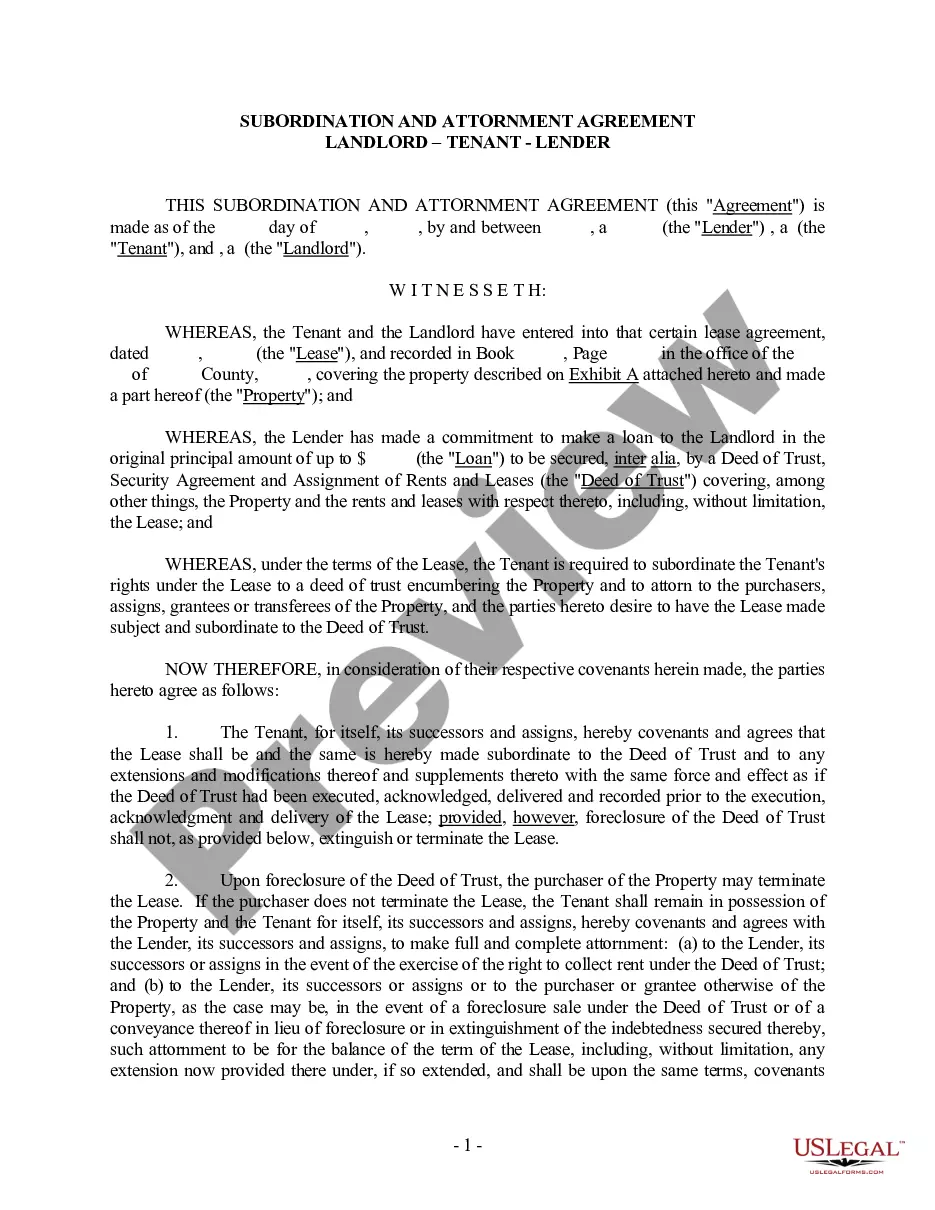
Subordination is the tenant's agreement that its interest under the lease will be subordinate to that of the lender.Attornment is the tenant's agreement to become the tenant of someone other than the original landlord and who has now taken title to the property.
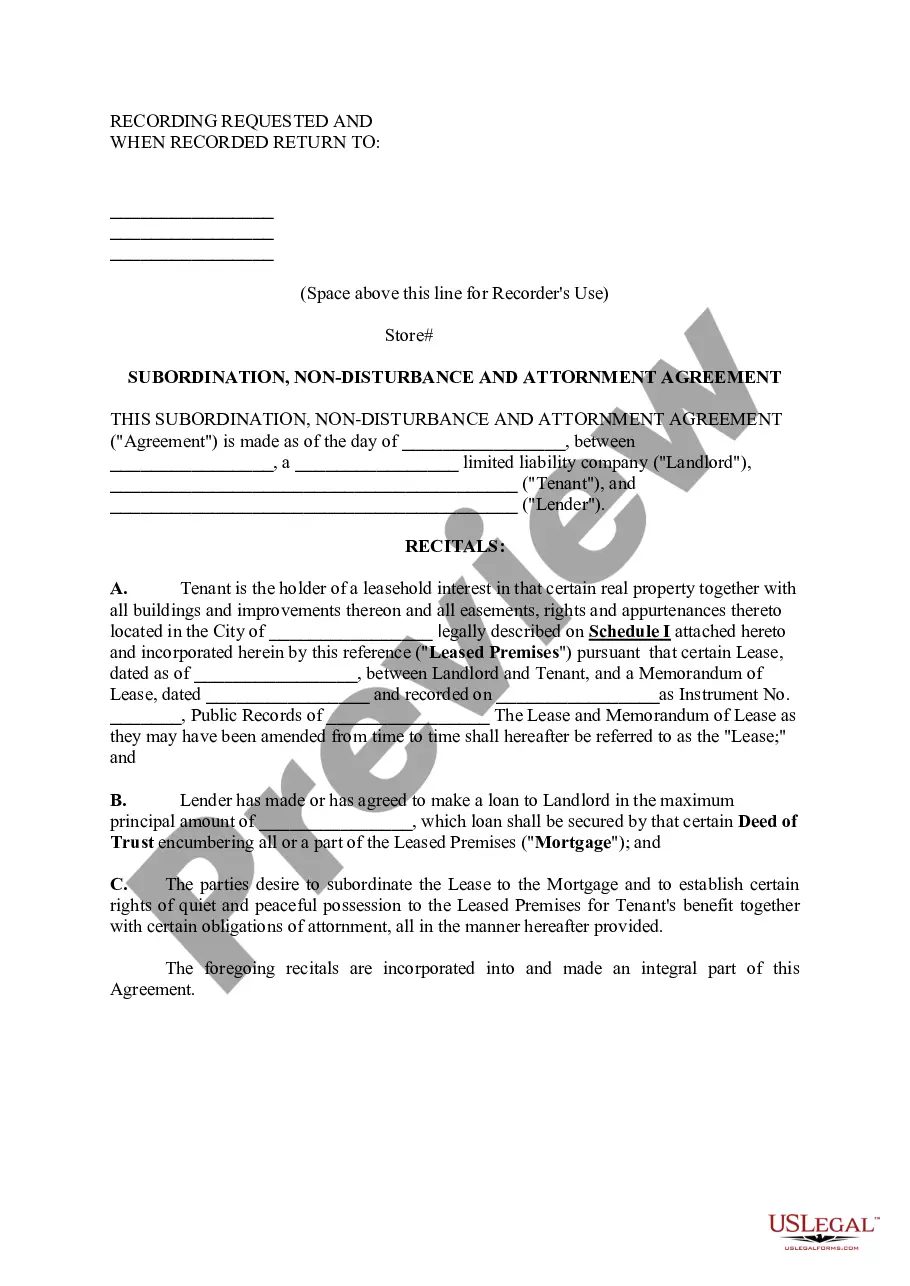
A Subordination and Non-Disturbance Agreement (SNDA) commonly called a non-disturb is an agreement that your landlord asks its lender to provide. The agreement basically says that if the building goes bankrupt and the lender takes control of the building from the landlord, the lender will honor your lease.
In the case of commercial property changing hands, an attornment clause in a subordination, non-disturbance, and attornment (SNDA) agreement requires the tenant to acknowledge a new owner as their landlord and to continue paying rent regardless of whether the property changes hands through a normal sale or a
Like an ordinary lease, under a ground lease a tenant or lessee pays rent to a landlord or lessor and receives in return a right to possession and use of the property for the time period covered by the rent.During the ground lease term, the tenant will typically own and depreciate the improvements.