Business Plan Template for Ecommerce Startup
Understanding this form
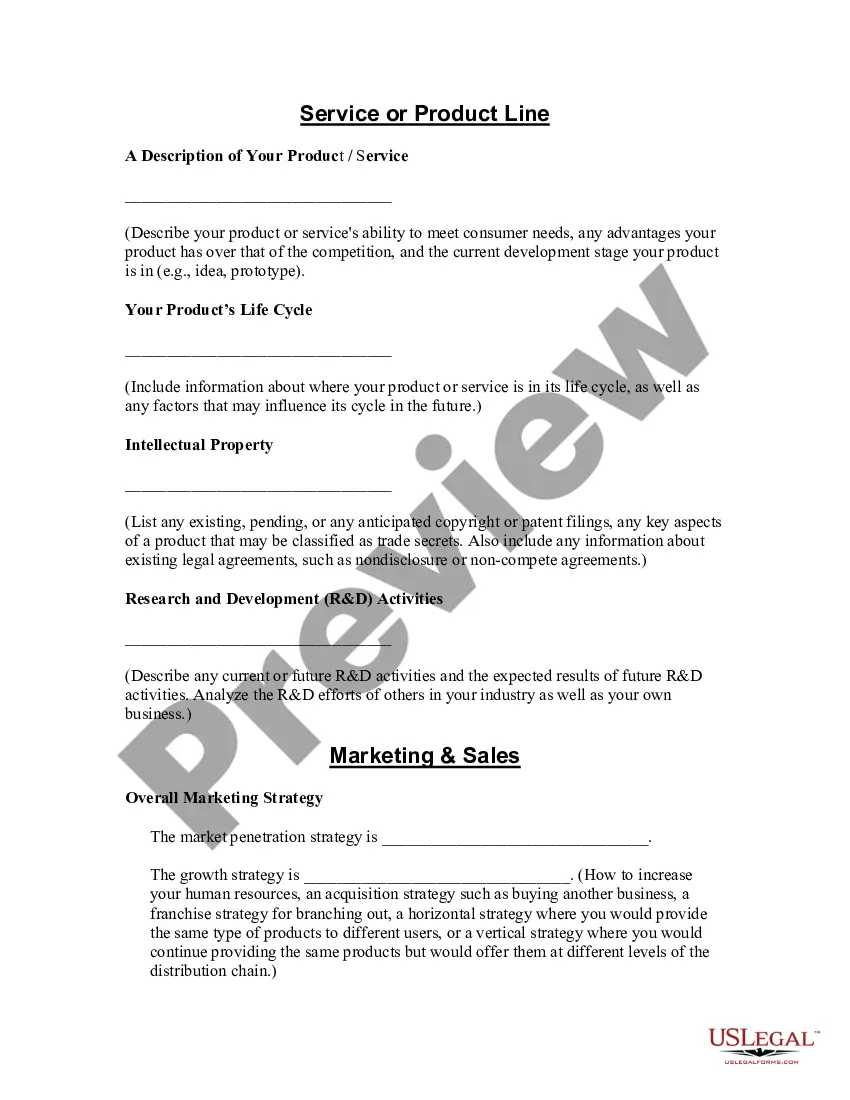
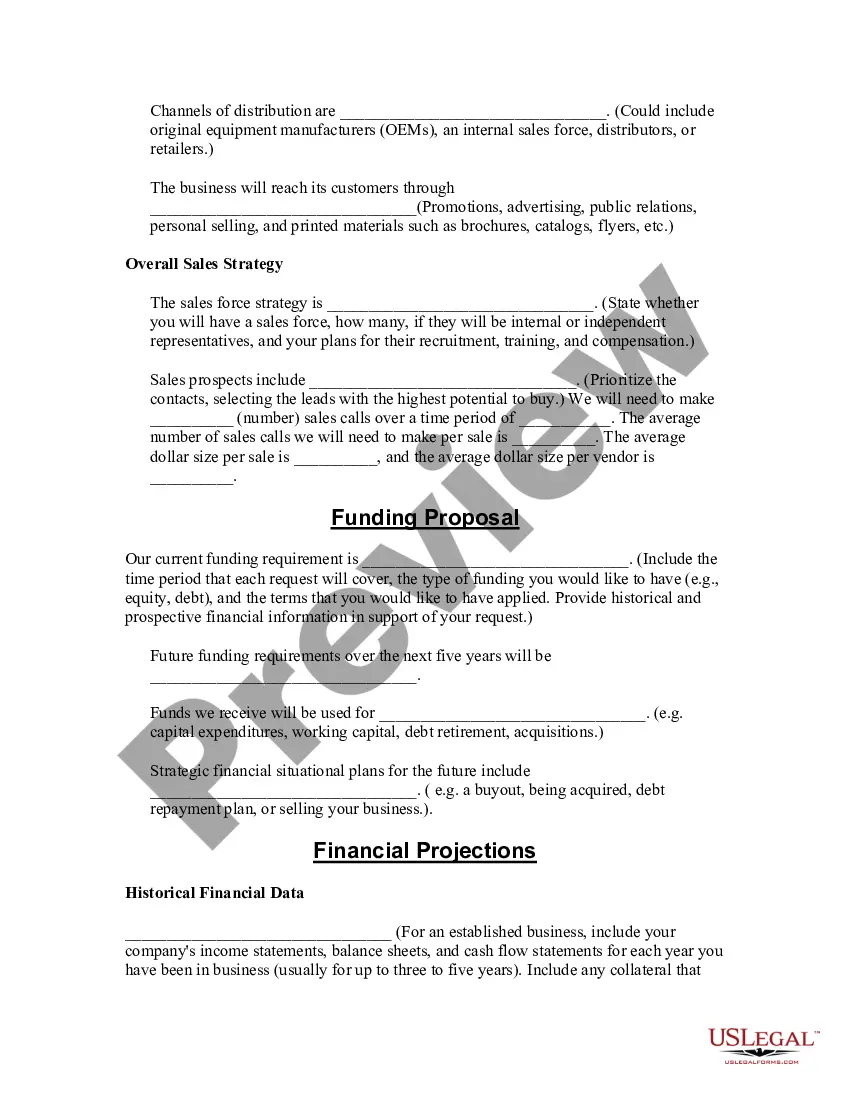
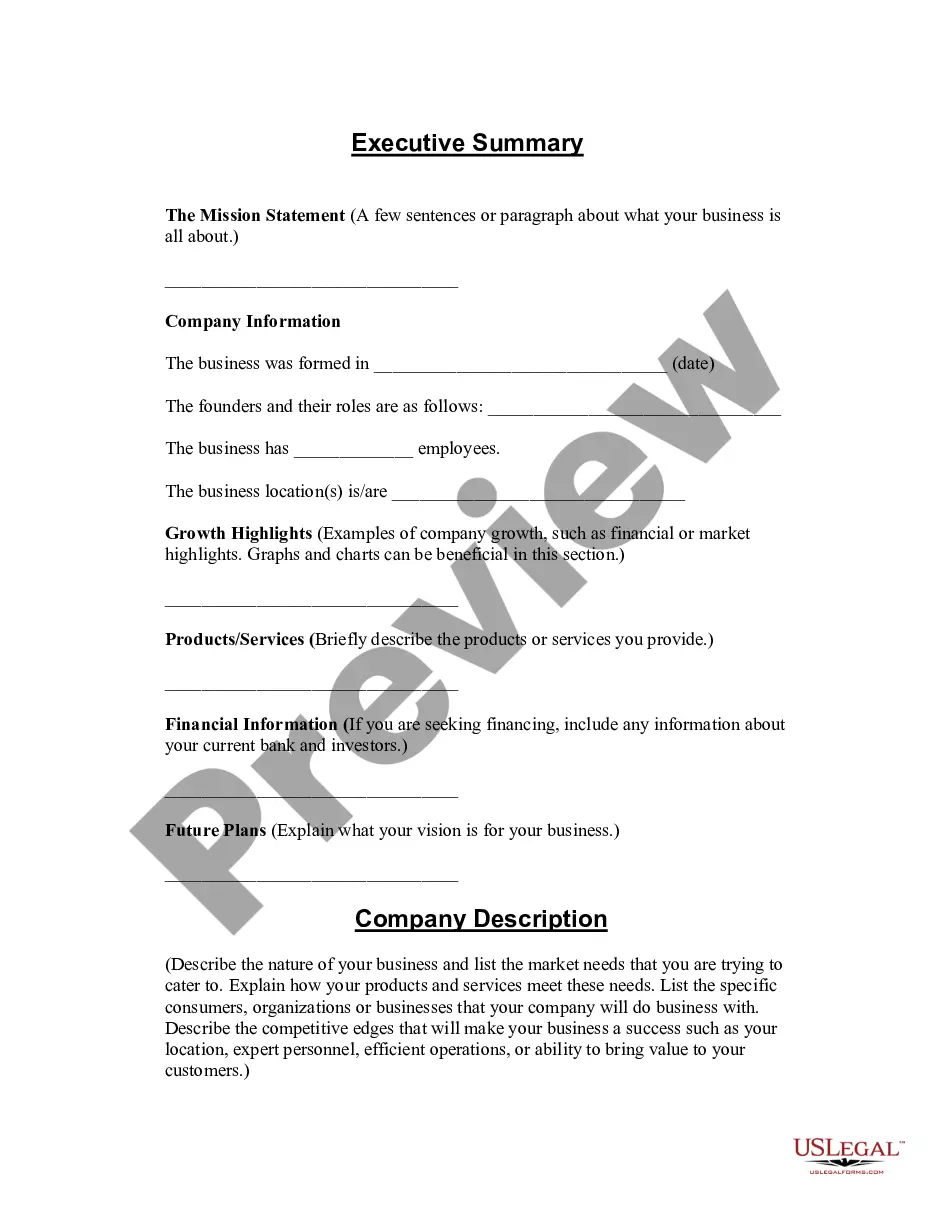
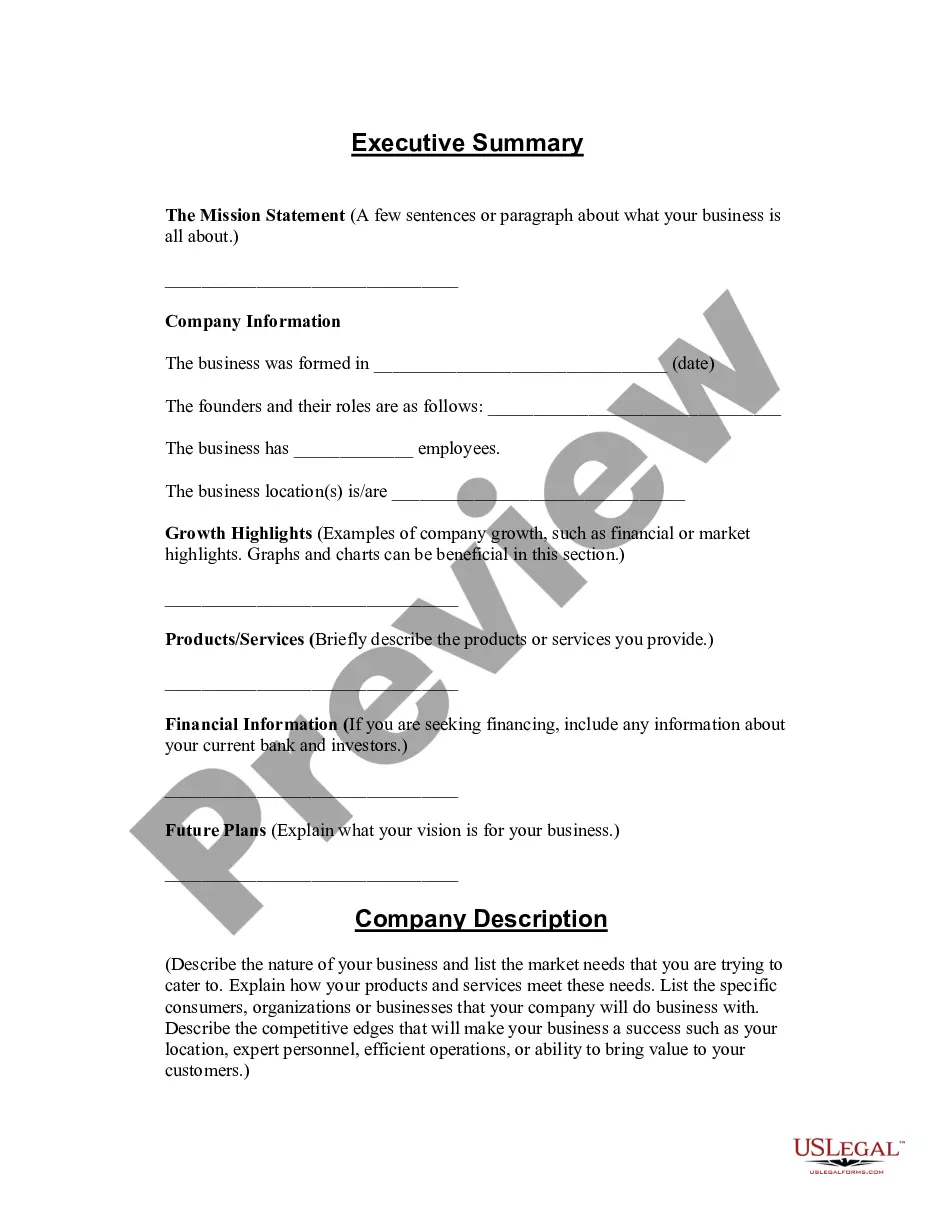
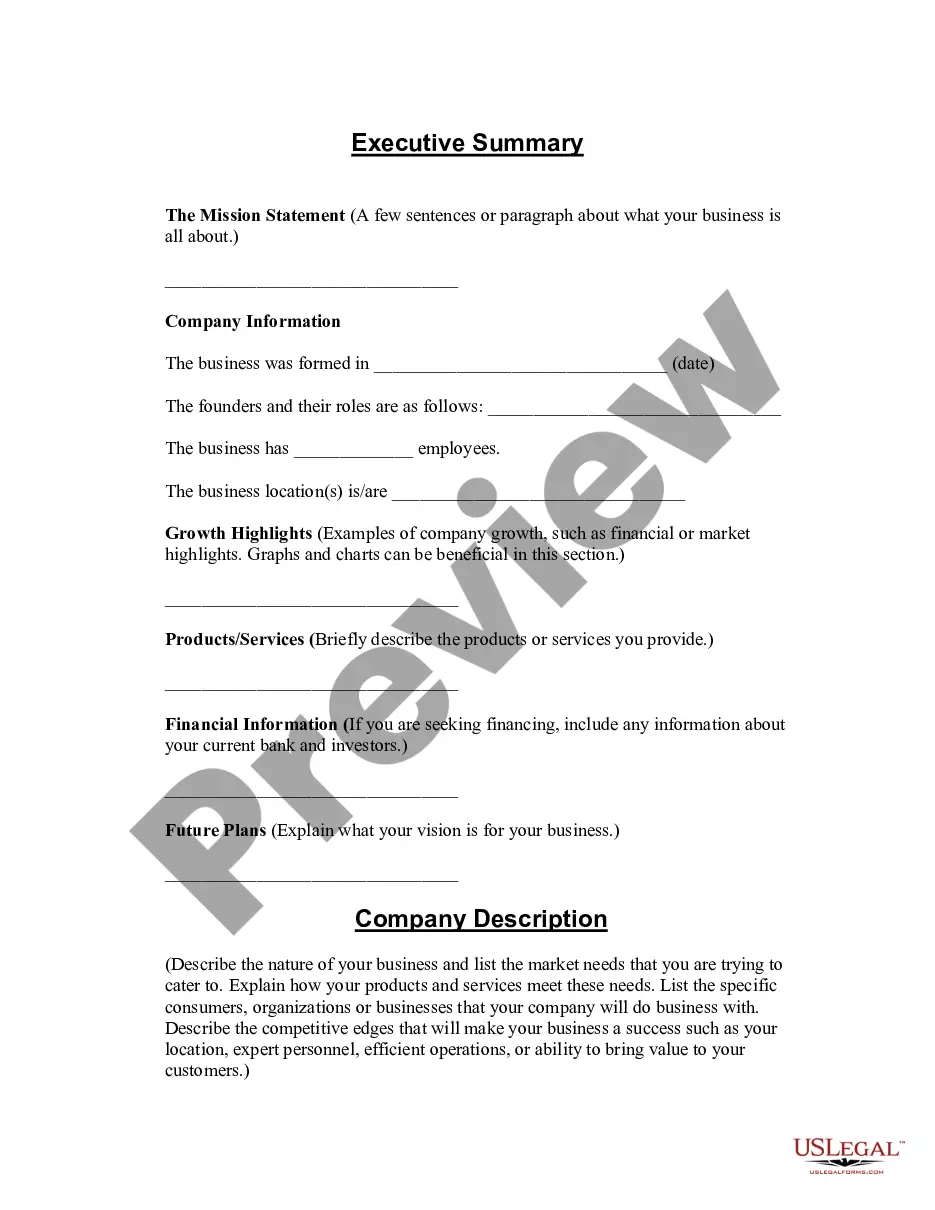
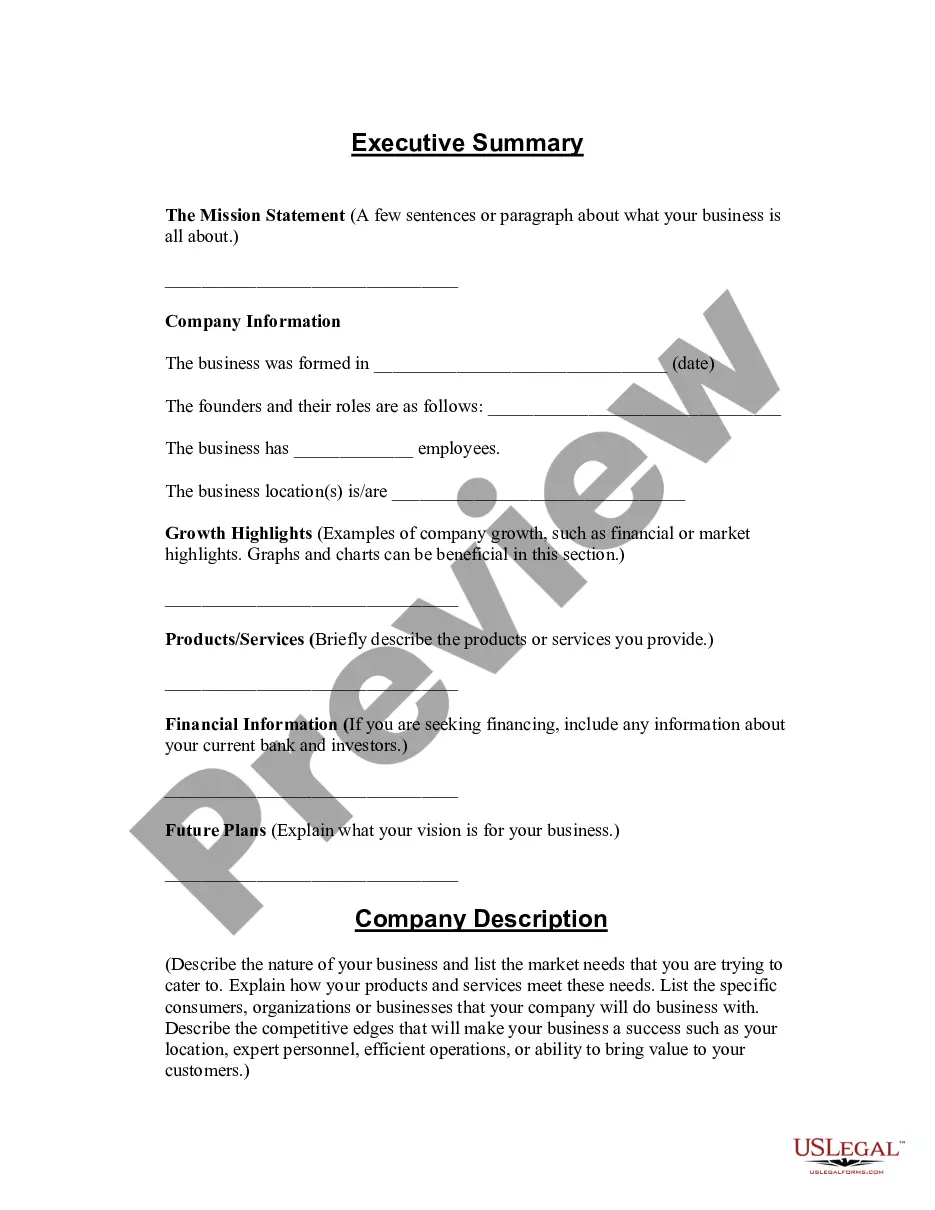
The Business Plan Template for Ecommerce Startup is a comprehensive document designed to help entrepreneurs outline their business strategy. This form provides a framework to detail aspects such as the mission statement, company information, market analysis, and financial projections. Unlike generic business plans, this template is specifically tailored for ecommerce startups, ensuring that users can effectively communicate their business vision to potential investors and stakeholders.
What’s included in this form
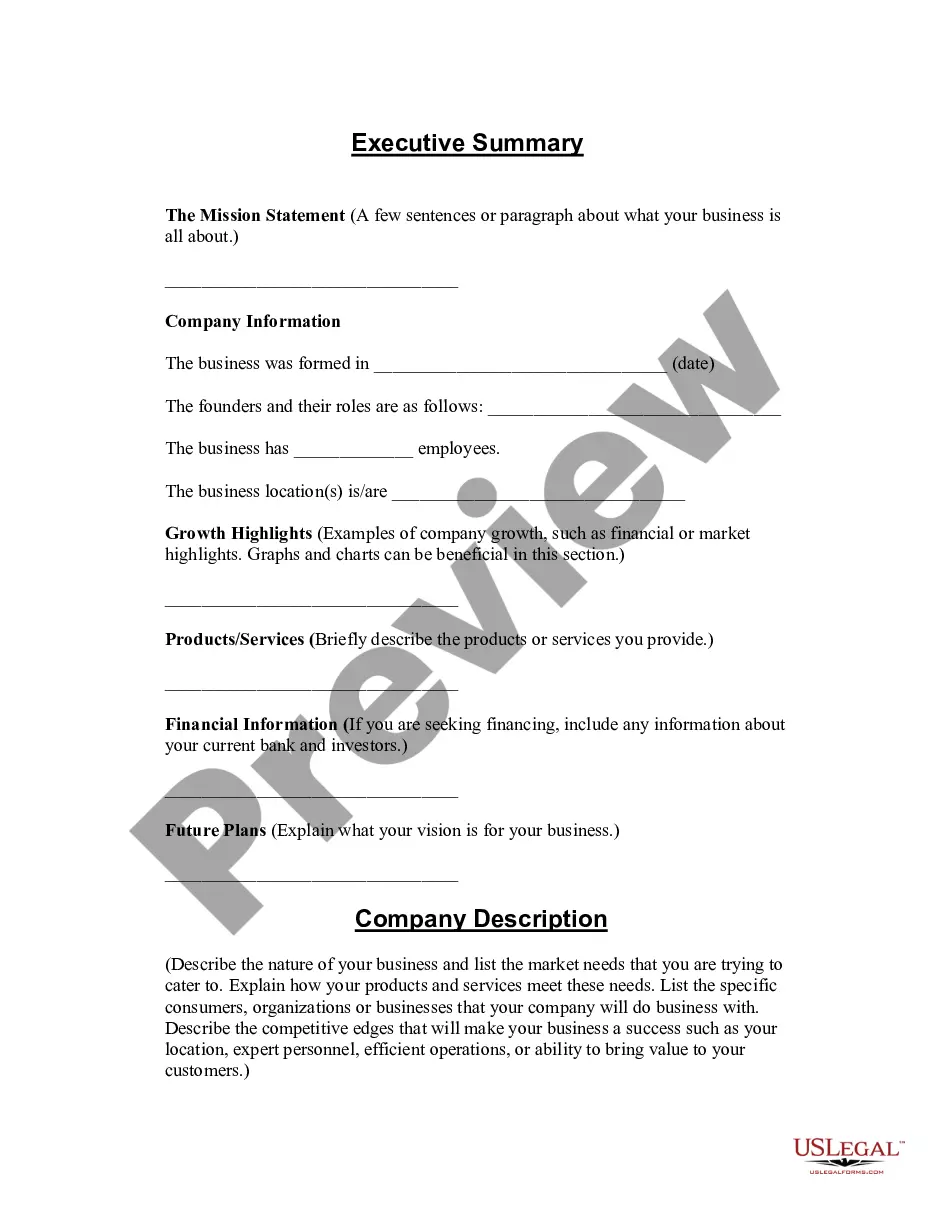
- Mission Statement: Define the core purpose of your ecommerce business.
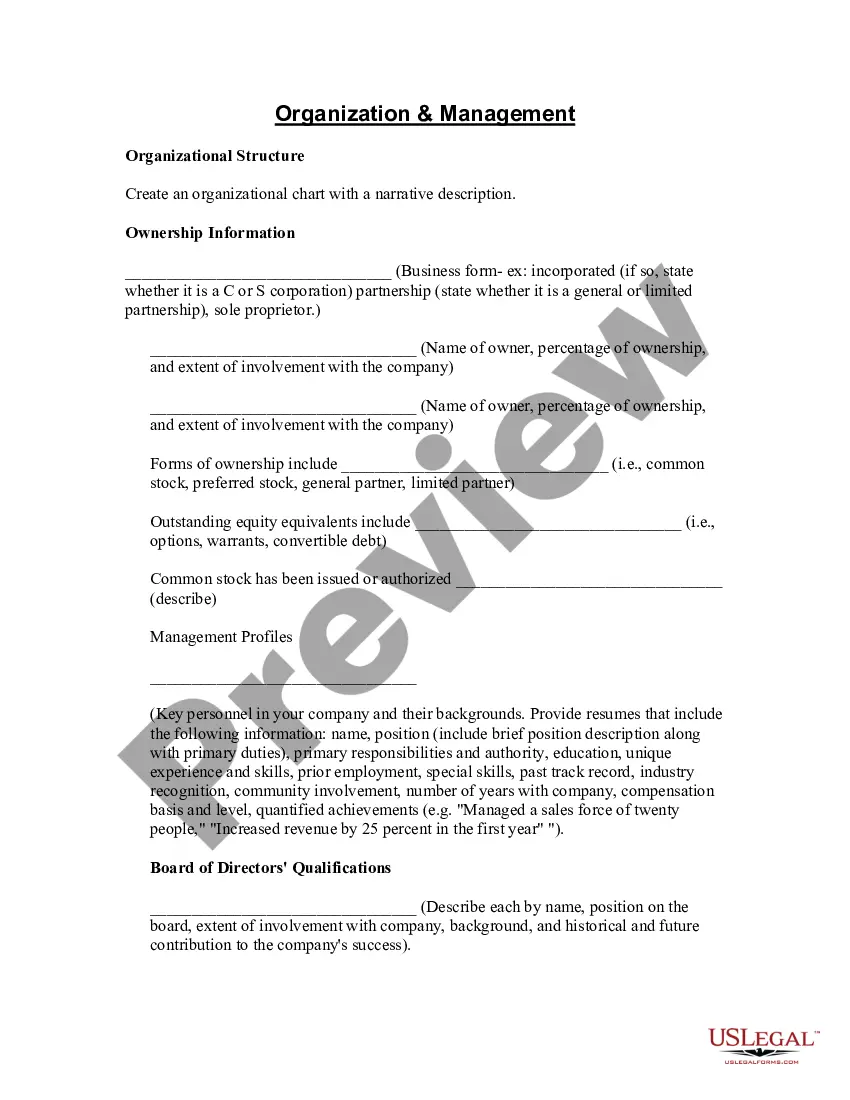
- Company Information: Detail founding dates, team members, and overall structure.
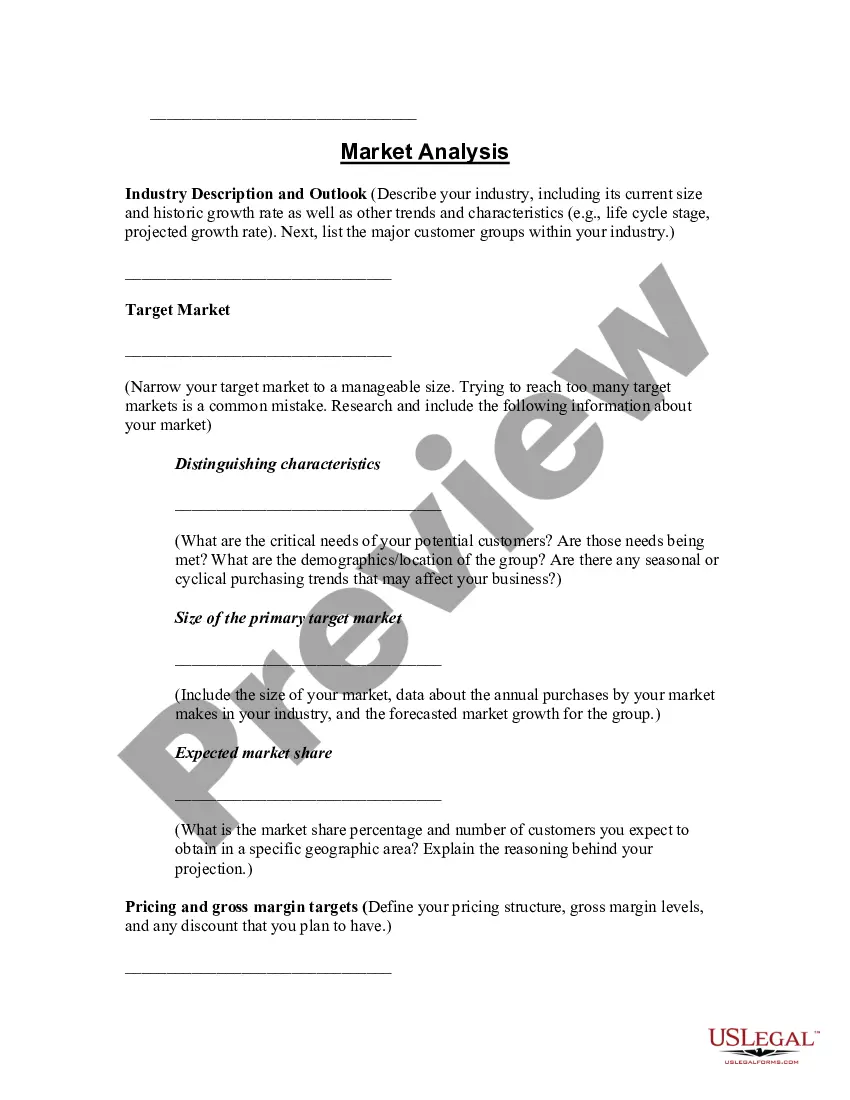
- Market Analysis: Analyze industry trends, target market, and competitive landscape.
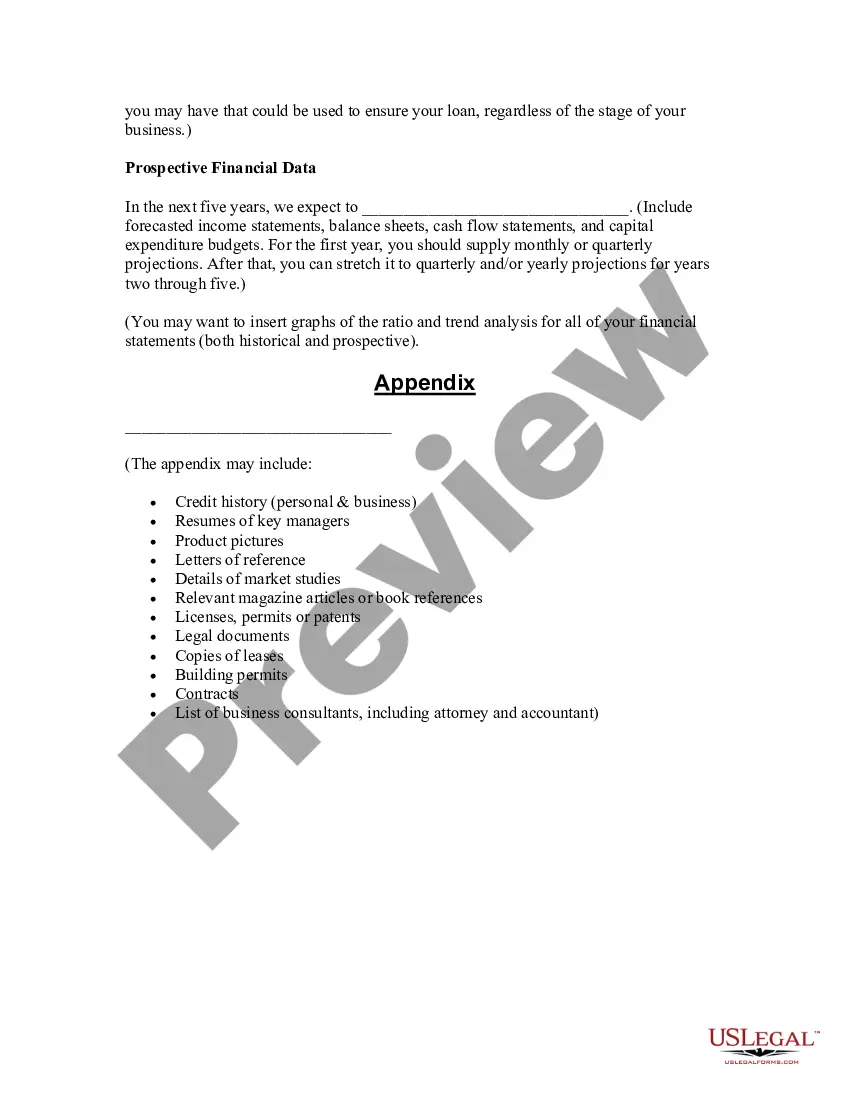
- Financial Projections: Include budget forecasts and funding requirements.
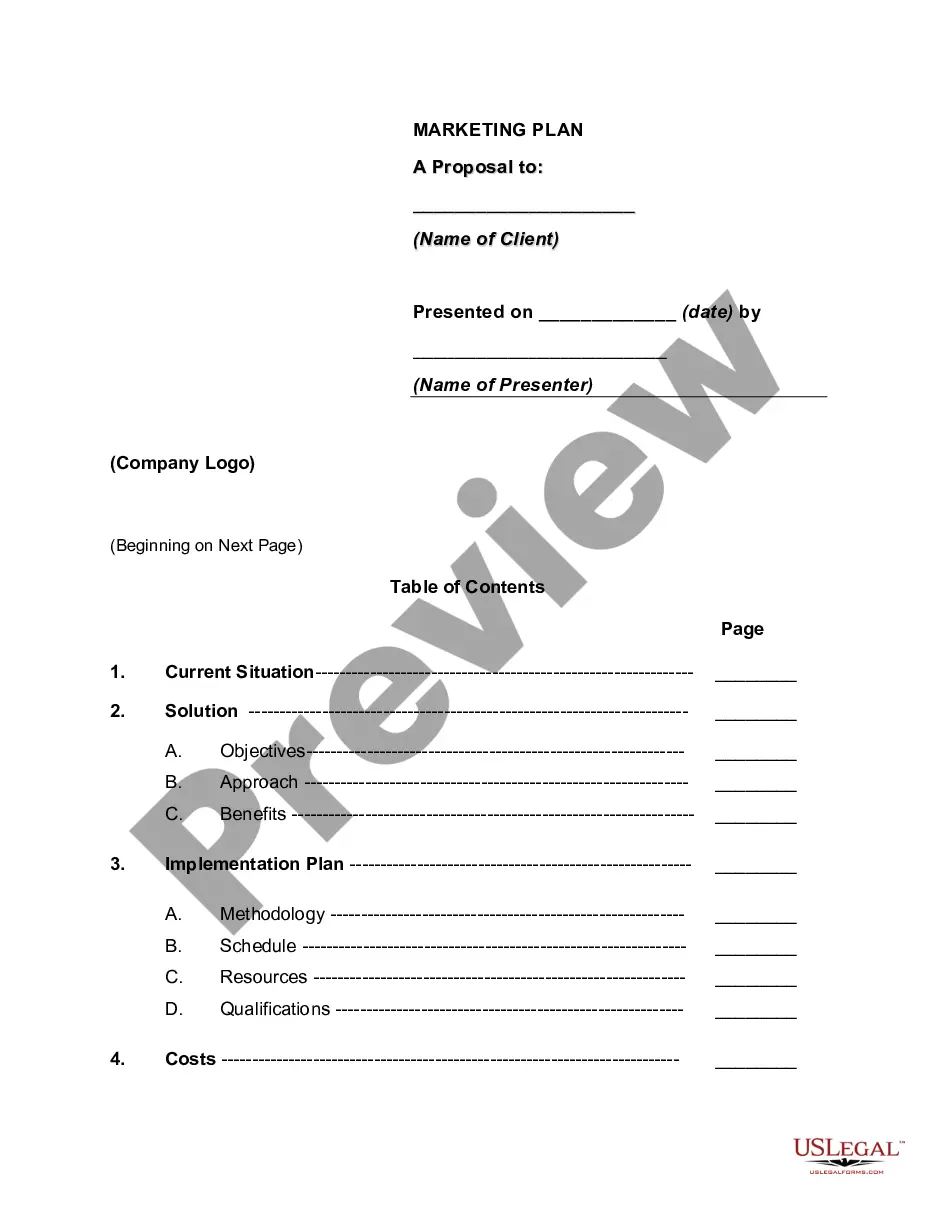
- Marketing Strategy: Outline how you plan to reach customers and grow sales.
- Appendix: Attach supporting documents like resumes, product images, and market studies.
Situations where this form applies
This form is useful for entrepreneurs who are in the early stages of establishing an ecommerce business. It can be utilized for various purposes, including seeking funding from investors, securing loans, or as a roadmap for business development. If you aim to effectively communicate your business model and expectations to potential partners or financial backers, this template can serve as a foundational tool.
Intended users of this form
The following individuals should consider using this form:
- Startup founders looking to create a detailed business plan.
- Business owners seeking investment or loans for their ecommerce ventures.
- Entrepreneurs who need to communicate their business strategy to stakeholders.
- Individuals preparing to enter the ecommerce market with a solid plan.
Steps to complete this form
To complete the Business Plan Template for Ecommerce Startup, follow these steps:
- Identify your mission statement and write it down in the designated space.
- Provide details about your company formation, including founding dates and team roles.
- Conduct market research to accurately fill in the market analysis section.
- Outline financial projections and funding needs for the business.
- Develop a marketing strategy that includes your approach to customer acquisition.
Notarization guidance
This form does not typically require notarization unless specified by local law. However, having a notarized business plan can add an extra layer of credibility if presenting to certain lenders or investors.
Get your form ready online
Our built-in tools help you complete, sign, share, and store your documents in one place.
Make edits, fill in missing information, and update formatting in US Legal Forms—just like you would in MS Word.
Download a copy, print it, send it by email, or mail it via USPS—whatever works best for your next step.
Sign and collect signatures with our SignNow integration. Send to multiple recipients, set reminders, and more. Go Premium to unlock E-Sign.
If this form requires notarization, complete it online through a secure video call—no need to meet a notary in person or wait for an appointment.
We protect your documents and personal data by following strict security and privacy standards.

Make edits, fill in missing information, and update formatting in US Legal Forms—just like you would in MS Word.

Download a copy, print it, send it by email, or mail it via USPS—whatever works best for your next step.

Sign and collect signatures with our SignNow integration. Send to multiple recipients, set reminders, and more. Go Premium to unlock E-Sign.

If this form requires notarization, complete it online through a secure video call—no need to meet a notary in person or wait for an appointment.

We protect your documents and personal data by following strict security and privacy standards.
Common mistakes to avoid
- Failing to conduct thorough market research, leading to inaccurate projections.
- Overestimating market share without basis in realistic data.
- Neglecting to include a detailed marketing strategy.
- Providing vague financial projections that lack supporting documentation.
- Not updating the business plan regularly as the business evolves.
Why use this form online
- Convenience of completing the form online at any time.
- Editable templates allow for customization as business evolves.
- Guided sections ensure comprehensive information capture.
- Access to professionally drafted content by licensed attorneys.
Looking for another form?
Form popularity
FAQ
Start with a summary. Describe your company. Add illustrations of products. Analyze the marketing opportunities (Target Audience) Operations in your business. Assessment of your finances. Proposal for funding.
Step 1: Research the ecommerce space and find your niche. Step 2: Select your business name and choose a legal structure. Step 3: Apply for an EIN. Step 4: Obtain business permits and licenses. Step 5: Choose your ecommerce platform and create your website. Step 6: Source or develop (and list) your products.
An ecommerce business plan defines and directs the various factors that go into an online store's launch and continued growth.But for some ecommerce businesses, the management of startup funds plays a surprisingly minor role in the overall plan.
Point 1: Your Business Plan Executive Summary. Point 2: Your Business Description. Point 3: Market Analysis and Competition. Point 4: Your Product or Service. Point 5: Marketing and Sales Plan. Point 6: Ownership, Management, and Personnel. Point 7: Financial Plan and Projections. Point 8: Investment.
Business plans can be divided roughly into four distinct types. There are very short plans, or miniplans, presentation plans or decks, working plans, and what-if plans.
Research Ecommerce Business Models. Start Ecommerce Niche Research. Validate Target Market and Product Ideas. Register Your Ecommerce Business & Brand Name. Finalize Your Ecommerce Business Plan. Create Your Online Store. Attract Customers To Your Ecommerce Website.
Step 1: Build A Business Plan And Model. Step 2: Choose Your Products To Sell Online. Step 3: Build An eCommerce Website In 5 Minutes. Step 4: Upload Your Products And Start Selling.
The average costs for eCommerce stores include: Professionally-built eCommerce website - $5,000 to $10,000. Domain name - $2 - $20 per year. Hosting - $300 per month.