Business Plan Template for Investors
About this form
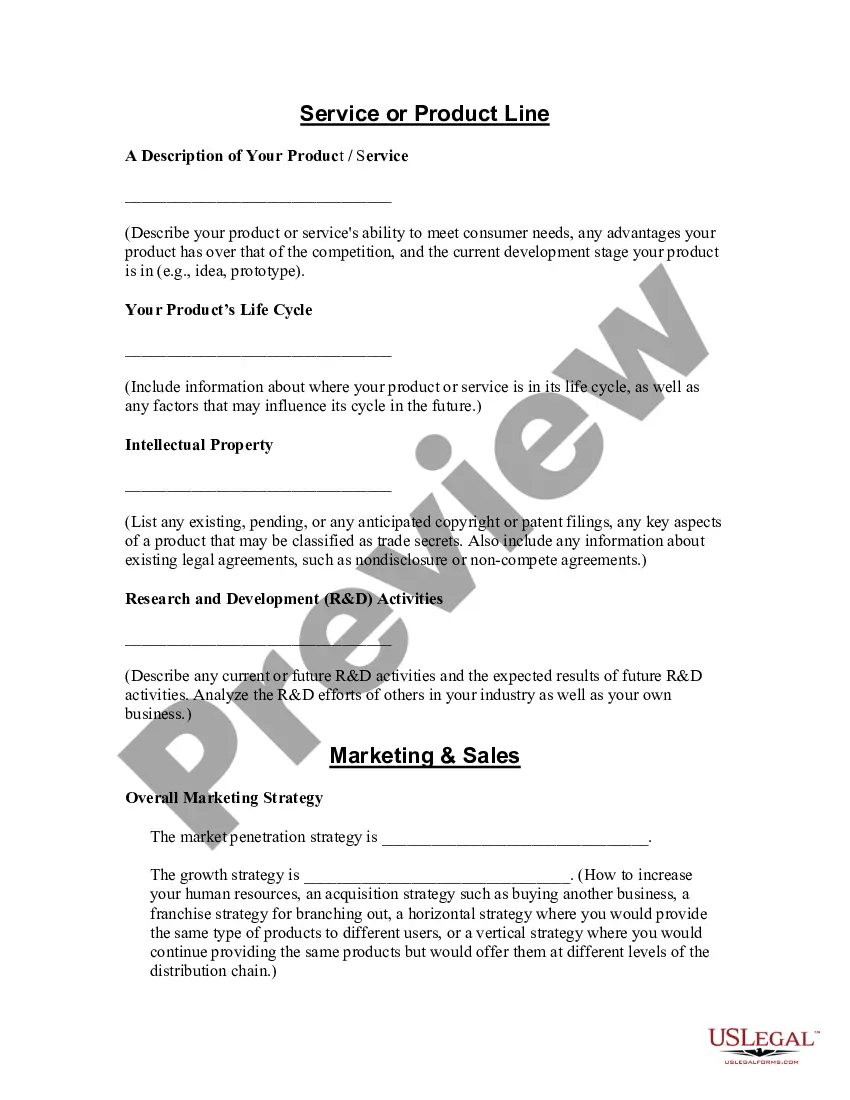
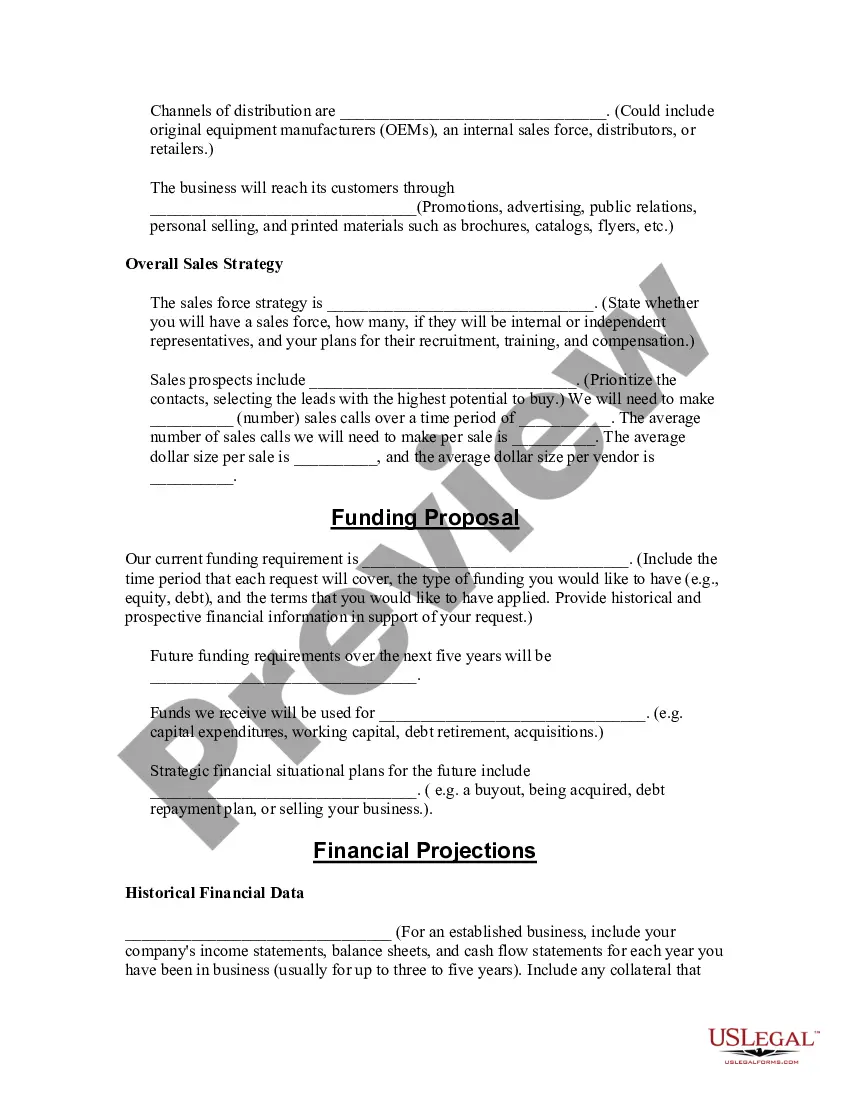
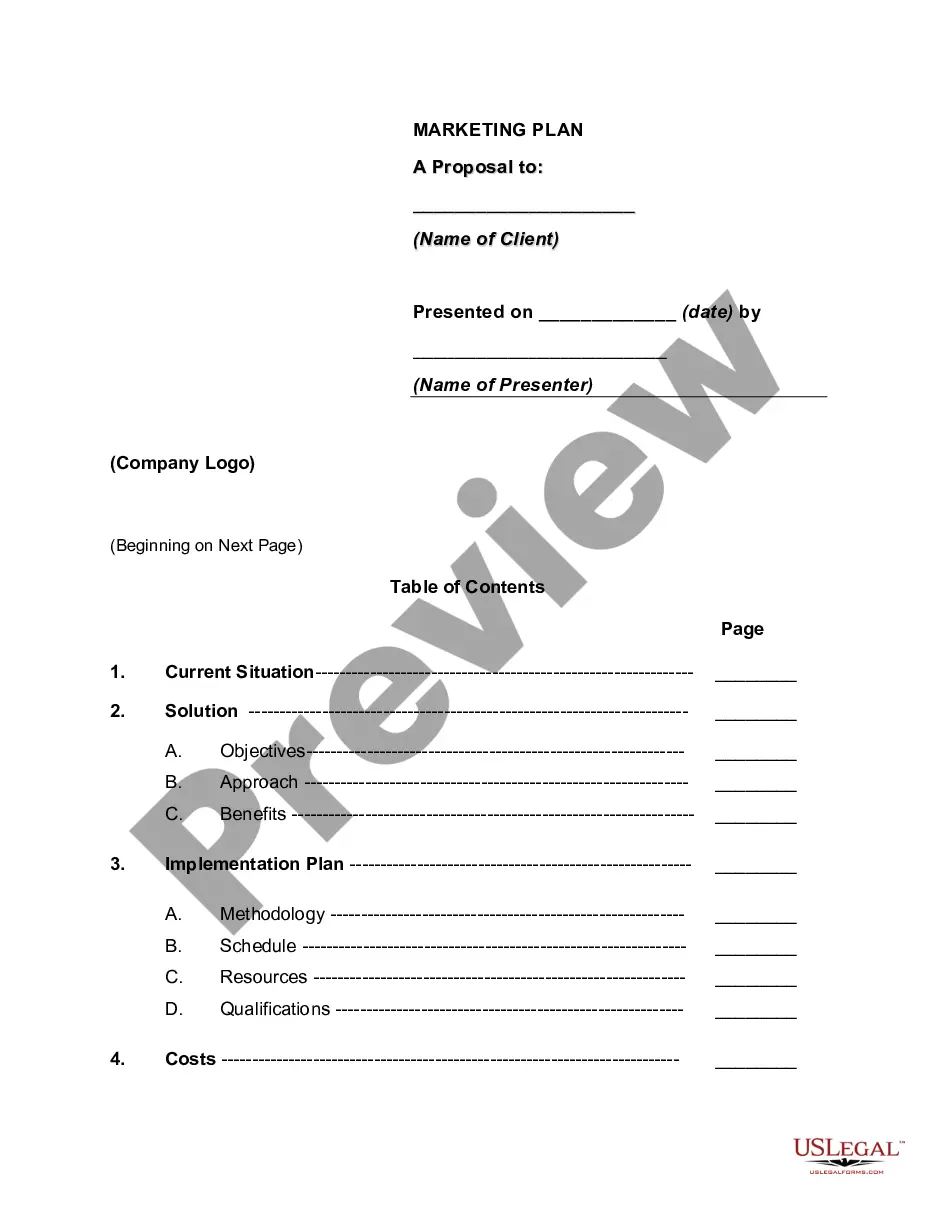
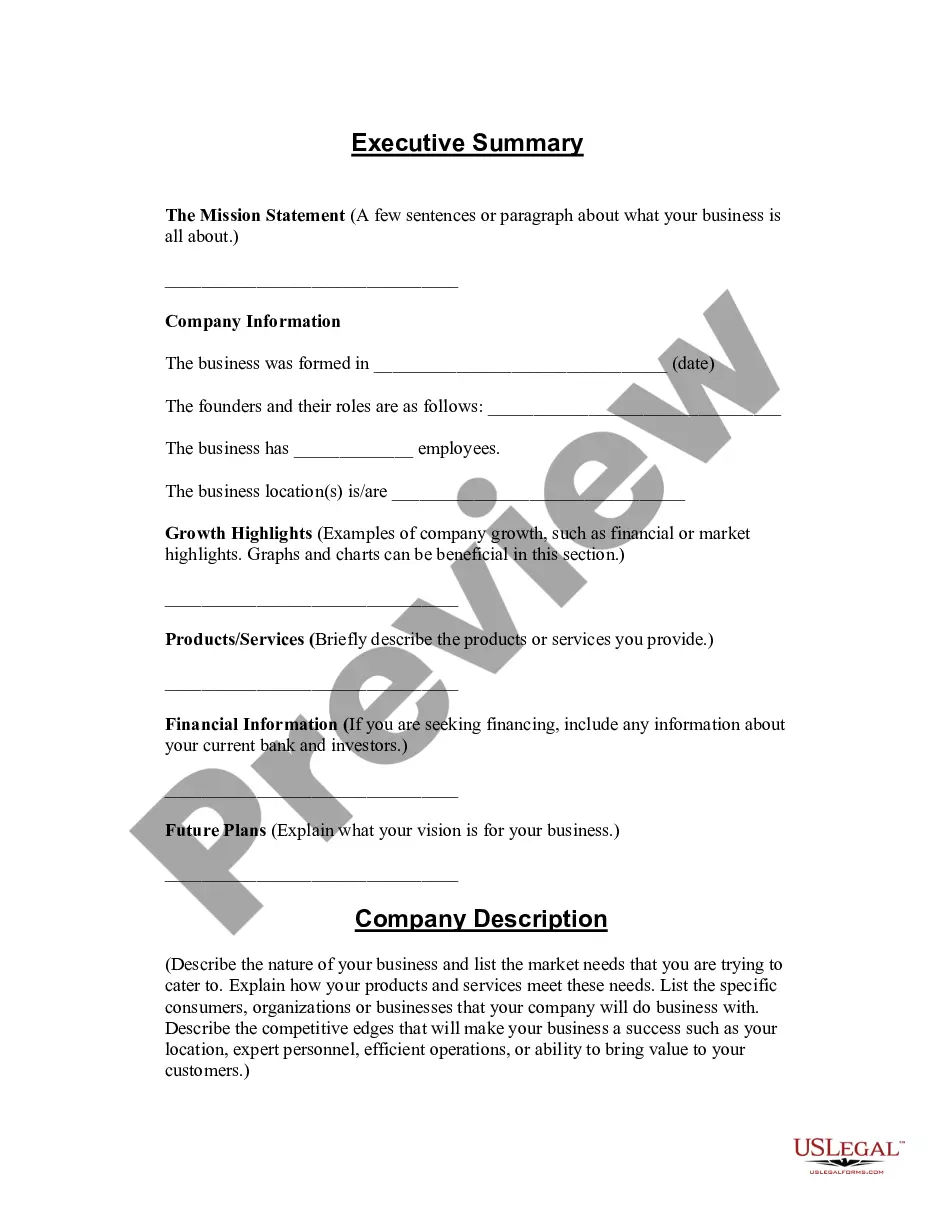
The Business Plan Template for Investors is a comprehensive guide designed to help you articulate your business goals and strategies. This form is essential for individuals seeking financial backing or investor participation by clearly outlining vital components of their business, including market analysis, product offerings, and financial projections. Unlike generic templates, this form provides tailored sections that are crucial for securing investment and demonstrating the viability of your business idea.
What’s included in this form
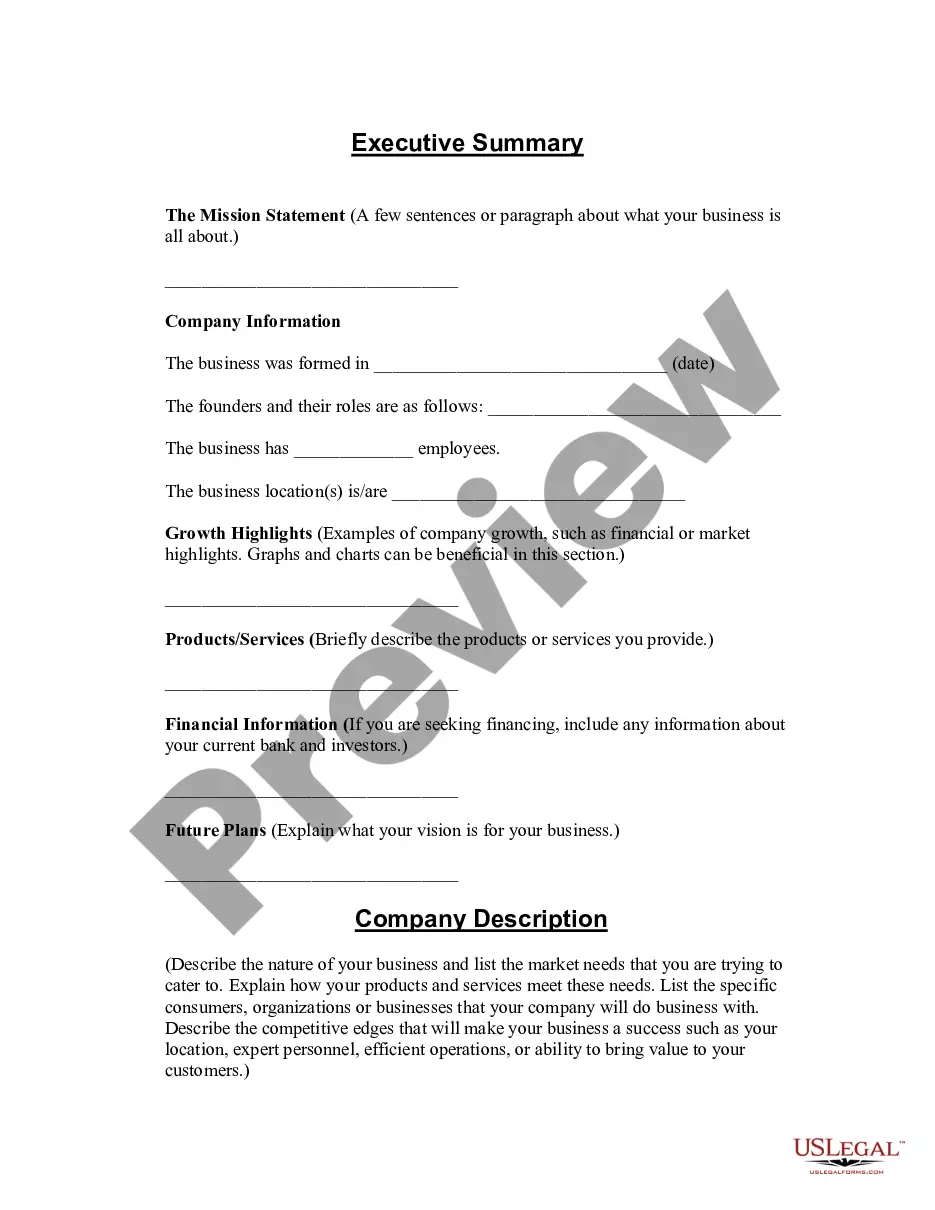
- Mission Statement: A brief overview of your business's purpose.
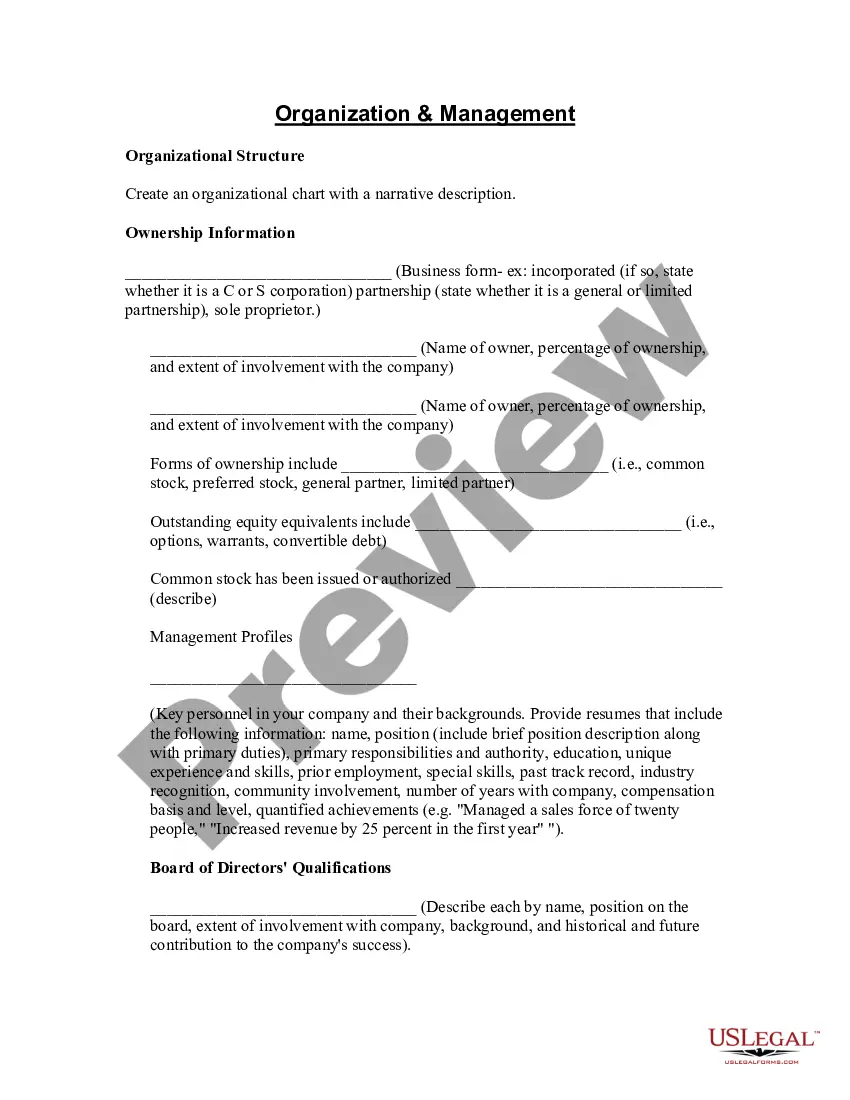
- Company Information: Details about your business's formation, structure, and personnel.
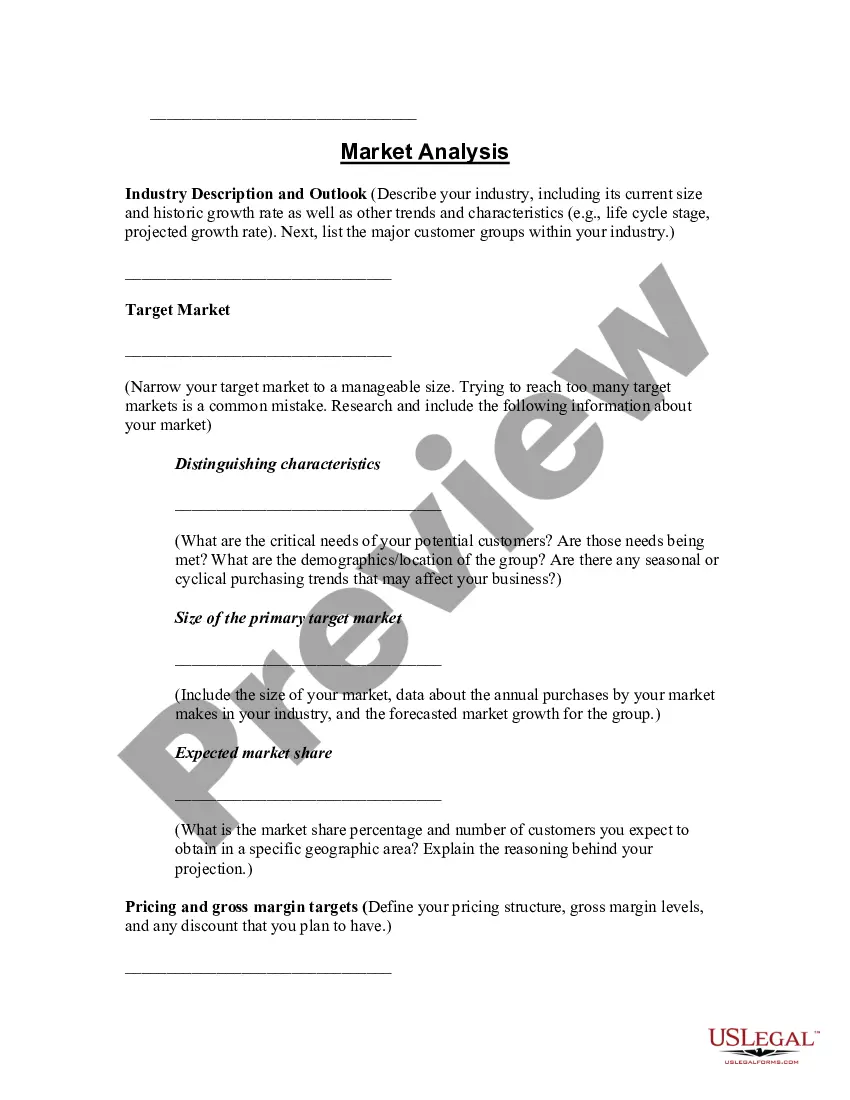
- Market Analysis: An assessment of the industry, target market, and competitive landscape.
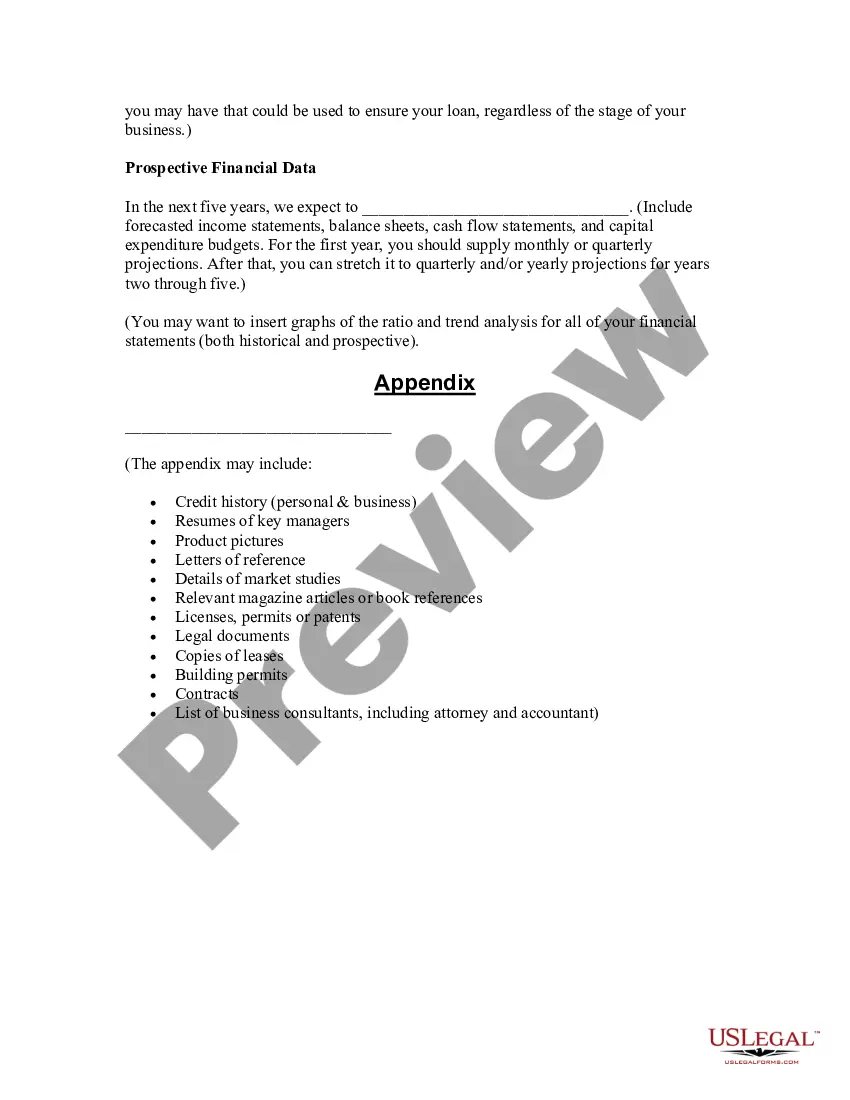
- Financial Information: Insights on current funding needs and financial history.
- Funding Proposal: Specific details of your funding requirements and intended use of funds.
- Financial Projections: Detailed forecasts of revenue, expenses, and profitability.
Common use cases
This form is particularly useful when you are looking to secure funding from investors or financial institutions. You should use the Business Plan Template for Investors when you need to present a clear and structured business plan that highlights your business model, market opportunity, and financial outlook. Itâs also beneficial when discussing growth strategies with potential partners or stakeholders.
Intended users of this form
- Entrepreneurs seeking funding for a new business venture.
- Small business owners looking to expand or diversify their operations.
- Startups preparing for pitch meetings with potential investors.
- Anyone needing to outline their business strategy for loan applications or investment proposals.
Instructions for completing this form
- Begin by entering your business's mission statement, clearly explaining your core objectives.
- Provide detailed company information, including founding dates, ownership structure, and key personnel roles.
- Conduct a thorough market analysis and identify your target market, outlining critical customer needs and demographics.
- Detail your financial requirements and projections, specifying how funding will be used and expected outcomes.
- Conclude with a summary of your company's growth strategy and future plans to share with potential investors.
Notarization requirements for this form
This form does not typically require notarization unless specified by local law. However, it is advisable to consult with a legal professional regarding your specific requirements.
Get your form ready online
Our built-in tools help you complete, sign, share, and store your documents in one place.
Make edits, fill in missing information, and update formatting in US Legal Forms—just like you would in MS Word.
Download a copy, print it, send it by email, or mail it via USPS—whatever works best for your next step.
Sign and collect signatures with our SignNow integration. Send to multiple recipients, set reminders, and more. Go Premium to unlock E-Sign.
If this form requires notarization, complete it online through a secure video call—no need to meet a notary in person or wait for an appointment.
We protect your documents and personal data by following strict security and privacy standards.

Make edits, fill in missing information, and update formatting in US Legal Forms—just like you would in MS Word.

Download a copy, print it, send it by email, or mail it via USPS—whatever works best for your next step.

Sign and collect signatures with our SignNow integration. Send to multiple recipients, set reminders, and more. Go Premium to unlock E-Sign.

If this form requires notarization, complete it online through a secure video call—no need to meet a notary in person or wait for an appointment.

We protect your documents and personal data by following strict security and privacy standards.
Avoid these common issues
- Failure to define a clear target market, leading to vague marketing strategies.
- Overly optimistic financial projections that lack supporting data.
- Neglecting to outline competitive advantages that distinguish your business.
- Ignoring the importance of a solid management team in the organizational structure.
Why complete this form online
- Convenience: Download and customize the form from anywhere at any time.
- Editability: Easily modify sections to suit your specific business needs.
- Guidance: Structured layout ensures you include all necessary components of a successful business plan.
- Compliance: Stay aligned with legal requirements across multiple jurisdictions.
Looking for another form?
Form popularity
FAQ
Executive Summary. Business or Industry Overview. Market Analysis. Competitive Analysis. Sales and Marketing Plan. Owner and Management of the Company. Operating Plan. Financial Plan.
Having a business plan is important because it will help you set realistic goals for your start-up. It will also serve as an excellent tool to secure investor funding and to establish the financial forecasts for your business and Return on Investment (ROI).
Perhaps, one of the most common uses of a business plan is to attract investors to finance a new business idea. A business plan has become a standard document for investors and funders to evaluate new businesses.
In summary, investors are looking for these five things: A management team they believe in. An idea with a large market and a competitive advantage. A company with momentum or traction. An idea that will generate cash flow.
Angel investors typically want from 20 to 25 percent return on the money they invest in your company. Venture capitalists may take even more; if the product is still in development, for example, an investor may want 40 percent of the business to compensate for the high risk it is taking.
Executive summary. Briefly tell your reader what your company is and why it will be successful. Company description. Market analysis. Organization and management. Service or product line. Marketing and sales. Funding request. Financial projections.
The Big Picture. There are 14 important sections of a business plan. The Big Questions. Executive Summary. Investment Opportunity. Team Overview. Market Opportunity. Company Synopsis. Revenue Model.
Tell a story. A common topic among experts was the need to be personable and create a narrative. Define the problem. You might be head over heels about your business concept. Practice as much as you can. Be realistic.
Step One: Assess Your Current Financial Situation. The first step in making an investment plan for the future is to define your present financial situation. Step Two: Define Your Goals. Step Three: Determine Your Risk Tolerance. Step Four: Decide What to Invest In. Step Five: Monitor Your Investments.