South Carolina Non-Foreign Affidavit Under IRC 1445
About this form
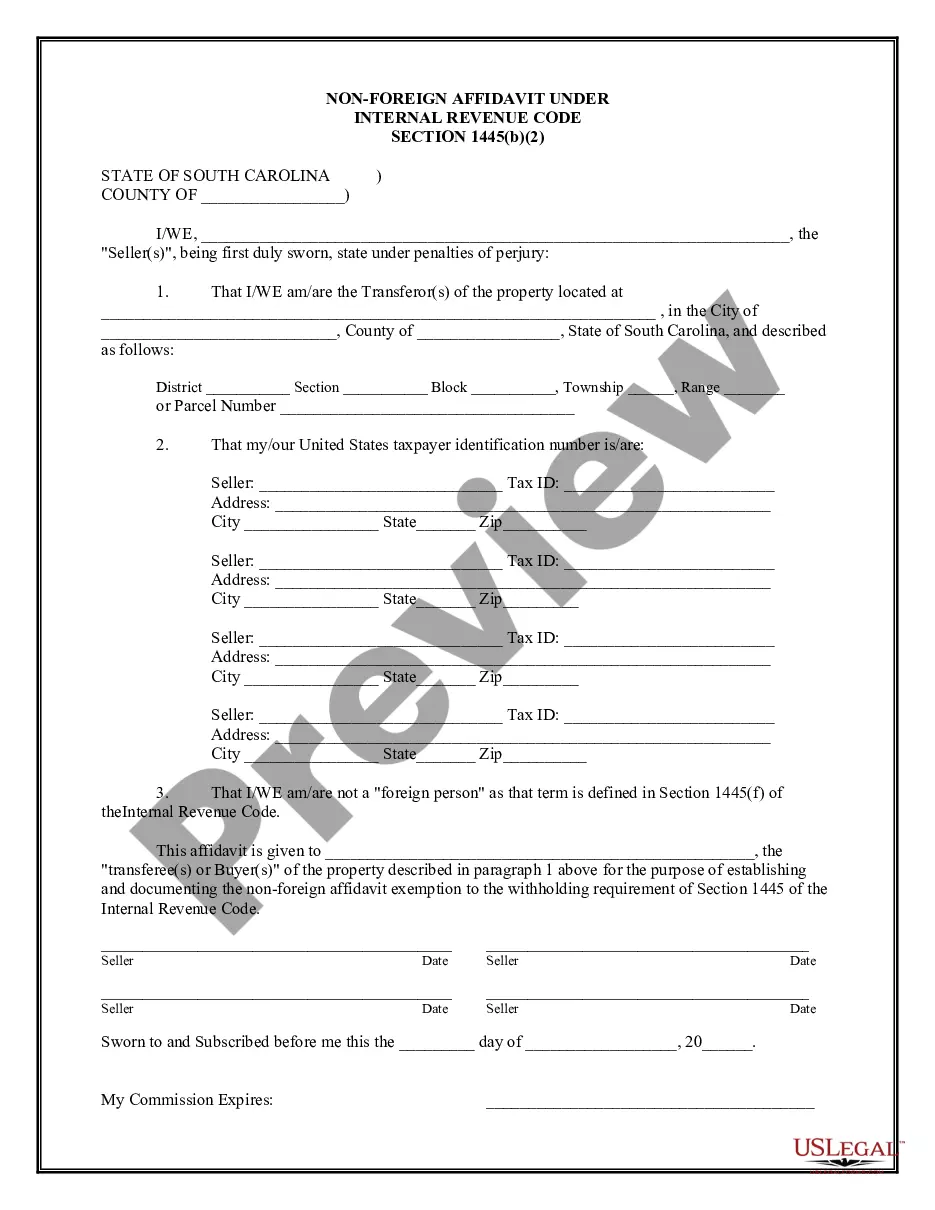
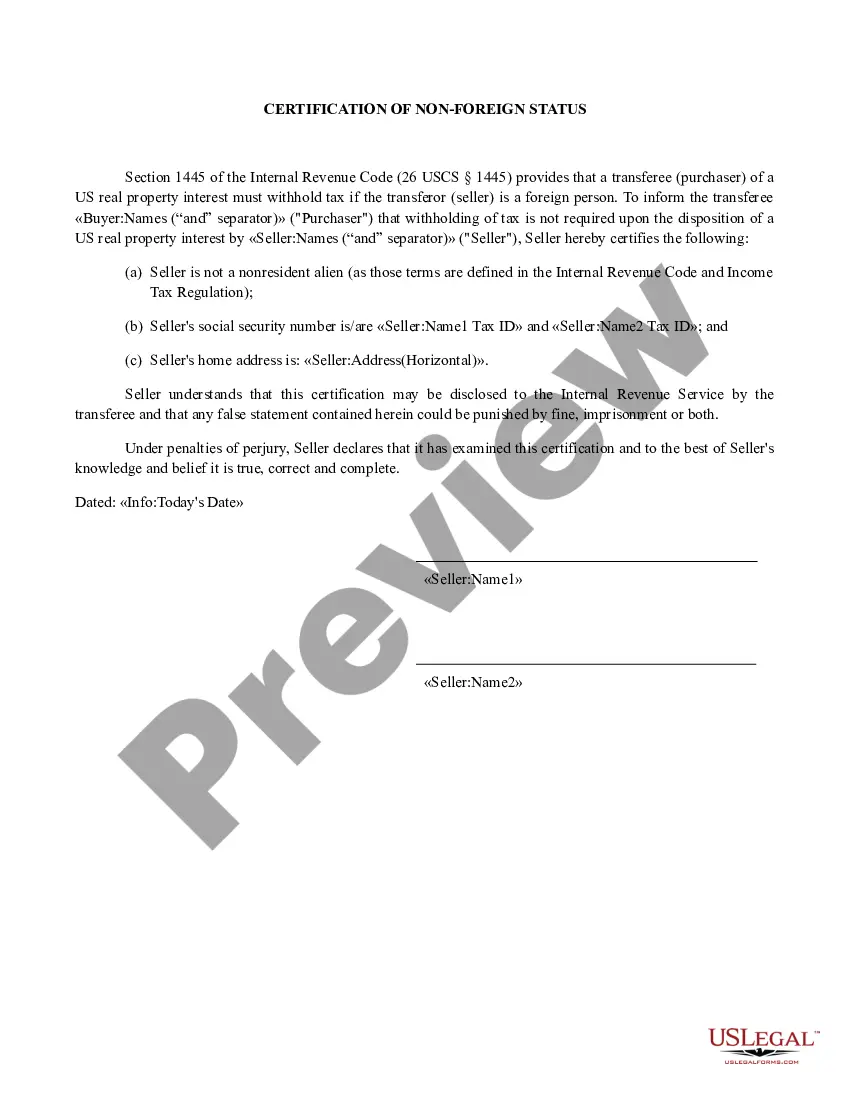
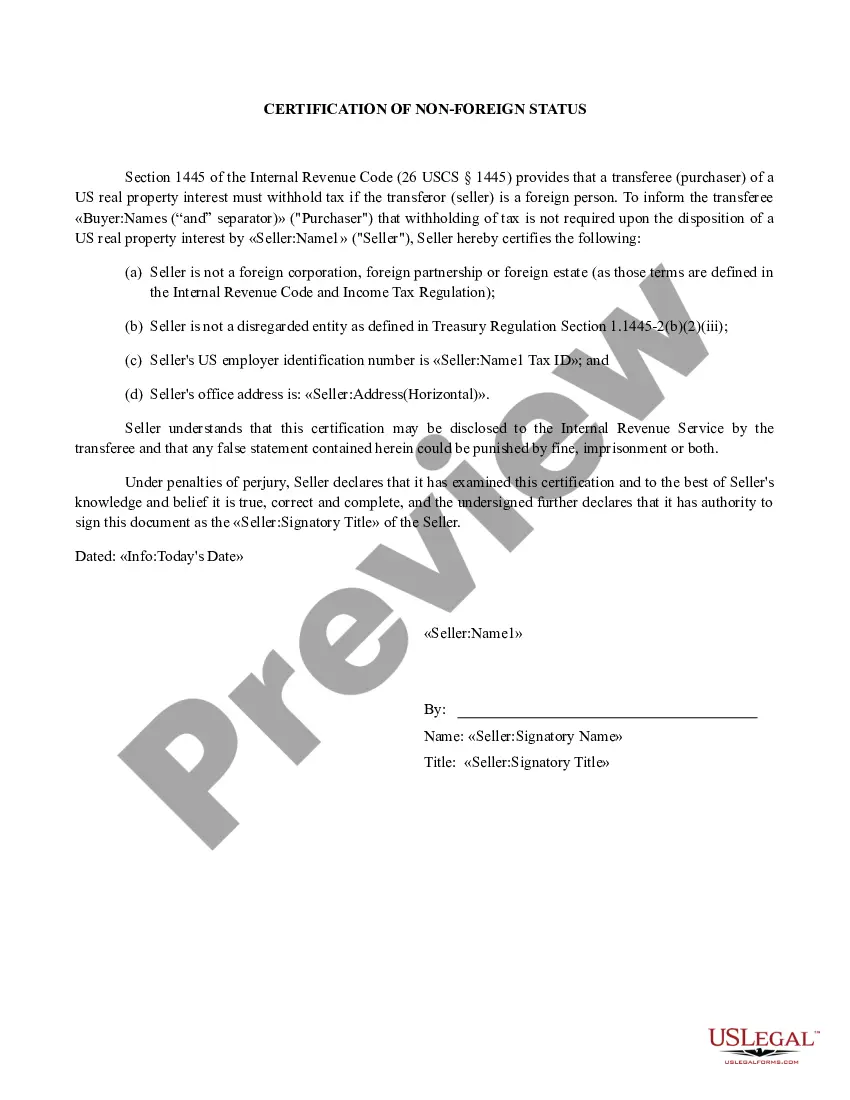
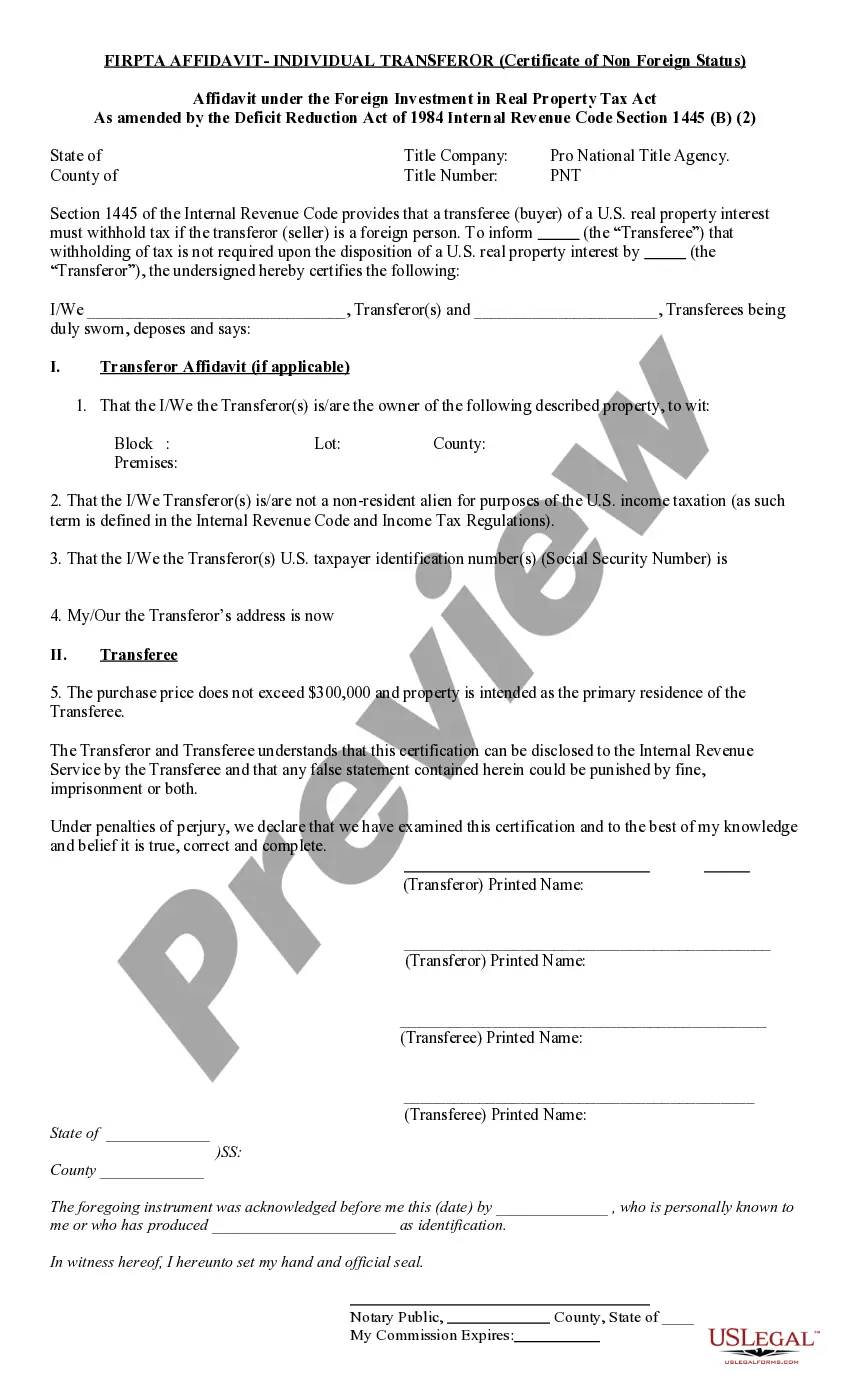
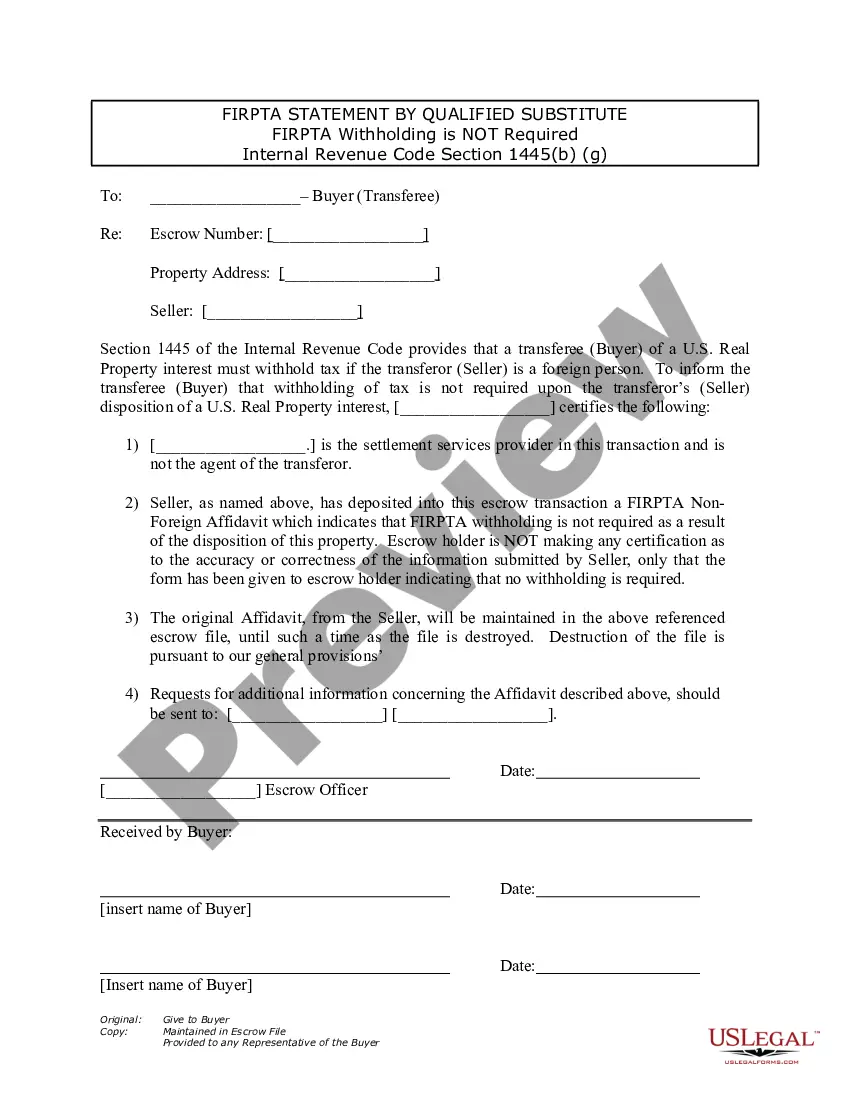
The Non-Foreign Affidavit Under IRC 1445 is a legal document that sellers of real property use to declare that they are not foreign persons as defined by the Internal Revenue Code. This affidavit helps sellers avoid withholding taxes on the sale of property in the United States. Unlike other affidavits, this form specifically caters to the requirements set forth in IRC Section 1445, ensuring compliance with federal tax laws when transferring property ownership.
Key components of this form
- Identification of the seller(s) and property being sold.
- Declaration of the seller(s) as non-foreign persons under IRC Section 1445.
- Provision of taxpayer identification numbers for each seller.
- Space for notarization to validate the affidavit.

When to use this form
This form should be used when a seller of real estate wishes to confirm their non-foreign status to the buyer. It is particularly important when the sale may trigger the withholding tax provisions of the Internal Revenue Code. Using this affidavit can help the seller avoid unnecessary withholding from the proceeds of the sale, streamlining the transaction process.
Who needs this form
- Individuals or entities selling real property within the United States.
- Real estate professionals assisting sellers in completing the transaction.
- Buyers requiring documentation that the seller is not a foreign person for tax purposes.
Instructions for completing this form
- Identify the seller(s) by providing their names and addresses.
- Specify the property details, including the address and legal description.
- Enter the United States taxpayer identification numbers for each seller.
- Clearly state that the seller(s) are not foreign persons as defined by the IRC.
- Sign and date the document in the presence of a notary public.
Does this document require notarization?
To make this form legally binding, it must be notarized. Our online notarization service, powered by Notarize, lets you verify and sign documents remotely through an encrypted video session.
Get your form ready online
Our built-in tools help you complete, sign, share, and store your documents in one place.
Make edits, fill in missing information, and update formatting in US Legal Forms—just like you would in MS Word.
Download a copy, print it, send it by email, or mail it via USPS—whatever works best for your next step.
Sign and collect signatures with our SignNow integration. Send to multiple recipients, set reminders, and more. Go Premium to unlock E-Sign.
If this form requires notarization, complete it online through a secure video call—no need to meet a notary in person or wait for an appointment.
We protect your documents and personal data by following strict security and privacy standards.

Make edits, fill in missing information, and update formatting in US Legal Forms—just like you would in MS Word.

Download a copy, print it, send it by email, or mail it via USPS—whatever works best for your next step.

Sign and collect signatures with our SignNow integration. Send to multiple recipients, set reminders, and more. Go Premium to unlock E-Sign.

If this form requires notarization, complete it online through a secure video call—no need to meet a notary in person or wait for an appointment.

We protect your documents and personal data by following strict security and privacy standards.
Common mistakes to avoid
- Failing to accurately list the property description or identification number.
- Not including all required seller names and taxpayer identification numbers.
- Omitting the notarization step, which is vital for legal validity.
- Signing the affidavit without the presence of a notary public.
Quick recap
- The Non-Foreign Affidavit Under IRC 1445 is crucial for sellers to declare their non-foreign status.
- Completing this affidavit can prevent withholding taxes during property sales.
- This form should be notarized to ensure its legal enforceability.
Looking for another form?



Form popularity
FAQ
FIRPTA Exemptions The sales price is $300,000 or less, and. The buyer signs affidavit at or before closing stating they intend to use property for personal purposes for at least 50% of time property occupied for the each of the first two 12 month periods immediately after closing.
Persons purchasing U.S. real property interests (transferees) from foreign persons, certain purchasers' agents, and settlement officers are required to withhold 15% (10% for dispositions before February 17, 2016) of the amount realized on the disposition (special rules for foreign corporations).
This document, included in the seller's opening package, requests that the seller swears under penalty of perjury that they are not a non-resident alien for purposes of United States income taxation. A Seller unable to complete this affidavit may be subject to withholding up to 15%.
You or a member of your family must have definite plans to reside at the property for at least 50% of the number of days the property is used by any person during each of the first two 12-month periods following the date of transfer.
What Is a Certification of Non-Foreign Status? With a Certification of Non-Foreign Status, the seller of real estate is certifying under penalty of perjury, that the seller is not foreign. Therefore, the seller and the transaction will not have the withholding requirements.
The disposition of a U.S. real property interest by a foreign person (the transferor) is subject to the Foreign Investment in Real Property Tax Act of 1980 (FIRPTA) income tax withholding. FIRPTA authorized the United States to tax foreign persons on dispositions of U.S. real property interests.
A foreign person includes a nonresident alien individual, foreign corporation, foreign partnership, foreign trust, foreign estate, and any other person that is not a U.S. person. It also includes a foreign branch of a U.S. financial institution if the foreign branch is a qualified intermediary.
The disposition of a U.S. real property interest by a foreign person (the transferor) is subject to income tax withholding (IRC section 1445). The transferee is the withholding agent.If the transferor is a foreign person and you fail to withhold, you may be held liable for the tax.