South Carolina Installments Fixed Rate Promissory Note Secured by Commercial Real Estate
About this form
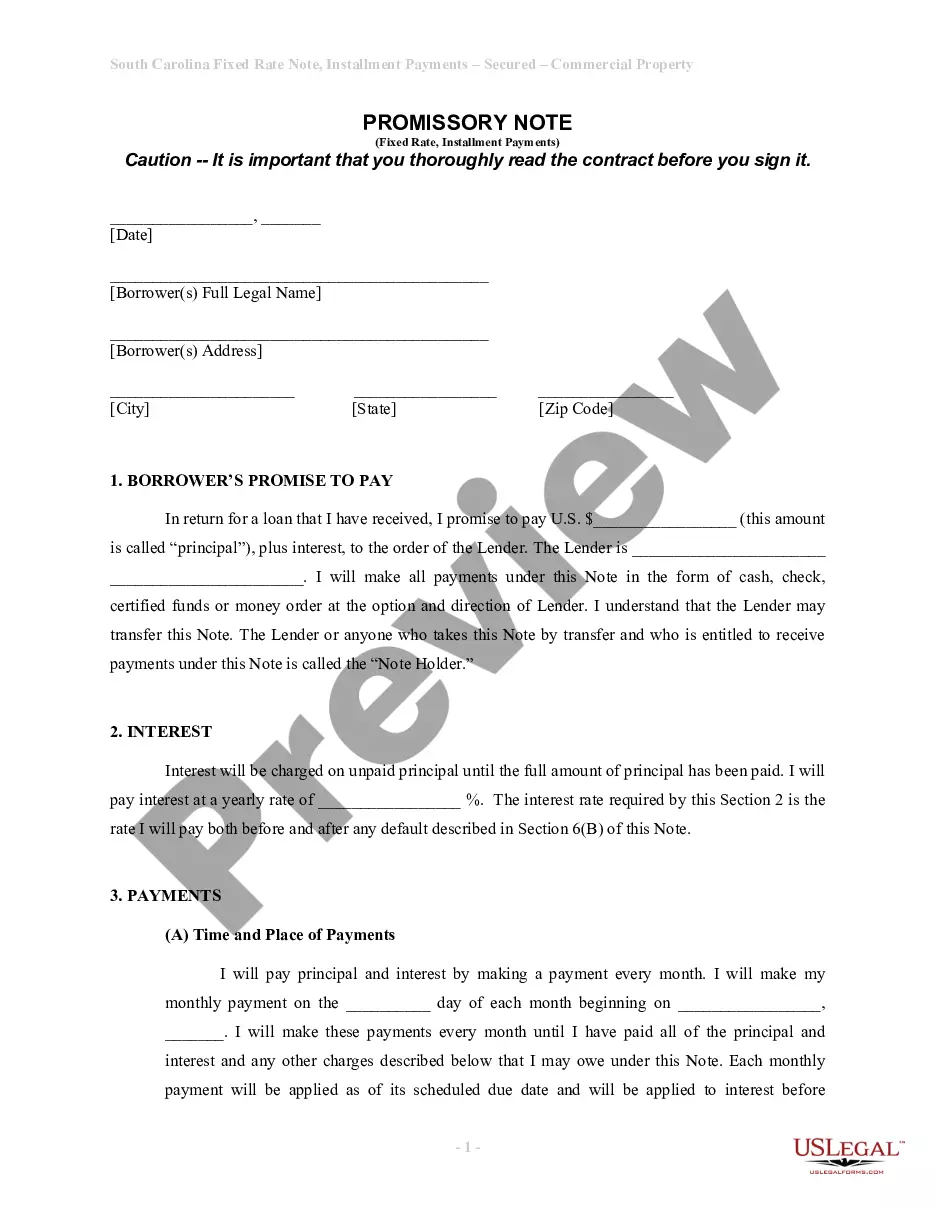
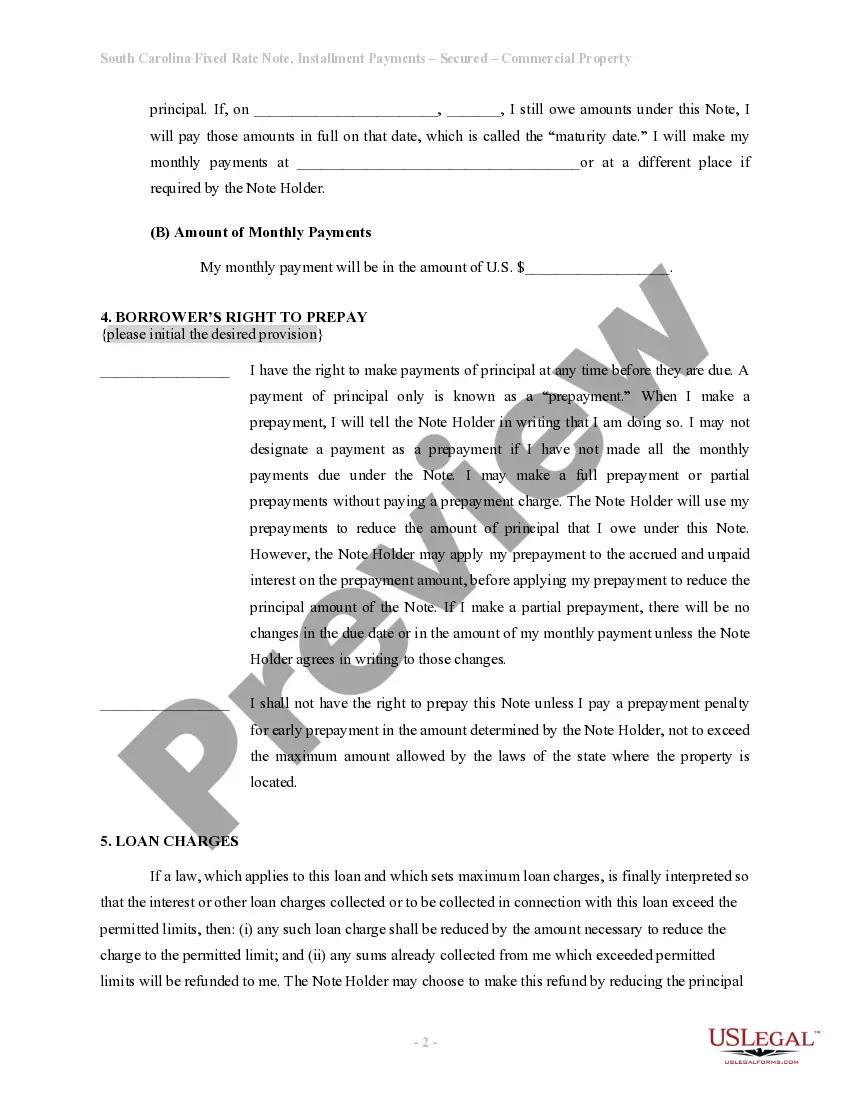
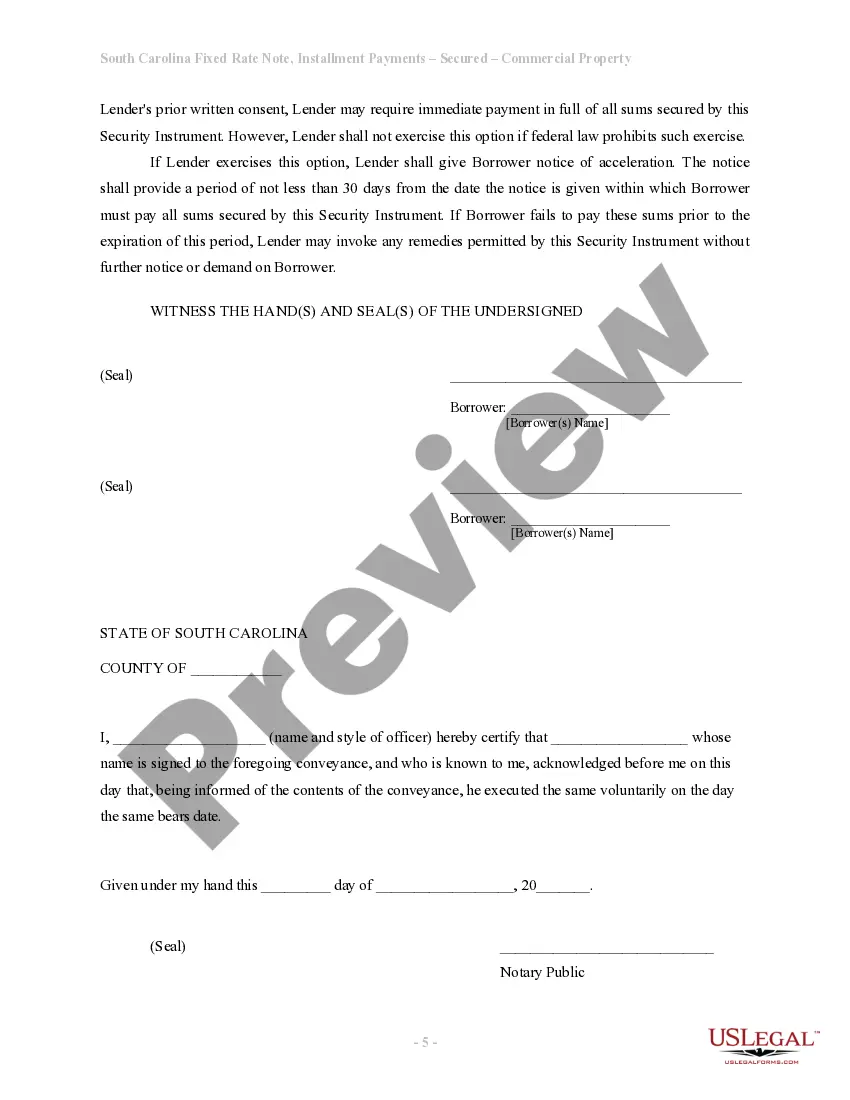
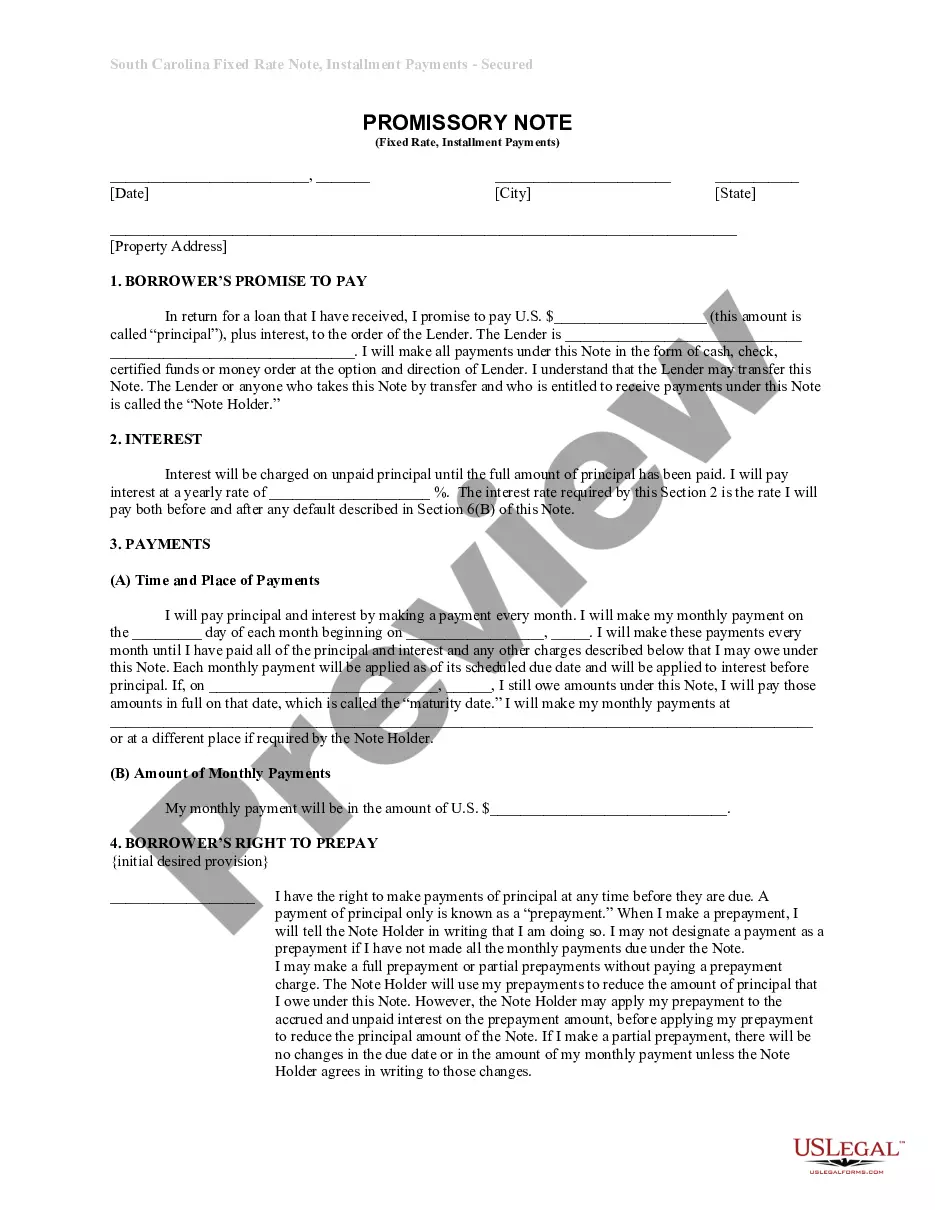
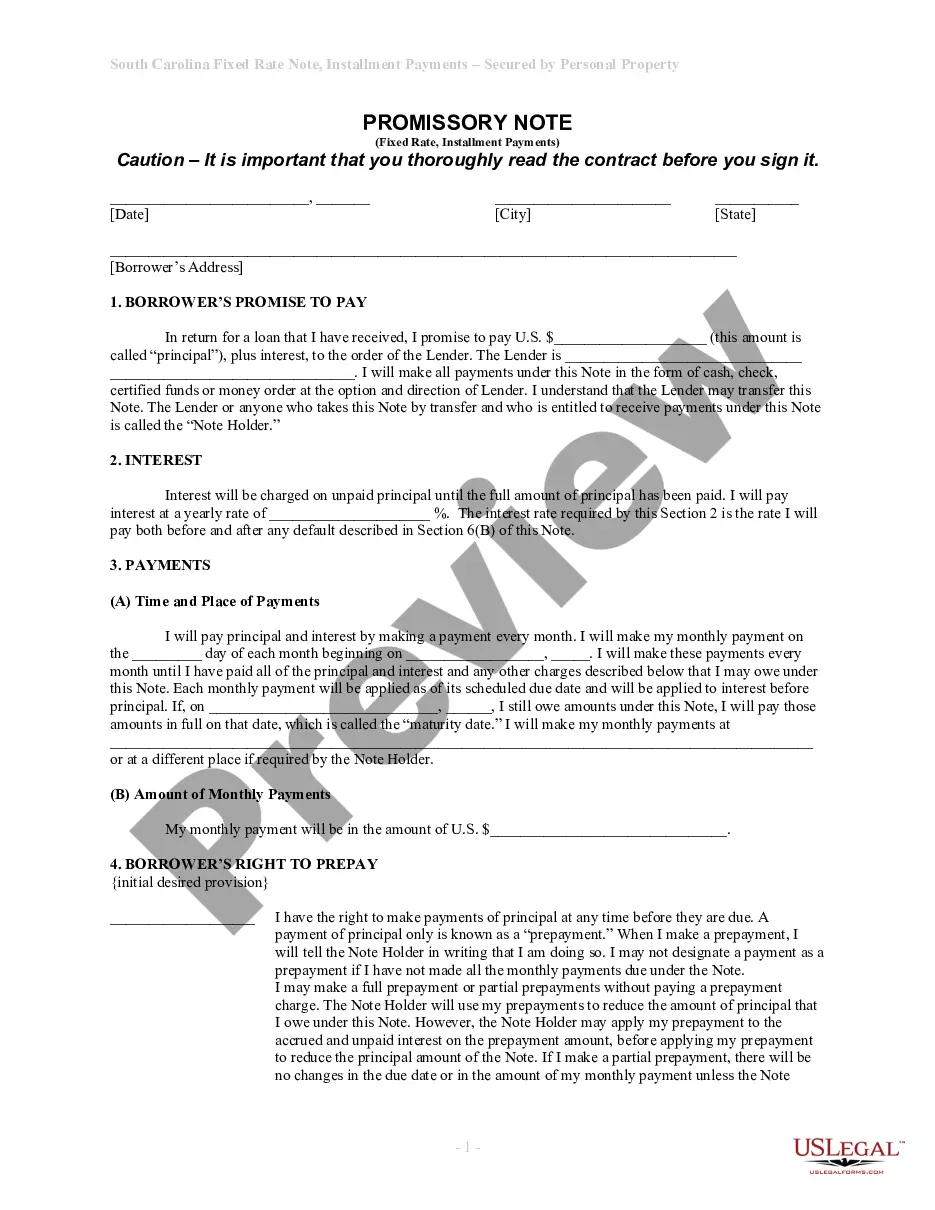
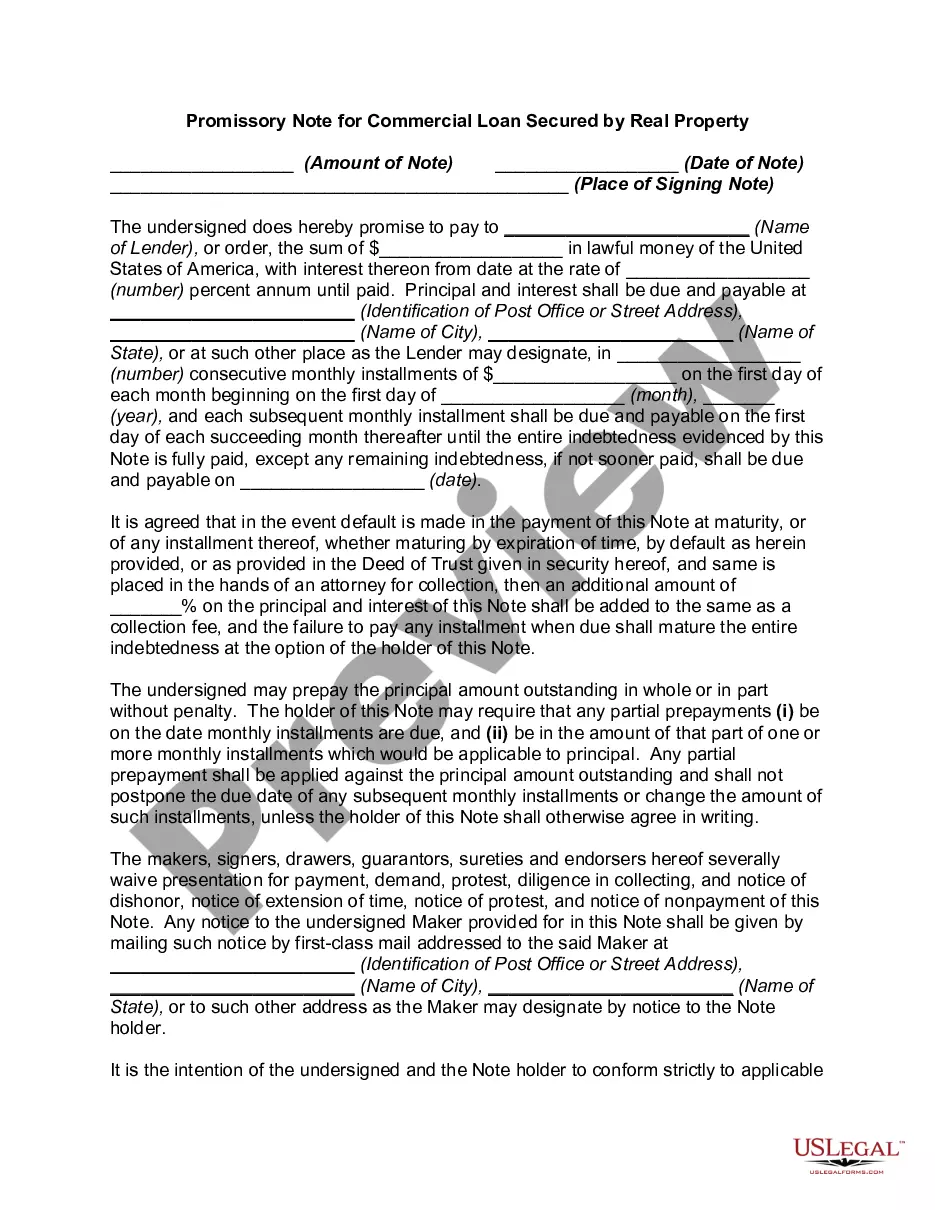
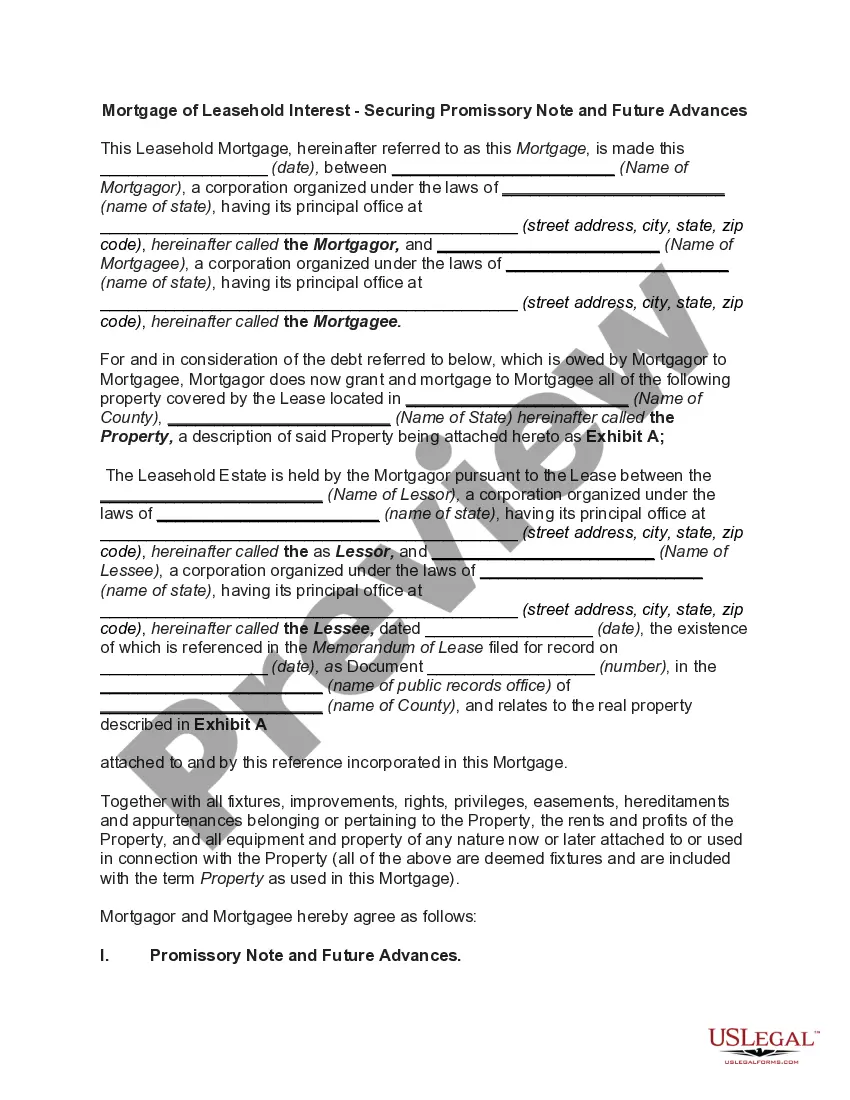
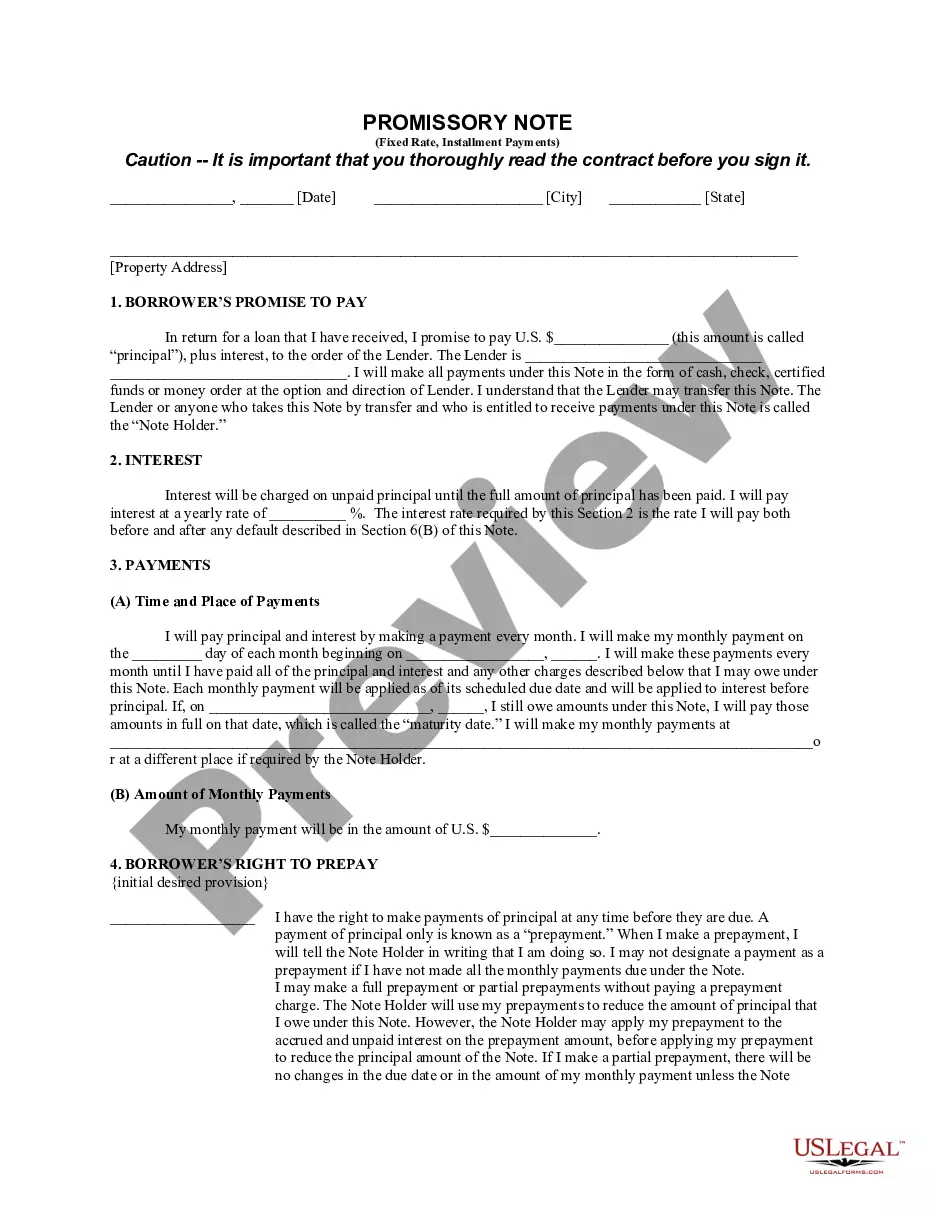
The South Carolina Installments Fixed Rate Promissory Note Secured by Commercial Real Estate is a legal document that formalizes a borrower's promise to repay a loan with fixed monthly installments, securing the loan against commercial property. This form is useful when obtaining financing for a business or commercial property, ensuring clarity between lenders and borrowers about payment terms and conditions. It differs from general promissory notes by specifically addressing loans secured by real estate, providing necessary legal protections for the lender.
Key components of this form
- Borrower's promise to pay the principal amount and interest.
- Detailed interest rate and payment schedule.
- Right to prepay the loan with conditions attached.
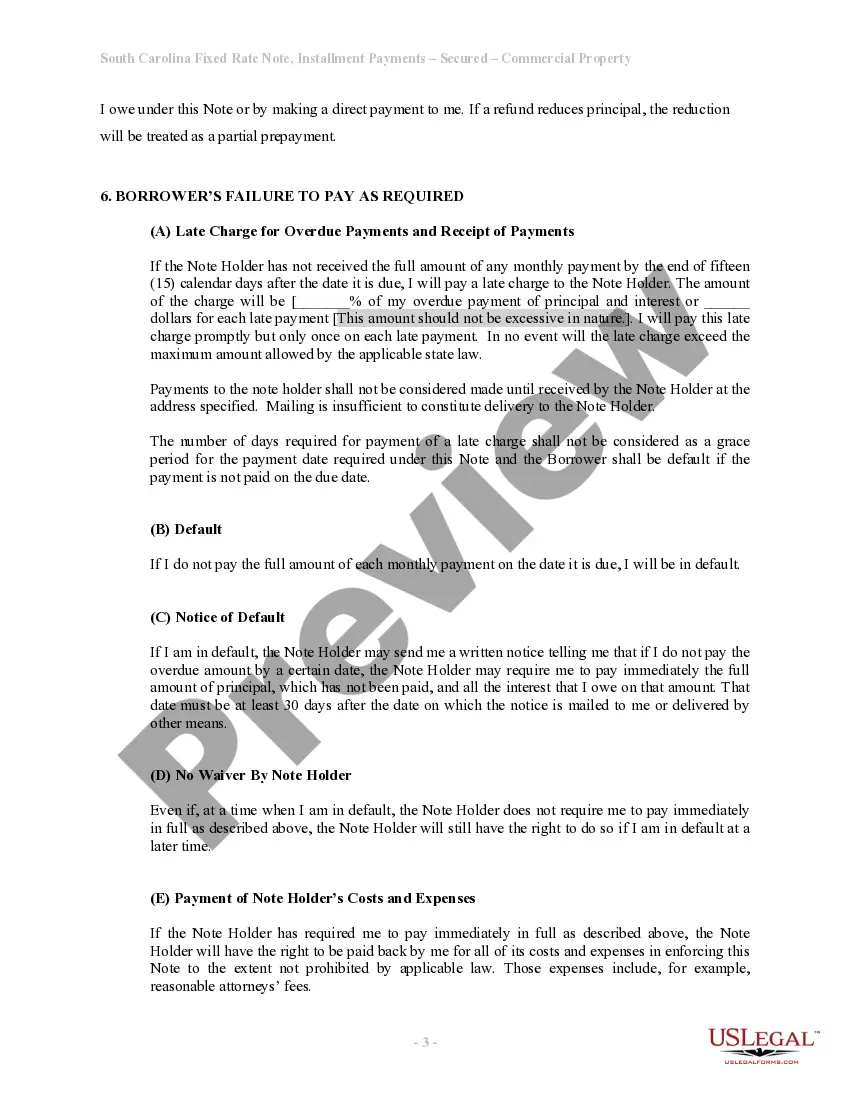
- Consequences of late payments and default rules.
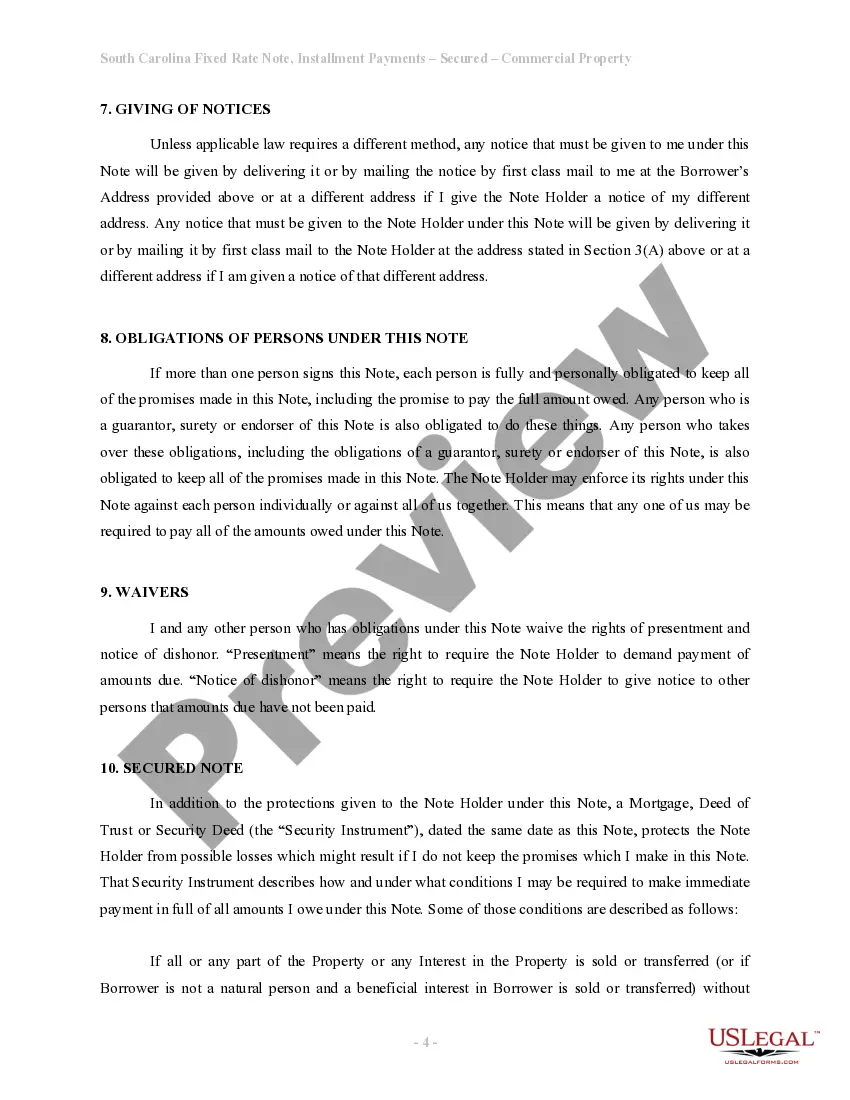
- Legal definitions regarding notifications and obligations.
- Secured status of the note through a mortgage or deed of trust.
When this form is needed
This form should be used when borrowing money to purchase or invest in commercial real estate where the property serves as collateral. It is also applicable when the borrower intends to establish a fixed schedule for repayment over time, making it ideal for business owners looking for structured financing options.
Who needs this form
- Business owners seeking to secure a loan against commercial property.
- Investors looking for financing options for real estate purchases.
- Individuals who have negotiated loan terms with a lender.
- Borrowers who prefer fixed-rate loans with structured payment plans.
Instructions for completing this form
- Enter the date, city, and state at the top of the form.
- Complete the borrower's name and address details clearly.
- Fill in the principal amount and interest rate applicable to the loan.
- Specify the monthly payment amount and the payment schedule.
- Include any provisions for late fees or prepayment conditions.
- Sign and date the form to make it legally binding.
Notarization guidance
This form does not typically require notarization unless specified by local law. However, depending on the lender's requirements or specific circumstances of the loan, notarization may be advisable for additional security and validation.
Get your form ready online
Our built-in tools help you complete, sign, share, and store your documents in one place.
Make edits, fill in missing information, and update formatting in US Legal Forms—just like you would in MS Word.
Download a copy, print it, send it by email, or mail it via USPS—whatever works best for your next step.
Sign and collect signatures with our SignNow integration. Send to multiple recipients, set reminders, and more. Go Premium to unlock E-Sign.
If this form requires notarization, complete it online through a secure video call—no need to meet a notary in person or wait for an appointment.
We protect your documents and personal data by following strict security and privacy standards.

Make edits, fill in missing information, and update formatting in US Legal Forms—just like you would in MS Word.

Download a copy, print it, send it by email, or mail it via USPS—whatever works best for your next step.

Sign and collect signatures with our SignNow integration. Send to multiple recipients, set reminders, and more. Go Premium to unlock E-Sign.

If this form requires notarization, complete it online through a secure video call—no need to meet a notary in person or wait for an appointment.

We protect your documents and personal data by following strict security and privacy standards.
Mistakes to watch out for
- Failing to specify the interest rate accurately, which can lead to disputes.
- Not including the complete borrower information, resulting in confusion about obligations.
- Overlooking the prepayment rights or penalties, which could impact future financial flexibility.
- Neglecting to sign the document, making it invalid.
Why use this form online
- Convenience of accessing and downloading the form at any time.
- Editable fields that allow customization to suit individual agreement details.
- Drafted by licensed attorneys, ensuring legal accuracy and compliance.
- Easy to store and manage electronically, reducing paperwork clutter.
Looking for another form?

Form popularity
FAQ
A simple promissory note might be for a lump sum repayment on a certain date. For example, you lend your friend $1,000 and he agrees to repay you by December 1. The full amount is due on that date, and there is no payment schedule involved.
Promissory notes are legally binding whether the note is secured by collateral or based only on the promise of repayment. If you lend money to someone who defaults on a promissory note and does not repay, you can legally possess any property that individual promised as collateral.
When a loan changes hands, the promissory note is endorsed (signed over) to the new owner of the loan. In some cases, the note is endorsed in blank which makes it a bearer instrument under Article 3 of the Uniform Commercial Code. So, any party that possesses the note has the legal authority to enforce it.
The lender holds the promissory note while the loan is being repaid, then the note is marked as paid and returned to the borrower when the loan is satisfied. Promissory notes aren't the same as mortgages, but the two often go hand in hand when someone is buying a home.
What Is a Promissory Note? A promissory note is a financial instrument that contains a written promise by one party (the note's issuer or maker) to pay another party (the note's payee) a definite sum of money, either on demand or at a specified future date.
Promissory notes are a valuable legal tool that any individual can use to legally bind another individual to an agreement for purchasing goods or borrowing money. A well-executed promissory note has the full effect of law behind it and is legally binding on both parties.
A promissory note can be secured with a pledge of collateral, which is something of value that can be seized if a borrower defaults.
The individual who promises to pay is the maker, and the person to whom payment is promised is called the payee or holder. If signed by the maker, a promissory note is a negotiable instrument.
Whether a promissory note is a security is one of the most vexatious issues in US securities laws.In general, under the Securities Acts, promissory notes are defined as securities, but notes with a maturity of 9 months or less are not securities.