Work Made for Hire Author Contract
What is this form?
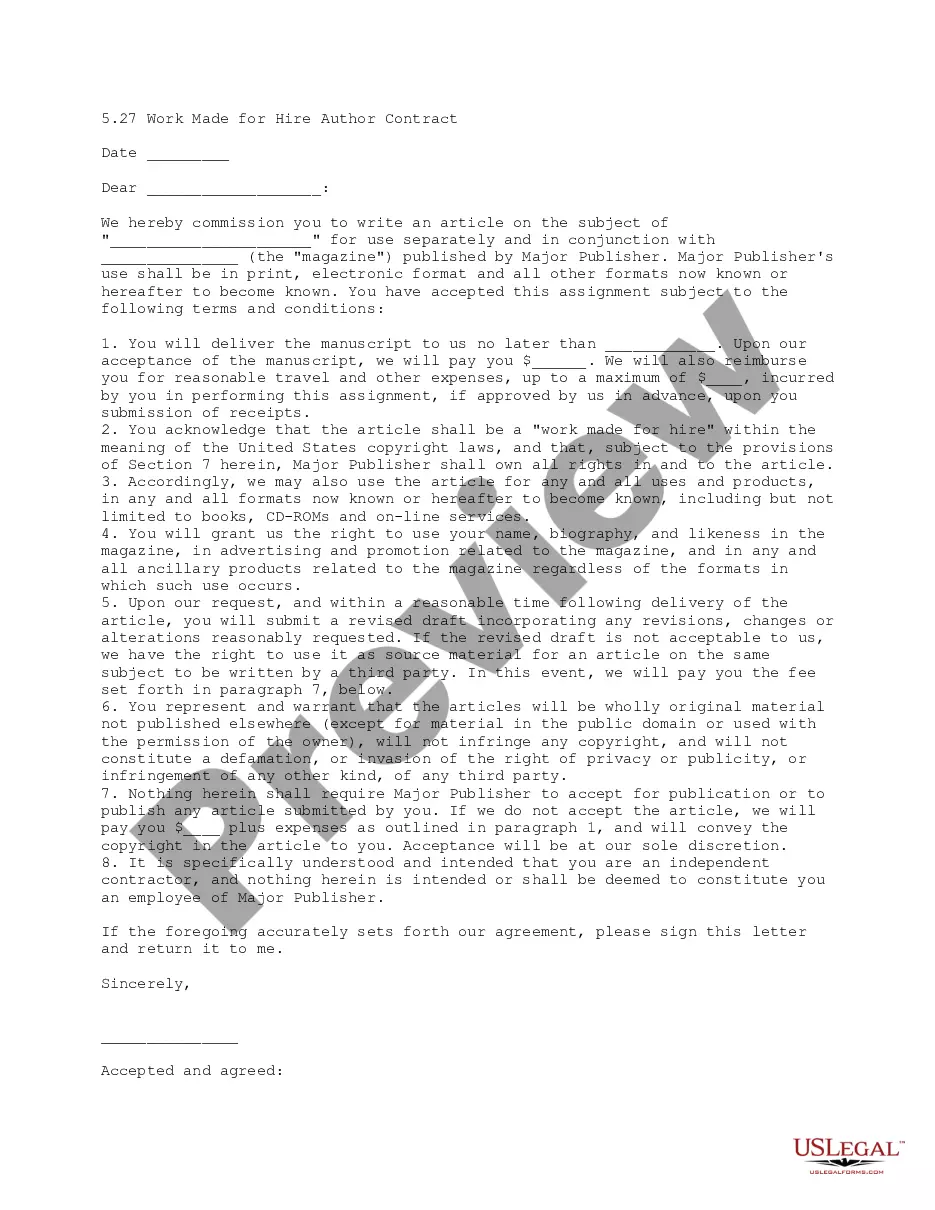
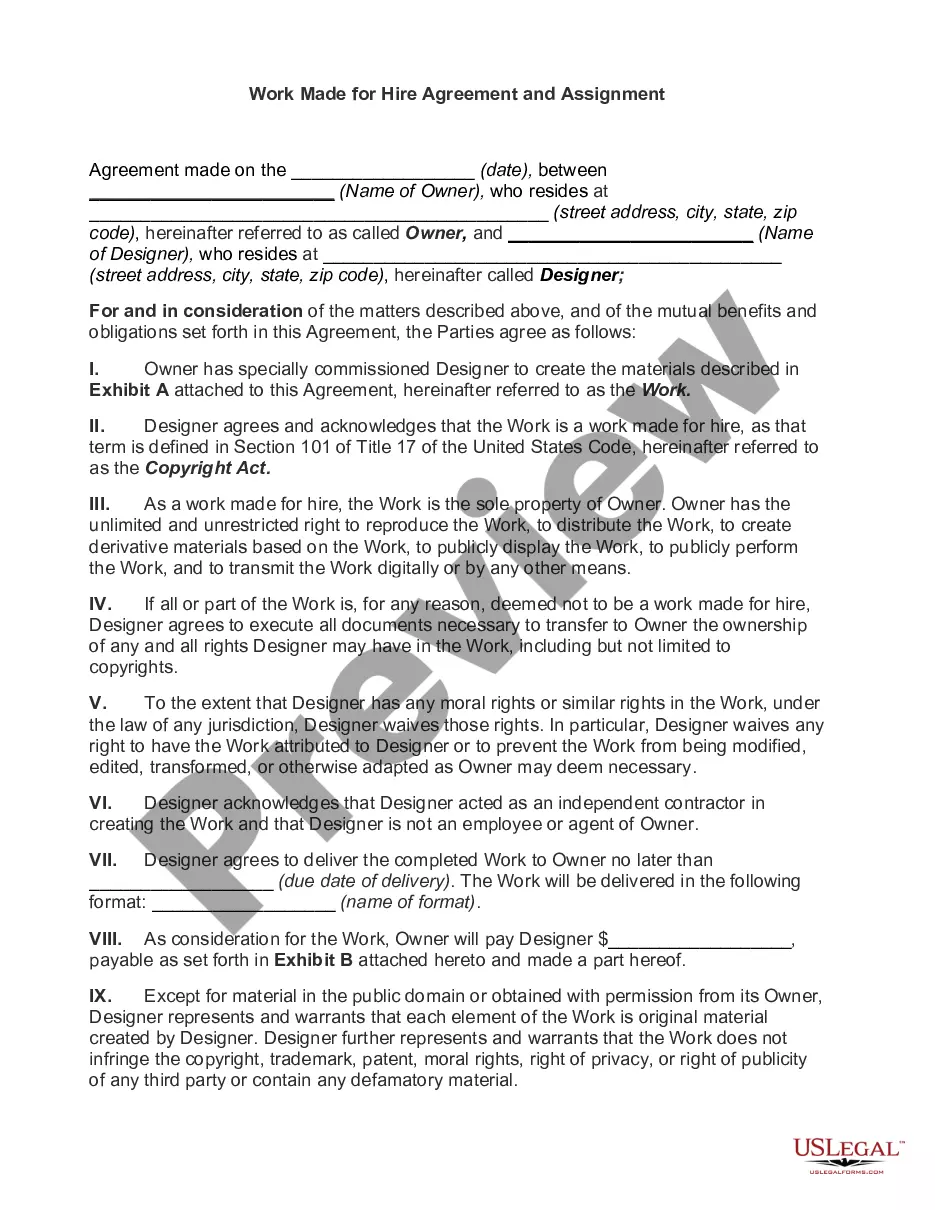
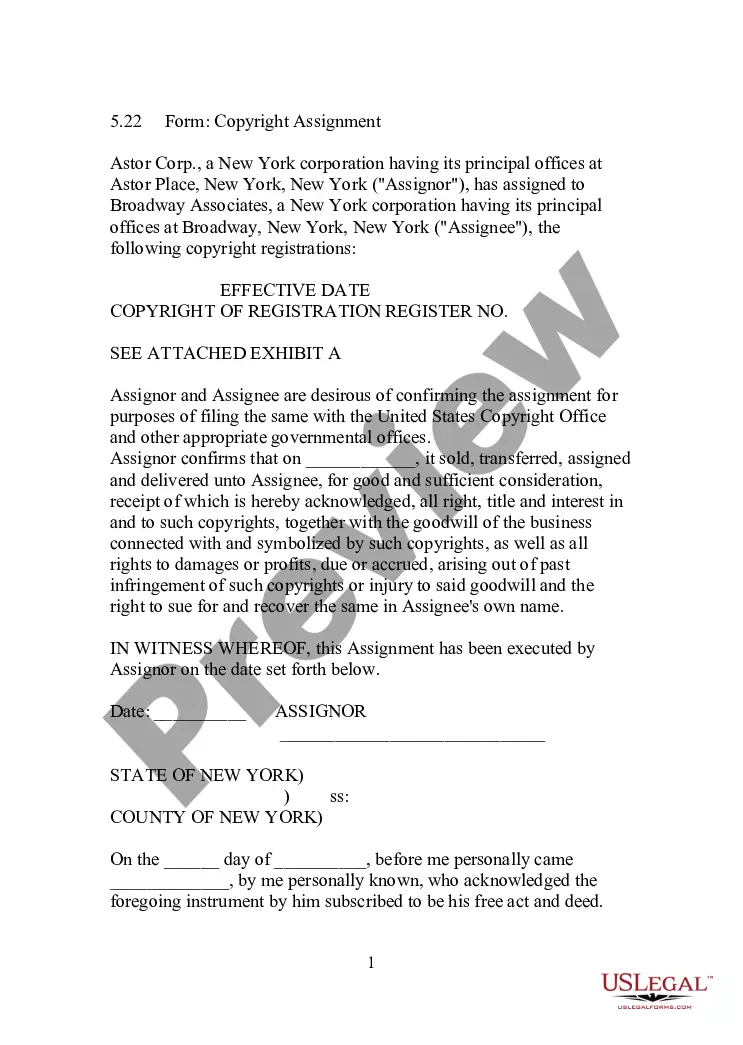
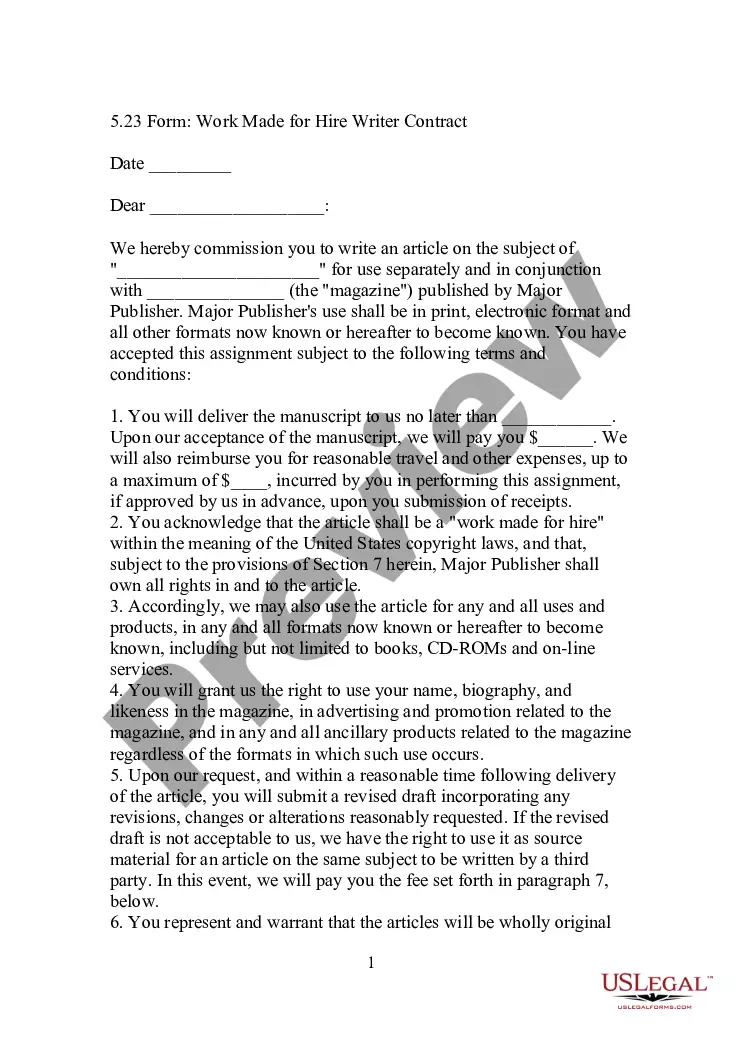
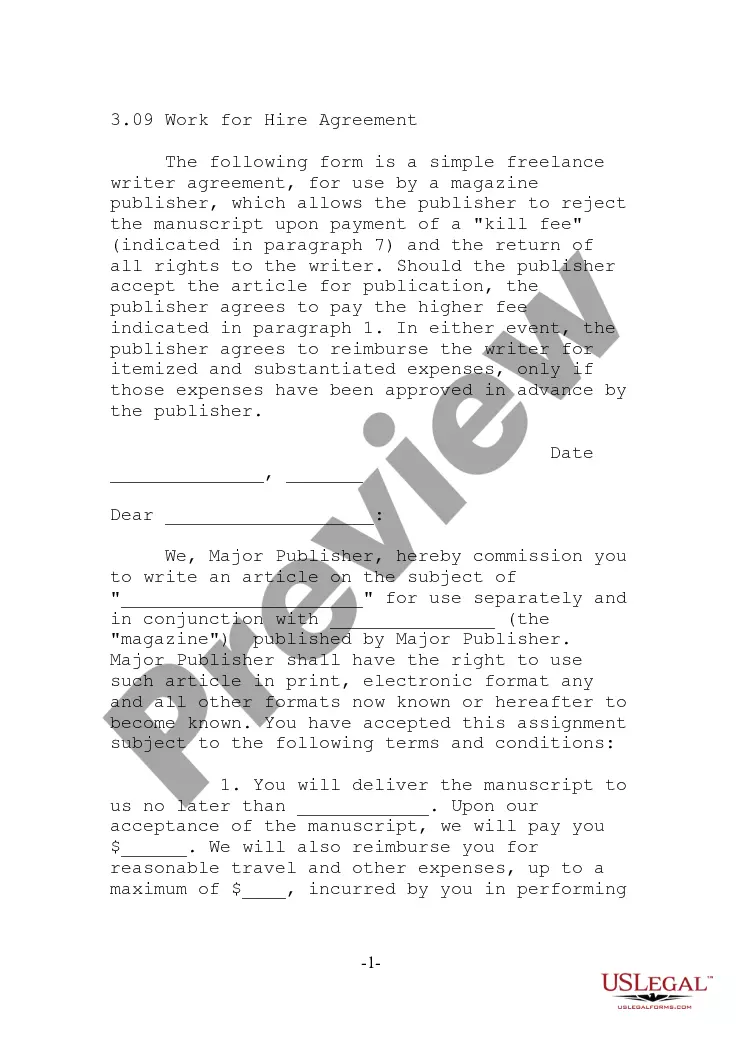
The Work Made for Hire Author Contract is a legal document used to commission an author to write an article specifically for a publisher. This contract outlines the terms of the engagement and ensures that the article is recognized as a "work made for hire" under U.S. copyright law. This form is distinct from general employment contracts in that it specifically addresses copyright ownership and publication rights for the commissioned work.
Key components of this form
- Commissioning details, including subject matter and deadlines.
- Compensation terms for the author, including fees and reimbursement for expenses.
- Acknowledgment of copyright ownership by the publisher upon completion of the work.
- Agreement on the use of the author's name and likeness in promotional materials.
- Conditions for manuscript revisions and potential non-acceptance of submissions.
- Clarification of the author's independent contractor status.
Situations where this form applies
This form is ideal when a publisher wishes to hire an author for a specific article. It is essential when the publisher wants to ensure that the article is owned fully by them under copyright law. Use this contract when the author is creating unique content that will be utilized in various formats, including print and digital media.
Who should use this form
- Publishers who need to commission articles from freelance authors.
- Authors looking to establish clear terms of engagement and copyright ownership with a publisher.
- Freelance writers and content creators who want to ensure their rights and compensation are clearly defined.
Steps to complete this form
- Fill in the date and the name of the author being commissioned.
- Clearly specify the subject matter of the article and the name of the publication.
- Enter the deadline for manuscript delivery and the agreed payment.
- Detail any reimbursable expenses and obtain approval for these costs beforehand.
- Ensure both parties sign and date the form to confirm the agreement.
Is notarization required?
This form does not typically require notarization unless specified by local law. It is advisable to check with legal counsel in your jurisdiction for any specific requirements.
Get your form ready online
Our built-in tools help you complete, sign, share, and store your documents in one place.
Make edits, fill in missing information, and update formatting in US Legal Forms—just like you would in MS Word.
Download a copy, print it, send it by email, or mail it via USPS—whatever works best for your next step.
Sign and collect signatures with our SignNow integration. Send to multiple recipients, set reminders, and more. Go Premium to unlock E-Sign.
If this form requires notarization, complete it online through a secure video call—no need to meet a notary in person or wait for an appointment.
We protect your documents and personal data by following strict security and privacy standards.

Make edits, fill in missing information, and update formatting in US Legal Forms—just like you would in MS Word.

Download a copy, print it, send it by email, or mail it via USPS—whatever works best for your next step.

Sign and collect signatures with our SignNow integration. Send to multiple recipients, set reminders, and more. Go Premium to unlock E-Sign.

If this form requires notarization, complete it online through a secure video call—no need to meet a notary in person or wait for an appointment.

We protect your documents and personal data by following strict security and privacy standards.
Common mistakes
- Failing to clearly define the subject matter of the article.
- Not specifying deadlines for submission and payment.
- Overlooking the importance of signature and date for validity.
- Neglecting to obtain prior approval for reimbursable expenses.
Benefits of completing this form online
- Convenient access to a professionally drafted legal document.
- Ability to download and edit the form easily to suit specific needs.
- Assurance of reliability, as the form is created by licensed attorneys.
Looking for another form?
Form popularity
FAQ
But to qualify, a commissioned work must be specified as a work made for hire, either in a contract or other writing, and the work must fit within one of the following categories: (i) a contribution to a collective work, (ii) a part of a motion picture, (iii) a translation, (iv) a supplementary work, (v) a compilation,
The general rule is that you own the patent rights to an invention you create during the course of your employment unless you either:were specifically hired (even without a written agreement) for your inventing skills or to create the invention.
Generally, the person who creates a work is considered its author and the automatic owner of copyright in that work. However, under the work made for hire doctrine, your employer or the company that has commissioned your work, not you, is considered the author and automatic copyright owner of your work.
In the copyright law of the United States, a work made for hire (work for hire or WFH) is a work subject to copyright that is created by an employee as part of his or her job, or some limited types of works for which all parties agree in writing to the WFH designation.
1 For legal purposes, when a work is a work made for hire, the author is not the individual who actually created the work. Instead, the party that hired the individual is considered both the author and the copyright owner of the work.
Only the author or those deriving rights from the author can rightfully claim copyright. There is, however, an exception to this principle: works made for hire. If a work is made for hire, an employer is considered the author even if an employee actually created the work.
If a work is made for hire, the employer or the party that specially ordered or commissioned that work is the initial owner of the copyright in the work unless the employer or the commissioning party has signed a written agreement to the contrary with the work's creator. Copyright Term.
The term of copyright protection of a work made for hire is 95 years from the date of publication or 120 years from the date of creation, whichever expires first. (A work not made for hire is ordinarily protected by copyright for the life of the author plus 70 years.)