California Party Wall Agreement
Overview of this form
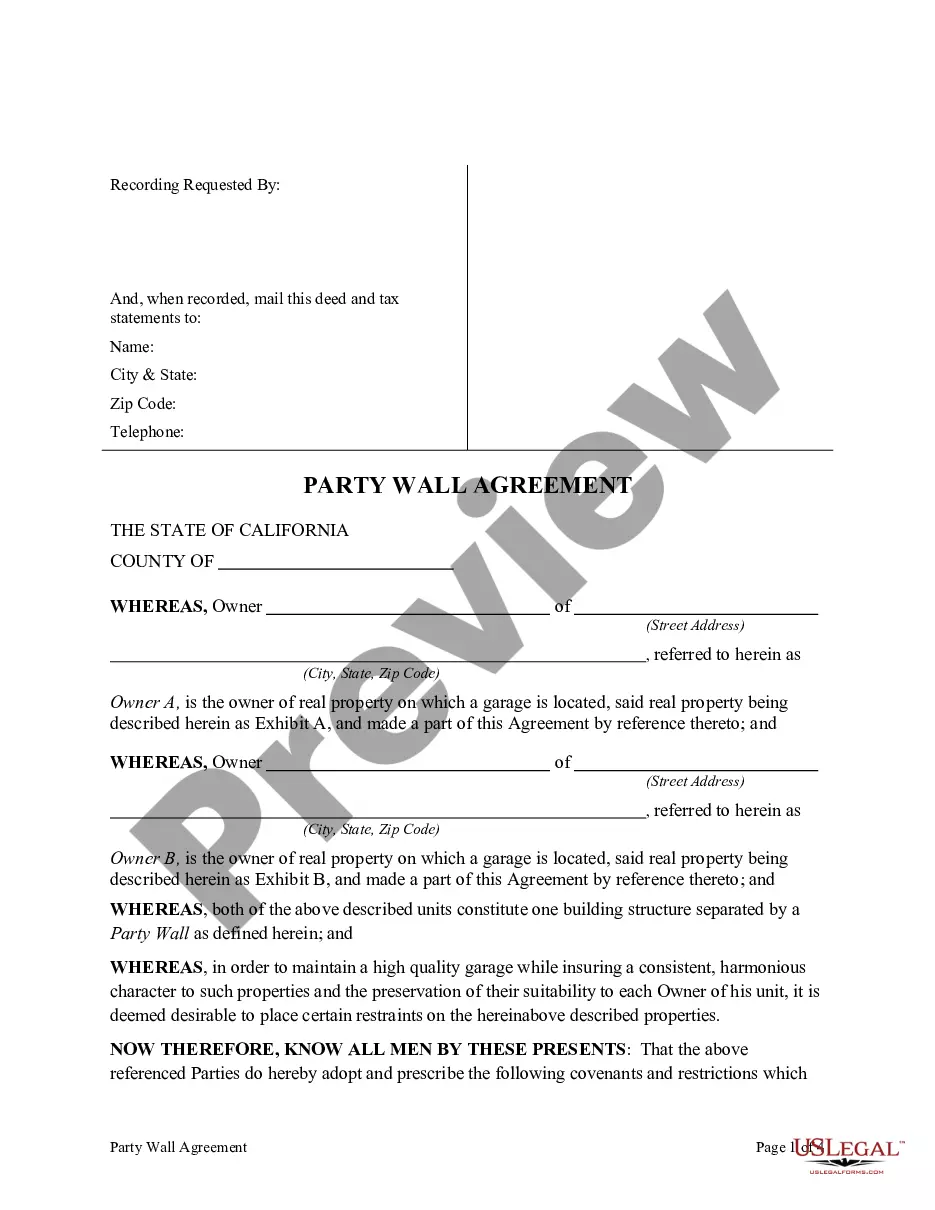
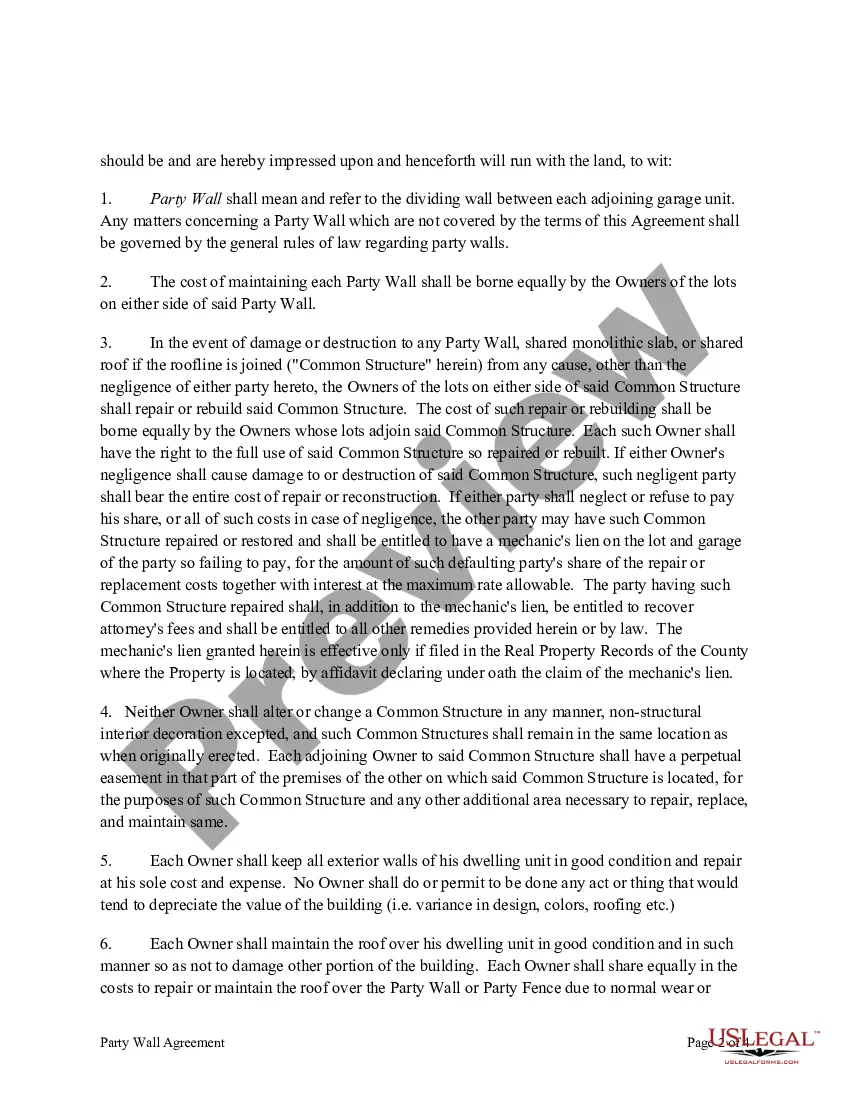
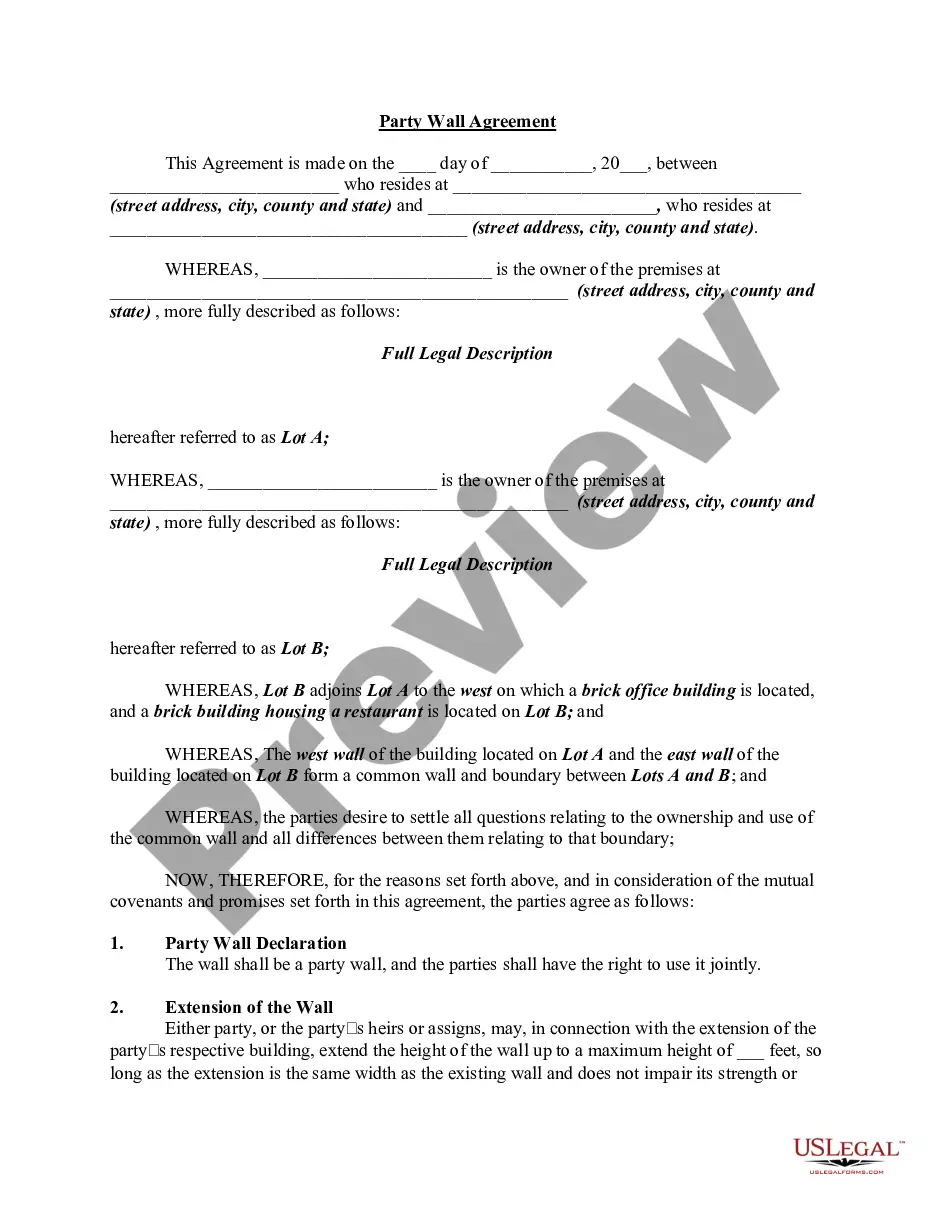
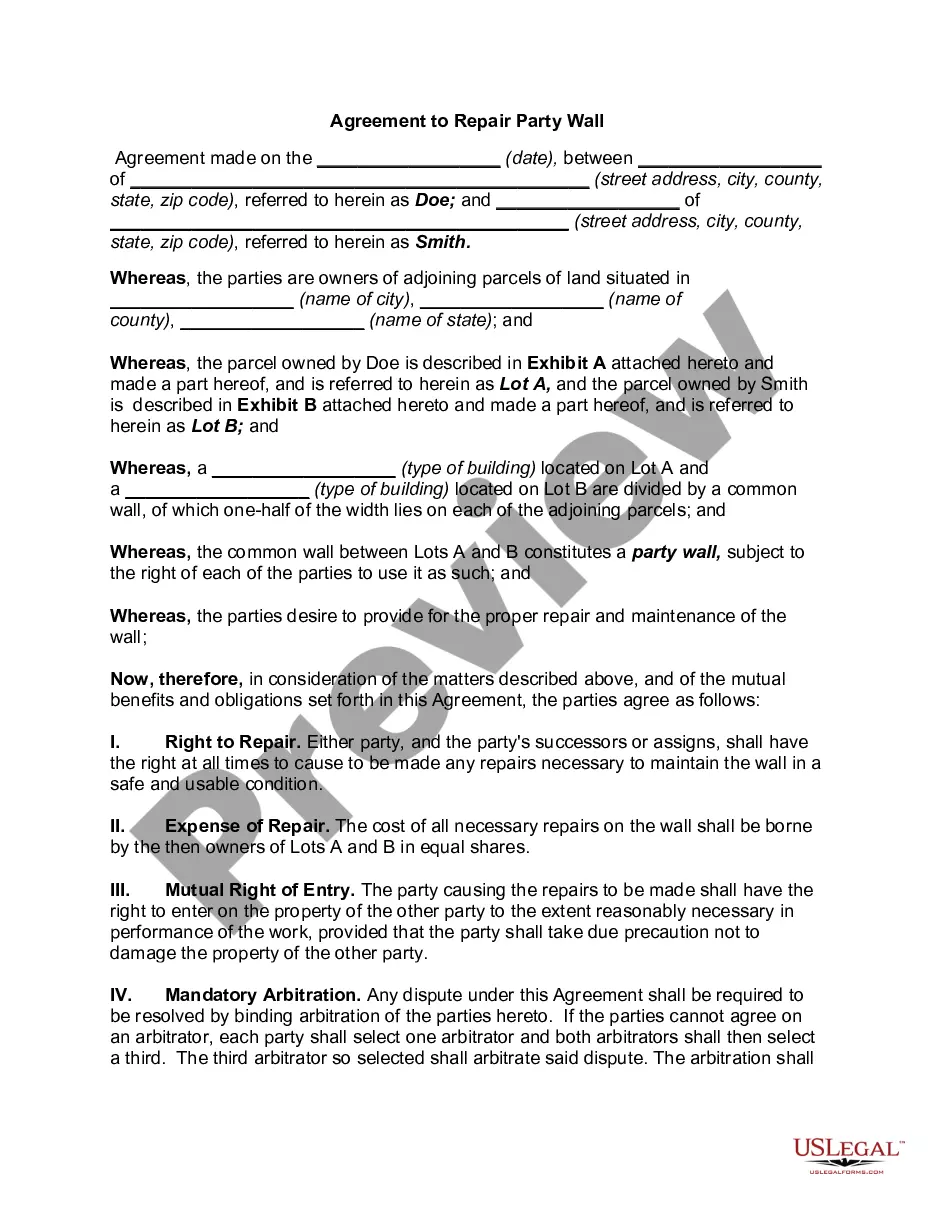
A Party Wall Agreement is a legal document that outlines the rights and responsibilities of property owners sharing a common wall, often referred to as a party wall. This form is essential for managing shared structures, ensuring that maintenance, repairs, and modifications are clearly defined to prevent disputes between adjacent property owners. Unlike similar agreements, a Party Wall Agreement specifically addresses the mutual obligations relating to the upkeep and use of the wall and connected structures.
Key parts of this document
- Definition of the party wall and other shared structures.
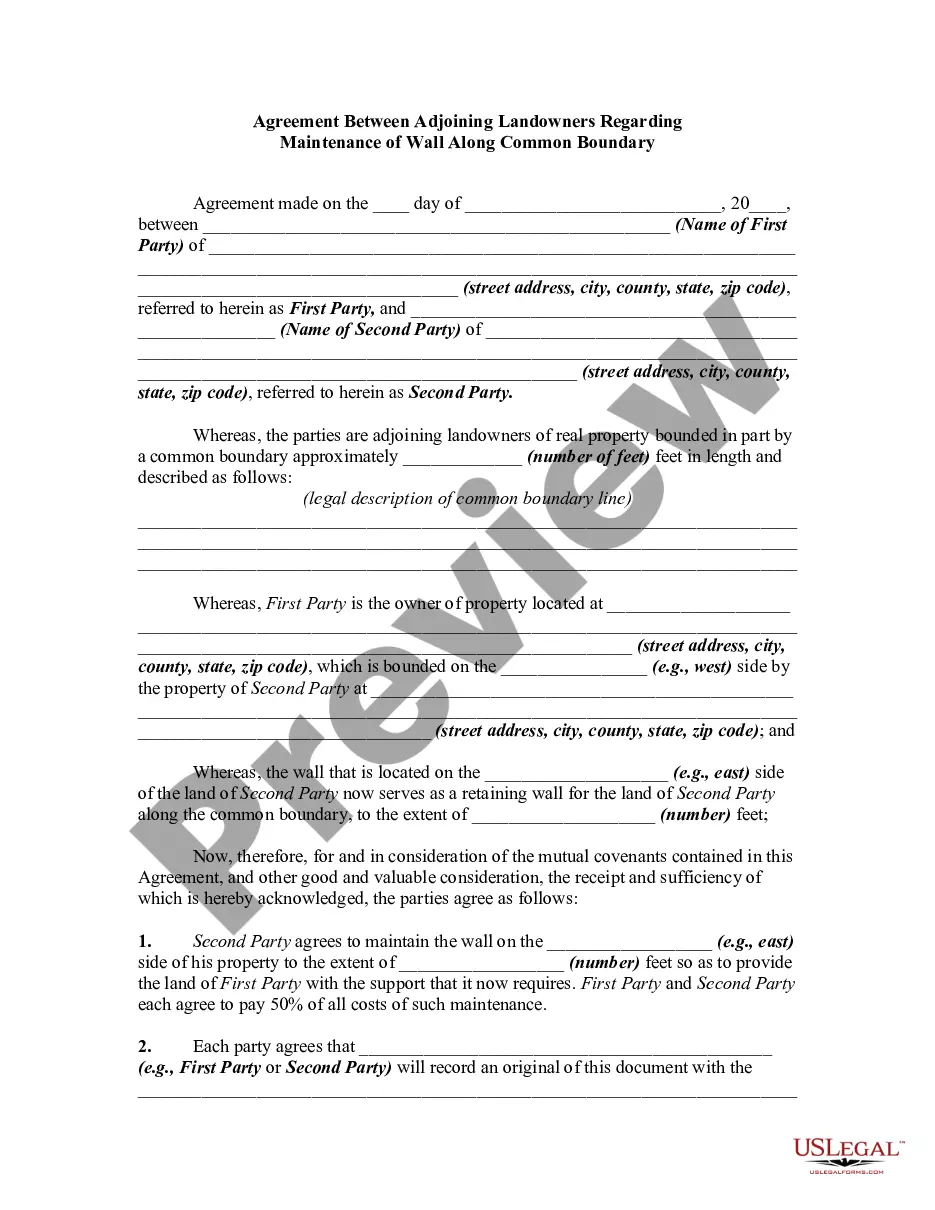
- Details on the maintenance responsibilities of each owner.
- Procedures for handling damage repairs and associated costs.
- Restrictions on modifications to shared structures.
- Rights to access other properties for maintenance and repairs.
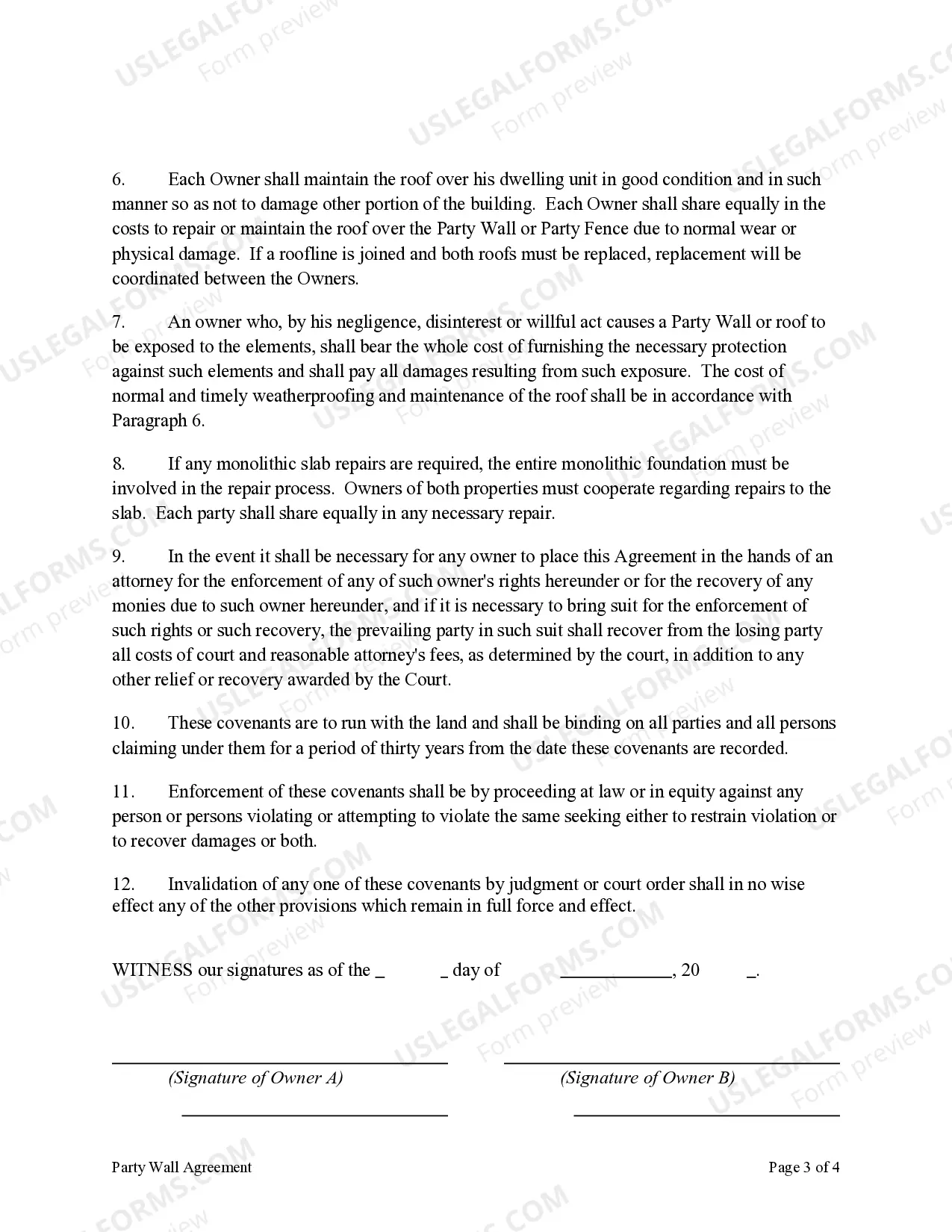
- Terms regarding legal enforcement of the agreement and related costs.



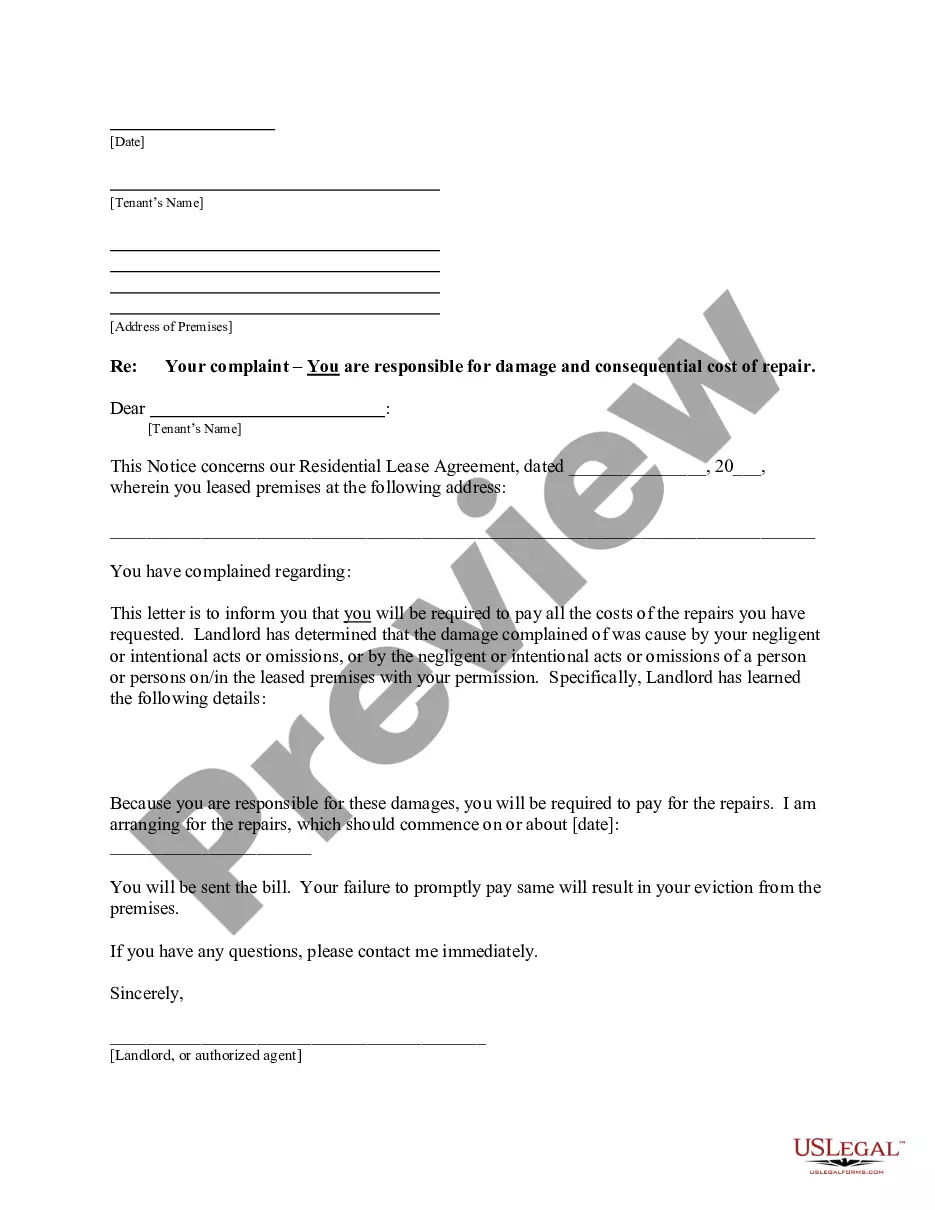
When this form is needed
This form should be used when two or more property owners share a wall or structure that is central to their properties. It is beneficial when constructing new buildings, making renovations, or when existing structures require upkeep. The agreement helps in clarifying how costs and responsibilities are shared, which can prevent misunderstandings and legal conflicts down the line.
Who can use this document
- Property owners who share a common wall or structure.
- Developers involved in new construction with adjoining property owners.
- Homeowners associations managing shared properties.
- Lenders and real estate professionals handling properties with party walls.
How to prepare this document
- Identify the parties involved by listing the property owners' names and addresses.
- Provide a clear description of the shared wall and any associated structures.
- Specify maintenance responsibilities and repair obligations for each owner.
- Include terms regarding the sharing of costs for repairs and improvements.
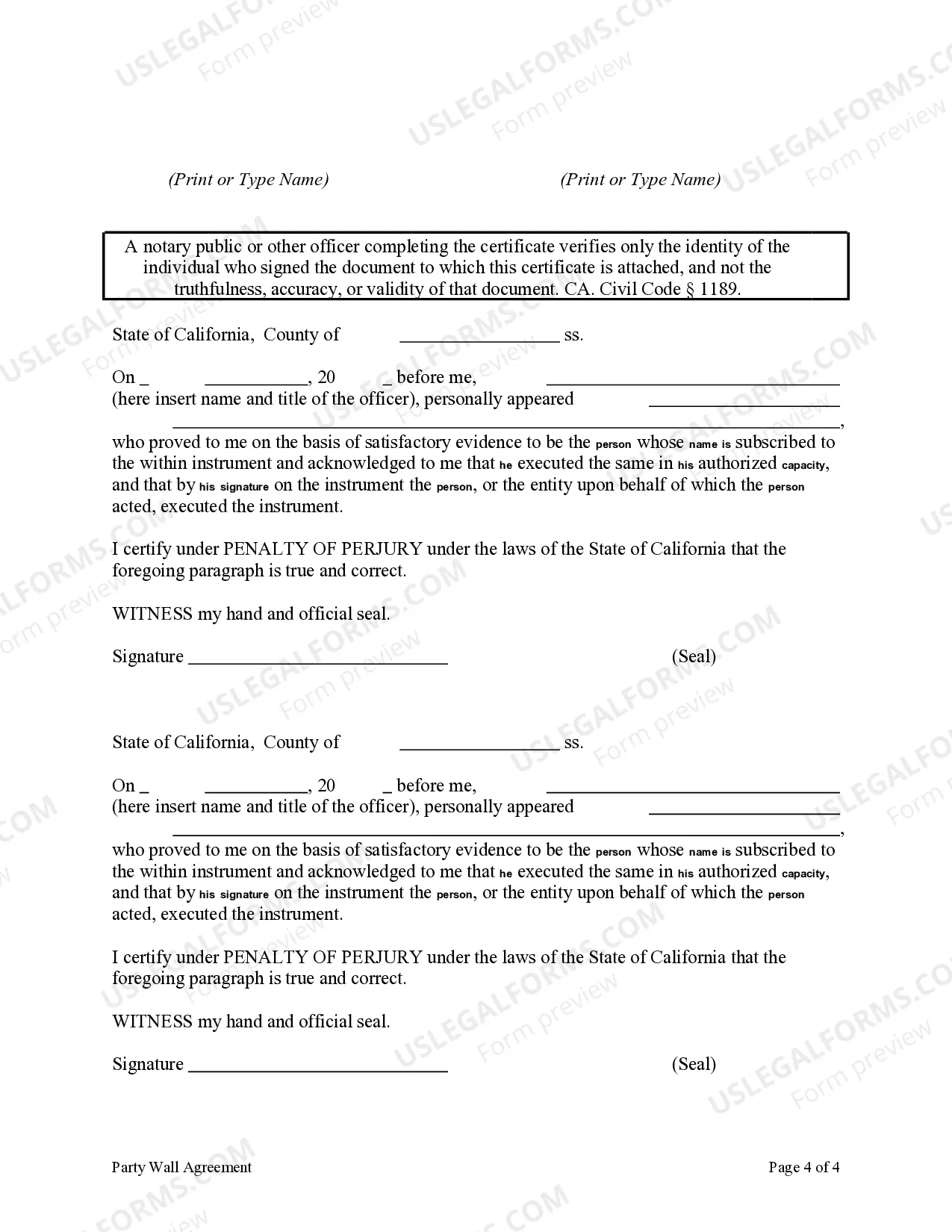
- Sign and date the agreement in the presence of witnesses, if required.
Does this form need to be notarized?
This form does not typically require notarization unless specified by local law. However, having the agreement notarized can provide an additional layer of authenticity and may be beneficial in case of disputes.
Get your form ready online
Our built-in tools help you complete, sign, share, and store your documents in one place.
Make edits, fill in missing information, and update formatting in US Legal Forms—just like you would in MS Word.
Download a copy, print it, send it by email, or mail it via USPS—whatever works best for your next step.
Sign and collect signatures with our SignNow integration. Send to multiple recipients, set reminders, and more. Go Premium to unlock E-Sign.
If this form requires notarization, complete it online through a secure video call—no need to meet a notary in person or wait for an appointment.
We protect your documents and personal data by following strict security and privacy standards.

Make edits, fill in missing information, and update formatting in US Legal Forms—just like you would in MS Word.

Download a copy, print it, send it by email, or mail it via USPS—whatever works best for your next step.

Sign and collect signatures with our SignNow integration. Send to multiple recipients, set reminders, and more. Go Premium to unlock E-Sign.

If this form requires notarization, complete it online through a secure video call—no need to meet a notary in person or wait for an appointment.

We protect your documents and personal data by following strict security and privacy standards.
Mistakes to watch out for
- Failing to accurately define the shared structures and their boundaries.
- Not specifying maintenance and repair responsibilities clearly.
- Overlooking the need for all parties to sign the agreement.
- Not reviewing state-specific laws that may affect the agreement.
Advantages of online completion
- Convenience of downloading and completing the form from anywhere.
- Editability allows property owners to customize the agreement to their needs.
- Reliability of having a legally vetted document prepared by licensed attorneys.
Legal use & context
- This agreement is enforceable in a court of law, ensuring compliance by all parties involved.
- Proper execution and documentation are crucial for defending oneâs rights under the agreement.
- Invalidation of any single clause does not affect the other clauses in the agreement.
Quick recap
- A Party Wall Agreement is vital for defining responsibilities between property owners sharing a wall.
- Clearly outlined terms can prevent disputes related to wall maintenance and repairs.
- Consulting an attorney or legal professional can ensure the agreement complies with local laws.
Looking for another form?
Form popularity
FAQ
To get a California Party Wall Agreement in place, begin by assessing your construction plans and identifying whether they require an agreement. Communicate openly with your neighbor about your intentions and secure their agreement. Consider using platforms like USLegalForms to access templates and legal guidance tailored to your needs. Following these steps will ensure a smooth experience and help maintain good neighborly relations.
Typically, the homeowner initiating construction organizes the California Party Wall Agreement. However, it often involves collaborating with your neighbor for mutual understanding and consent. Engaging a qualified surveyor can further facilitate the process, as they can handle communication and documentation. Having an experienced professional involved can ensure that everyone's interests are protected.
To get a California Party Wall Agreement in place, first consult with a qualified party wall surveyor or legal expert to understand your rights and obligations. They can help draft the agreement and ensure it complies with local laws. Next, communicate with your neighbor about your construction plans and express the importance of formalizing the agreement. Taking these steps will streamline the process and provide clarity for both parties.
If you do not have a California Party Wall Agreement, you risk facing disputes with your neighbor about property boundaries and construction work. This can lead to delays in your project and potential legal issues. Without a formal agreement, you may also be responsible for any damage that occurs to adjacent properties during construction. It's best to establish this agreement to avoid misunderstandings and promote a cooperative relationship.
In California, the law regarding fences between neighbors is primarily governed by the California Party Wall Agreement. This agreement establishes mutual responsibilities and rights regarding the construction and maintenance of shared walls or fences. It is important to communicate openly with your neighbor to avoid disputes. If issues arise, a well-drafted California Party Wall Agreement can provide a clear framework for resolving them amicably.
A shared wall is a wall that is used by two adjacent properties but may not have the same legal implications as a party wall. It often lacks a clear agreement defining the rights and responsibilities for maintenance and repairs. Using a California Party Wall Agreement is beneficial to clearly establish ownership and responsibility for any issues that may arise related to the shared wall.
A party wall agreement is often triggered by construction or renovation plans that could affect the shared wall. This includes any work involving the wall or nearby structures, which might impact the integrity of the party wall. Establishing a California Party Wall Agreement is vital to outline the responsibilities and protections for each owner, preventing future disputes.
The 3 meter rule applies to construction projects near a party wall, stating that work cannot occur within three meters of the wall without notifying the adjoining neighbor. This rule protects both parties and helps maintain safety during construction. A California Party Wall Agreement can detail specific procedures to follow in line with this rule, ensuring compliance and mutual respect.
A party wall qualifies as a wall that stands on the boundary line of two owners’ properties, supporting the structure of both buildings. It can include walls that are built entirely on one owner's land but shared for structural support or access. Properly defining a party wall in a California Party Wall Agreement is essential for protecting your property rights and ensuring fair use.
Generally, your neighbor may not drill into the party wall without obtaining permission from you, as it can compromise the structure. Indeed, the California Party Wall Agreement can provide guidance on this matter, establishing clear rules and procedures for any work that affects the party wall. If drilling is necessary, discussing it will help prevent disputes.