Missouri Letter from Tenant to Landlord responding to Notice to Terminate for Noncompliance - Noncompliant condition caused by Landlord's own deliberate or negligent act
Understanding this form
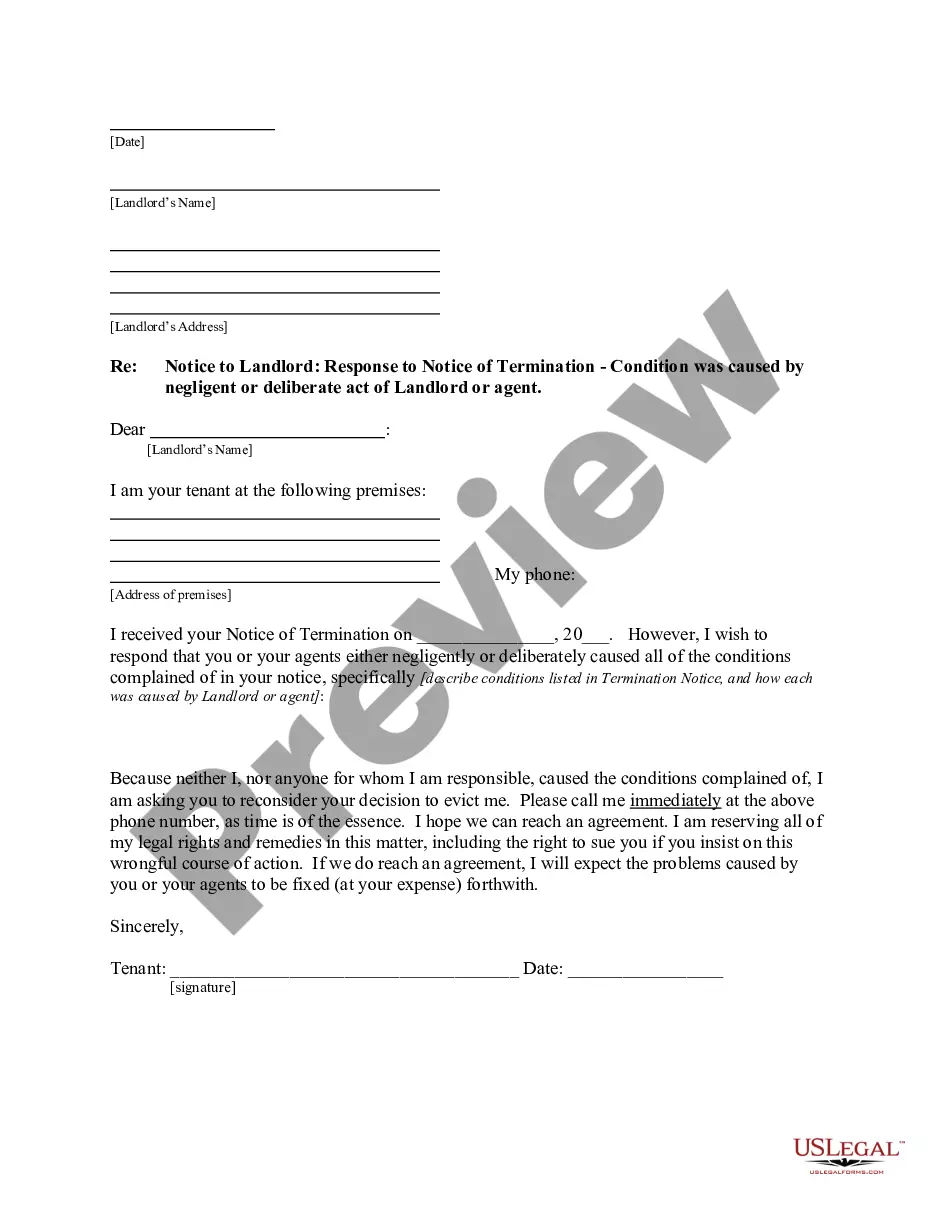
This form is a Letter from Tenant to Landlord responding to a Notice to Terminate for Noncompliance. It allows a tenant to formally address a landlord's eviction notice by asserting that the noncompliant conditions leading to the eviction were the result of the landlord's own actions, either deliberate or negligent. This letter distinguishes itself from similar forms by focusing specifically on tenant rights and necessary repairs while reserving the tenant's right to pursue legal remedies.
Key parts of this document
- Identification of tenant and property details
- Reference to the landlord's notice of eviction
- Assertion of noncompliance due to landlord's actions
- Request for immediate repairs and non-eviction
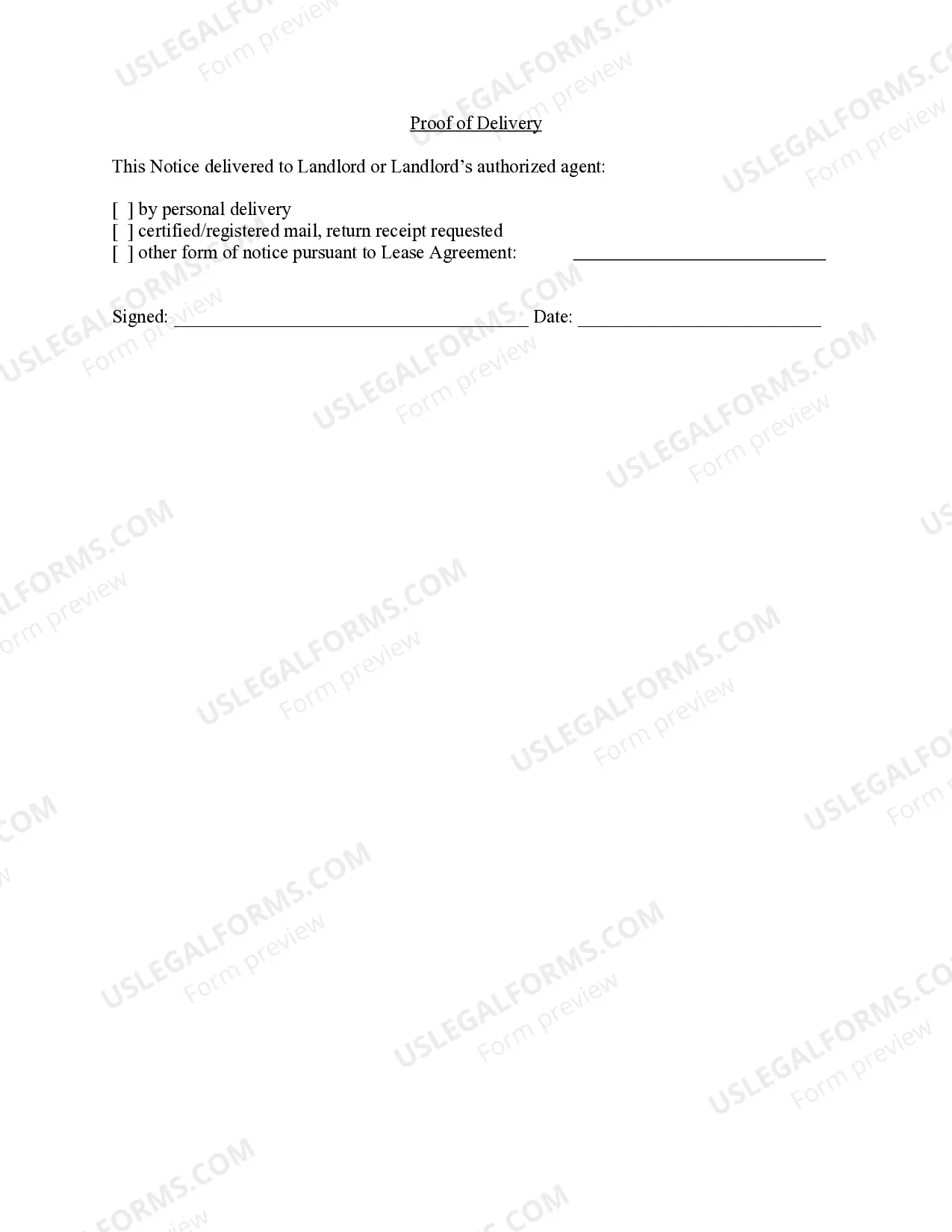
- Proof of delivery documentation

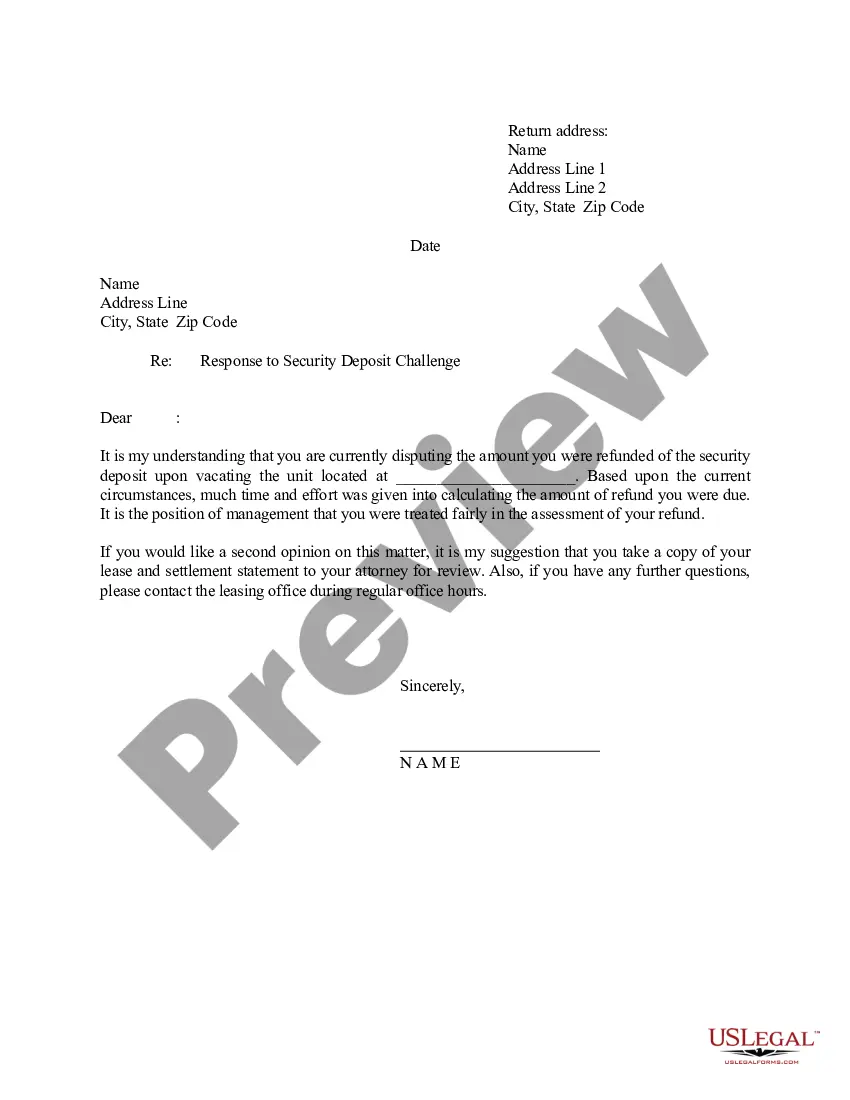


When to use this form
This letter is needed when a tenant receives a notice of eviction from their landlord but believes that the landlord's actions or negligence are the reasons for any noncompliance. It is an essential tool for tenants who want to contest the eviction and request necessary repairs to their living conditions.
Intended users of this form
- Tenants facing eviction notices for noncompliance
- Individuals who believe their landlord is responsible for the noncompliant conditions
- Tenants seeking to communicate formally with their landlord regarding necessary repairs
Instructions for completing this form
- Identify the tenant's name and address along with the property in question.
- Clearly reference the landlord's notice of eviction.
- State the reasons why the landlord is responsible for the noncompliance.
- Request immediate repairs and assert the intention to contest the eviction.
- Sign the letter and date it before delivering it to the landlord or their authorized agent.
Does this document require notarization?
This form does not typically require notarization unless specified by local law. Ensure to follow state-specific requirements for any notarization needs.
Get your form ready online
Our built-in tools help you complete, sign, share, and store your documents in one place.
Make edits, fill in missing information, and update formatting in US Legal Forms—just like you would in MS Word.
Download a copy, print it, send it by email, or mail it via USPS—whatever works best for your next step.
Sign and collect signatures with our SignNow integration. Send to multiple recipients, set reminders, and more. Go Premium to unlock E-Sign.
If this form requires notarization, complete it online through a secure video call—no need to meet a notary in person or wait for an appointment.
We protect your documents and personal data by following strict security and privacy standards.

Make edits, fill in missing information, and update formatting in US Legal Forms—just like you would in MS Word.

Download a copy, print it, send it by email, or mail it via USPS—whatever works best for your next step.

Sign and collect signatures with our SignNow integration. Send to multiple recipients, set reminders, and more. Go Premium to unlock E-Sign.

If this form requires notarization, complete it online through a secure video call—no need to meet a notary in person or wait for an appointment.

We protect your documents and personal data by following strict security and privacy standards.
Common mistakes
- Failing to accurately identify the property and parties involved.
- Not referencing the landlord's notice correctly.
- Omitting the request for repairs.
- Neglecting to proofread for clarity and completeness.
- Not delivering the notice in a proper manner to ensure receipt.
Why use this form online
- Convenience of easily downloading and filling out the form.
- Editable fields allow for quick customization to your specific situation.
- Reliability of professionally drafted content tailored to your state's requirements.
- 24/7 access to forms that can be filled out at your own pace.
- This letter serves as a formal acknowledgment of the landlord's eviction notice.
- It is an important step in asserting tenant rights within the eviction process.
- Documenting communication with the landlord can be useful in legal disputes.
Quick recap
- This letter is crucial for tenants responding to eviction notices based on noncompliance.
- It allows tenants to assert their rights and request necessary repairs.
- Understanding your stateâs requirements can strengthen your case.
Looking for another form?
Form popularity
FAQ
Unfortunately that is not the case. Once a break notice has been served is cannot be unilaterally withdrawn. Even if both parties agree that the notice is withdrawn, service of the notice terminates the existing lease and creates a new tenancy by implication. There are a number of consequences that flow from this.
Pay any delinquent rent that is due to the landlord within the allotted time of the notice. Move out of the premises within the allotted time of the notice. File an answer with the judicial court. File a motion to stay with the court.
Unfortunately that is not the case. Once a break notice has been served is cannot be unilaterally withdrawn. Even if both parties agree that the notice is withdrawn, service of the notice terminates the existing lease and creates a new tenancy by implication. There are a number of consequences that flow from this.
Every time the tenancy ends legally, the notice to quit also expires. This is valid when the tenancy is renewed for either a new fixed term or a new periodic tenancy. When the rent is increased or decreased, a new tenancy has to be issued, so any notice served is deprecated.
An eviction notice must state a reason why you are being evicted, otherwise it is invalid.For tenants who lived in the property for more than 12 months, the landlord must provide at least 60 days prior notice to vacate, under California Civil Code 1946.
Pay any delinquent rent that is due to the landlord within the allotted time of the notice. Move out of the premises within the allotted time of the notice. File an answer with the judicial court. File a motion to stay with the court.
Unconditional quit notices are used to order the tenant to leave the premises without the chance to remedy the situation. This is used for a serious breach of the lease agreement or chronic late rent payment.
While tenants cannot unreasonably deny access to a landlord, landlords must also follow all of the state and local rules regarding access to tenants' apartments. Roughly half of states have rules governing landlord entry into tenants' apartments.
Surprisingly, this is not the case. In fact, once a break notice has been validly served it cannot be withdrawn; service of the notice effectively terminates the existing lease and creates a new tenancy by implication if the tenant remains in occupation past the break date (Tayleur v Wildin (1867-68) LR 3 Ex 303).