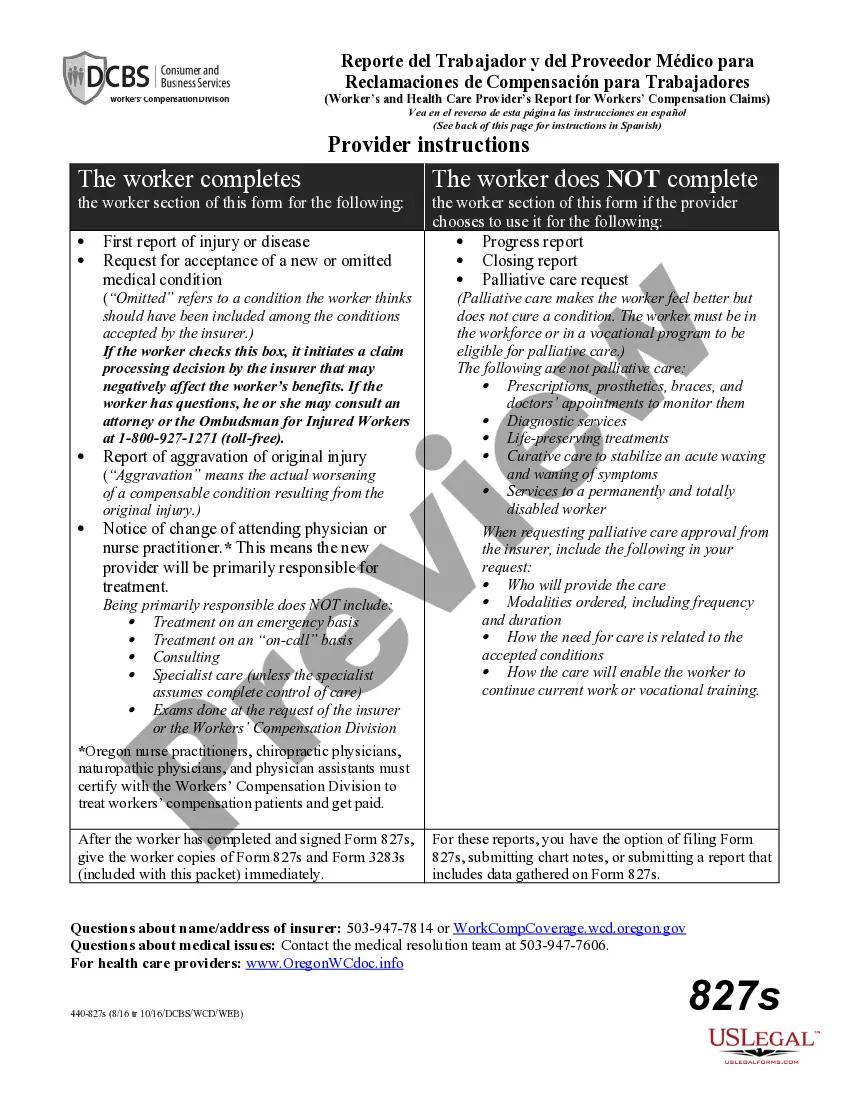
Subsurface Easement Agreement from one Lessee to Another
About this form
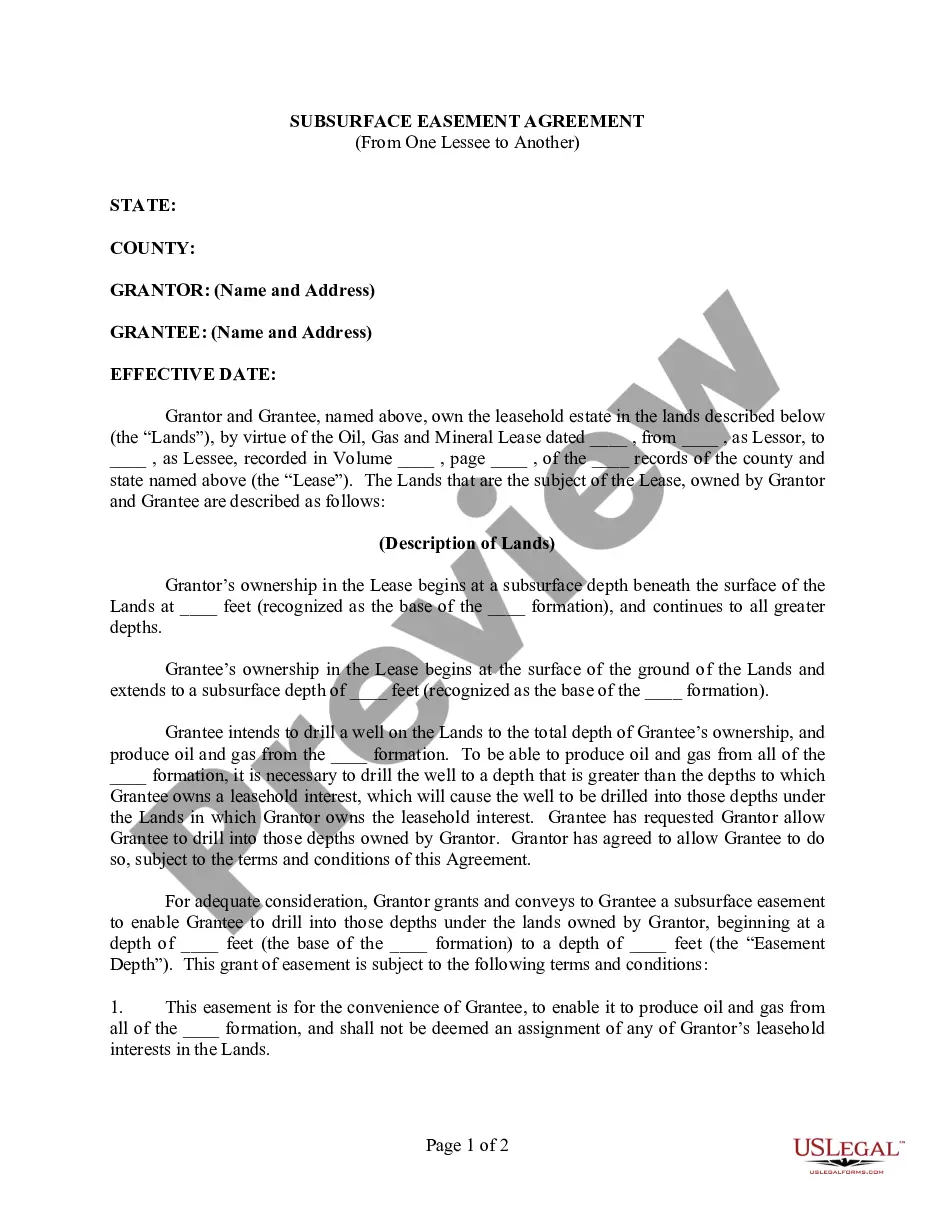
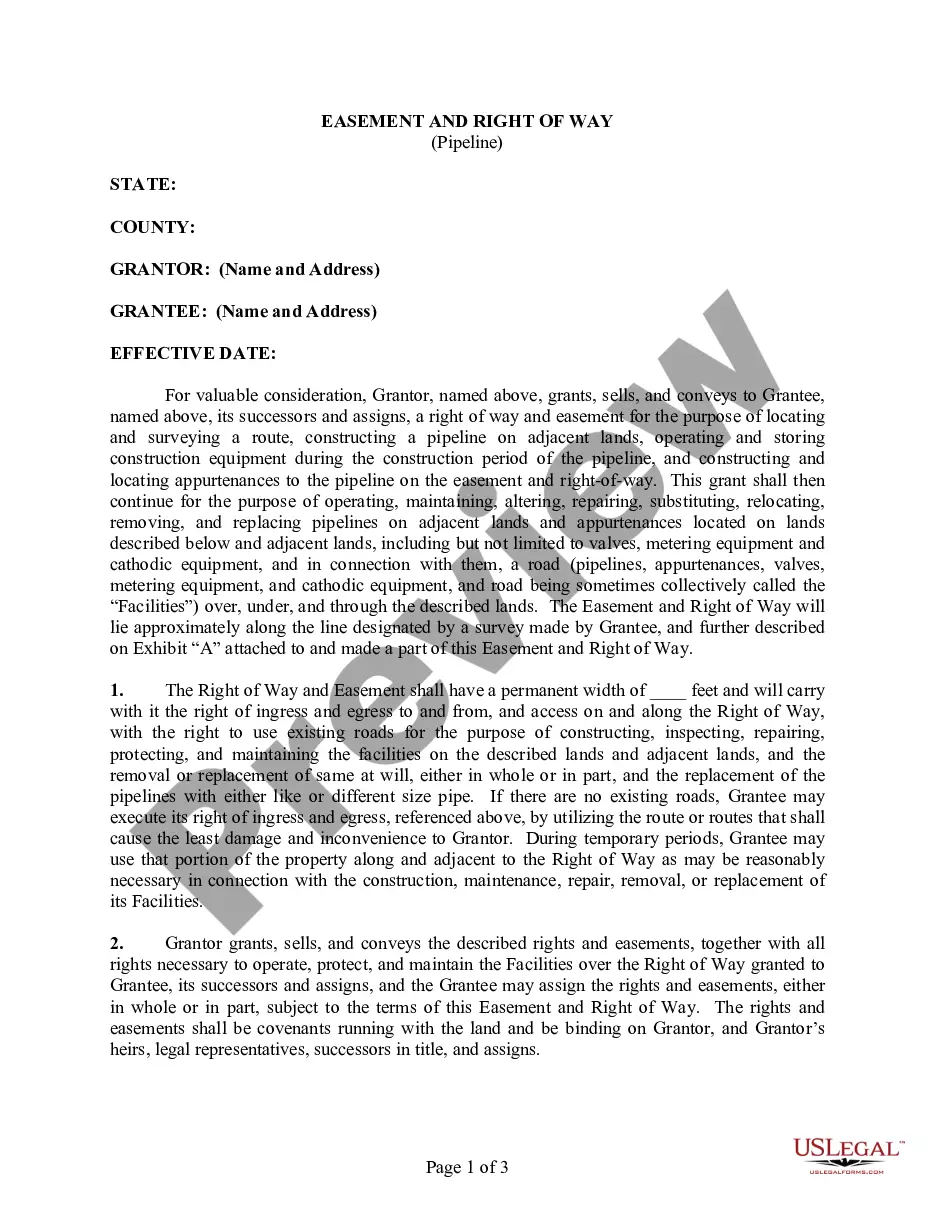
The Subsurface Easement Agreement from One Lessee to Another is a legal document that enables one lessee (Grantee) to obtain permission from another lessee (Grantor) to drill below the surface of specific land. This form specifically addresses the rights pertaining to drilling for oil and gas at designated subsurface depths, allowing for the production of resources that may lie beneath the Grantor's land. Unlike surface lease agreements, this document focuses solely on subsurface rights, making it essential for lessees engaging in mineral extraction activities.
Form components explained
- Identification of Grantor and Grantee, including names and addresses.
- Description of the lands covered by the lease agreement.
- Details regarding the depths of subsurface ownership for both Grantor and Grantee.
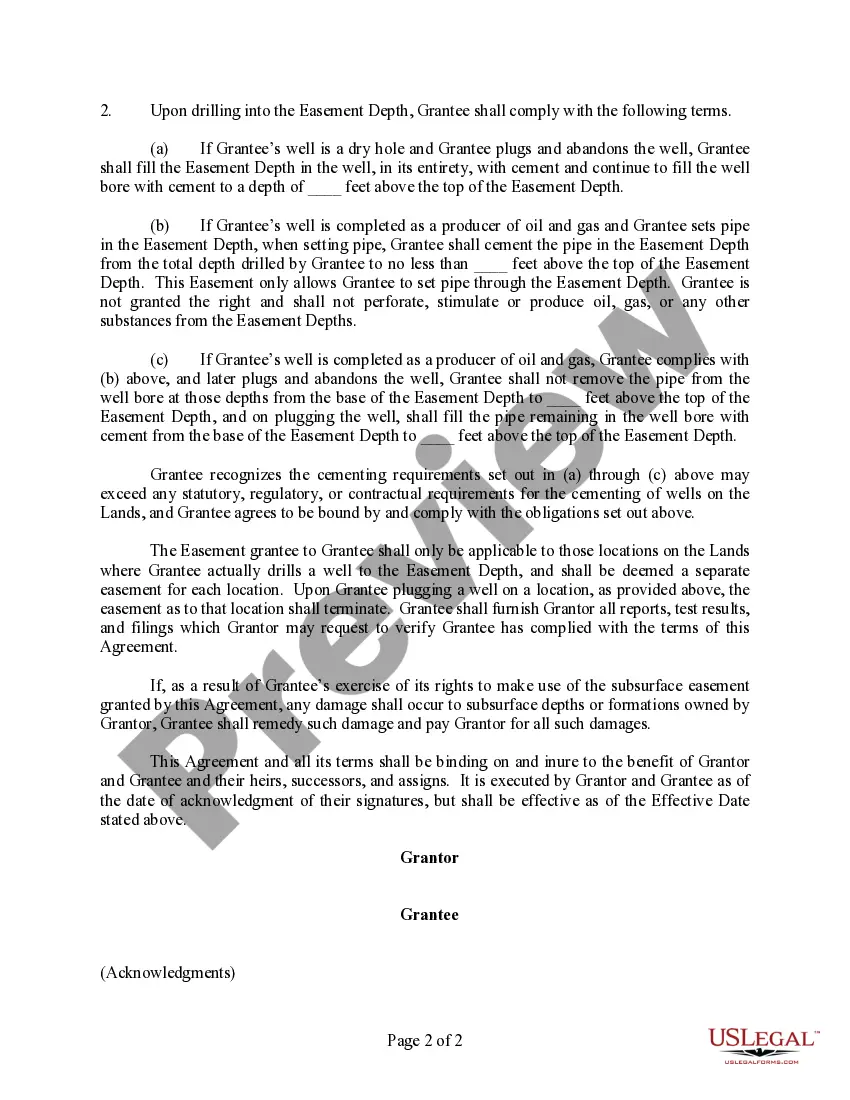
- Terms and conditions governing the drilling and production activities.
- Provisions regarding well abandonment and the maintenance of easement integrity.
When this form is needed
This form should be used when a lessee wishes to drill into subsurface depths that are owned by another lessee on the same property. It is applicable when the Grantee needs access to deeper formations for oil and gas extraction that extend beyond their leasehold interests. The agreement ensures mutual consent and clarifies the responsibilities of both parties, minimizing potential disputes over subsurface rights.
Who this form is for
- Lessees involved in oil and gas extraction activities.
- Landowners who have entered into lease agreements for oil, gas, and mineral rights.
- Legal professionals representing either parties in subsurface easement negotiations.
- Real estate investors engaged in mineral rights transactions.
Steps to complete this form
- Identify the Grantor and Grantee by entering their names and addresses.
- Specify the effective date of the agreement.
- Provide a detailed description of the lands covered by the lease.
- Indicate the depths of subsurface rights for both parties.
- Fill in the terms and conditions as outlined in the form regarding drilling activities.
- Ensure both parties sign and date the document to finalize the agreement.
Does this document require notarization?
This form does not typically require notarization unless specified by local law. It is advisable to check state regulations to confirm if notarization is necessary for the agreement to be legally binding.
Get your form ready online
Our built-in tools help you complete, sign, share, and store your documents in one place.
Make edits, fill in missing information, and update formatting in US Legal Forms—just like you would in MS Word.
Download a copy, print it, send it by email, or mail it via USPS—whatever works best for your next step.
Sign and collect signatures with our SignNow integration. Send to multiple recipients, set reminders, and more. Go Premium to unlock E-Sign.
If this form requires notarization, complete it online through a secure video call—no need to meet a notary in person or wait for an appointment.
We protect your documents and personal data by following strict security and privacy standards.

Make edits, fill in missing information, and update formatting in US Legal Forms—just like you would in MS Word.

Download a copy, print it, send it by email, or mail it via USPS—whatever works best for your next step.

Sign and collect signatures with our SignNow integration. Send to multiple recipients, set reminders, and more. Go Premium to unlock E-Sign.

If this form requires notarization, complete it online through a secure video call—no need to meet a notary in person or wait for an appointment.

We protect your documents and personal data by following strict security and privacy standards.
Common mistakes to avoid
- Failing to provide accurate descriptions of the land and depths involved.
- Not clearly outlining the conditions under which drilling is permitted.
- Neglecting to ensure both parties sign the agreement.
- Omitting the effective date of the agreement.
Why use this form online
- Convenient access to a legally reviewed template suitable for various jurisdictions.
- Easy customization to fit your specific needs without legal jargon.
- Secure downloads that allow for immediate use and implementation.
Legal use & context
- This agreement forms a legally binding contract between the parties concerning subsurface rights.
- It is important to consider local laws regarding drilling and mineral rights to ensure enforcement.
- The standard legal practices surrounding easements apply to this agreement, reinforcing the need for clarity and compliance.
Quick recap
- The Subsurface Easement Agreement is crucial for drilling below current lease depths.
- Proper completion ensures both parties understand their rights and responsibilities.
- Legal review and adherence to state regulations are essential for enforceability.
Looking for another form?

Form popularity
FAQ
Generally speaking, an easement is a more serious property right; it is the legal right to use someone else's land for a particular purpose. Easements are often recorded at the county clerk's office and encumber your property's title.Here, however, you probably do not need to take the step of granting an easement.
Jur. 2d Easements. (ii) By Tenant: While tenants lack the fee necessary to grant an easement such that it would bind the landlord post lease term, a tenant nevertheless may grant a right of way, provided however that the governing lease does not expressly prohibit such a grant.
That a lessee can create or impose an easement by a grant for the period of his term cannot be doubted.
According to Section 8 of Easement Act "An Easement may be imposed by any one in the circumstances, and to the extent, in and to which he may transfer his interest in heritage on which the liability is to be imposed." So section 8 of Act permits the servient owner to impose an easement on his own property.
An easement is a nonpossessory right to use and/or enter onto the real property of another without possessing it. It is "best typified in the right of way which one landowner, A, may enjoy over the land of another, B".
An easement is a limited right to use another person's land for a stated purpose. Examples of easements include the use of private roads and paths, or the use of a landowner's property to lay railroad tracks or electrical wires.
Ruth Hersh, Real Estate Agent EXIT Success Realty. Owner of land allowing another to use space under the ground, such as to install a sewer or gas line.
Give the document a simple title: Grant of Easement is sufficient. Identify the parties. You need to explain who the parties are to the agreement. The person granting the easement to his property is the Grantor and the person gaining access to the property is the Grantee.
If the property is sold to a new owner, the easement is typically transferred with the property. The holder of the easement, however, has a personal right to the easement and is prohibited from transferring the easement to another person or company.