Reciprocal Assistance Agreement
Understanding this form
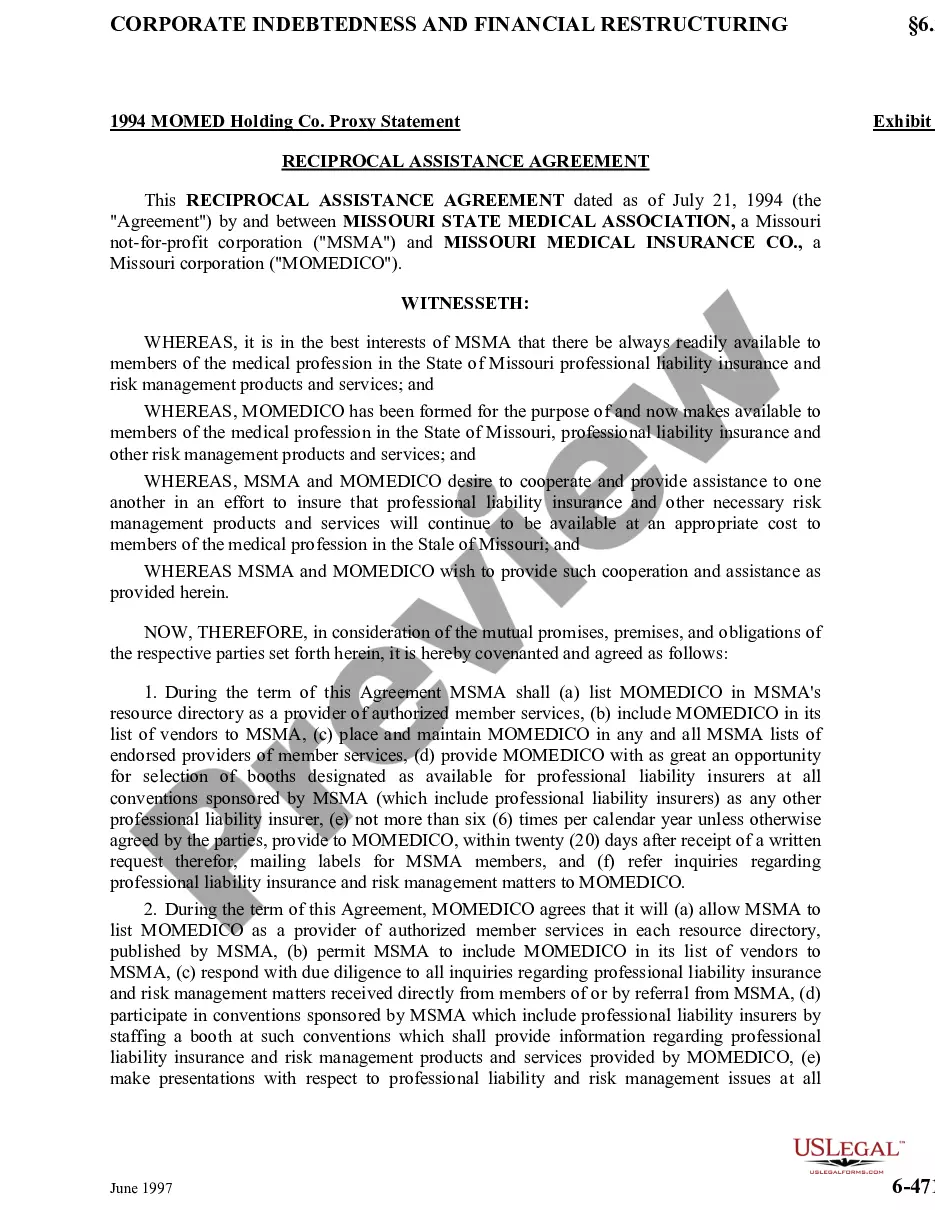
The Reciprocal Assistance Agreement is a legal document that outlines the terms of cooperation between two parties, specifically in a corporate context. This agreement facilitates the sharing of resources and support to ensure that essential services, such as professional liability insurance and risk management, remain accessible to members of the medical profession. It is distinct from other corporate agreements by its focus on mutual aid and resource sharing between organizations rather than financial transactions or ownership rights.
Main sections of this form
- Identification of the parties involved - Missouri State Medical Association (MSMA) and Missouri Medical Insurance Co. (MOMEDICO).
- Reciprocal obligations regarding listing services and referrals to ensure members have access to essential offerings.
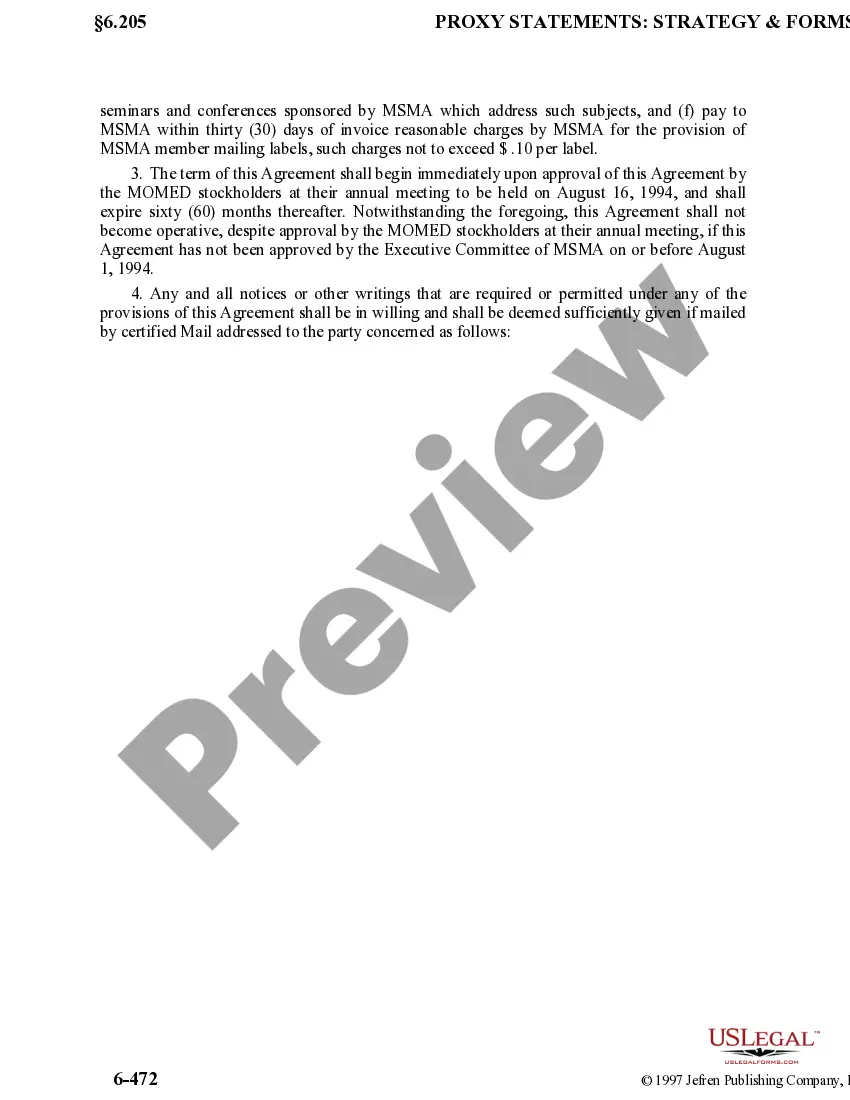
- Duration of the agreement, including terms for renewal and conditions for operational approval.
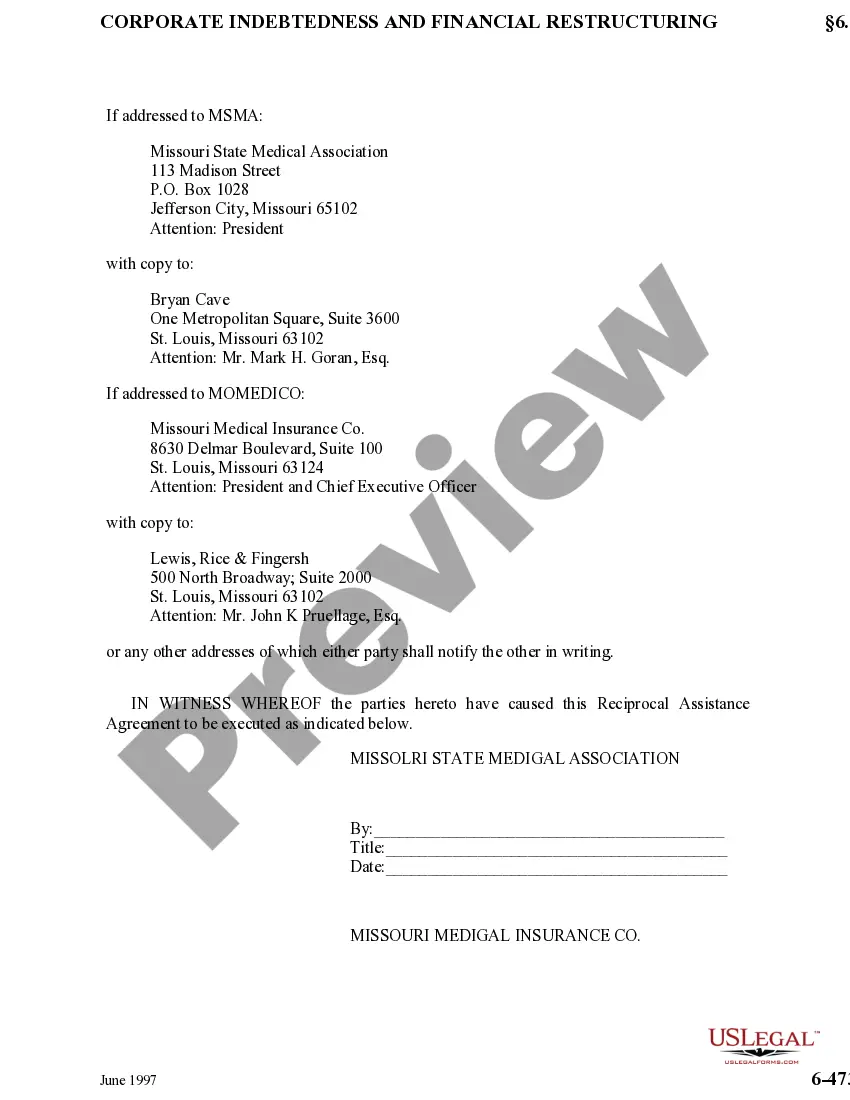
- Procedures for communication and notice between the parties, ensuring transparency in cooperation.
When to use this document
This Reciprocal Assistance Agreement is used when two organizations, particularly within the medical field, seek to collaborate in providing essential services and support to their members. It is beneficial when a medical association needs to partner with an insurance company to ensure that healthcare professionals have access to necessary liability insurance and risk management resources.
Who this form is for
This agreement is suitable for:
- Professional medical associations looking to enhance member services.
- Insurance companies providing liability coverage and risk management services to healthcare providers.
- Organizations seeking to formalize cooperative relationships for the benefit of their members.
Steps to complete this form
- Identify the parties involved, including their legal names and addresses.
- Outline the specific obligations of each party regarding member services and cooperation.
- Specify the agreement's duration and conditions for approval to ensure clarity on operational terms.
- Document the communication procedures for notices and correspondence between the parties.
- Ensure both parties sign and date the agreement for legal validity.
Is notarization required?
This form does not typically require notarization to be legally valid. However, some jurisdictions or document types may still require it. US Legal Forms provides secure online notarization powered by Notarize, available 24/7 for added convenience.
Get your form ready online
Our built-in tools help you complete, sign, share, and store your documents in one place.
Make edits, fill in missing information, and update formatting in US Legal Forms—just like you would in MS Word.
Download a copy, print it, send it by email, or mail it via USPS—whatever works best for your next step.
Sign and collect signatures with our SignNow integration. Send to multiple recipients, set reminders, and more. Go Premium to unlock E-Sign.
If this form requires notarization, complete it online through a secure video call—no need to meet a notary in person or wait for an appointment.
We protect your documents and personal data by following strict security and privacy standards.

Make edits, fill in missing information, and update formatting in US Legal Forms—just like you would in MS Word.

Download a copy, print it, send it by email, or mail it via USPS—whatever works best for your next step.

Sign and collect signatures with our SignNow integration. Send to multiple recipients, set reminders, and more. Go Premium to unlock E-Sign.

If this form requires notarization, complete it online through a secure video call—no need to meet a notary in person or wait for an appointment.

We protect your documents and personal data by following strict security and privacy standards.
Common mistakes
- Failing to clearly define the roles and responsibilities of each party.
- Neglecting to indicate the effective dates and duration of the agreement.
- Incorrectly addressing the notices, which may lead to communication issues.
Why complete this form online
- Convenient access to legal templates, allowing for immediate download and customization.
- Editable document formats enable users to tailor the agreement to their unique circumstances.
- Reliable legal language drafted by licensed attorneys, ensuring compliance with local laws.
Legal use & context
- This agreement fosters collaboration while outlining the obligations of each party, making it enforceable in Missouri.
- It serves as a protective measure for both parties, establishing a clear understanding of expectations and reducing the likelihood of disputes.
Looking for another form?

Form popularity
FAQ
Although the U.S. worked hard to revive the treaty after 9/11 attacks in a bid to enlist Latin American nations to join the so-called war on terror, many member nations did not support subsequent U.S. wars in Afghanistan and Iraq. Mexico left the treaty in 2002, citing the need for a new pact.
Also called the Rio Pact or the Inter-American Treaty of Reciprocal Assistance, the treaty became effective on December 3, 1948, when two-thirds of the member states had ratified it. The treaty provided for mutual assistance if an act of aggression threatened the peace of the Western Hemisphere.
Truman. Signers Originally 19 countries, Argentina, Bolivia, Brazil, Chile, Colombia, Costa Rica, Cuba, Dominican Republic, El Salvador, Guatemala, Haiti, Honduras, Mexico, Panama, Paraguay, Peru, United States, Uruguay and Venezuela. Later, Ecuador, Micaragua and Trinidad-Tobago joined the alliance.
In 2001, the United States invoked the Rio Treaty after the September 11 attacks.On 29 May 2019, the National Assembly approved its return to the Treaty in a preliminary discussion. The National Assembly reiterated its approval to return to the treaty in July 2019.
Also called the Rio Pact or the Inter-American Treaty of Reciprocal Assistance, the treaty became effective on December 3, 1948, when two-thirds of the member states had ratified it. The treaty provided for mutual assistance if an act of aggression threatened the peace of the Western Hemisphere.
The Rio Treaty, which was signed in 1947 and entered into force in 1948, is a collective security pact among 19 of the 35 countries of the Western Hemisphere.