Easement Agreement (Pipeline for Gas and other Substances)
Overview of this form
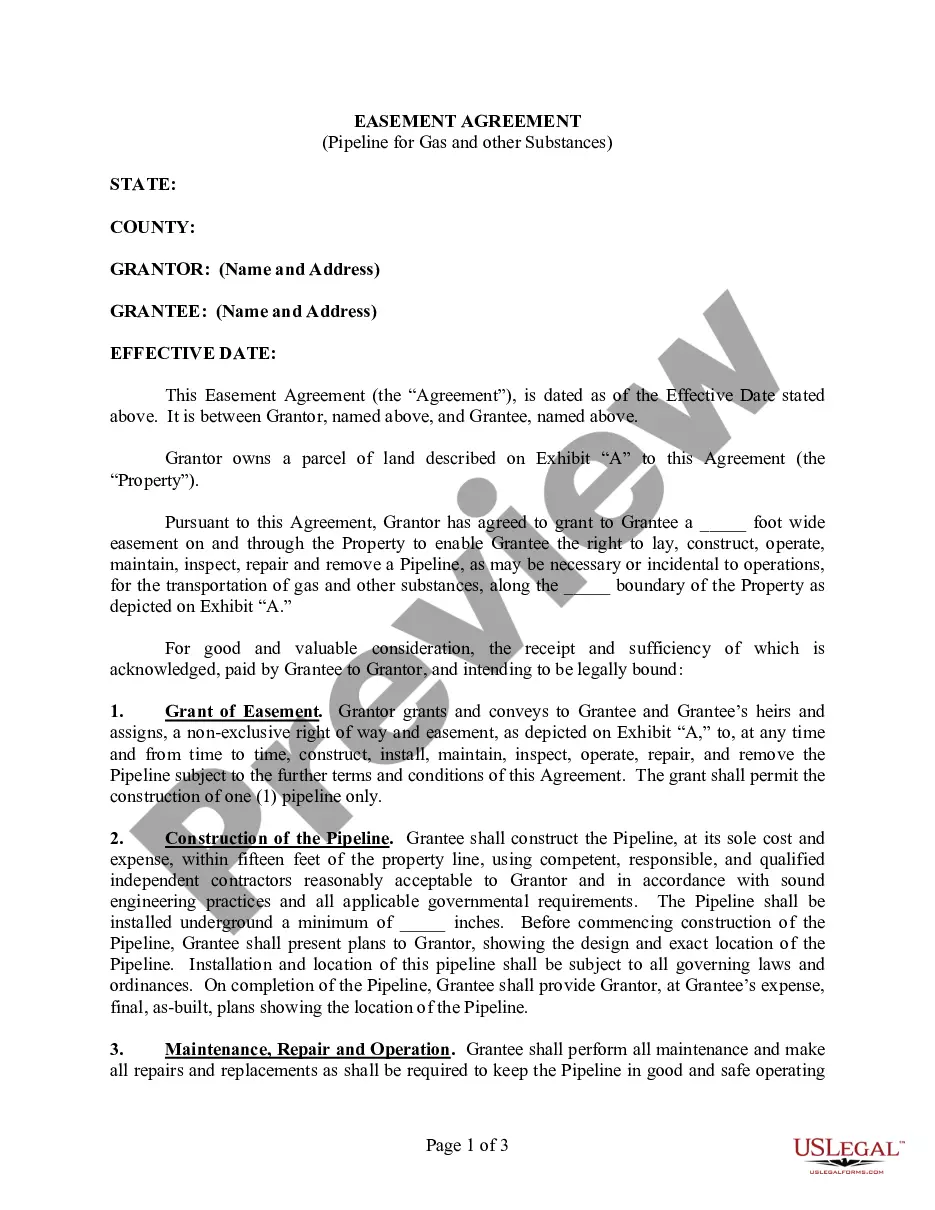
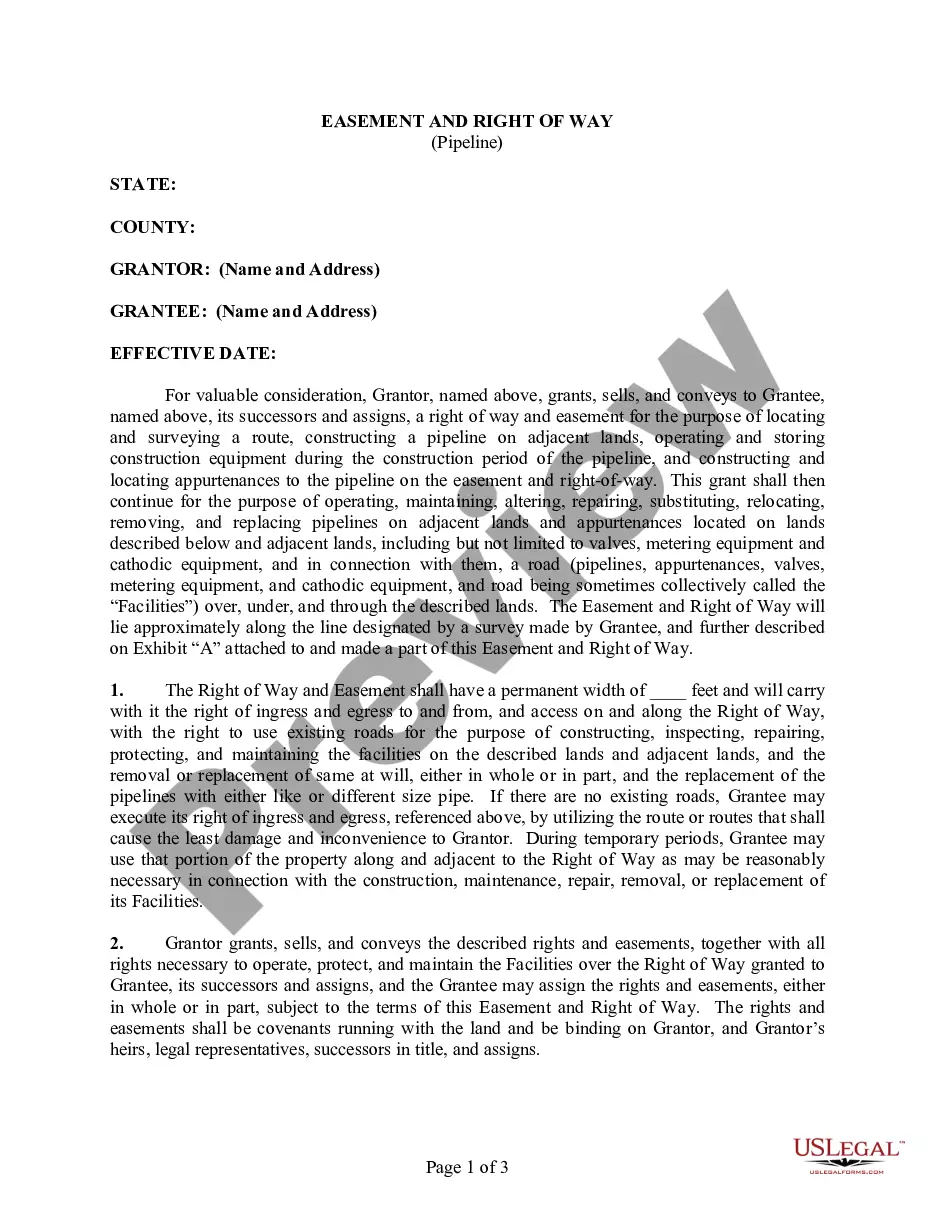
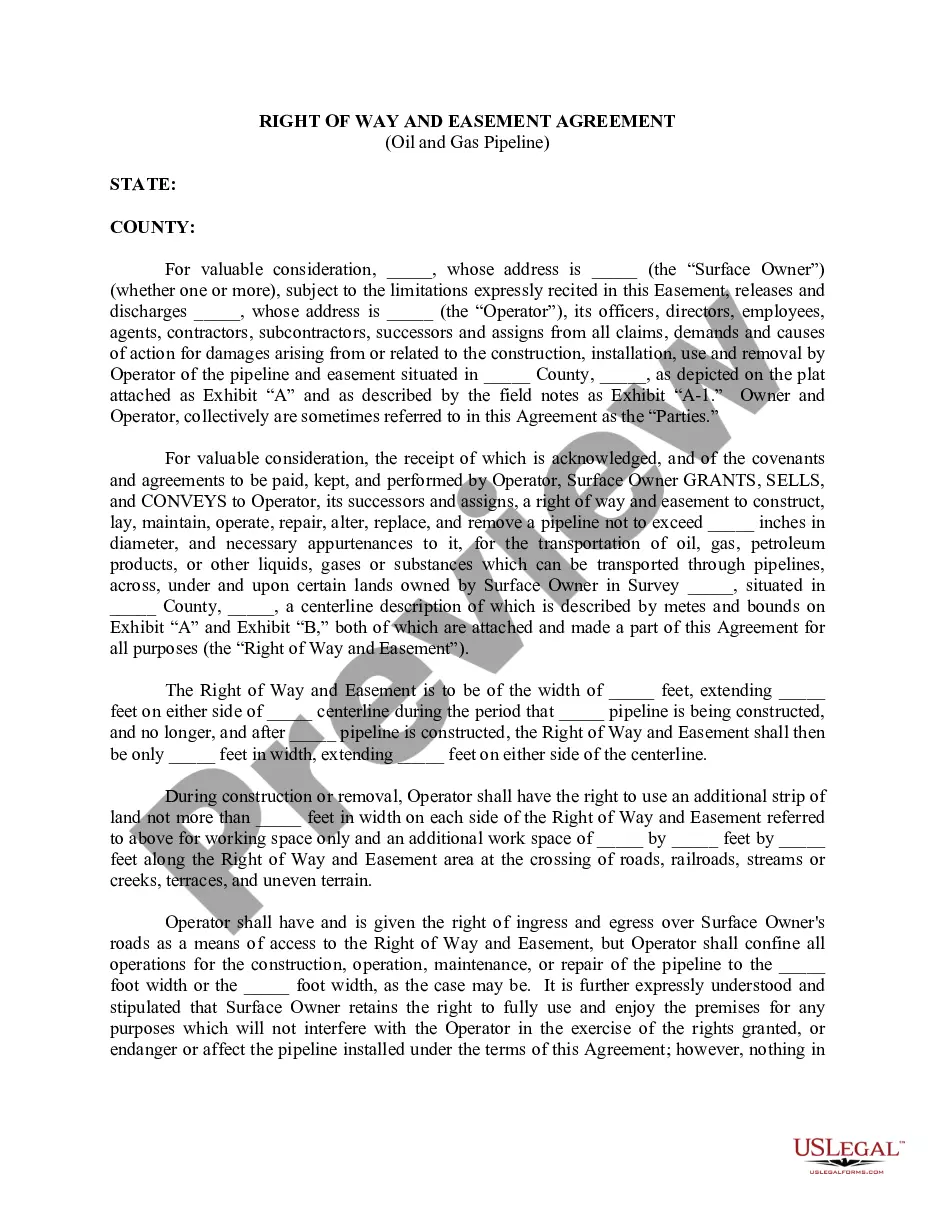
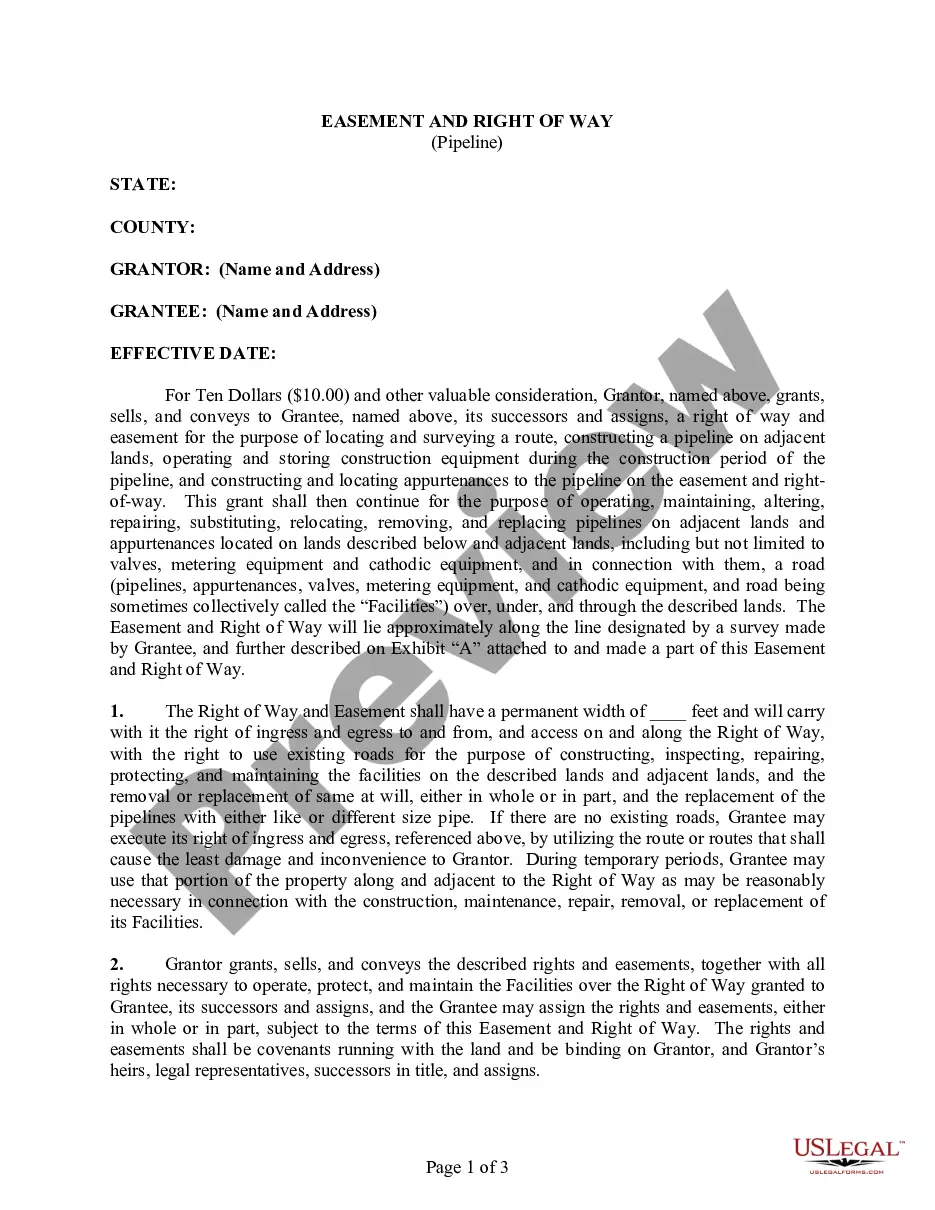
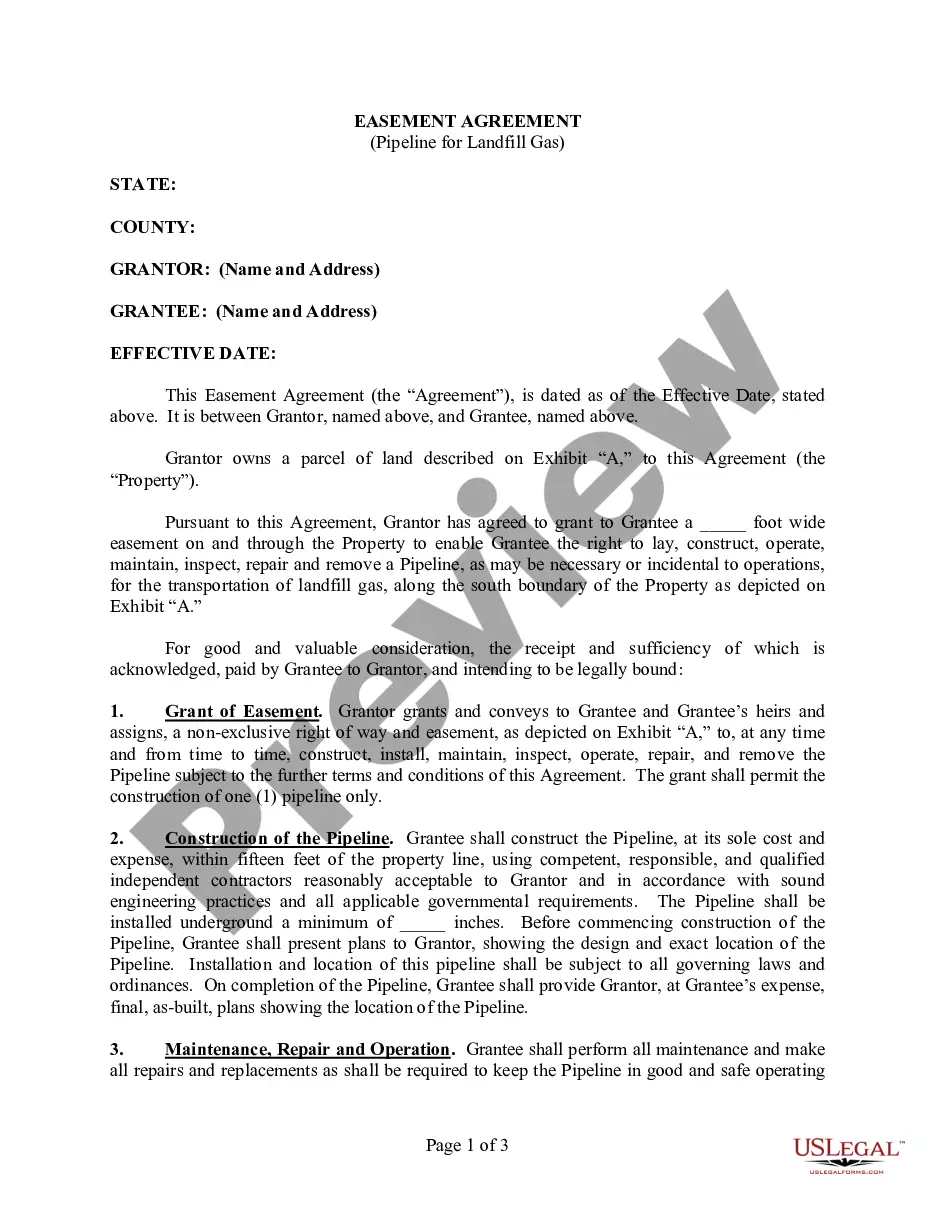
The Easement Agreement for Pipeline for Gas and other Substances is a legal document that grants a non-exclusive right of way for the construction, operation, and maintenance of a pipeline on a property. This form outlines the rights and responsibilities of both the grantor (property owner) and grantee (pipeline operator) regarding the use of the property for pipeline activities. It differs from other easement agreements by specifically addressing pipelines related to gas and other substances, ensuring clarity on the operational and maintenance expectations of the parties involved.
What’s included in this form
- Grant of Easement: Details the rights granted to the grantee for pipeline construction and maintenance.
- Construction of the Pipeline: Sets requirements for how and where the pipeline must be constructed.
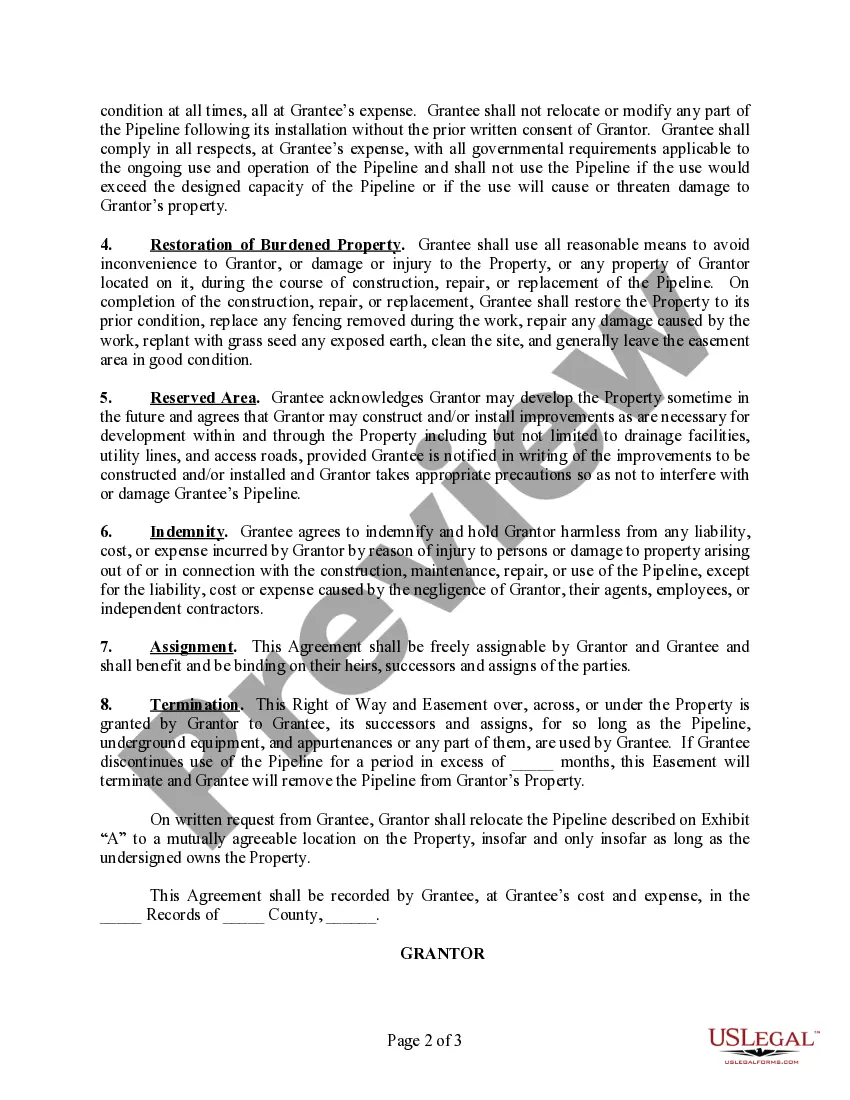
- Maintenance, Repair and Operation: Outlines the responsibilities of the grantee for maintaining the pipeline.
- Restoration of Burdened Property: Requires the grantee to restore the property after construction activities.
- Indemnity: Specifies indemnification responsibilities regarding potential damages or injuries.
- Termination: Conditions under which the easement may be terminated if the pipeline is not used.
Situations where this form applies
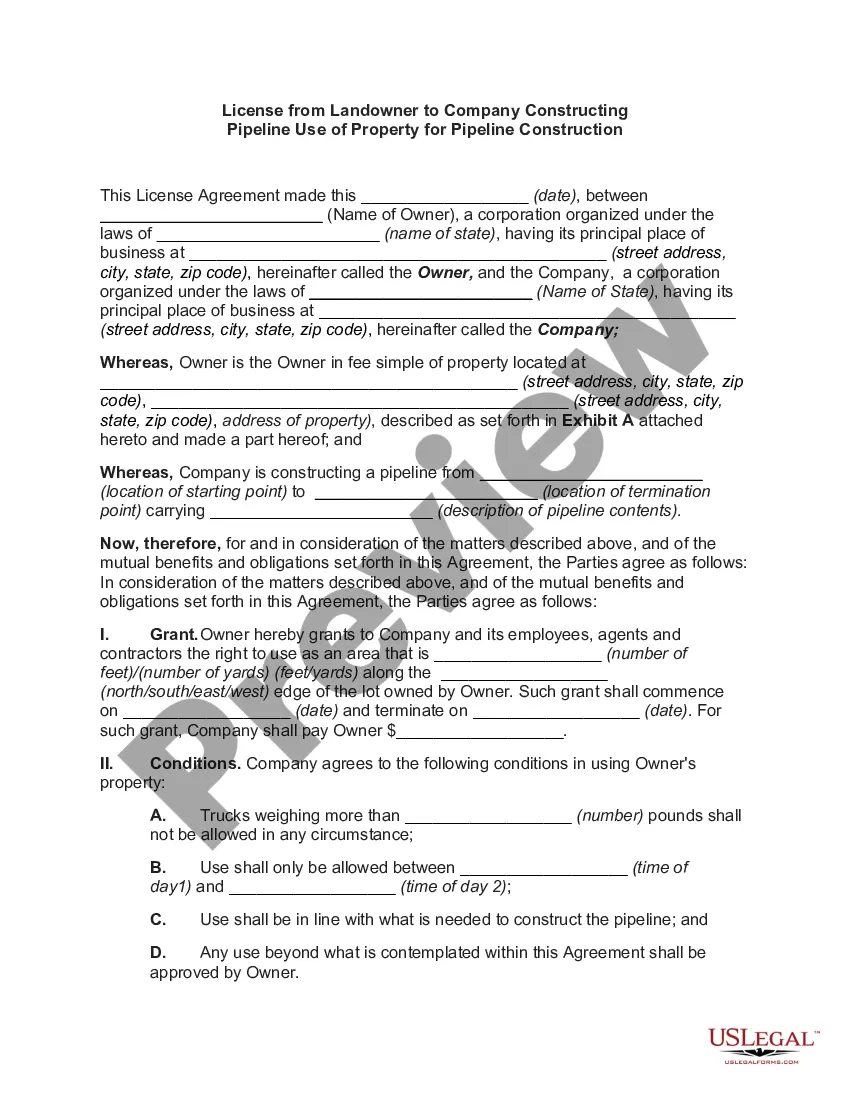
This Easement Agreement should be used when a property owner (grantor) wishes to allow a pipeline operator (grantee) to install and maintain a pipeline on their property for gas or other substances. It is applicable in real estate transactions involving installations of utilities where clear terms of access, maintenance, and liability are necessary to protect both parties' interests.
Who can use this document
This form is suitable for:
- Property owners (grantors) who are approached by pipeline companies for easements.
- Pipeline operators (grantees) seeking to install or maintain pipeline systems on private land.
- Landowners involved in real estate development that may require utility access across their property.
How to complete this form
- Identify the parties: Clearly fill in the names and addresses of the grantor and grantee.
- Specify the property: Include a description of the property on Exhibit A.
- Enter the width of the easement: Fill in the designated width for the pipeline easement.
- Complete construction details: Indicate the minimum depth for the pipeline installation and include construction plans if necessary.
- Define the effective date: Clearly state the date when the easement becomes effective.
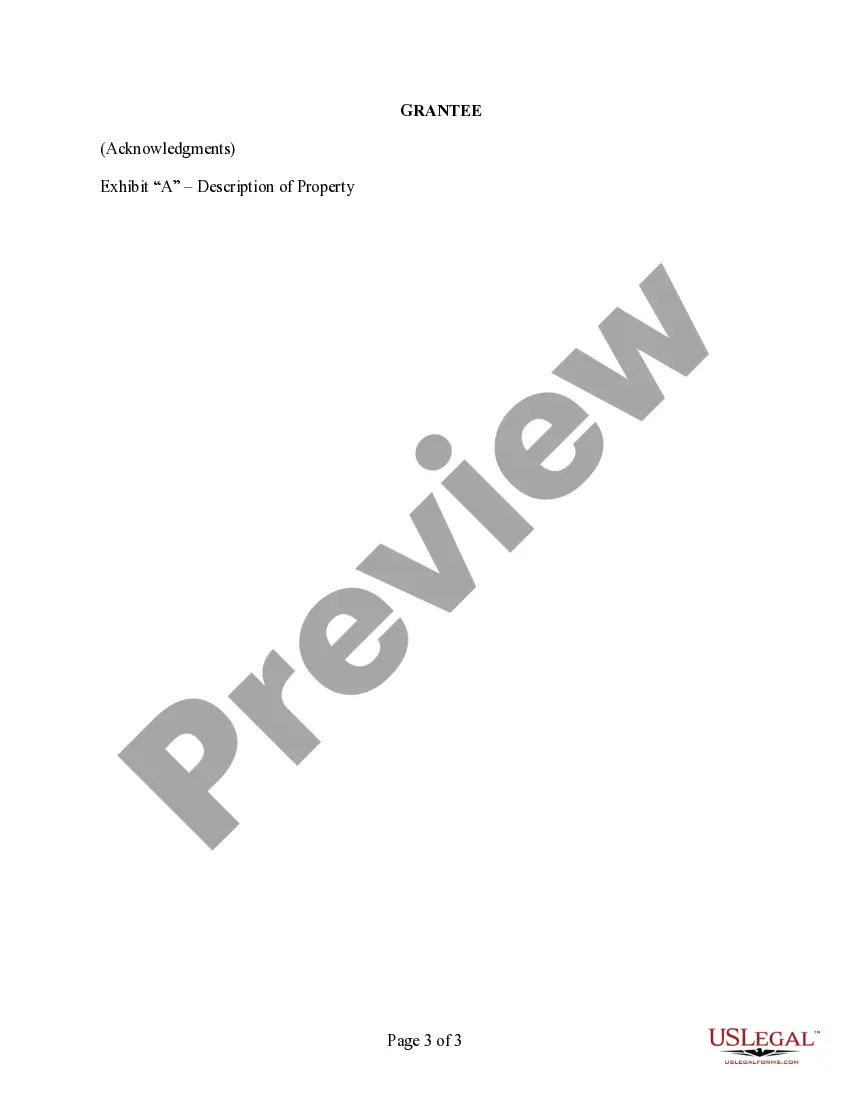
- Sign and date: Ensure both parties sign the agreement to validate it.
Is notarization required?
This document requires notarization to meet legal standards. US Legal Forms provides secure online notarization powered by Notarize, allowing you to complete the process through a verified video call, available 24/7.
Get your form ready online
Our built-in tools help you complete, sign, share, and store your documents in one place.
Make edits, fill in missing information, and update formatting in US Legal Forms—just like you would in MS Word.
Download a copy, print it, send it by email, or mail it via USPS—whatever works best for your next step.
Sign and collect signatures with our SignNow integration. Send to multiple recipients, set reminders, and more. Go Premium to unlock E-Sign.
If this form requires notarization, complete it online through a secure video call—no need to meet a notary in person or wait for an appointment.
We protect your documents and personal data by following strict security and privacy standards.

Make edits, fill in missing information, and update formatting in US Legal Forms—just like you would in MS Word.

Download a copy, print it, send it by email, or mail it via USPS—whatever works best for your next step.

Sign and collect signatures with our SignNow integration. Send to multiple recipients, set reminders, and more. Go Premium to unlock E-Sign.

If this form requires notarization, complete it online through a secure video call—no need to meet a notary in person or wait for an appointment.

We protect your documents and personal data by following strict security and privacy standards.
Mistakes to watch out for
- Failing to specify the exact location of the easement on the property.
- Not including necessary construction details, such as depth and width.
- Neglecting to review local laws that may impact the easement.
- Skipping signatures from both parties, which can render the agreement unenforceable.
Benefits of completing this form online
- Convenience: Download and complete the form from anywhere, saving time.
- Editability: Easily fill in the required fields and customize the agreement to fit your specific situation.
- Reliability: Access forms that are drafted by licensed attorneys to ensure legal compliance.
Looking for another form?


Form popularity
FAQ
Easements are treated as a recovery of the basis of the property first, with any excess proceeds treated as capital gain, which is taxed at a lower rate than ordinary income. The basis of property that offsets an easement is limited to the basis of the affected acres or square footage.
How much money should landowners get when an oil or gas pipeline crosses their land? As it stands, landowners receive a one-time payment roughly based on the length of the pipeline, with rates varying from $5 to $50 per foot or more for a Marcellus or Utica shale pipeline right-of-way agreement.
Pipelines can reduce property values by 5 to 40 percent by making them less attractive to potential buyers, according to local Realtors.
How much money should landowners get when an oil or gas pipeline crosses their land? As it stands, landowners receive a one-time payment roughly based on the length of the pipeline, with rates varying from $5 to $50 per foot or more for a Marcellus or Utica shale pipeline right-of-way agreement.
You are willing to either share in or bear the cost of land maintenance and are now ready to negotiate. Reducing the impact the easement has on the neighbor will help convince him to say yes. Include in the negotiations elements that include his continued use and rights to share that parcel of land with you.
What is a Pipeline Easement? Generally, an easement is a legal interest that allows someone the right to use another's property for a certain purpose. A pipeline easement specifically gives the easement holder the right to build and maintain a pipeline on a landowner's property.
If an easement is 50 rods long, that is almost an acre. In a recent case, a pipeline company paid some owners $180 per rod and others $767 per rod for the same project.
API recommends setbacks of 50 feet from petroleum and hazardous liquids lines for new homes, businesses, and places of public assembly (API 2003). It also recommends 25 feet for garden sheds, septic tanks, and water wells and 10 feet for mailboxes and yard lights.
What is a Pipeline Easement? Generally, an easement is a legal interest that allows someone the right to use another's property for a certain purpose. A pipeline easement specifically gives the easement holder the right to build and maintain a pipeline on a landowner's property.