New Jersey Last Will and Testament for Civil Union Partner with Adult and Minor Children
Understanding this form
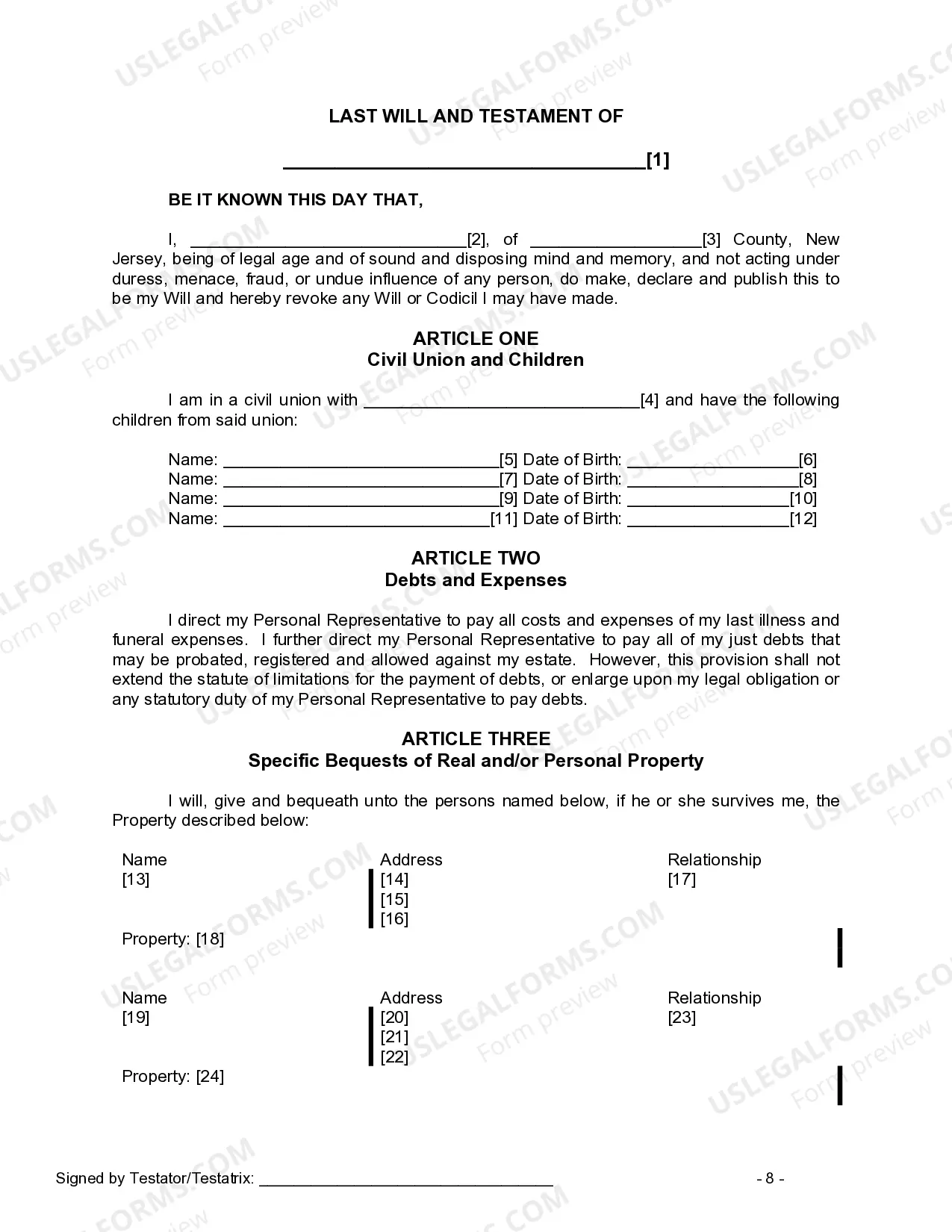
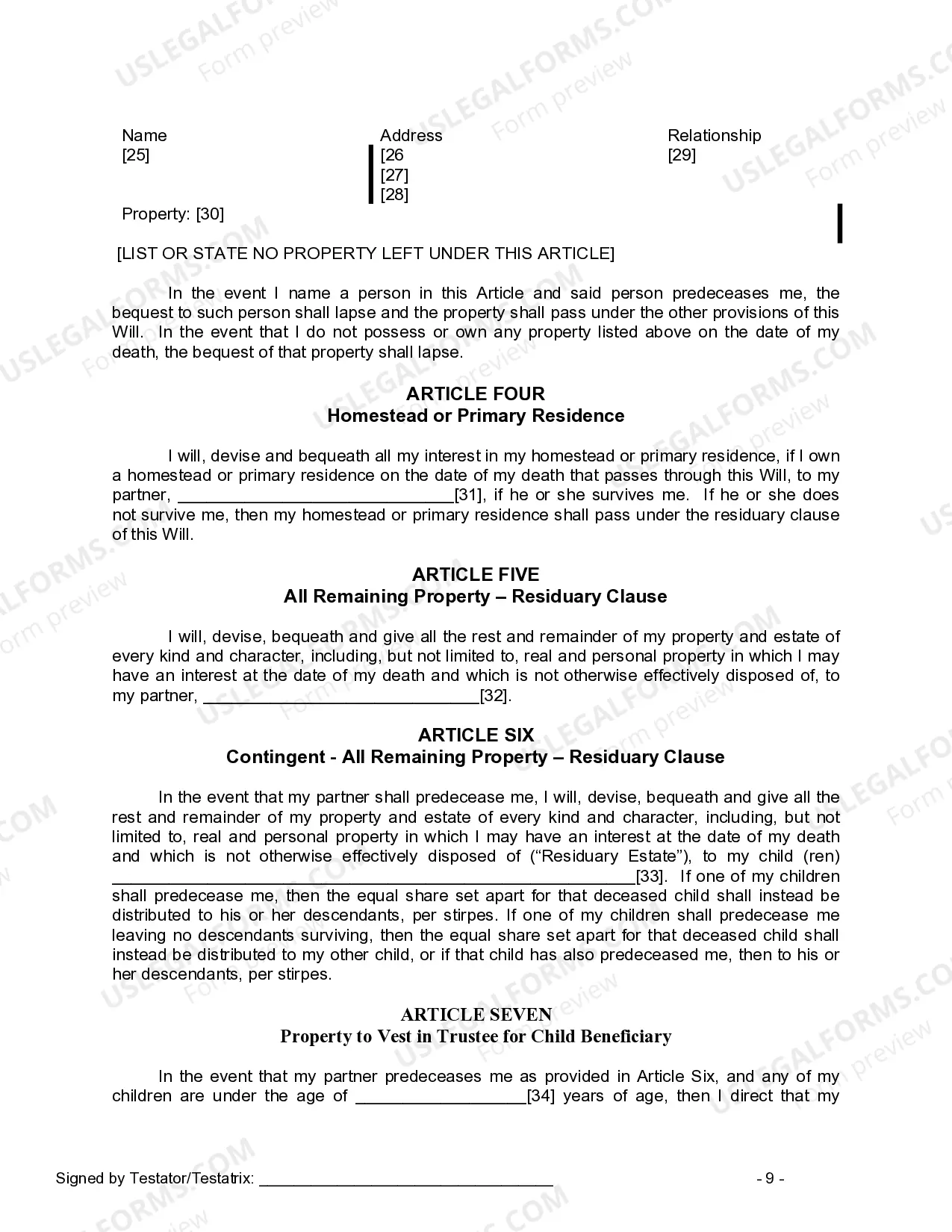
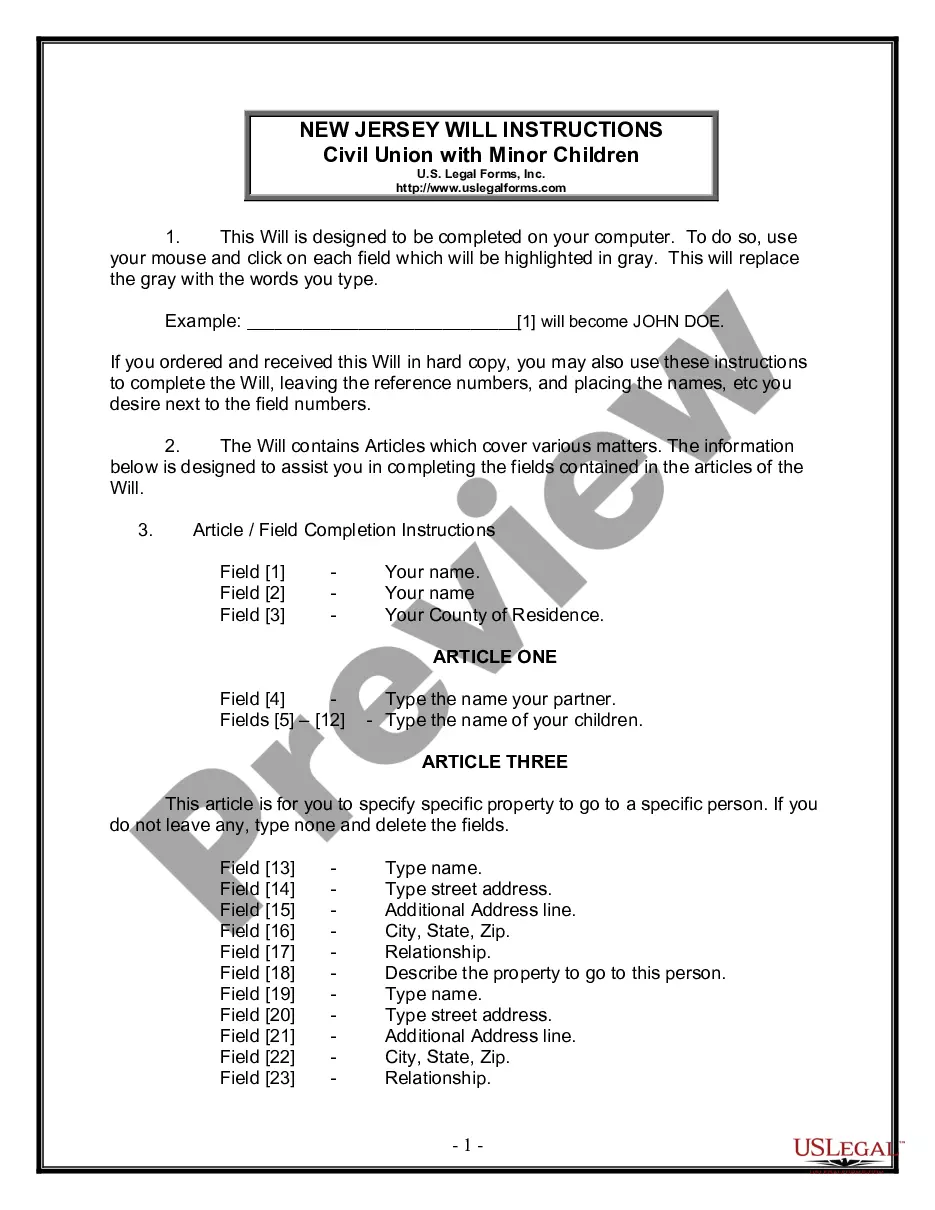
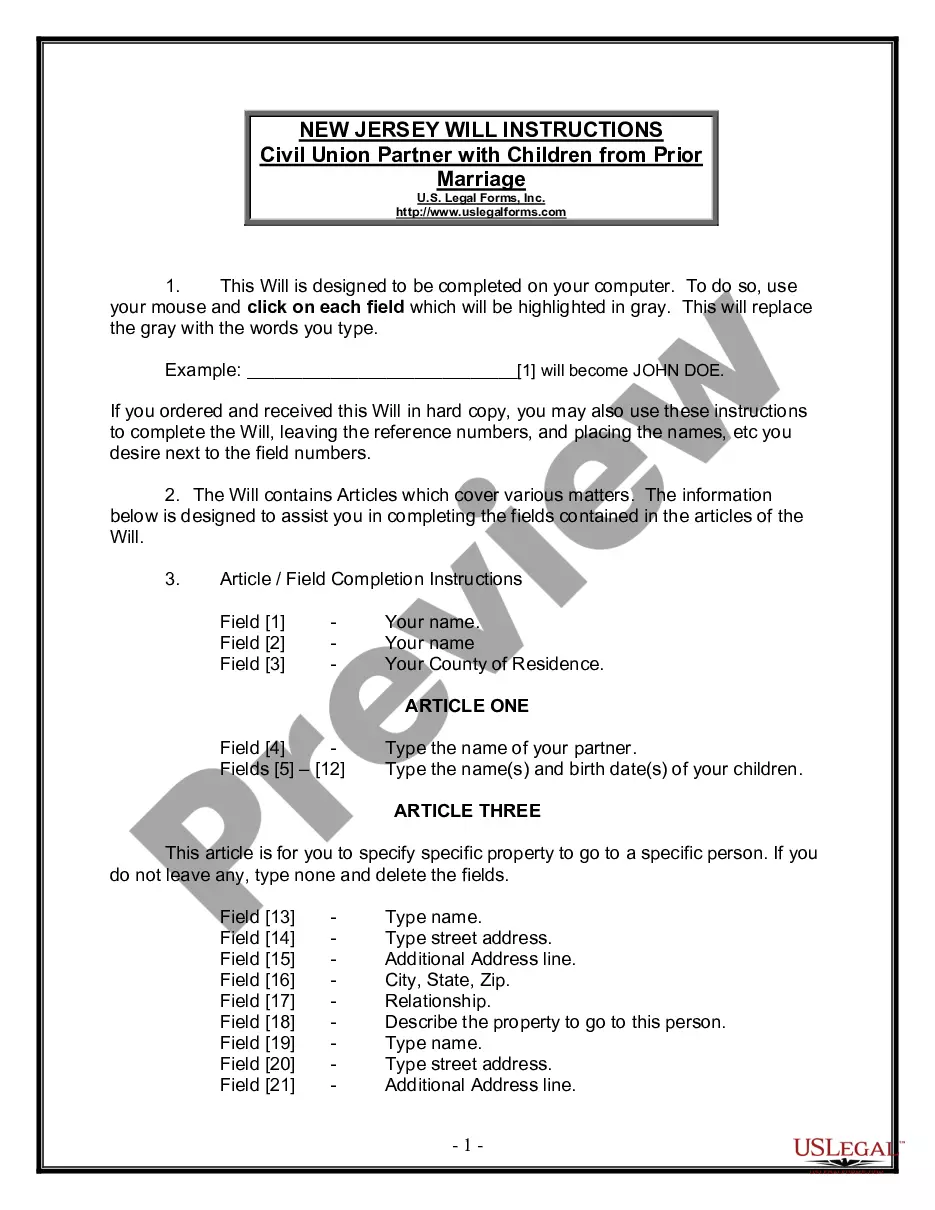
This Last Will and Testament is specifically designed for civil union partners who have both adult and minor children. It serves as a legal document that outlines how your assets will be distributed upon your death and provides for the care of your children. This form differs from standard wills as it includes provisions related to civil unions and incorporates specific clauses for both adult and minor heirs, ensuring that your partner and children are taken care of according to your wishes.
Form components explained
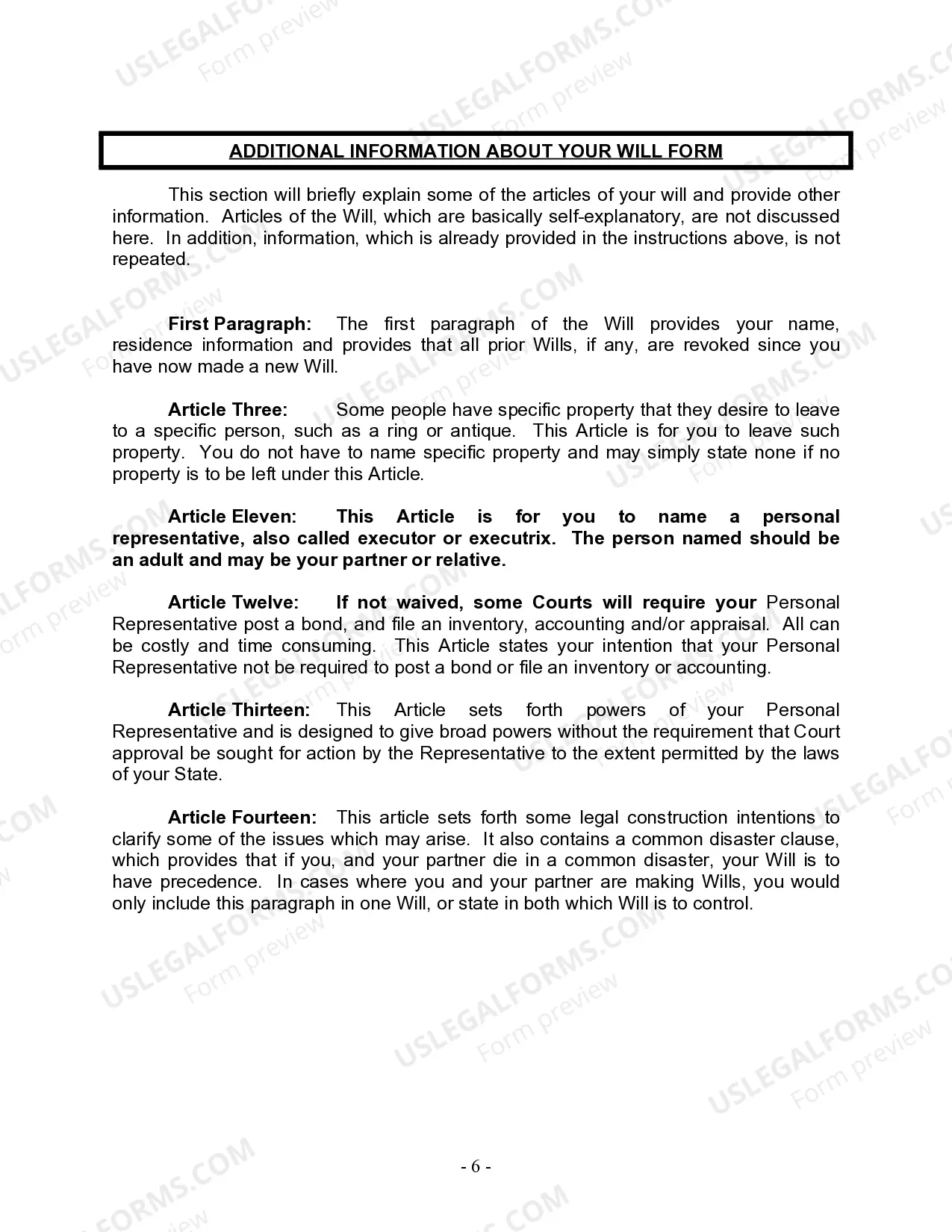
- Appointment of a personal representative or executor
- Designations for property recipients, including provisions for a civil union partner and children
- Establishment of trusts for minor children
- Appointment of guardians for minor children
- Provisions for the allocation of specific property to individuals
- Self-proving affidavit requirements for ease in probate



When to use this form
This form should be used when you wish to create a legally binding will that addresses the unique dynamics of a civil union. It's essential for securing your partner's rights and managing your children's inheritance, particularly if you have minor children. This will is necessary to ensure that your assets are distributed according to your specific wishes and to provide for the guardianship of your children, should both parents pass away.
Who this form is for
- Civil union partners with both adult and minor children
- Individuals looking to ensure their partner is provided for after their passing
- Parents who want to establish guardianship for their minor children
- Those needing to designate specific property and trusts for their heirs
Steps to complete this form
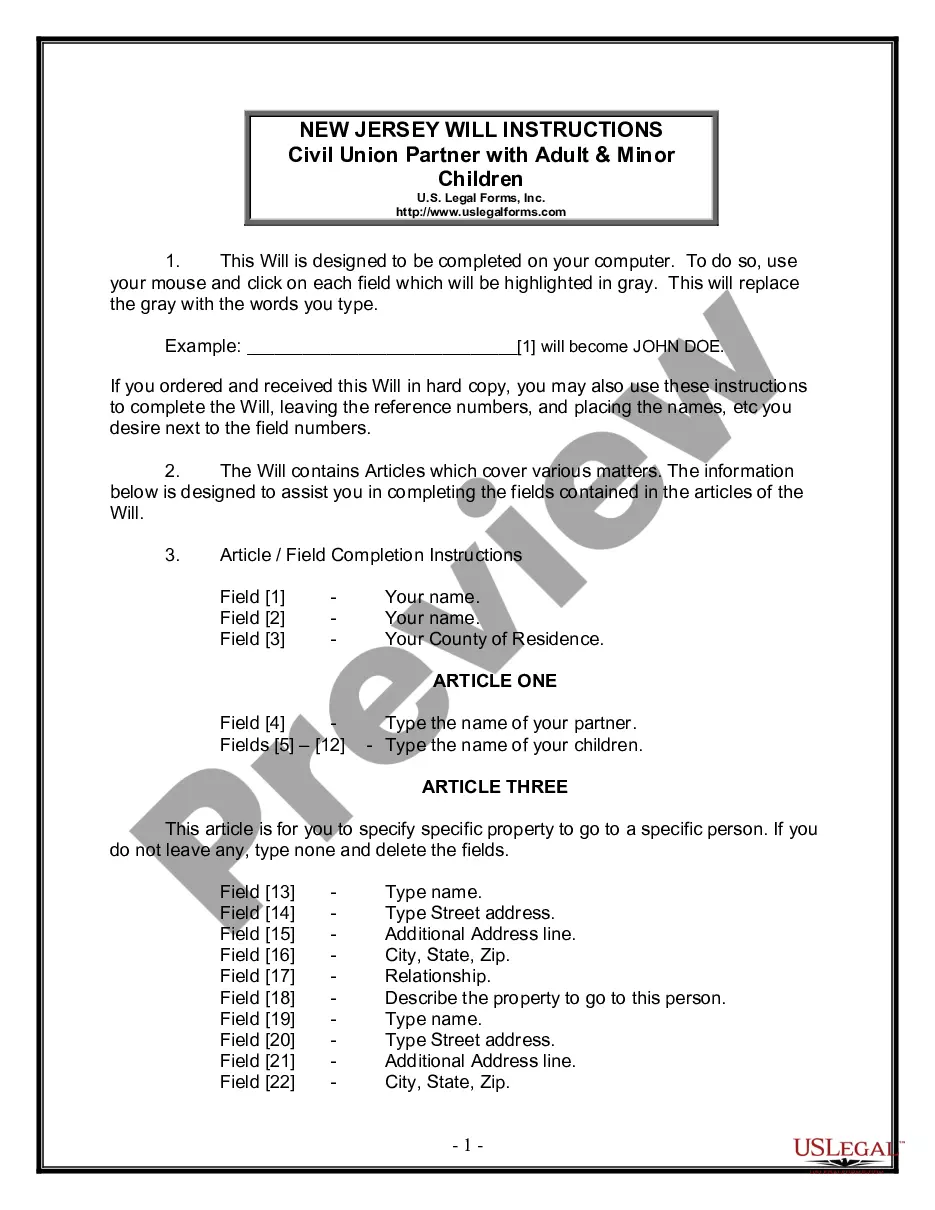
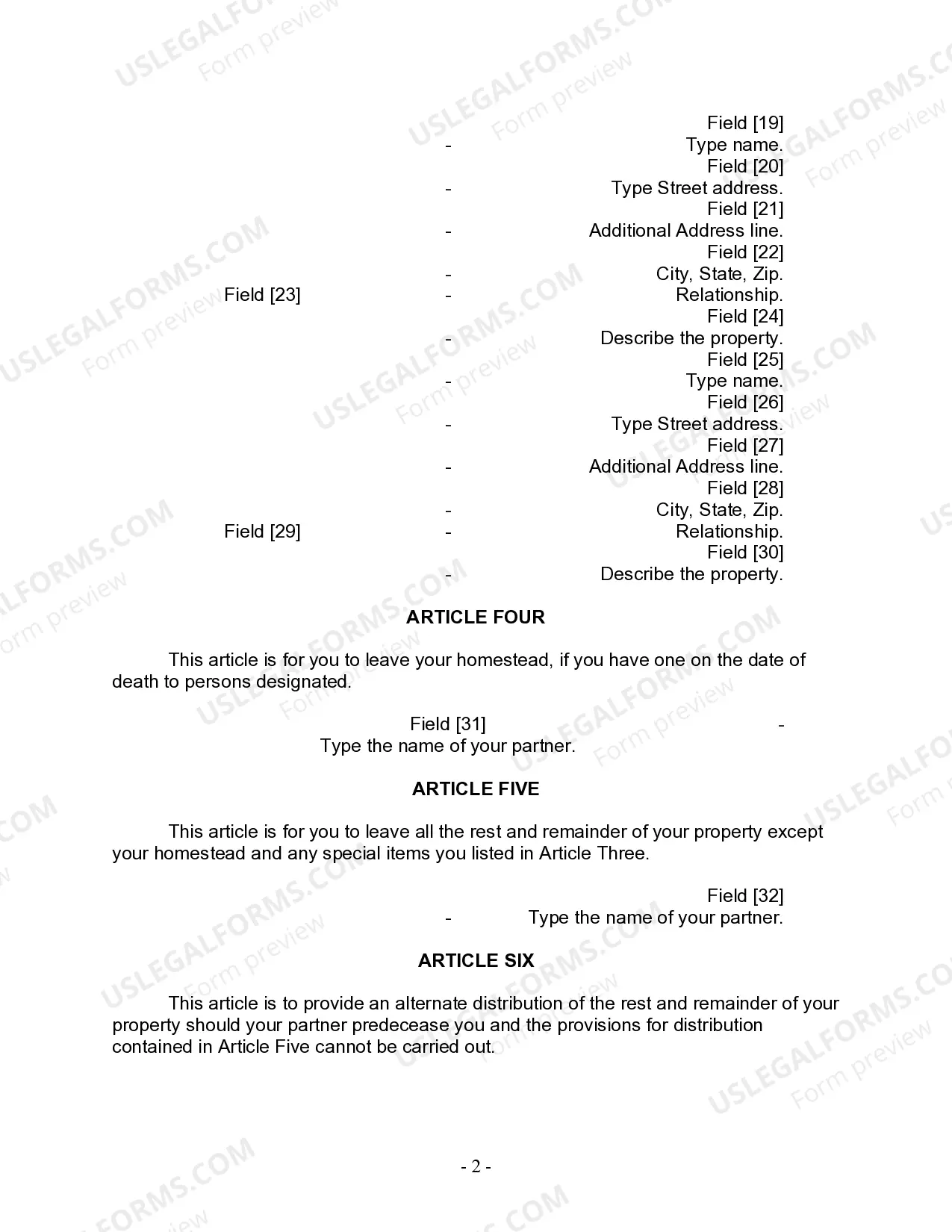
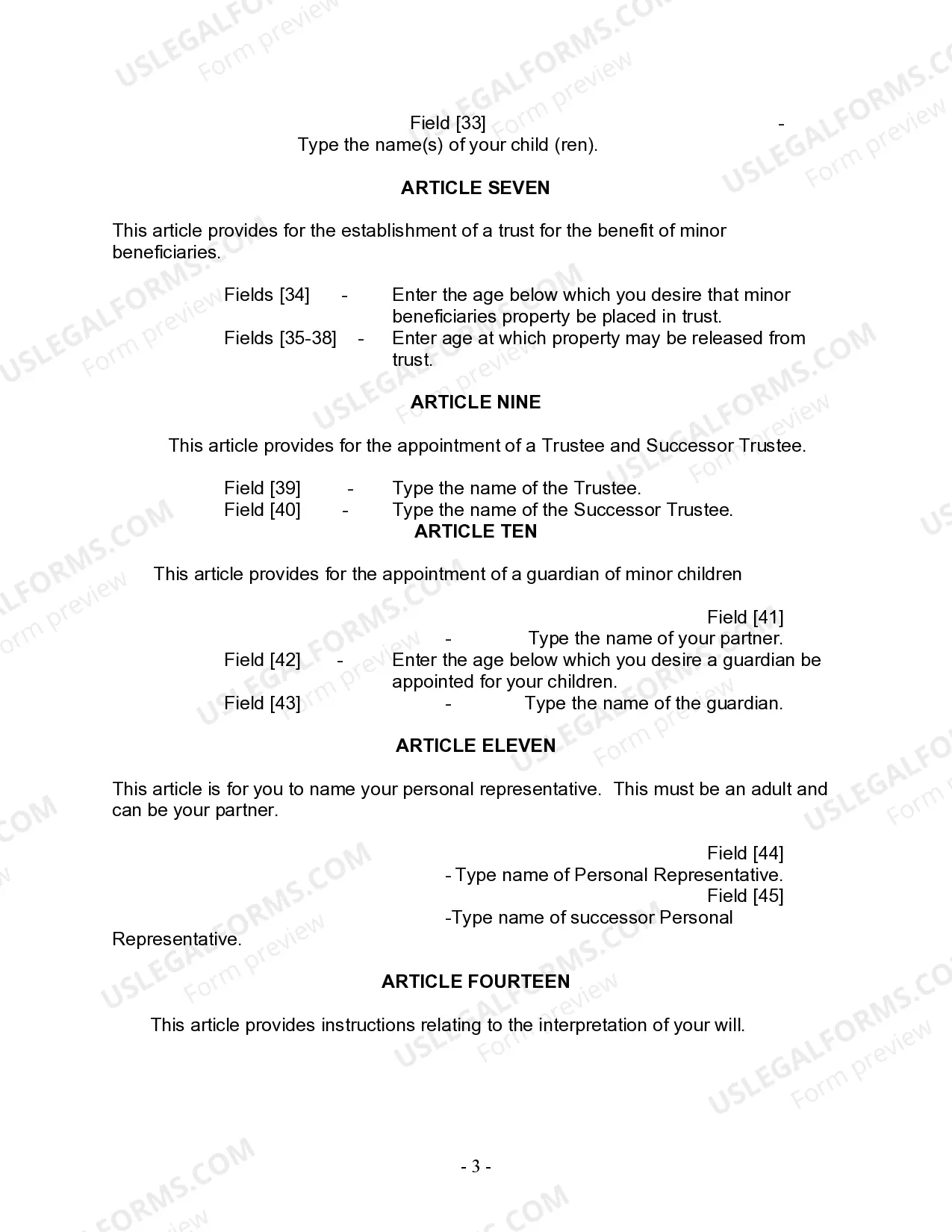
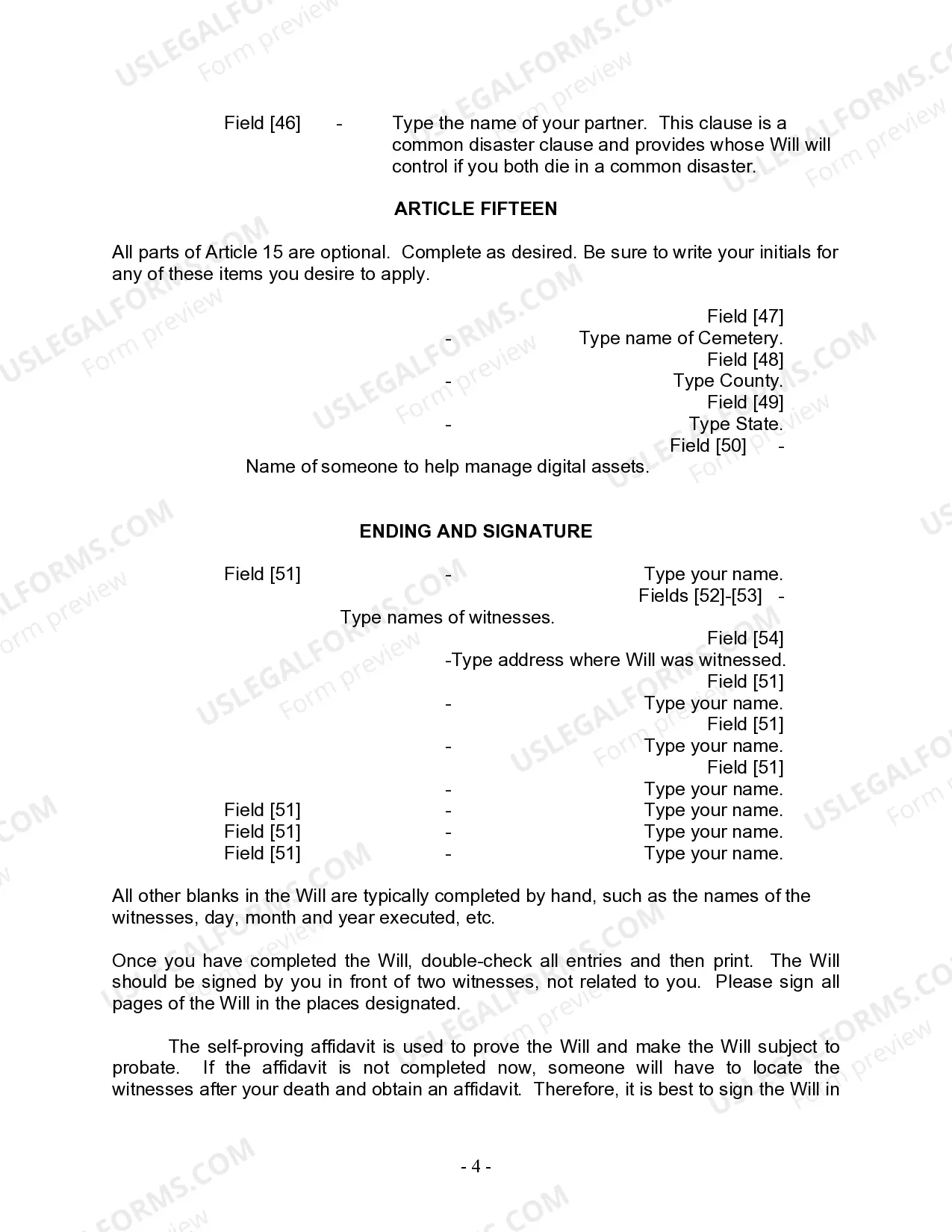
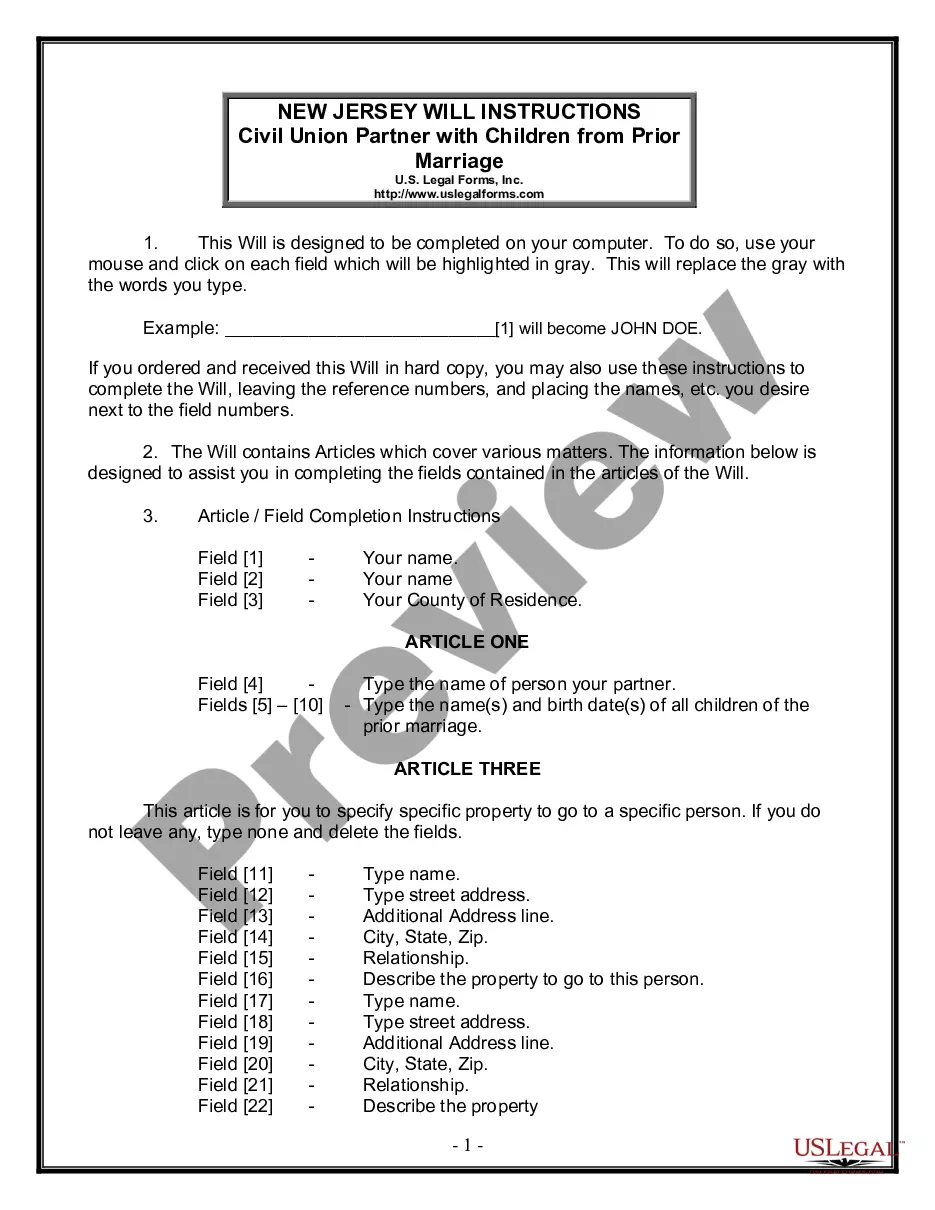
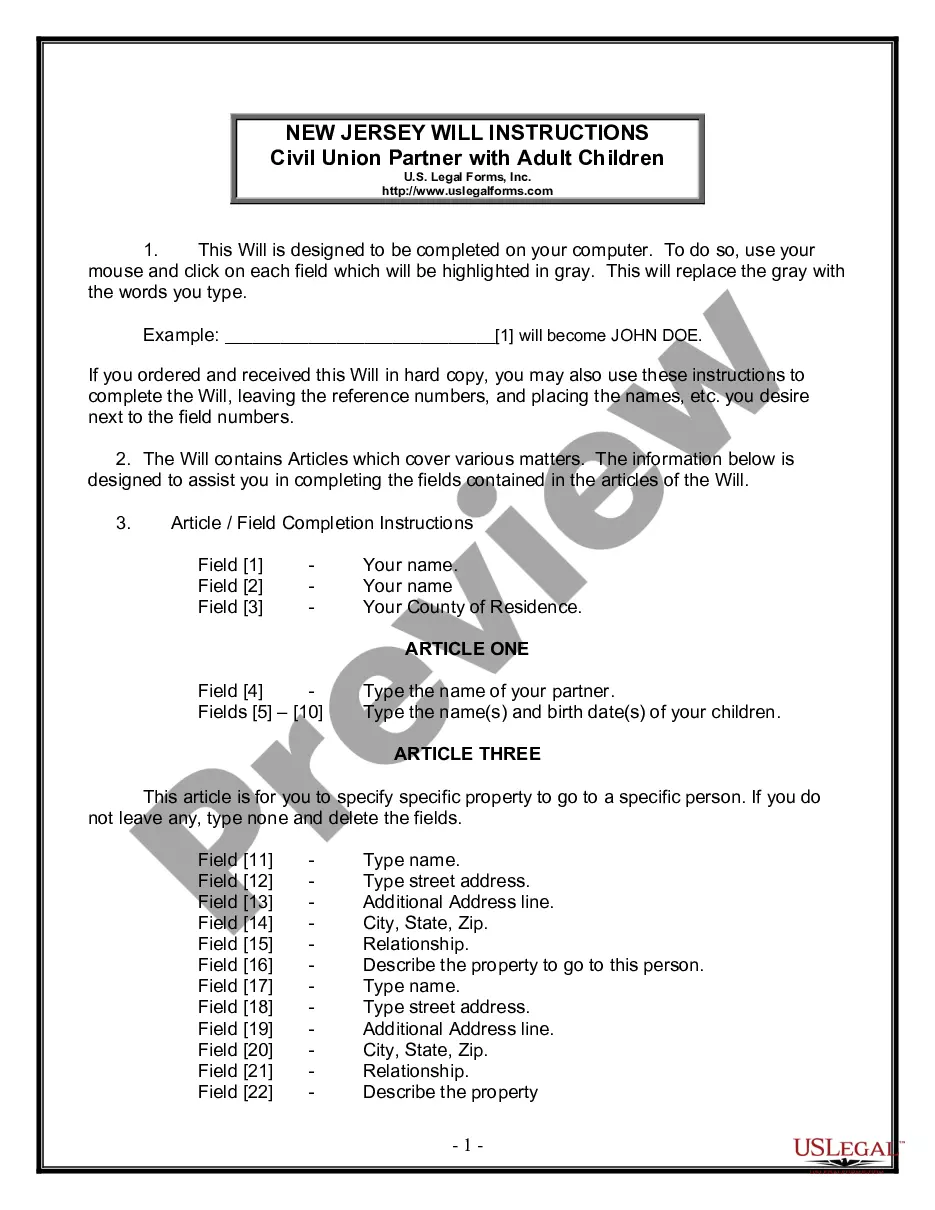
- Begin by entering your full name, county of residence, and confirming that this document revokes any prior wills.
- Designate your civil union partner and list your children, including their names and dates of birth.
- Specify any specific property you wish to bequeath and to whom.
- Indicate your preferences for guardianship and the appointment of trustees for any trusts for minor beneficiaries.
- Ensure the document is signed in the presence of two unrelated witnesses and complete the self-proving affidavit if applicable.
Does this form need to be notarized?
Yes, this form must be notarized to be legally valid. It is highly recommended to sign the will in the presence of a notary public, as this helps in executing the self-proving affidavit, which simplifies the probate process.
Get your form ready online
Our built-in tools help you complete, sign, share, and store your documents in one place.
Make edits, fill in missing information, and update formatting in US Legal Forms—just like you would in MS Word.
Download a copy, print it, send it by email, or mail it via USPS—whatever works best for your next step.
Sign and collect signatures with our SignNow integration. Send to multiple recipients, set reminders, and more. Go Premium to unlock E-Sign.
If this form requires notarization, complete it online through a secure video call—no need to meet a notary in person or wait for an appointment.
We protect your documents and personal data by following strict security and privacy standards.

Make edits, fill in missing information, and update formatting in US Legal Forms—just like you would in MS Word.

Download a copy, print it, send it by email, or mail it via USPS—whatever works best for your next step.

Sign and collect signatures with our SignNow integration. Send to multiple recipients, set reminders, and more. Go Premium to unlock E-Sign.

If this form requires notarization, complete it online through a secure video call—no need to meet a notary in person or wait for an appointment.

We protect your documents and personal data by following strict security and privacy standards.
Common mistakes to avoid
- Failing to properly sign the will in front of the required witnesses
- Not updating the will after significant life changes, such as marriages or births
- Omitting specific property or beneficiaries that were intended to be included
- Neglecting to complete the self-proving affidavit when required
Advantages of online completion
- You can easily fill out the form on your computer, allowing for quick edits and modifications.
- Access to attorney-drafted templates assures accuracy and legal validity.
- Downloaded forms can be printed immediately, meeting your estate planning needs swiftly.
Legal use & context
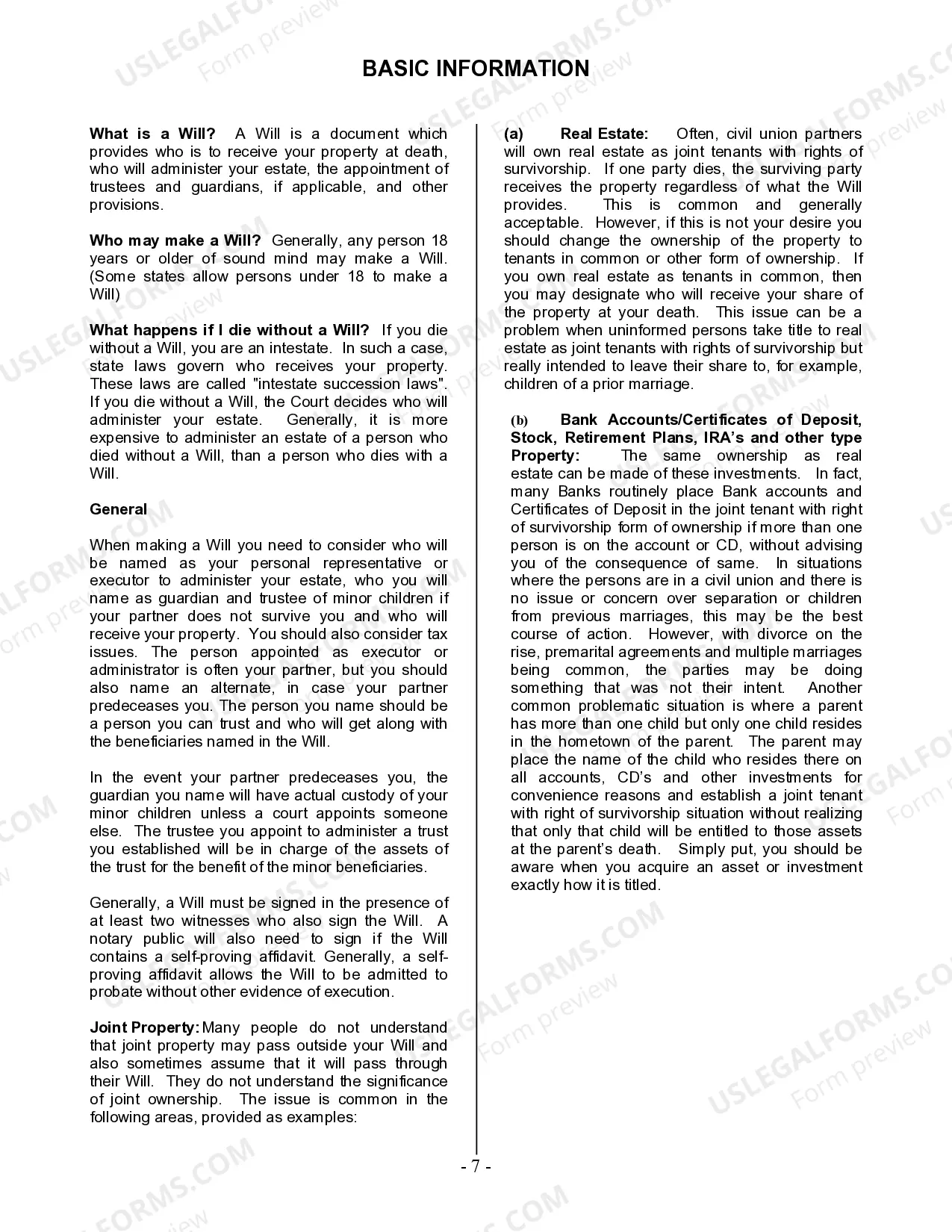
- A will provides certainty and clarity regarding the distribution of your estate.
- It ensures your wishes are honored, especially relating to your civil union partner and minor children.
- It helps prevent disputes among heirs by clearly outlining beneficiary designations.
Quick recap
- The Last Will and Testament form is essential for civil union partners with children.
- Using this form ensures your partner and children are provided for according to your wishes.
- Proper execution, including witnesses and notarization, is vital for legal validity.
Looking for another form?


Form popularity
FAQ
Create the initial document. Start by titling the document Last Will and Testament" and including your full legal name and address. Designate an executor. Appoint a guardian. Name the beneficiaries. Designate the assets. Ask witnesses to sign your will. Store your will in a safe place.
A: Under New Jersey's new law, a civil union is the legally recognized union of two individuals of the same sex. Civil union couples receive the legal benefits and protections and are subject to the legal responsibilities provided under New Jersey law to married couples. But a civil union is not a marriage.
No, in New Jersey, you do not need to notarize your will to make it legal. However, New Jersey allows you to make your will "self-proving" and you'll need to go to a notary if you want to do that. A self-proving will speeds up probate because the court can accept the will without contacting the witnesses who signed it.
Under New Jersey law, a handwritten Will can be valid as a writing intended as a Will if the material portions of the document are in the handwriting of the decedent and signed by the decedent.
In New Jersey, the will must be in writing. You must sign your own will, witnessed by two individuals over 18 (You must be at least age 18 as well.)Notarized wills are not required, but they do help speed the process, since a probate court doesn't have to track down the two witnesses.
A notarized will does not need to be probated.When a person dies leaving behind a will that is not notarized, the law requires that its validity be ascertained by a notary or by a court. Similarly, any non-notarized modification made to a will must be probated, whether the will is notarized or not.
Bank accounts. Brokerage or investment accounts. Retirement accounts and pension plans. A life insurance policy.
Probate must occur before the Surrogate in the County of the decedent's residence at the time of death. The Executor must bring the original Will, certified copy of the death certificate, a list of the names and addresses of the decedent's next of kin, and a check book to pay various fees and costs.
What makes a will valid in New Jersey? A person must be at least 18 years old and mentally competent to create a valid will. Generally, this means they understand the purpose of the will and know what they wish to happen to their property. The testator, as well as two witnesses, must sign a typed will.