New Jersey Last Will and Testament for Civil Union Partner with Minor Children from Prior Marriage
Overview of this form
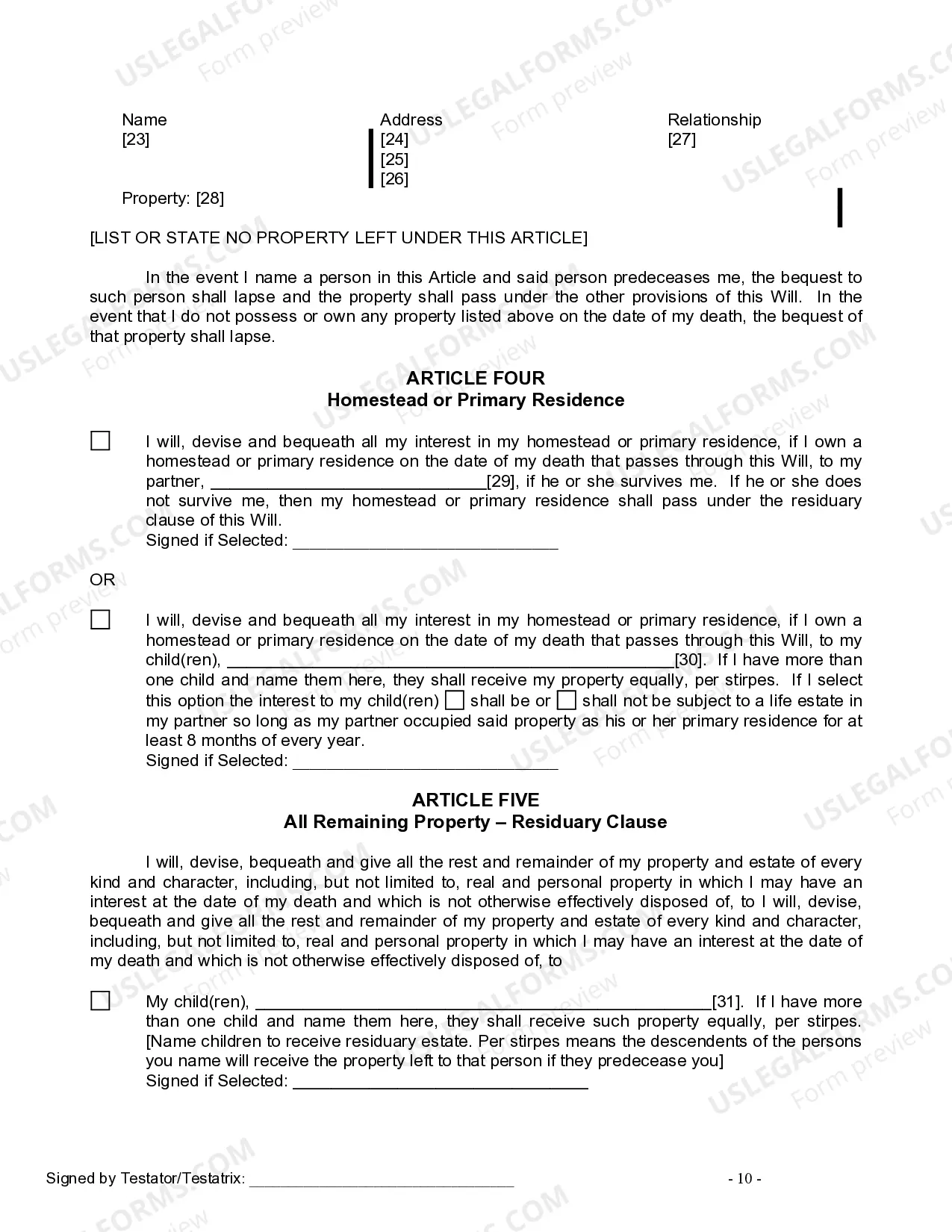
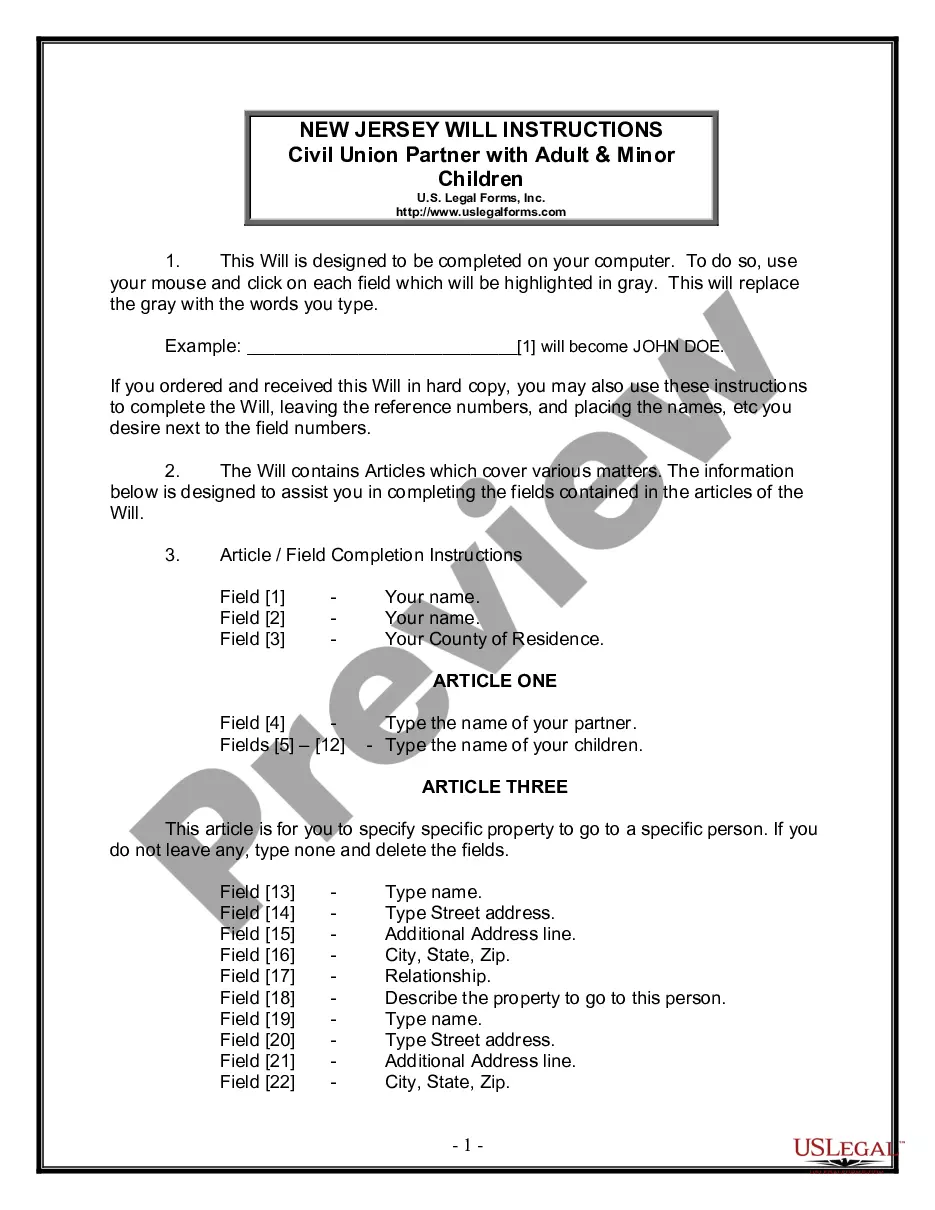
This Last Will and Testament is designed specifically for individuals in a civil union who have minor children from a prior marriage. The document outlines how your property will be distributed after your death, appoints a personal representative to manage your estate, and designates a trustee for any assets allocated to your minor children. This will ensures that your wishes are clearly articulated and legally recognized, providing peace of mind to you and your loved ones.
Key components of this form
- Appointment of a personal representative or executor to manage the estate.
- Specification of beneficiaries, including a civil union partner and minor children from a prior marriage.
- Provisions for bequeathing specific items of property.
- Appointment of a trustee for managing assets left to minor children.
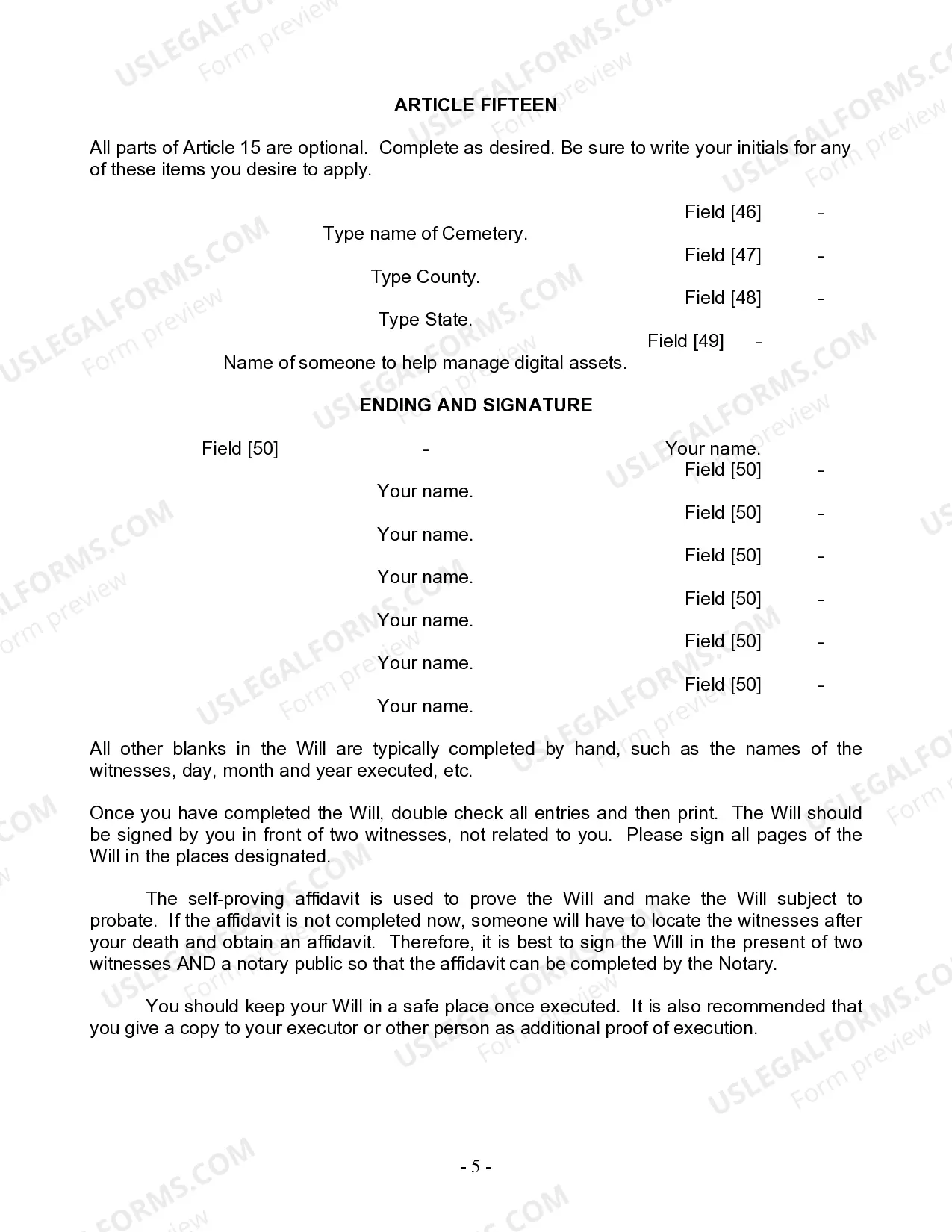
- Instructions for leaving a homestead or primary residence.
- Appointment of guardians for minor children if needed.




When this form is needed
This form should be used when you wish to legally document your last wishes regarding property distribution upon your death, particularly if you are in a civil union and have minor children from a prior relationship. It is essential for ensuring that your assets are distributed according to your desires and that your children are cared for according to your wishes.
Intended users of this form
- Individuals in a civil union.
- Parents with minor children from prior marriages.
- Anyone wanting to clarify the distribution of their assets after death.
- Those who wish to name a guardian for their minor children.
Completing this form step by step
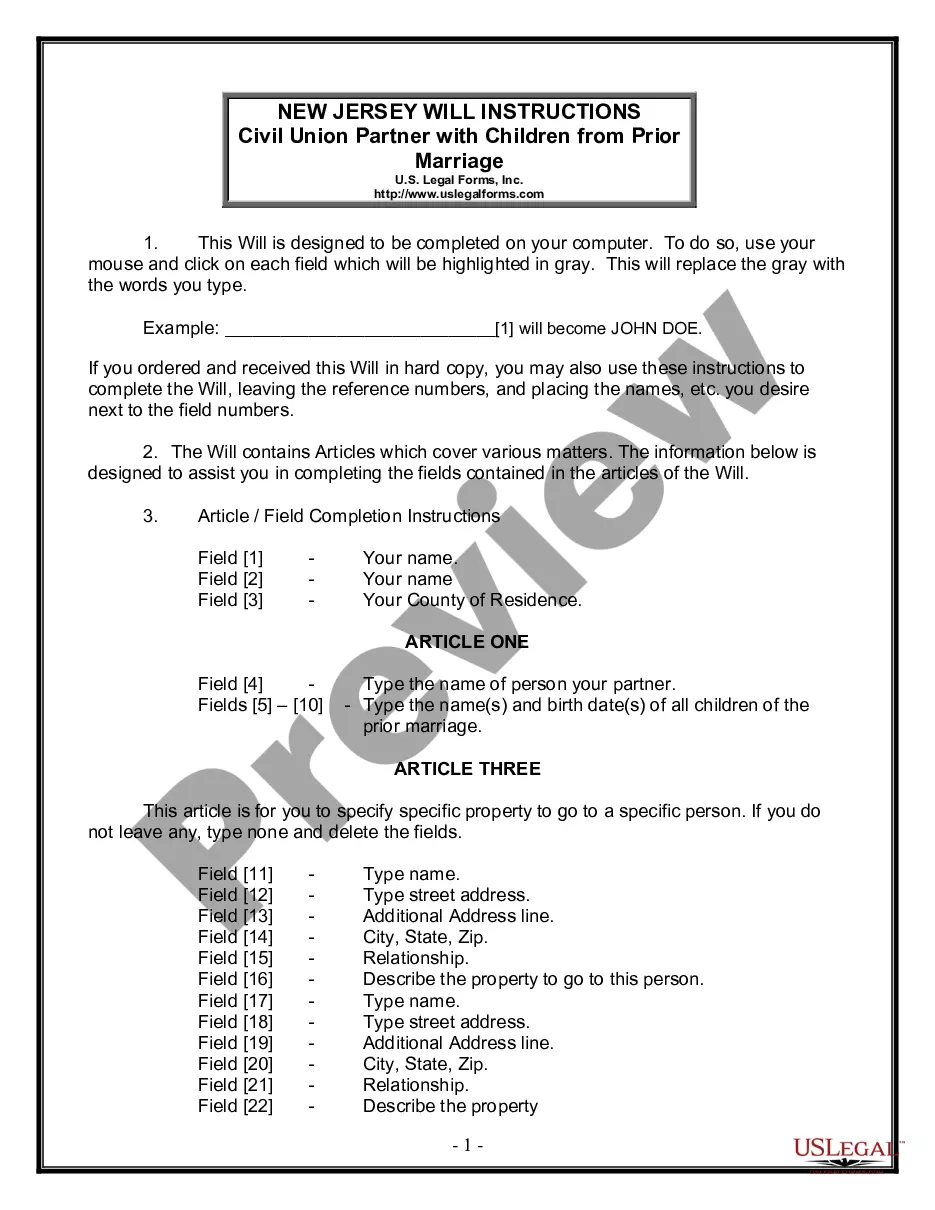
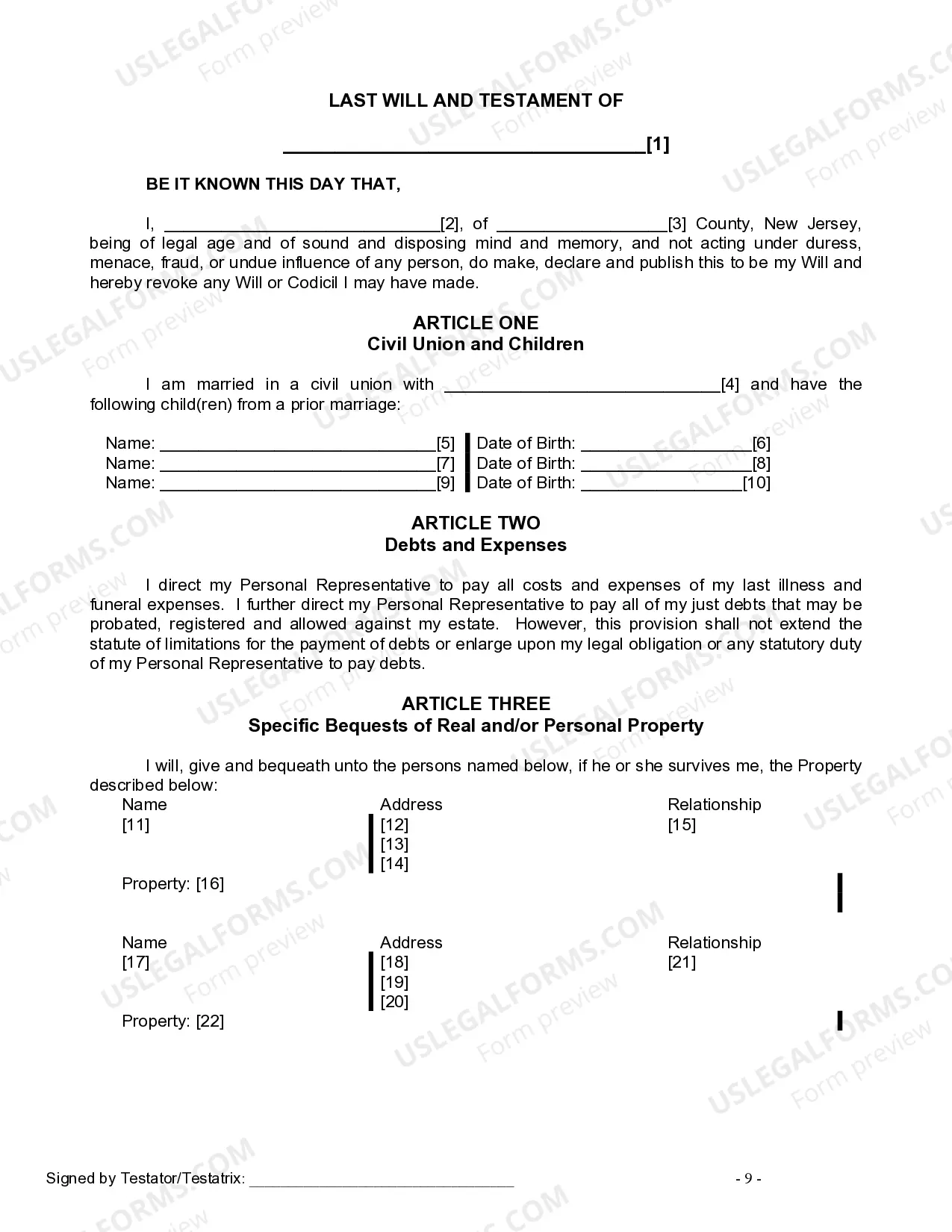
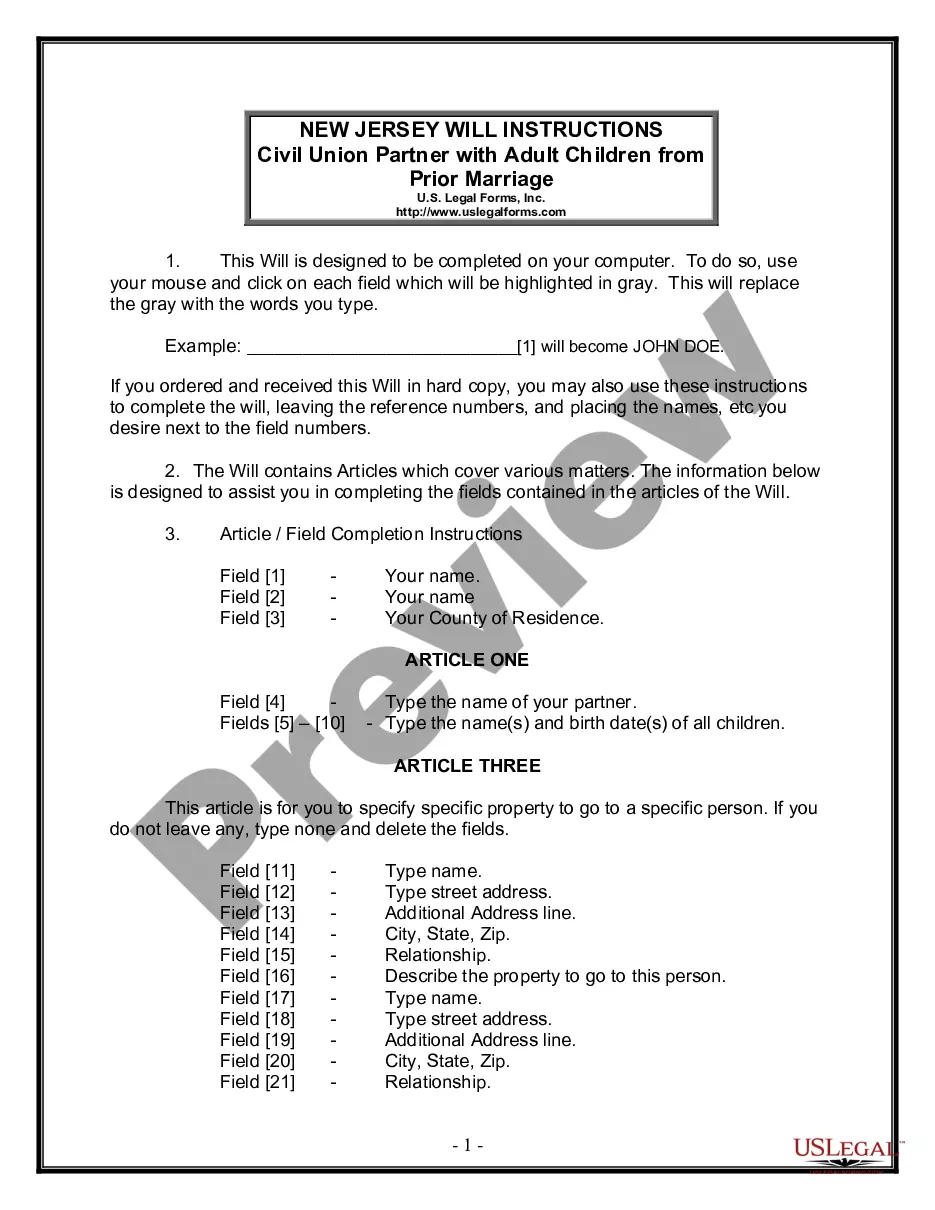
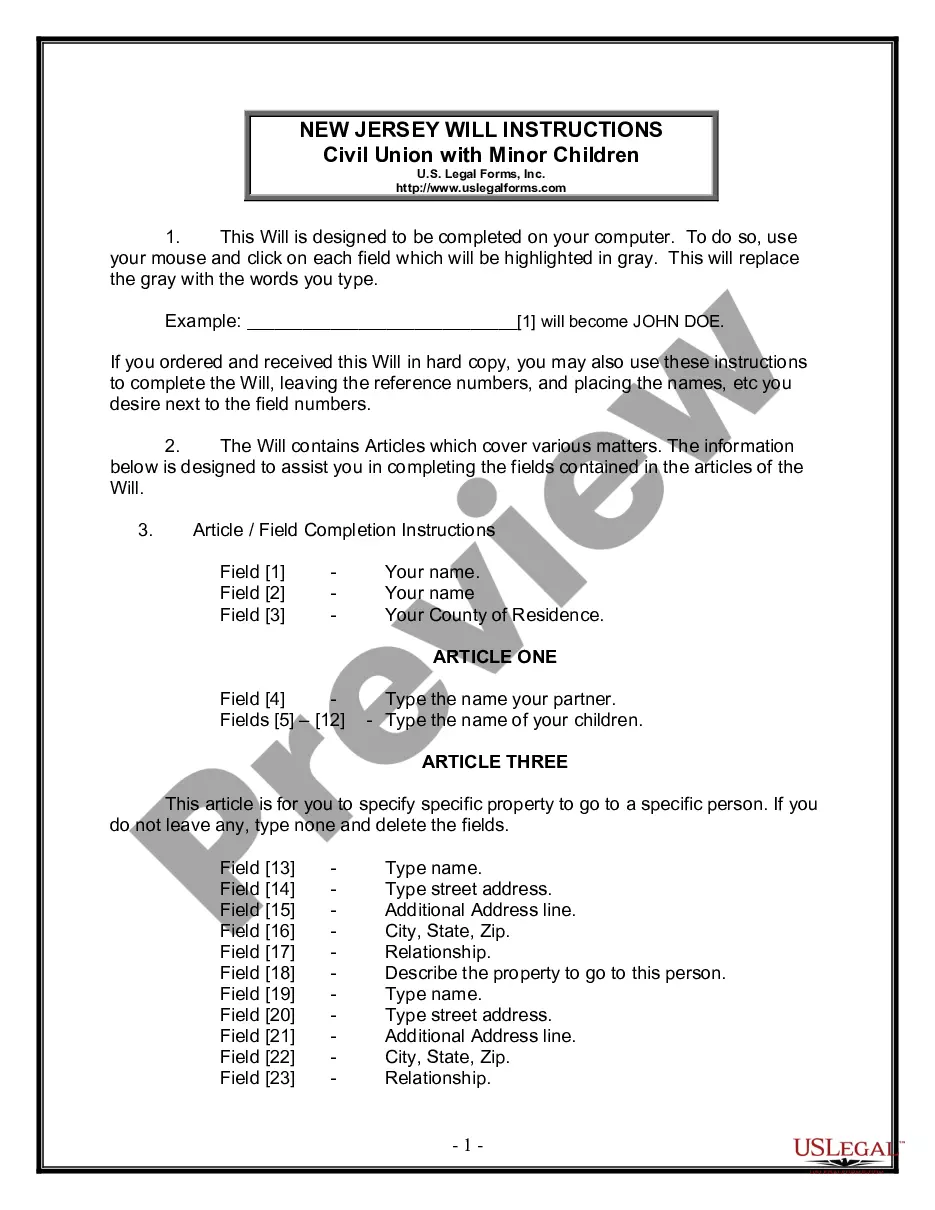
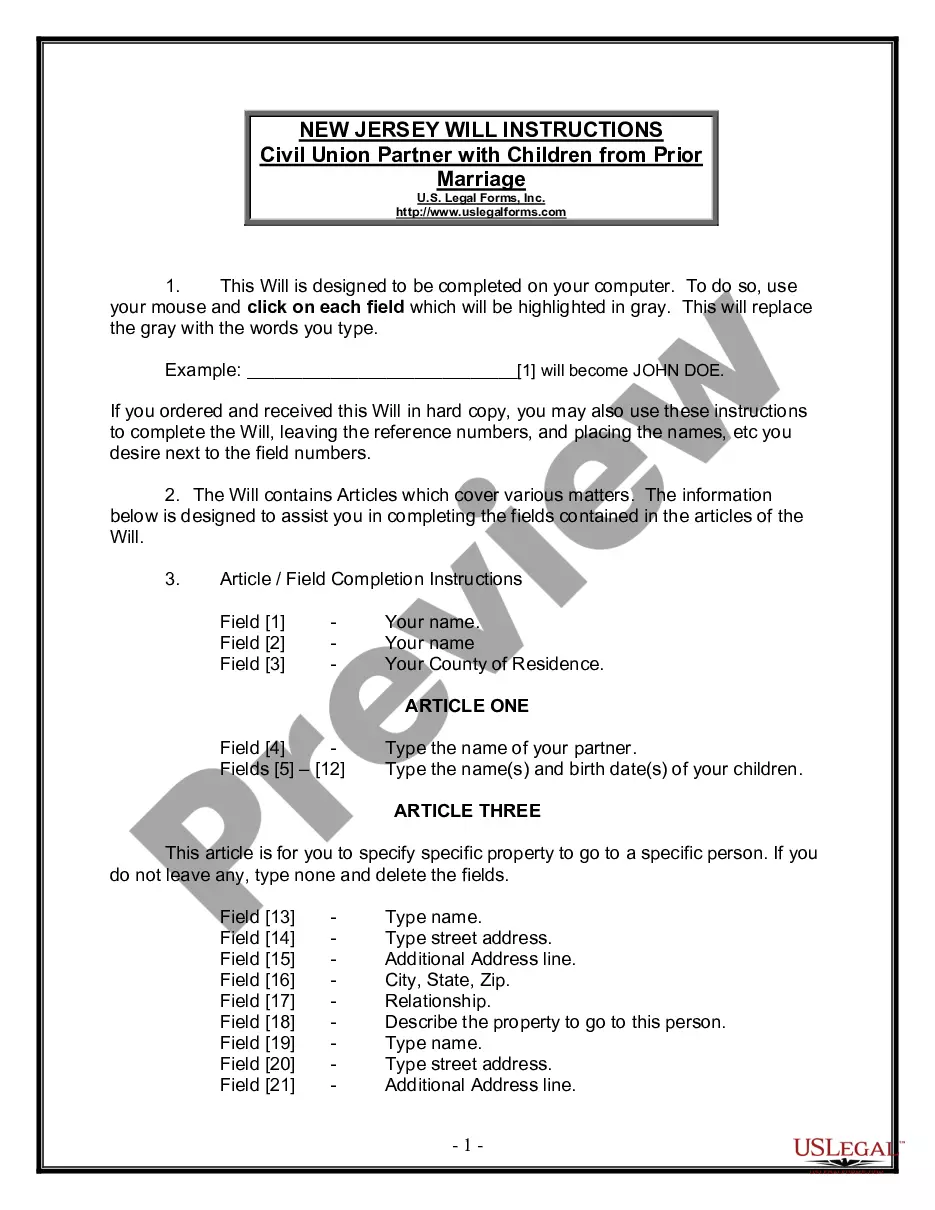
- Enter your name and county of residence.
- List the names and birth dates of your civil union partner and any minor children from a prior marriage.
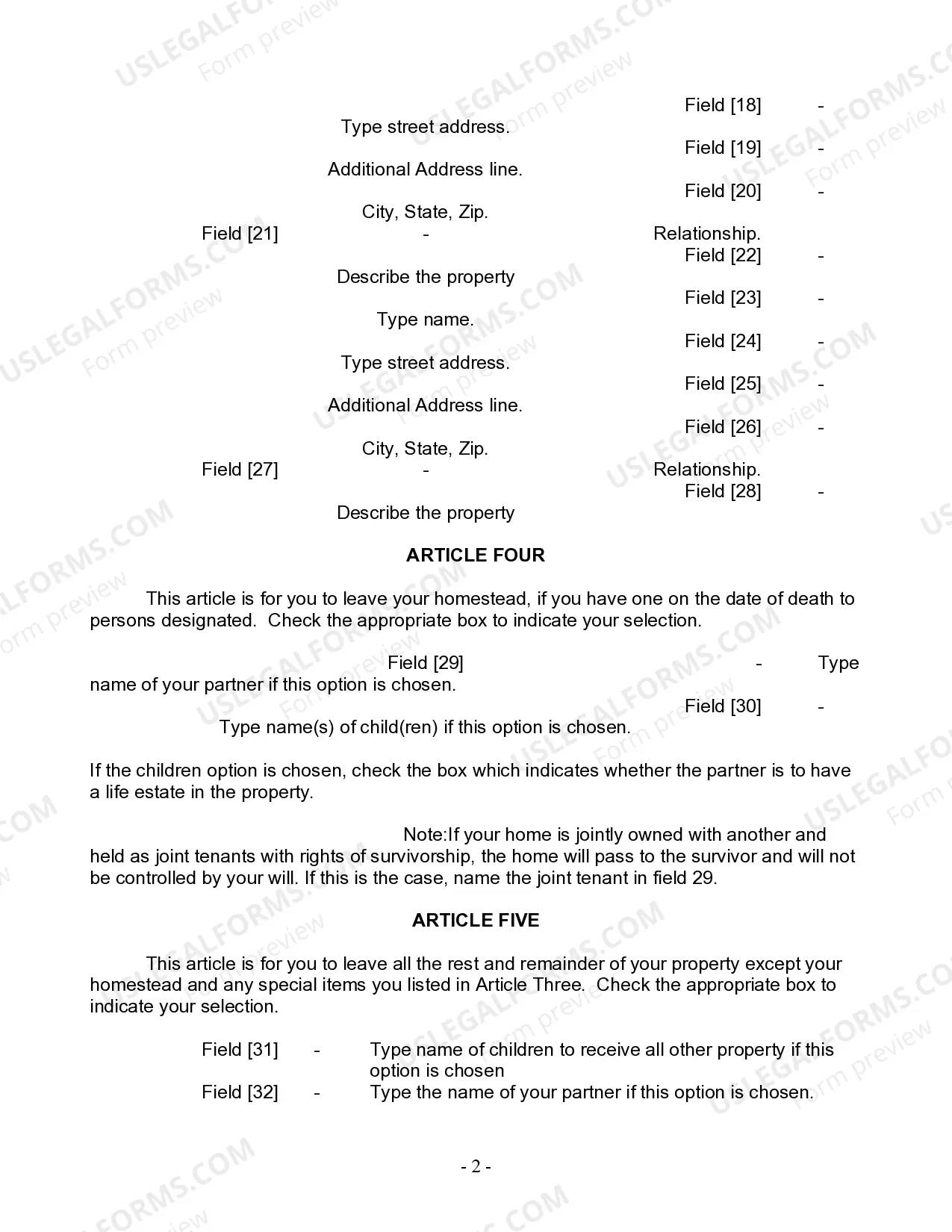
- Specify any specific property you wish to bequeath to certain individuals.
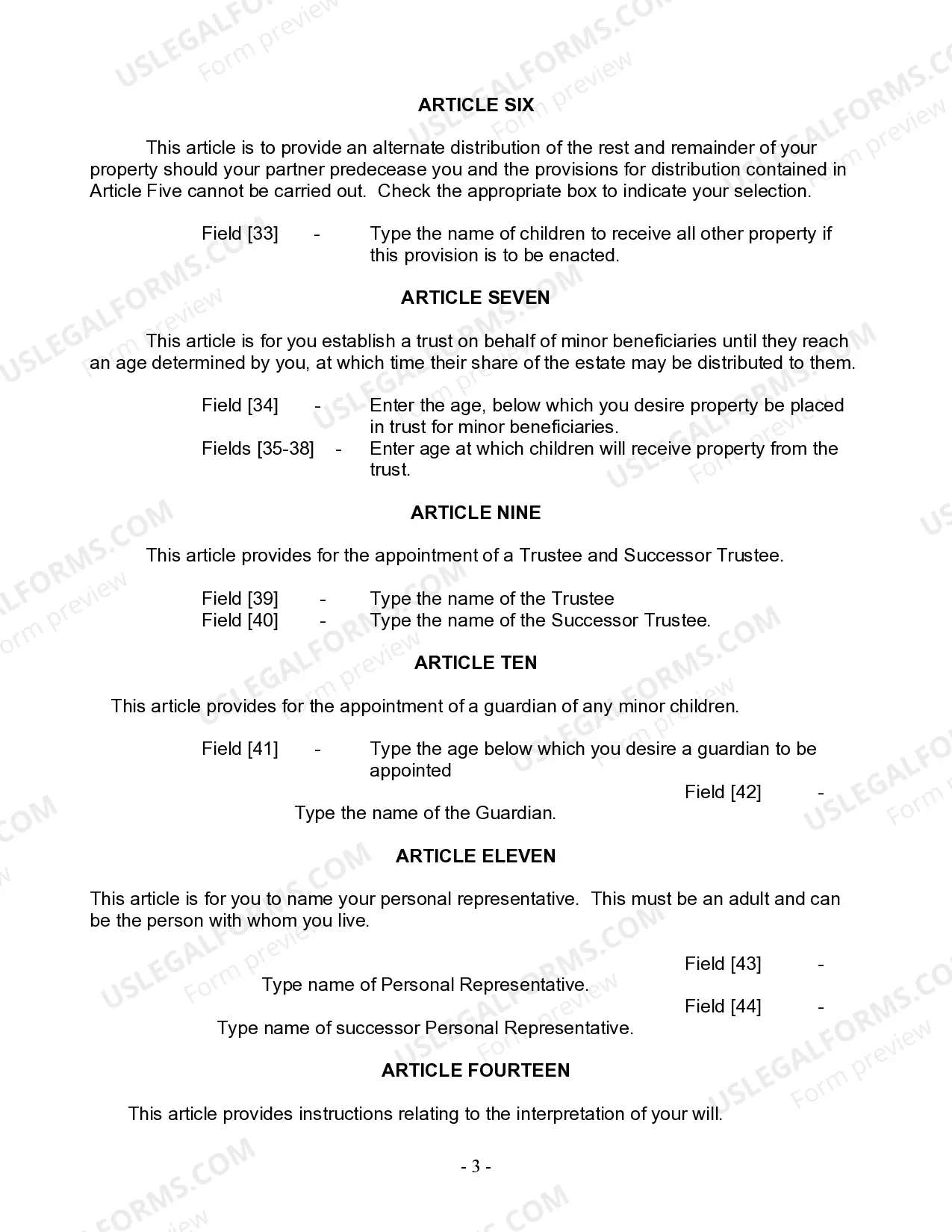
- Designate a personal representative to manage your estate and a trustee for minor children's assets.
- Ensure the will is signed in the presence of two witnesses and, if required, notarized to validate the document.
Does this form need to be notarized?
Yes, this form must be notarized to be legally valid, particularly if it includes a self-proving affidavit. Notarization helps establish the authenticity of your will. US Legal Forms offers integrated online notarization services, allowing you to complete this step conveniently and securely.
Get your form ready online
Our built-in tools help you complete, sign, share, and store your documents in one place.
Make edits, fill in missing information, and update formatting in US Legal Forms—just like you would in MS Word.
Download a copy, print it, send it by email, or mail it via USPS—whatever works best for your next step.
Sign and collect signatures with our SignNow integration. Send to multiple recipients, set reminders, and more. Go Premium to unlock E-Sign.
If this form requires notarization, complete it online through a secure video call—no need to meet a notary in person or wait for an appointment.
We protect your documents and personal data by following strict security and privacy standards.

Make edits, fill in missing information, and update formatting in US Legal Forms—just like you would in MS Word.

Download a copy, print it, send it by email, or mail it via USPS—whatever works best for your next step.

Sign and collect signatures with our SignNow integration. Send to multiple recipients, set reminders, and more. Go Premium to unlock E-Sign.

If this form requires notarization, complete it online through a secure video call—no need to meet a notary in person or wait for an appointment.

We protect your documents and personal data by following strict security and privacy standards.
Mistakes to watch out for
- Failing to sign the will in front of the required number of witnesses.
- Not including all children from previous marriages in the will.
- Forgetting to name alternate beneficiaries or guardians.
- Not updating the will after significant life changes, such as divorce or the birth of additional children.
Why use this form online
- Convenient access and the ability to complete the document at your own pace.
- Editable fields allow you to customize the form to fit your specific needs.
- Reliability of attorney-drafted templates to ensure legal compliance.
Looking for another form?
Form popularity
FAQ
Following the legalization of same-sex marriage in their jurisdiction Vermont, Connecticut, New Hampshire, Rhode Island, and Delaware, ceased to offer civil unions. Civil unions are still legal in Hawaii, Illinois, New Jersey, and Colorado; civil unions are also still legal in six municipalities of Arizona.
Five states allow for civil unions: Colorado, Hawaii, Illinois, Vermont and New Jersey. California, District of Columbia, Maine, Nevada, Oregon, Washington and Wisconsin allow for domestic partnerships while Hawaii allows for a similar relationship known as reciprocal beneficiaries.
Similar to civil unions, domestic partnerships are a form of relationship that gives limited state rights to both same-sex and opposite-sex couples who live together but wish to remain unmarried or whose marriage is prohibited by law.
The end to a civil union is accomplished through a dissolution. Under the Civil Union Act, when a civil union couple wishes to have their relationship legally dissolved, they must file a complaint for dissolution in family court.
Under the Domestic Partnership Act, a domestic partnership is established when both persons have a common residence and are jointly responsible for each other's common welfare as evidenced by joint financial arrangements or joint ownership of real or personal property.
While civil partnerships do not come with the same traditional and religious connotations, the rights and obligations are almost identical to those of marriage. This extends not only to the available financial provision upon separation but also in respect of the rules of inheritance and available tax entitlements.
A: Under New Jersey's new law, a civil union is the legally recognized union of two individuals of the same sex. Civil union couples receive the legal benefits and protections and are subject to the legal responsibilities provided under New Jersey law to married couples. But a civil union is not a marriage.
Under the Domestic Partnership Act, a domestic partnership is established when both persons have a common residence and are jointly responsible for each other's common welfare as evidenced by joint financial arrangements or joint ownership of real or personal property.