Oregon Last Will and Testament for Widow or Widower with Minor Children
Understanding this form
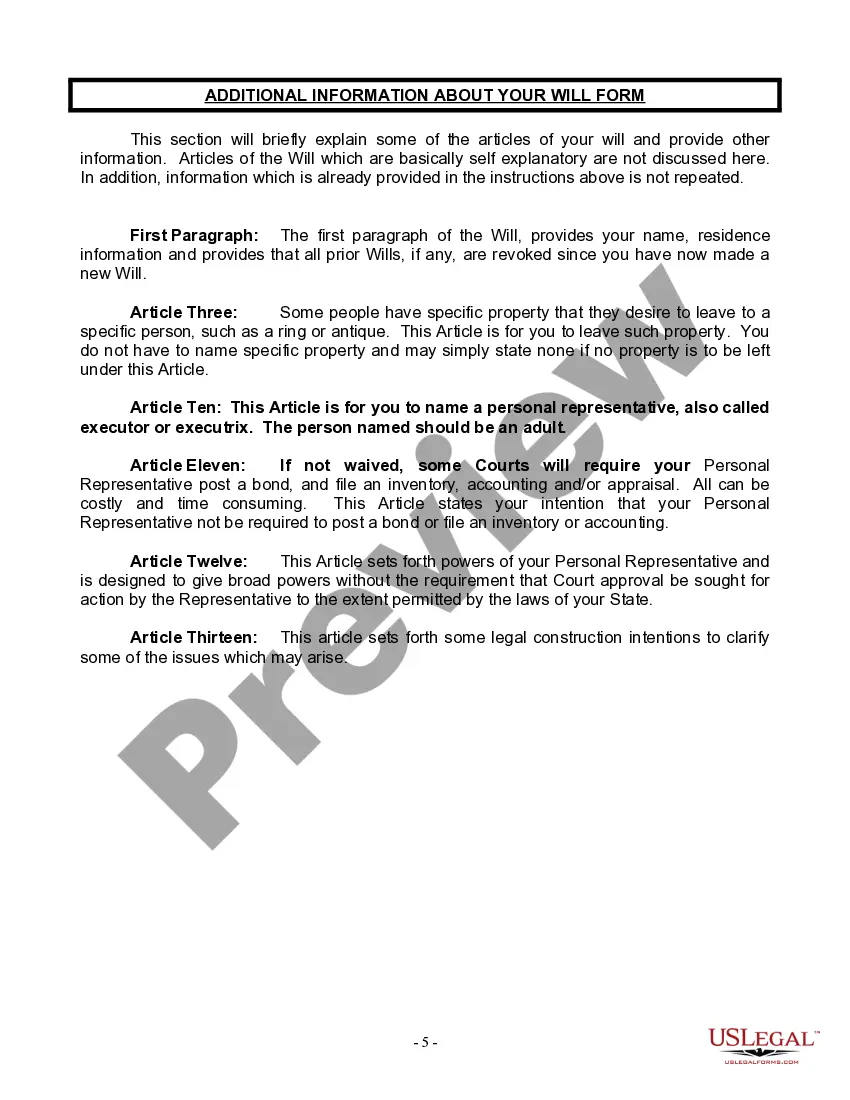
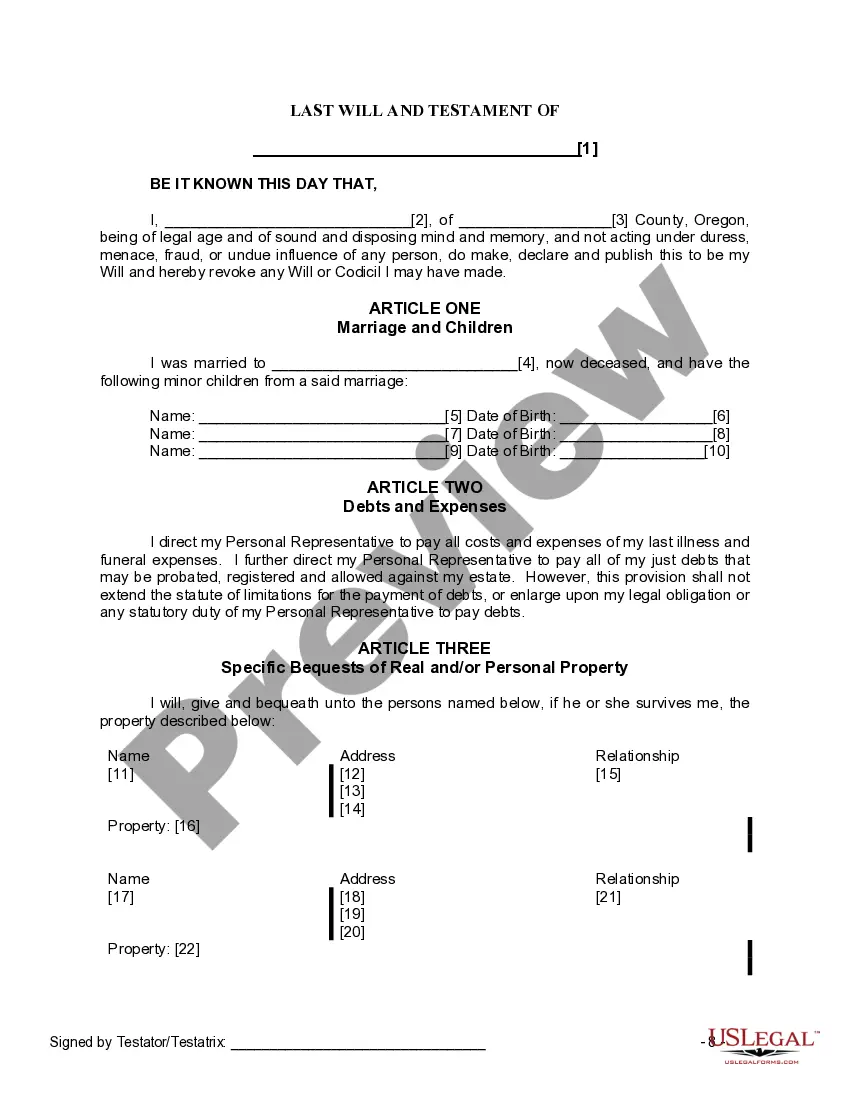
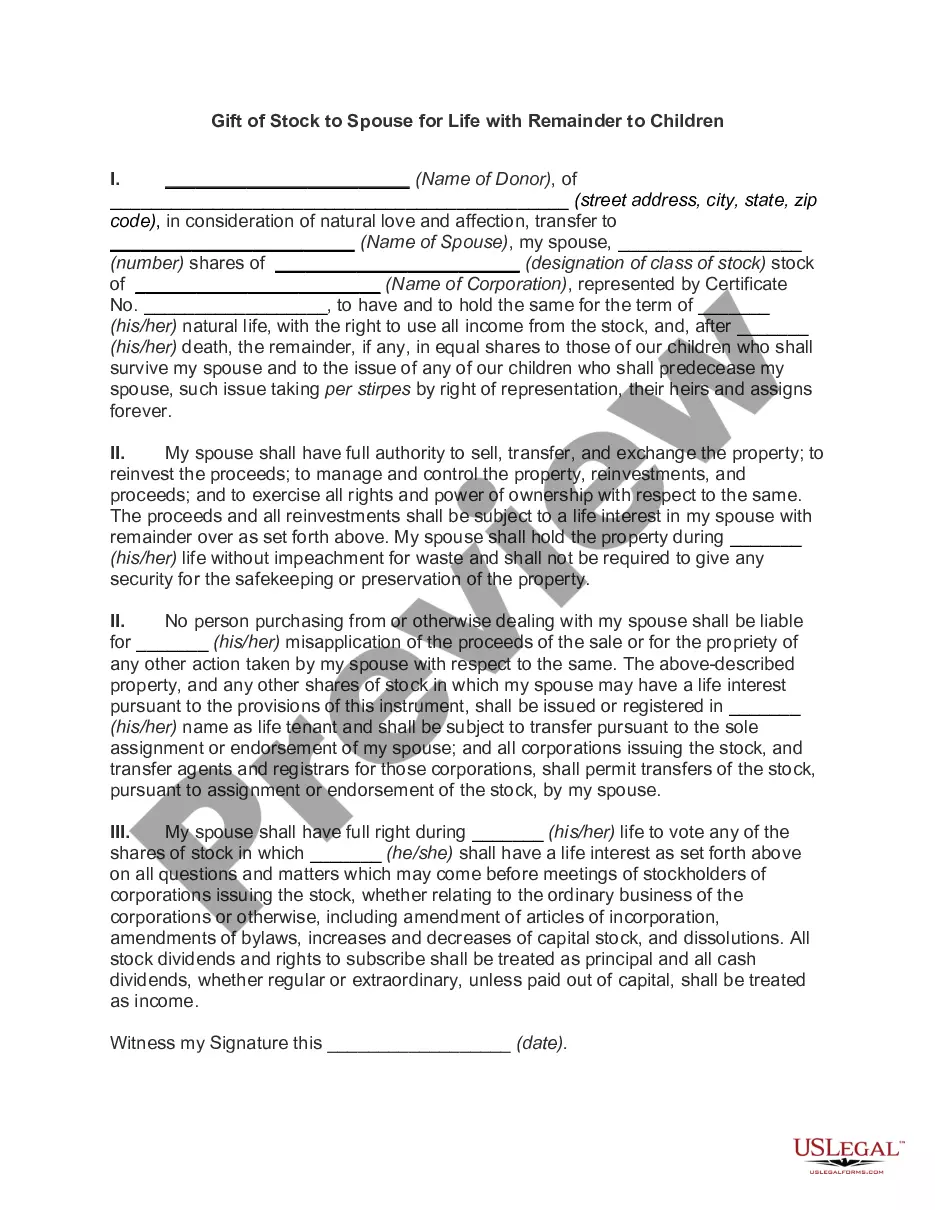
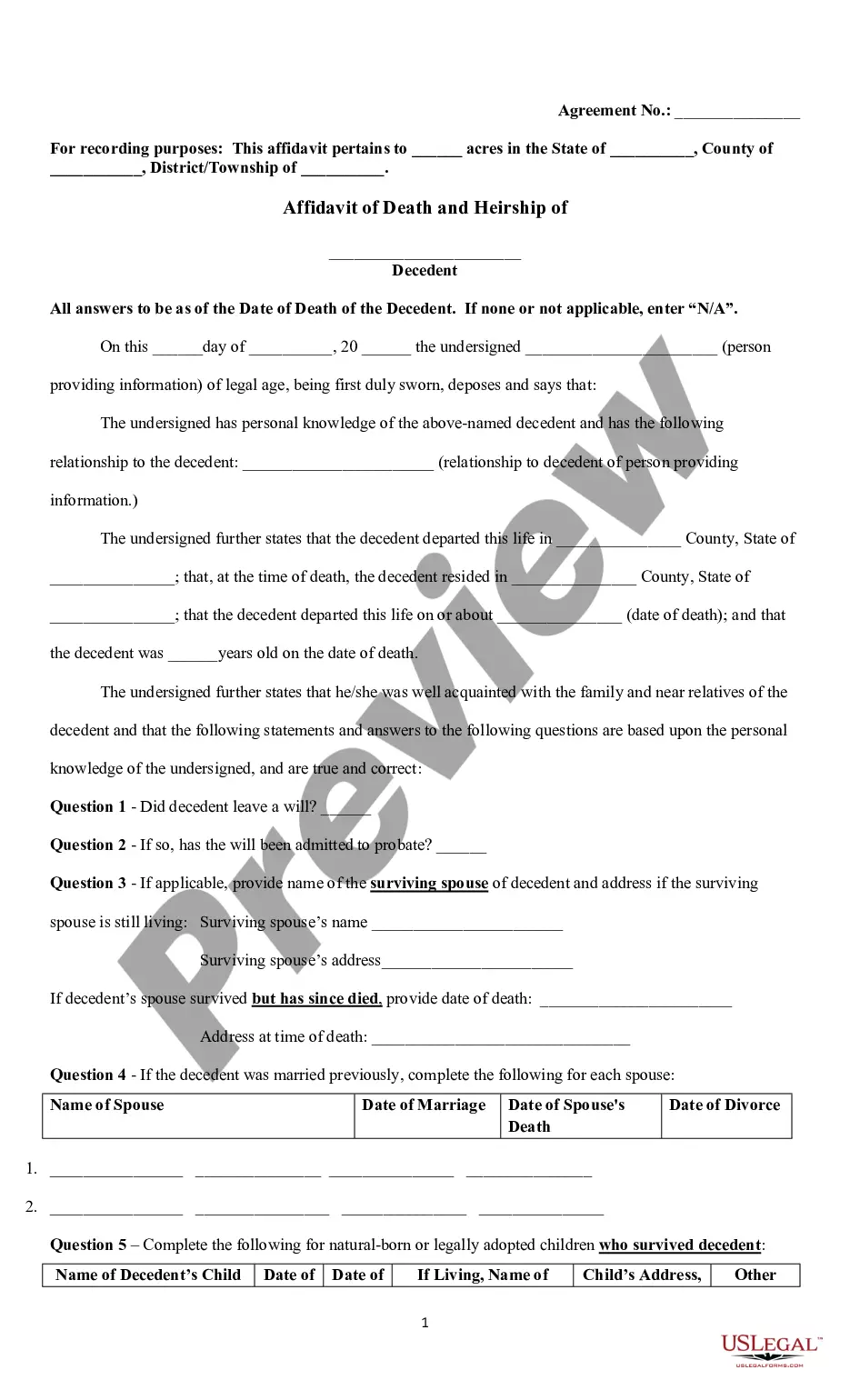
The Last Will and Testament for Widow or Widower with Minor Children is a legal document that outlines how a personâs estate will be distributed upon their death. This form is specifically designed for individuals who are widowed or widowers and have minor children, ensuring that their wishes regarding property distribution, guardianship, and the financial management of their children's assets are clearly articulated. Unlike general wills, this form includes provisions for the appointment of a personal representative, designated beneficiaries, and a trustee for the minor children's inheritance.
Form components explained
- Personal representative or executor appointment: Names the person responsible for administering the estate.
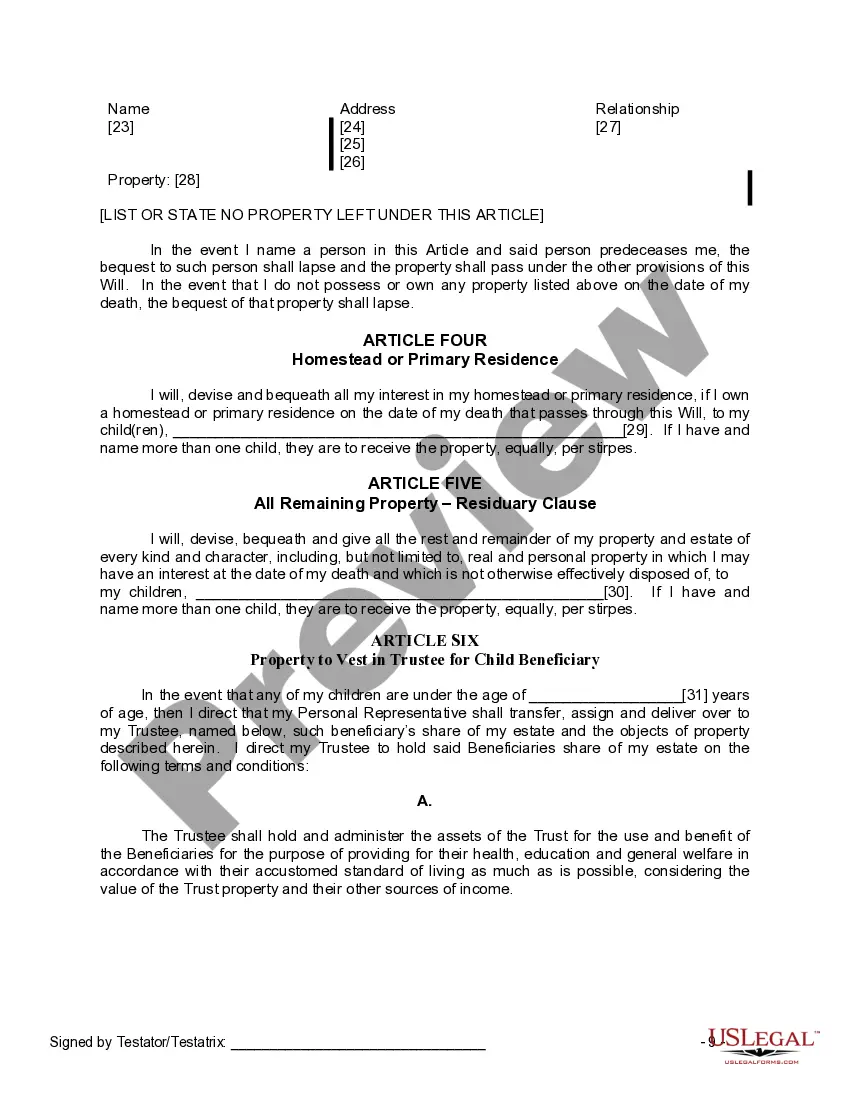
- Beneficiary designation: Specifies who will inherit property and other assets.
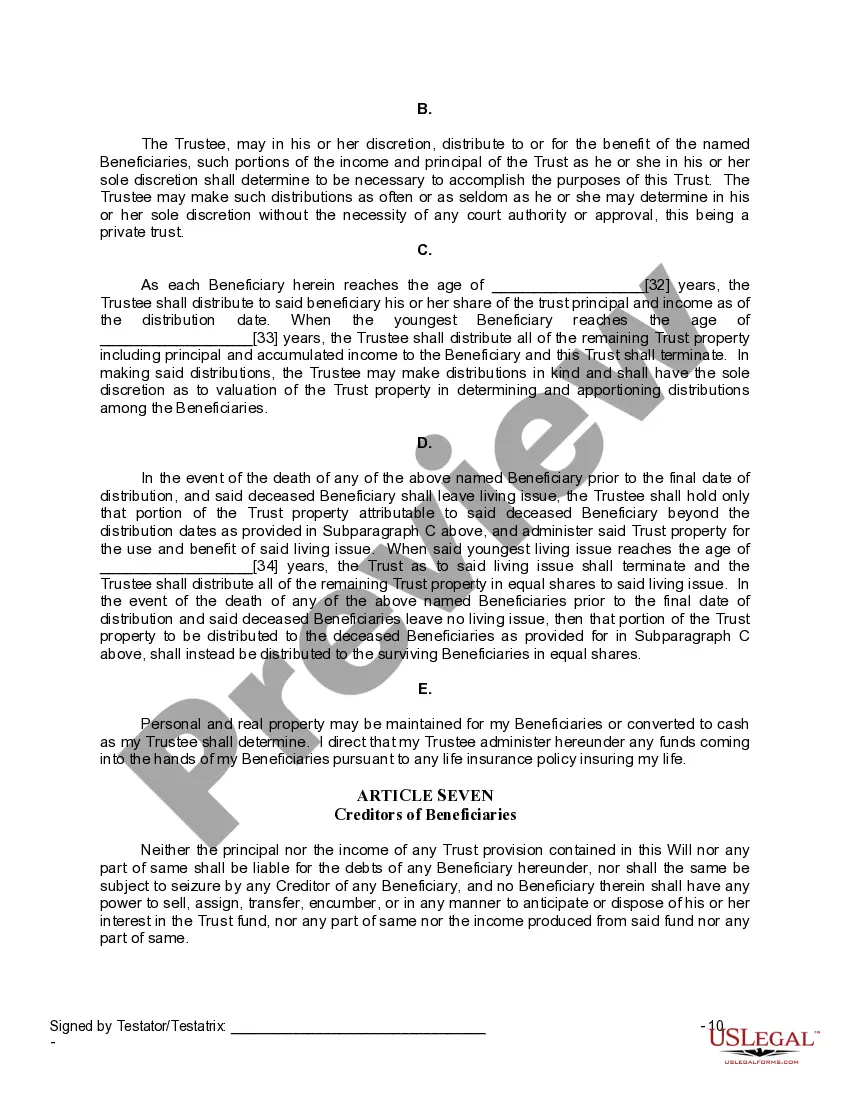
- Trustee nomination: Appoints a trustee to manage assets left for minor children.
- Guardian appointment for minor children: Designates a guardian in case both parents are deceased.
- Specific bequests: Allows the testator to name specific individuals to receive particular items or assets.
- Signature and witness requirements: Details the signing process, including the need for witnesses and possible notarization.





Common use cases
This Will should be used when a widow or widower wants to ensure that their minor children are provided for after their death. Circumstances may include the recent death of a spouse, changes in family dynamics, or when planning for the future care and financial security of children. If you wish to dictate how your assets are to be managed and who will care for your children, this document is essential.
Who this form is for
- Individuals who are widowed or have lost their spouse and have minor children.
- Parents wanting to clarify their wishes regarding the distribution of their estate.
- Those needing to appoint a guardian for their children if both parents pass away.
- Anyone looking to establish a trust for their minor children's assets.
Steps to complete this form
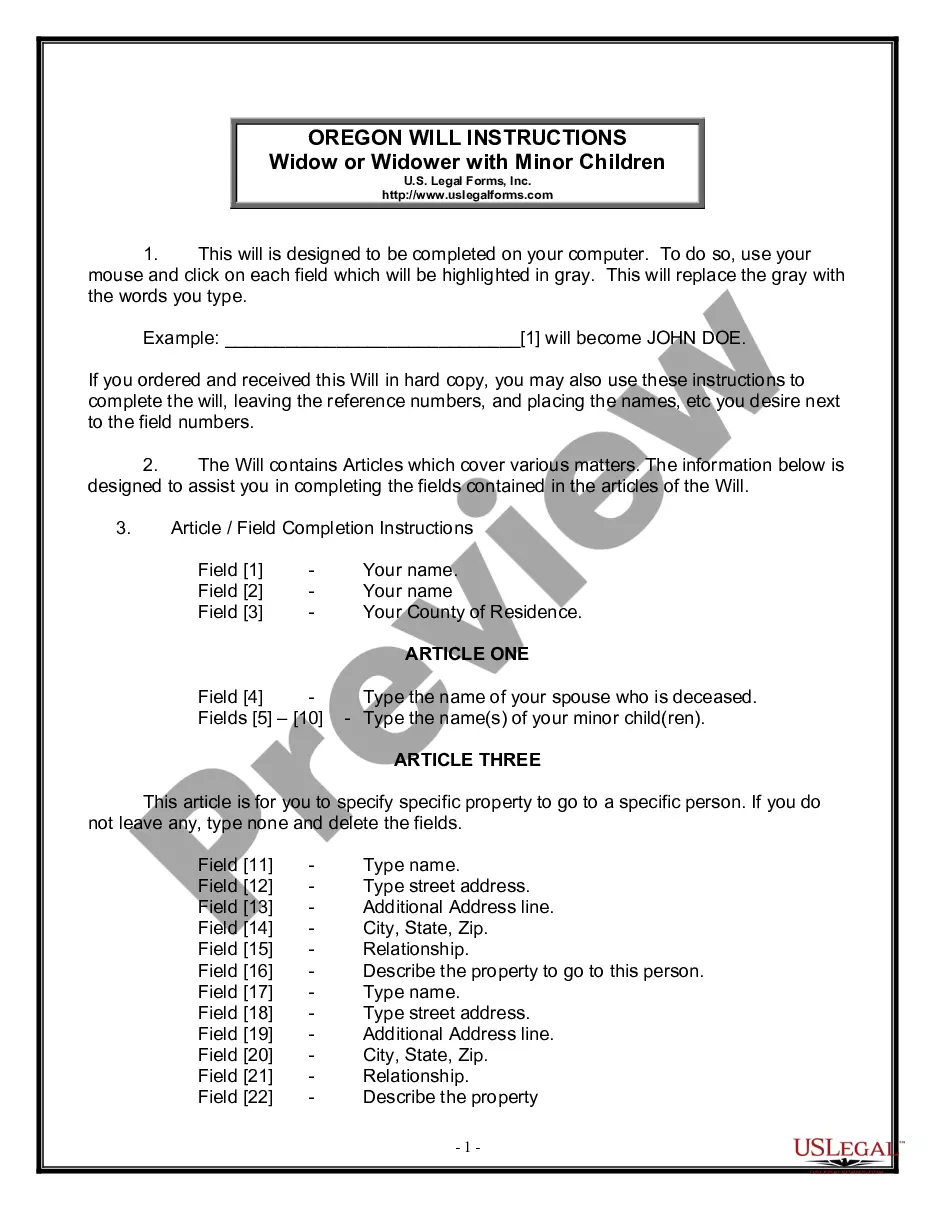
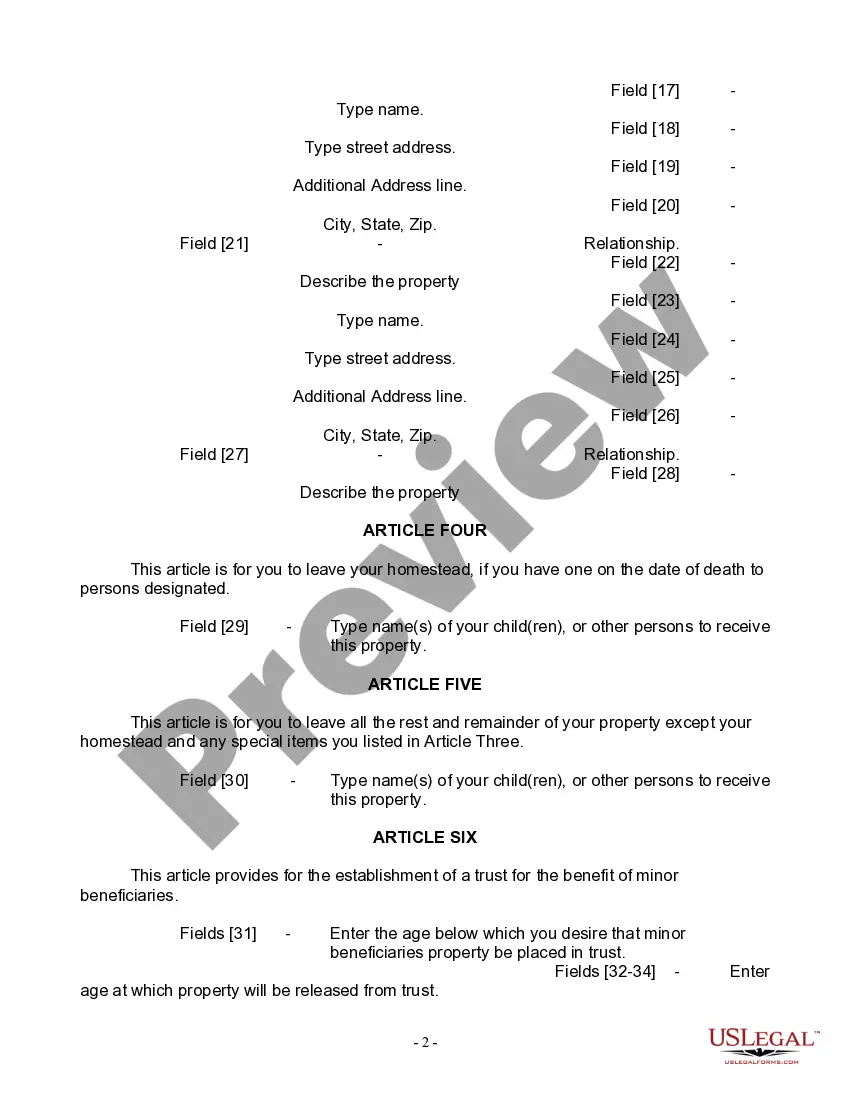
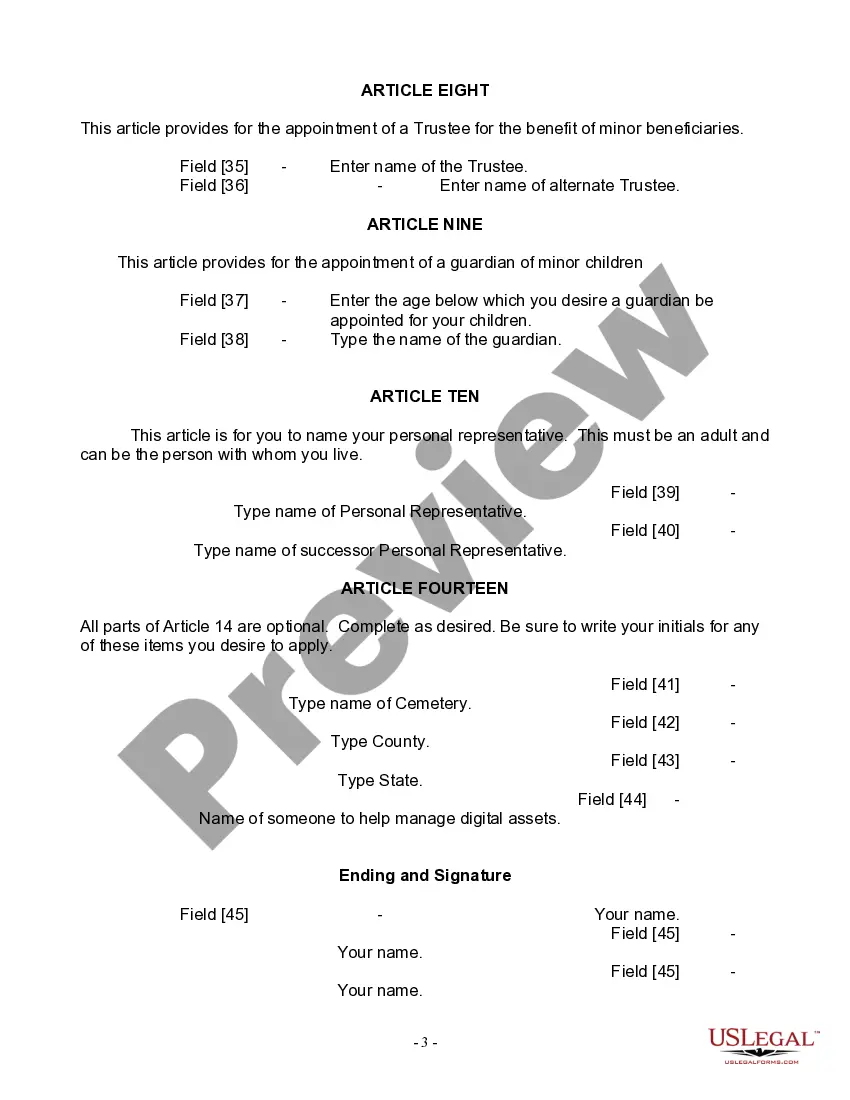
- Enter your full name and county of residence in the designated fields.
- Provide the name of your deceased spouse and list your minor children.
- Designate specific beneficiaries for any special property and provide their relationship to you.
- Complete sections for guardianship and trustee appointments for minor childrenâs assets.
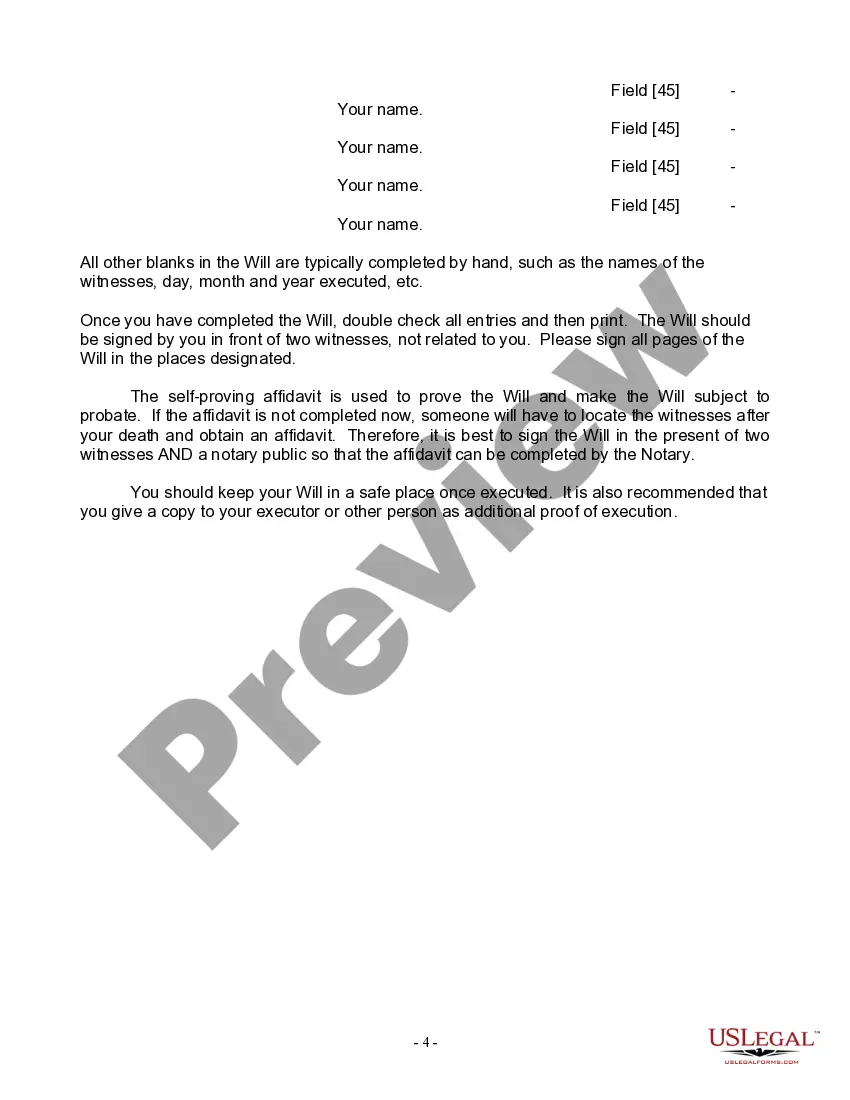
- Sign the document in front of two non-related witnesses and follow any notary requirements if applicable.
Notarization guidance
Yes, this form must be notarized to be legally valid in some states. Having a notary public sign as a witness allows the attached self-proving affidavit to be utilized, simplifying the probate process. U.S. Legal Forms offers integrated online notarization, making it accessible and convenient to finalize your will securely.
Get your form ready online
Our built-in tools help you complete, sign, share, and store your documents in one place.
Make edits, fill in missing information, and update formatting in US Legal Forms—just like you would in MS Word.
Download a copy, print it, send it by email, or mail it via USPS—whatever works best for your next step.
Sign and collect signatures with our SignNow integration. Send to multiple recipients, set reminders, and more. Go Premium to unlock E-Sign.
If this form requires notarization, complete it online through a secure video call—no need to meet a notary in person or wait for an appointment.
We protect your documents and personal data by following strict security and privacy standards.

Make edits, fill in missing information, and update formatting in US Legal Forms—just like you would in MS Word.

Download a copy, print it, send it by email, or mail it via USPS—whatever works best for your next step.

Sign and collect signatures with our SignNow integration. Send to multiple recipients, set reminders, and more. Go Premium to unlock E-Sign.

If this form requires notarization, complete it online through a secure video call—no need to meet a notary in person or wait for an appointment.

We protect your documents and personal data by following strict security and privacy standards.
Avoid these common issues
- Failing to sign the will in the presence of the required number of witnesses.
- Not including specific instructions for the digital accounts or real estate.
- Overlooking to appoint an alternate personal representative or guardian.
- Forgetting to update the will after significant life changes.
Why complete this form online
- Convenience: Access and complete the form from home at your own pace.
- Editability: Easily make changes to ensure all information is accurate.
- Reliability: Forms are drafted by licensed attorneys, ensuring compliance with legal standards.
Legal use & context
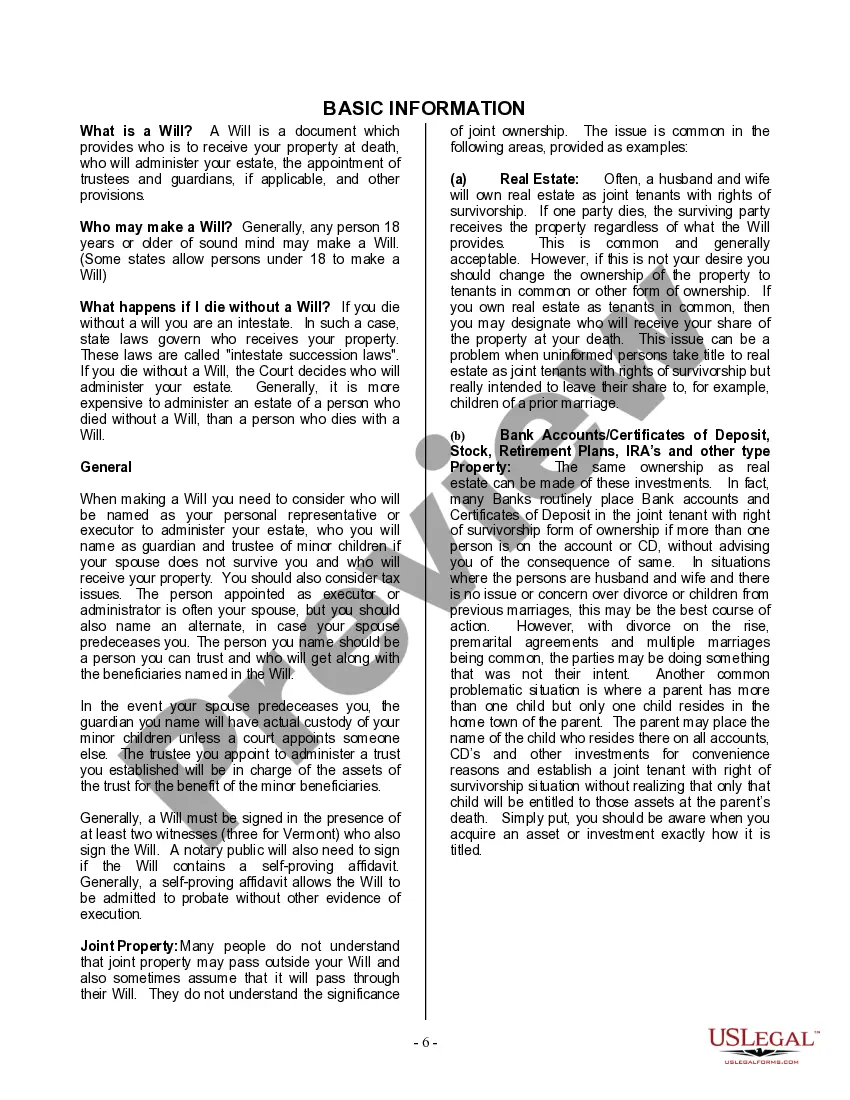
- This Last Will and Testament is a legally binding document that dictates how your assets will be handled after your death.
- It ensures that your minor children are cared for as per your wishes.
- Failure to execute a valid will can result in intestate succession, where state laws dictate asset distribution.
- Proper completion and witness signatures enhance the probative value of the will in court.
Key takeaways
- This will is specifically designed for widows or widowers with minor children.
- It includes provisions for appointing guardians and managing children's assets through trusts.
- Proper witnessing and notarization are essential for the documentâs validity.
- Utilizing this form helps ensure your final wishes are legally recognized and honored.
Looking for another form?
Form popularity
FAQ
The short answer is no. Wills that are handwritten and not witnessed are not recognized as valid in Oregon. A handwritten will that is witnessed by two individuals will be considered valid.
Self-written wills are typically valid, even when handwritten, as long as they're properly witnessed and notarized, or proven in court. A handwritten will that is not witnessed or notarized is considered a holographic will. Not all states accept holographic wills .
A witness must be an independent adult who isn't related to the testator and has no personal interest in the Will. A neighbour or family friend is ideal. Someone cannot be a witness if they are: The spouse or civil partner of the testator.
Witnesses: An Oregon will must be signed by at least two individuals who saw the testator sign the will or heard him acknowledge the signature. Writing: An Oregon will must be in writing. Beneficiaries: A testator can leave property to anyone.
In Oregon, you must be at least 18 years old and of sound mind to make a will. If you are married or emancipated, you can make a will before you turn 18. Your will must be in writing and must be signed by you and two witnesses. Some people cannot serve as witnesses to your will.
Signature: The will must be signed by the testator or by someone else in the testator's name in his presence, by his direction. Witnesses: An Oregon will must be signed by at least two individuals who saw the testator sign the will or heard him acknowledge the signature. Writing: An Oregon will must be in writing.
No, in Oregon, you do not need to notarize your will to make it legal. However, Oregon allows you to make your will "self-proving" and you'll need to go to a notary if you want to do that. A self-proving will speeds up probate because the court can accept the will without contacting the witnesses who signed it.
Create the initial document. Start by titling the document Last Will and Testament" and including your full legal name and address. Designate an executor. Appoint a guardian. Name the beneficiaries. Designate the assets. Ask witnesses to sign your will. Store your will in a safe place.
In Oregon, you must be at least 18 years old and of sound mind to make a will. If you are married or emancipated, you can make a will before you turn 18. Your will must be in writing and must be signed by you and two witnesses.It is important to make sure that all of Oregon's legal formalities are carefully observed.