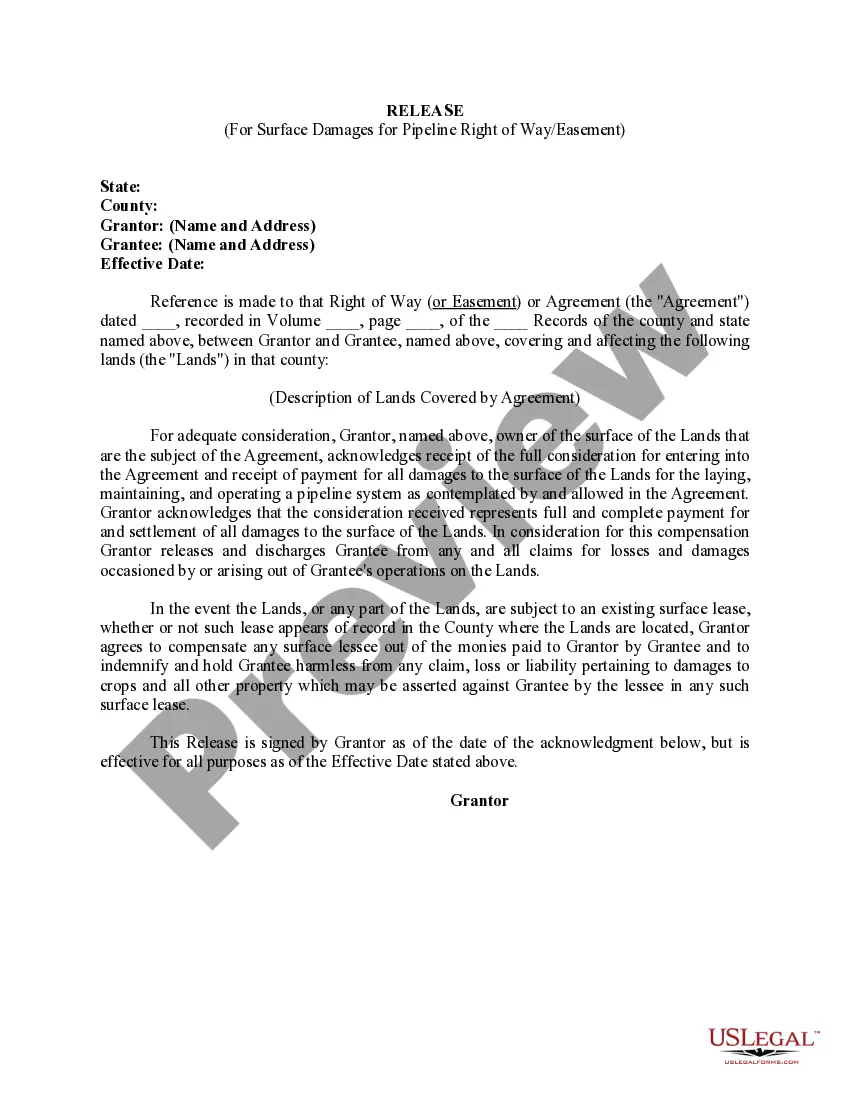
Release For Surface Damages For Pipeline Right of Way / Easement
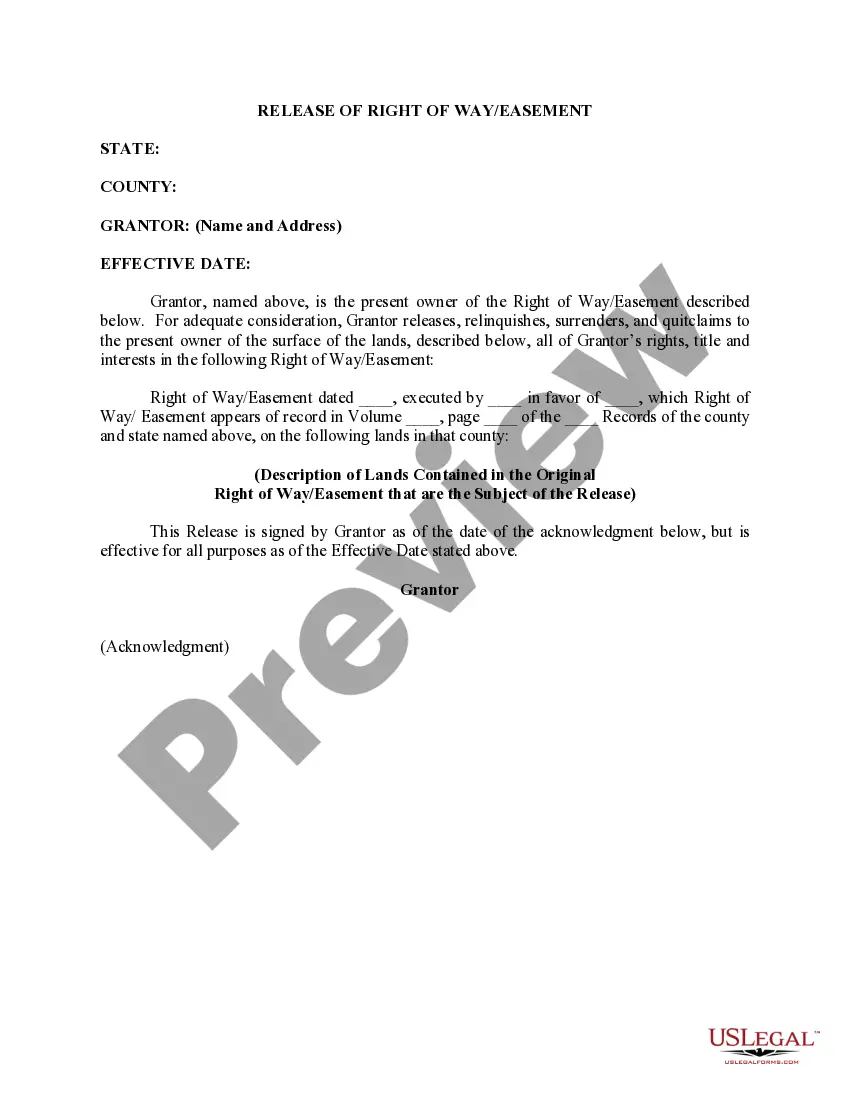
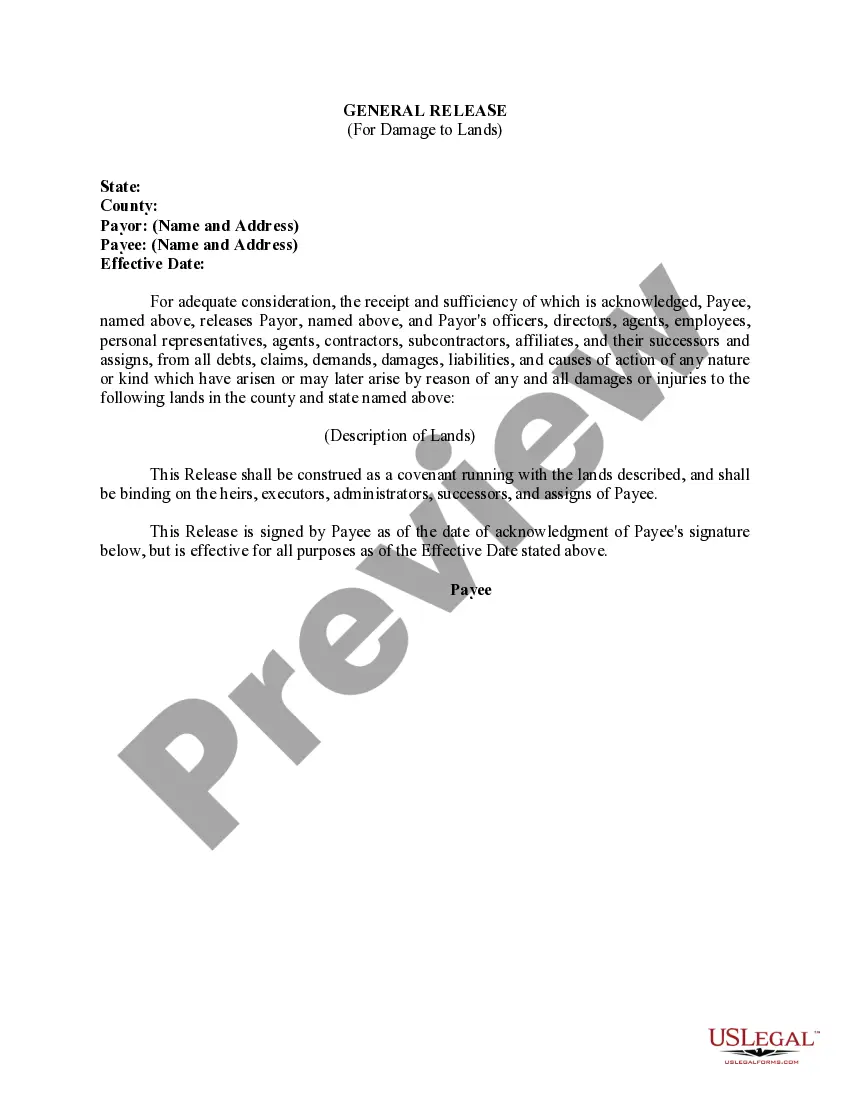
Overview of this form
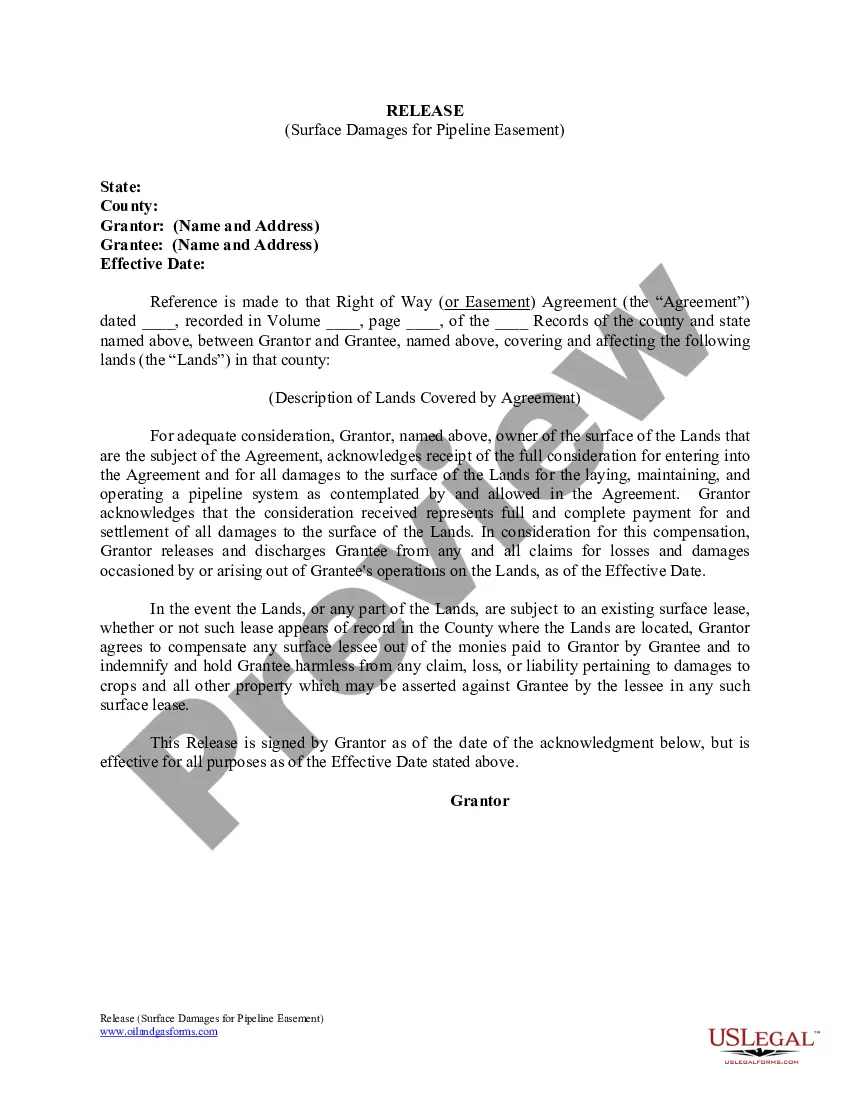
The Release for Surface Damages for Pipeline Right of Way/Easement is a legal document used to acknowledge and release claims for damages to land resulting from the operations of a pipeline on that land. This form serves to confirm that the landowner has received compensation for any damages incurred due to the pipeline's activities and releases the operator from further claims. It is specifically designed for surface damages related to pipeline rights of way or easements, setting it apart from general release forms that may not pertain to such specific situations.
Form components explained
- Grantor and Grantee information, including names and addresses.
- The effective date of the release and referenced easement agreement details.
- Recognition of consideration received for damages to the land.
- Release of claims against the Grantee for any damages arising from the operations on the land.
- Indemnification clause regarding existing surface leases.
- Signature line for the Grantor, along with acknowledgment details.

When to use this form
This form should be used when a landowner grants a right of way or easement for the installation, maintenance, or operation of a pipeline on their property. It is relevant when the landowner has received compensation for any surface damages caused by the pipeline activities and wants to formally release the pipeline operator from any future claims related to those damages. The release is particularly important if there are existing leases or agreements that might otherwise complicate claims against the operator.
Who can use this document
This form is intended for:
- Landowners who have entered into a pipeline easement agreement.
- Pipelines operators or entities requiring a release of liability.
- Surface lessees who may be affected by pipeline operations on leased properties.
How to complete this form
- Identify the parties involved by filling out the names and addresses of the Grantor and Grantee.
- Enter the effective date of the release along with relevant details of the easement agreement.
- Describe the lands affected by the pipeline activities in the designated section.
- Confirm the receipt of compensation for damages and include any necessary indemnification clauses if applicable.
- Sign and date the form, ensuring that all parties are aware of the release conditions.
Notarization guidance
This form must be notarized to be legally valid. US Legal Forms provides secure online notarization powered by Notarize, allowing you to complete the process through a verified video call.
Get your form ready online
Our built-in tools help you complete, sign, share, and store your documents in one place.
Make edits, fill in missing information, and update formatting in US Legal Forms—just like you would in MS Word.
Download a copy, print it, send it by email, or mail it via USPS—whatever works best for your next step.
Sign and collect signatures with our SignNow integration. Send to multiple recipients, set reminders, and more. Go Premium to unlock E-Sign.
If this form requires notarization, complete it online through a secure video call—no need to meet a notary in person or wait for an appointment.
We protect your documents and personal data by following strict security and privacy standards.

Make edits, fill in missing information, and update formatting in US Legal Forms—just like you would in MS Word.

Download a copy, print it, send it by email, or mail it via USPS—whatever works best for your next step.

Sign and collect signatures with our SignNow integration. Send to multiple recipients, set reminders, and more. Go Premium to unlock E-Sign.

If this form requires notarization, complete it online through a secure video call—no need to meet a notary in person or wait for an appointment.

We protect your documents and personal data by following strict security and privacy standards.
Typical mistakes to avoid
- Not providing complete contact information for both parties.
- Failing to detail the land description clearly.
- Omitting the effective date, which can lead to confusion regarding when the release applies.
- Neglecting to sign or date the form, which may invalidate the release.
Benefits of using this form online
- Convenience: Download and complete the form at any time from your device.
- Editability: Make necessary adjustments easily before finalizing the document.
- Reliability: Ensure the use of attorney-drafted templates that comply with legal standards.
Legal use & context
- This release is legally binding once signed by both parties.
- It can help prevent future disputes over surface damages related to pipeline operations.
- Proper completion and signing are crucial for enforceability.
Summary of main points
- Formally release pipeline operators from liability for surface damages.
- Document the terms of compensation and future claims.
- Ensure accuracy and compliance with local laws when using the form.
Looking for another form?


Form popularity
FAQ
What is a Pipeline Easement? Generally, an easement is a legal interest that allows someone the right to use another's property for a certain purpose. A pipeline easement specifically gives the easement holder the right to build and maintain a pipeline on a landowner's property.
You don't usually report payment for an easement or damages. You only reduce your cost basis in the remaining property, by the amount you received, for when the property is sold in the future. But,if you got the 1099-S, it must be reported on your tax return, but it is most likely not taxable.
An easement is a limited right to use another person's land for a stated purpose. Examples of easements include the use of private roads and paths, or the use of a landowner's property to lay railroad tracks or electrical wires.
If an easement is 50 rods long, that is almost an acre. In a recent case, a pipeline company paid some owners $180 per rod and others $767 per rod for the same project.
Give the document a simple title: Grant of Easement is sufficient. Identify the parties. You need to explain who the parties are to the agreement. The person granting the easement to his property is the Grantor and the person gaining access to the property is the Grantee.
How much money should landowners get when an oil or gas pipeline crosses their land? As it stands, landowners receive a one-time payment roughly based on the length of the pipeline, with rates varying from $5 to $50 per foot or more for a Marcellus or Utica shale pipeline right-of-way agreement.
Easements are treated as a recovery of the basis of the property first, with any excess proceeds treated as capital gain, which is taxed at a lower rate than ordinary income. The basis of property that offsets an easement is limited to the basis of the affected acres or square footage.
You are willing to either share in or bear the cost of land maintenance and are now ready to negotiate. Reducing the impact the easement has on the neighbor will help convince him to say yes. Include in the negotiations elements that include his continued use and rights to share that parcel of land with you.
Pipelines can reduce property values by 5 to 40 percent by making them less attractive to potential buyers, according to local Realtors.