General Release For Damage to Lands
What this document covers
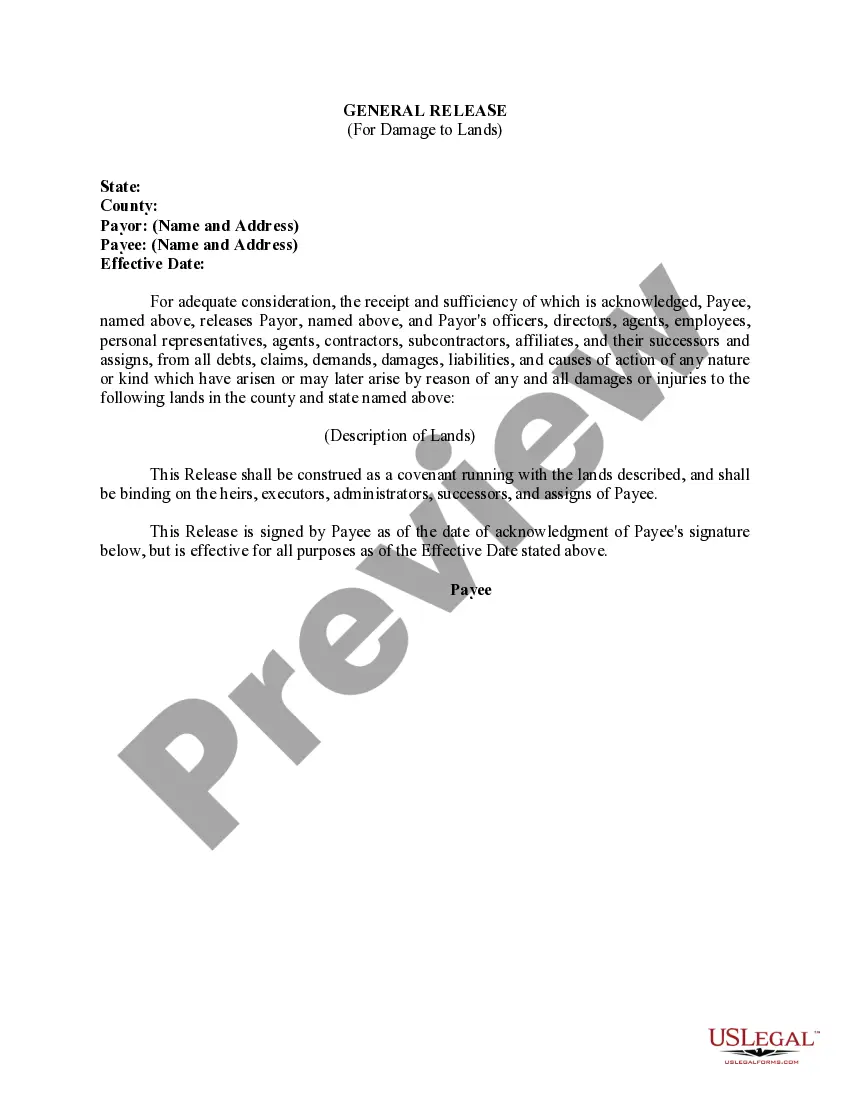
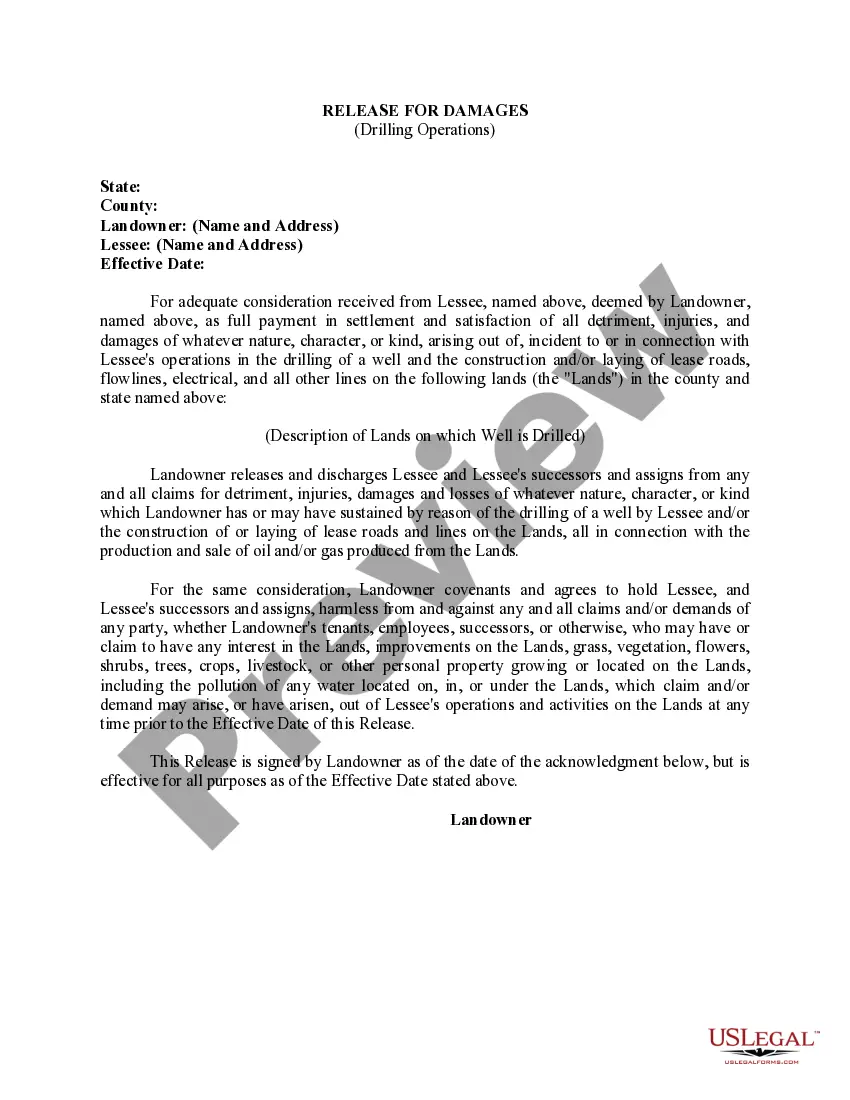
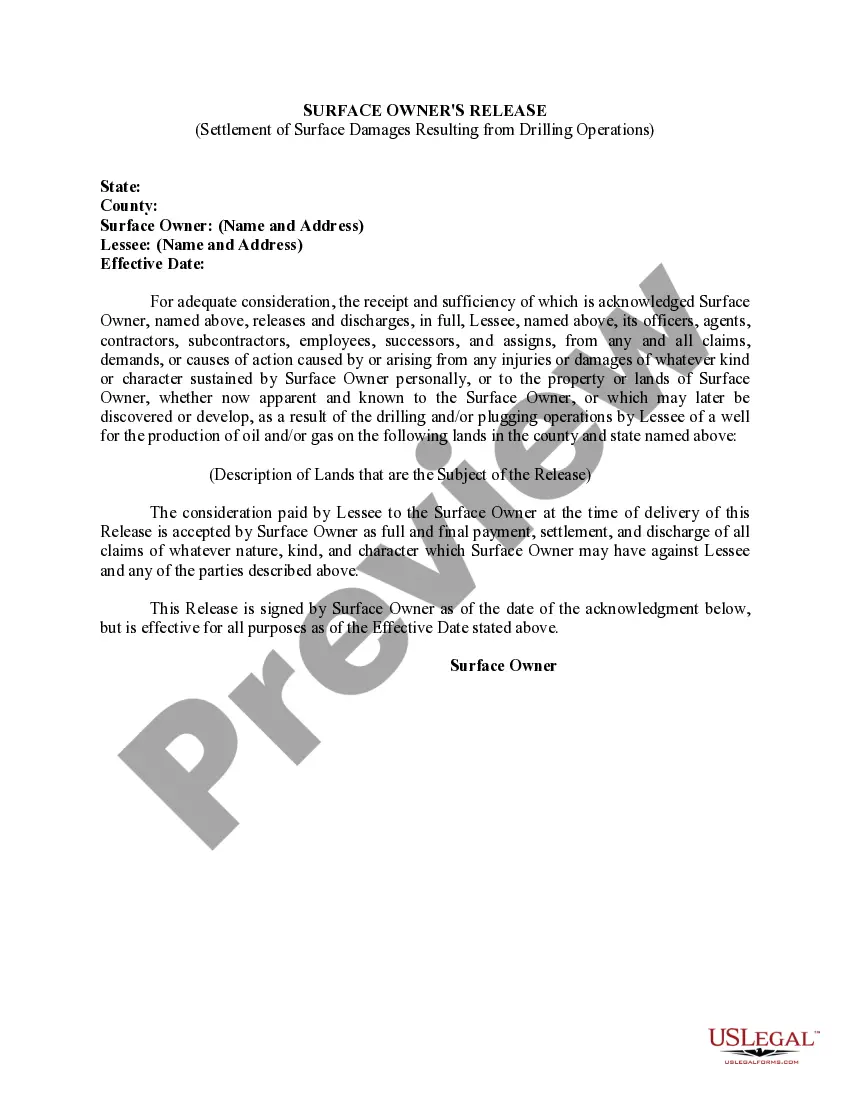
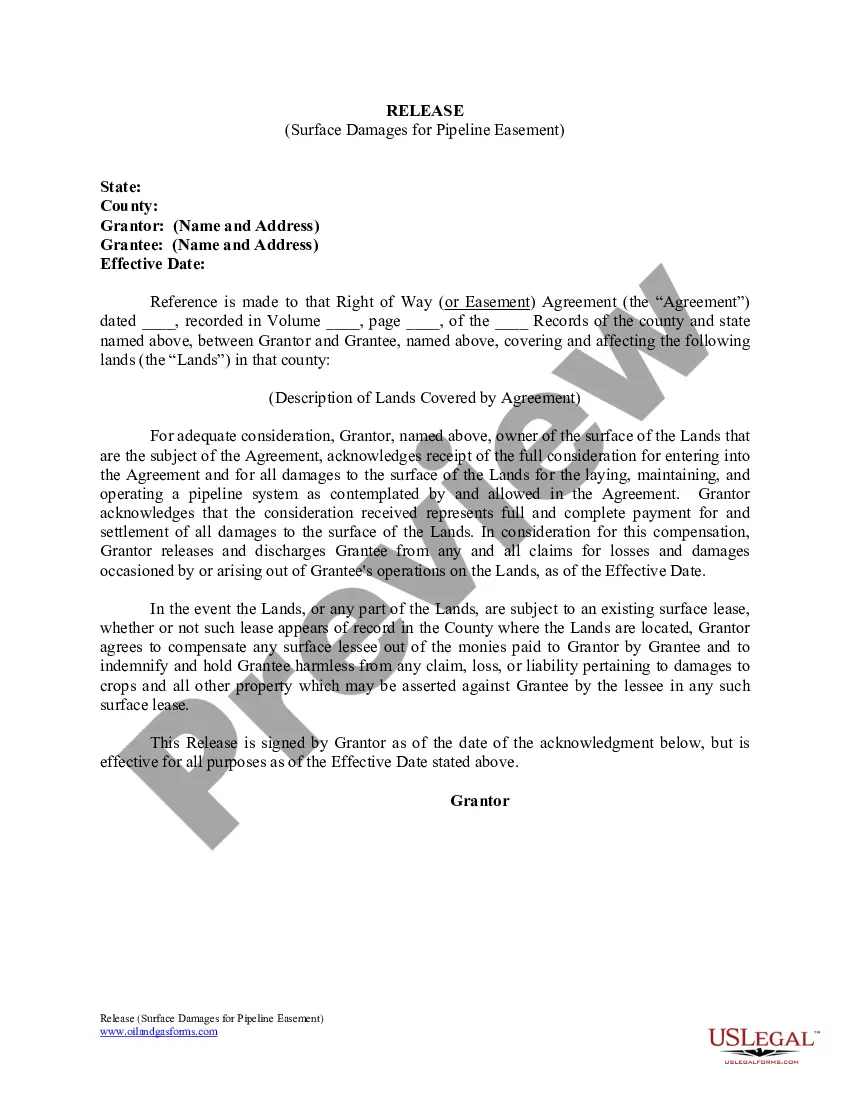
The General Release for Damage to Lands is a legal document used to formally release one party (the Payor) from all claims or liabilities related to damages incurred by another party (the Payee) on specified land. This form differs from similar agreements by explicitly covering damages or injuries to particular lands, ensuring that the Payor's affiliates are also protected. Using this release helps clarify responsibilities and eliminate future disputes regarding the described property damage.
Key parts of this document
- Identifying details of both parties: the Payee and Payor must provide their names and addresses.
- Effective Date: Specifies when the release takes effect.
- Property description: Includes the specific lands affected by the release.
- Release clause: States the Payee's intention to release the Payor and their affiliates from all related claims.
- Binding nature: Reinforces that the agreement is binding on heirs and successors of the Payee.
- Signature section: Authorizes the document through the Payee's signature and acknowledgment.
When this form is needed
This form is used when a party wants to legally release another party from financial or legal liability related to property damage. Scenarios may include property disputes due to land development, repairs, or damages resulting from negligence. It is particularly useful in real estate transactions or when resolving conflicts arising from land use.
Who should use this form
- Property owners (Payees) looking to resolve disputes regarding property damage.
- Contractors or service providers (Payors) who seek to clarify their liability after completing work on a property.
- Individuals or businesses involved in real estate transactions that may have claims against them related to land use or damage.
Completing this form step by step
- Identify the parties by providing the full names and addresses for both the Payee and Payor.
- Specify the effective date of the release to indicate when the agreement takes effect.
- Enter a detailed description of the lands involved in the damage claims.
- Review the release clause to ensure it accurately reflects the intention to release the Payor and their affiliates from claims.
- Sign the document where indicated, ensuring that the date of signing aligns with the effective date.
Does this form need to be notarized?
This form does not typically require notarization to be legally valid. However, some jurisdictions or document types may still require it. US Legal Forms provides secure online notarization powered by Notarize, available 24/7 for added convenience.
Get your form ready online
Our built-in tools help you complete, sign, share, and store your documents in one place.
Make edits, fill in missing information, and update formatting in US Legal Forms—just like you would in MS Word.
Download a copy, print it, send it by email, or mail it via USPS—whatever works best for your next step.
Sign and collect signatures with our SignNow integration. Send to multiple recipients, set reminders, and more. Go Premium to unlock E-Sign.
If this form requires notarization, complete it online through a secure video call—no need to meet a notary in person or wait for an appointment.
We protect your documents and personal data by following strict security and privacy standards.

Make edits, fill in missing information, and update formatting in US Legal Forms—just like you would in MS Word.

Download a copy, print it, send it by email, or mail it via USPS—whatever works best for your next step.

Sign and collect signatures with our SignNow integration. Send to multiple recipients, set reminders, and more. Go Premium to unlock E-Sign.

If this form requires notarization, complete it online through a secure video call—no need to meet a notary in person or wait for an appointment.

We protect your documents and personal data by following strict security and privacy standards.
Mistakes to watch out for
- Failing to provide a complete and accurate description of the property involved.
- Not including the effective date, which can lead to disputes over the timing of the release.
- Incorrectly identifying the parties, which may invalidate the release.
- Missing signatures or acknowledgments from the Payee, making the document unenforceable.
Advantages of online completion
- Instant access: Download the form immediately and complete it at your convenience.
- User-friendly: Our forms are designed to be easy to understand, even for those without legal experience.
- Editable: Customize the form with specific details relevant to your situation.
- Secure and reliable: Get peace of mind knowing the forms are created by licensed attorneys.
Legal use & context
- The General Release for Damage to Lands helps avoid future legal disputes related to property damage.
- This document is legally binding when properly executed by all parties involved.
- It protects the interests of the Payor by ensuring claims are conclusively settled.
Main things to remember
- The form releases the Payor from all claims related to specific lands.
- It is crucial for resolving disputes over land damages and clarifying liabilities.
- Completing the form accurately is vital for its legal efficacy.
Looking for another form?
Form popularity
FAQ
Identify the releasor. Describe the photo, image, likeness, or video. Address any payment the model receives for the release. Address royalties. Address whether the model has the ability to revoke their authorization. The parties sign and date the release.
A waiver is not complete until it includes the signatures of both the event host and business owner and that of the participant. The date should also be included alongside the signatures. You may also include a signature line for a witness if necessary.
You do not have to sign this authorization form. Instead, you can provide only the medical documentation necessary for the insurer to evaluate your injuries and compensation.
All parties involved in the incident. A statement saying you were involved in the accident that caused the injury. The total amount of the property damage. A statement that releases the defendant from any future claims or damages that are related to the incident.
The standard talent release form is designed for the purpose of an individual to grant full permission to have images of their likeness and the sound of their voice to be recorded on audio or video and used at the user's discretion and without payment, other compensation or legal repercussion to the grantee.
Get help. Writing a waiver should not be complicated. Use the correct structure. Proper formatting. Include a subject line. Include a caution! Talk about the activity risks. Do not forget an assumption of risk. Hold harmless.
The General Release is a broad release from all possible civil claims resulting from a dispute. Since the Releasing Party is giving up all known and unknown claims against the other party, care should be taken to ensure that the Releasor is fully aware of their rights.