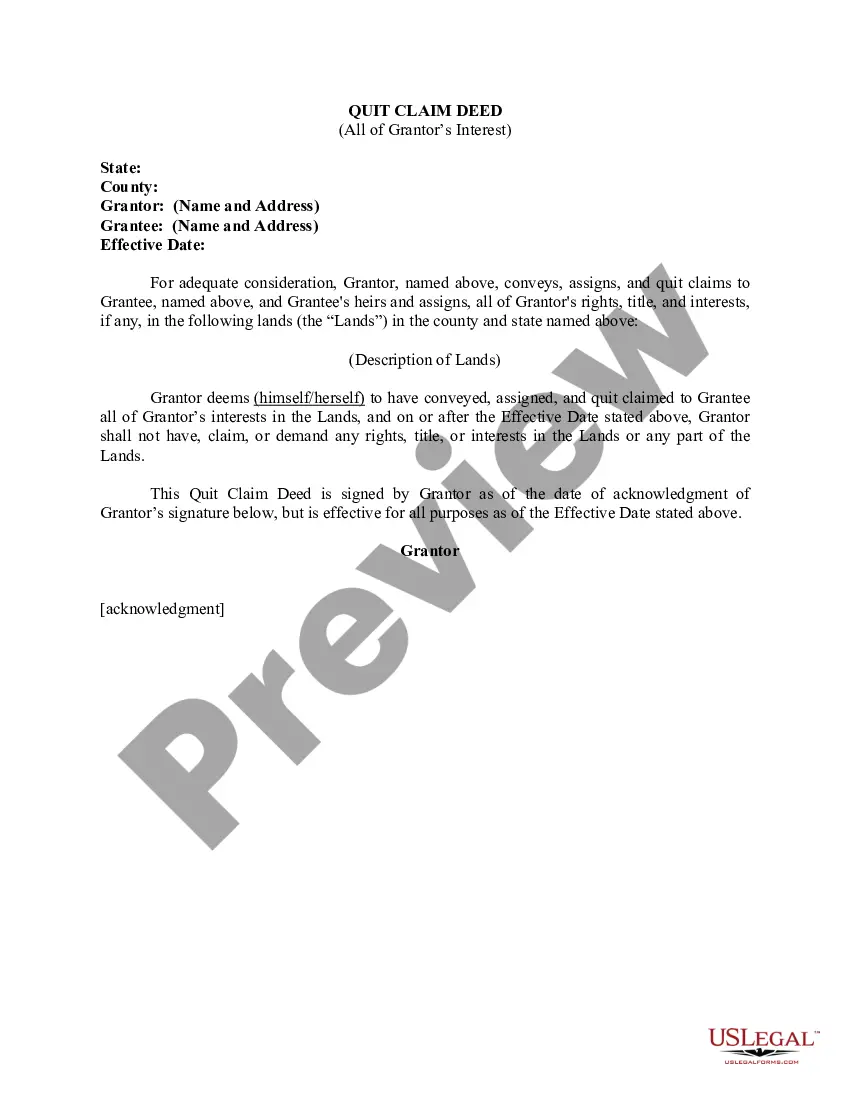
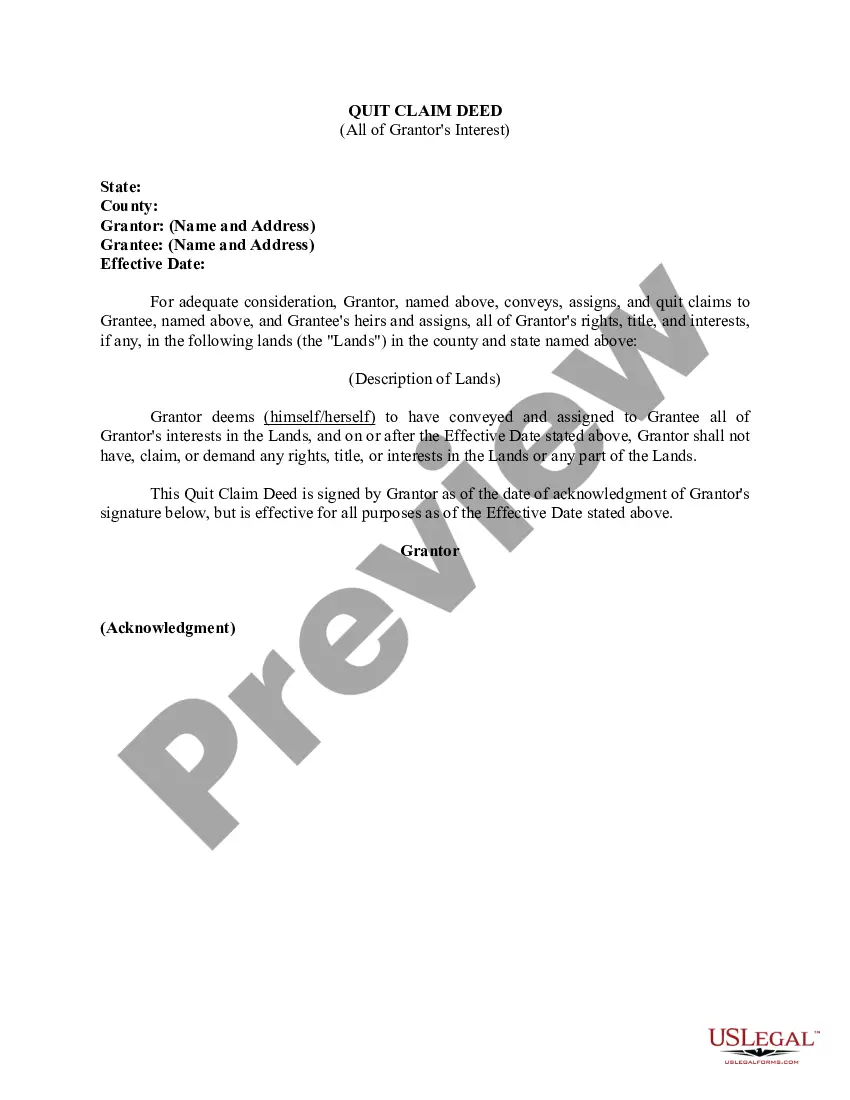
Quit Claim Deed (All of Grantor's Interest)
About this form
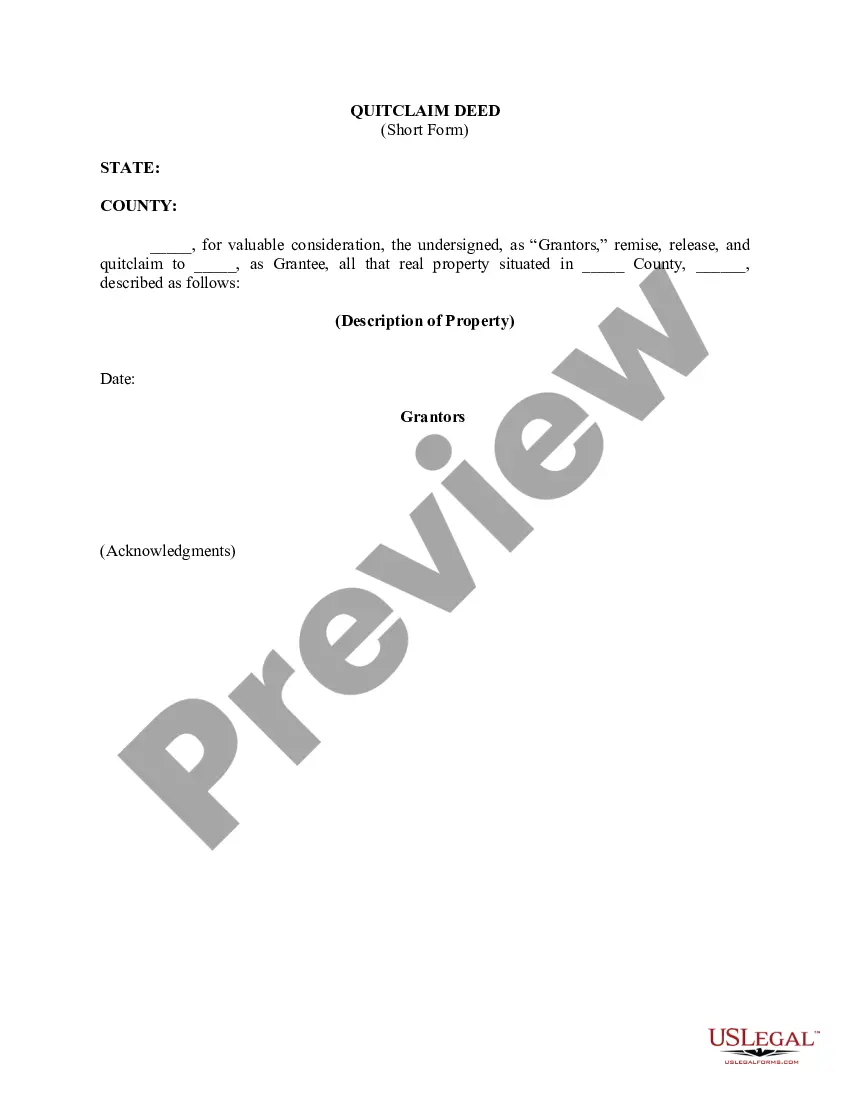
The Quit Claim Deed allows a Grantor to convey their entire interest in a specified property to a Grantee without guaranteeing the title. This means the Grantor relinquishes any claims to the property, even if those claims are unclear. This form is particularly distinct because it does not provide warranty protections, making it a straightforward option for transferring ownership quickly and efficiently.
Form components explained
- Grantor Information: The name and address of the person transferring the property.
- Grantee Information: The name and address of the person receiving the property.
- Effective Date: The date when the transfer of interest becomes legally binding.
- Description of Lands: Detailed information about the property being conveyed.
- Signature of Grantor: The Grantor must sign the deed to make it valid.
- Acknowledgment: A section for acknowledgment by a notary, confirming the signature of the Grantor.
Common use cases
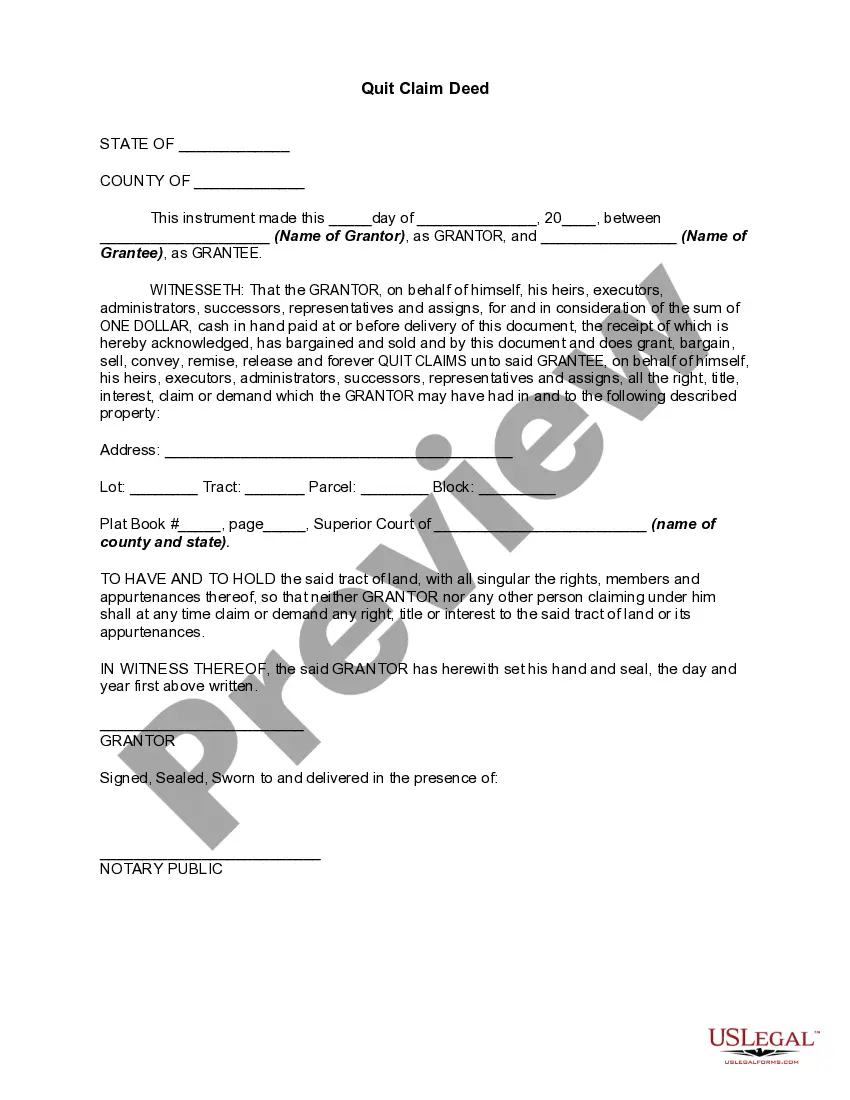
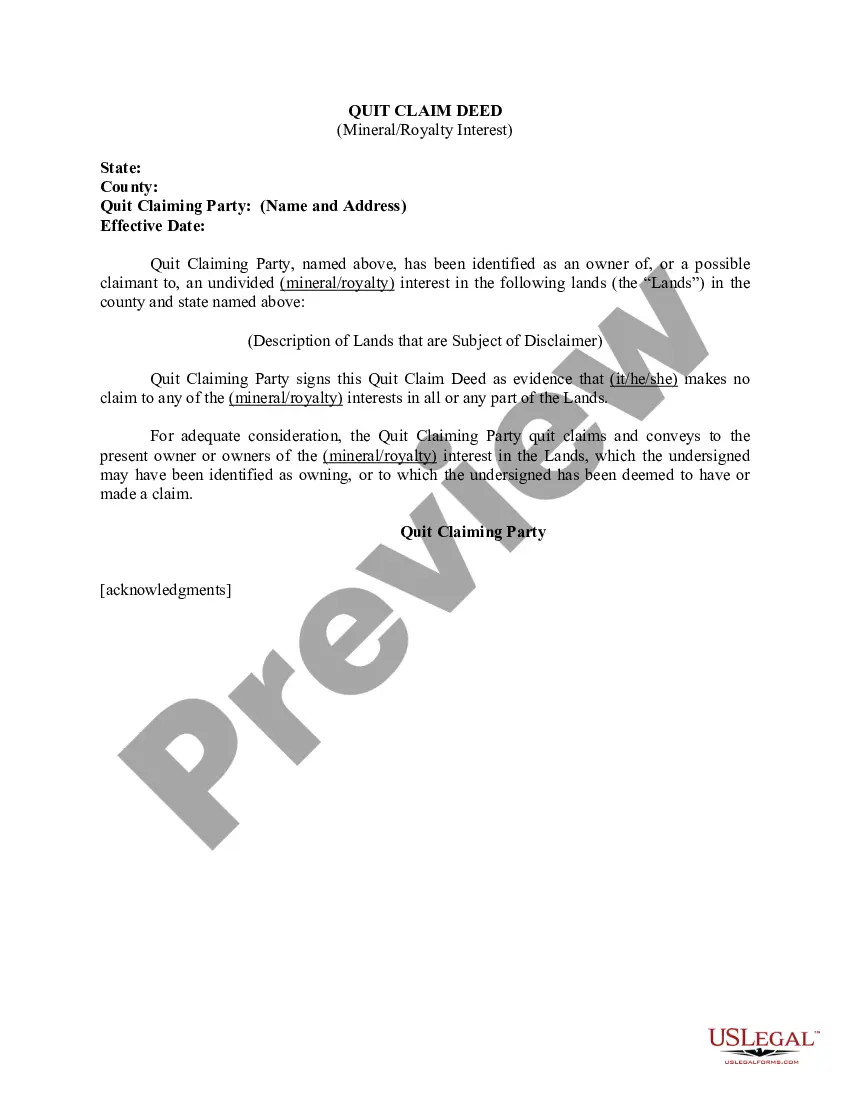
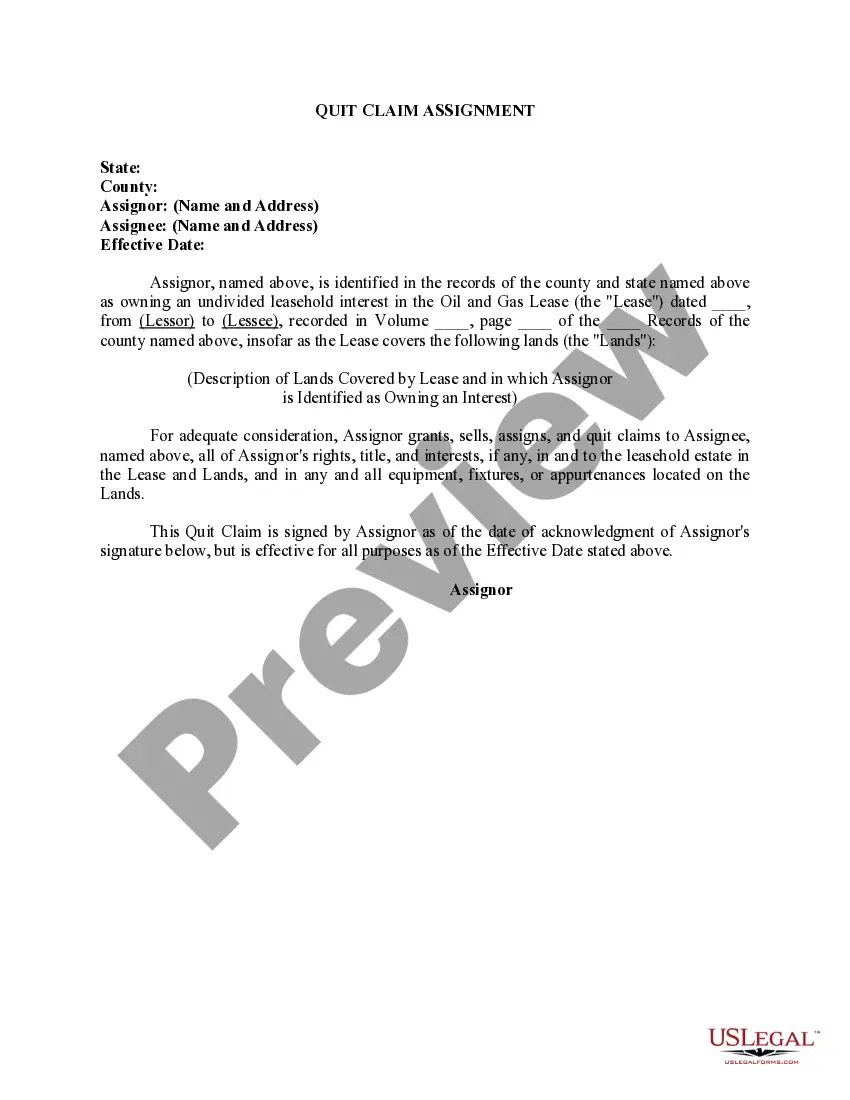
This form is suitable for situations where a property owner wishes to transfer their interest in a property to another person without making any guarantees about the title. Common scenarios include transferring property between family members, clearing title issues, or when the Grantor does not need or cannot provide a warranty deed.
Who this form is for
- Property owners wishing to transfer their interest to another individual.
- Individuals involved in informal property transfers, such as family members or friends.
- Grantors needing a simple and fast way to execute a property transfer without the complexities of a warranty deed.
Completing this form step by step
- Identify the Grantor and Grantee by providing their full names and addresses.
- Enter the effective date for the transfer.
- Clearly describe the property being conveyed, including any legal description required by your jurisdiction.
- Have the Grantor sign the deed in the presence of a notary.
- Complete the acknowledgment section for notarization.
Notarization requirements for this form
Notarization is required for this form to take effect. Our online notarization service, powered by Notarize, lets you verify and sign documents remotely through an encrypted video session, available 24/7.
Get your form ready online
Our built-in tools help you complete, sign, share, and store your documents in one place.
Make edits, fill in missing information, and update formatting in US Legal Forms—just like you would in MS Word.
Download a copy, print it, send it by email, or mail it via USPS—whatever works best for your next step.
Sign and collect signatures with our SignNow integration. Send to multiple recipients, set reminders, and more. Go Premium to unlock E-Sign.
If this form requires notarization, complete it online through a secure video call—no need to meet a notary in person or wait for an appointment.
We protect your documents and personal data by following strict security and privacy standards.

Make edits, fill in missing information, and update formatting in US Legal Forms—just like you would in MS Word.

Download a copy, print it, send it by email, or mail it via USPS—whatever works best for your next step.

Sign and collect signatures with our SignNow integration. Send to multiple recipients, set reminders, and more. Go Premium to unlock E-Sign.

If this form requires notarization, complete it online through a secure video call—no need to meet a notary in person or wait for an appointment.

We protect your documents and personal data by following strict security and privacy standards.
Avoid these common issues
- Failing to provide a complete and accurate description of the property.
- Not signing the form in front of a notary, if required.
- Overlooking the need for the parties' full legal names and addresses.
Why complete this form online
- Convenient access to a ready-made legal document that saves time and effort.
- Editability allows you to customize the form according to your specific situation.
- Reliability of forms drafted by licensed attorneys, ensuring compliance with legal standards.
Looking for another form?

Form popularity
FAQ
A person who signs a quitclaim deed to transfer property they do not own results in no title at all being transferred since there is no actual ownership interest. The quitclaim deed only transfers the type of title you own.
To use a Quitclaim Deed to add someone to a property deed or title, you would need to create a Quitclaim Deed and list all of the current owners in the grantor section. In the grantee section, you would list all of the current owners as well as the person you would like to add.
There will be a $30 recording fee. If you prepare a quitclaim deed using the Do-It-Yourself Quitclaim Deed (after Divorce) tool, detailed instructions on what to do next will print out along with the deed.
Step 1: Download the MI quitclaim deed form. Step 2: Add the name and address of the preparer under Prepared By on the first line of the document. Step 3: Add the return address under After Recording Return To. This is typically the name and address of the grantee, but it could be a different party.
Also called a non-warranty deed, a quitclaim deed conveys whatever interest the grantor currently has in the property if any. The grantor only "remises, releases, and quitclaims" their interest in the property to the grantee.
But you might be wondering if an owner can transfer a deed to another person without a real estate lawyer. The answer is yes. Parties to a transaction are always free to prepare their own deeds.A quitclaim deed, for example, is far simpler than a warranty deed.
The Quit Claim Deed form uses the terms of Grantor (Seller or Owner of said property) and Grantee (Buyer of said property) for the two parties involved. First, the parties must fill in the date. Then, write in the name of the county and state in which the property is located.