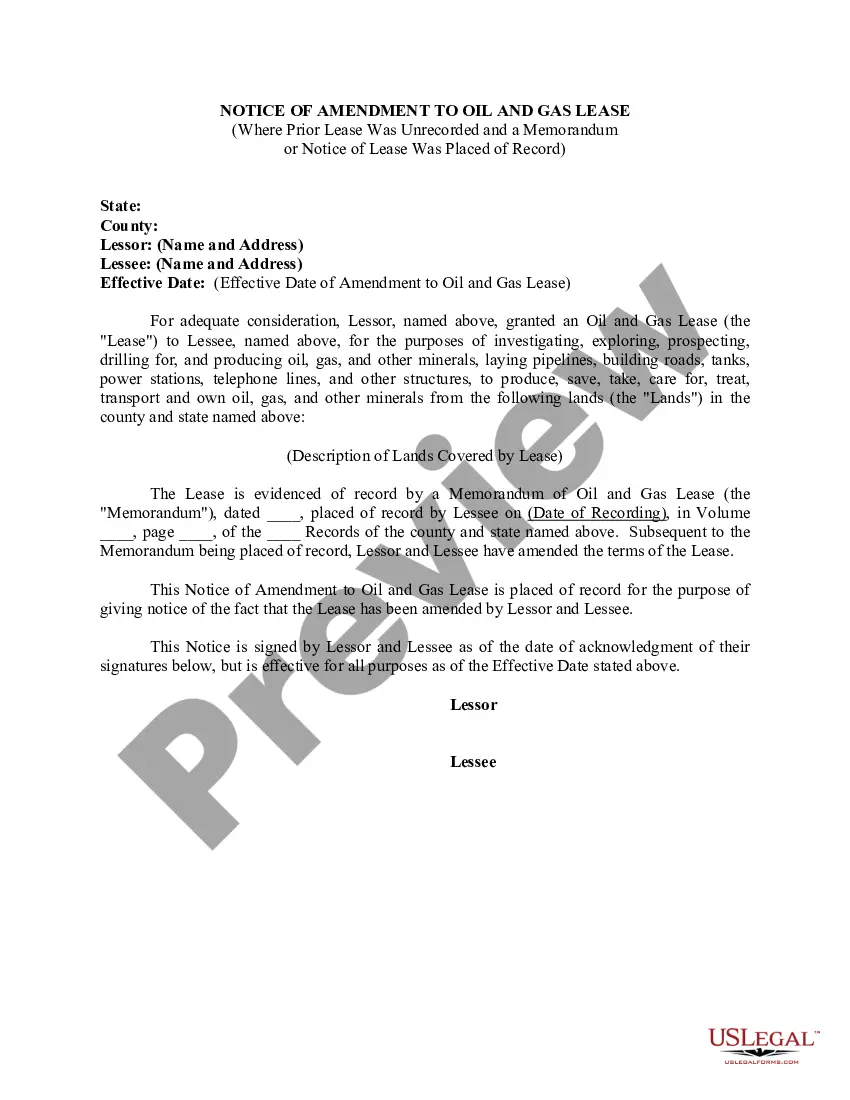
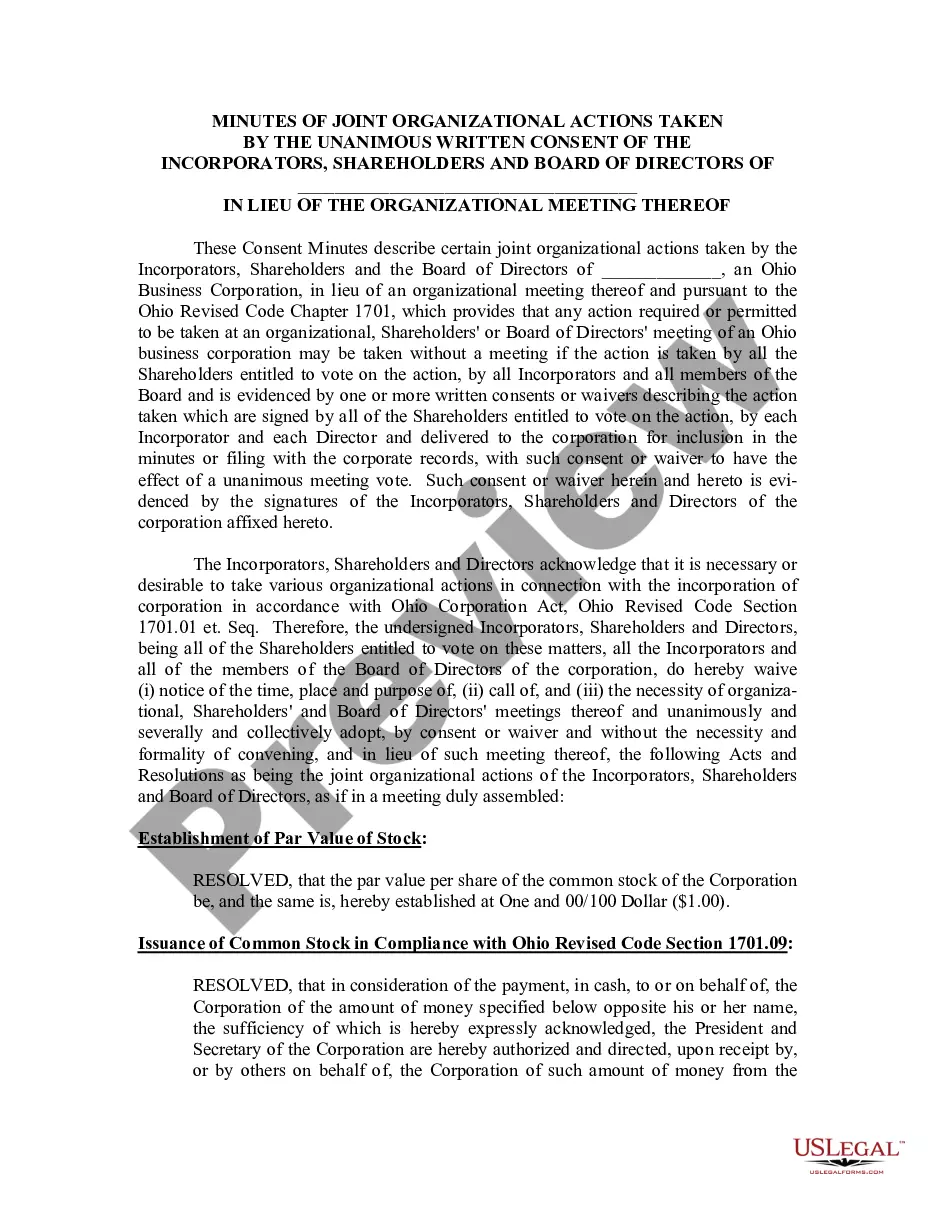
Often times a memorandum is placed of record rather than the complete oil and gas lease. If that unrecorded lease is amended, the amendment will probably not be recorded. This notice, once filed of record, is constructive notice that the original lease has been amended, and places any party dealing with the lease, on notice, that there has been an amendment to the original lease.
Notice of Amendment to Oil and Gas Lease Where Prior Lease Was Unrecorded and A Memorandum or Notice of Lease Was Placed of Record
Category:
State:
Multi-State
Control #:
US-OG-106
Format:
Word;
Rich Text
Instant download
Description

How to fill out Notice Of Amendment To Oil And Gas Lease Where Prior Lease Was Unrecorded And A Memorandum Or Notice Of Lease Was Placed Of Record?
When it comes to drafting a legal form, it’s easier to leave it to the specialists. Nevertheless, that doesn't mean you yourself can not find a sample to utilize. That doesn't mean you yourself cannot find a template to utilize, however. Download Notice of Amendment to Oil and Gas Lease Where Prior Lease Was Unrecorded and A Memorandum or Notice of Lease Was Placed of Record from the US Legal Forms website. It offers numerous professionally drafted and lawyer-approved forms and samples.
For full access to 85,000 legal and tax forms, customers just have to sign up and choose a subscription. As soon as you are signed up with an account, log in, search for a particular document template, and save it to My Forms or download it to your device.
To make things less difficult, we’ve included an 8-step how-to guide for finding and downloading Notice of Amendment to Oil and Gas Lease Where Prior Lease Was Unrecorded and A Memorandum or Notice of Lease Was Placed of Record quickly:
- Make sure the form meets all the necessary state requirements.
- If available preview it and read the description before buying it.
- Press Buy Now.
- Select the suitable subscription to meet your needs.
- Make your account.
- Pay via PayPal or by debit/credit card.
- Choose a preferred format if several options are available (e.g., PDF or Word).
- Download the document.
As soon as the Notice of Amendment to Oil and Gas Lease Where Prior Lease Was Unrecorded and A Memorandum or Notice of Lease Was Placed of Record is downloaded you may fill out, print and sign it in almost any editor or by hand. Get professionally drafted state-relevant documents in a matter of minutes in a preferable format with US Legal Forms!
Form popularity
FAQ
Also known as a memo of lease. A recordable instrument used to put third parties on notice of a lease interest encumbering real property. The memorandum of lease outlines the specific terms of a lease agreement, including: The lease term, including the commencement date and the expiration date.
Landowners who are considering purchasing, or have already purchased a property can search their county Register of Deeds registry to determine if an oil and gas lease is recorded.A search of the public records at the county register of deeds office is necessary.
An oil lease is essentially an agreement between parties to allow a Lessee (the oil and gas company and their production crew) to have access to the property and minerals (oil and gas) on the property of the Lessor. The lease agreement is a legal contract of terms.It establishes the primary term of the lease.
Not necessarily. Where your royalty is based on volume of production and your lease is for a period of years and as much longer as oil and gas is produced, or similar language is contained in your lease, your lease may not automatically expire at the end of its primary term.
Total operated basis: The total reserves or production associated with the wells operated by an individual operator. This is also commonly known as the "gross operated" or "8/8ths" basis.
To ratify a lease means that the landowner and oil & gas producer, as current lessor and lessee of the land, agree (or re-agree) to the terms of the existing lease.
(Oil & Gas) This form is a memorandum of lease that summarizes an oil and gas lease without disclosing confidential information contained in the lease itself. It is filed in the county in which the leased property is located to put third parties on notice that a lease exists.
If you're interested in who owns your Texas Mineral Rights located below your property, the best place to start is your local County Clerk's Officenot only is this a free resource; they typically have some of the most up-to-date information you can find.