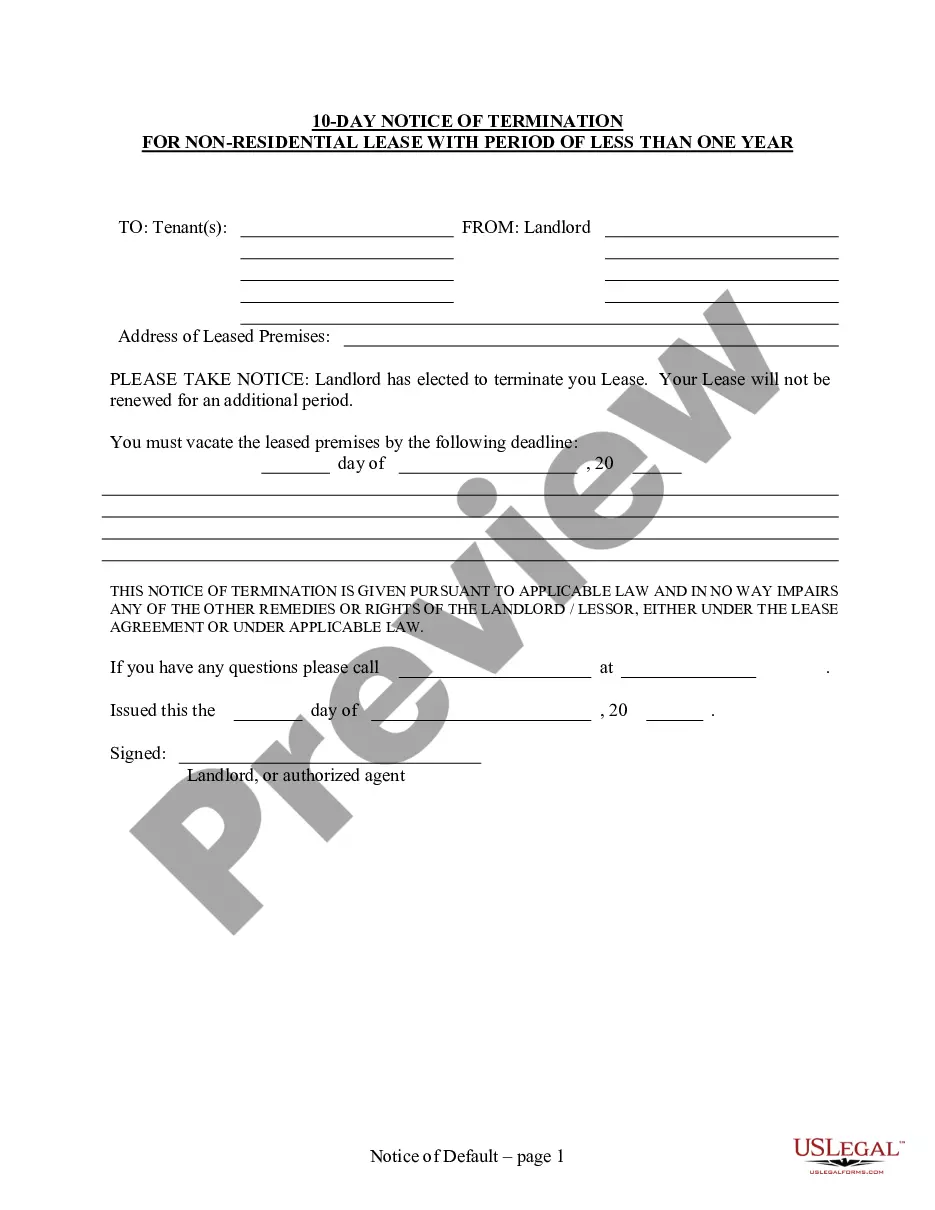
Ohio Minutes for Organizational Meeting
What this document covers
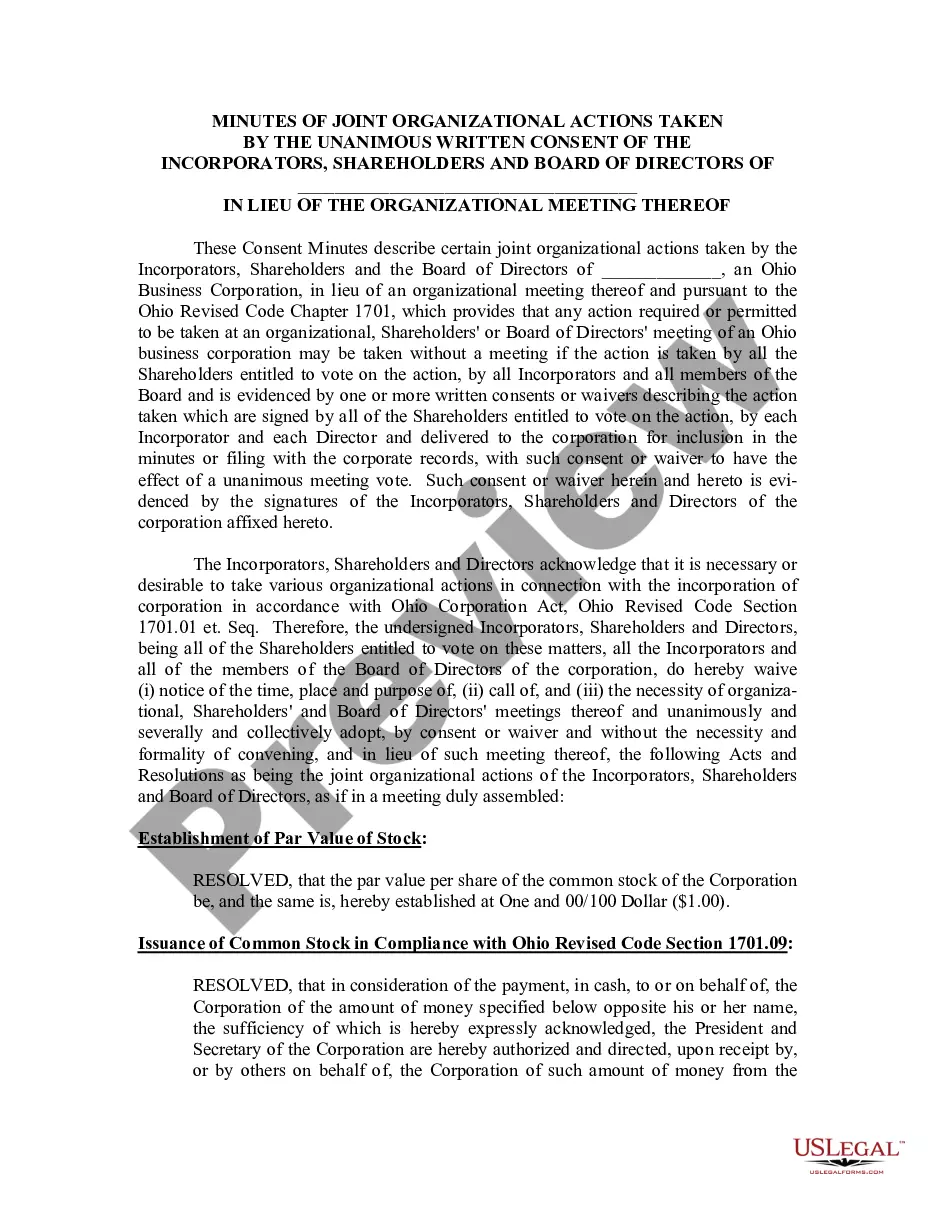
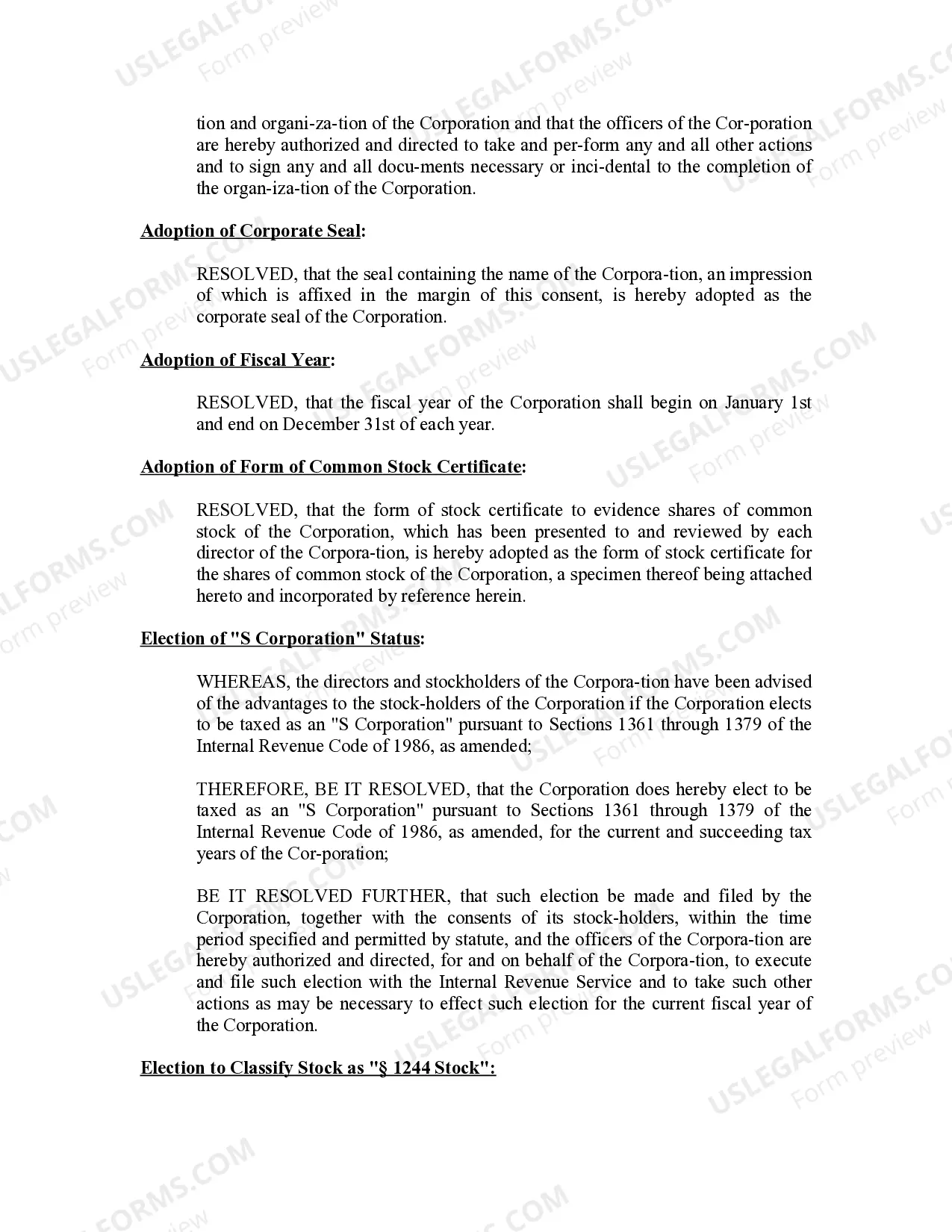
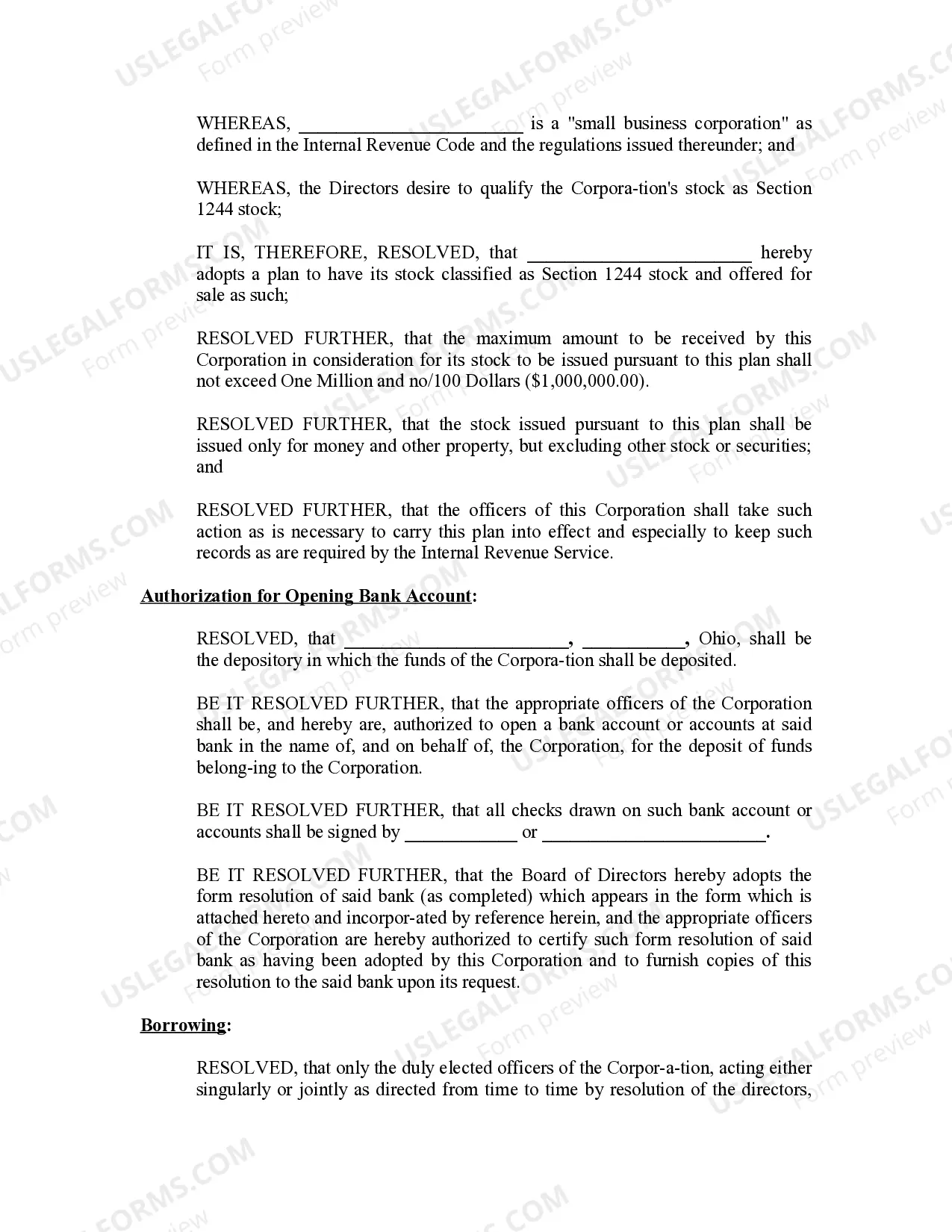
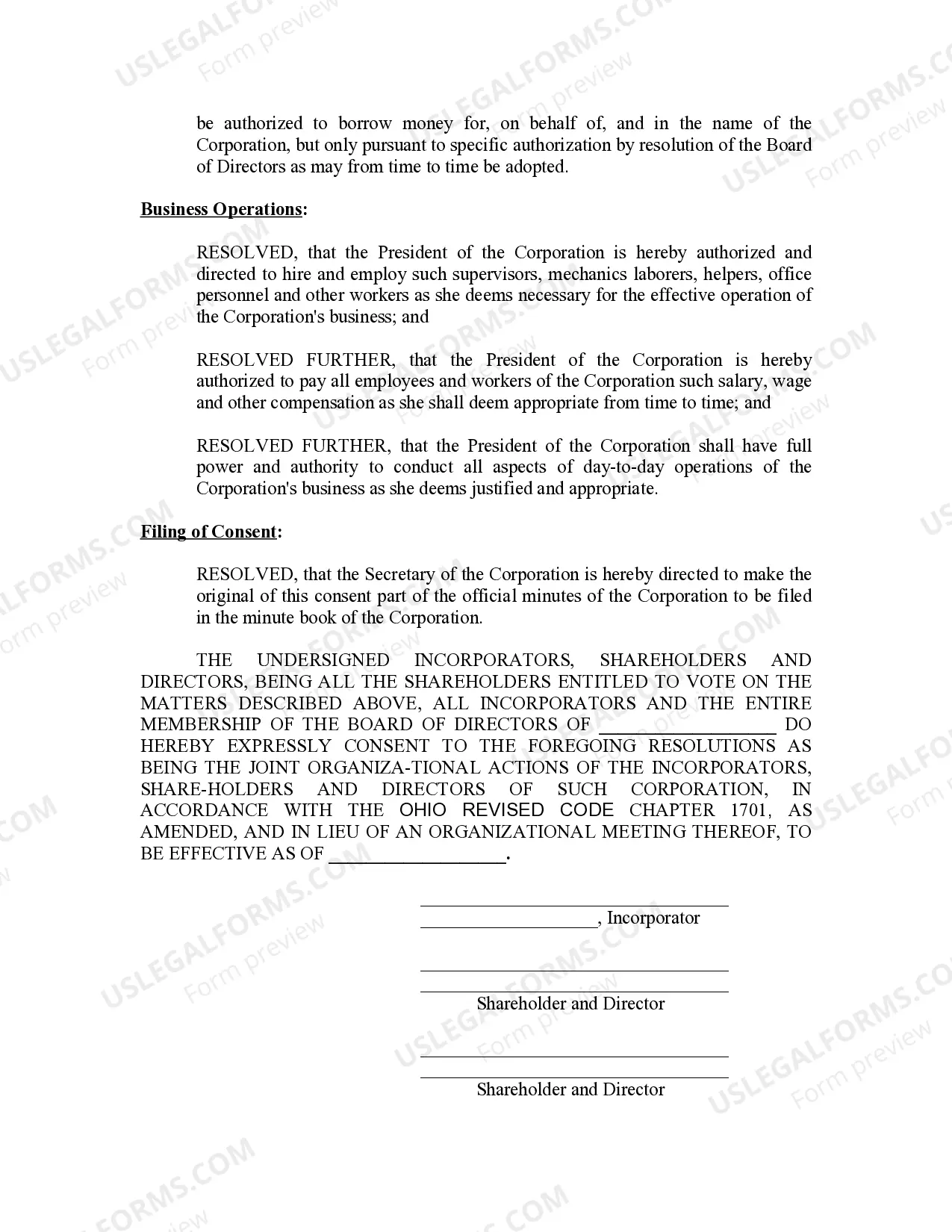
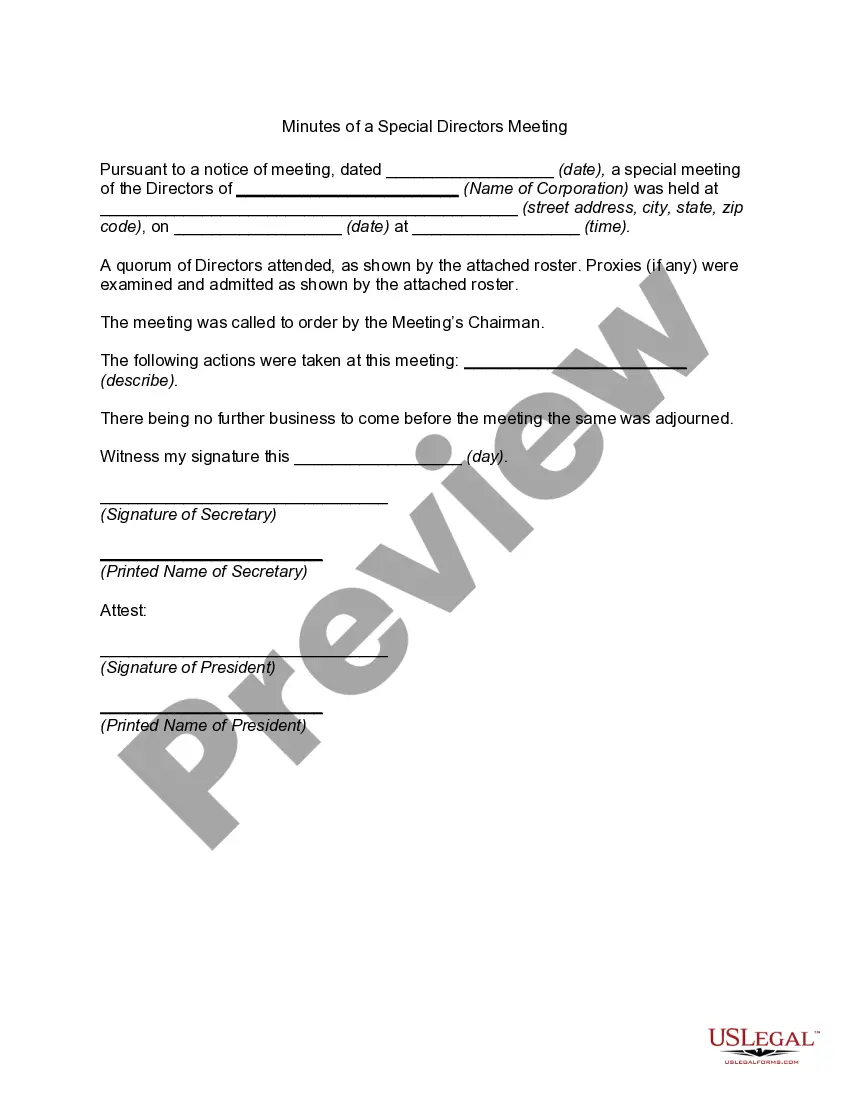
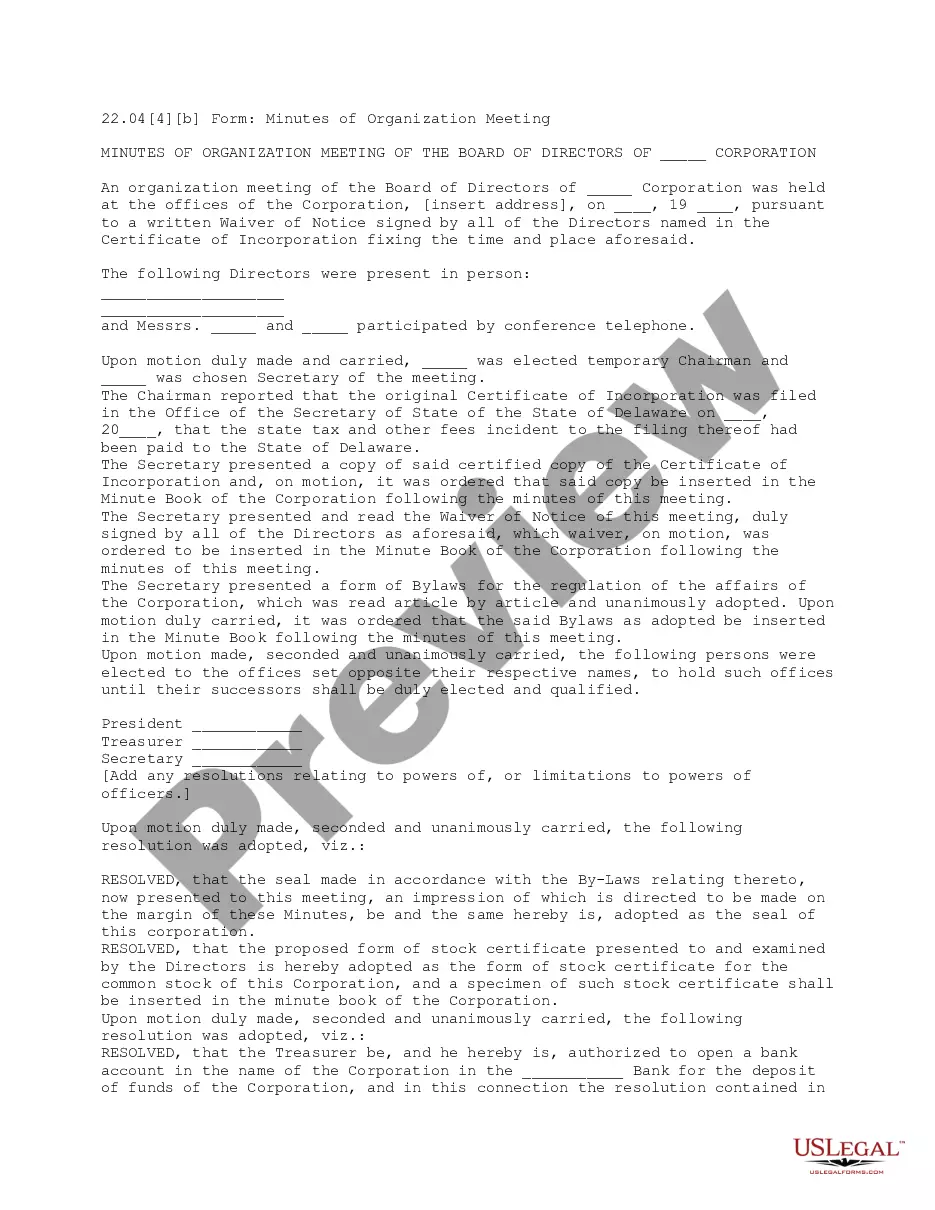
The Minutes for Organizational Meeting form is a legal document used by the Incorporators, Shareholders, and Board of Directors of an Ohio Corporation to summarize actions typically taken during an organizational meeting. This form allows these parties to conduct necessary organizational tasks without the need for an actual meeting, streamlining the incorporation process.
What’s included in this form
- Identification of the corporation and parties involved.
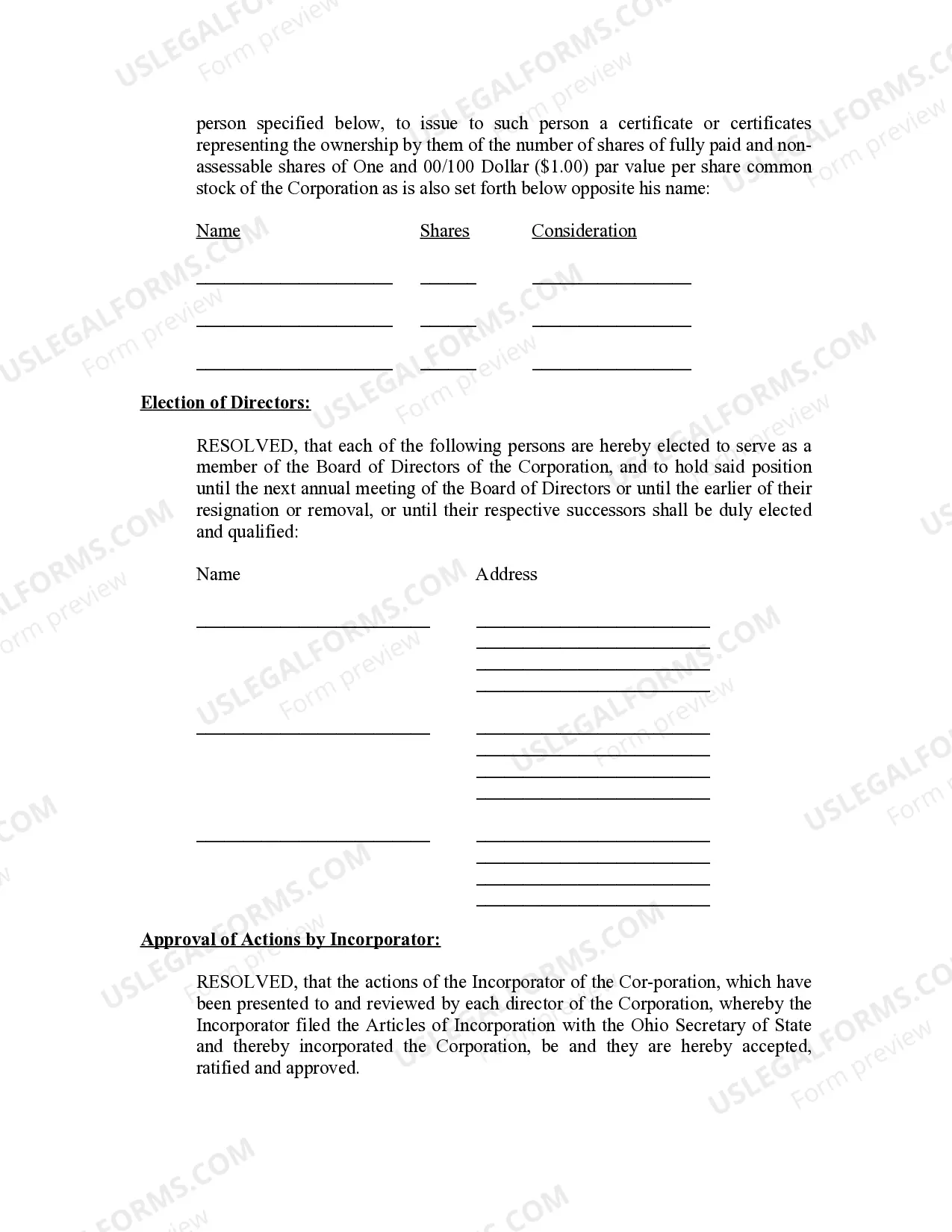
- Details of actions taken regarding stock issuance and par value.
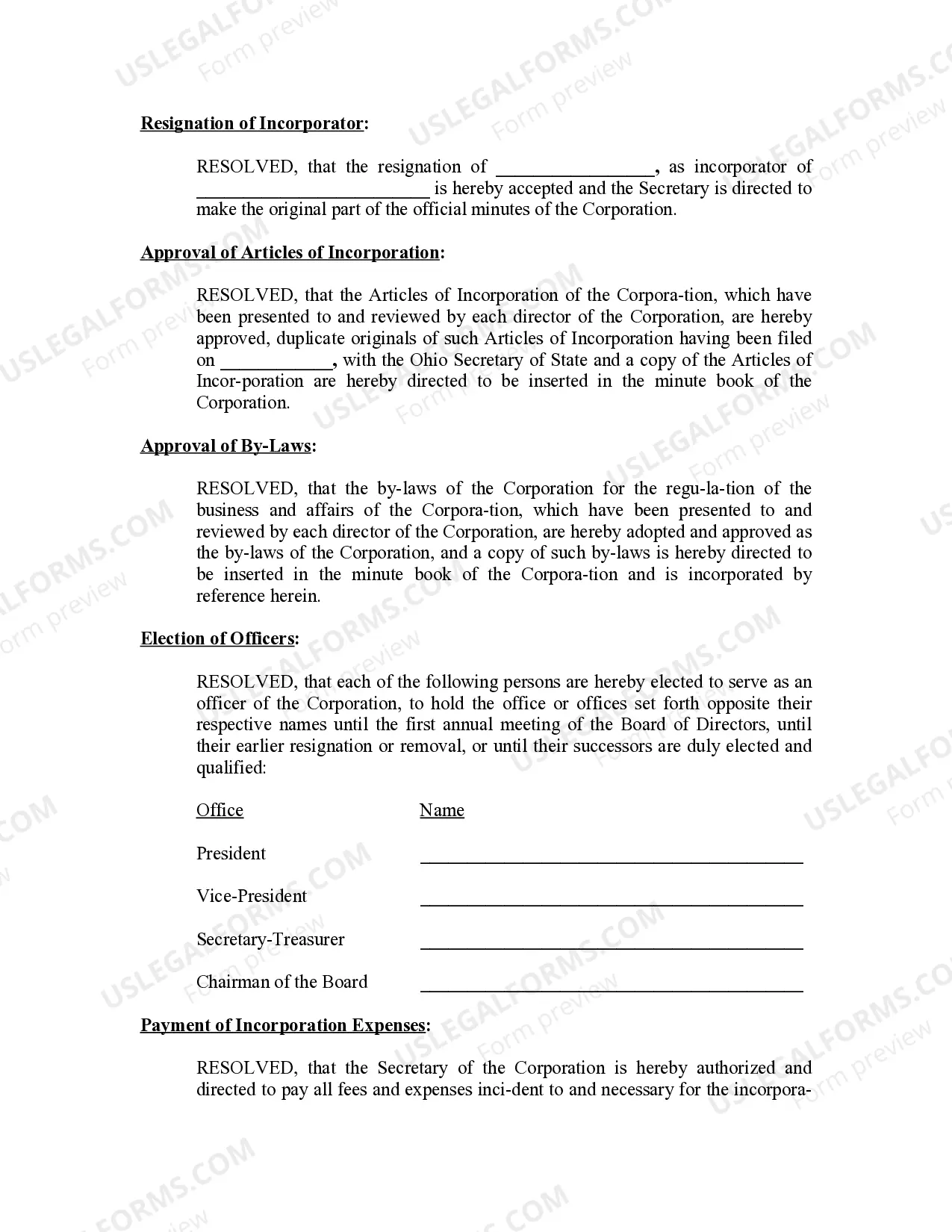
- Election of the Board of Directors and officers.
- Approval of Articles of Incorporation and by-laws.
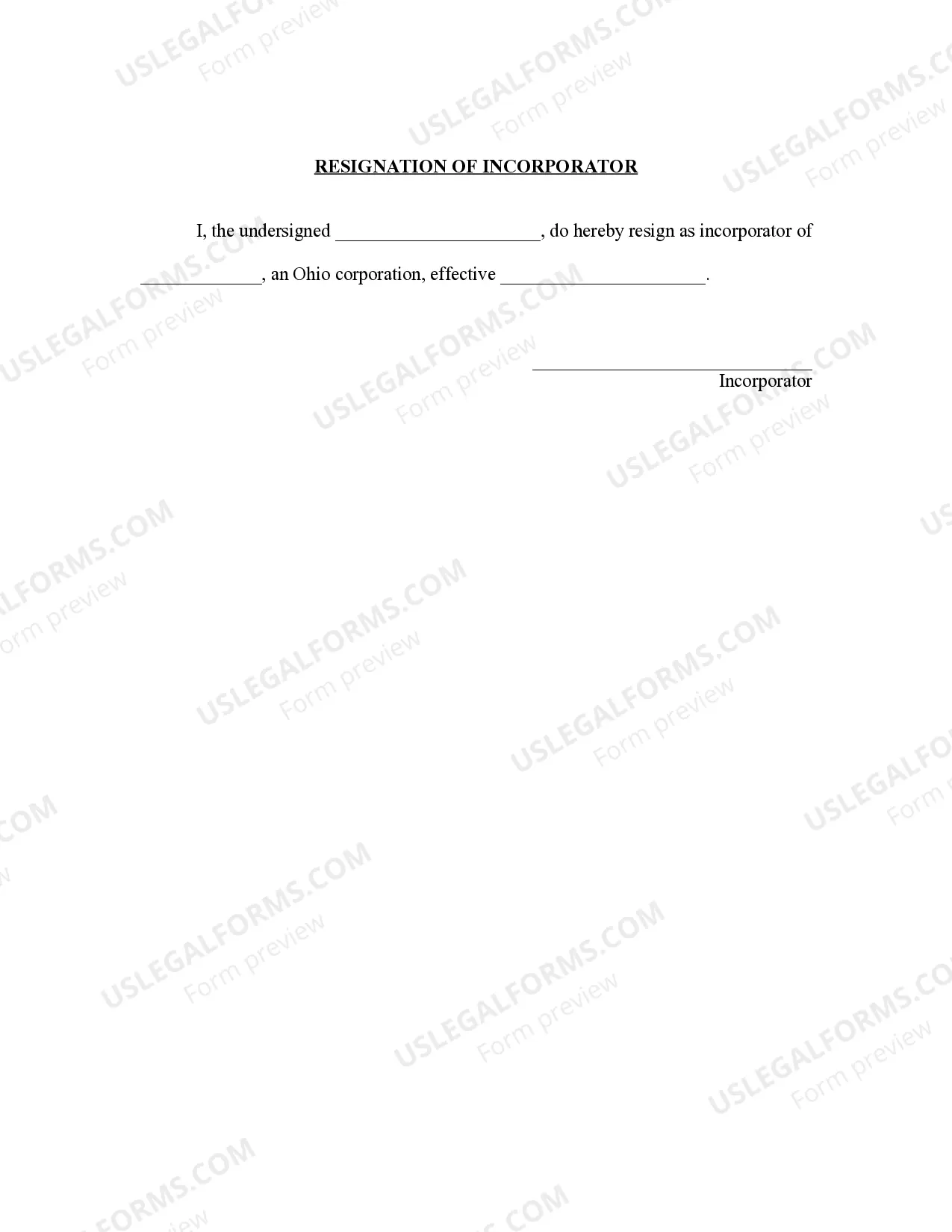
- Resignation of incorporators and authorization for corporate seal.
- Approval of any necessary resolutions for business operations and banking.
When to use this form
This form is useful in scenarios where you are forming a new Ohio corporation and need to establish key organizational details without holding a formal meeting. It can be used for electing directors, approving by-laws, issuing stock, and other necessary actions that require unanimous consent from all incorporators and directors at the initial stage of business formation.
Who should use this form
- Incorporators who are establishing a new Ohio corporation.
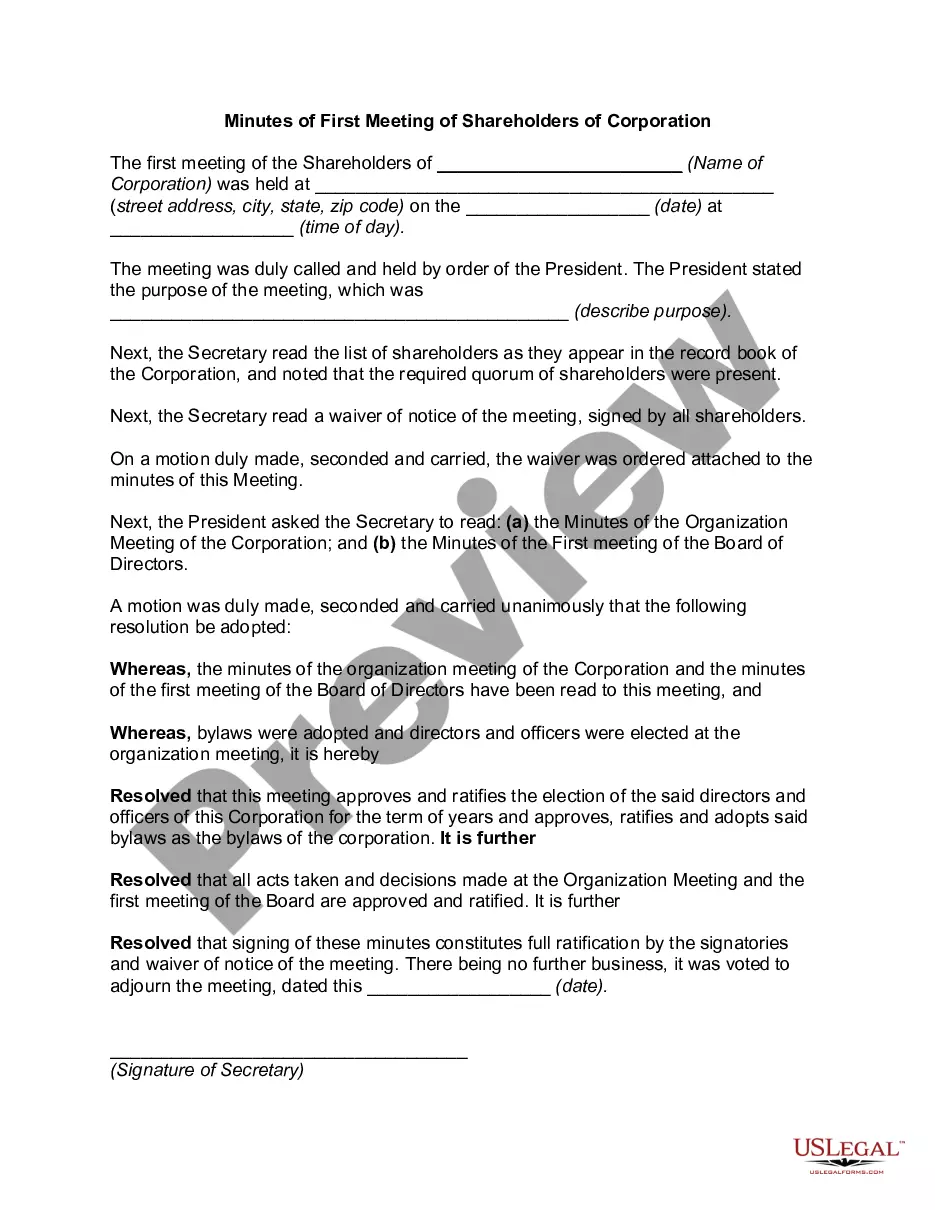
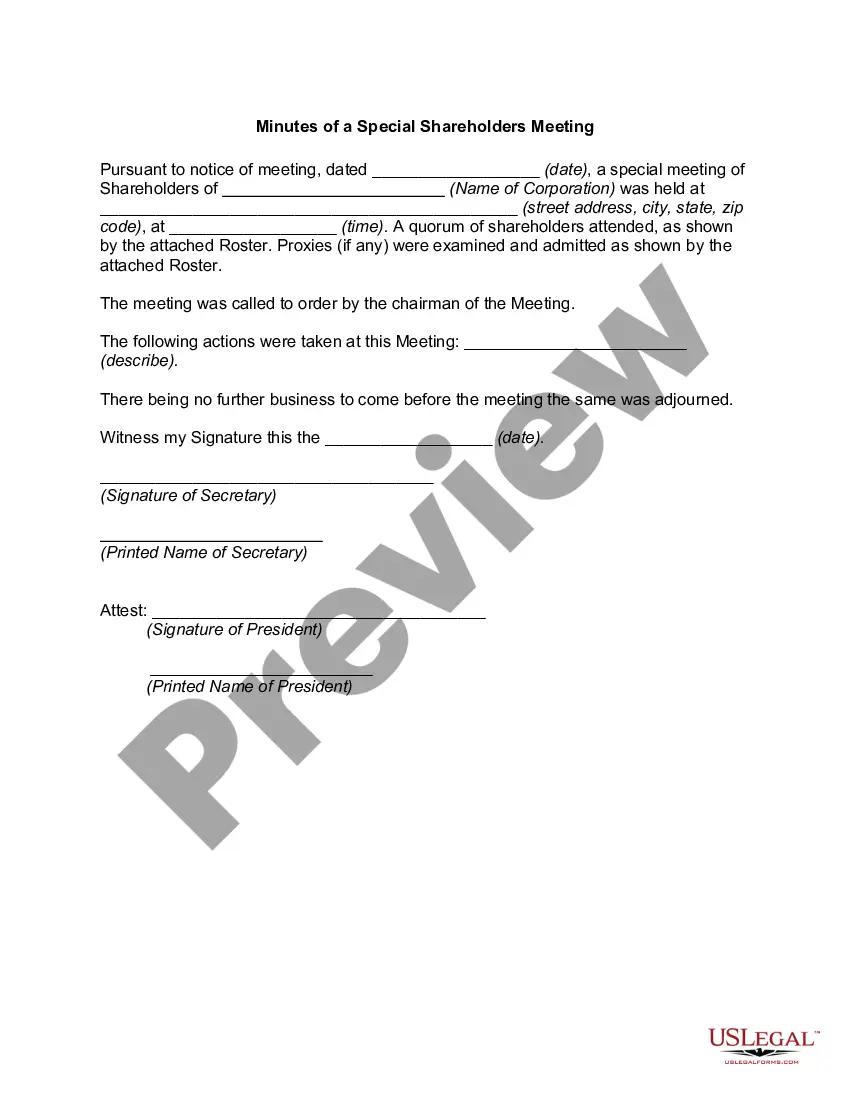
- Shareholders who wish to formalize decisions concerning the corporation.
- Members of the Board of Directors involved in initial corporate actions.
Completing this form step by step
- Identify the corporation by entering its full name where indicated.
- Include the names of all incorporators, shareholders, and directors signing the document.
- Specify the par value of stock and any stock issuance details in the designated sections.
- Elect officers and list their names in the appropriate fields.
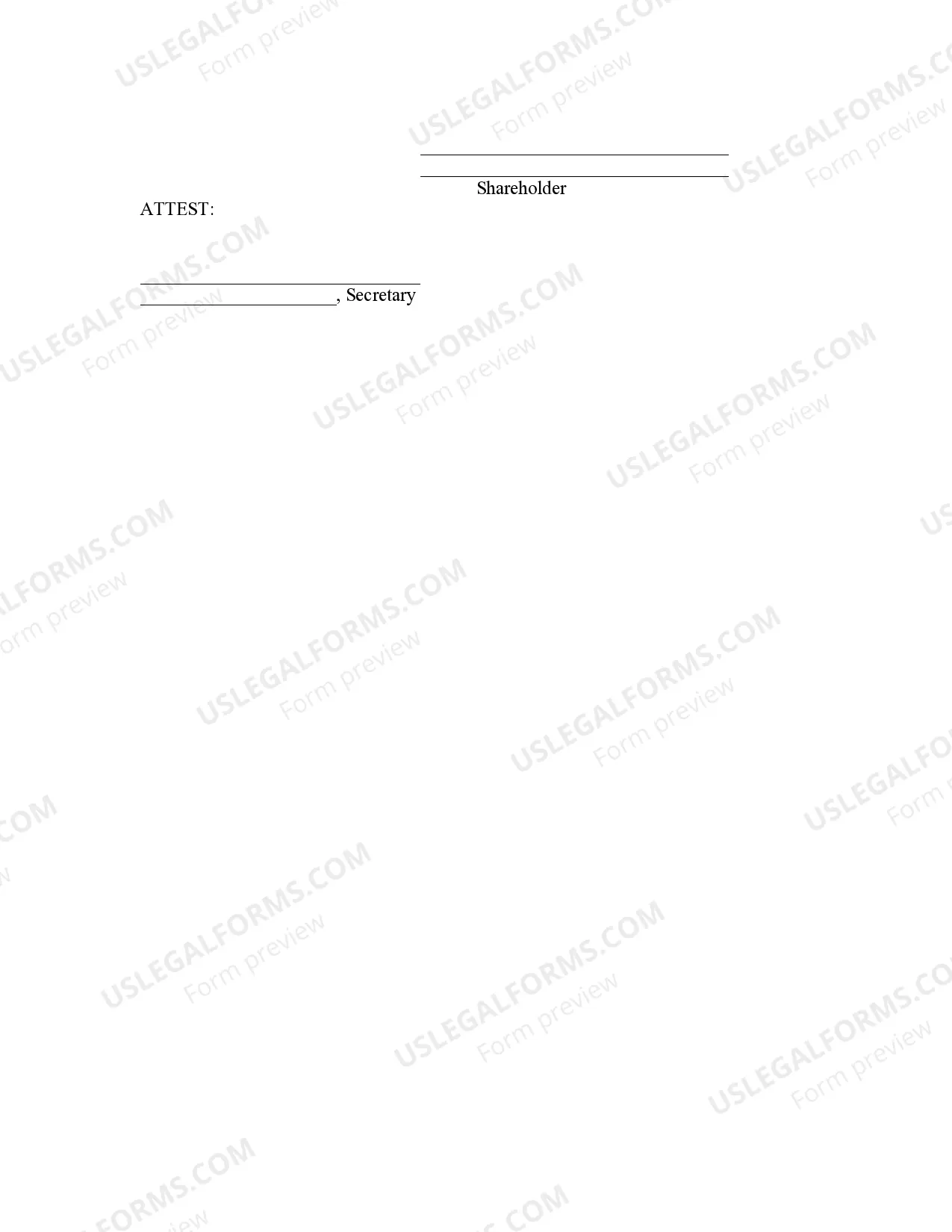
- Sign and date the consent form to validate the actions taken without a meeting.
Notarization requirements for this form
This form does not typically require notarization unless specified by local law. However, having it notarized can add an extra layer of verification and authenticity.
Get your form ready online
Our built-in tools help you complete, sign, share, and store your documents in one place.
Make edits, fill in missing information, and update formatting in US Legal Forms—just like you would in MS Word.
Download a copy, print it, send it by email, or mail it via USPS—whatever works best for your next step.
Sign and collect signatures with our SignNow integration. Send to multiple recipients, set reminders, and more. Go Premium to unlock E-Sign.
If this form requires notarization, complete it online through a secure video call—no need to meet a notary in person or wait for an appointment.
We protect your documents and personal data by following strict security and privacy standards.

Make edits, fill in missing information, and update formatting in US Legal Forms—just like you would in MS Word.

Download a copy, print it, send it by email, or mail it via USPS—whatever works best for your next step.

Sign and collect signatures with our SignNow integration. Send to multiple recipients, set reminders, and more. Go Premium to unlock E-Sign.

If this form requires notarization, complete it online through a secure video call—no need to meet a notary in person or wait for an appointment.

We protect your documents and personal data by following strict security and privacy standards.
Mistakes to watch out for
- Failing to include all necessary signatures from shareholders and directors.
- Not specifying the corporation's name correctly, leading to confusion.
- Omitting important resolutions or approvals required for compliance.
Benefits of completing this form online
- Convenience of filling out and accessing forms from anywhere.
- Editability allows for quick adjustments before finalizing legal documents.
- Secure storage and retrieval of documents for future reference.
Key takeaways
- The Minutes for Organizational Meeting form is essential for efficiently documenting initial corporate actions in Ohio.
- It allows for actions to be taken without a formal meeting, benefiting timely business setup.
- Ensure all relevant parties are included and signatures are collected to enforce the decisions made.
Looking for another form?
Form popularity
FAQ
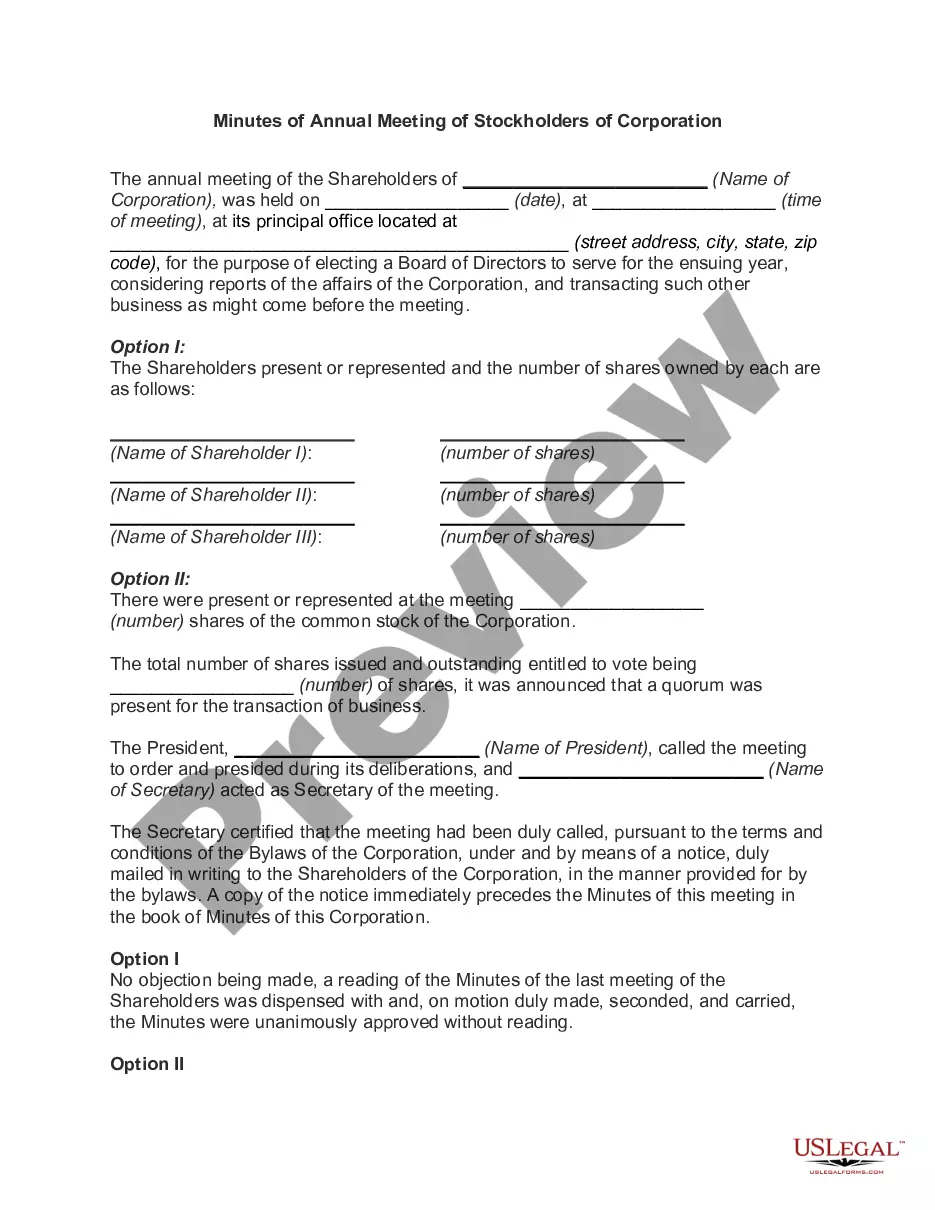
One of the most important formalities required of corporations is to hold annual shareholder meetings and to keep detailed reports of these meetings, known as annual meeting minutes.While there's no statutory requirement for LLCs to hold meetings, it may be required by your LLC's own operating agreement.
Date, time, and location. Minutes should include this basic information about when and where the meeting was held and how long it lasted. Creator. List of persons present. Topics list. Voting record. Review and approval.
Meeting name and place. Date and time of the meeting. List of meeting participants. Purpose of the meeting. For each agenda items: decisions, action items, and next steps. Next meeting date and place. Documents to be included in the meeting report.
The participants to the meetings have a reminder aid. The minutes say who will do what and when. They are the starting point of the following meeting. They are helpful for those absent to know was discussed and what decisions have been taken. In case of conflicts, they are useful to know what agreements were made.
A corporation's organizational meeting is meant to be the initial meeting of the owners of the corporation and management. Typically, the items on the meeting agenda include: The appointment of corporate officers. The acquisition of a minute book to record meeting minutes and actions. The approval of Corporate Bylaws.
Organizational meetings are held to appoint officers, elect or appoint directors, issue shares in the corporation, approve bylaws, setup minute books, appoint or waive the appointment of auditors, set up bank accounts, etc.
What's In. The minutes should include the title of the group that is meeting; the date, time, and venue; the names of those in attendance (including staff) and the person recording the minutes; and the agenda.
Single member LLCs should have meeting minutes for any actions that its operating agreement calls for a vote. Often this includes decisions to add new members to the company, merge with another company or dissolve the company.
Use a template. Check off attendees as they arrive. Do introductions or circulate an attendance list. Record motions, actions, and decisions as they occur. Ask for clarification as necessary. Write clear, brief notes-not full sentences or verbatim wording.